Mornings can feel loud before the coffee even brews. A smart color system can calm the chaos fast.
When every bin, drawer, and shelf has a clear color cue, everyone knows where things go. That means less searching, less mess, and fewer “Who moved my stuff?” moments.
1. Color-Coded Pantry Zones
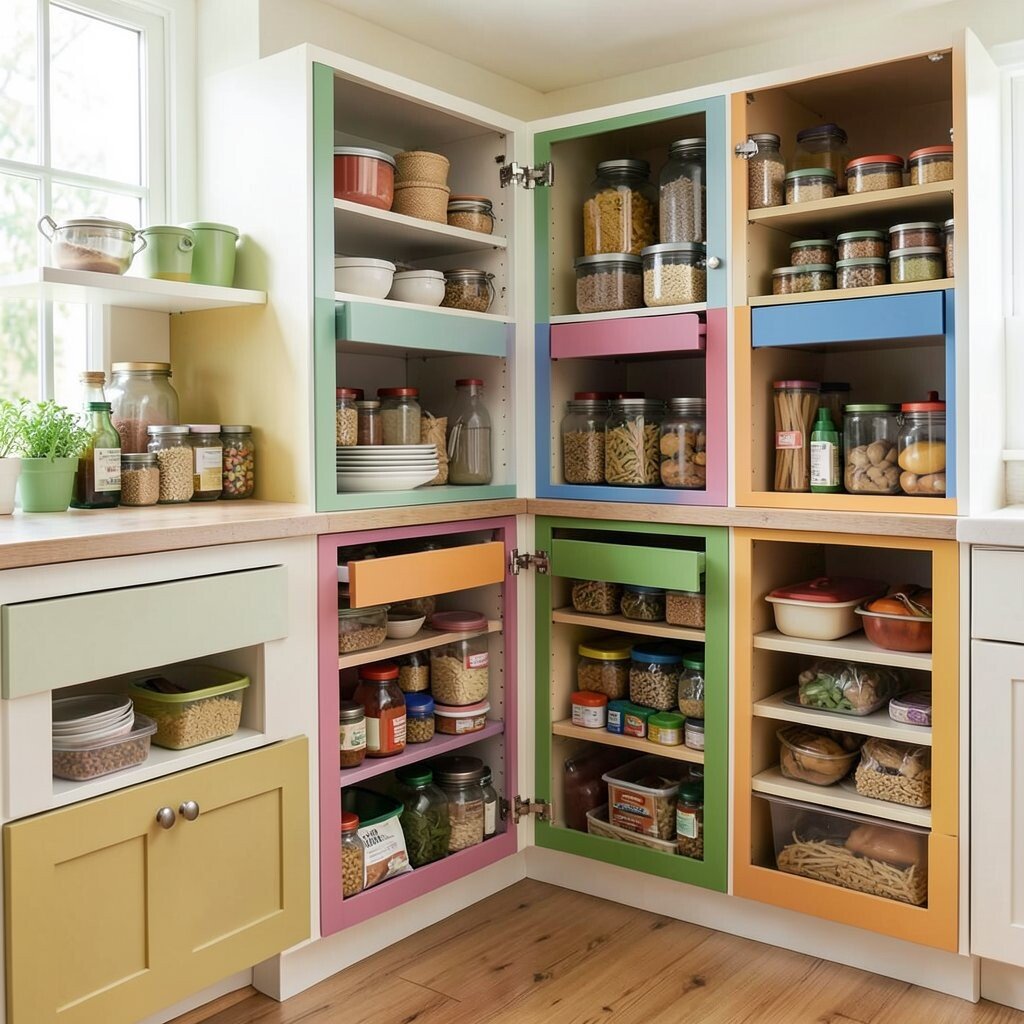
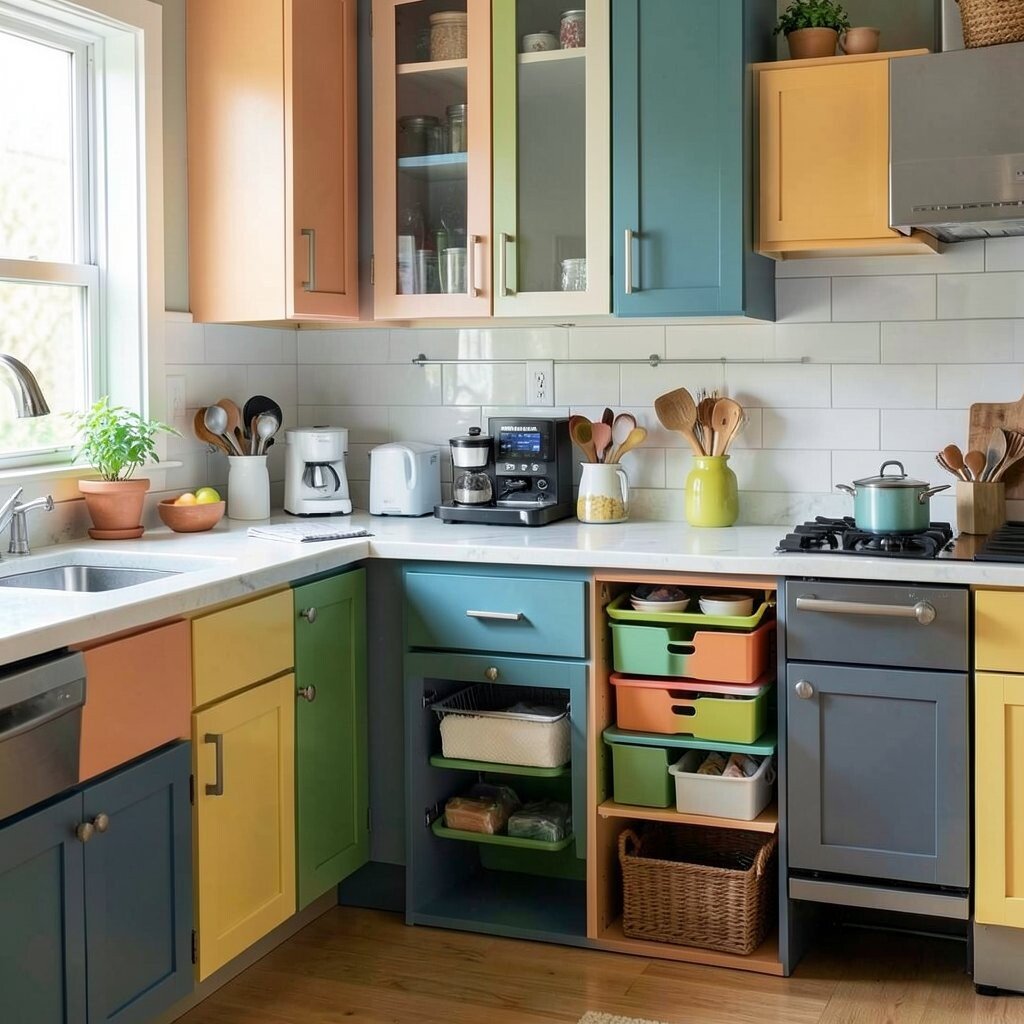
Set pantry zones with bright bins for baking, breakfast, snacks, and dinner sides. The shelves look cheerful right away, and the whole family can spot what belongs where.
This setup works well because colors speak faster than labels when people are in a hurry. Try red for quick snacks, blue for breakfast, green for meal prep, and yellow for grab-and-go lunch items. Clear plastic bins cost less at big box stores, while sturdy woven baskets give a warmer look if you want the pantry to feel styled.
2. Rainbow Drawer Dividers
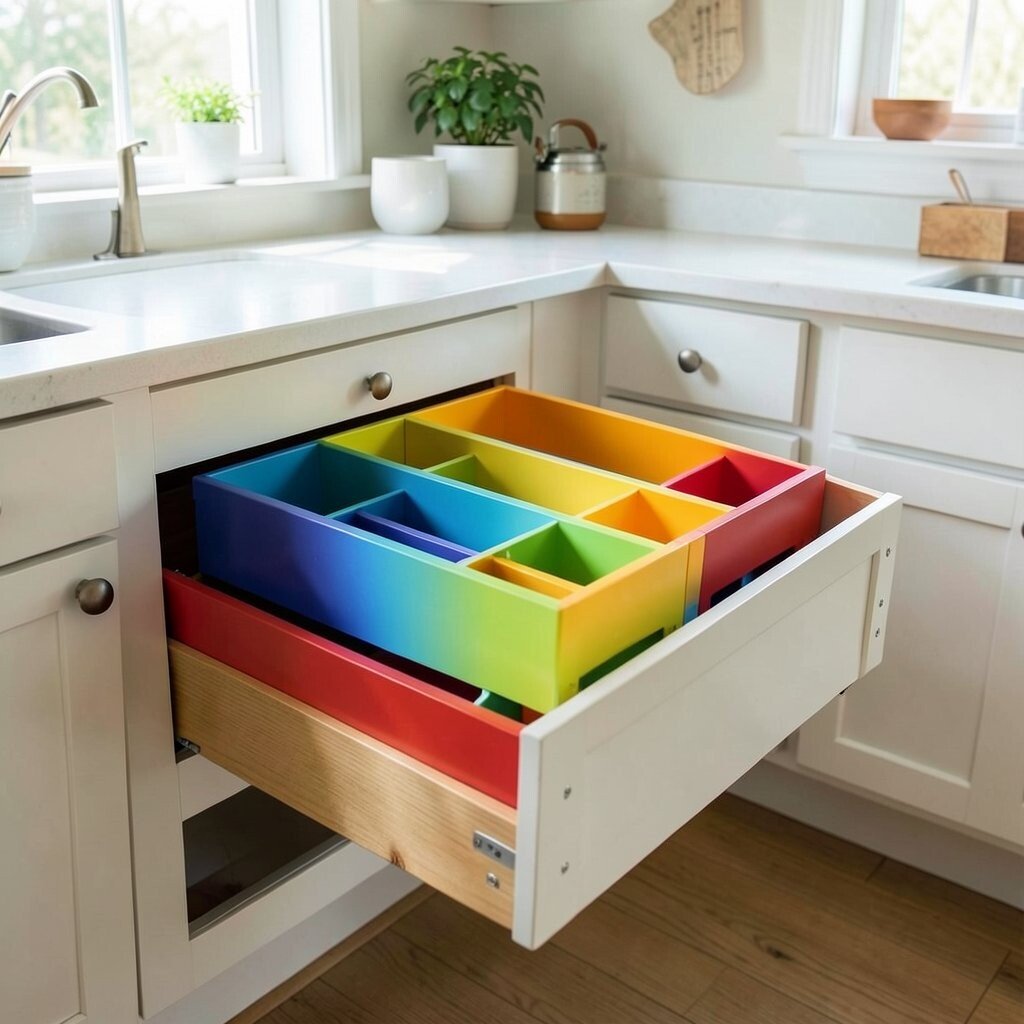
Drawers turn into easy maps when each section gets its own color. Spoon zones, knife zones, and tiny tool zones become simple to remember.
This idea helps kids put things back without much help. A drawer with soft pastel dividers can feel calm, while bold colors make the space playful and easy to read.
Use fabric bins, plastic trays, or thin wooden dividers based on your budget and style. If you like current trends, mix neutral drawer fronts with bright insert colors so the kitchen still looks clean and modern. You can also switch colors by season, which keeps the space fresh without buying all new storage.
3. Family Meal Prep Color Stations
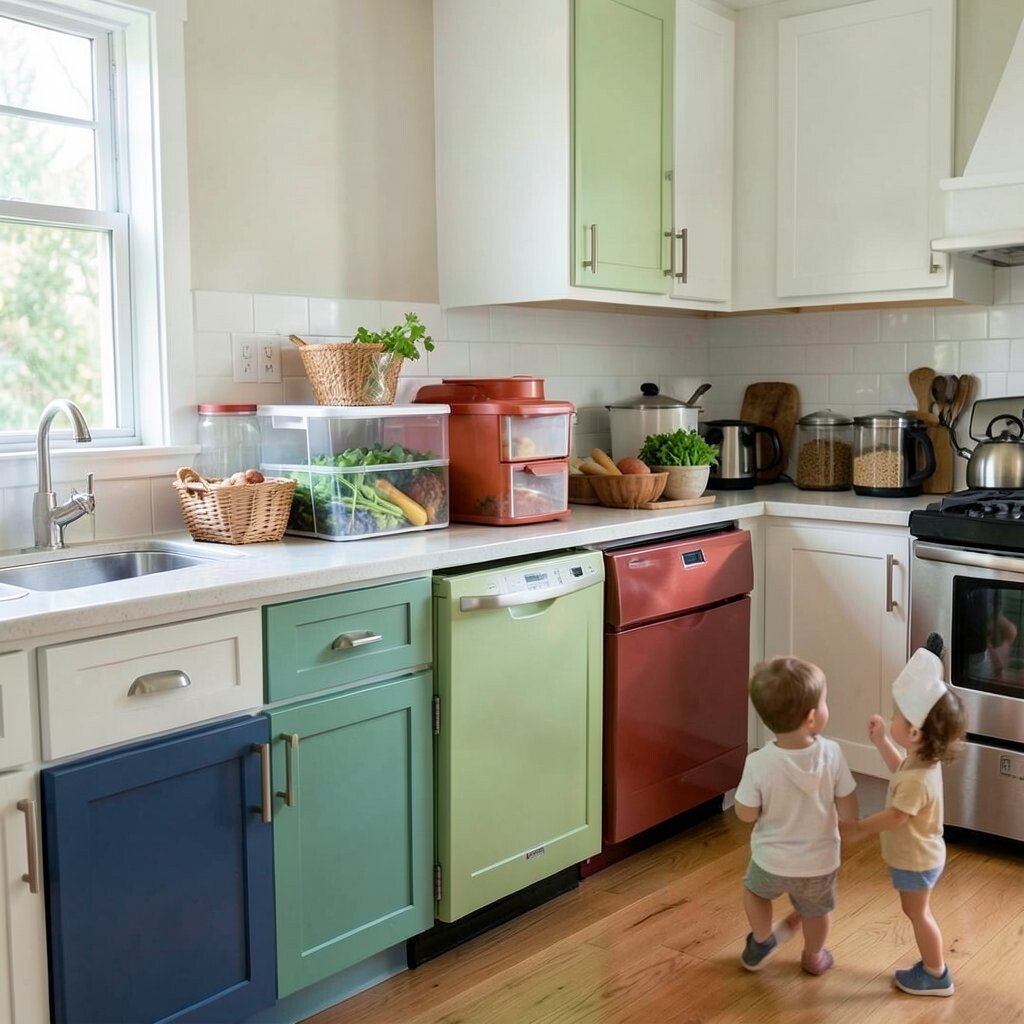
Meal prep gets easier when each family member has a color-coded station. One person can pack fruit in green containers while another uses blue ones for lunch proteins.
This keeps hands from mixing up lunches, snacks, and leftovers. It also saves time on busy nights because each person knows exactly which container belongs to them.
Pick colors that match each person’s favorite shade or school bag for a personal touch. If matching sets feel too expensive, use sticker dots or colored lids on plain containers. Many households like this method because it reduces waste and makes the fridge look neat instead of crowded.
4. Color-Tagged Fridge Shelves
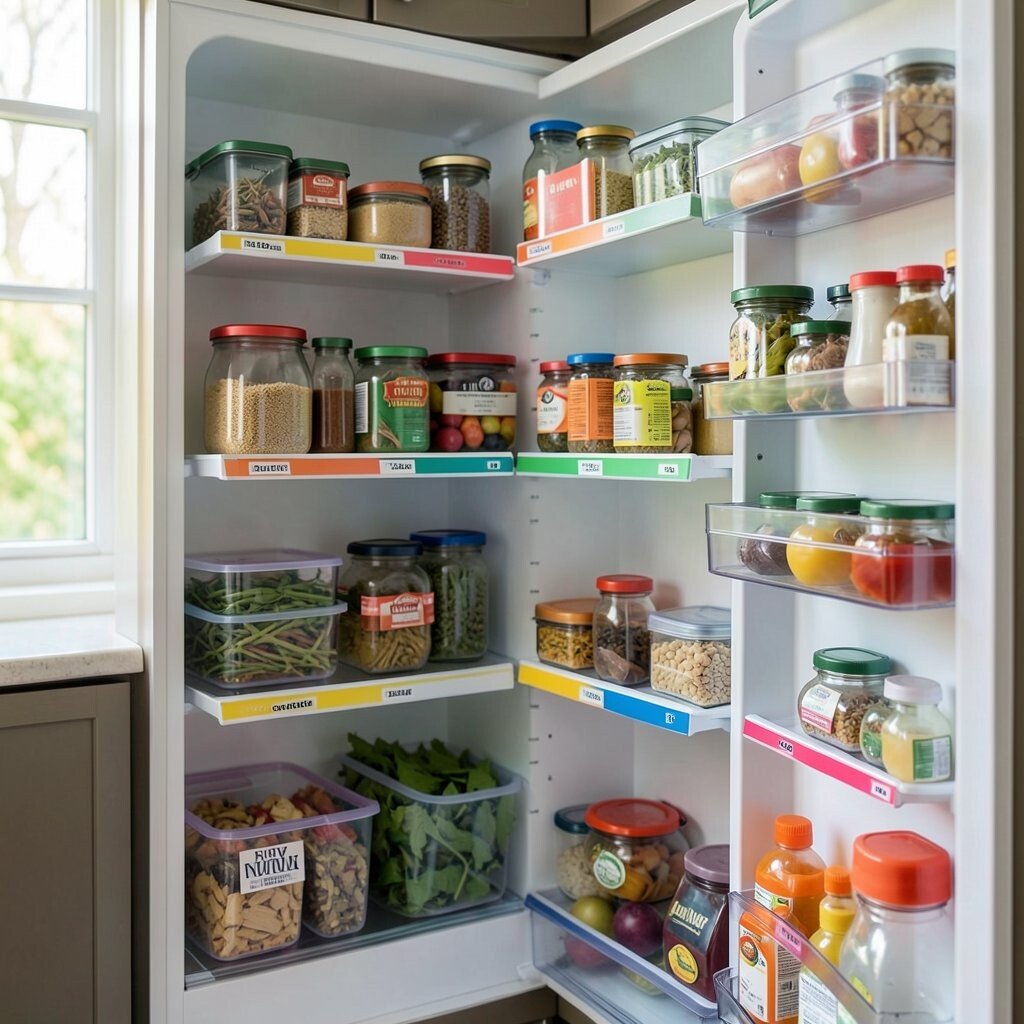
A fridge can feel like a puzzle until each shelf gets a color tag. Top shelves, middle shelves, and lower shelves become easy to sort at a glance.
This helps with food safety too, since raw items, leftovers, and ready-to-eat foods stay in separate places. Bright shelf clips or washable tape can make the system simple without costing much.
5. Snack Bin Rainbow Wall
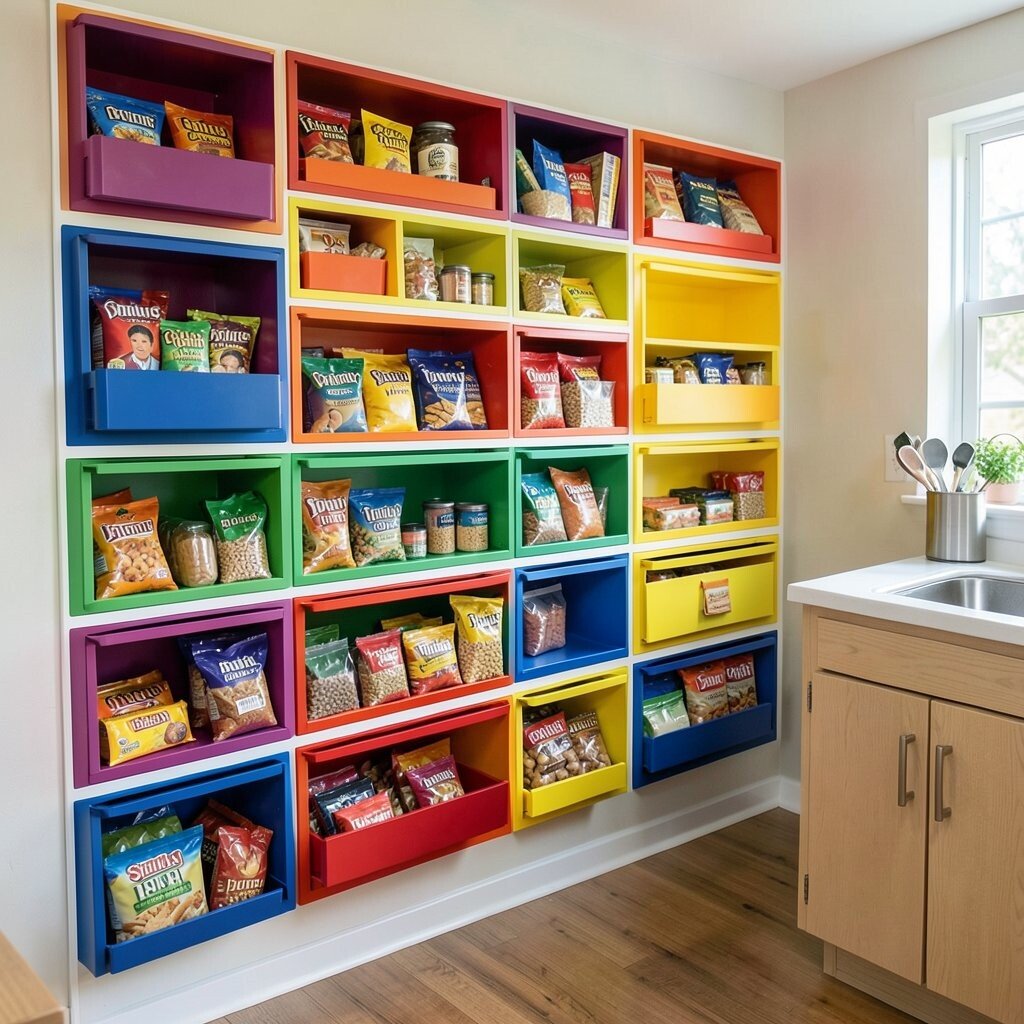
Snack bins lined up on a low shelf can feel like a mini store at home. Children love the look, and adults love that snacks stop floating around the kitchen.
Use one color for sweet treats, another for savory snacks, and another for school lunch extras. Clear bins with colored labels are a trendy choice because they show what is inside while still keeping the room tidy.
This system can fit tight budgets since many bins are reusable and easy to find at discount shops. For a personal touch, add name labels or fun icons like apples, crackers, or cookies. If you host often, you can keep one color for guest snacks so visitors know what is fair game.
6. Color-Coded Spice Shelf
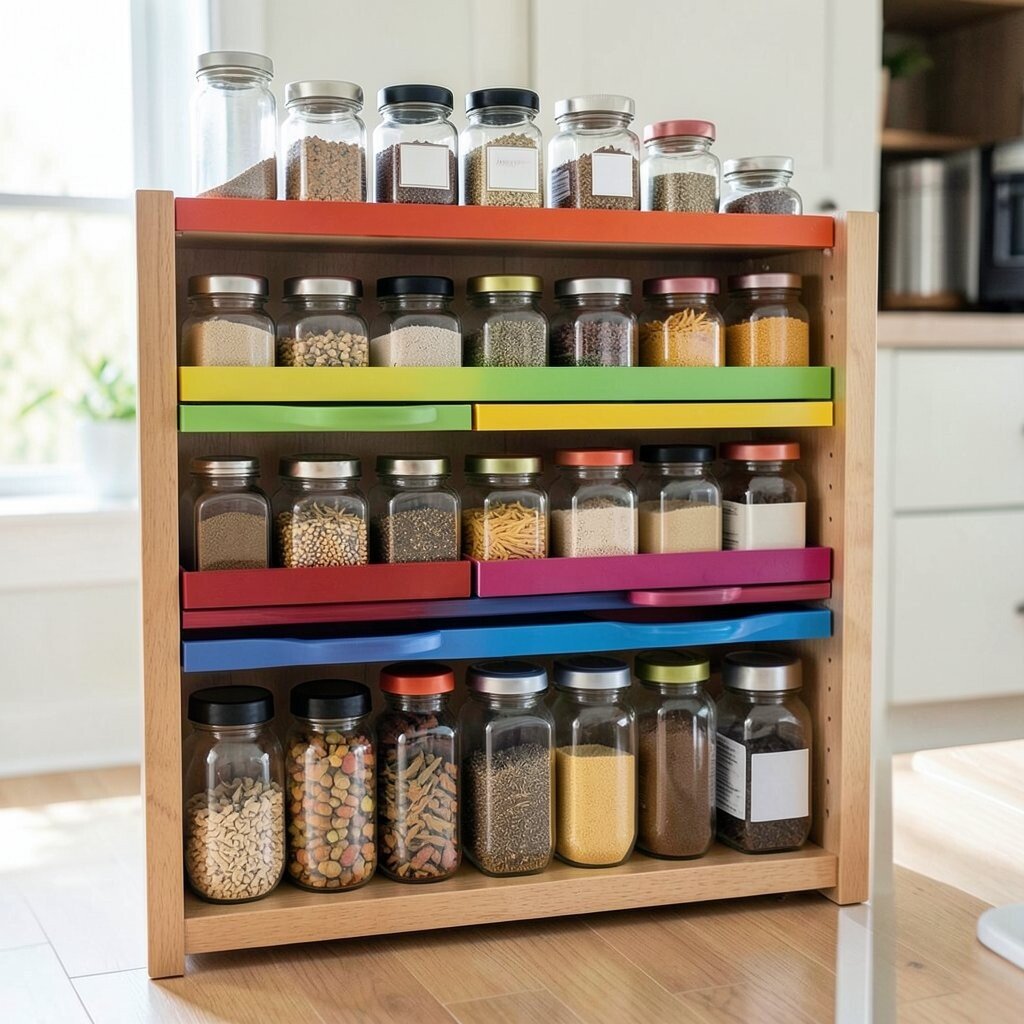
Spices look neat when the jars follow a color family. A row of amber glass with colored lids can make even a small shelf feel polished.
This style helps cooks grab what they need quickly while food is on the stove. It also keeps duplicates from hiding in the back, which saves money over time.
You can use sticker dots, lid rings, or colored labels to sort spices by heat, cuisine, or use. For example, red can mean spicy, green can mean herb blends, and gold can mean baking spices. Many home cooks like this look because it is both useful and pretty enough to leave on display.
7. Laundry Day Kitchen Basket System
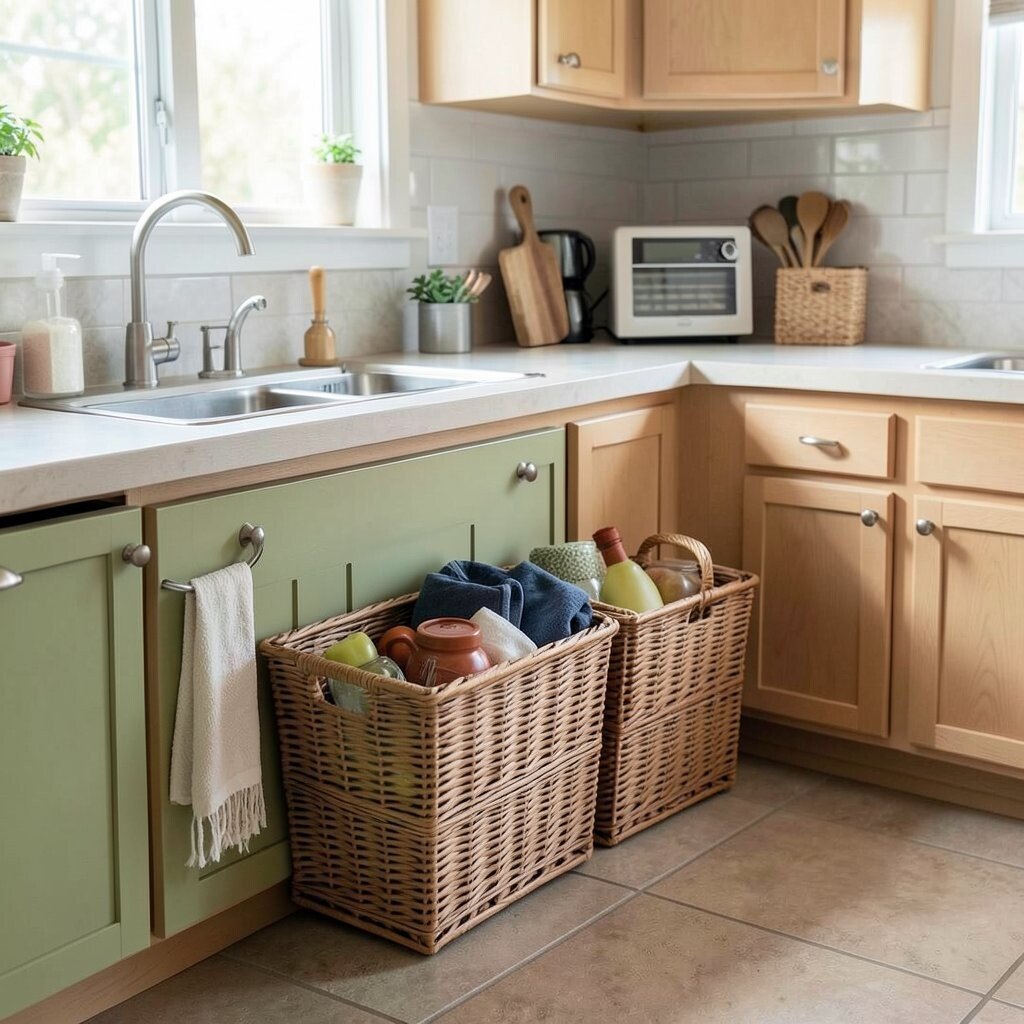
Busy kitchens often need a spot for towels, aprons, and table linens. Color-coded baskets make those items easy to sort before they pile up.
One basket can hold clean dish towels, another can hold dirty ones, and a third can hold aprons or napkins. The system keeps laundry out of the way and makes chores feel less random.
8. Color-Blocked Cleaning Caddy Setup
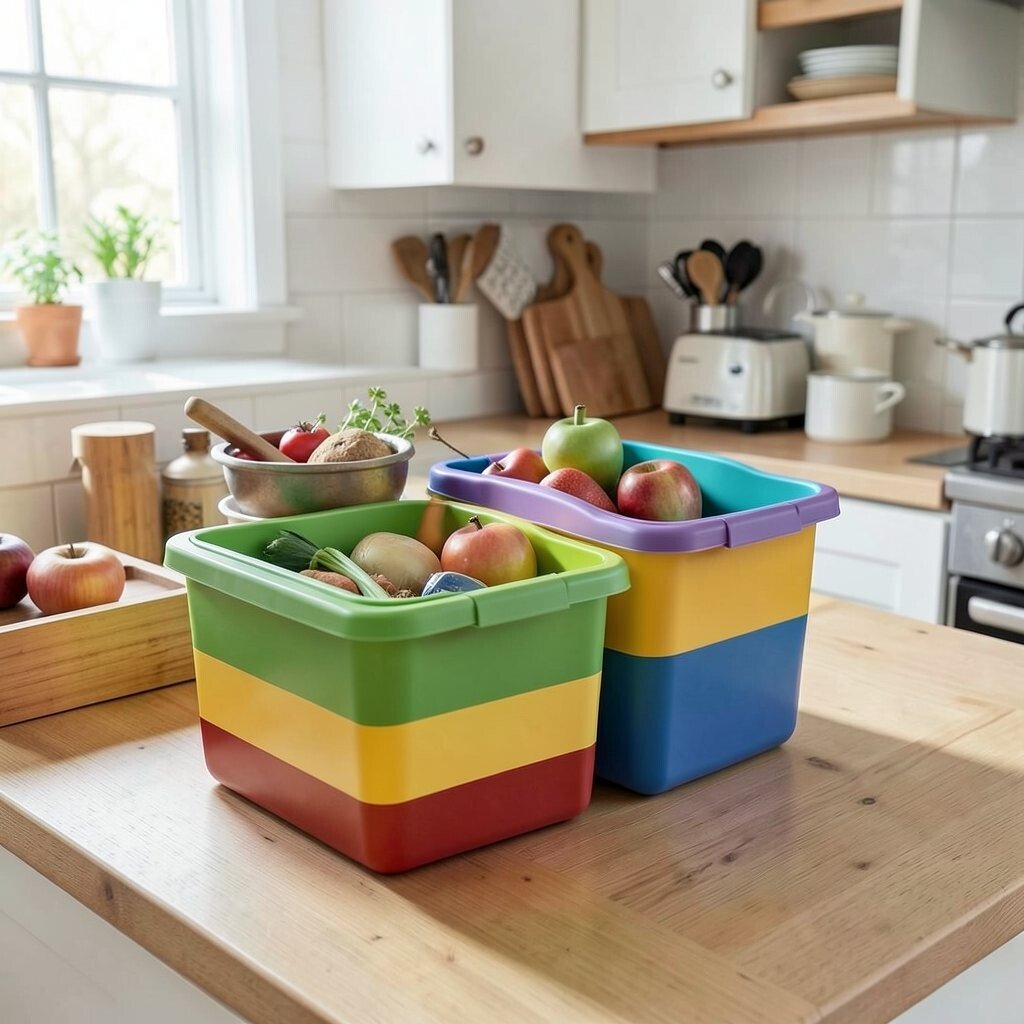
Cleaning supplies stay easier to grab when each caddy has its own color. A blue caddy for dishes, a green caddy for counters, and a yellow one for floors can make cleanup faster.
This is especially helpful for families who share chores. It also lowers the chance of mixing products that should stay separate.
Choose plastic caddies for a low-cost option or metal baskets for a more stylish look. To personalize them, add initials, chalk labels, or matching cloths in the same shade. This trend works well in compact kitchens because the caddies can slide under the sink or sit on a utility shelf.
9. Color-Zoned Recycling and Compost Corner
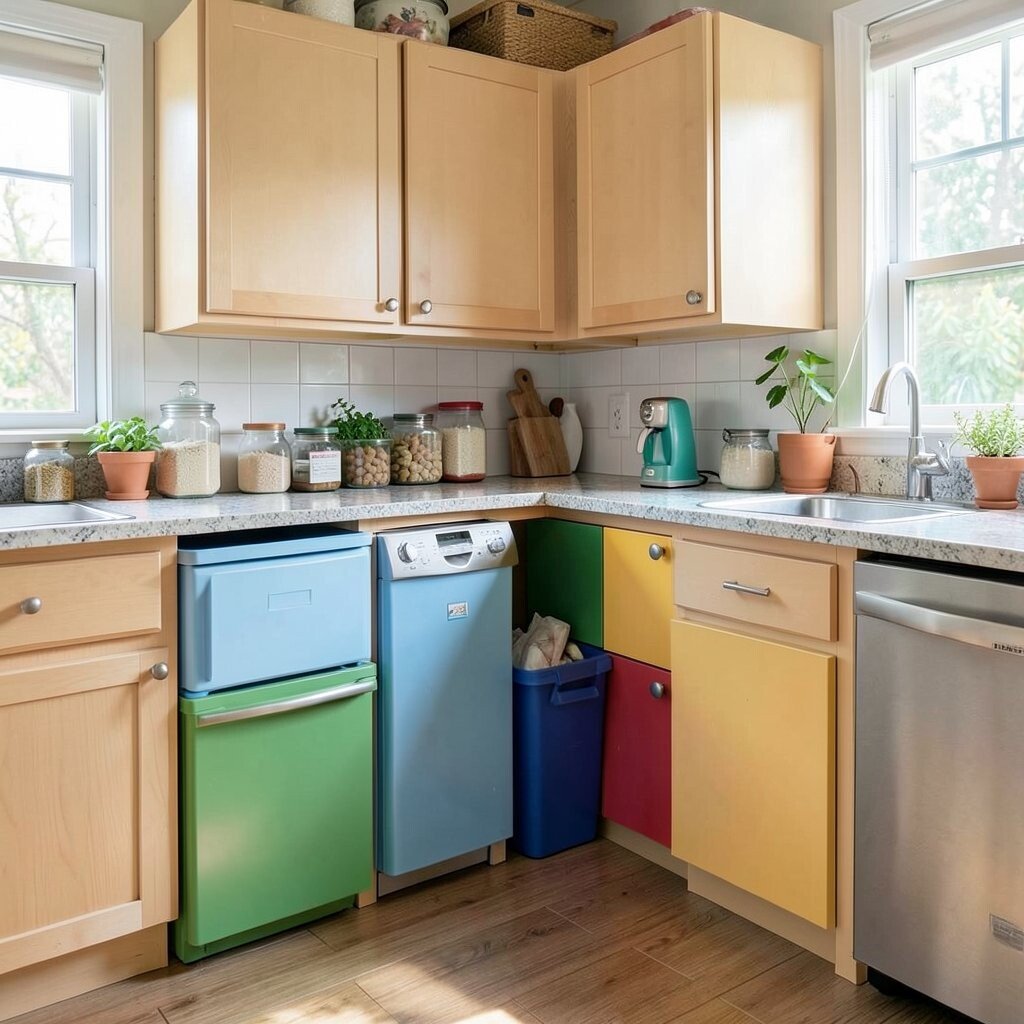
A recycling corner feels easier to use when each bin has a clear color. Blue for paper, gray for mixed recycling, and brown or green for compost can keep the rules simple.
This system cuts confusion and helps the whole home make better waste choices. It also makes the kitchen look cleaner because trash no longer spreads into the wrong spots.
Label the lids with big icons so even younger kids can help sort waste. If you want a nicer look, use matching bins in muted tones with colorful labels on the front. This setup can be low cost if you reuse old tubs and add waterproof tape or paint markers.
10. Color-Coded Utensil Cups and Crocks
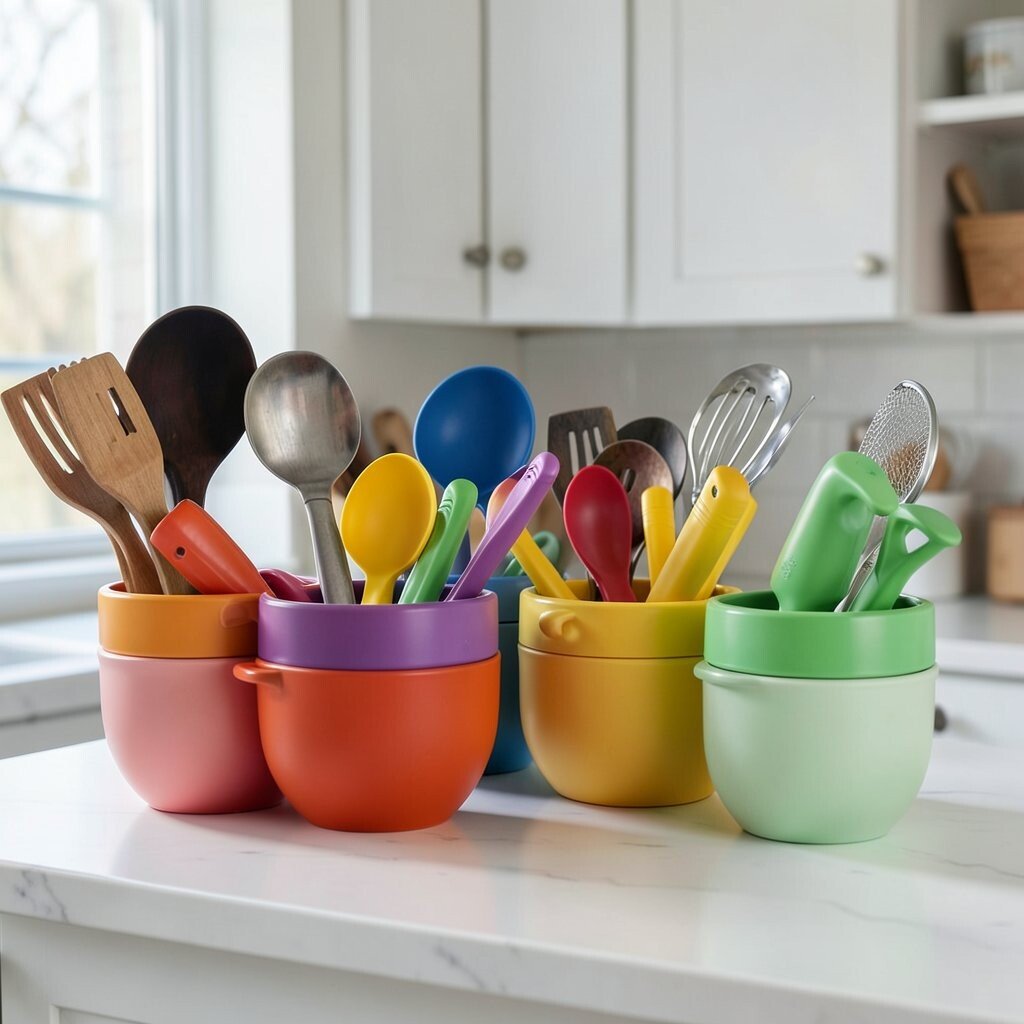
Countertop utensil cups can bring order to a busy cooking area. Place spatulas in one color cup, wooden spoons in another, and whisks in a third.
This makes tool grabbing faster during meal prep and keeps the counter from becoming one big jumble. It also adds a little style right where people can see it.
Try ceramic crocks for a classic feel or lightweight bins for a casual kitchen. If your family likes simple design, use one color for each task, such as red for baking tools and navy for cooking tools. The best part is that you can swap the cups anytime without changing the whole kitchen.
11. Color-Matched Appliance Docking Zone
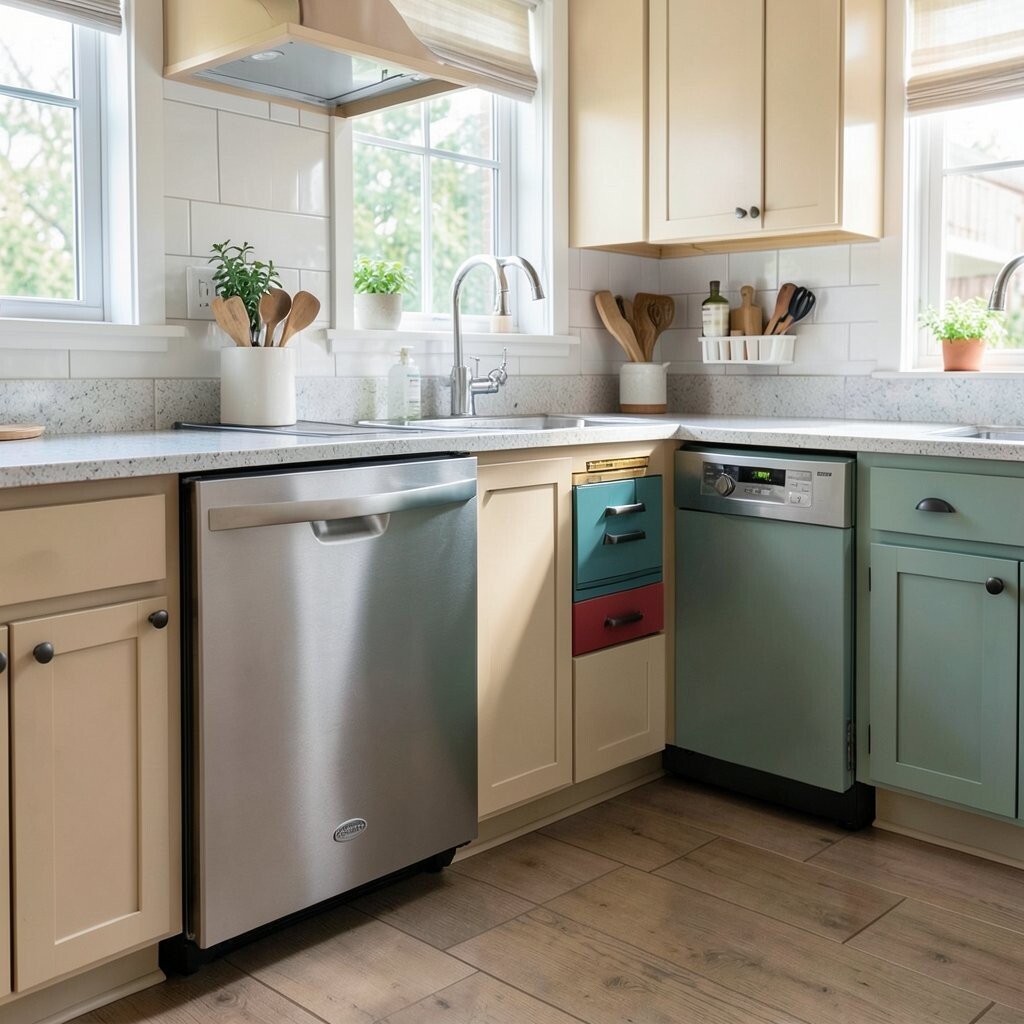
Small appliances look calmer when they have a color-matched home base. A mixer, toaster, blender, and coffee gear can each sit on a labeled mat or tray.
This keeps cords from tangling and makes countertops look less crowded. It also helps the family put things back in the same place after use.
12. Color-Coded Command Center for Kitchen Paperwork
Kitchens often become the place where forms, coupons, schedules, and school papers land. A color-coded command center keeps all that paper from taking over the table.
Use one pocket for bills, one for menus, one for permission slips, and one for grocery lists. This gives each paper a home and makes busy days feel more under control.
Magnetic file holders, wall pockets, or slim baskets all work well here, and the cost can stay very low. Add family photos, favorite colors, or a small chalkboard for a personal touch that makes the system feel friendly. Since many homes now use hybrid paper and digital planning, this setup bridges both worlds without looking messy.