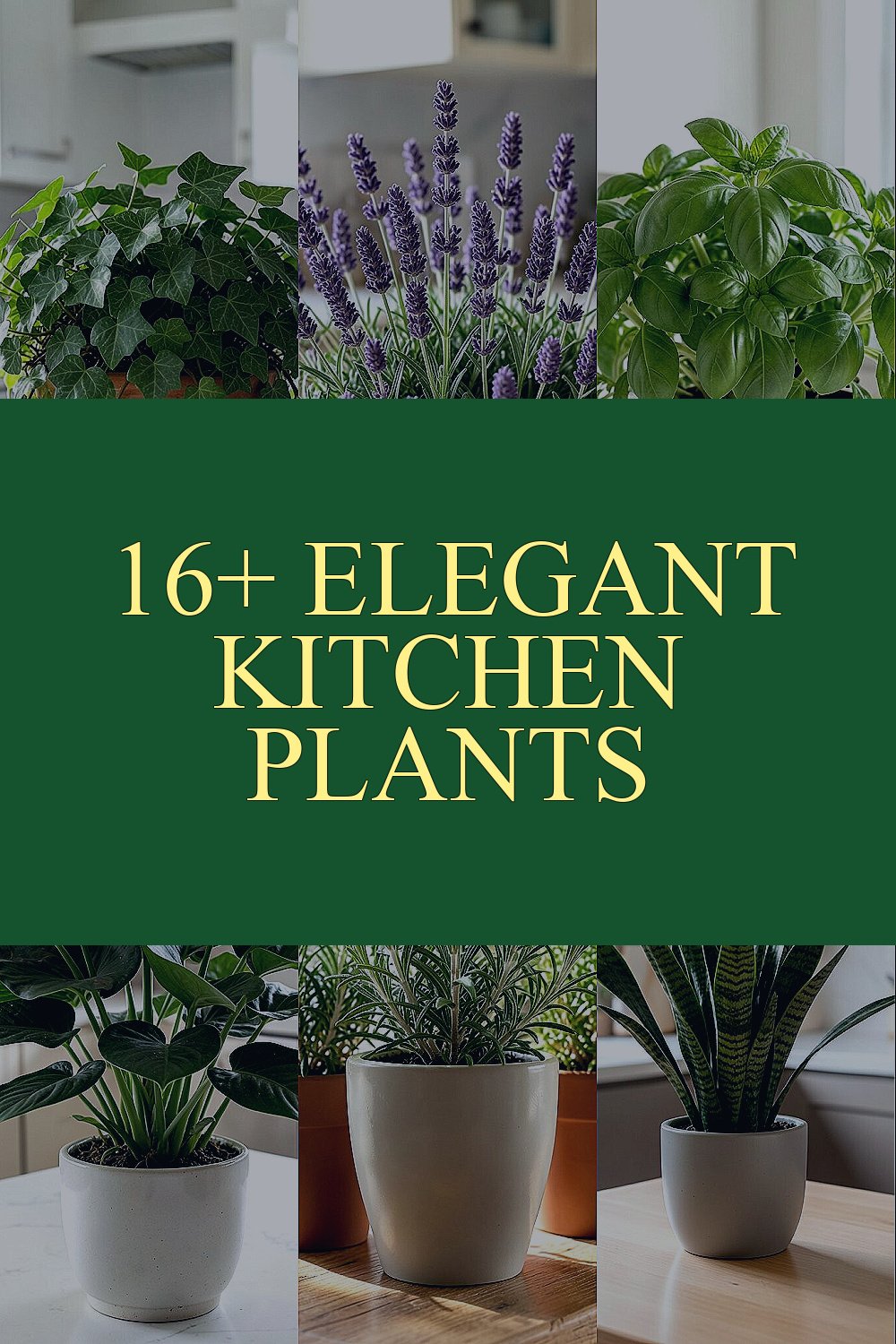
Green living makes kitchens feel calmer and cozier. The right plant can also make everyday cooking feel a little more special.
Pick one that fits your light, your schedule, and your style, and you’ll be rewarded fast.
-
1) English Ivy (Hedera helix)
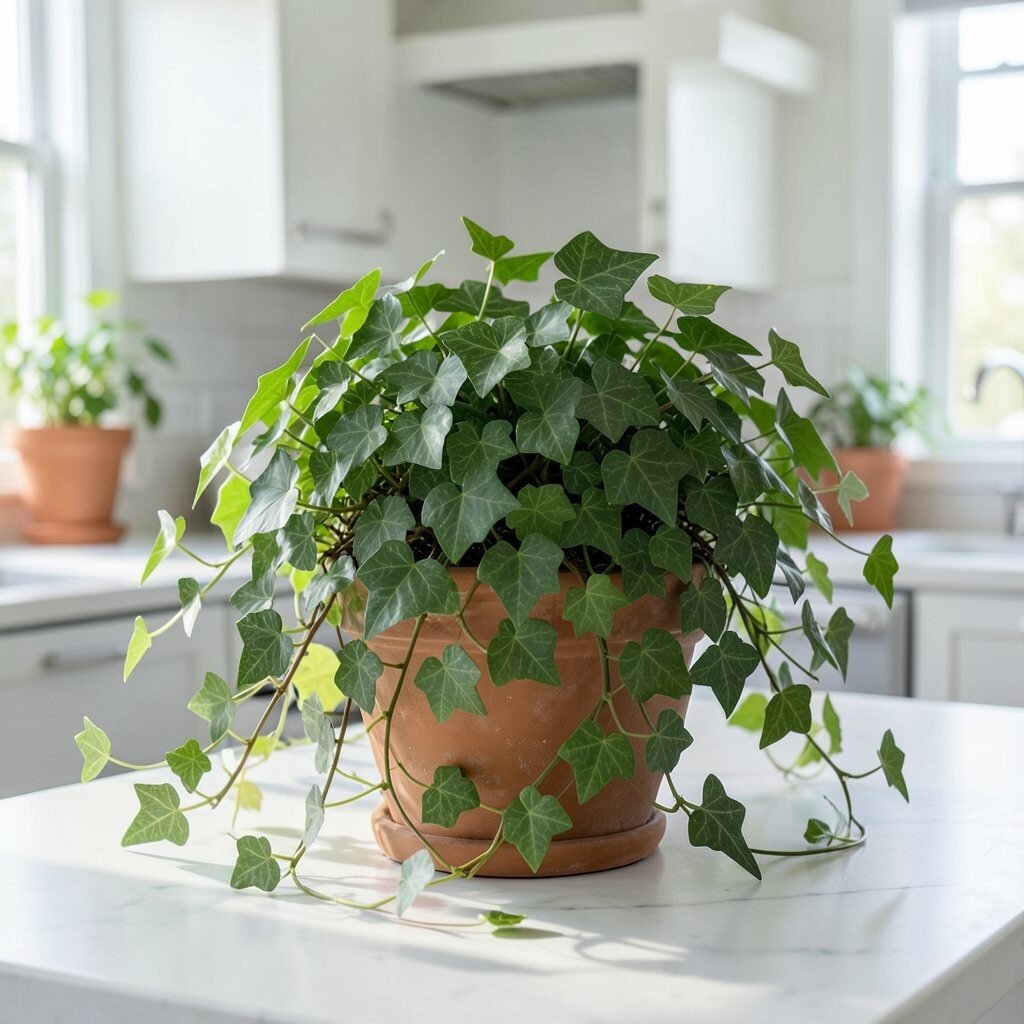
) English Ivy (Hedera helix) English ivy looks like a living curtain, with deep green leaves and a soft trailing shape. It can climb a small trellis near a window or spill from a shelf for a neat, classy look.
Ivy is great at bringing height to a room without taking up much floor space. In the kitchen, its steady foliage can help the space feel fresh, especially when you wipe down counters and keep things tidy.
For best results, keep it where light is bright but not harsh. Water when the top inch of soil feels dry, and avoid soggy roots. If you want personalization, try a dark ceramic pot for a moody, elegant vibe.
Cost-wise, ivy is often affordable because many places sell small starts. A popular trend is pairing trailing plants with simple macramé hangers or modern plant stands, so your ivy can look “designed,” not random.
-
2) Lavender (Lavandula)
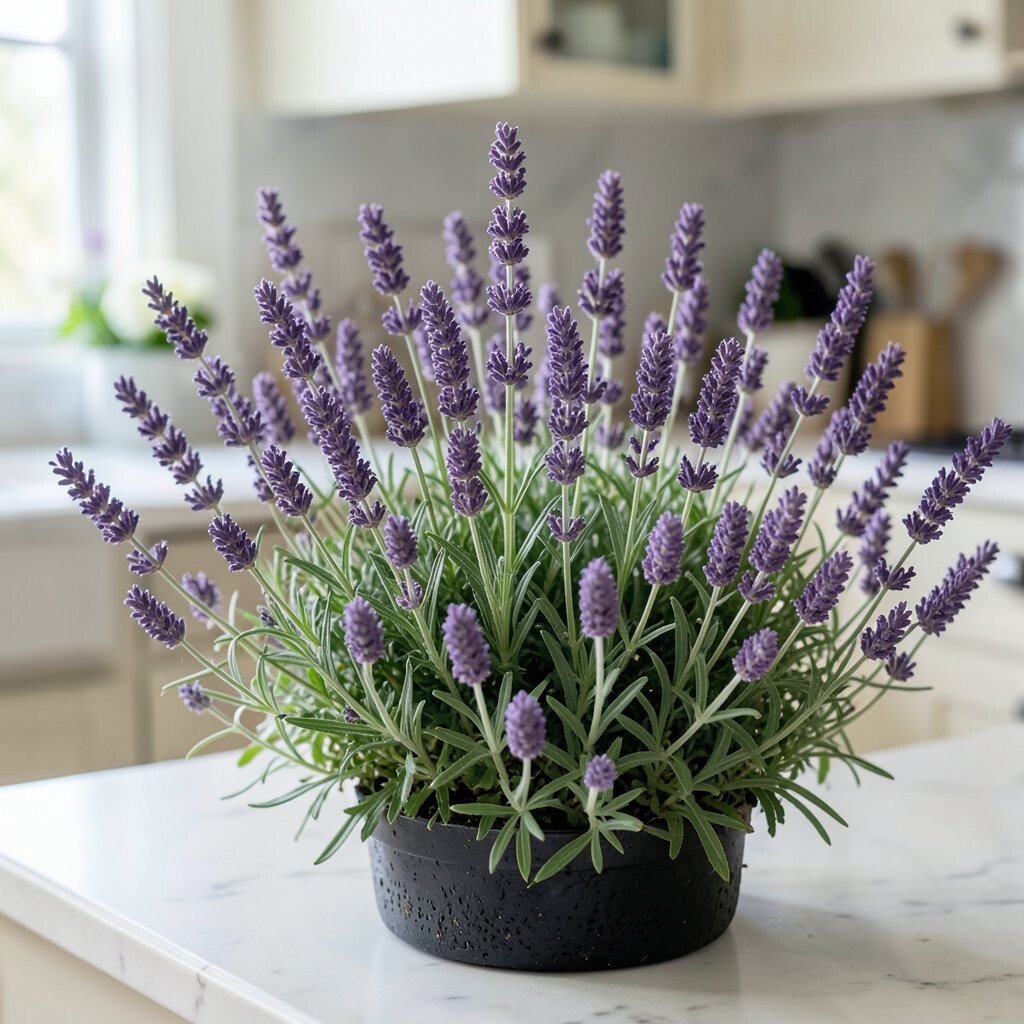
) Lavender (Lavandula) Lavender brings a calm, cozy feel with gray-green leaves and tiny purple flowers. Even when it’s not in bloom, its color looks elegant and tidy.
This plant adds a lovely scent that can make your kitchen feel welcoming. Some people also enjoy harvesting a few blooms for sachets or simple recipe ideas like mixing dried flowers into homemade sugar.
Lavender likes strong light, so a sunny windowsill is a great spot. Water carefully—let the soil dry a bit between waterings, and use a pot with drainage holes.
To personalize, choose a pot color that matches your backsplash or dish set. While lavender can cost more than leafy plants, you can start with a small one and upgrade later.
-
3) Basil (Ocimum basilicum)
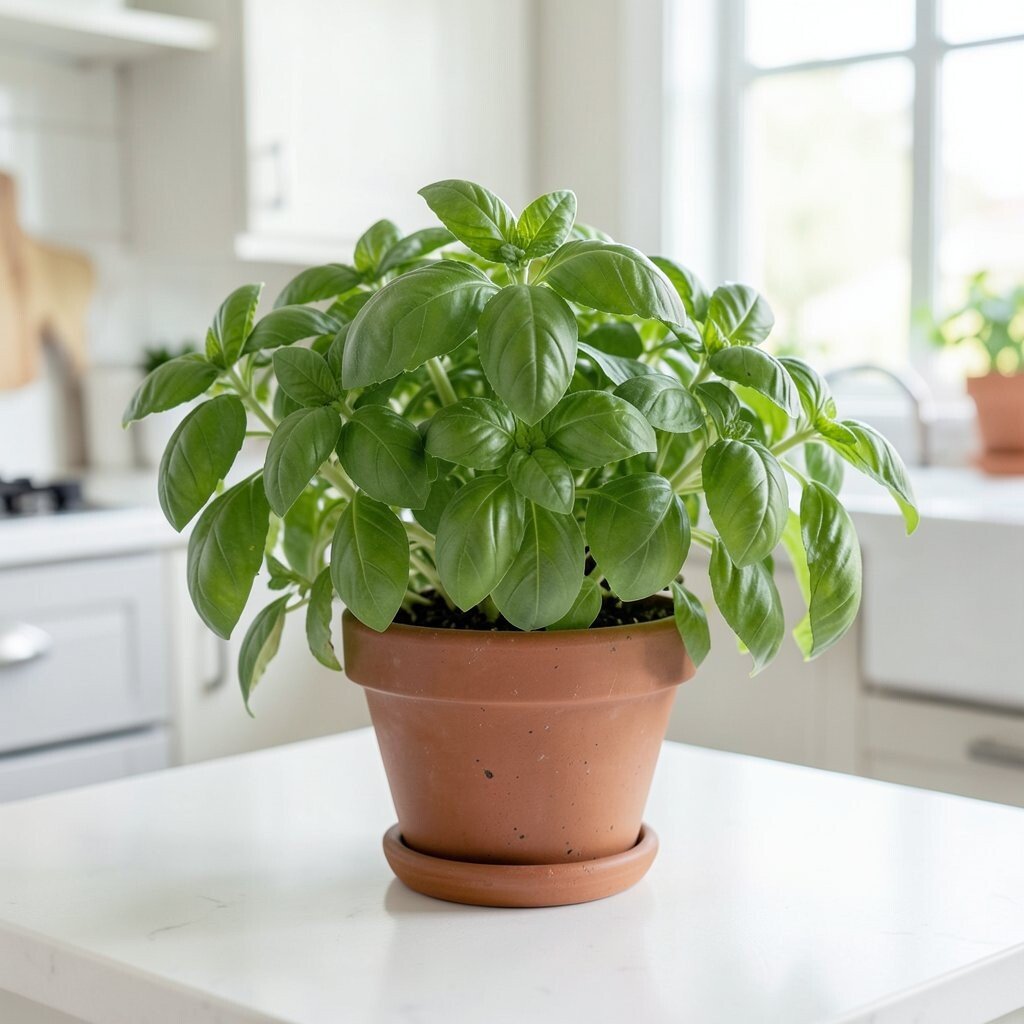
) Basil (Ocimum basilicum) Basil is one of the prettiest “use-it-often” plants you can keep. Its bright green leaves look fresh, and when it’s thriving, the whole kitchen feels more alive.
You get tasty flavor for cooking, plus a soft herb-garden look right near where you cook. Basil is also fun because you can trim it regularly and still keep it growing.
Keep basil in a bright window or under a grow light if your kitchen is dim. Water when the top soil feels dry, and pinch the tops to encourage bushy growth.
If you like personalization, grow different basil types in matching containers, like sweet basil and Thai basil for color variety. Basil is often affordable, and it’s trending as people bring “small indoor farms” into kitchens for both beauty and convenience.
For an extra elegant touch, use a clear glass jar with water for a short propagation phase, then move it into a nicer pot once roots show.
-
4) Peace Lily (Spathiphyllum)
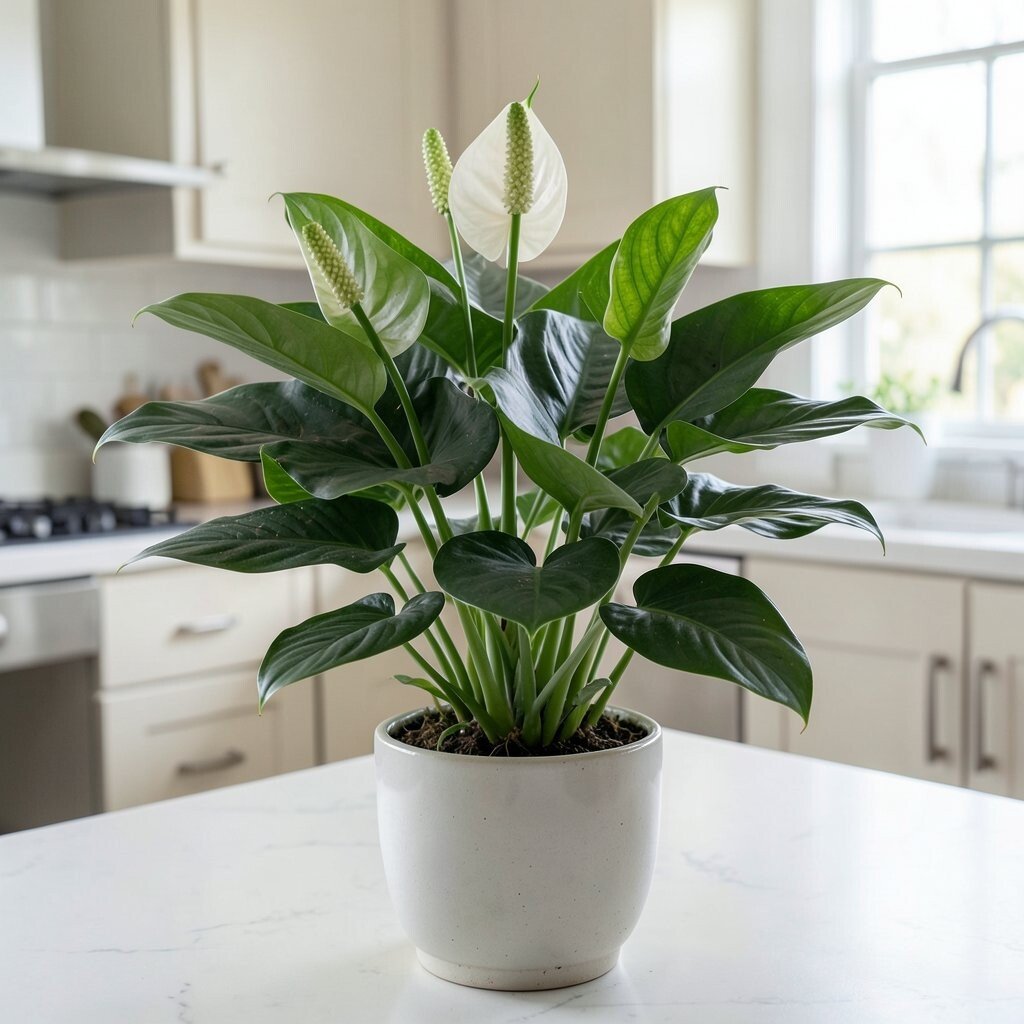
) Peace Lily (Spathiphyllum) Peace lilies have shiny leaves and graceful white blooms that look like little flags. They can make a kitchen corner feel soft and sophisticated.
This plant can be a real helper when the air feels dry, and it often looks refreshed even when you forget a day or two. Its droopy “please water me” look is like a friendly reminder.
Place it in medium to bright indirect light, not direct sun. Water when the soil surface feels dry, and wipe leaves occasionally so they stay glossy.
To personalize, match the pot style to your kitchen—sleek black for modern, or woven ceramic for warm homes. Cost is usually moderate, and peace lilies are easy to find at many garden centers.
-
5) Rosemary (Salvia rosmarinus)
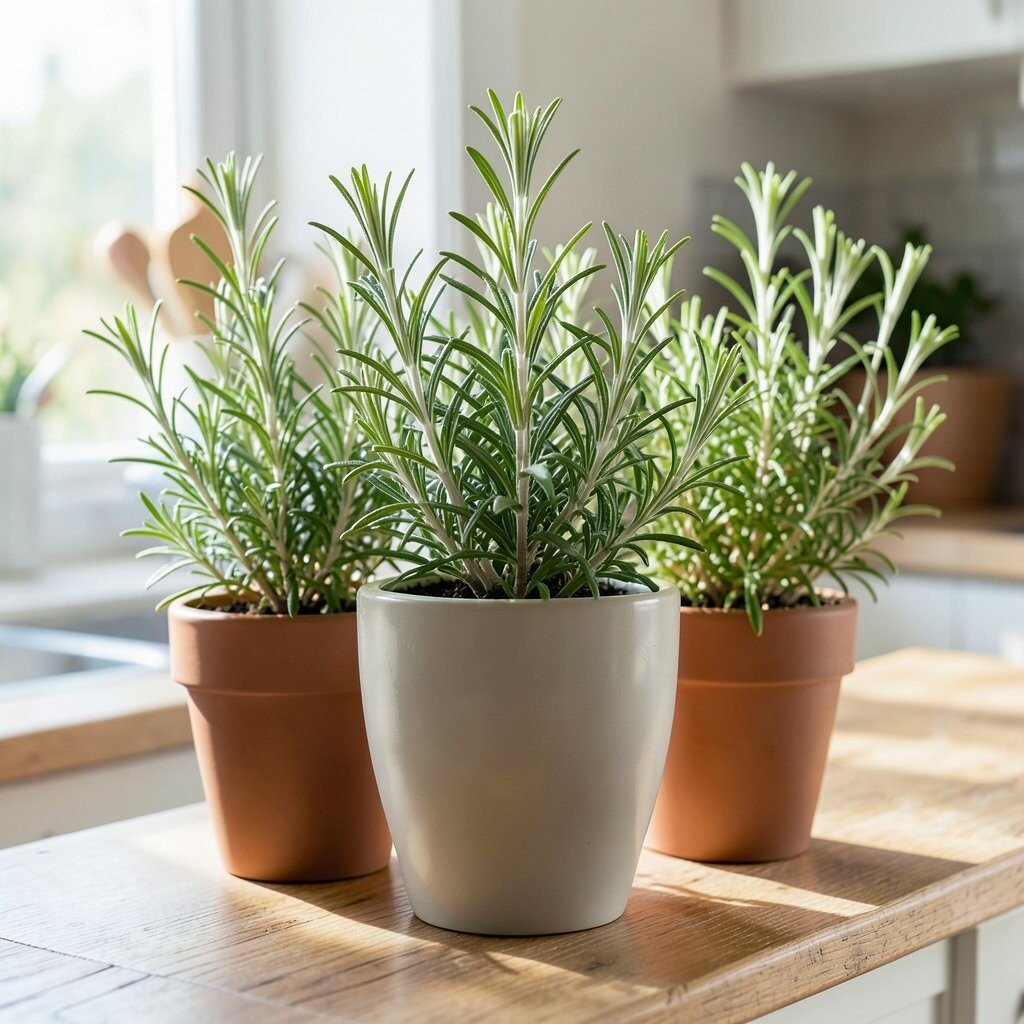
) Rosemary (Salvia rosmarinus) Rosemary looks elegant with needle-like leaves and a woody, upright shape. It’s the kind of plant that makes a countertop herb section feel like a boutique display.
This herb adds strong aroma when you rub the leaves, which can make cooking smell extra good. It also gives you a fresh ingredient for roasts, soups, and roasted vegetables.
Give rosemary lots of light, ideally near a sunny window. Water lightly but thoroughly, then let the soil dry a bit before watering again.
For personalization, train it into a small, tidy form by pruning the tips. Rosemary can cost a bit more than simple herbs, but one healthy plant can last a long time in the right conditions.
Keeping a small rosemary in a decorative terracotta pot is a current favorite look because terracotta helps the soil breathe. Pair it with a small labeled plant tag for a charming “chef station” style.
-
6) Snake Plant (Dracaena trifasciata)
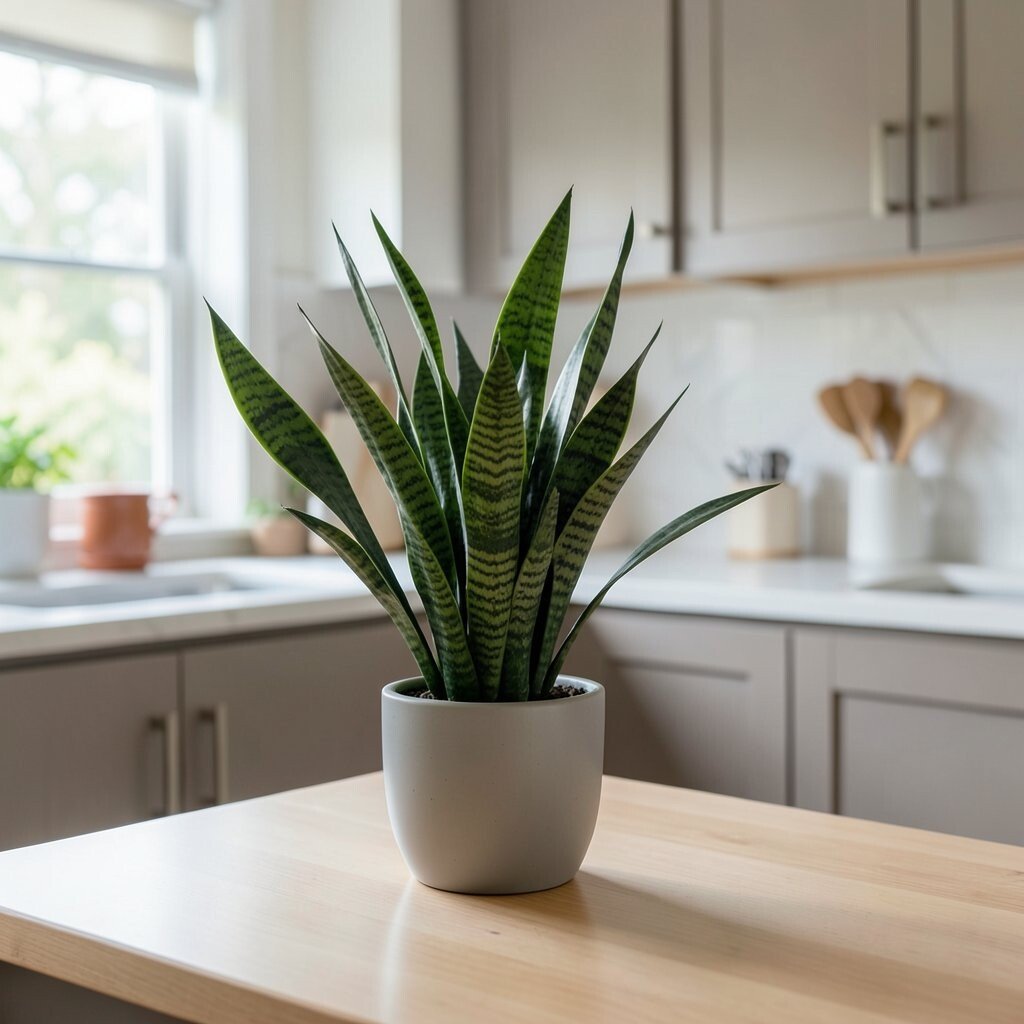
) Snake Plant (Dracaena trifasciata) Snake plants look bold and architectural, with tall leaves that stand straight and strong. Their striped or solid green patterns make kitchens feel neat and modern.
They’re also low-fuss, which is perfect for busy cooking days and messy weeks. Many people love that they tolerate lower light and uneven watering better than most plants.
Place it where it gets bright indirect light, but it can handle weaker spots too. Water sparingly, and never let the pot sit in standing water.
To personalize, pick a pot with a fun shape—like a tall cylinder—or keep it minimal with matte white. Snake plants are usually budget-friendly, and a popular trend is grouping them with one or two matching planters for a “designed shelf” look.
-
7) Rubber Plant (Ficus elastica)
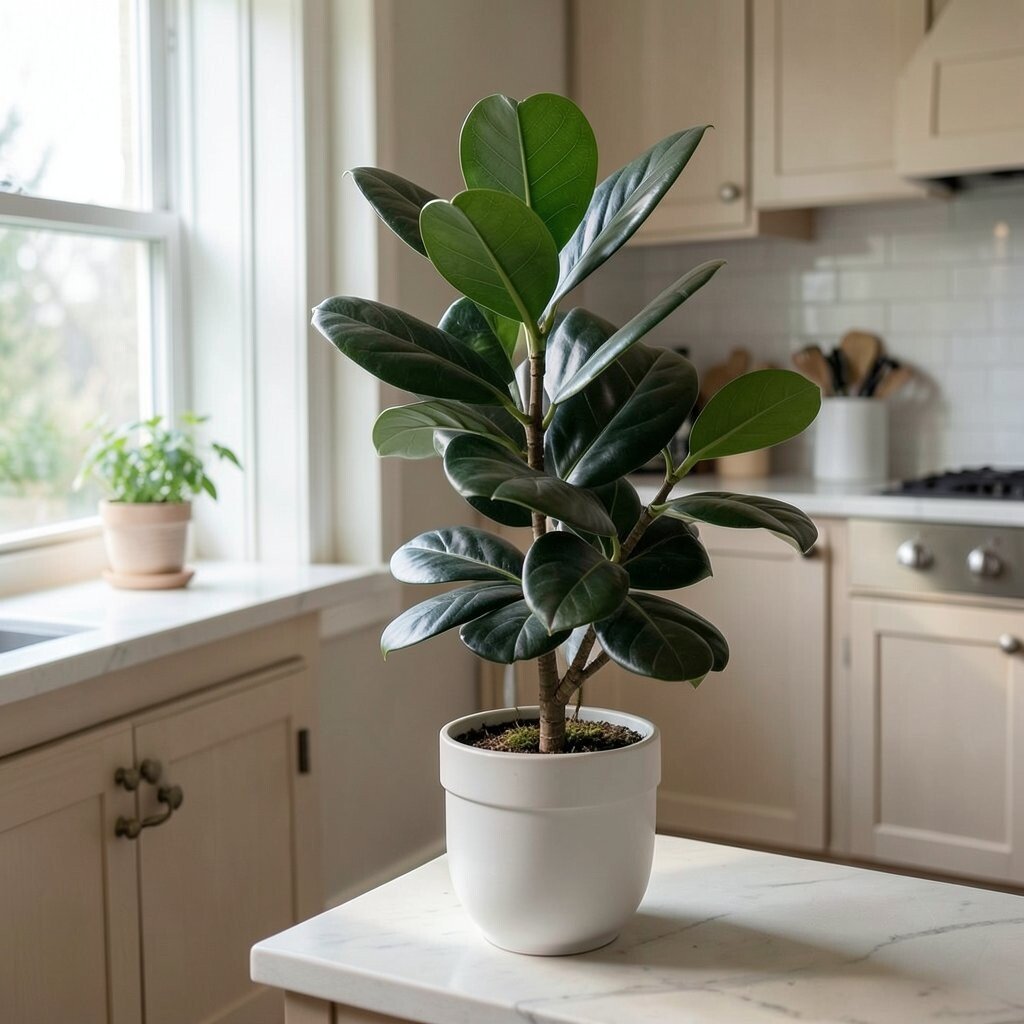
) Rubber Plant (Ficus elastica) Rubber plants bring a glossy, polished look to the kitchen. Their thick leaves can be deep green, burgundy, or even splashed with cream, depending on the variety.
This plant feels like a statement piece, especially if you place it near a window or kitchen island. It can also make the space feel more calm and grown-up.
Give it bright, indirect light, and rotate the pot every so often so it grows evenly. Water when the top few inches of soil feel dry, and avoid overwatering.
For personalization, choose a variety that matches your color mood—dark leaves for drama or lighter leaves for a bright feel. Rubber plants can be a bit pricey, but one plant can become a long-term centerpiece.
A current trend is placing larger-leaf plants in decorative baskets or matching ceramic cachepots to hide plain nursery pots.
-
8) Mint (Mentha)
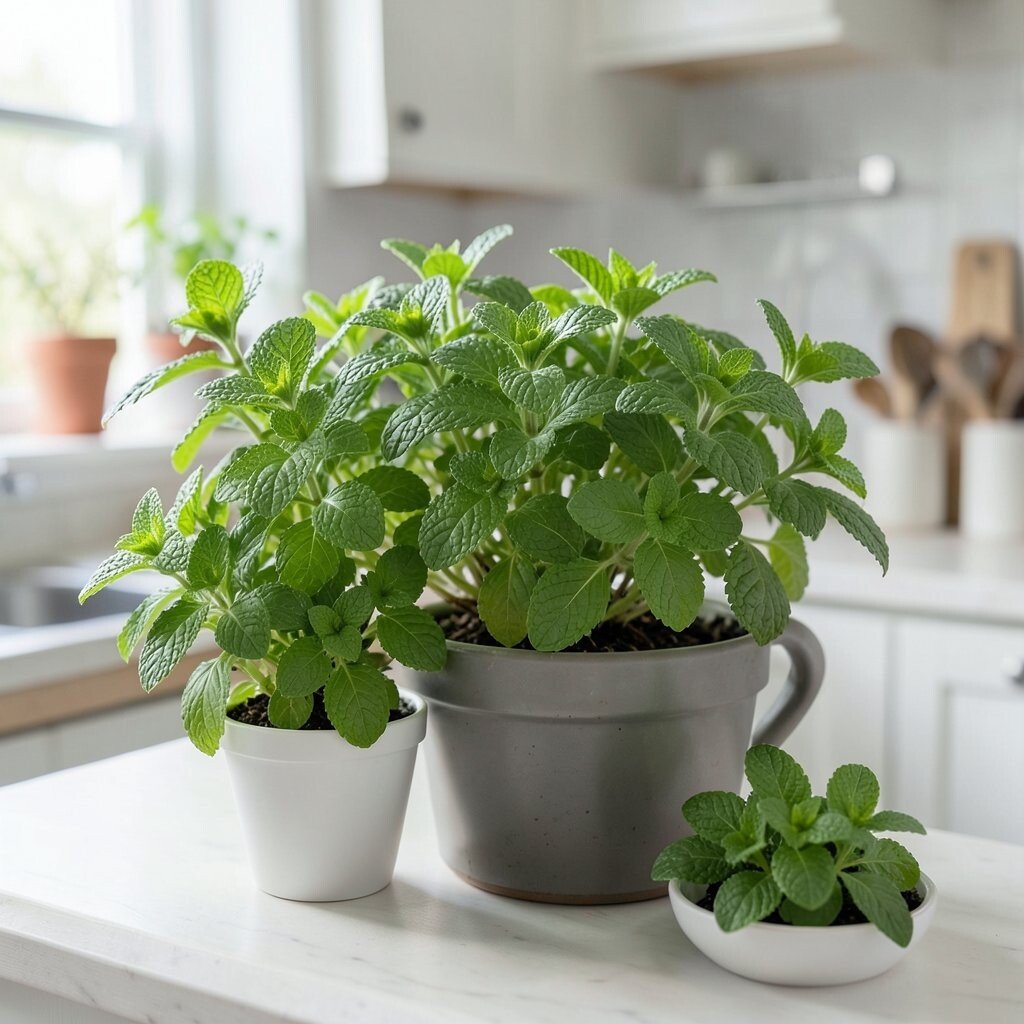
) Mint (Mentha) Mint is a lively plant with soft, fragrant leaves that look inviting. It can spread, so it often looks best in a contained pot with plenty of room.
This plant is perfect for tea, drinks, and cooking, and it adds a fresh scent the moment you brush against it. It also makes kitchens feel “active,” like you’re always ready for something warm or refreshing.
Keep mint in bright light but protect it from scorching sun. Water when the soil surface dries, and consider trimming often to keep it bushy.
If you want personalization, grow mint with a few edible flowers in the same color palette, like purple basil varieties nearby. Mint can be affordable, but it’s best to buy one plant at a time because it can take over if you let it run.
-
9) Calathea (Goeppertia)
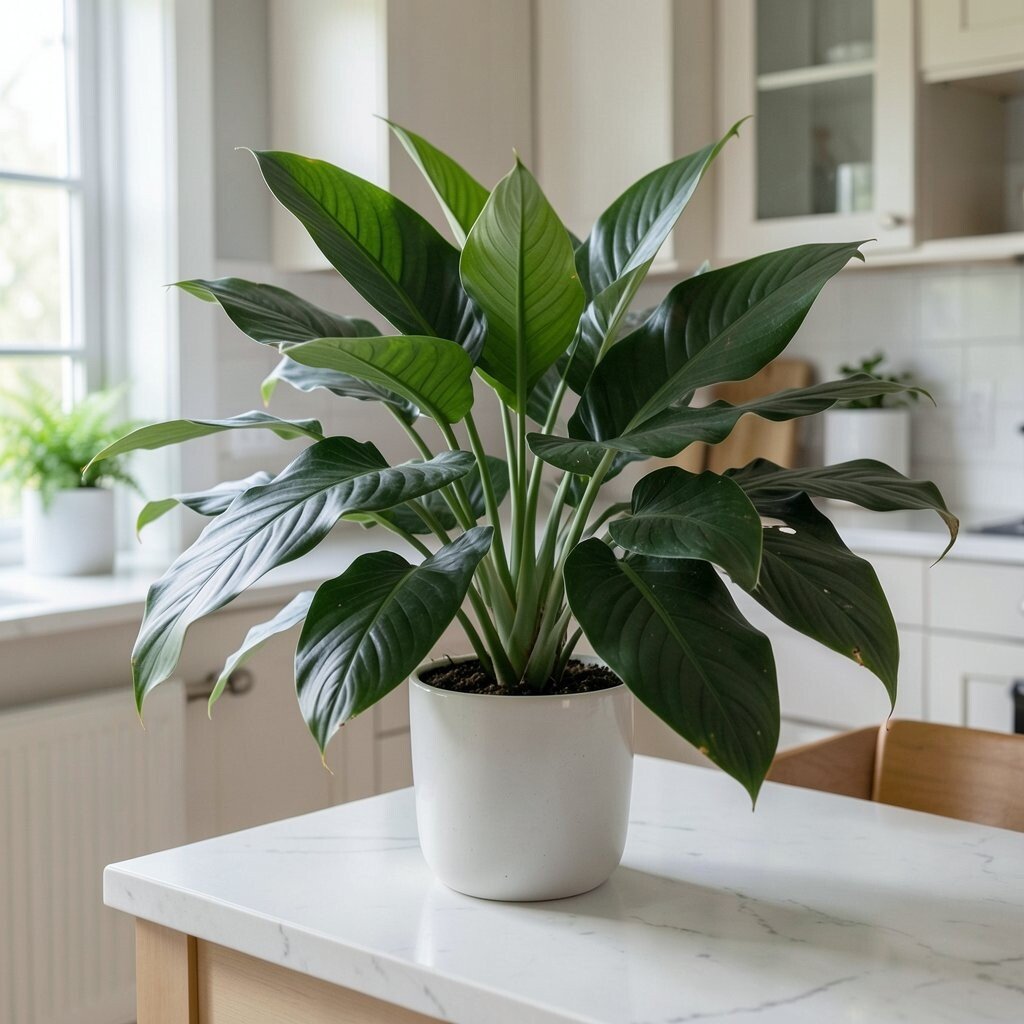
) Calathea (Goeppertia) Calathea leaves look like they were painted, with swirly patterns and rich colors. They can be so beautiful that they steal attention from even your favorite mugs.
This plant loves a kitchen vibe because it often enjoys humidity and steady conditions. When it’s happy, it can make your space feel like a cozy retreat, not just a cooking zone.
Place calathea in bright, indirect light and avoid cold drafts from doors or vents. Water with care, keeping the soil lightly moist but not soggy.
To personalize, pair calathea with simple plant stands so the leaf art stays visible. Calathea plants can cost more than basic herbs, but the leaf patterns are worth it for many plant lovers.
A trend right now is adding “statement foliage” plants to kitchens, especially with pattern-heavy leaves that look stylish in modern interiors.
-
10) Chives (Allium schoenoprasum)
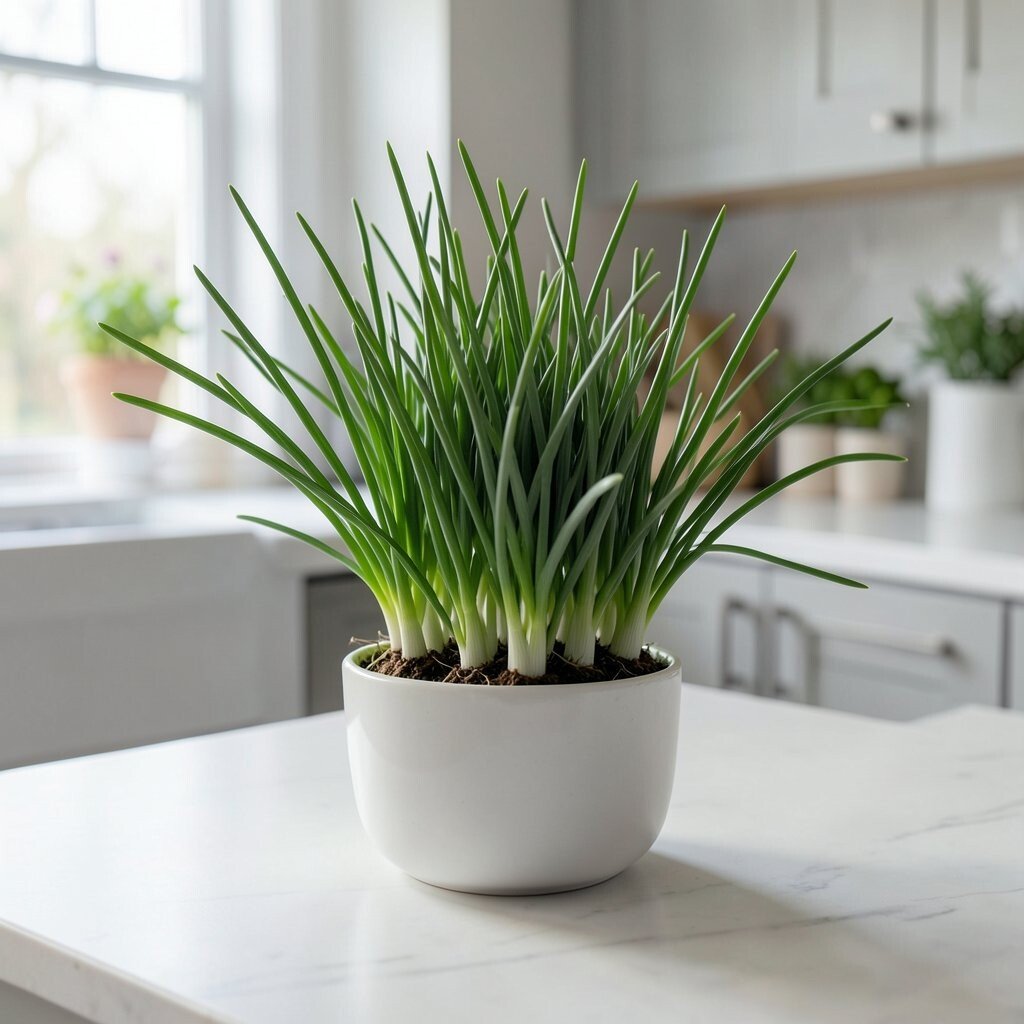
) Chives (Allium schoenoprasum) Chives create a neat, grass-like look with small purple blooms that feel charming and elegant. They add a soft green texture that looks great near a cutting board.
You get an herb you can snip quickly, which makes weeknight cooking feel easier. It’s also a great plant for first-time gardeners because it’s usually forgiving.
Chives enjoy bright light, so a sunny window or bright corner works well. Keep the soil lightly moist and trim the leaves regularly to encourage fresh growth.
For personalization, use small matching pots or a mini herb tray to make a “garden row” effect. Chives are often low-cost, and many people are trending toward mini herb collections because they look tidy and functional.
-
11) Aloe Vera (Aloe barbadensis)
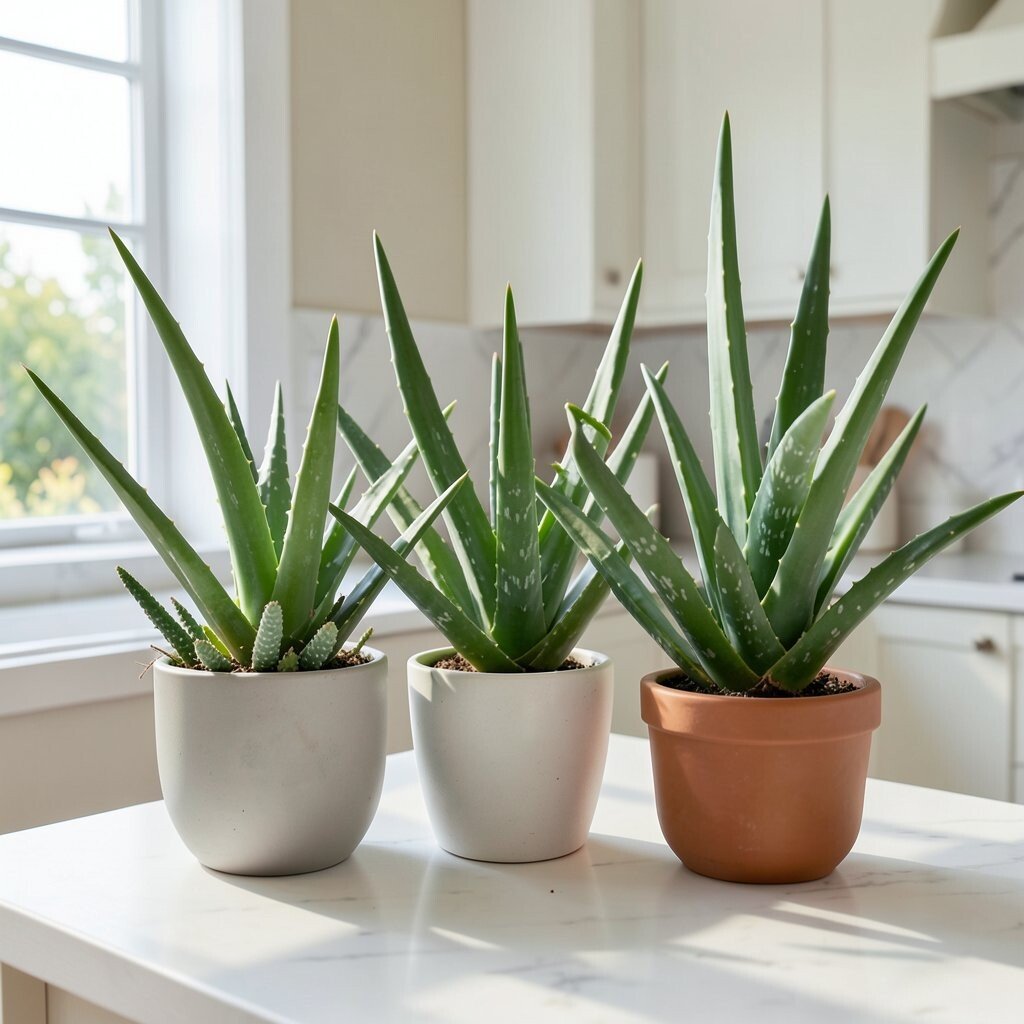
) Aloe Vera (Aloe barbadensis) Aloe vera has thick, sculptural leaves that look clean and modern. Its spiky shape makes it feel like a tasteful decor piece, not just a plant.
This plant is great when you want something hardy that doesn’t need daily care. You can also use aloe gel for soothing purposes, which makes it feel extra useful in the home.
Place it in bright sunlight, ideally near a sunny window. Water only when the soil is completely dry, and make sure your pot has excellent drainage.
To personalize, choose a pot that matches your countertop style—light stone for airy kitchens, or dark ceramic for contrast. Aloe usually fits mid-range budgets, and it’s a popular choice because it’s both stylish and practical.
One trend is pairing aloe with other drought-tolerant plants like snake plant or small succulents for an elegant, water-wise display.
-
12) Thai Basil (Ocimum basilicum var. thyrsiflora)
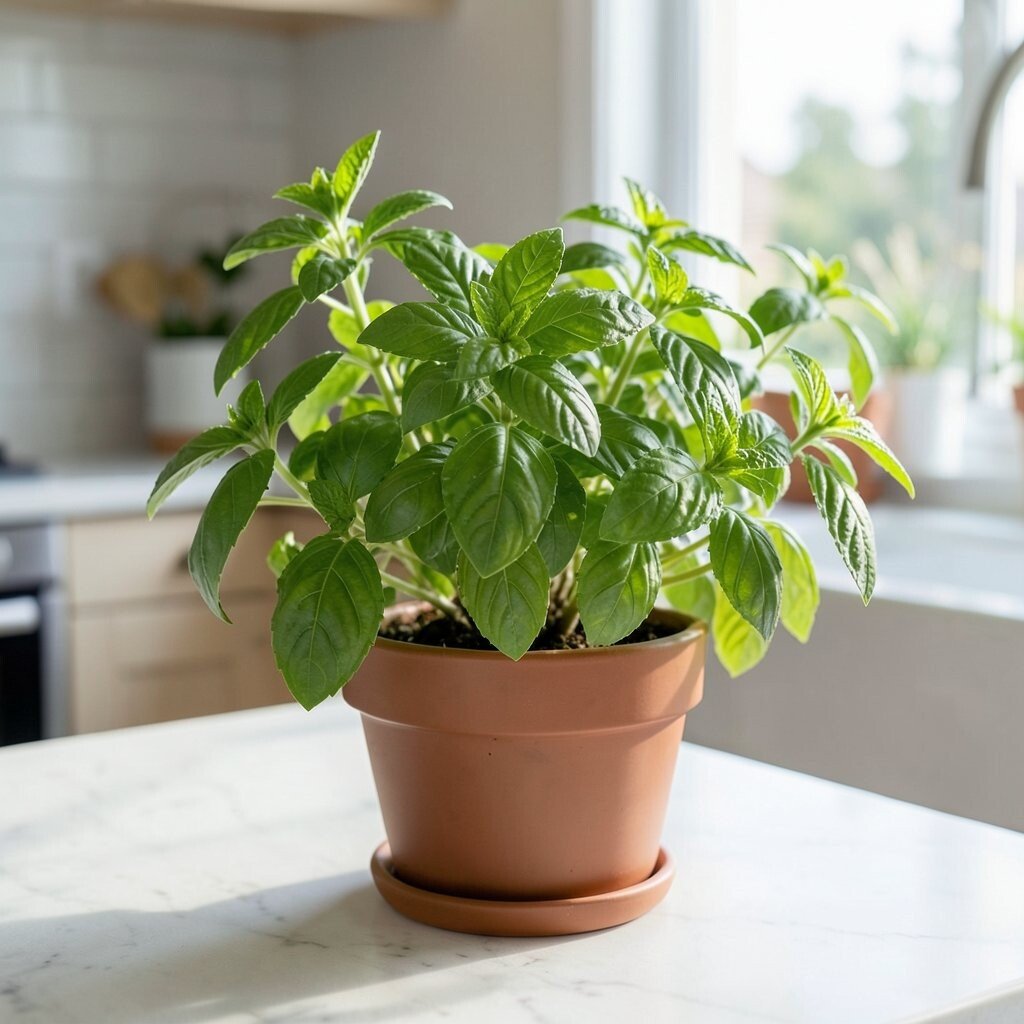
) Thai Basil (Ocimum basilicum var. thyrsiflora) Thai basil looks slightly different from sweet basil, often with purple stems and a deeper, richer leaf color. That color contrast can look amazing beside colorful kitchen tools.
It’s tasty for many dishes, and the plant makes your kitchen feel like a food studio. You can also pinch leaves often, so it stays bushy and pretty.
Give it bright light and water when the top layer of soil dries. If you notice it drooping, check moisture first and adjust your watering rhythm.
For personalization, grow it in a pot that echoes the purple tones—like plum, deep blue, or terracotta. Thai basil is often affordable, and it’s trending because more people are cooking global flavors at home.
-
13) Pothos (Epipremnum aureum)
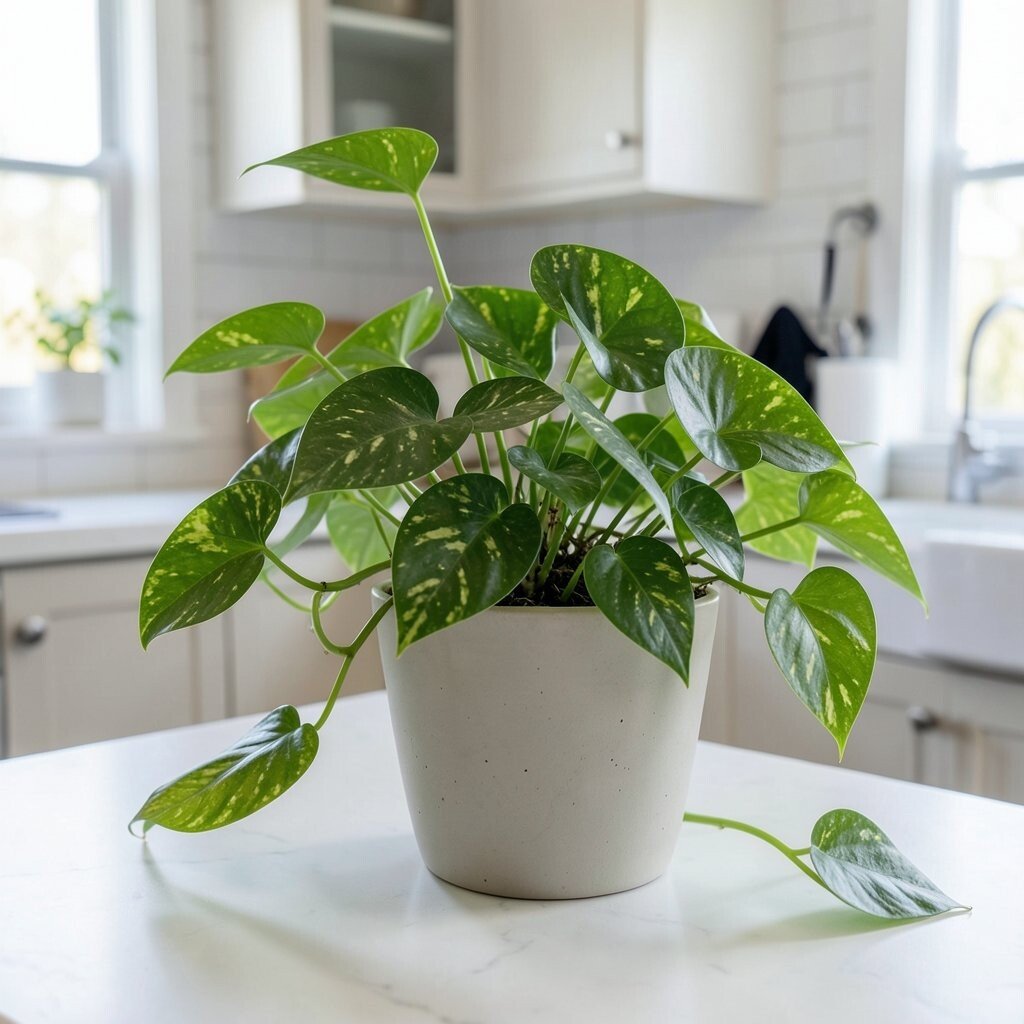
) Pothos (Epipremnum aureum) Pothos is one of the easiest plants to love, with trailing vines and heart-shaped leaves. It can look elegant on shelves, hanging planters, or even trained along a small rod.
It helps brighten a kitchen by adding soft green movement, especially when vines drape over the edges of furniture. It’s also helpful for beginners because it tolerates a range of conditions.
Place it in bright, indirect light for best growth, but it can handle lower light too. Water when the top soil dries, and let the pot drain fully afterward.
To personalize, choose a pothos variety with golden, marble, or deep green patterns. Cost is usually low, and a trend is using matching hanging macramé or simple modern planters to create a “plant gallery” look.
Try adding a small plant label or a ribbon around the pot for a fun kitchen display theme.
-
14) Boston Fern (Nephrolepis exaltata)
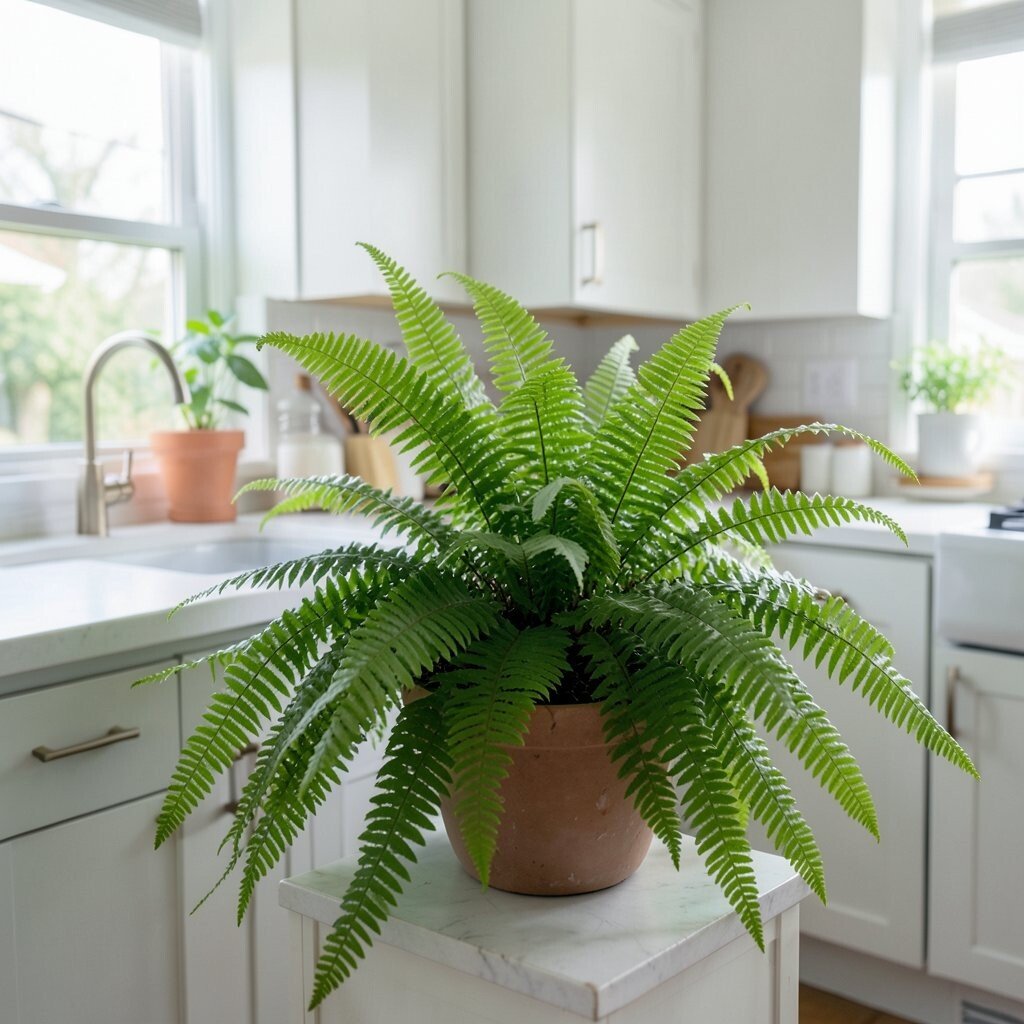
) Boston Fern (Nephrolepis exaltata) Boston ferns look like a lush green cloud with delicate fronds. In a kitchen, they feel soft and luxurious, especially near light-colored walls.
They can also bring a sense of freshness, which is great for spaces that feel busy or clutter-prone. When watered correctly, their fronds stay full and elegant.
Keep Boston fern in bright, indirect light and aim for higher humidity if possible. Water when the top of the soil starts to dry, and misting can help if your kitchen air is dry.
To personalize, use a hanging basket or a stand that shows the fronds flowing downward. Ferns can cost more than hardy plants, but they’re a showstopper when cared for well.
-
15) Spider Plant (Chlorophytum comosum)
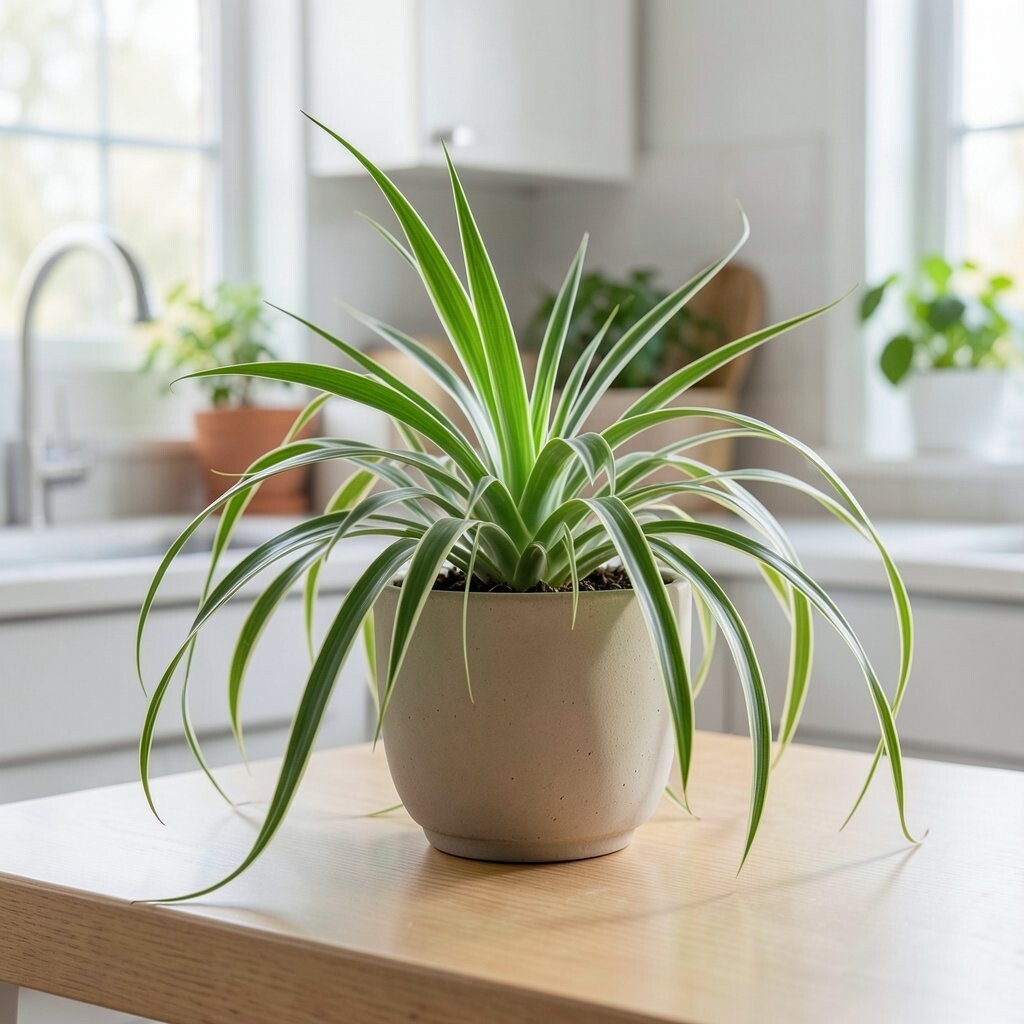
) Spider Plant (Chlorophytum comosum) Spider plants are cheerful and full, with long arching leaves that look like green ribbons. Their baby plantlets often hang from the parent, giving you a playful, elegant effect.
This plant is great for brightening corners, because it keeps looking lively without demanding constant attention. It also fits many kitchen styles, from farmhouse to modern.
Place it in bright, indirect light and water when the soil surface is lightly dry. Too much water can cause problems, so letting it dry a bit is key.
For personalization, try a basket-style pot or a hanging planter that matches your cabinet hardware. Spider plants are usually affordable, and one trend is mixing them with trailing plants for a cascading “green waterfall” look.
If you want to make it feel extra special, tuck a small tray underneath to catch drips and keep your counters spotless.
-
16) Anthurium (Anthurium andraeanum)
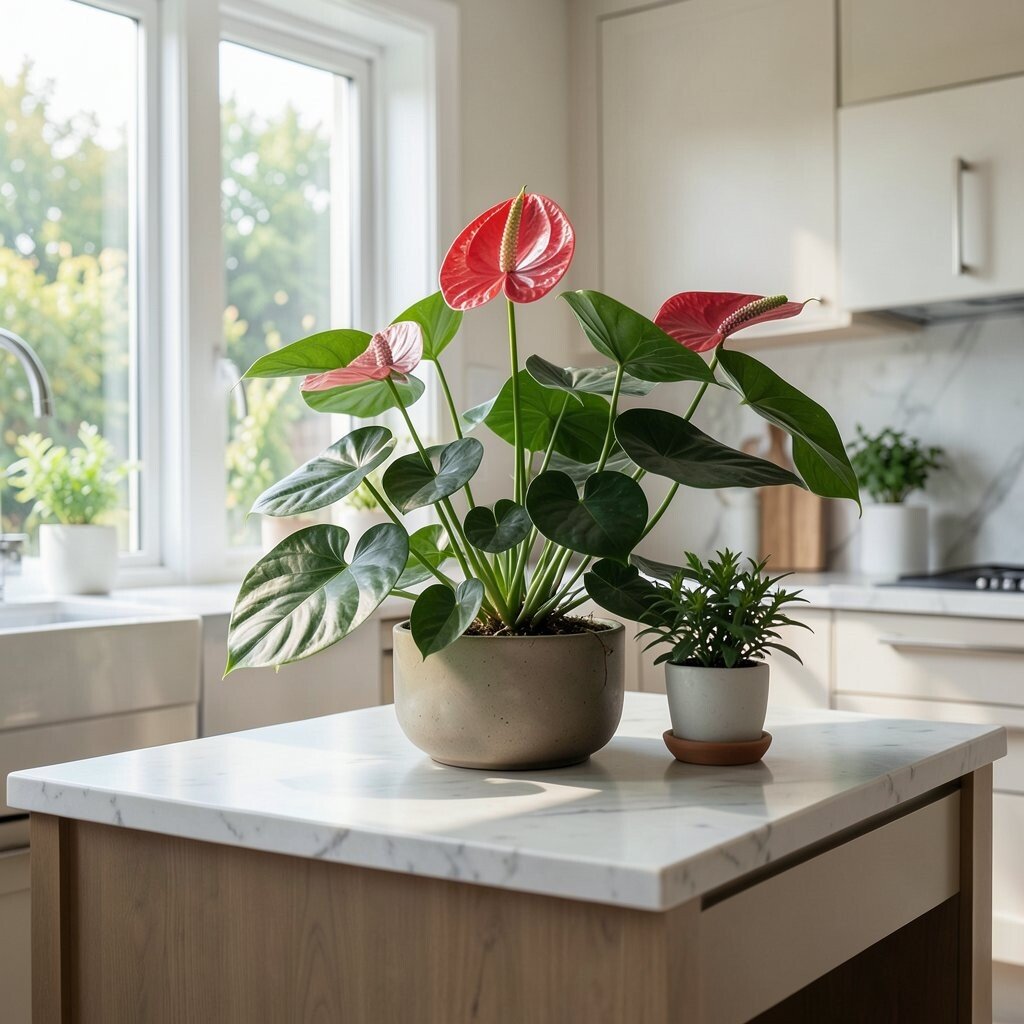
) Anthurium (Anthurium andraeanum) Anthurium is known for glossy leaves and bold, heart-shaped blooms. In a kitchen, its bright red, pink, or white flowers can look like natural art.
This plant is unique because the flowers can last a long time, which means you get steady beauty. It also tends to make people stop and look, especially when the kitchen feels calm and tidy.
Give anthurium bright, indirect light and steady warmth. Water when the top inch of soil feels dry, and make sure it drains well.
To personalize, choose a color that matches your dish towels or seasonal accents. Anthuriums can be more expensive, but they’re trending as “bright bloom” plants for indoor spaces because the flowers pop even in simple rooms.
-
17) ZZ Plant (Zamioculcas zamiifolia)
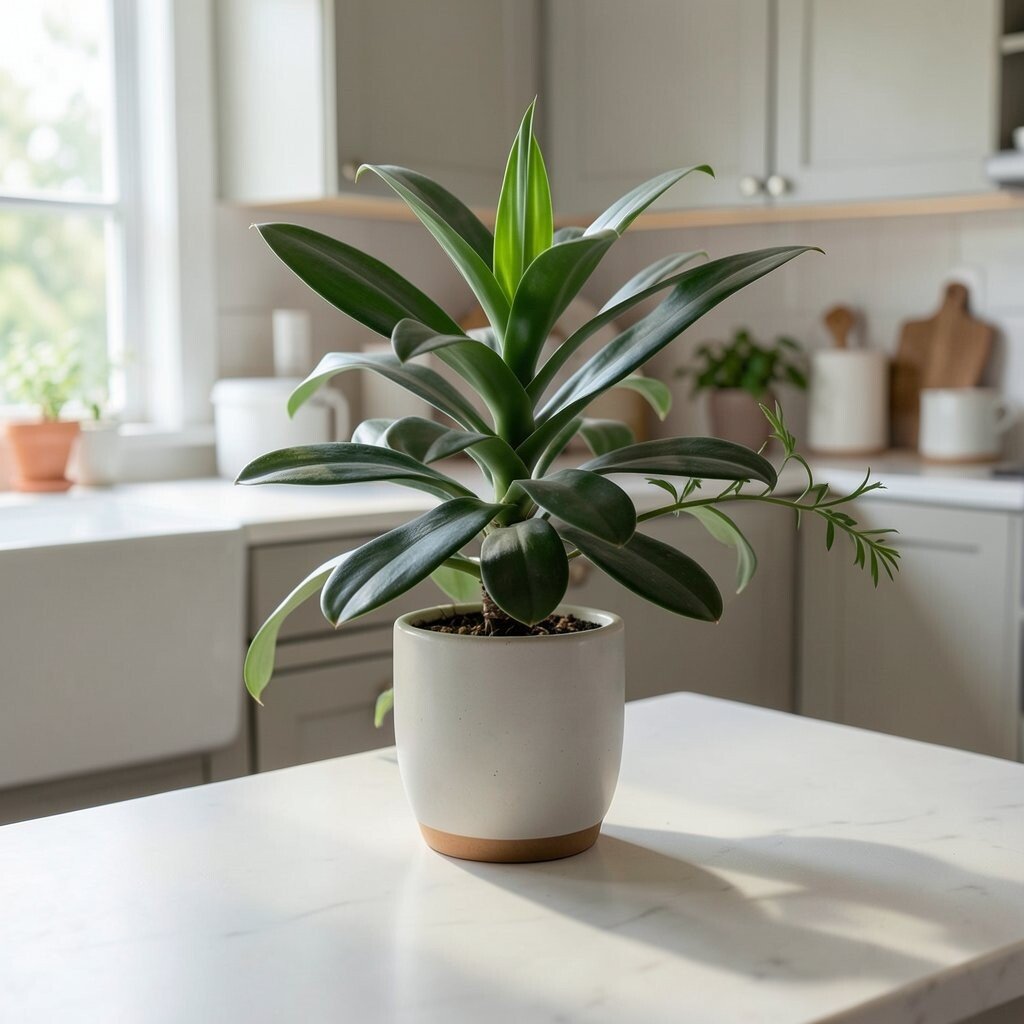
) ZZ Plant (Zamioculcas zamiifolia) ZZ plants have thick, waxy leaves that look sleek and glossy. Their upright growth makes them feel structured and elegant, even in a small kitchen.
They’re famous for being low-maintenance, so they’re a smart choice for people who want beauty without stress. In many homes, ZZ plants stay looking great for a long time with minimal changes.
Place ZZ in bright, indirect light, but it can handle medium light too. Water sparingly, and let the soil dry out well between waterings.
For personalization, set it in a tall pot or a modern planter to highlight its vertical shape. ZZ plants may cost more than entry-level herbs at first, but their durability often makes them worth it.
A current trend is using ZZ plants as part of “set-and-forget” décor because they pair well with minimal, modern kitchens.