Small kitchens can feel bright like morning sunshine. With the right moves, shadows shrink fast.
You won’t need a total makeover—just smart light habits you can start this week.
-
Use a glossy ceiling paint

Use a glossy ceiling paint Think of your ceiling as a quiet reflector that bounces light back into the room. A light-reflecting finish helps day and lamp light feel less stuck in corners.
Look for a ceiling paint labeled for better reflectivity. It can make the whole kitchen feel taller and cleaner, especially when you keep walls light. If you want budget comfort, choose a paint with good coverage and paint only the ceiling first.
-
Choose warm-white bulbs for cozy brightness
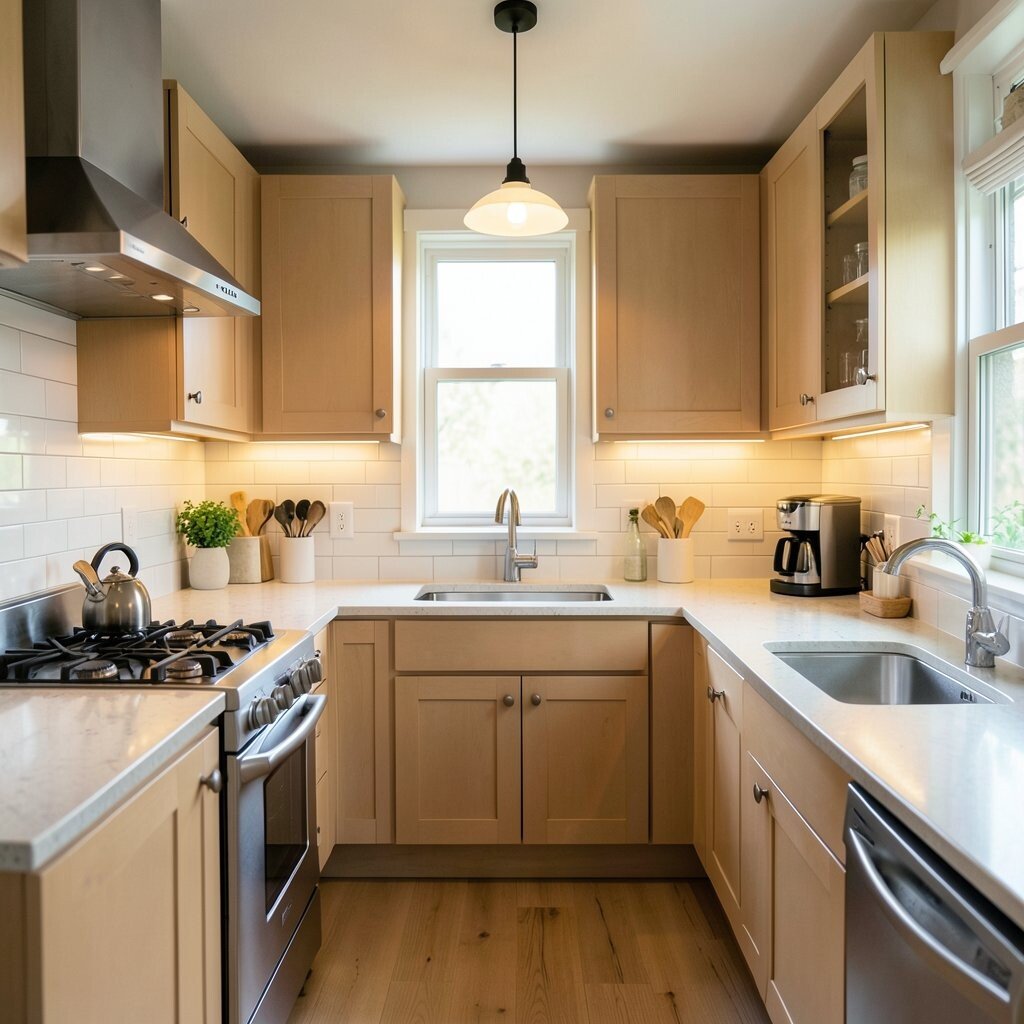
Choose warm-white bulbs for cozy brightness Harsh, icy bulbs can make a small kitchen look sharp and shadowy. Warm-white bulbs soften the glow and help cabinets look more inviting.
Try a consistent color temperature across fixtures so the room feels calm. People often switch to warmer LEDs and notice food looks more natural right away.
If you’re watching cost, swap one bulb type at a time and use your brightest fixture first. Pair the change with clean glass covers so light spreads more evenly.
-
Layer lighting with three simple levels

Layer lighting with three simple levels Instead of one overhead light, use multiple sources that work together. This reduces hard shadows on counters and creates an overall glow.
Use ambient light overhead, task light near prep areas, and accent light for a feature like art or open shelving. When you layer, the room feels “lit from within,” not just “lit from above.”
You can personalize by matching lamp styles to your taste, from modern bars to classic shades. Start with inexpensive under-cabinet LED strips, then add a small pendant or track once you see the effect.
Budget tip: focus first on where you work hardest, like the sink and stove. That way, every dollar gives you real usefulness.
-
Install under-cabinet LED strips
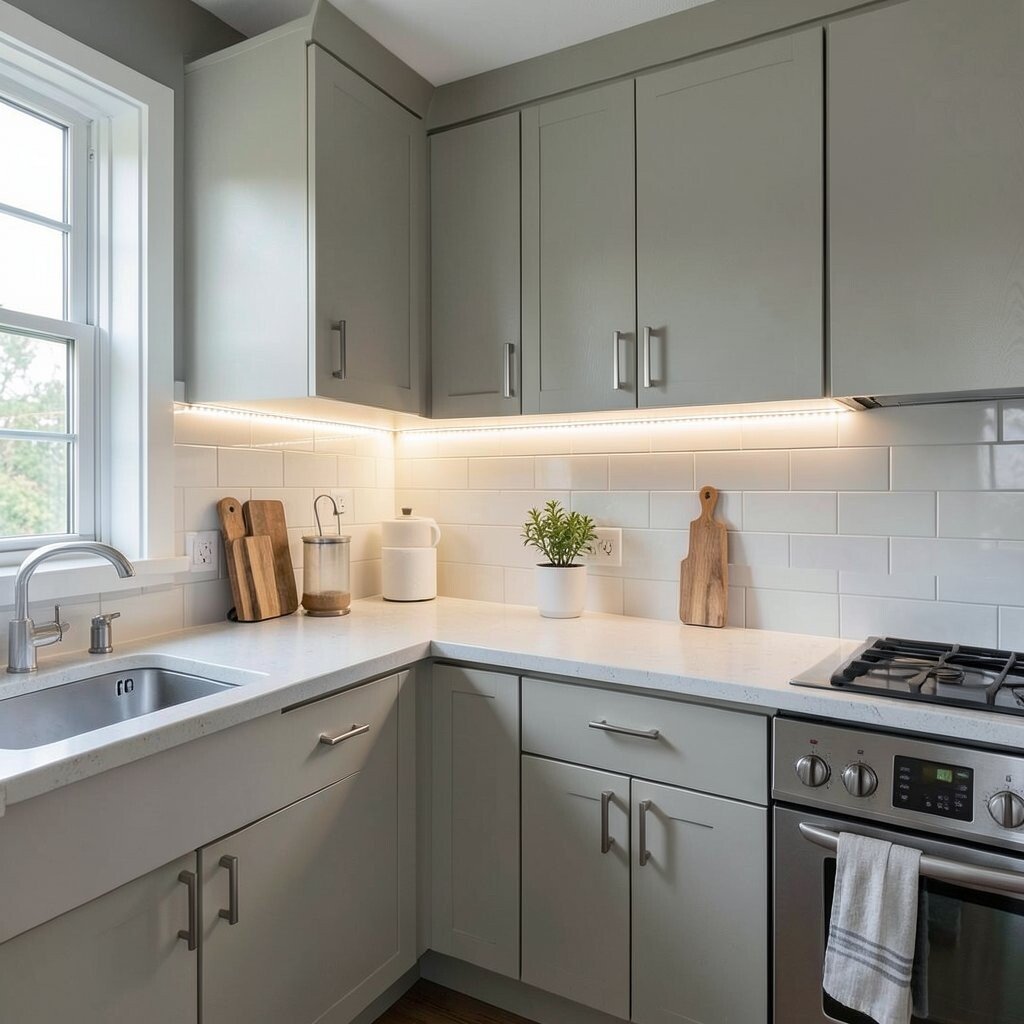
Install under-cabinet LED strips Under-cabinet lights turn a cramped countertop into a friendly work zone. You’ll see cutting boards clearly and your backsplash won’t look dark anymore.
Choose LEDs with good color rendering so greens and reds look true. Many strips also dim, which is perfect for morning coffee or evening cooking.
-
Use light-toned backsplashes and grout

Use light-toned backsplashes and grout A bright backsplash acts like a mirror strip behind your food area. It bounces light upward and helps cabinets blend into the room instead of feeling heavy.
Pick lighter tiles, or consider a clean matte or soft satin finish. Even the grout color matters; pale grout creates a smoother, brighter grid.
For a personal touch, choose a pattern that stays airy, like thin lines or small accents. If you’re planning costs, peel-and-stick backsplash panels can be a quick trial before committing to tile.
-
Mount reflective cabinet hardware
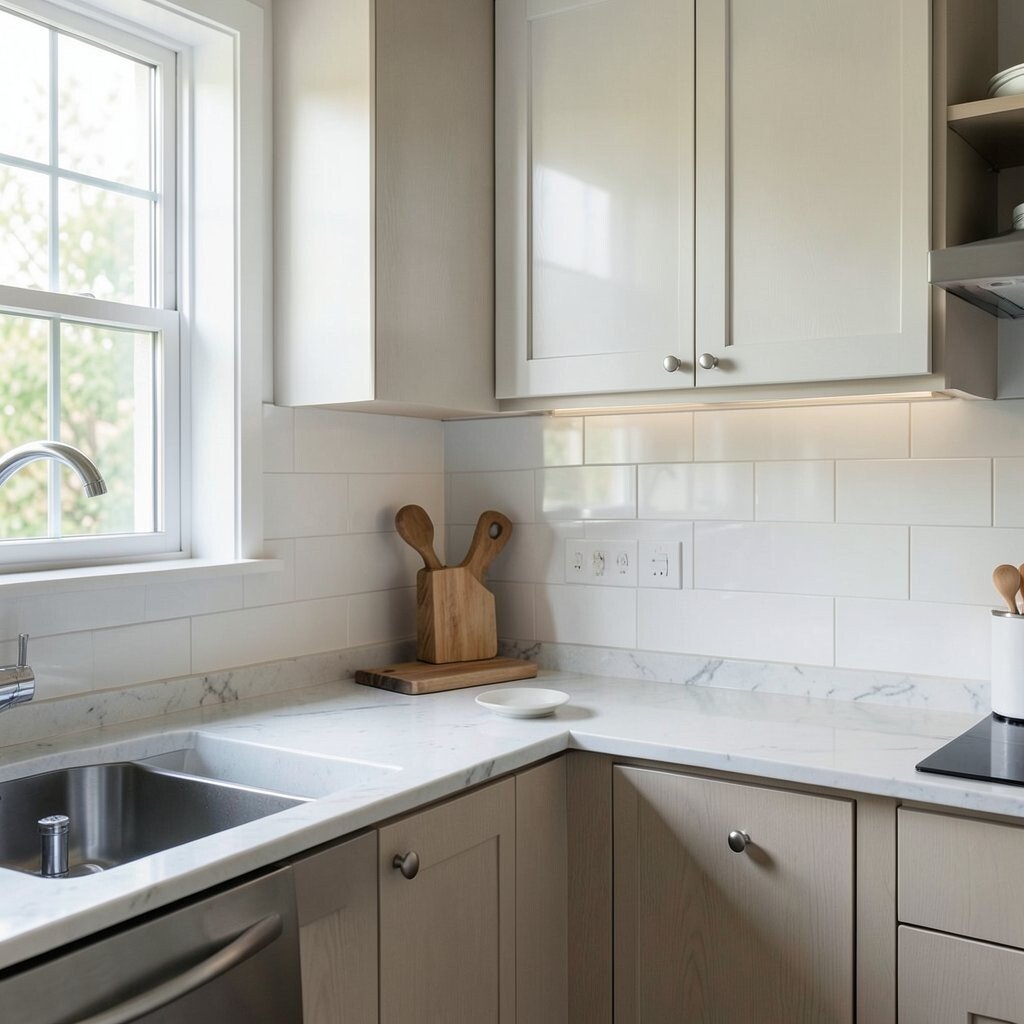
Mount reflective cabinet hardware Metal knobs and pulls can catch light and give your kitchen a lively sparkle. When hardware is reflective, it helps the room feel more active and less flat.
Try finishes like brushed nickel or polished chrome, especially if your cabinet color is warm or neutral. It’s a small change that can look surprisingly “high-end.”
To personalize, mix styles only if they share the same brightness level, like similar shine across pulls. Watch costs by refreshing only the most visible cabinet doors first.
-
Swap to a brighter paint for the main walls

Swap to a brighter paint for the main walls Light wall paint is the easiest way to make a small space feel bigger. It helps every light source spread more kindly across the room.
Go for soft whites, creamy beiges, or pale warm greys so the kitchen stays welcoming. If you want to keep personality, you can add color through accessories instead of changing everything.
For personalization, test samples on two walls and watch them at different times of day. Budget tip: take your sample spots near your main light fixture so you see real results.
Current trend: many people are leaning toward warm whites because they pair well with wood tones and brass accents.
-
Keep countertops mostly uncluttered

Keep countertops mostly uncluttered Too many items on the counter block light and create visual shadows. When the surface is calmer, light can travel and the kitchen feels open.
Use a tray for daily items like oils and salt, and store the rest in drawers or baskets. It’s an easy habit that makes your kitchen look brighter even without any new lighting.
-
Choose open shelving with smart spacing
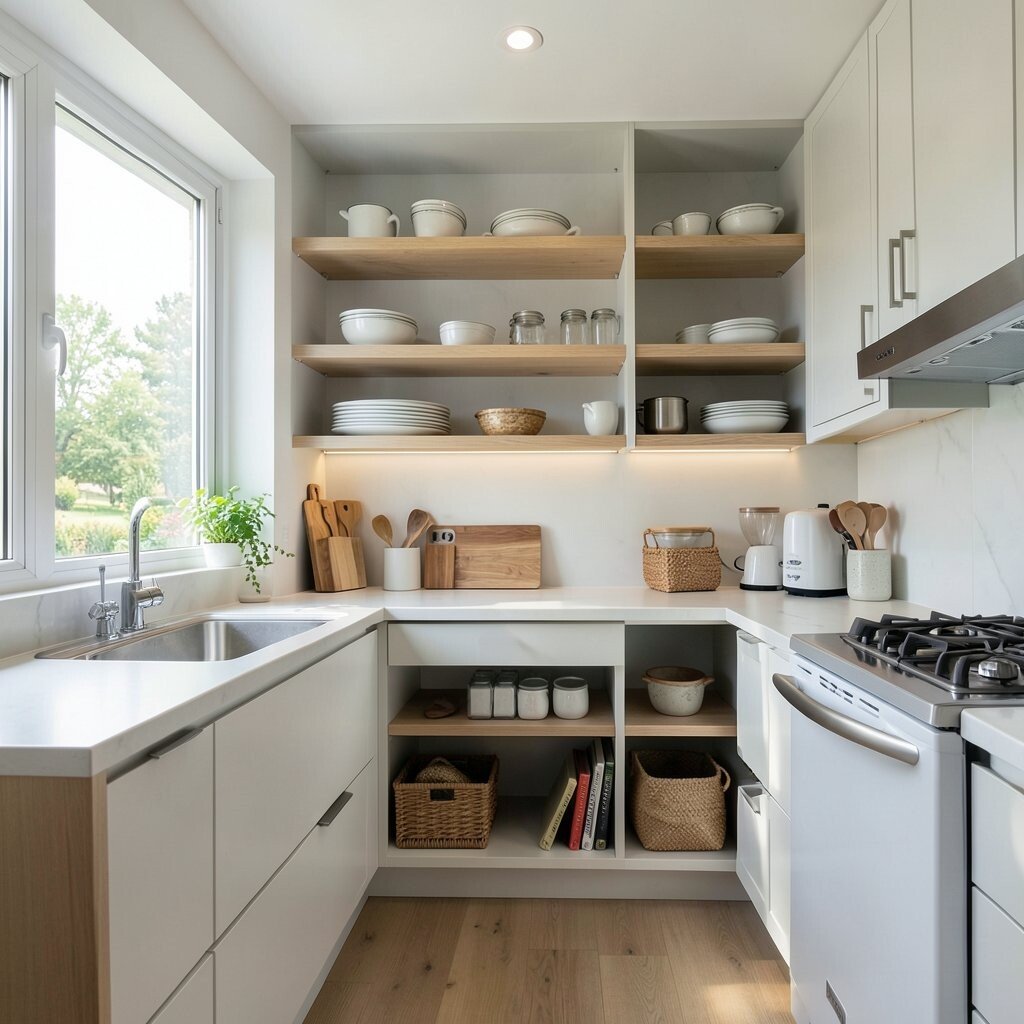
Choose open shelving with smart spacing Open shelves can make a small kitchen feel lighter because there’s less solid coverage. Light can bounce around and you can show off your prettiest dishes.
Keep shelf items cohesive, like matching mugs or baskets in similar colors. If you want the room to stay bright, use lighter storage like woven or off-white baskets.
Personalize by grouping items by height, not just by type. Cost-wise, you can start with one section of open shelving if you don’t want to change everything.
-
Use sheer curtains or no-fuss window films

Use sheer curtains or no-fuss window films Window light is powerful in a small kitchen, and heavy curtains can smother it. Sheer curtains spread daylight softly across the room.
If privacy is needed, choose a light window film that blurs views but still lets brightness in. Many films look subtle and modern without covering the whole view.
This is a great personalization moment: pick a film pattern that matches your style, from simple dots to gentle lines. Budget tip: film is often far less expensive than new blinds.
-
Add a bright rug runner (or skip dark rugs)
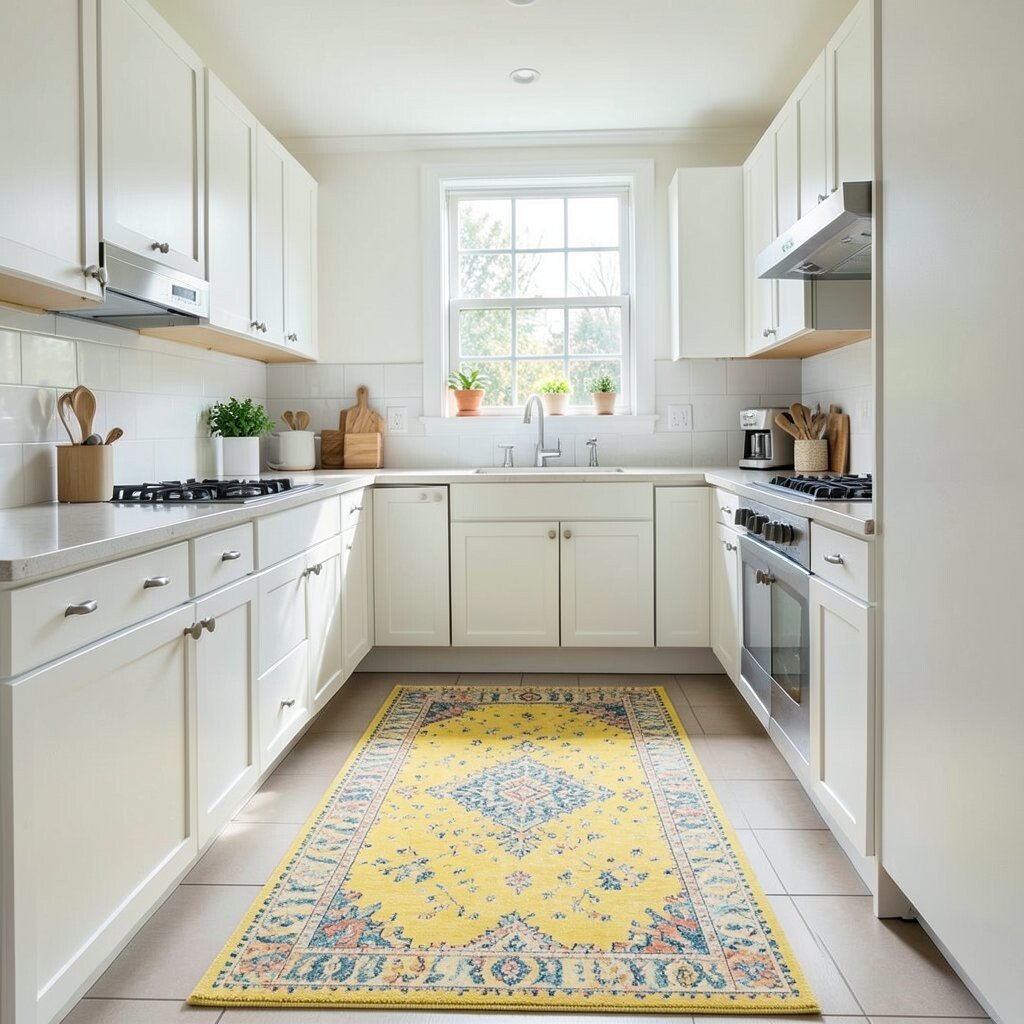
Add a bright rug runner (or skip dark rugs) A rug can brighten the path through your kitchen when it has a light background. Dark rugs can pull light downward and make the space feel tighter.
Choose a low pile or flat weave so light stays visible. If you love patterns, pick ones with lots of negative space so the design doesn’t feel crowded.
Personalize with colors that echo your backsplash or dishes. Cost-wise, a runner is a smaller upgrade than replacing flooring and it can make the kitchen feel instantly more finished.
Current trend: textured neutrals are popular because they add softness without blocking light.
-
Hang mirrors strategically near light sources

Hang mirrors strategically near light sources A mirror can bounce light like a second window. When placed well, it pulls brightness into otherwise shadowy zones.
Try a mirror on a wall that faces a window or a bright fixture. The best spots usually reflect the brightest parts of the kitchen, like the sink area or open shelving.
-
Go for a lighter cabinet interior paint

Go for a lighter cabinet interior paint Cabinet interiors are the kind of detail people forget, but they make a big difference. When inside surfaces are light, they help light bounce from shelf to shelf.
You can paint the inside walls a soft white or light cream for a clean look. It can make your glassware and dishes look more crisp.
If painting feels like too much, consider lining shelves with light-colored liners. Budget tip: liners are cheaper and still give that brighter “showroom” feeling.
Personalization idea: add a subtle color to the back panel for a cozy accent, like warm gray or blush. Keep it light so it stays reflective.
-
Upgrade to a brighter sink faucet finish

Upgrade to a brighter sink faucet finish The faucet is right where eyes go when you walk into the kitchen. A bright, reflective finish can add extra sparkle to your daily light.
Consider polished chrome, brushed nickel, or a clean stainless look. These finishes catch light and make the sink area feel more vibrant.
-
Use a statement pendant with a light-colored shade

Use a statement pendant with a light-colored shade A pendant can be both useful and pretty when the shade helps light spread. Choose a light-colored shade that reflects the bulb’s glow downward and sideways.
Even in a small kitchen, the right pendant adds style without clutter. You can also pick a shade with a shape that doesn’t trap light.
Personalize by matching the metal tone to cabinet hardware or light fixtures. Cost tip: look for sales on pendants, or choose a simpler fixture that uses a high-quality bulb.
-
Add wall-mounted sconce lights for side glow
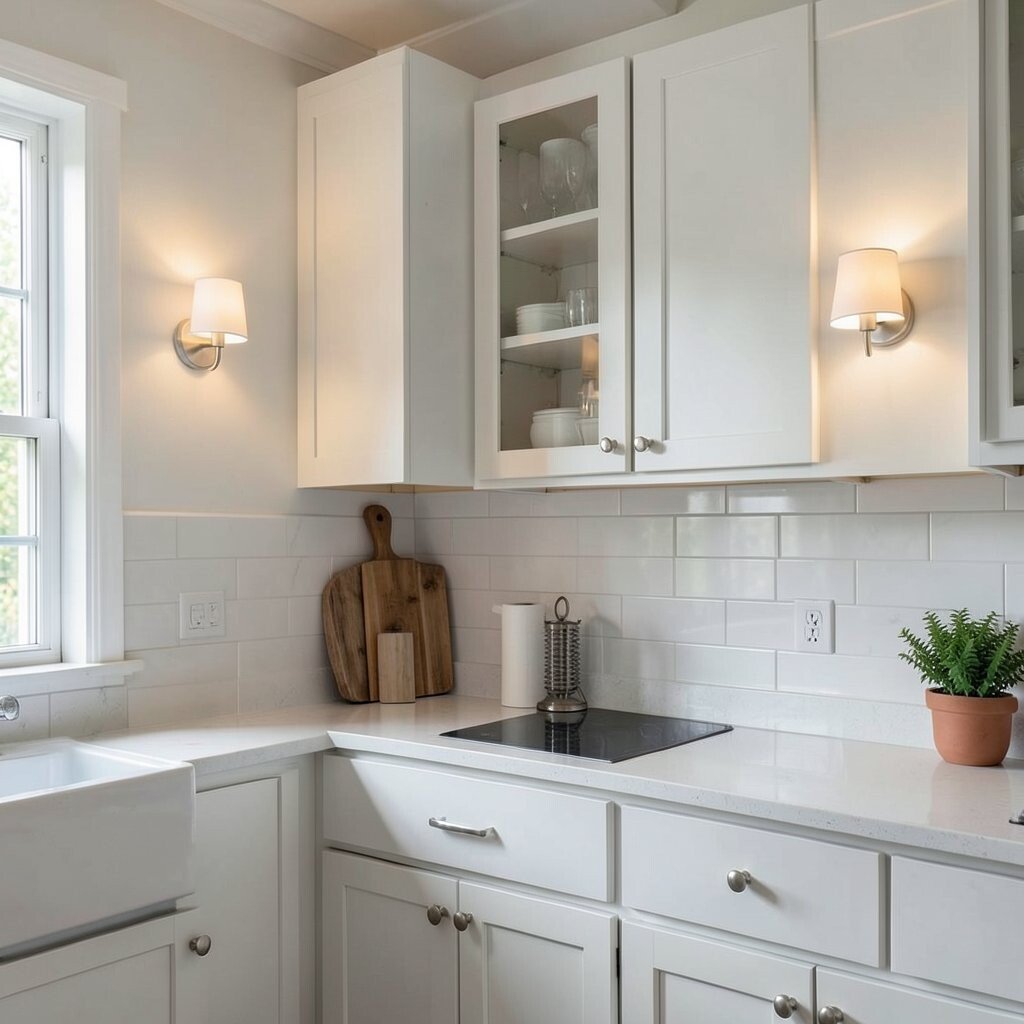
Add wall-mounted sconce lights for side glow Side lighting helps your kitchen feel brighter because it fills in shadows along walls. Wall sconces can create a soft glow that doesn’t overpower a small room.
Place them near areas you use often, like beside a breakfast corner or near open shelving. Tilting the light slightly toward the center gives you a more even spread.
For personalization, choose sconces with glass covers if you want a gentle, polished look. Budget tip: even one well-placed sconce can upgrade the whole feel.
-
Swap dark blinds for brighter shades

Swap dark blinds for brighter shades Window coverings can quietly change the kitchen’s mood every day. Dark blinds can swallow daylight, especially in the morning.
Try light-filtering shades in white, cream, or warm beige. They keep the room private while letting brightness move through.
-
Use a pale, reflective countertop finish
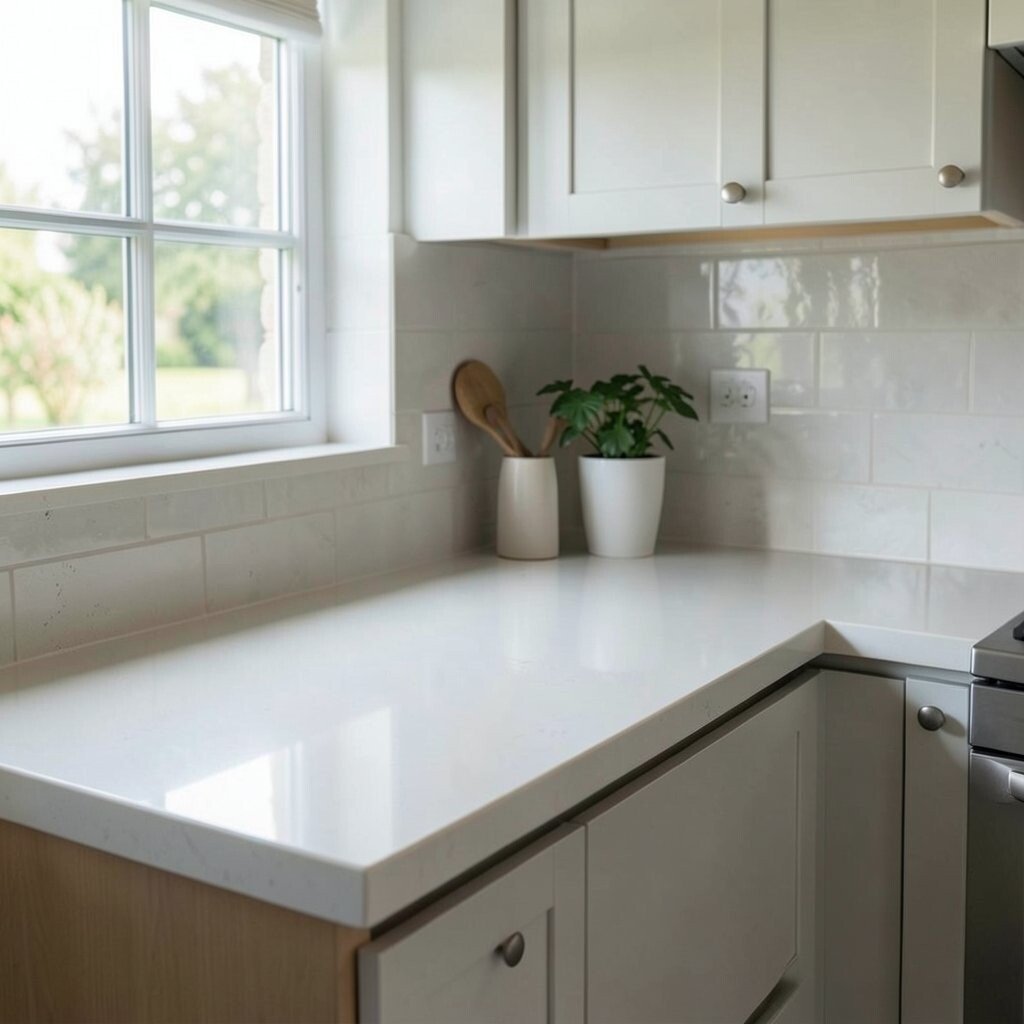
Use a pale, reflective countertop finish Countertops can either bounce light or absorb it. If yours is very dark or highly matte, brightness may struggle to stay in the room.
Look for surfaces with a softer reflectivity, like light quartz, honed marble (with careful selection), or engineered stone in warm light tones. Even a small light change near the sink area can help.
Personalize by matching countertop veining to your hardware and backsplash design. Cost consideration: if full replacement is too high, consider a lighter backsplash or add brighter task lighting first.
-
Choose a light cabinet door style

Choose a light cabinet door style Door style affects how much light gets broken up by edges. Flat, simple door fronts often reflect light more evenly in small kitchens.
Consider modern slab doors or minimal profiles if you’re updating later. A complex, highly detailed door can create many tiny shadow lines.
Personalization idea: you can keep traditional vibes with a lighter finish and simple hardware. Budget tip: if you can’t replace doors, repainting or refinishing can still create that bright effect.
-
Keep the kitchen’s color palette tight

Keep the kitchen’s color palette tight When too many colors compete, the room feels busier and light can look scattered. A tight color palette makes brightness feel smoother and more consistent.
Pick one main light wall tone, one neutral cabinet tone, and one accent color. Then repeat the accent in small places like towels, jars, or a single art print.
This helps the eye travel without stopping at dark spots. Cost-wise, palette control often costs nothing beyond a few accessory swaps.
-
Use clear or light-colored storage bins

Use clear or light-colored storage bins Opaque containers can hide dust and darken visual space. Clear or light-colored bins make shelves look brighter and tidier.
Try clear acrylic for snacks, or light woven baskets for produce and pantry items. When you can see what’s inside, you also tend to reduce clutter.
Personalize by labeling bins with chalk markers or cute tags. Budget tip: start with the items you use daily so you get the biggest daily payoff.
-
Add a small track light system
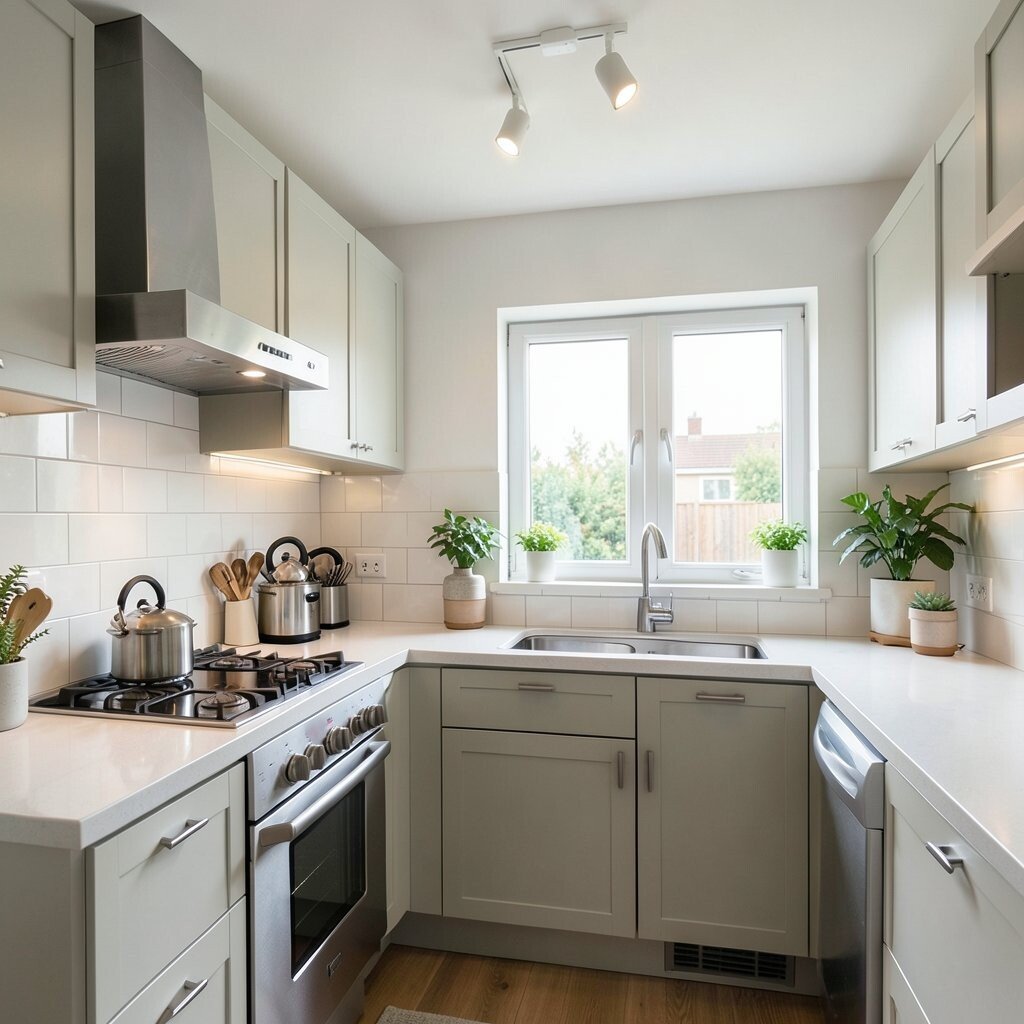
Add a small track light system Track lighting is flexible and can point where you need light most. In a small kitchen, this means fewer dark corners and better coverage.
Direct heads toward counters, open shelves, and art so light spreads where you look. If you like control, choose adjustable heads that can change over time.
Personalization idea: paint the track the same color as the ceiling so it disappears. Cost consideration: choose fewer heads first, then expand later if you want more drama.
-
Let reflective appliances do their job
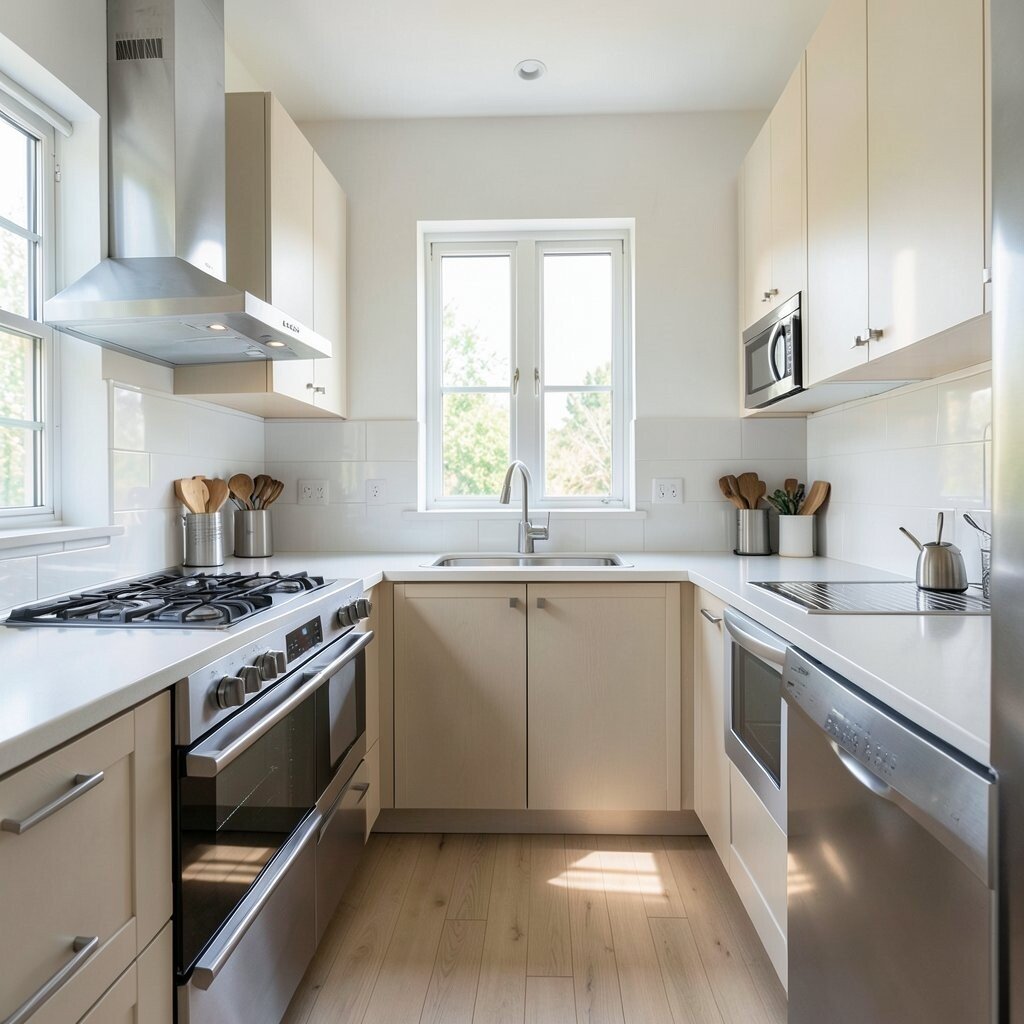
Let reflective appliances do their job Stainless steel and polished finishes can add brightness by reflecting light. Your appliances can become part of the light system, not just the background.
If replacing appliances is too costly, you can still get a similar effect with clean, polished surfaces and a microfiber routine. Smudges reduce reflection, so a quick wipe makes a real difference.