Warm cabinets and welcoming seating belong together. The right barstools can make your kitchen feel finished and cared for.
This list shows custom ideas that match your cabinet style, color, and vibe while still giving you comfort for everyday life.
-
1. Cabinet-Color Painted Barstools With Matching Trim
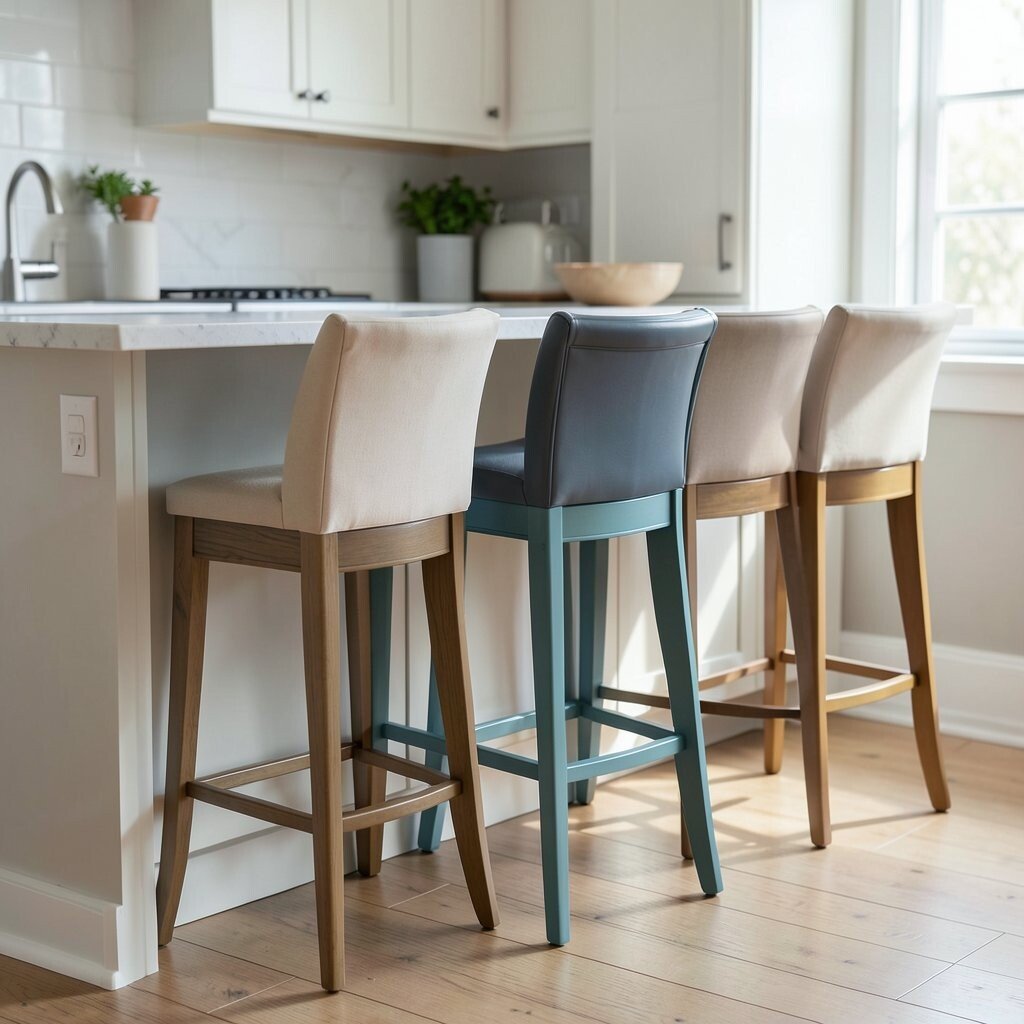
Cabinet-Color Painted Barstools With Matching Trim Imagine a barstool that looks like it stepped out of the cabinet doors. A smooth painted finish in the same tone makes the whole space feel pulled together.
For best results, bring a cabinet sample to a paint shop and match the undertone, not just the shade. Add a thin trim band at the seat frame to echo the cabinet edging and hardware details. This setup looks clean, modern, and brand-new even when your kitchen gets busy.
Custom painting costs more than basic stain, but it saves you money later by avoiding mismatched replacements. A good tip is to ask for a durable topcoat rated for high-traffic homes. If your cabinets have a satin sheen, choose satin on the stool too for a consistent look.
-
2. Stained Wood Barstools That Mirror Your Cabinet Grain
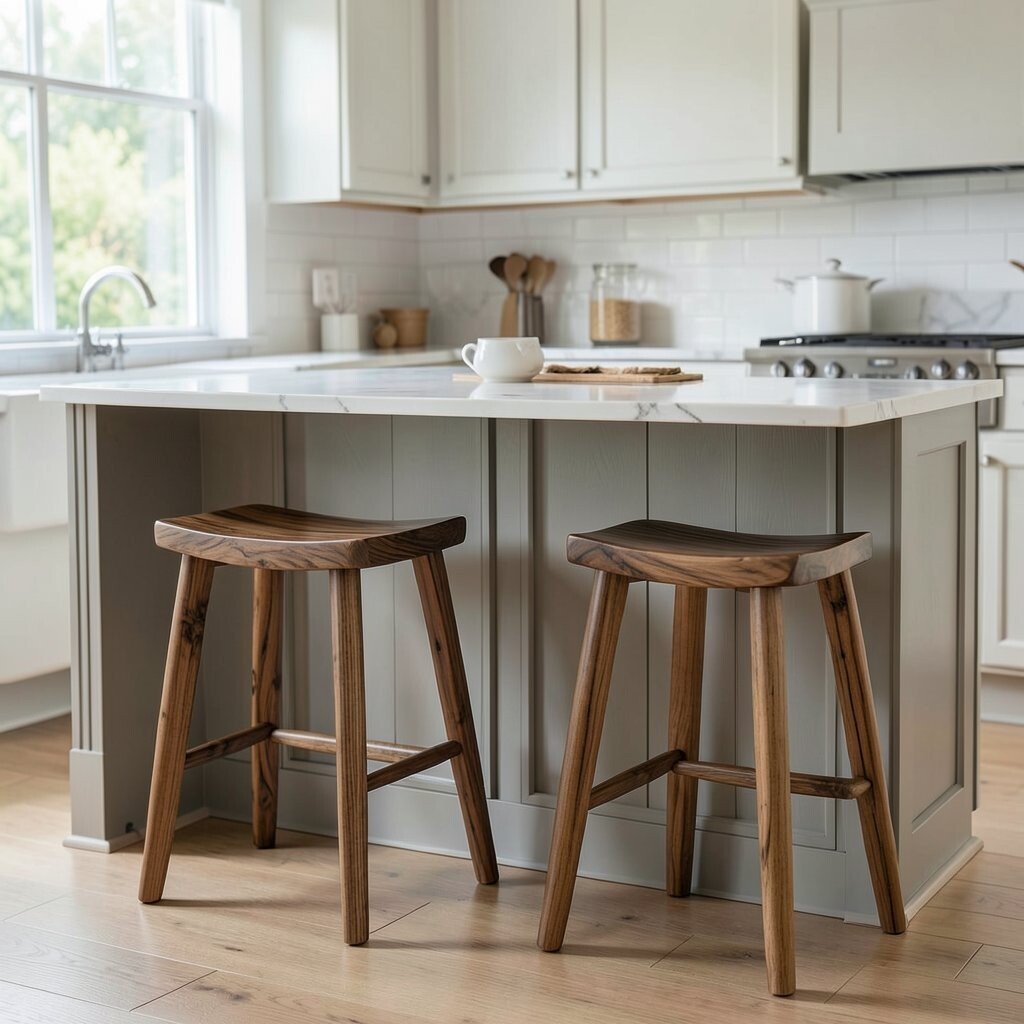
Stained Wood Barstools That Mirror Your Cabinet Grain Stained wood barstools can match the feeling of your cabinets in a very natural way. When the grain and color are in the same family, your kitchen looks calm and steady.
Choose a stain that repeats the cabinet character, such as warm oak, soft maple, or deep walnut. Many custom makers can match depth and tone by using your cabinet boards as a guide. You will also love how the wood ages, because matching grain tends to blend over time.
One practical benefit is that wood hides small scuffs better than bright paint. A cost note: custom matching stain can cost mid-range, but it is worth it if you plan to keep the kitchen for years. Trend-wise, lighter “natural” stains and smooth, straight lines are staying popular for open, airy kitchens.
-
3. Two-Tone Barstools: Seat Color From Cabinets, Frame From a Complement
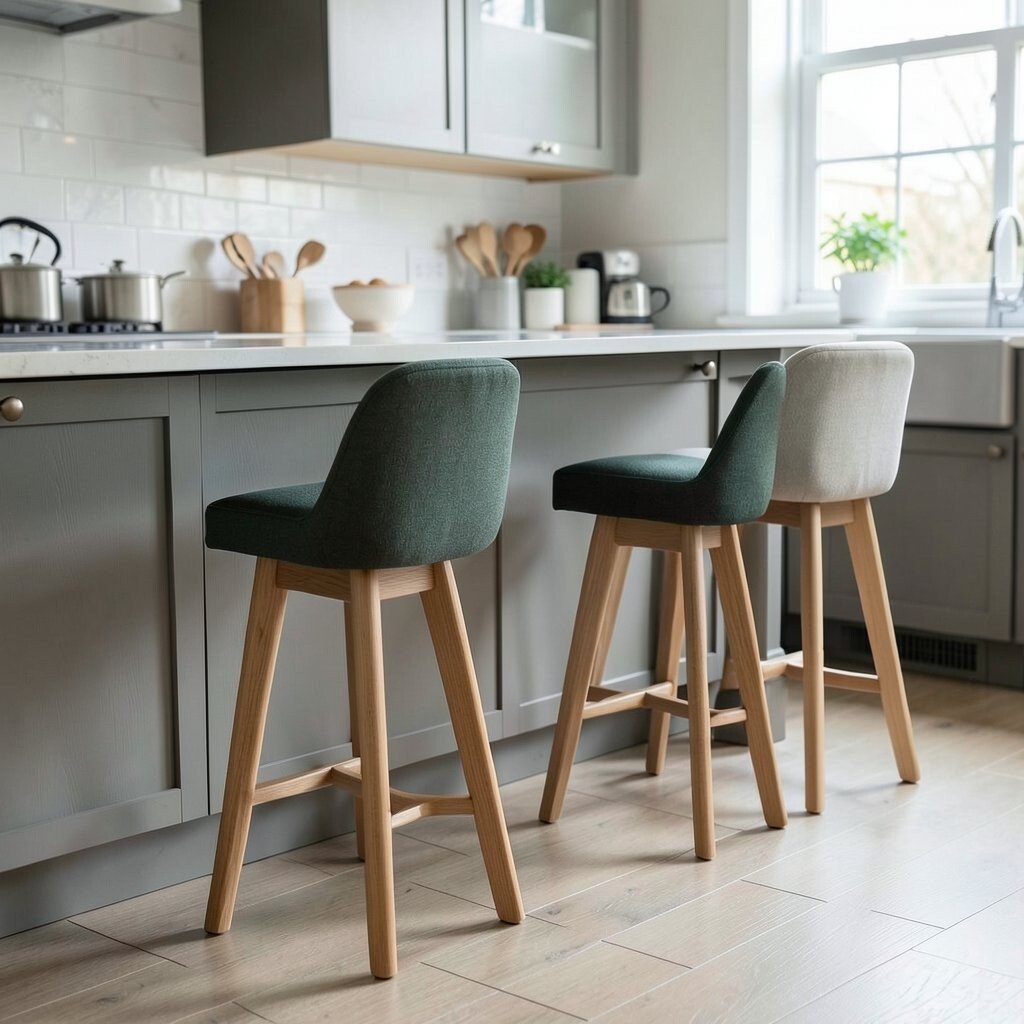
Two-Tone Barstools: Seat Color From Cabinets, Frame From a Complement Two-tone barstools can look bold while still feeling like they belong. You get a seat color that matches the cabinets, and a frame color that adds contrast without clashing.
Think about pairing cabinet color with a second neutral like blackened steel, warm white, or weathered gray. This makes the stool stand out at the counter but still feels coordinated. If your cabinets have metal hardware, you can echo that metal with a matching frame accent.
For personalization, swap the seat material: a painted cabinet-tone base with a fabric seat in a matching pattern can feel custom without being loud. Ask the maker about matching the cabinet door reveal style, such as adding a small step or shadow line effect. Budget-wise, two-tone designs often cost a bit more due to extra finishing steps, but the look is worth it.
Current trends include “soft contrast” palettes, where one tone is slightly lighter or warmer than the other. If you want it to feel effortless, keep the contrast gentle and avoid extreme color jumps.
-
4. Upholstered Barstools With Fabric That Pulls From Cabinet Details
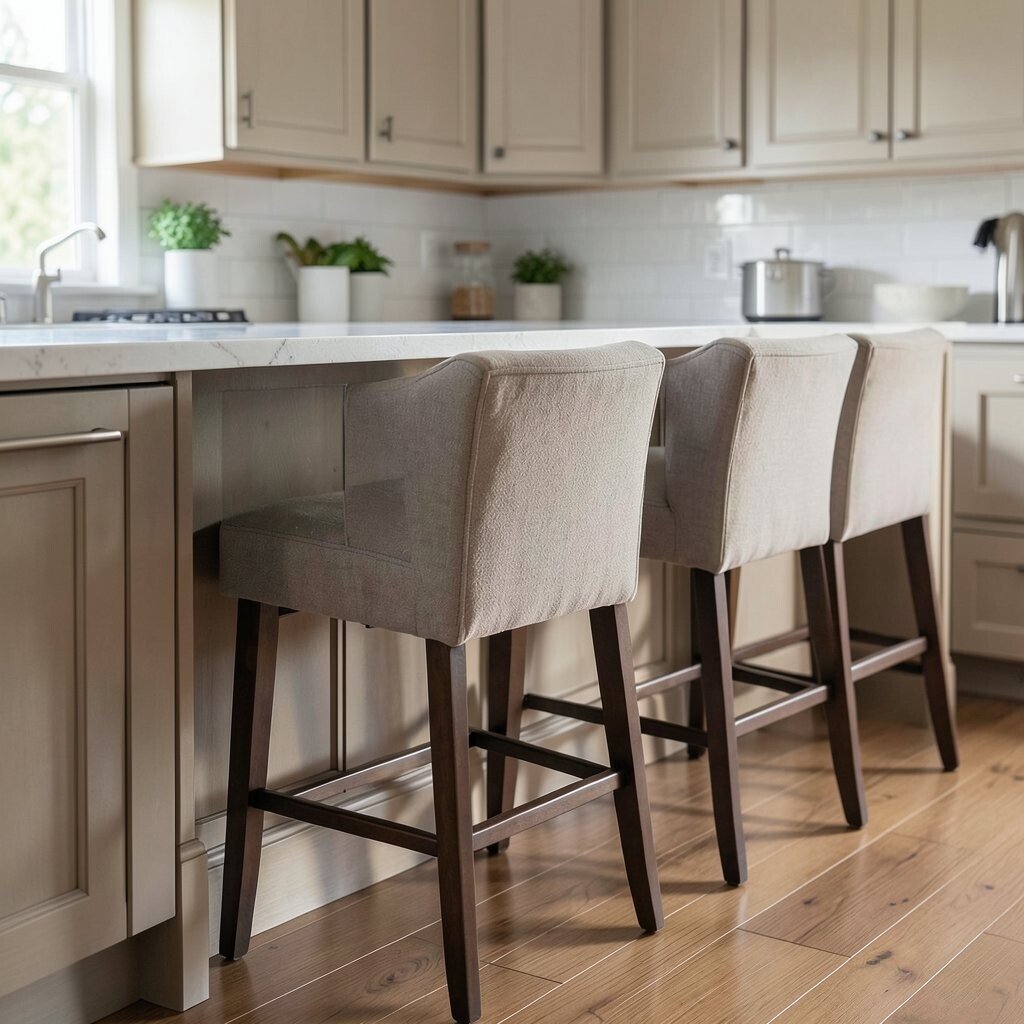
Upholstered Barstools With Fabric That Pulls From Cabinet Details Upholstered barstools add comfort right away, especially for long breakfasts or homework time. When you choose fabric that connects to your cabinet design, it looks intentional instead of random.
Pick a fabric that matches a cabinet pattern, like subtle flecks in wood stain, or echo the cabinet hardware style with a clean solid fabric. If your cabinet doors have shaker lines, choose a fabric with a simple texture so the stool stays calm. This idea is unique because the fabric becomes a quiet “bridge” between visual styles.
For benefits, you get a softer seat plus better sound dampening, which is nice for busy kitchens. Cost can vary a lot because performance fabric and custom sizing raise the price, but you also extend the life of the stool. A great tip is to choose wipeable, stain-resistant fabric and request removable covers if possible.
Today, many people want neutral upholstery with warm undertones, plus a pop only through piping or a matching skirt. If you want a modern touch, look for tailored edges and tight seams that mirror the crisp lines of your cabinetry.
-
5. Custom Shaped Backrests That Copy the Cabinet Door Profile
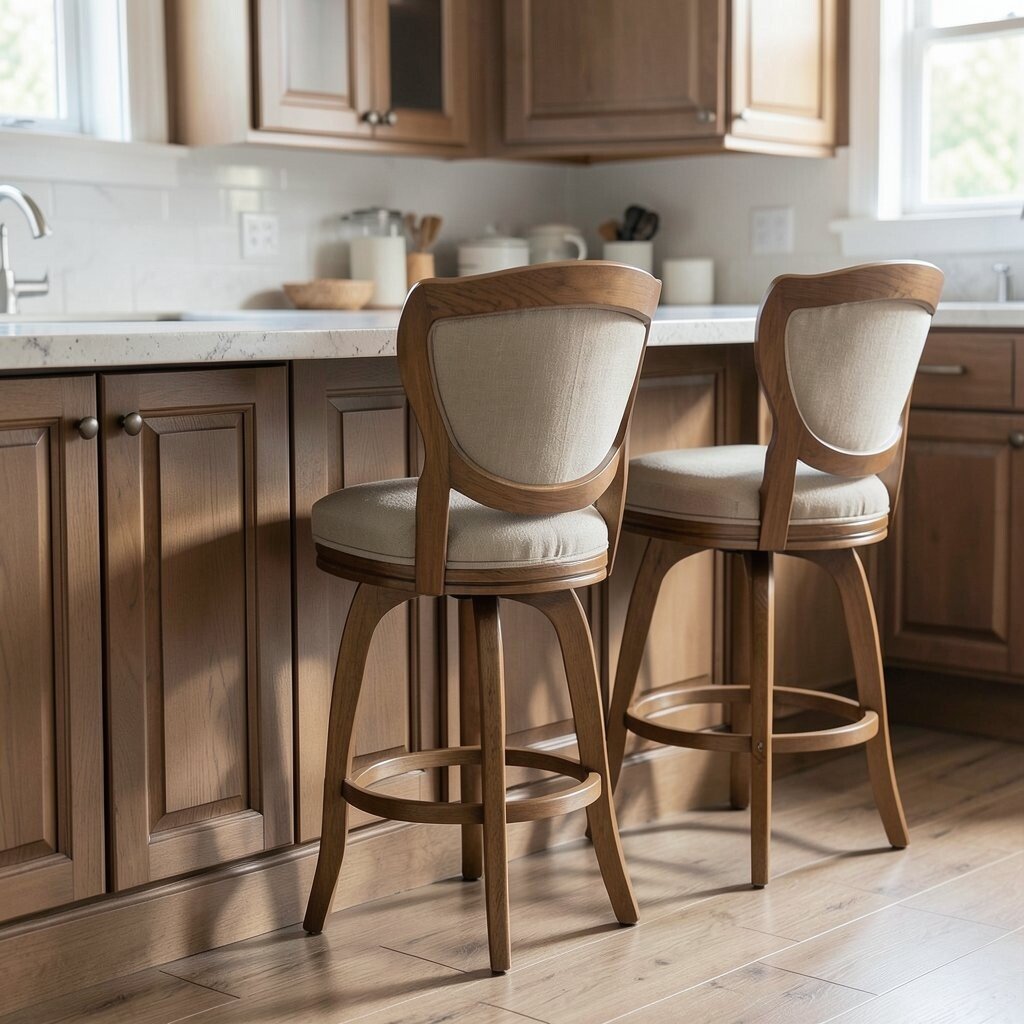
Custom Shaped Backrests That Copy the Cabinet Door Profile Some cabinets have gentle curves, and that detail should not disappear at the counter. Barstools with a backrest profile that matches your cabinet door shape can look like a matching set.
Have the maker measure the cabinet door arch, bevel, or straight panel style, then build that same silhouette into the stool back. This creates a “family resemblance” that you feel every time you glance across the kitchen. Uniqueness comes from the craftsmanship, because not many off-the-shelf stools can match custom door lines.
For comfort, ask for a slightly curved back that supports your posture. That small change can make sitting feel easier and more relaxed. Cost considerations matter here: custom joinery and custom back shapes usually raise the price, so it helps to limit complexity to one standout part.
Personalization tip: add a thin finish line around the back panel the way your cabinet doors frame the panels. Trend-wise, “built-in look” design remains popular, and this is the same idea in stool form.
-
6. Oversized Slat-Back Barstools Inspired by Shaker Cabinets
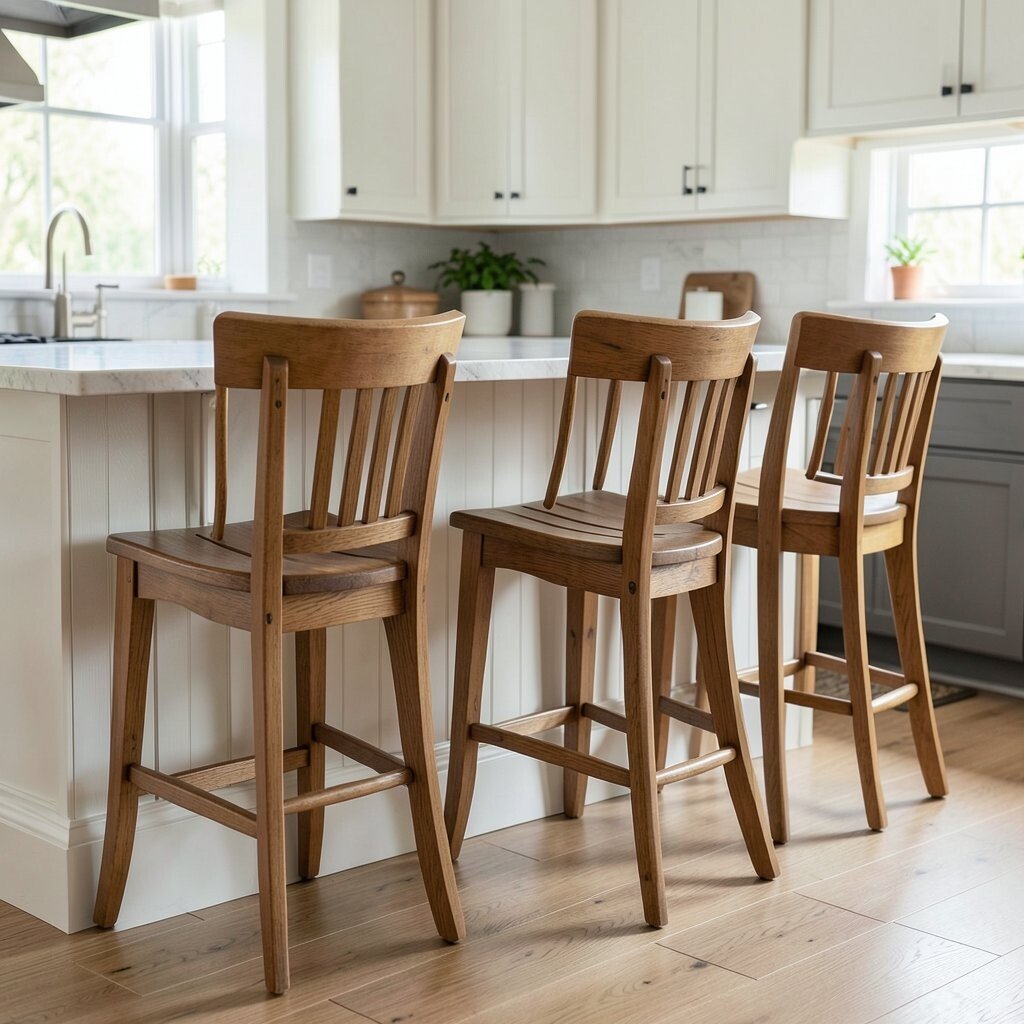
Oversized Slat-Back Barstools Inspired by Shaker Cabinets Shaker cabinets often feature simple panel lines, and you can copy that vibe on your barstools. Oversized slat-back designs echo the structure of the doors while still feeling airy and light.
Choose slats that match the spacing and thickness feel of your cabinet frames. Then finish the wood in the same stain or paint tone so the stool blends into the cabinetry look. This idea feels unique because the stool becomes part of the cabinet “language,” not just a separate object.
If you want comfort, add a removable cushion seat in a matching fabric or leather alternative. That lets you keep the clean slat back while softening the sit. Budget wise, custom slats require more woodworking, so expect a higher cost than standard frames, but you’ll get a statement piece.
A useful tip is to ask for rounded edges on every slat contact area. Also, consider how the stool looks from the side, since barstools get seen while people talk and move around. Right now, many kitchens lean toward simple geometry, and shaker-inspired slat backs keep the look timeless.
-
7. Matching Counter-Height Metal Accent Barstools With Wood Seats
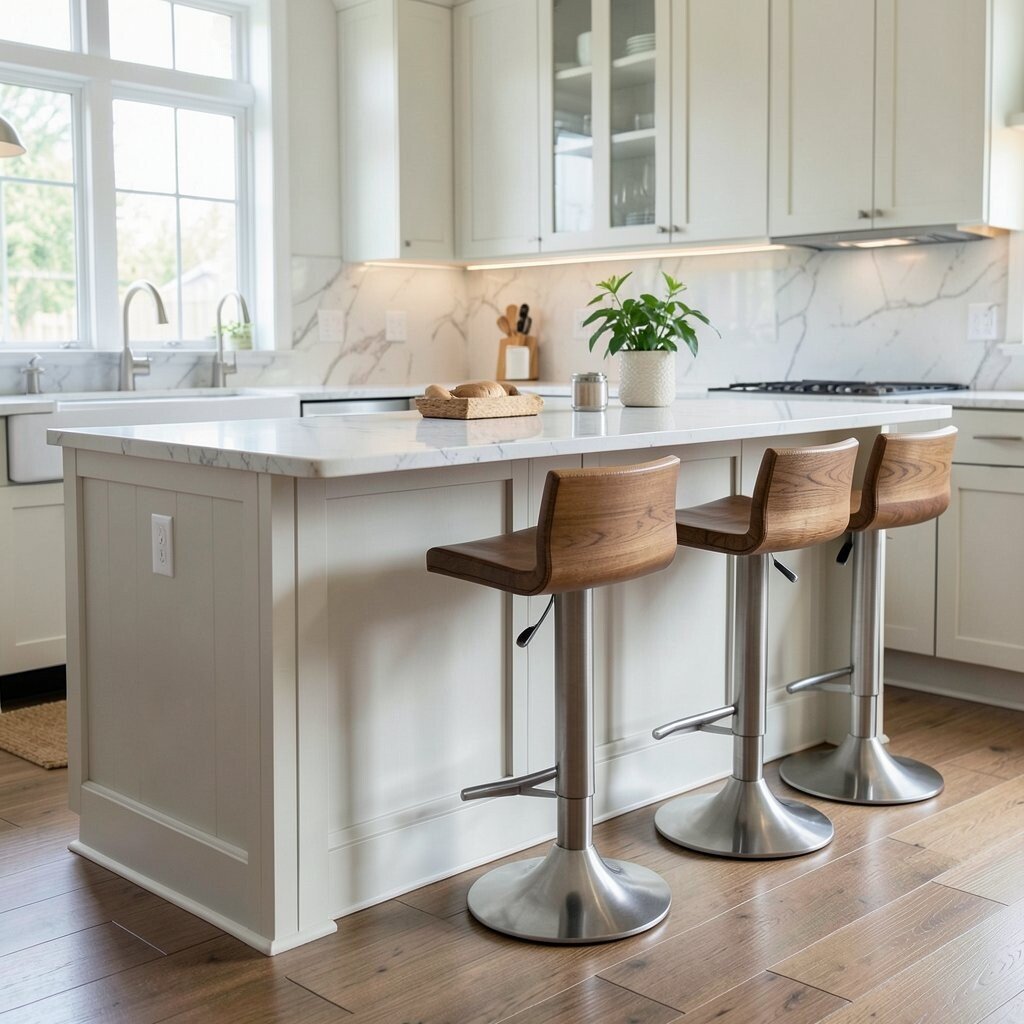
Matching Counter-Height Metal Accent Barstools With Wood Seats Metal and wood together can match cabinets in a surprising way. If your cabinetry has metal hardware, repeating that metal on the stool creates instant harmony.
Try a wood seat finished in the same color as your cabinet interiors or door panels, paired with a metal footrest that matches your hardware. Choose brushed, satin, or matte metal finishes based on your kitchen’s lighting. This approach is unique because it keeps the visual focus near the cabinets while giving a modern edge.
For benefits, metal frames are usually sturdy and easier to maintain for daily messes. A cost note: custom metal work can raise the budget, but you often save money long-term because the frame resists warping and wear. If you want a trend-friendly look, pick a warm metal tone like brushed bronze rather than very shiny chrome.
-
8. Semi-Custom Barstools With Drawer-Front Style Panels
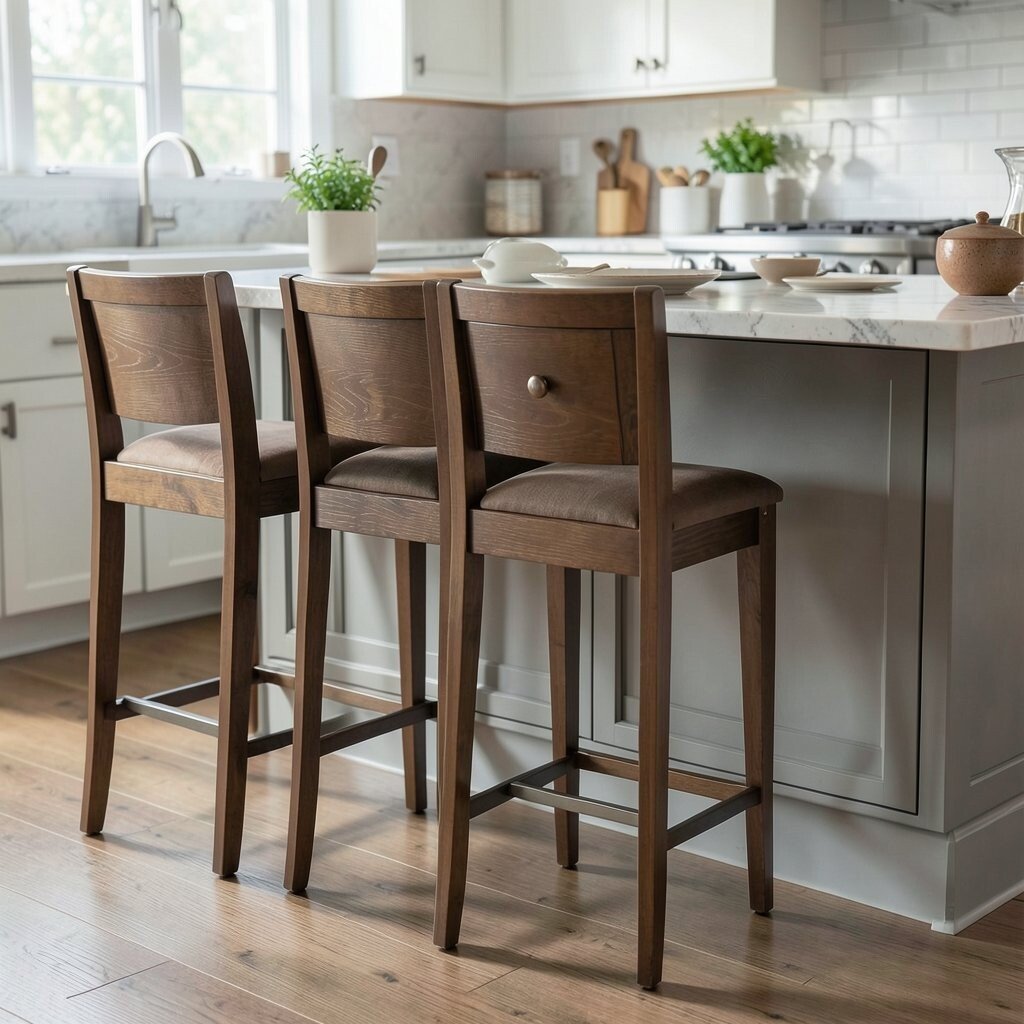
Semi-Custom Barstools With Drawer-Front Style Panels What if your barstool had a little “drawer front” personality? Drawer-front style panels on the stool back or sides can mirror cabinet detailing in a fun, practical way.
Use the same panel inset shapes and finish lines that show up on your drawers and doors. You can even add matching pulls or a faux knob detail purely for style. This makes the barstool feel truly custom, because the pattern is pulled from your actual cabinetry.
For personalization, choose whether the panel area should be painted or stained. Painted panels can look bright and clean, while stained panels can look rich and warm. Cost can be moderate to higher depending on whether the maker builds real inset panels or uses a simpler overlay method.
A helpful tip is to keep the hardware placement consistent with cabinet height and spacing. That means it should feel aligned visually when you stand at the counter. Current trends often mix practical function with playful details, and this delivers both.
-
9. Leather or Faux Leather Seat Tones Matched to Cabinet Undertones

Leather or Faux Leather Seat Tones Matched to Cabinet Undertones A leather seat can look luxurious while still matching your cabinetry tone. The key is choosing a seat color that shares the same undertones as your cabinet finish.
If your cabinets are warm, pick warm leather shades like honey, caramel, or chocolate with a soft brown base. If your cabinets are cool, choose a cooler gray-brown or deep taupe. This uniqueness comes from tone matching, because two colors can both be “brown” but feel different once light hits them.
Benefits include easy wipe-clean comfort and a seat that feels inviting. Cost considerations: real leather usually costs more, while high-quality faux leather can be a smart budget move. A tip for long-lasting seats is to choose upholstery that is rated for frequent use, and ask about how it ages.
Trend-wise, many kitchens are moving toward cozy neutrals rather than bold colors. If you want it to feel custom, add a thin contrasting stitch that echoes the seam style of your cabinet edging, if you have one.
-
10. Matching Feet and Base Trim: Repeating Your Cabinet Toe-Kick Style

Matching Feet and Base Trim: Repeating Your Cabinet Toe-Kick Style Your cabinets have a base area, even if it is subtle. Repeating that toe-kick or base trim style on barstools can make the space feel built-in.
Choose a stool base that includes a similar cut, bevel, or panel shape to the cabinet kick plate. Then match the finish so the tone flows from the cabinet base to the stool base. This design feels unique because it focuses on the area people notice when they walk in or clean the floor.
For benefits, a well-designed base can also hide scuffs and make cleaning easier under the stool. Cost varies: adding trim and panel work to the base usually increases price a bit, but it often saves you from buying multiple mismatched pieces later. A tip is to measure your cabinet toe-kick height and keep the stool’s visual line aligned.
Current trends include tidy lines and “shadow gaps,” and this idea leans into that polished look without needing expensive hardware upgrades.
-
11. Custom Stenciled or Routed Patterns Inspired by Cabinet Door Panels
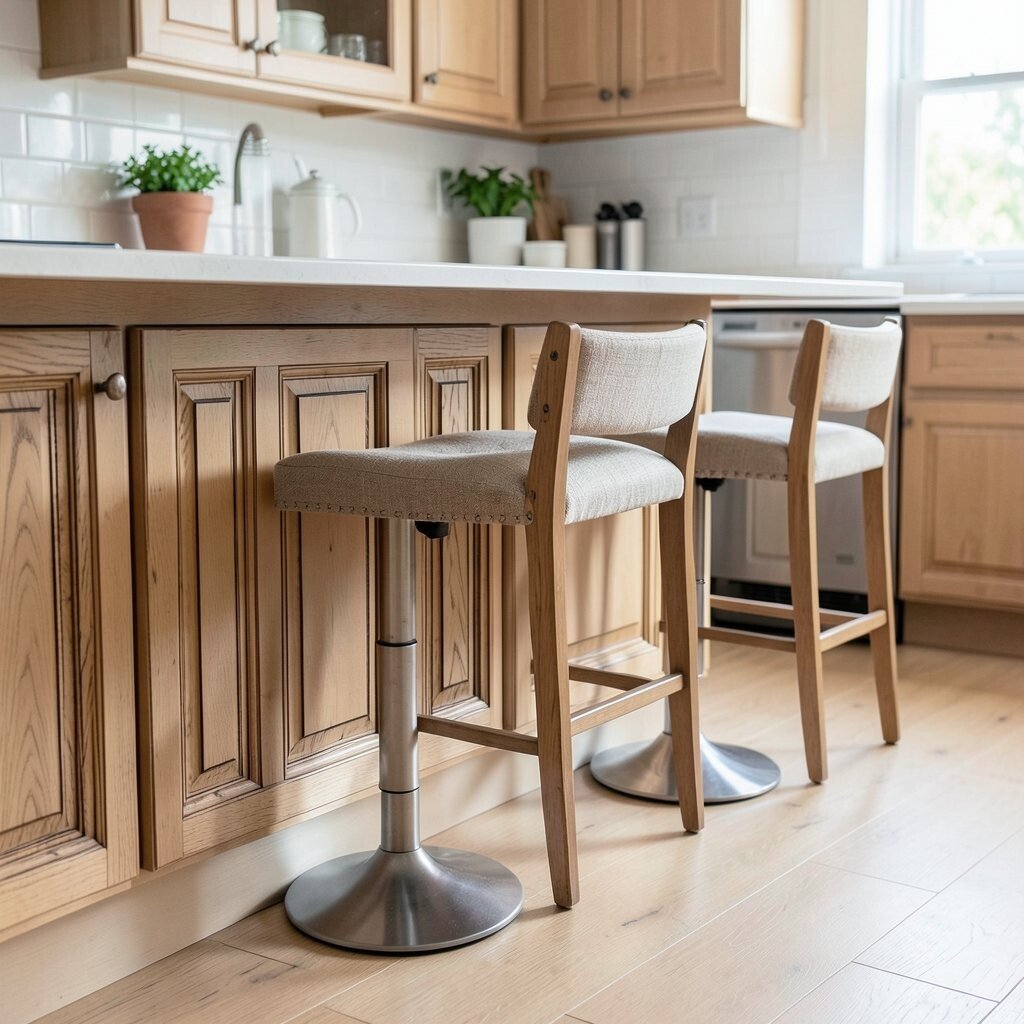
Custom Stenciled or Routed Patterns Inspired by Cabinet Door Panels If your cabinet doors have a special inset or raised panel pattern, you can bring that detail to the barstool. Custom routed or stenciled patterns give the stool a story, not just a color match.
For a routed look, ask the maker to repeat the panel geometry on the backrest or side panels. For a more budget-friendly approach, a stencil pattern can add the same visual rhythm without heavy woodworking. This uniqueness is strong because it looks like the cabinet design continues into the seating.
Benefits include the “designed by the same person” vibe, especially in photos and staged gatherings. Cost consideration: routed patterns can raise the price, while stencil work can keep it more affordable. A tip is to keep the pattern scale consistent so it does not look too busy on the stool.
-
12. Built-In Look Barstools With Same Finish and a Matching Back Rail
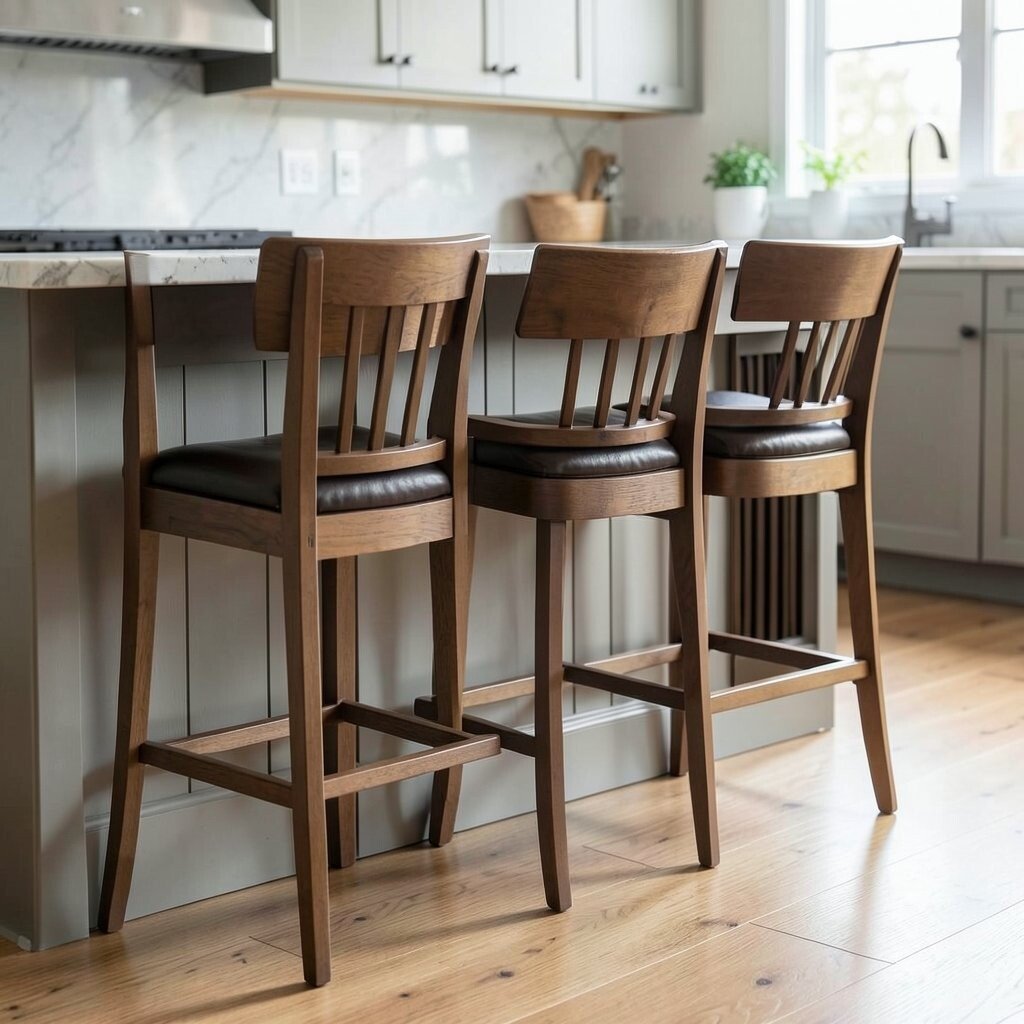
Built-In Look Barstools With Same Finish and a Matching Back Rail Some kitchens feel like they were planned from one blueprint, and you can recreate that with the right barstools. Built-in look stools use a matching finish and a back rail that echoes the cabinet’s top trim or railing style.
Choose a back rail height and spacing that fits your countertop area and feels like it belongs with the cabinets. Then match the finish exactly, including sheen, so everything reflects light the same way. This idea feels irresistible because it gives a seamless design line across the whole kitchen.
For benefits, a rail can add comfort by giving your back a place to rest, and it also makes the stool feel more stable. Cost can be higher because built-in style features take extra customization, but you are basically replacing the “mixed match” problem with one cohesive system. A helpful tip is to ask for a template test: the maker can mock the design so you see spacing before final work starts.
Current trends favor integrated details, and this fits perfectly with that direction. If you want personalization, add a subtle matching wood tone panel near the lower back area, like a small cabinet inset that only stands out up close.