Your backsplash can turn a plain kitchen into a place you actually want to hang out in. The shine, color, and texture are the quiet details that make everything feel finished.
Here are backsplash ideas that compare glass and ceramic options in a way that feels practical, pretty, and easy to picture.
-
1) Clear Glass Tiles With Soft Light
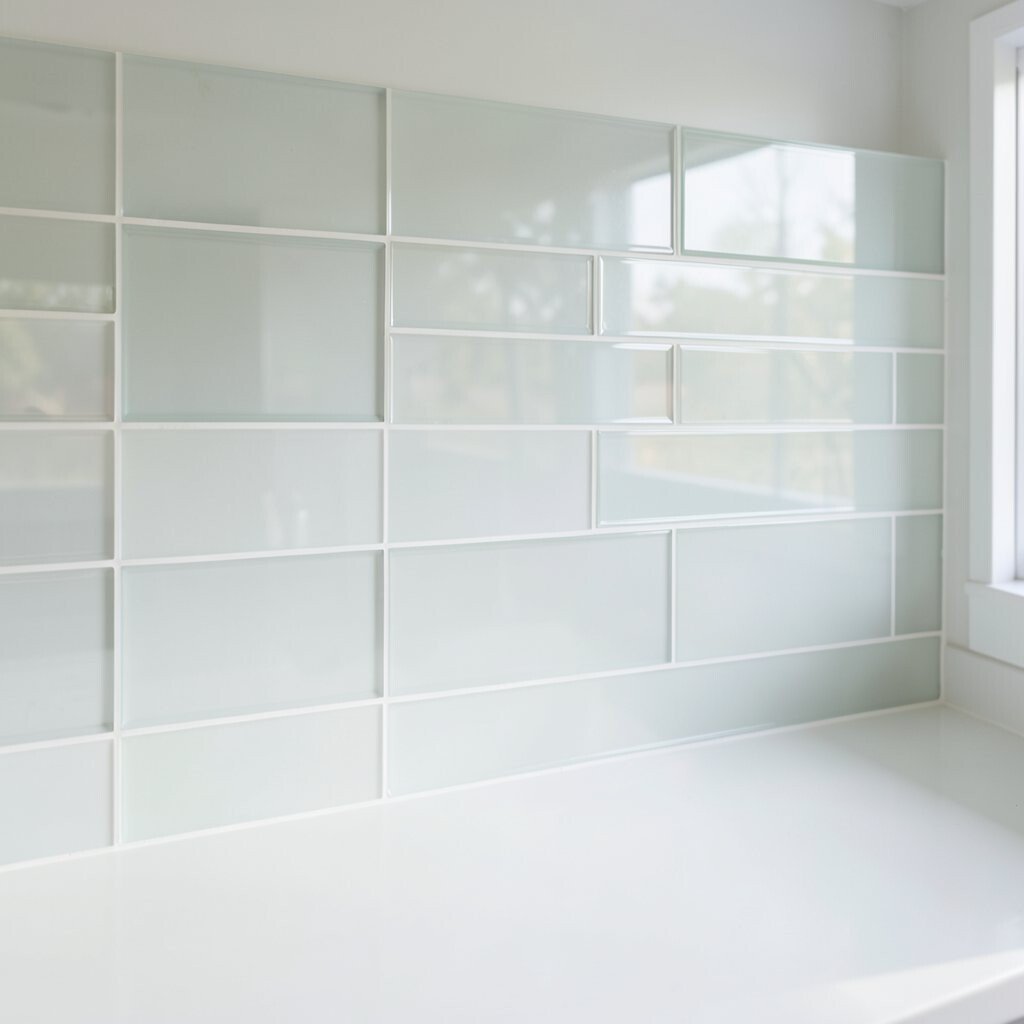
) Clear Glass Tiles With Soft Light Imagine cooking with the backsplash catching light like a gentle mirror. Clear glass tiles can make counters feel brighter without changing your cabinetry.
They also help small kitchens feel more open. Cleaning is usually straightforward because smooth surfaces wipe clean fast. Choose tempered glass for safer use behind the stove and keep grout lines neat to reduce visible mess.
If you want a personal touch, try pairing clear glass with a warm-toned mosaic trim. For cost planning, clear glass often lands mid-range, but custom patterns or bigger slabs can raise the price. A current trend is mixing clear glass fields with thicker accents, so the kitchen looks layered instead of flat.
-
2) Glossy White Glass Panels for a Sleek Look
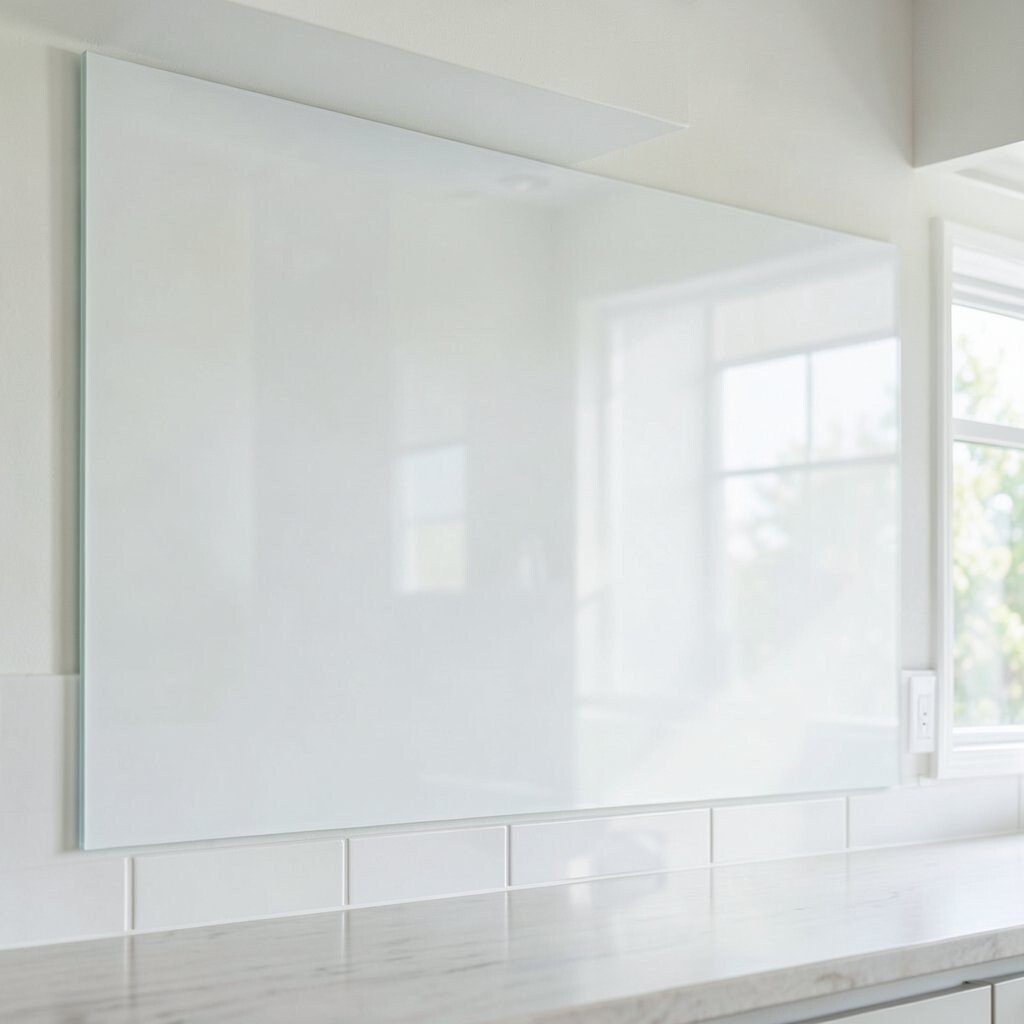
) Glossy White Glass Panels for a Sleek Look Glossy white glass panels give your kitchen a clean, modern vibe. They reflect light so the space feels crisp and fresh.
Because the surface stays smooth, it helps hide minor splatters between cleanings. Glass also tends to be less porous than many ceramics, which can be a plus for busy cooks.
To personalize, look for panels with a subtle sparkle or slight color depth, like satin white with an icy undertone. If you love the look of marble kitchens, use glossy white glass over a light gray or warm beige backing for that expensive feel.
Budget-wise, you can save money by choosing standard sizes and a simple layout. A trend that stays strong is using large-format glossy pieces to reduce grout lines and keep the design calm.
-
3) Blue Ceramic Subway Tiles With Classic Charm
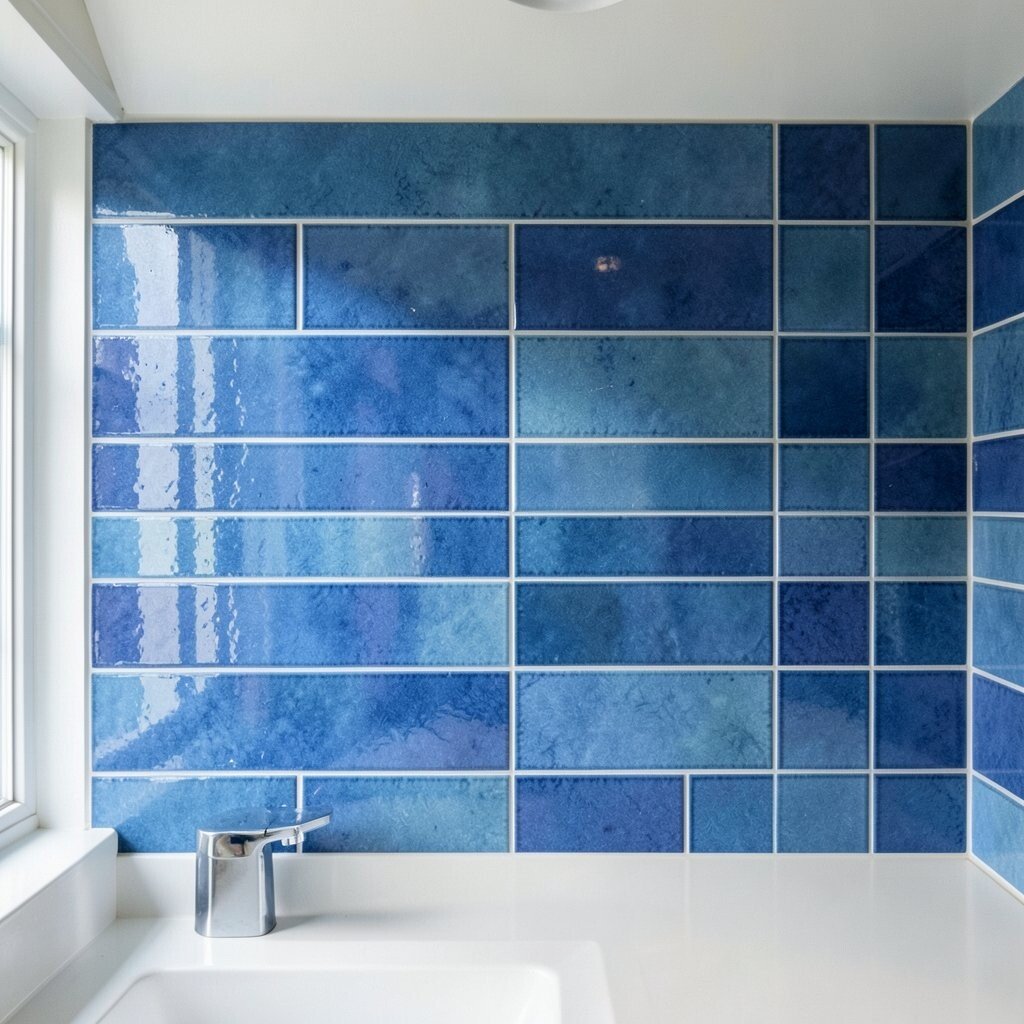
) Blue Ceramic Subway Tiles With Classic Charm Picture blue ceramic subway tiles lined up like tidy little waves. The glossy finish makes the kitchen look bright and friendly.
Ceramic gives you that timeless look with solid durability for everyday cooking. The grout can also be a design tool, since a contrasting grout color adds extra character.
Pick a light cobalt or soft navy so the tones look rich but not overpowering. For personalization, add a narrow border row or place a few accent tiles as a stripe near the stove.
Cost is often easier to manage with ceramic, especially when you choose common sizes from big-name tile lines. A current trend is mixing traditional subway shapes with modern grout colors, like warm white grout against deeper blue tiles.
For best results, seal grout if the manufacturer recommends it, and use a grout color that matches your cleaning habits.
-
4) Textured Glass Mosaic for Depth and Movement
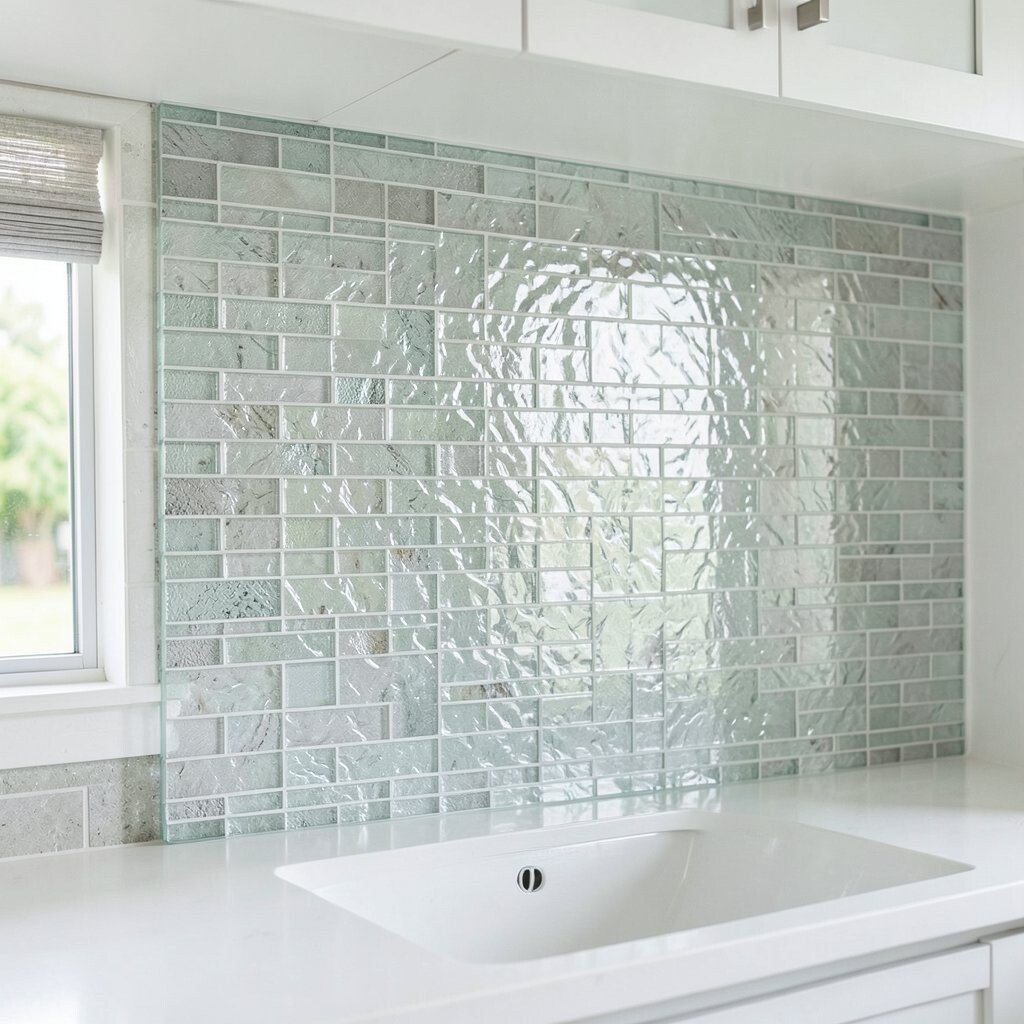
) Textured Glass Mosaic for Depth and Movement Textured glass mosaic tiles look like tiny pieces of art when the light hits them. You may see gentle ripples or a pebbled surface that adds depth.
This option feels unique because glass texture creates shadows and highlights that feel lively, even in daylight. It also works well behind a light hood or open shelving where you want visual interest.
For tips, choose a mosaic with consistent thickness so installation stays smooth. Use a neutral grout that complements your texture, since heavy contrast can distract from the design’s subtle beauty. If you want a personalization twist, blend two close shades, like seafoam and mist, to create an “almost ombré” effect.
-
5) Handmade Ceramic Look Tiles With an Organic Edge
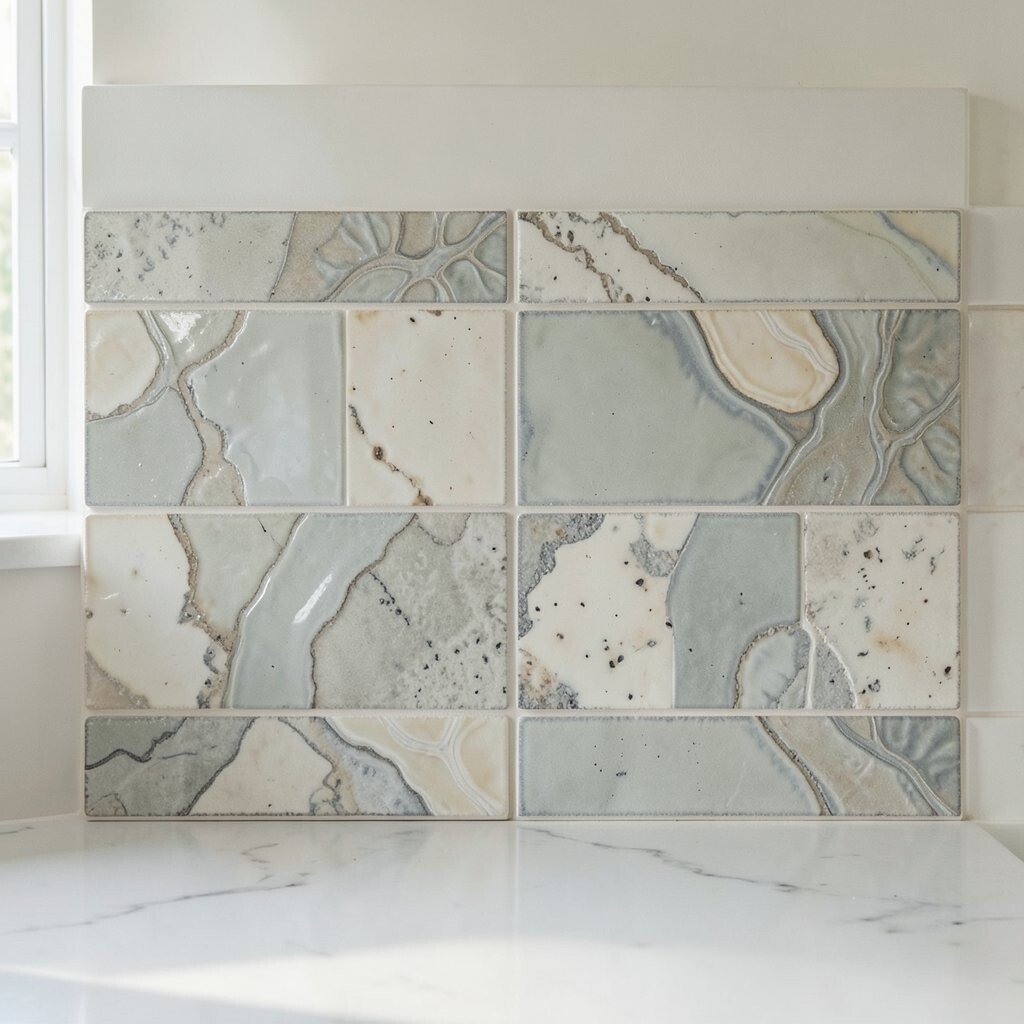
) Handmade Ceramic Look Tiles With an Organic Edge Think of tiles that look touched by hand, with tiny color variations and soft speckles. They give your kitchen a warm, lived-in feeling that still looks stylish.
Handmade-style ceramic adds uniqueness without needing an expensive custom job. Ceramic also holds up well in kitchens because it’s made for real-life cooking splashes.
Pair these tiles with simple hardware and matte finishes so the backsplash becomes the star. If you want personalization, add a small patterned band at counter height, like a narrow row with a slightly darker glaze.
Cost considerations are usually friendly because many brands offer handmade-inspired lines at different price points. A trend you’ll keep seeing is “imperfection on purpose,” where tiny differences make the backsplash feel authentic.
To keep it looking fresh, use gentle cleaners and avoid harsh scouring pads that could dull the glaze over time.
-
6) Riverstone-Inspired Glass for a Spa-Like Mood
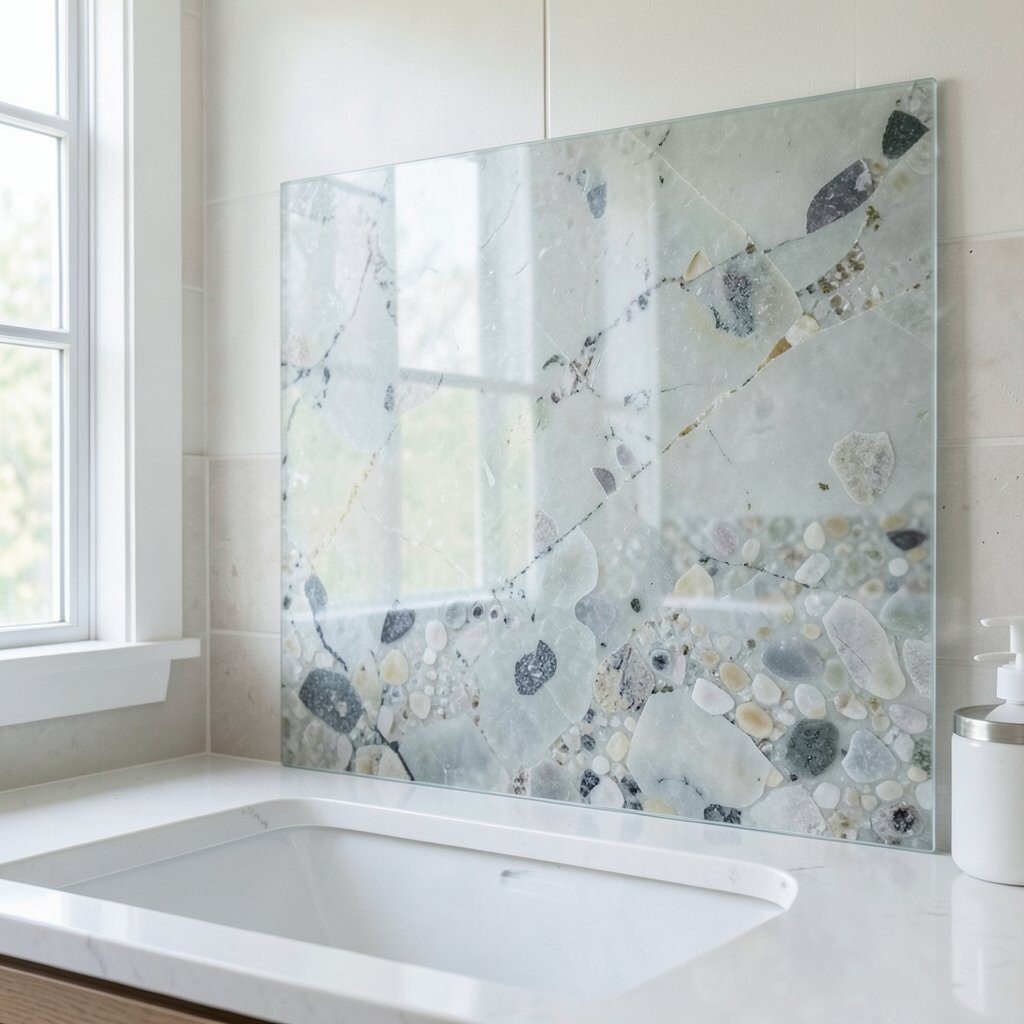
) Riverstone-Inspired Glass for a Spa-Like Mood Close your eyes and picture smooth stone colors under clear water. Riverstone-inspired glass tiles can create that spa-like vibe right behind your sink.
Glass pieces often give a glossy finish that feels calming and bright. They’re also great for adding a “wow” moment without complicated layouts.
For a smart tip, choose a base color that matches your countertop undertone, like warm cream for warm stone. Use a lighter grout if you want the stones to look airy, or a deeper grout for a more dramatic contrast.
Personalization can be as simple as adding a few larger “stone focal” pieces around the area you see most. Cost can vary widely based on mosaic size and whether the design is pre-mounted, so compare pricing by square foot and installation complexity. Current trends include nature-inspired textures that bring calm into modern kitchens.
-
7) Classic White Ceramic With Patterned Accent Rows
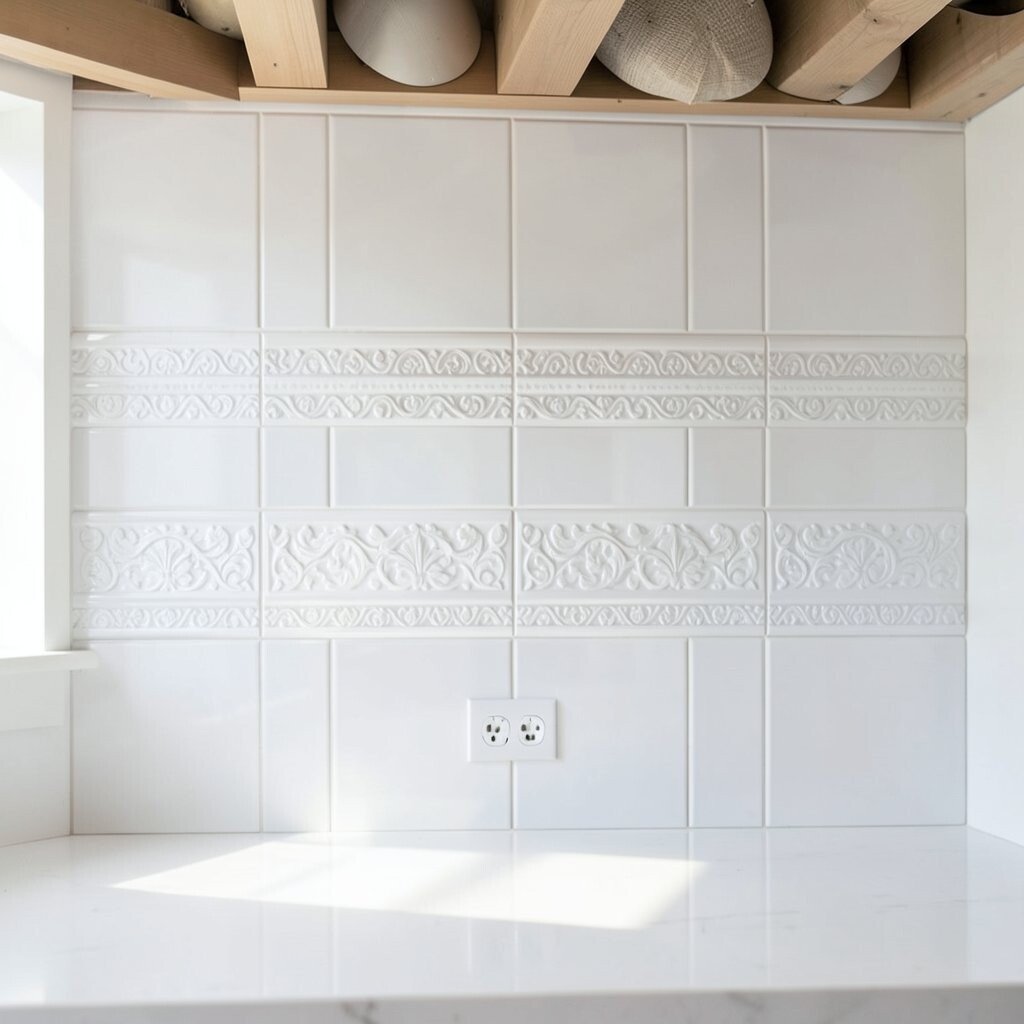
) Classic White Ceramic With Patterned Accent Rows A mostly white ceramic backsplash with a patterned accent row feels easy and timeless. It gives your kitchen clean walls while still adding a little surprise.
Ceramic is a dependable choice that handles daily cooking splashes well. The accent row lets you personalize without committing to an entire bold pattern.
Pick an accent tile that echoes something in your kitchen, like the color in cabinet pulls or the tones in your countertops. For example, small geometric accents can pair beautifully with modern cabinetry. If your style is cozy, choose subtle floral or medallion-inspired designs in muted tones.
When thinking about cost, plan around the accent tiles first, since they usually drive up the budget more than plain field tiles. A current trend is “quiet patterning,” where a small band adds personality while the rest stays calm.
-
8) Smoked or Dark Glass for a Dramatic Kitchen
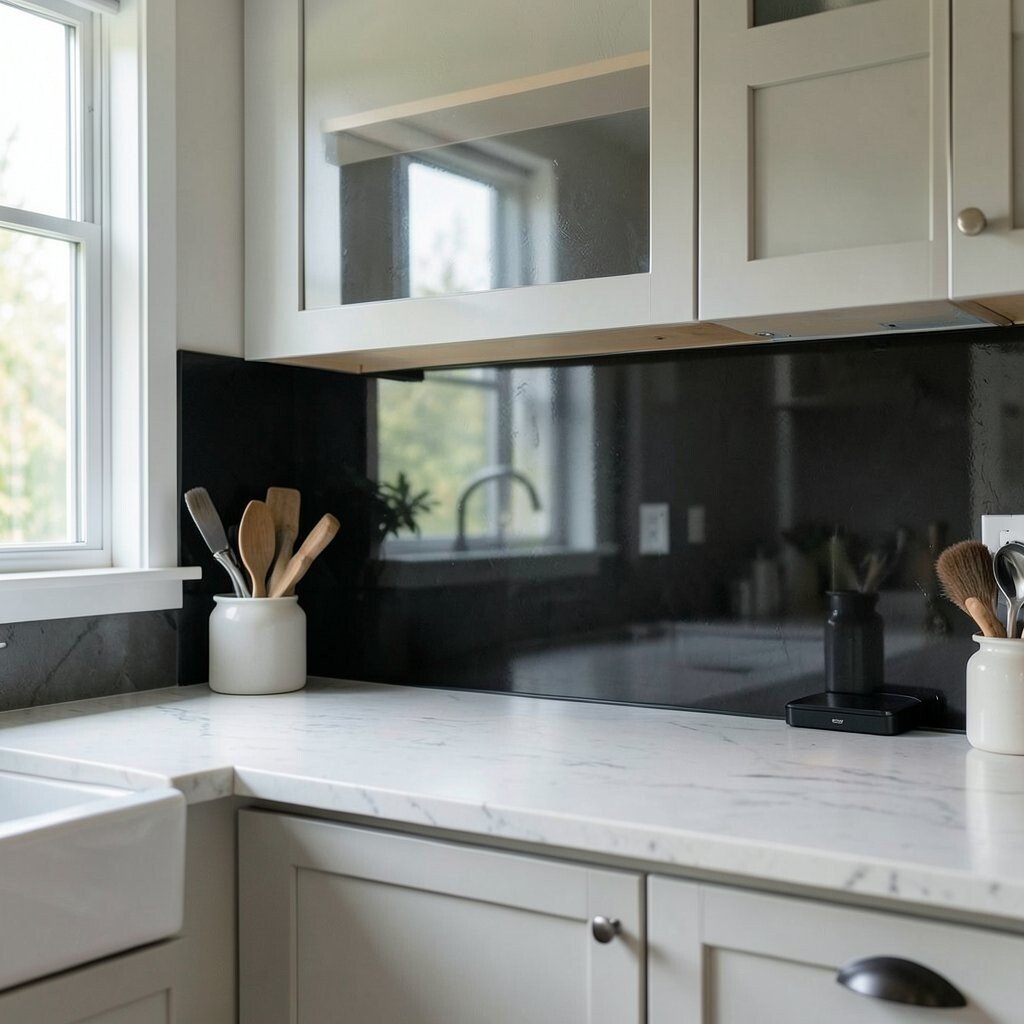
) Smoked or Dark Glass for a Dramatic Kitchen Smoked glass backsplash tiles look like nighttime reflections. They turn everyday cooking into something a little more dramatic and upscale.
Dark glass can add strong contrast, especially with light cabinets or warm wood tones. It also hides some visible specks because the surface reads rich and even.
For a tip, choose dark glass in a grout color that doesn’t fight the tile. Many people love charcoal grout because it blends in and keeps the focus on the glass shine.
To personalize, pair dark glass with warm metallic accents like brushed brass or copper-toned fixtures. Cost considerations depend on thickness and finish—some dark glass options cost more because they’re more specialized. A trend that’s growing is using dark backsplashes to balance bright countertops and keep kitchens feeling bold yet elegant.
-
9) Matte Ceramic Tiles for a Soft, Modern Feel
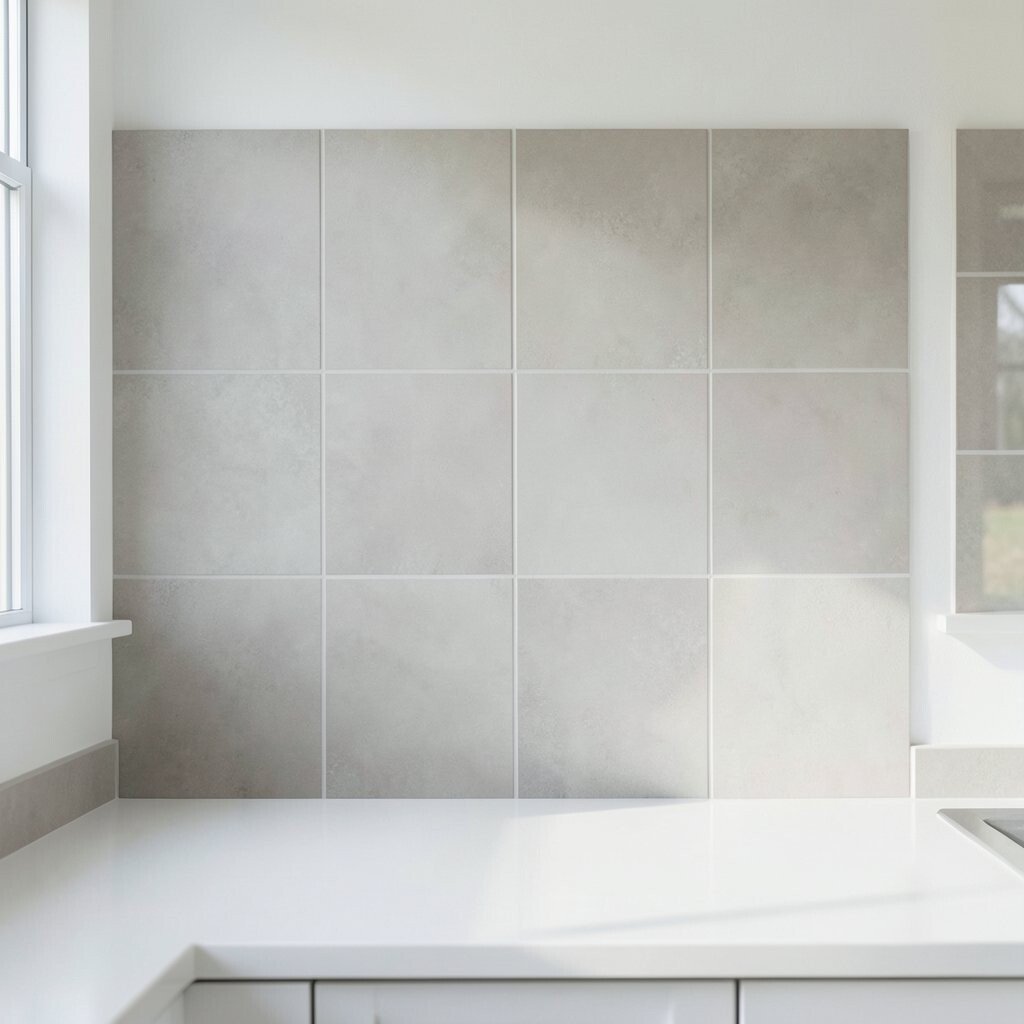
) Matte Ceramic Tiles for a Soft, Modern Feel Matte ceramic tiles look smooth but not shiny, like a calm painted wall. They feel modern, and they can be easier to match with matte cabinets.
This finish reduces glare, which can be nice if your kitchen has strong overhead lighting. Ceramic matte surfaces can also hide small water spots better than high-gloss finishes.
For personalization, try a two-tone matte setup where one section is a lighter shade and the other is slightly deeper. You can also use different shapes—like mix horizontal rectangles with small squares—to create gentle movement.
Cost is often manageable, and matte ceramics are widely available. A current trend is earthy, muted colors in matte finishes, like greige, warm taupe, or soft sage.
Maintenance tips: use a gentle non-abrasive cleaner so the matte glaze stays even and doesn’t look patchy.
-
10) Mosaic Glass Tiles in Warm Honey and Amber Tones
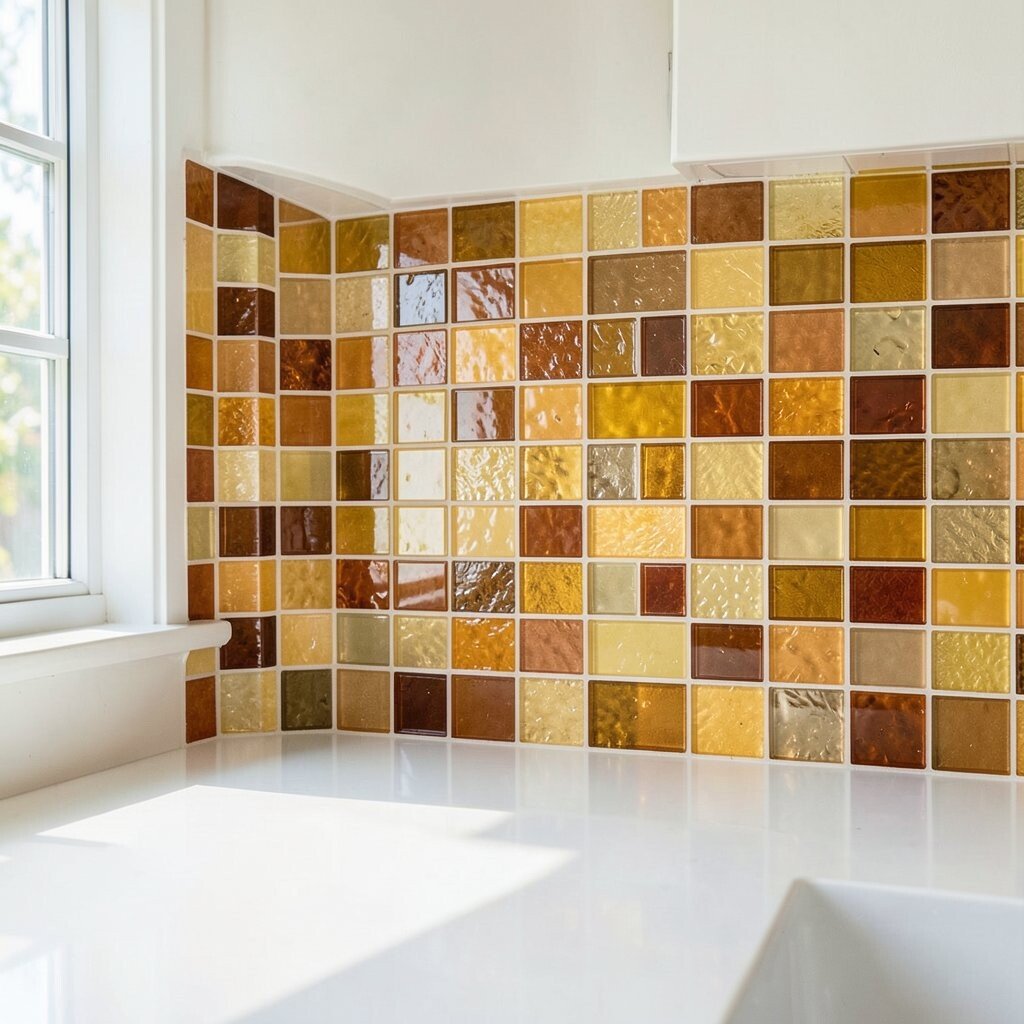
) Mosaic Glass Tiles in Warm Honey and Amber Tones Warm honey and amber glass mosaics can make a kitchen feel sunny even on cloudy days. The color seems to glow softly when light hits it.
Glass mosaics create a layered sparkle that looks like tiny light bulbs. They’re also unique because amber tones can shift from golden to copper depending on the time of day.
For tips, choose a grout color that supports the warmth, such as creamy white or light beige. If you have warm wood cabinetry, this choice can make the whole kitchen feel coordinated.
Personalization ideas include adding a thin stripe of darker amber tiles near the stove or around the window area. Cost considerations: mosaics often cost more than large plain tiles because of the detail, but the impact can be worth it for the space they cover.
A trend right now is “warm minimalism,” where kitchens stay simple but add rich color through materials like amber glass.
-
11) Patterned Ceramic Moroccan-Inspired Backsplash
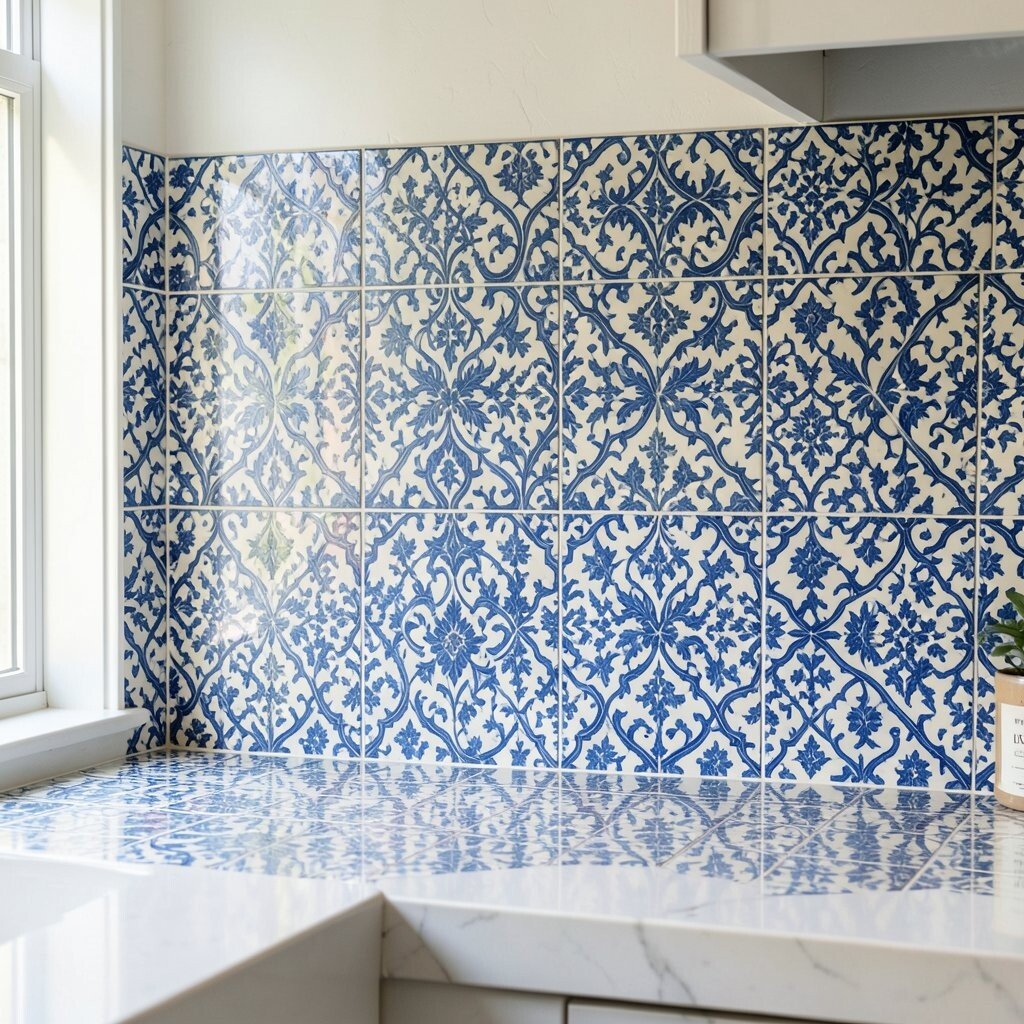
) Patterned Ceramic Moroccan-Inspired Backsplash Moroccan-inspired ceramic tiles bring movement and heritage to your kitchen wall. You might picture star shapes, repeating patterns, and bold color accents.
Ceramic handles heat and daily use well, and its pattern helps hide small marks. The design uniqueness is big here, since you’re adding texture, color, and rhythm all at once.
To personalize, choose a palette that matches your kitchen style, like deep teal with creamy whites or terracotta with soft sand. Use the pattern as a focal area, especially behind the stove or sink where you’ll see it daily.
Cost considerations depend on the complexity of the pattern and whether tiles are pre-arranged into sheets. A current trend is blending Moroccan accents with clean cabinetry, so the kitchen feels both curated and not overly busy.
-
12) Clear Glass With Floating-Effect Backing
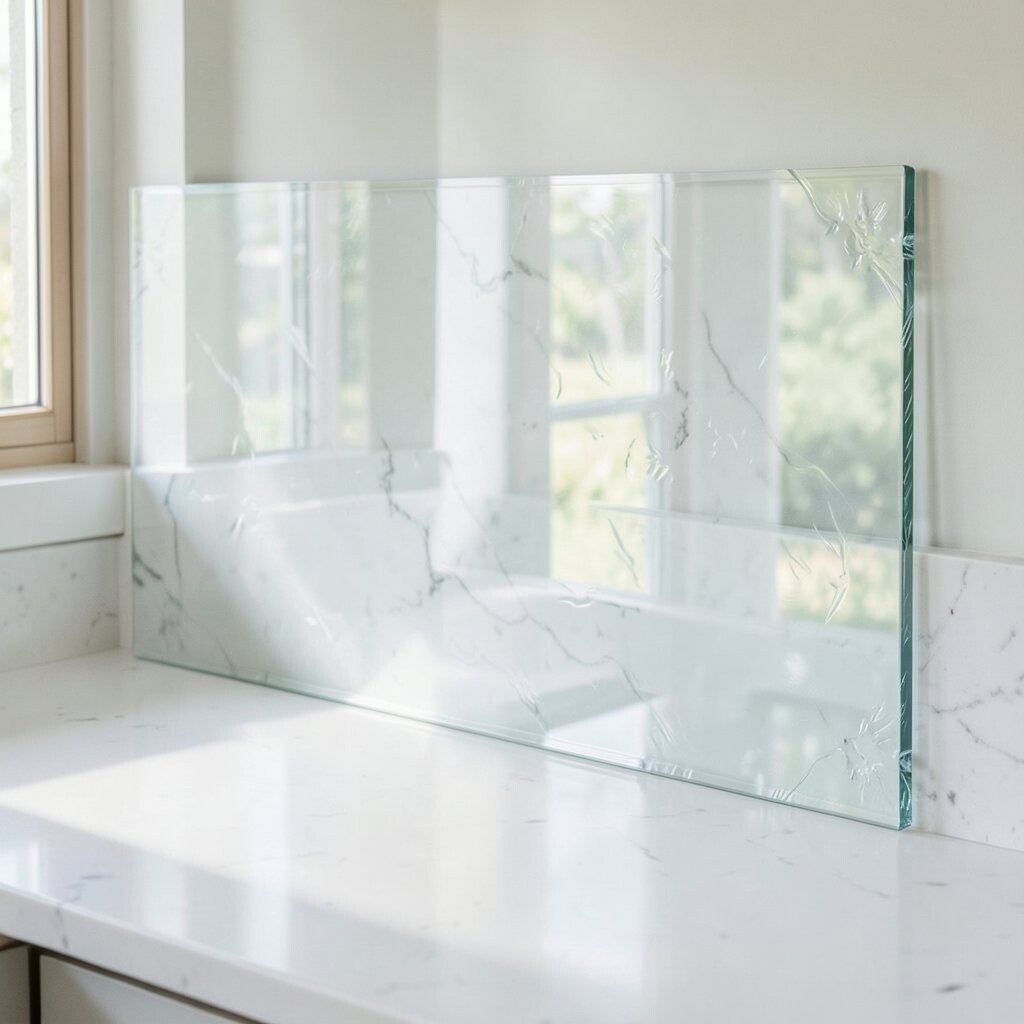
) Clear Glass With Floating-Effect Backing Clear glass tiles look extra special when they sit over a unique backing. With the right underlayer, you get a floating-effect sparkle that feels modern and fresh.
One benefit of clear glass is that it can make other colors pop, like veining in marble counters or warm tones in wood cabinets. The glass also helps your kitchen feel brighter because it bounces light around.
For tips, choose backing colors carefully and test a small section before installing the full wall. A taupe, warm gray, or soft sand backing can create a calm glow without overwhelming the space.
Personalization ideas include adding a subtle gradient backing that shifts from lighter near the counter to deeper near the cabinets. Cost varies based on whether you choose custom-backed materials or standard installation sheets. Current trends include layered looks—glass over textures, then topped with simple trim for a clean finish.
-
13) Glazed Ceramic With Color-Shift Undertones
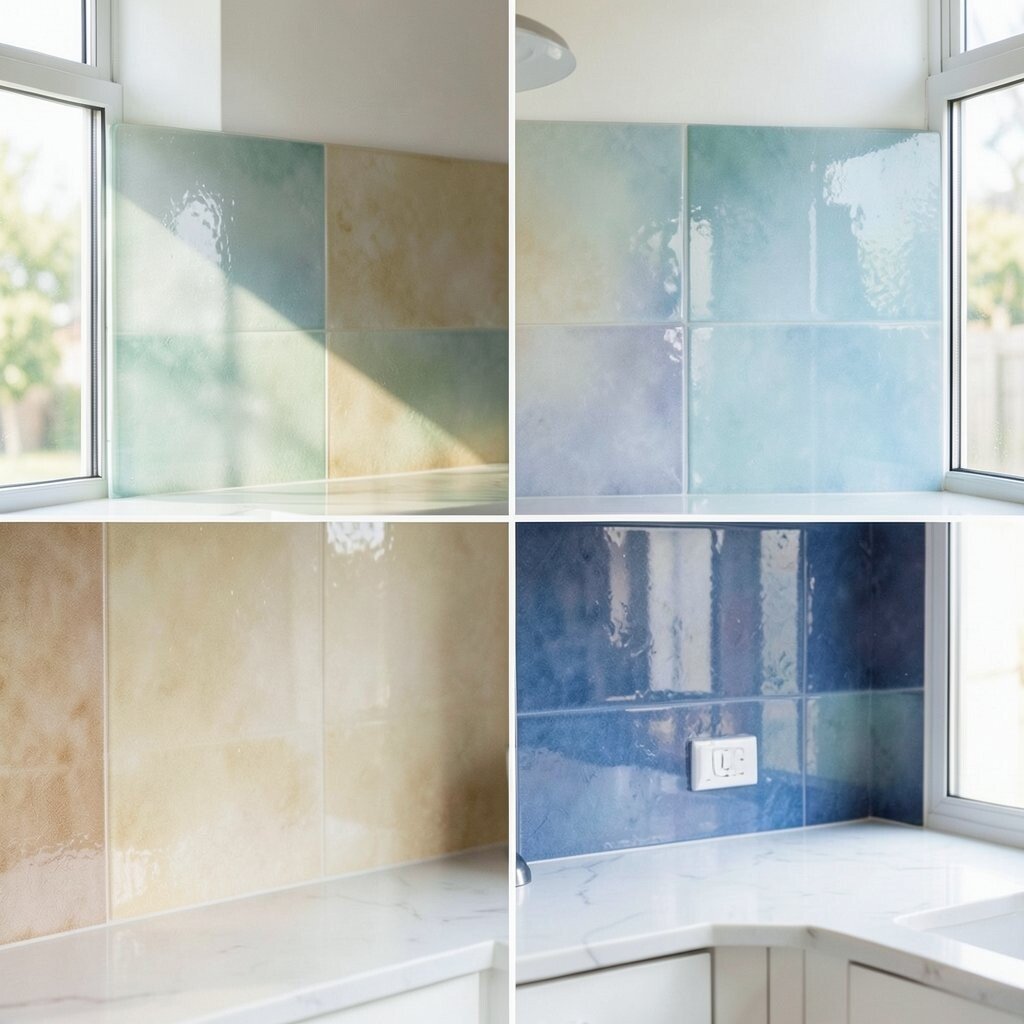
) Glazed Ceramic With Color-Shift Undertones Some glazed ceramic tiles change tone depending on the light, and that’s pure magic. You might see a shift from green to blue or from gray to soft teal.
Ceramic with color-shift glazing offers uniqueness without needing a complex pattern. It also tends to be comfortable to live with, since the tone shift feels gentle rather than loud.
For personalization, pair these tiles with neutral backsplashes around the edges, so the color change stays the hero. Consider choosing cabinet hardware in finishes that match the undertone you love most.
Cost considerations: special glazes can cost more than basic ceramic, but they can reduce the need for extra accents because the tile already provides interest. A trend is “quiet drama,” where you choose a small number of high-impact materials and keep the rest clean and simple.
Maintenance is usually easy because glazed ceramic resists stains well, as long as grout is sealed properly.
-
14) Large-Format Ceramic Slabs for Minimal Grout Lines
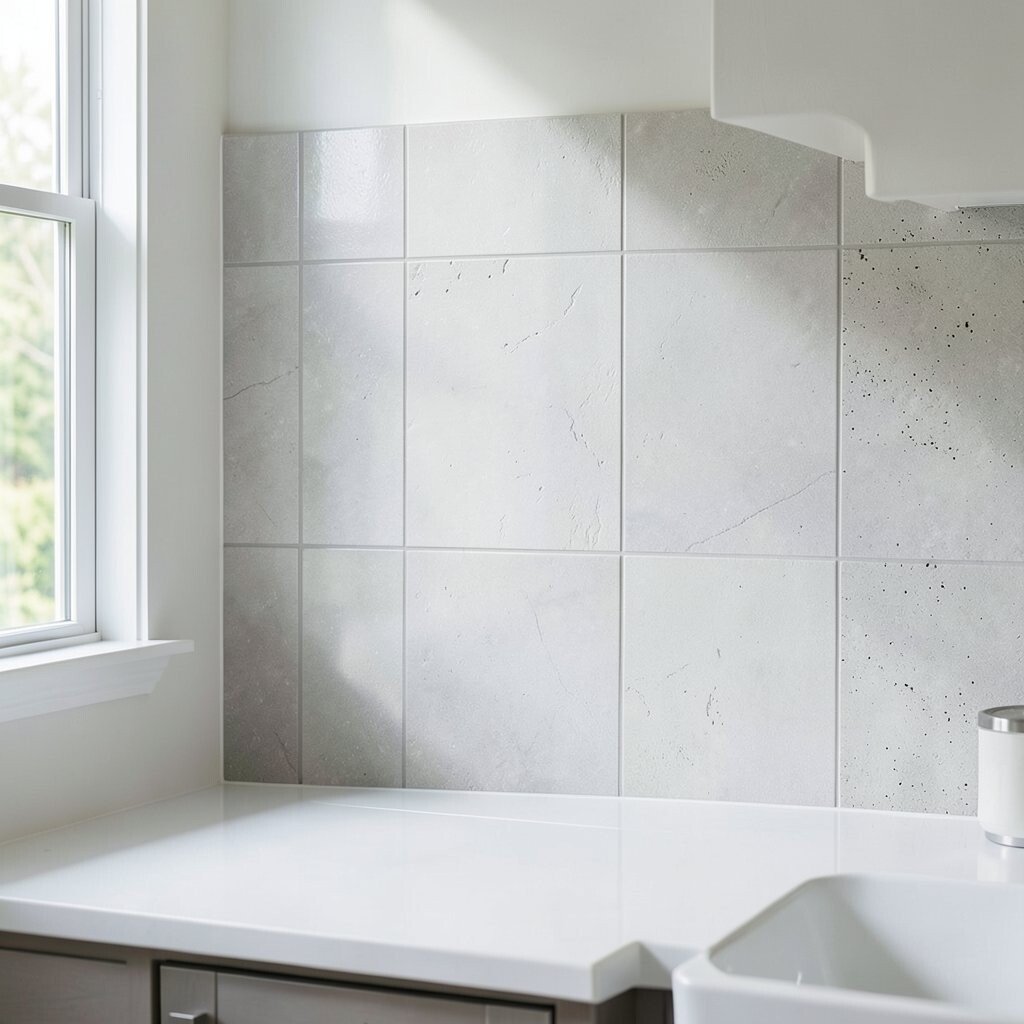
) Large-Format Ceramic Slabs for Minimal Grout Lines Large-format ceramic slabs make your backsplash look almost seamless. Instead of lots of small tiles, you see big surfaces with smooth flow.
This option can make installation feel faster and gives a clean look that matches modern kitchens. It also makes the wall easier to wipe because there’s less grout to scrub.
For tips, measure carefully and plan around outlets and corners. If you want personalization, choose a slab with subtle movement, like light veining, so the wall feels rich but not busy.
Cost can be mid to high depending on thickness and finish, but you may save money in labor if fewer pieces reduce installation time. A current trend is using slab looks in both white and warm stone colors to keep kitchens bright and upscale.
-
15) Glass and Ceramic Blend Design for the Best of Both
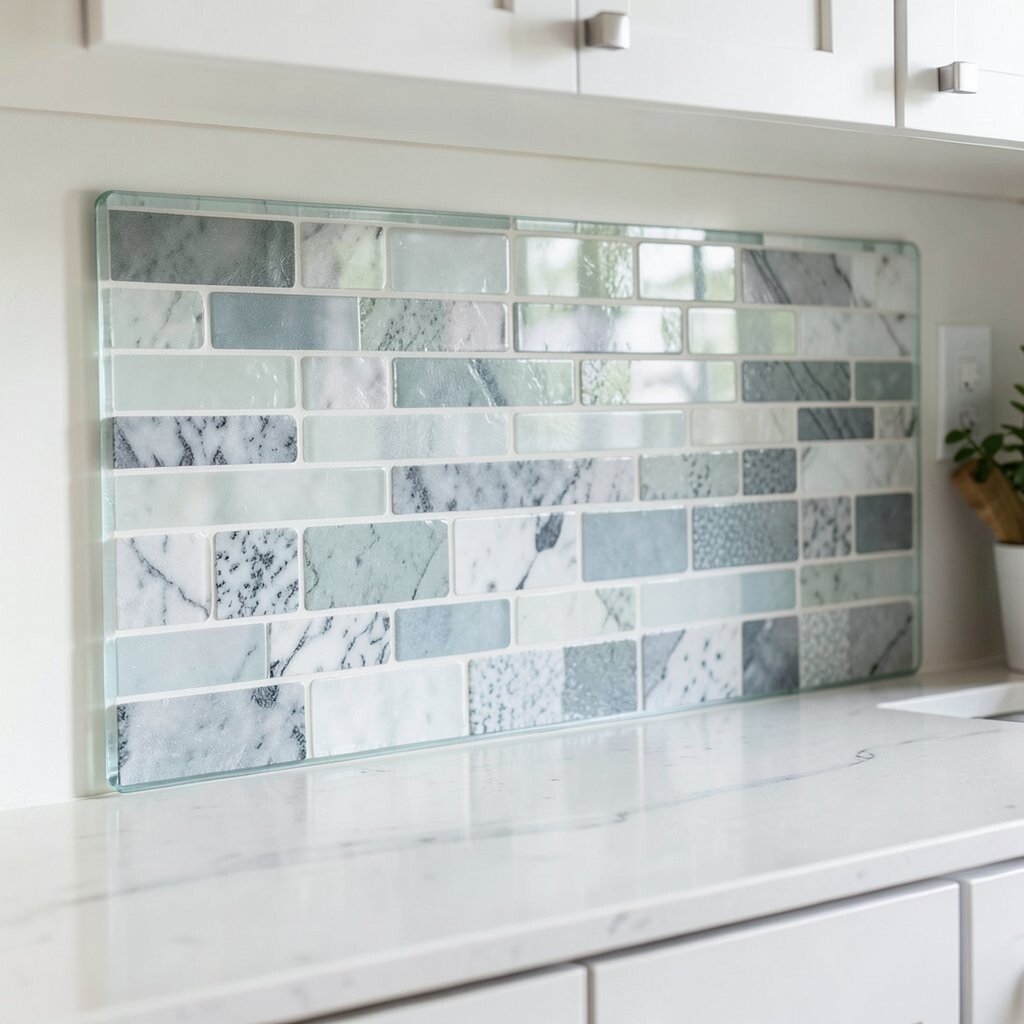
) Glass and Ceramic Blend Design for the Best of Both A blended backsplash uses both glass and ceramic so you can get shine and comfort in one design. You might picture glass mosaics in one section and ceramic subway tiles in another.
This is a great way to tailor the look to your kitchen because each material brings a different personality. Glass can highlight light and add sparkle, while ceramic can add warmth and classic charm.
For tips, decide your “main” material first and then use the other as an accent. Many homeowners like a ceramic base with a glass feature band near the countertop for a balanced look.
Personalization ideas: mirror your countertop pattern by picking glass in a color that matches the veining, or choose ceramic in a shade that works with your floors. Cost considerations depend on how much glass you use; glass tends to be pricier, so blend thoughtfully to manage the budget.
A current trend is mixing finishes—gloss with matte, shine with texture—so the backsplash feels styled, not plain.