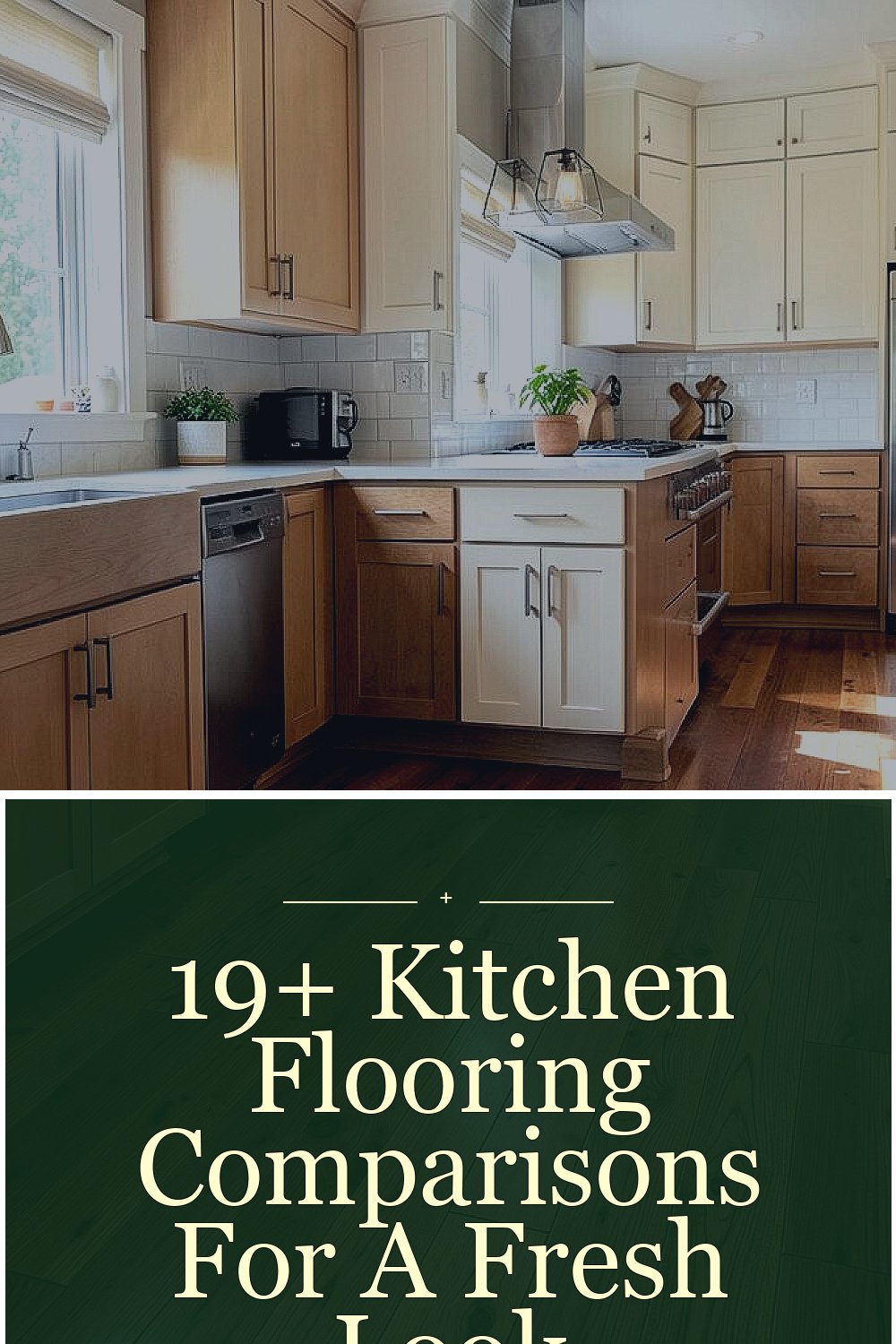
The floor you choose sets the mood before you even cook.
A fresh surface can make everyday spills feel easier to handle.
1. Porcelain Tile vs Ceramic Tile
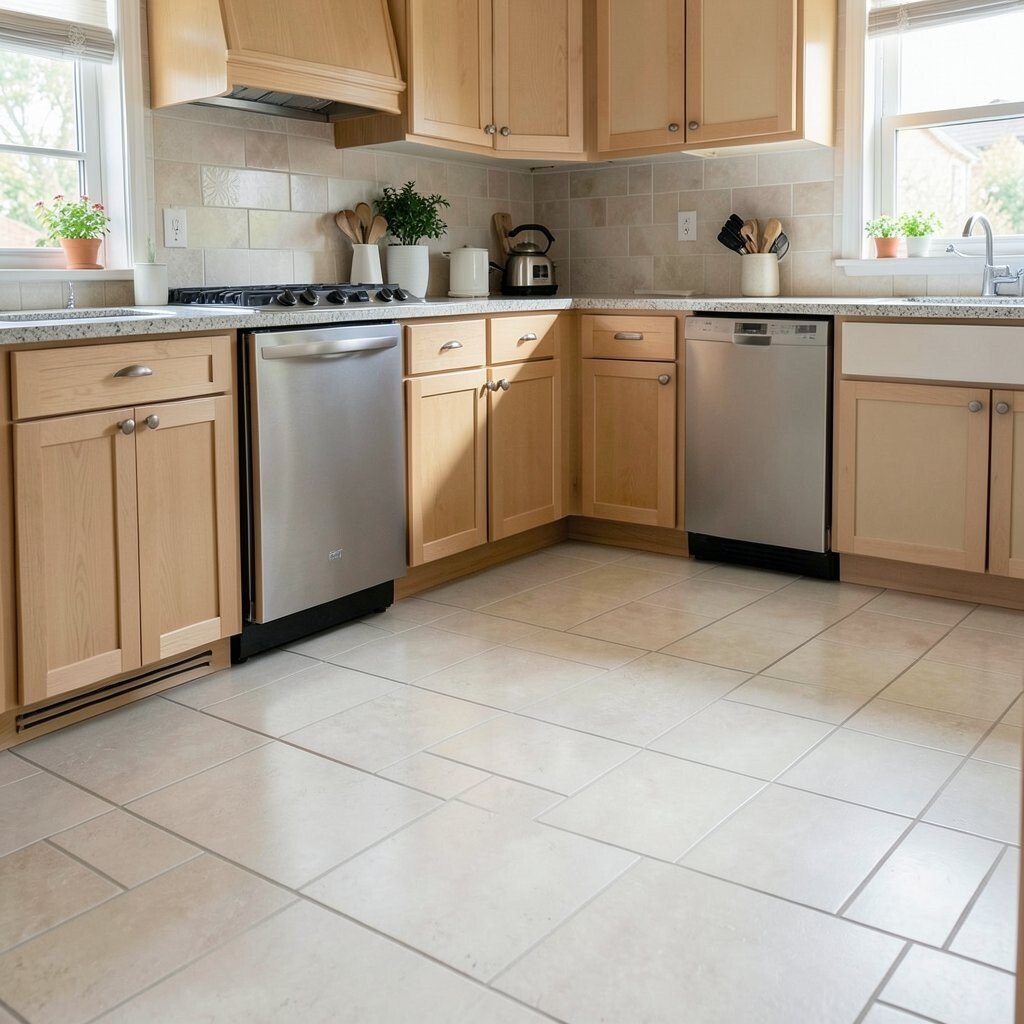
Porcelain and ceramic look similar at first glance, but porcelain often feels denser and more polished. You’ll notice crisp grout lines, a neat pattern, and plenty of color choices.
For kitchens, both options bring strong durability and easy cleaning. Porcelain usually stands up better to heavy foot traffic and water. If you like trends, look for large-format tiles and soft stone looks that mimic marble without the drama.
2. Vinyl Plank (Luxury Vinyl) vs Sheet Vinyl
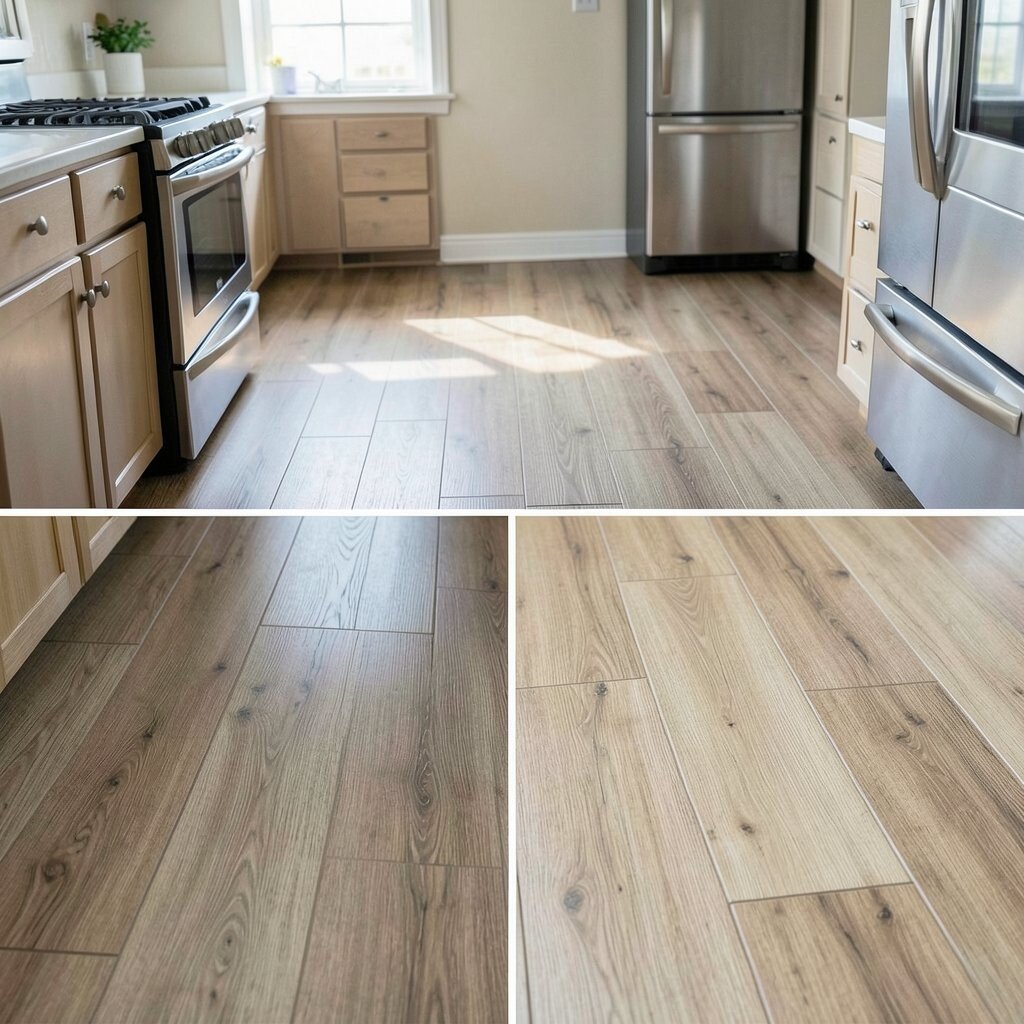
Luxury vinyl plank shows off realistic wood grains and smooth color blending. Underfoot, it feels warm for a kitchen, and it can hide small subfloor bumps.
Sheet vinyl gives a sleek, continuous look with fewer seams. It’s also great for resisting splashes around sinks and dish areas. For personalization, choose wide planks for a calmer look or pick a bold pattern for a modern kitchen vibe, and budget for quality underlayment to boost comfort.
3. Hardwood vs Engineered Wood
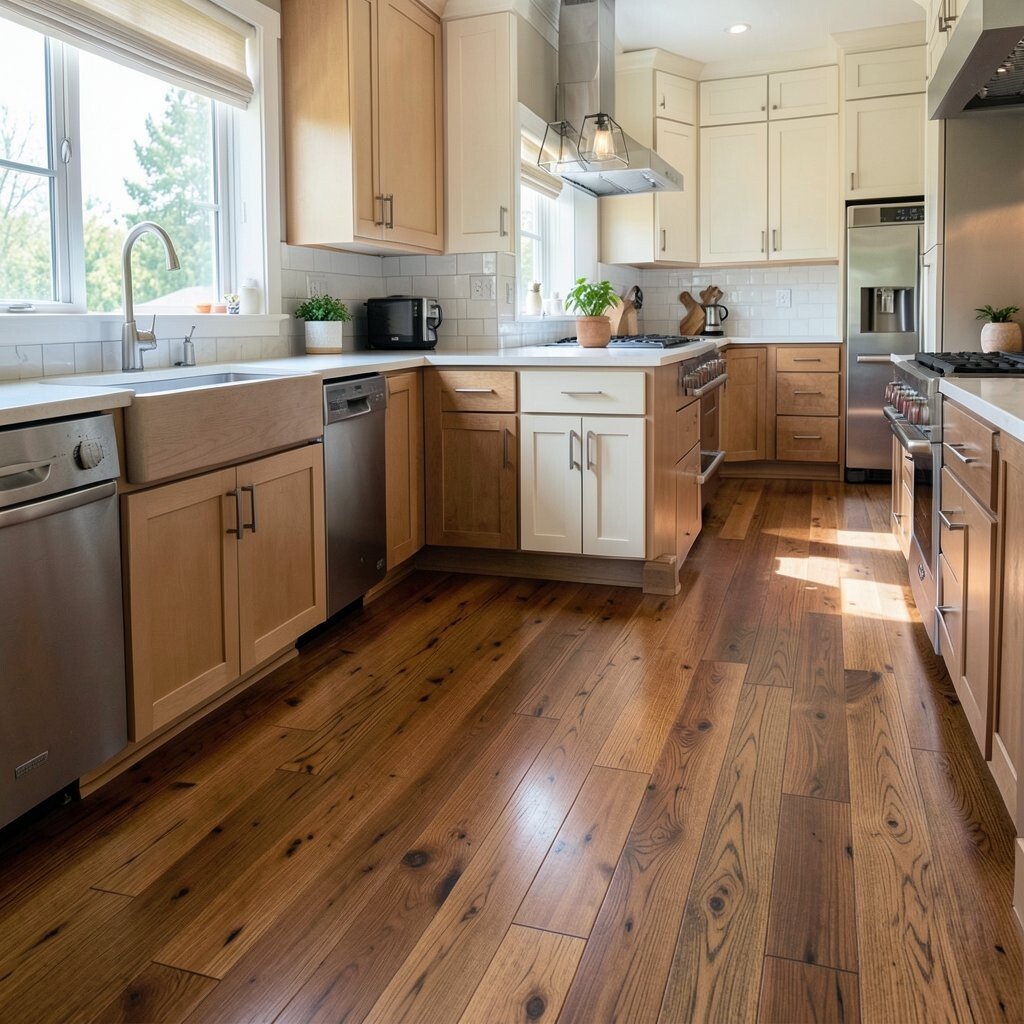
Hardwood flooring brings classic warmth and rich color that makes the room feel alive. You can see natural knots and swirls in the finish, and it pairs beautifully with most cabinet styles.
Engineered wood has a layered core that often handles moisture changes better than solid wood. Both options can be refinished, but engineered may have more limits depending on the top layer thickness. Cost can vary a lot, so compare installation quotes too, and consider a matte finish if you hate glare.
4. Laminate Flooring vs LVP (Loose-Lay Vinyl Options)
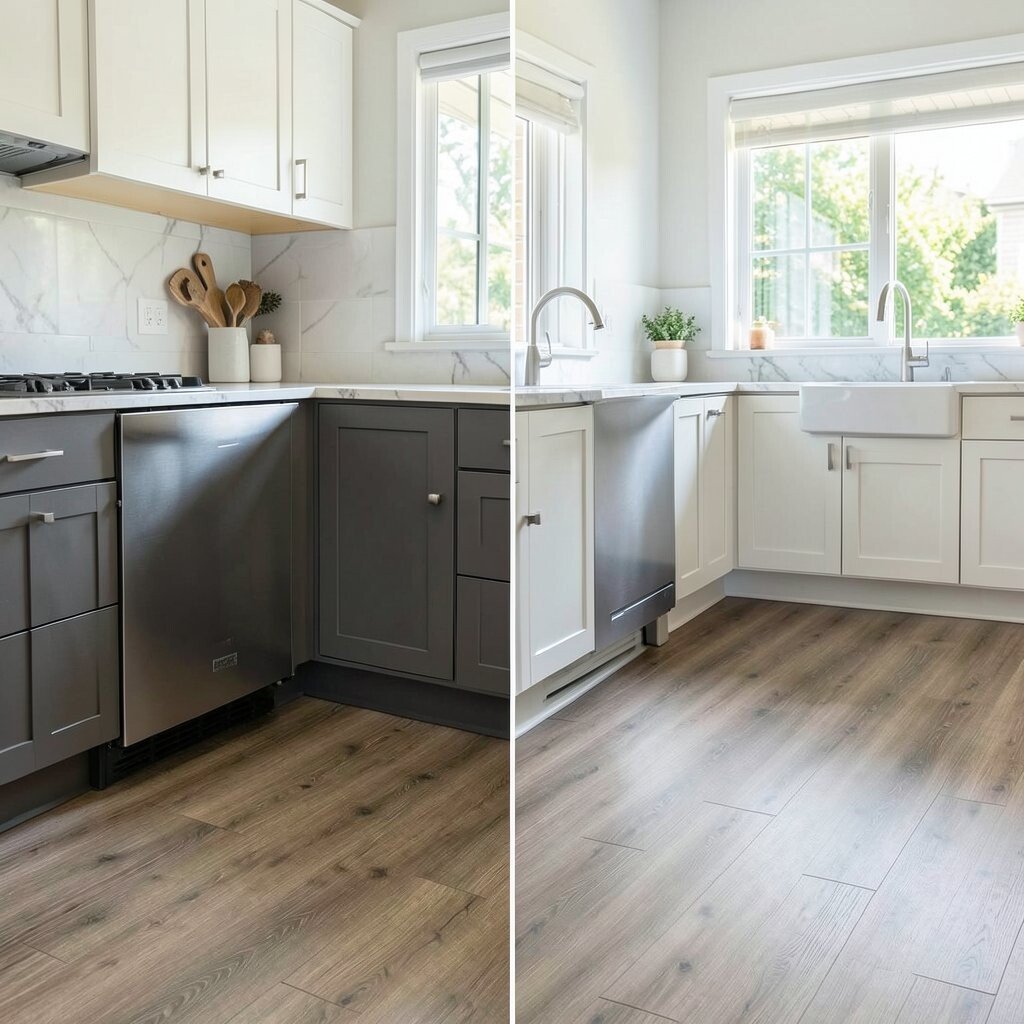
Laminate looks like wood or stone with a printed layer under clear wear protection. You’ll get a tidy, uniform look that can suit modern kitchens well.
LVP can feel more comfortable because many products have built-in cushioning. Laminate is often cheaper, but it may not like standing water for long. If you want trends, pick “hand-scraped” textures and wider boards, and make sure your installer uses the right underlayment for stability and quieter steps.
5. Natural Stone Tile (Slate, Travertine, Limestone)
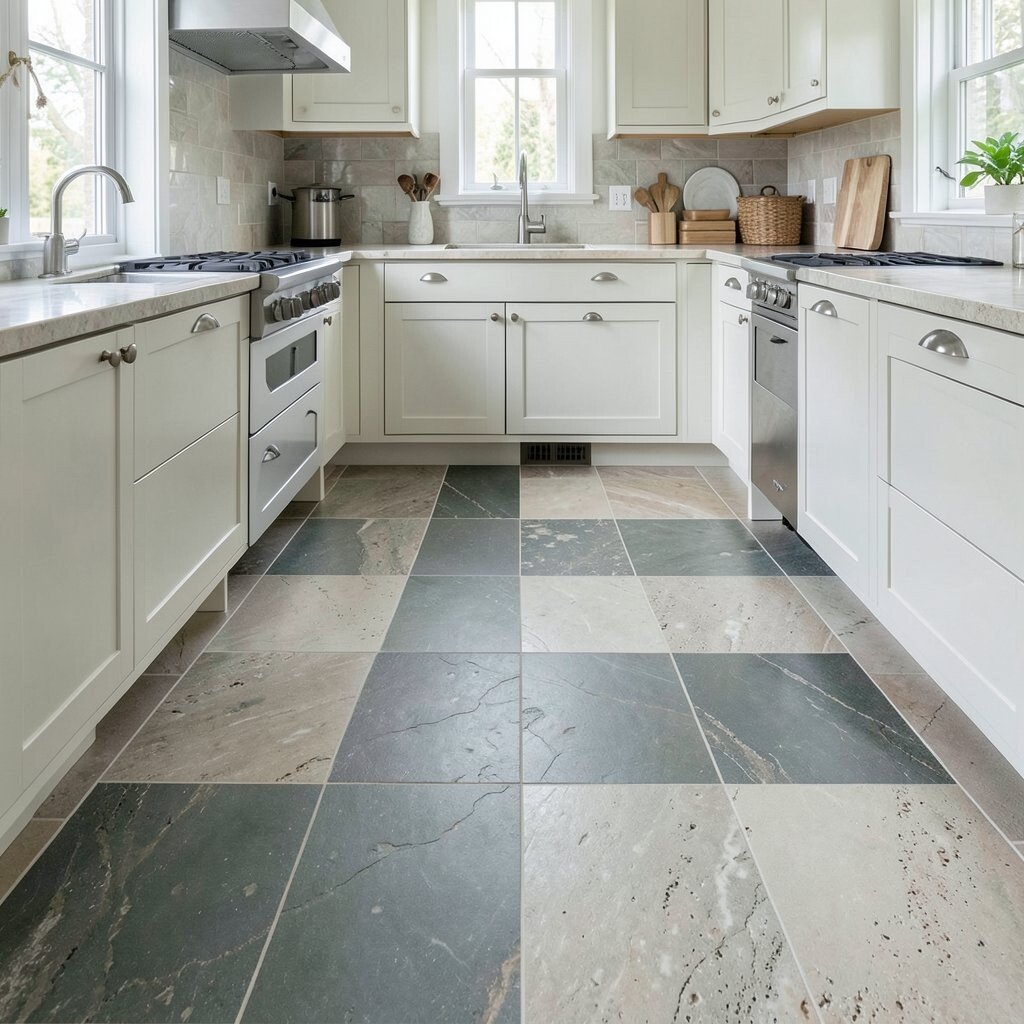
Natural stone floors have a one-of-a-kind character that looks like it was made for your home. You can spot gentle color shifts, speckles, and natural edges that feel special.
Stone adds a high-end look and can last a long time when cared for properly. The downside is that some stones may need sealing and extra cleaning habits. For personalization, mix a few larger tiles with smaller accents near the sink, and budget for sealing products and grout choices.
6. Cork Flooring for Soft Comfort
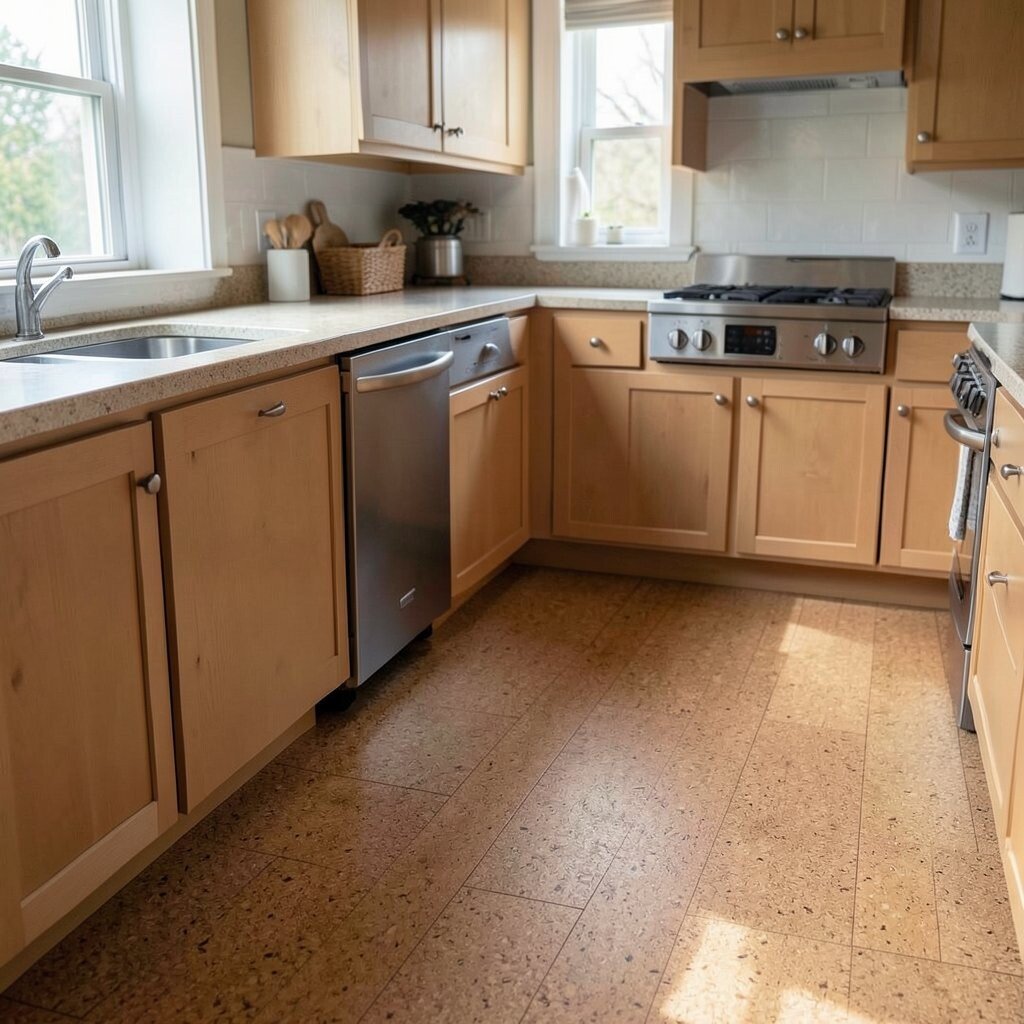
Cork feels springy under your feet, so standing while cooking feels less tiring. Its surface has a gentle, warm texture that looks earthy and cozy.
This material also helps with sound, so footfalls seem quieter. Cork can handle normal kitchen messes, but you’ll still want a protective finish for spills. Many homeowners choose cork for a more relaxing kitchen feel, and it’s a great choice when you want comfort without losing style.
Costs usually sit in the mid-range, but quality levels vary a lot. If you love a trend, search for cork with a clean, modern plank format rather than super rustic looks. Pair it with easy-wipe rugs near high-traffic spots for extra protection.
7. Polished Concrete for a Modern Edge
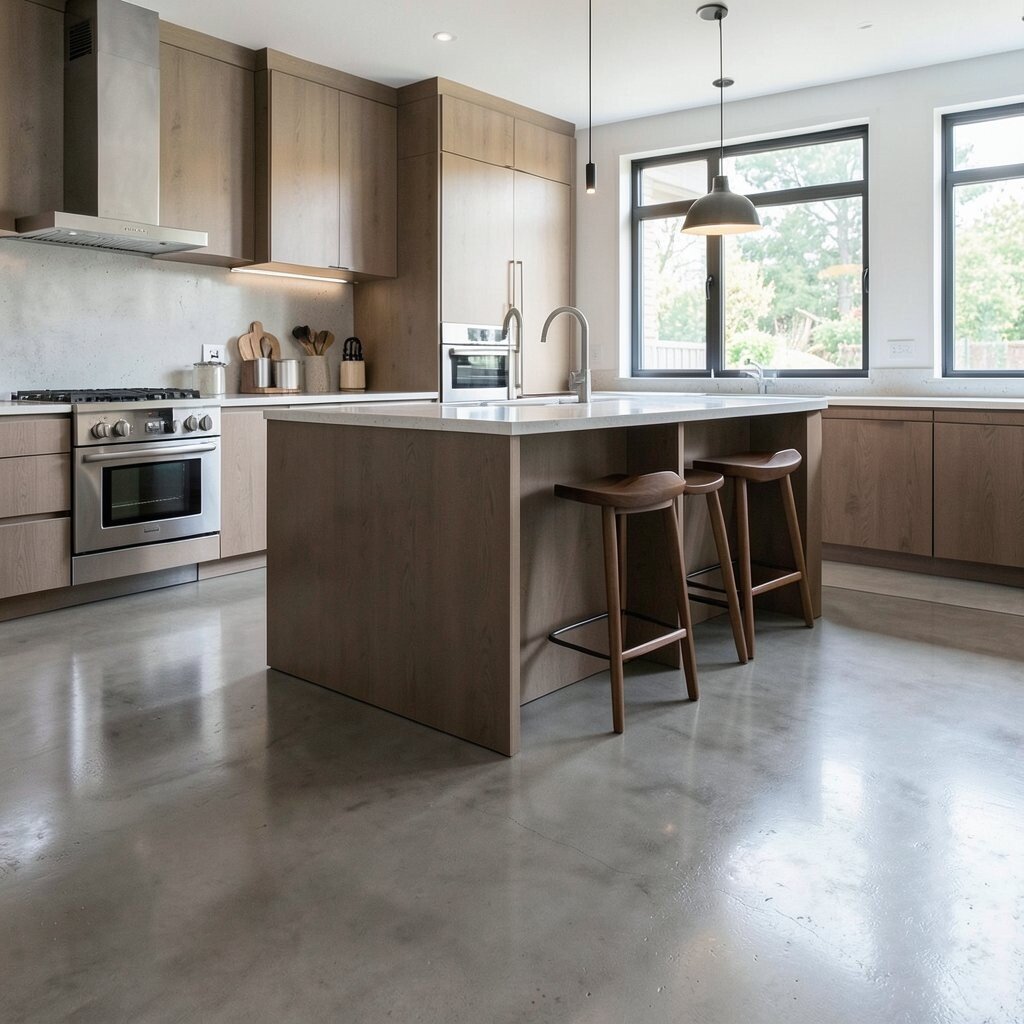
Polished concrete has a smooth, sleek look with a cool gray sheen or warm earth tones. It can show subtle swirls and natural specks that make each floor slightly different.
You’ll love how easy it is to clean and how well it handles heavy traffic. Concrete also keeps a kitchen looking crisp and contemporary. The best tip is to check whether your subfloor is already concrete or whether it needs preparation.
Cost can be higher for grinding and finishing, especially if you want a reflective polish. For personalization, add area rugs for color contrast and warmth. If your kitchen gets lots of sunlight, think about slip-resistant finishes so it stays safe.
8. Concrete Stain and Microtopping (DIY-Friendly Look)
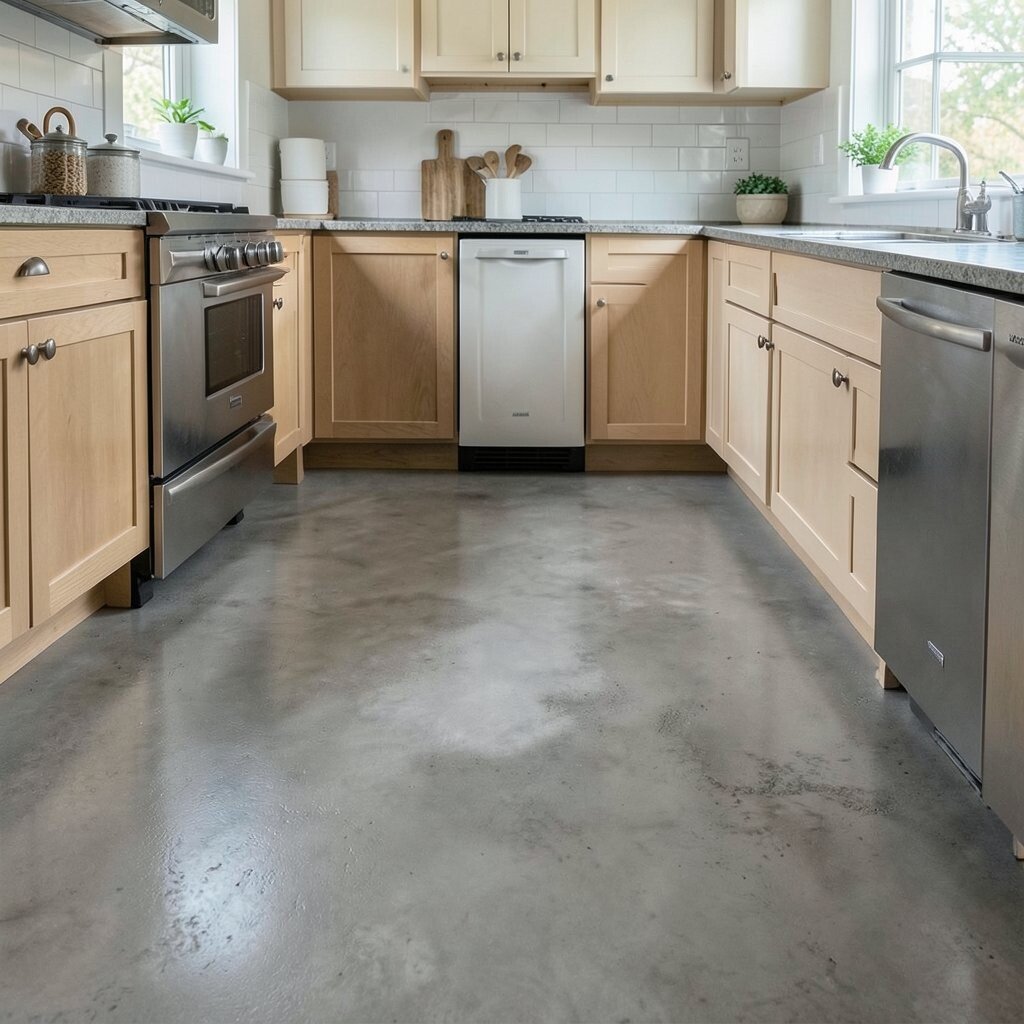
Concrete stain and microtopping can create a smooth, custom finish that feels industrial but still stylish. You can choose earthy stains, subtle marbling effects, or a uniform modern color.
This option is great for homeowners who want a tailored look and enjoy hands-on projects. It’s also durable and easy to wipe, especially when sealed correctly. Budget for sealing and top coats, because those layers help protect the surface.
To keep it comfortable, consider adding radiant heat or using thicker rugs in cooking zones. Current trends often lean toward warm greige and soft taupe tones. Make a sample panel first, because lighting can change the final shade a lot.
9. Ceramic Tile in Herringbone Patterns
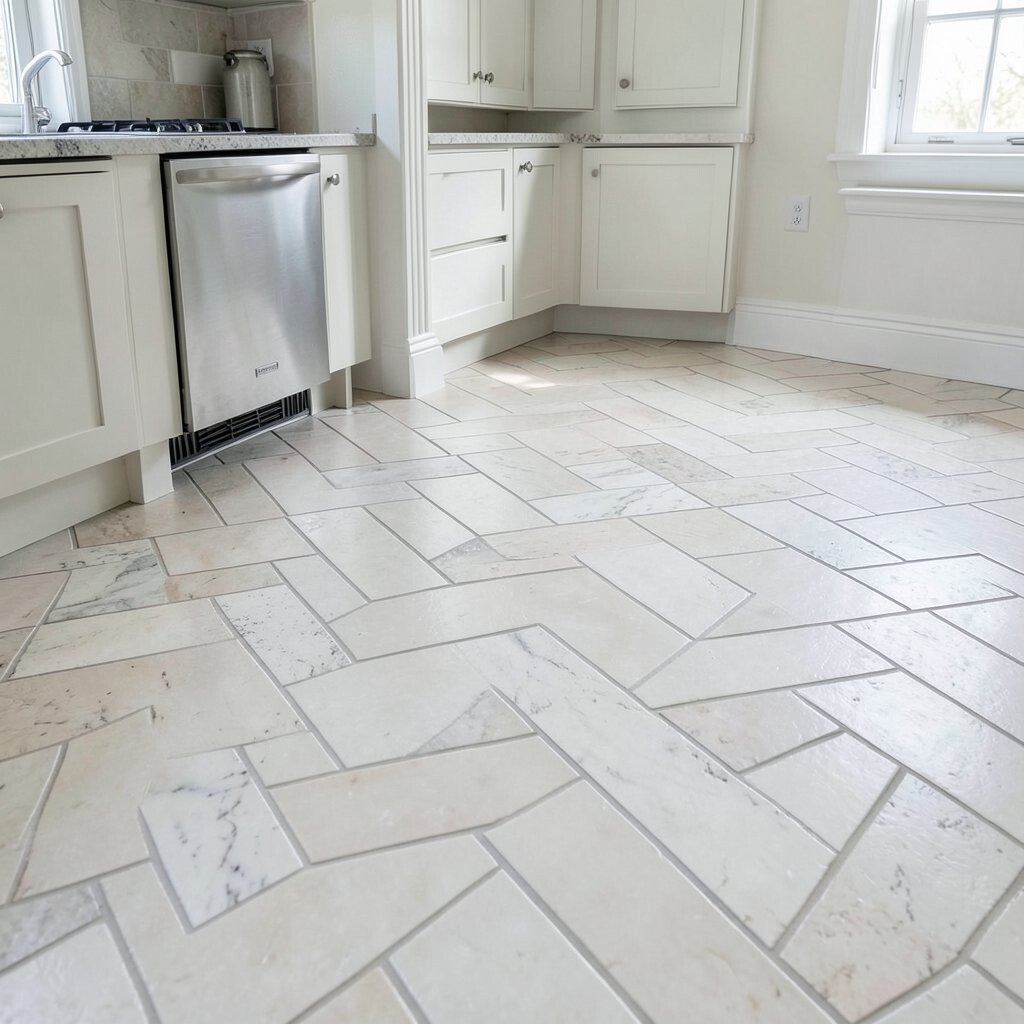
Herringbone ceramic tile gives a kitchen a moving, stylish vibe. The pattern catches light and adds visual energy without needing extra décor.
It’s durable, easy to clean, and perfect for busy homes. You can personalize with grout color: bright grout looks bold, while matching grout looks calm and blended. Costs can change based on tile size and how complex the pattern layout becomes.
When planning, measure carefully around cabinets and appliances. A tip: choose tiles with consistent variation so the pattern stays neat. If you want a trend, try large-format herringbone with minimal grout lines for a cleaner look.
10. Terrazzo Tile for a Playful, Premium Feel
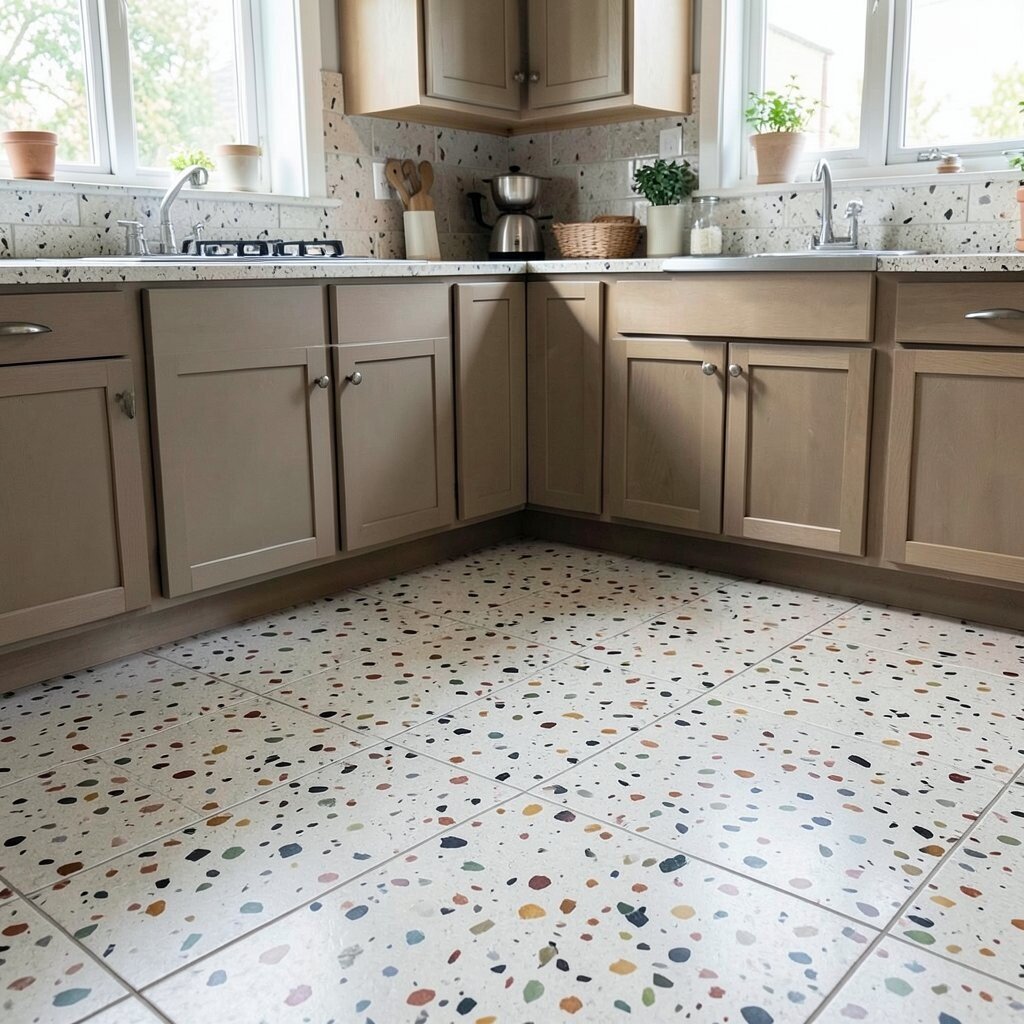
Terrazzo tile brings a speckled, art-like look that feels fun and grown-up at the same time. You’ll see little flecks that can match countertop colors for a coordinated design.
This flooring is known for durability and long-term beauty. It also hides minor scuffs well compared to lighter solid surfaces. For personalization, pick flecks that echo your backsplash or hardware finish, like brass or black accents.
Cost tends to be mid to high because of materials and installation details. If you want the trendy look without the biggest price tag, check for pre-mixed or smaller format terrazzo tiles. Also, choose a sealant plan for stain resistance, especially near the sink.
11. Engineered Vinyl Tile (and Why It’s Different)
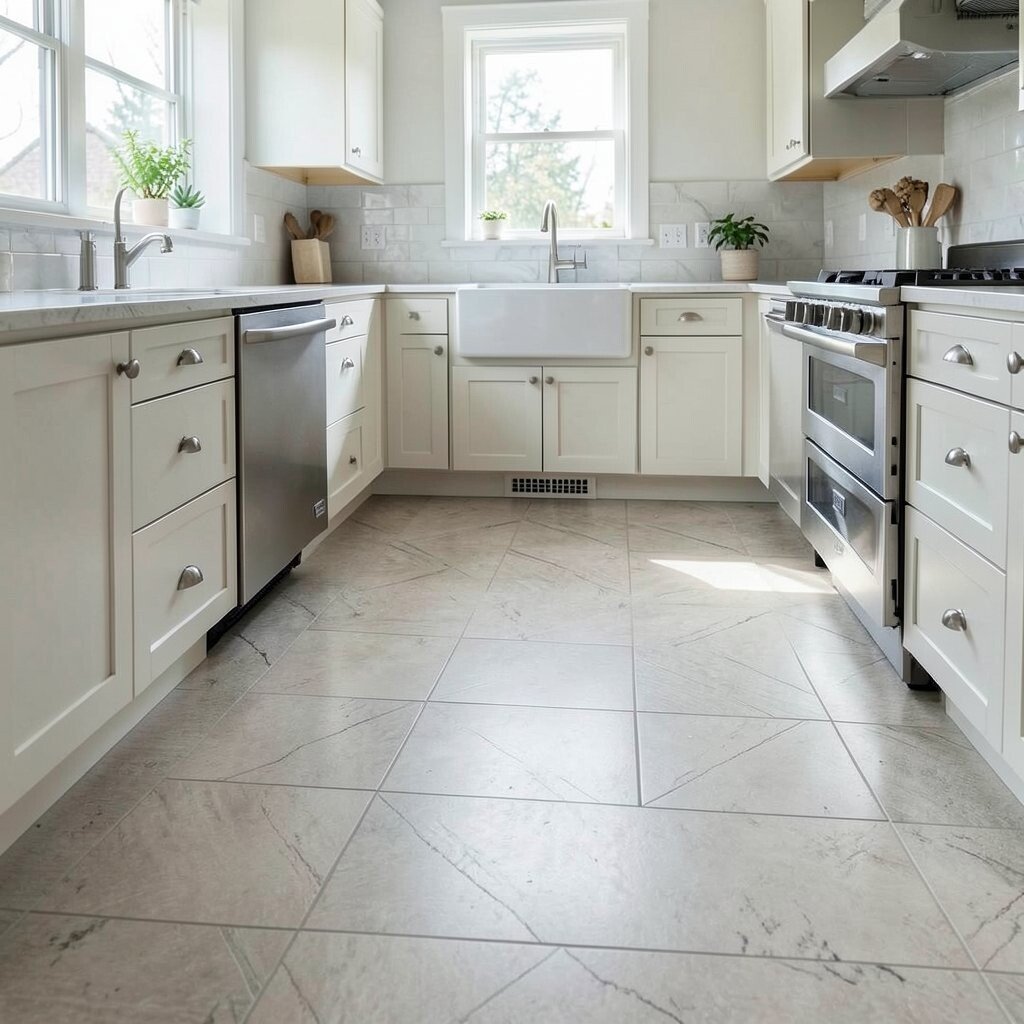
Engineered vinyl tile can look like stone or ceramic, but it usually installs with easier handling. You can get clean shapes with realistic textures and color depth.
Many styles include cushioned layers that make walking feel more comfortable. The benefits include good water resistance and simple maintenance. For personalization, choose larger tiles to create fewer seams, which helps the floor feel more continuous.
Cost often lands in a friendly range for many budgets, especially compared to natural stone. A helpful tip is to check wear layers, because thicker wear layers usually last longer. Keep a microfiber mop ready for quick cleanups after cooking days.
12. Bamboo Flooring for a Sleek, Eco Mood
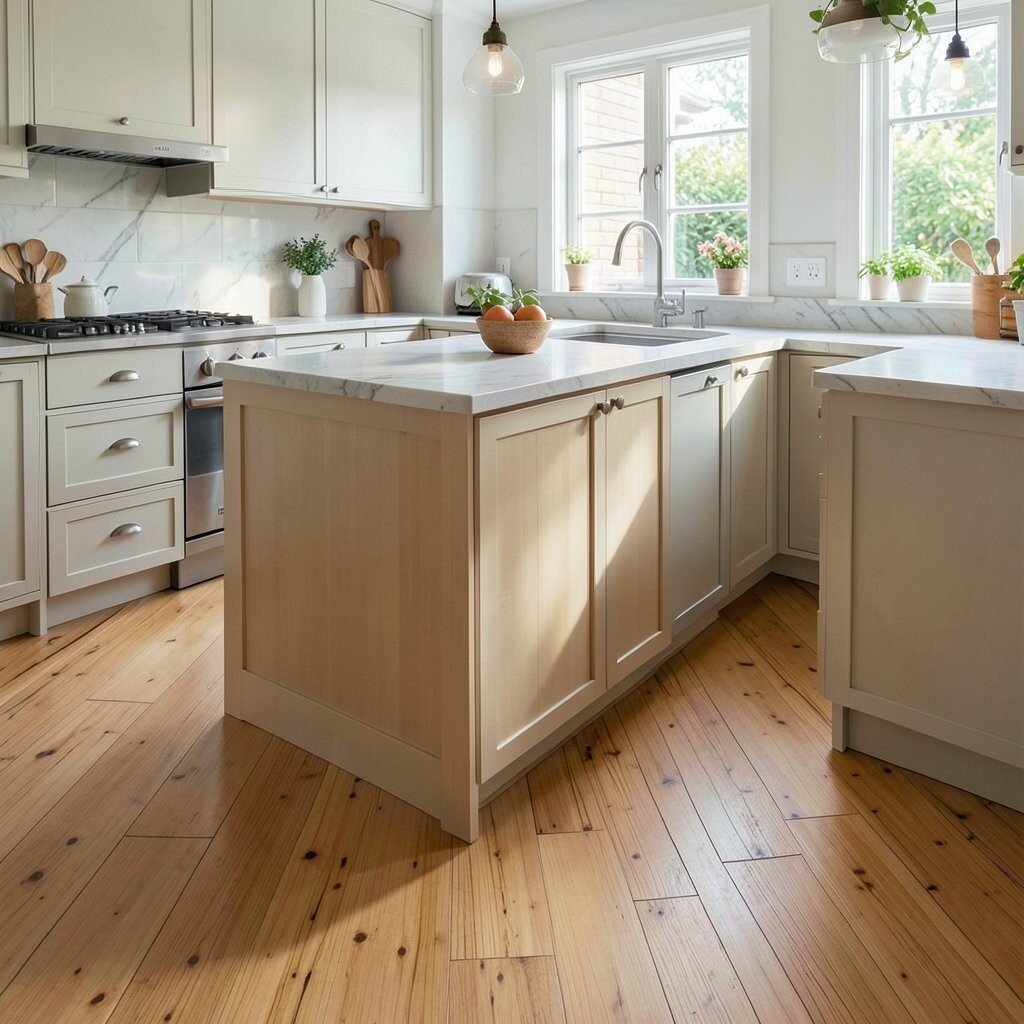
Bamboo can look smooth and modern, with light golden tones or darker stained shades. It adds a clean vibe that pairs well with light cabinets and warm wood tones.
Many people love bamboo for its renewable story and its natural strength. Bamboo can work in kitchens, but it still needs good sealing and prompt spill cleanup. If you like personalization, choose strand-woven bamboo for a denser look and extra durability.
Cost varies based on quality and finish. Budget for a pro install if your subfloor isn’t level, because bamboo shows gaps more easily. Also, keep a felt pad plan for furniture so the floor stays scratch-free.
13. Rubber Flooring (Gym-Grade Comfort for Kitchens)
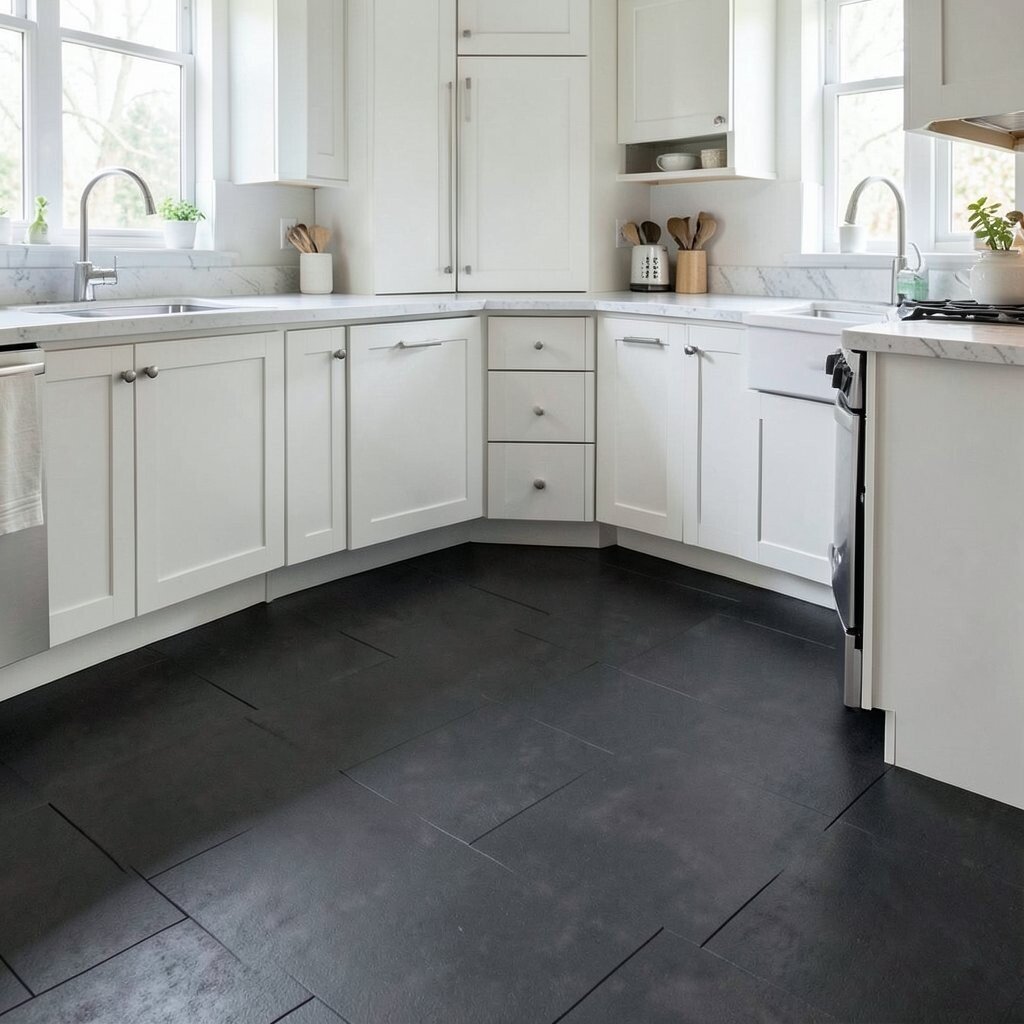
Rubber flooring brings a cushioned feel that makes standing easier during long cooking sessions. You can find it in warm neutrals, earthy browns, and even clean black tones.
This flooring is great for households that want comfort and slip resistance. It also handles impacts well, which can be useful for families with kids or pets. For personalization, choose a matte finish to avoid glare and pick a color that matches your cabinet undertones.
14. Natural Linoleum (Old-School Style, New Appeal)
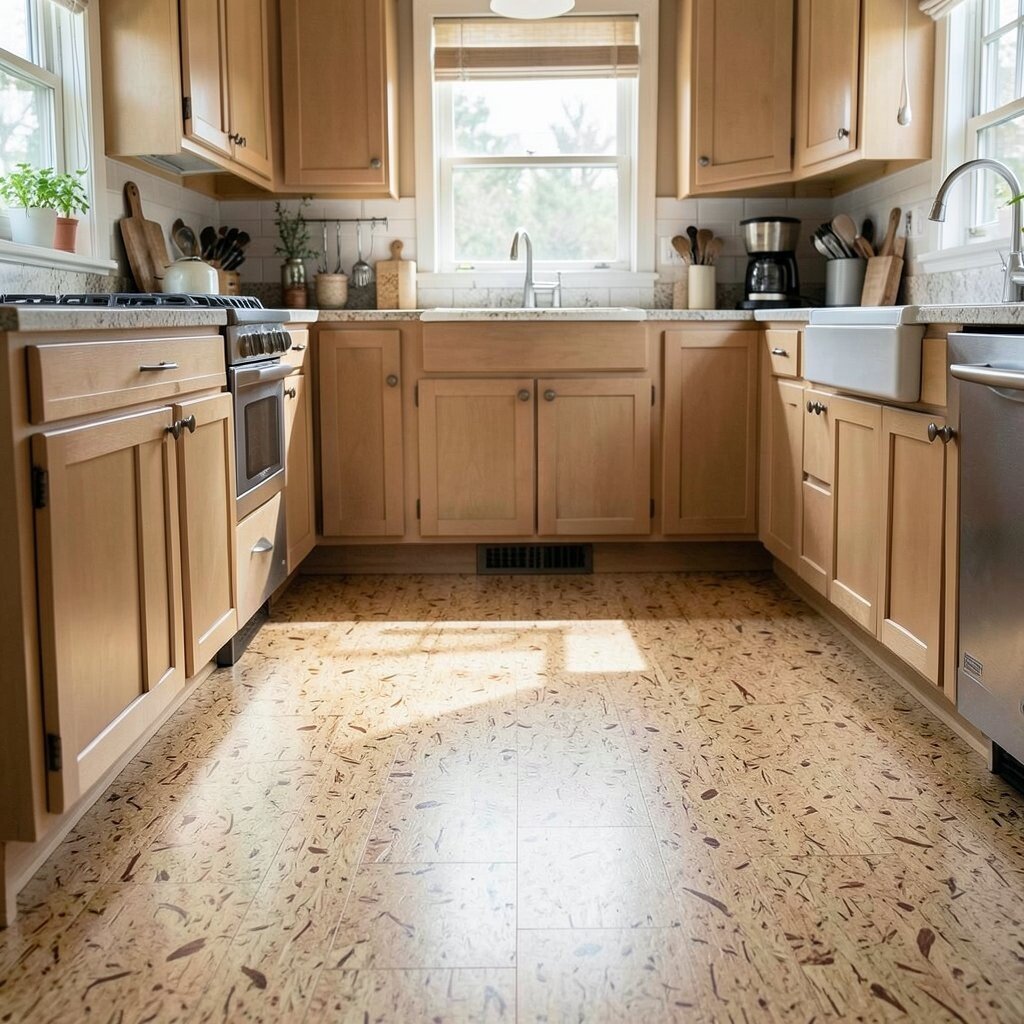
Natural linoleum has a soft, slightly matte surface with a gentle, classic pattern. It often looks subtly textured, which can hide minor scuffs and everyday marks.
It’s known for comfort and easy care with the right products. Linoleum can also be more forgiving than some hard floors when you drop a utensil. Cost varies widely based on brand, thickness, and installation method, so compare total project quotes, not just the tile or sheet price.
A current trend is using linoleum with bold borders or vintage-inspired layouts. If you like that look, plan your seam placement and choose a color palette that ties into your backsplash. Always protect it with recommended finishes to help resist spills.
15. Engineered Hardwood Tiles for Easy Updates
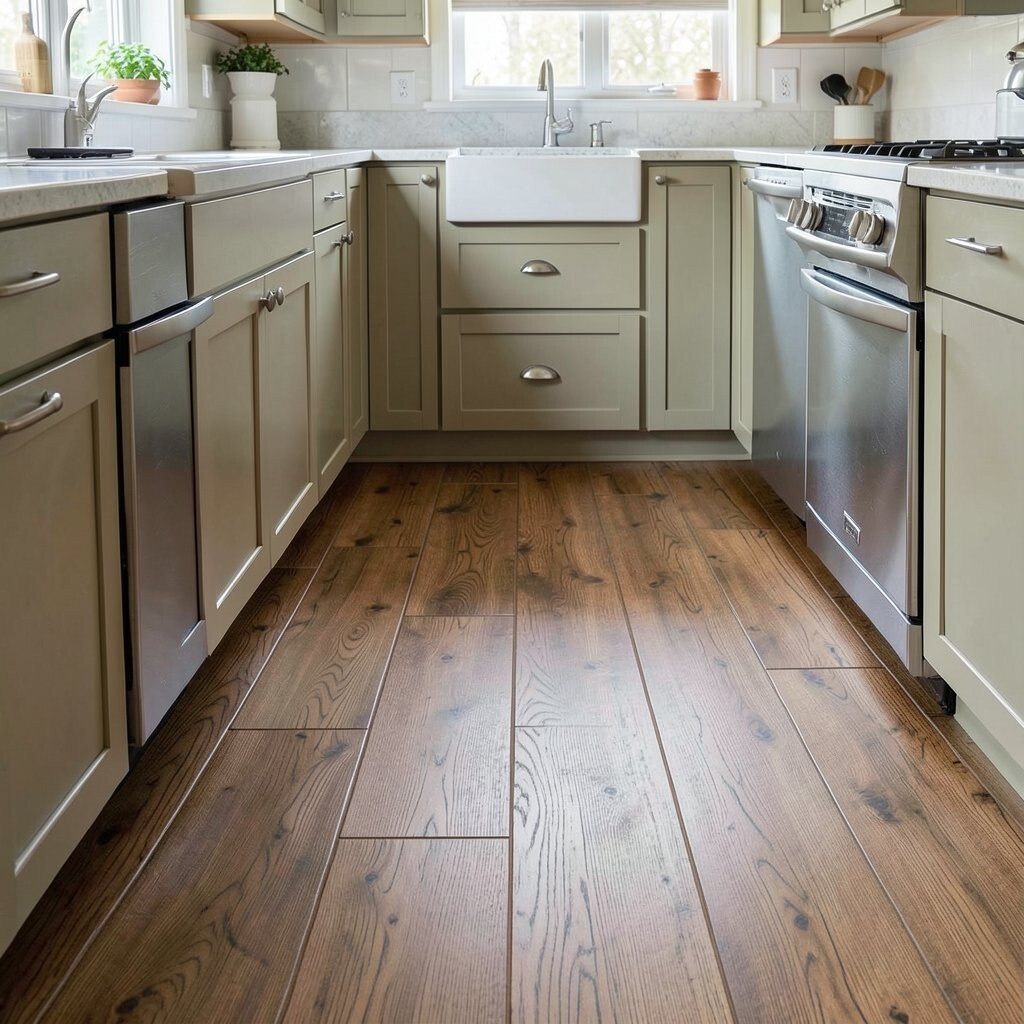
Engineered hardwood tiles give the look of wood with a layout that feels tidy and planned. You can choose rectangular or plank-style tiles that make the kitchen feel bigger.
They often handle small changes in humidity better than solid hardwood. Maintenance is usually simpler than you might expect, and many products can be cleaned with a damp mop. For personalization, pick a wide tile format to reduce visual breaks.
Costs are often in the mid-range, though premium brands can be pricier. A smart tip is to check thickness and wear layer for long-term refinishing potential. If you want a trendy look, choose “light wire-brushed” finishes that look natural but still modern.
16. Travertine with Brushed Finish (Warm Stone Look)
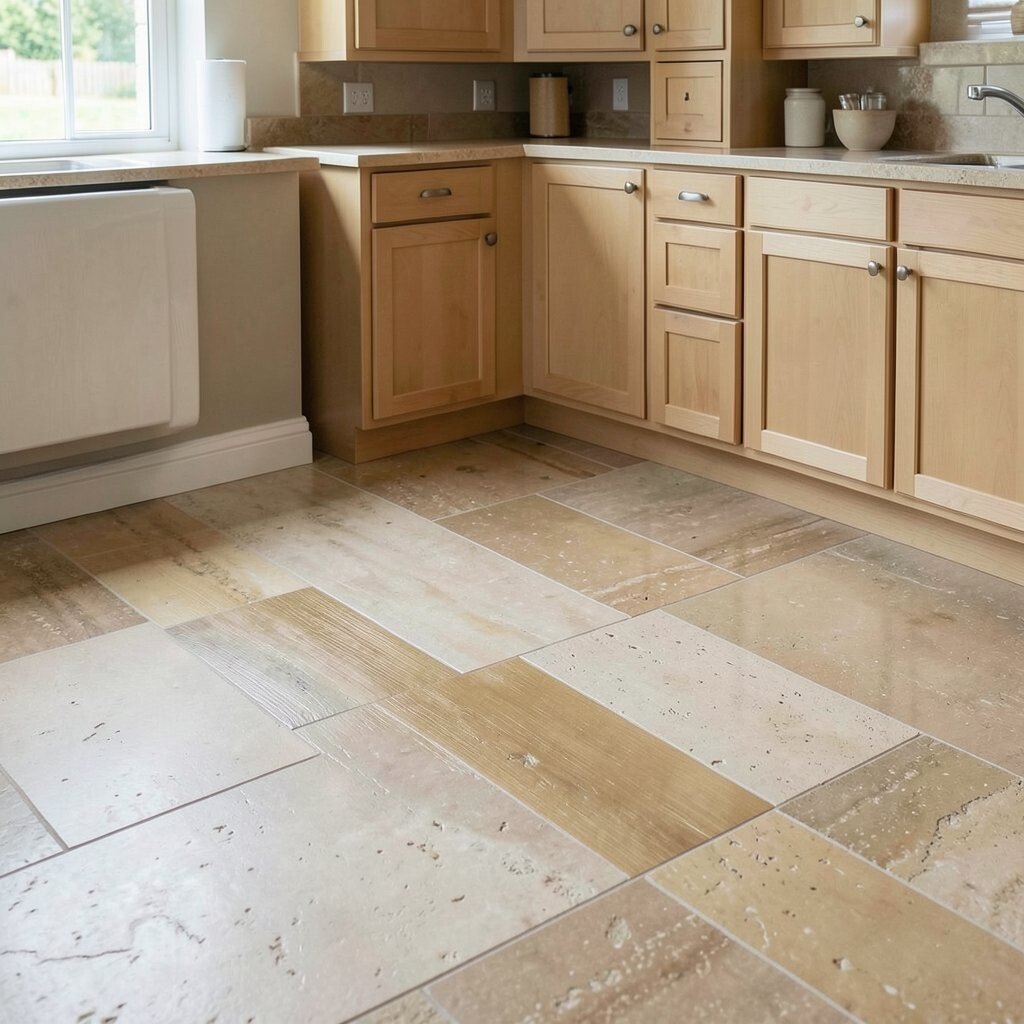
Travertine offers a warm, spa-like look with natural pores and soft, creamy colors. A brushed finish can make it feel less slippery and more inviting.
Stone flooring boosts the luxury feel of a kitchen and stands up well to everyday use. The unique part is that each tile pattern and color variation looks personal. For tips, choose a grout color that matches the overall stone tone to make the floor look calm and seamless.
Cost can run higher once you add sealing, grout, and careful installation. If you’re planning a refresh, get a few samples and compare them under kitchen lighting. This helps you avoid surprises when the floor reads warmer or cooler than expected.
17. Porcelain Slabs vs Tile for Low-Grout Drama
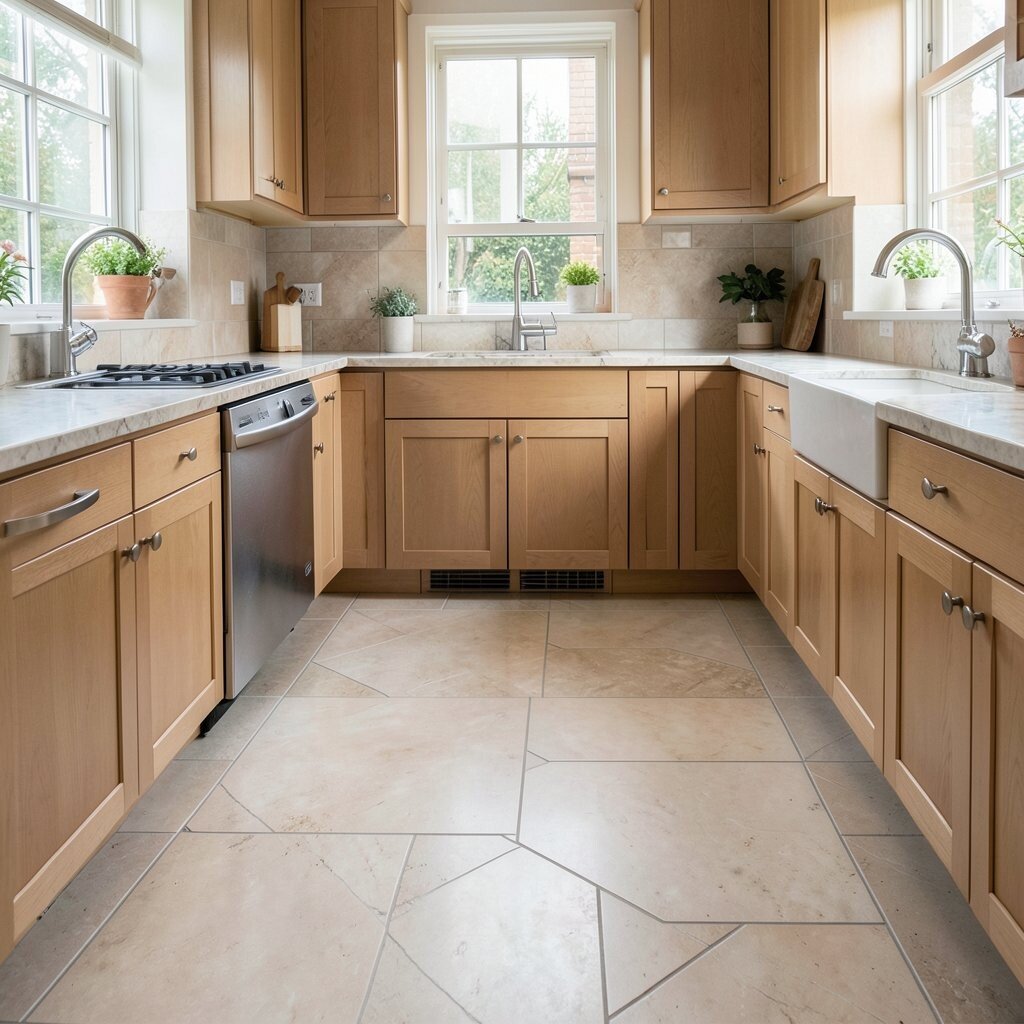
Porcelain slabs create a smooth, large-surface look that reduces grout lines. You’ll notice a clean, modern floor that feels almost seamless from a distance.
This helps with cleaning because there are fewer grout areas where dirt can gather. Large-format floors also create a more open, airy feeling in kitchens. For personalization, choose slip-resistant finishes and look at subtle veining patterns that mimic natural stone.
Cost can be higher due to slab size and installation needs. However, fewer tile joints can lower long-term maintenance and help the kitchen stay crisp. Talk to your installer about layout cuts around cabinets so the pattern stays balanced.
18. Carpet Tiles for a Cozy Cooking Zone
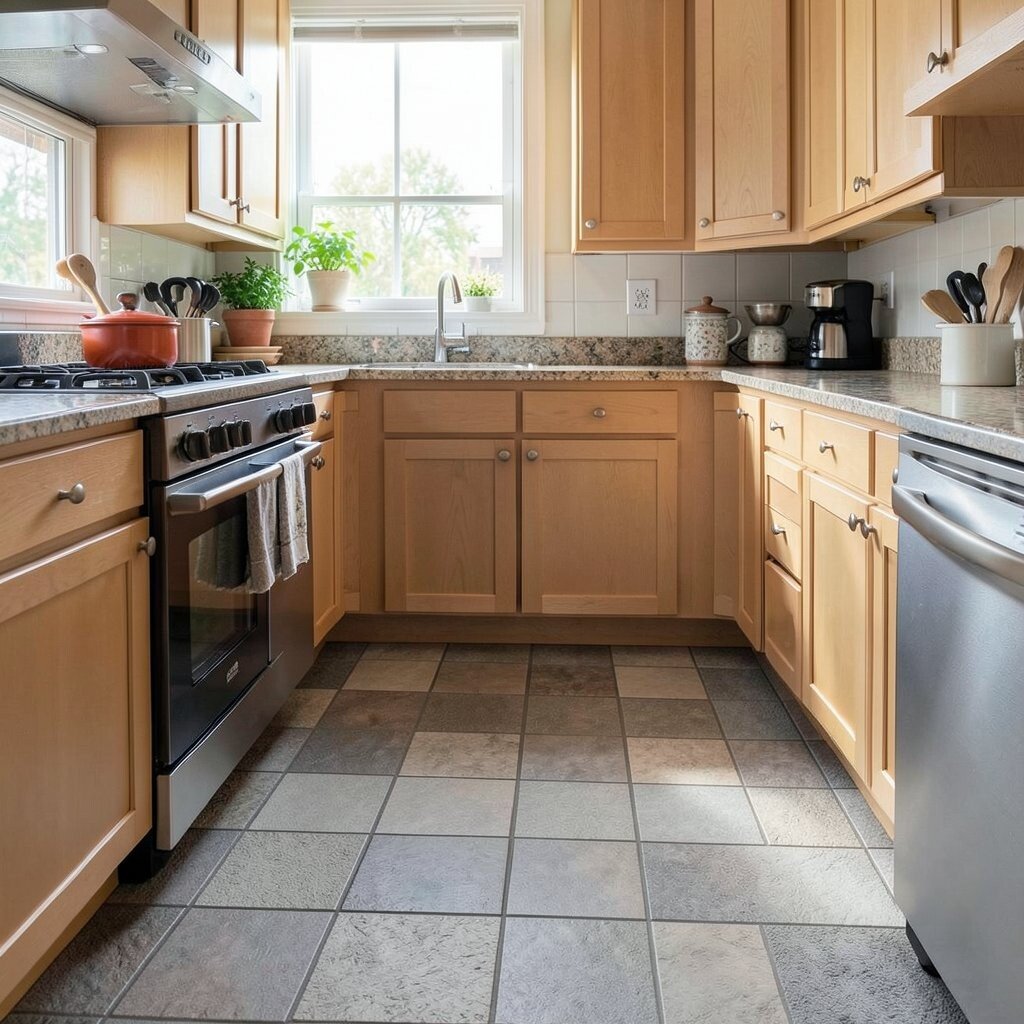
Carpet tiles can bring comfort and softness to your kitchen, especially near a breakfast nook. You’ll get warm texture that helps the space feel friendly and less echo-y.
They’re also easy to replace if a spot gets stained, which can be a big win. For benefits, the underfoot feel reduces strain while you stand at the stove or prep counter. A tip: keep carpet tiles only in a dining or small cooking-adjacent area, and use wipeable flooring near the sink for safety.
19. Tile + Wood Combo (Zoning That Looks Intentional)
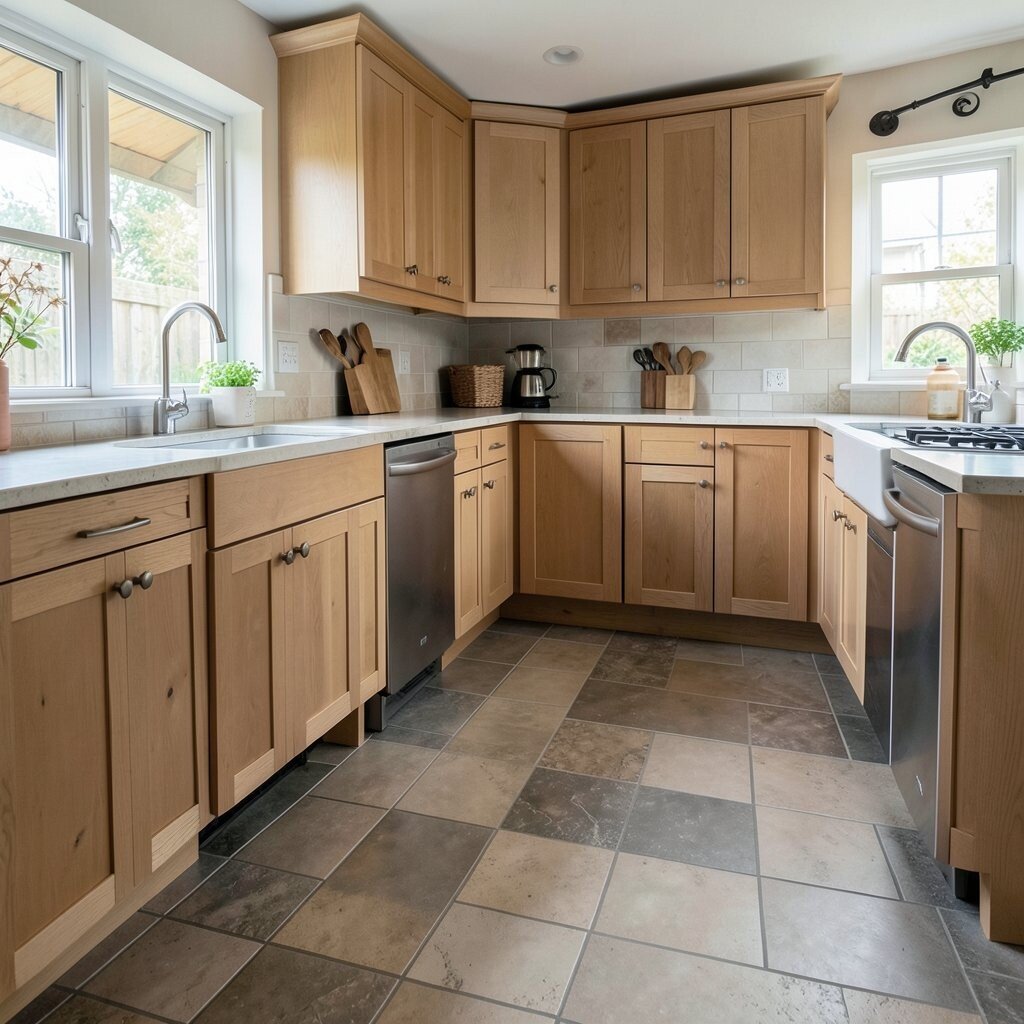
A tile and wood combo gives you clear kitchen zoning that feels stylish and practical. You might place tile where splashes happen and wood where you like to linger.
This method helps you get the best of both worlds: water-resistant strength plus warm wood beauty. Planning matters most, so use a matching transition strip that feels smooth and secure. Cost depends on the materials you choose and how complicated the layout is, especially when you cut around cabinets.
For personalization, align the wood plank direction with your main visual lines and keep the tile pattern consistent. Current trends often favor bold transitions, like a sleek metal strip or a contrasting tile border. Take time to sketch your zones so the design looks intentional, not accidental.
20. Choosing by Routine: High-Traffic, Kids, Pets, and Style
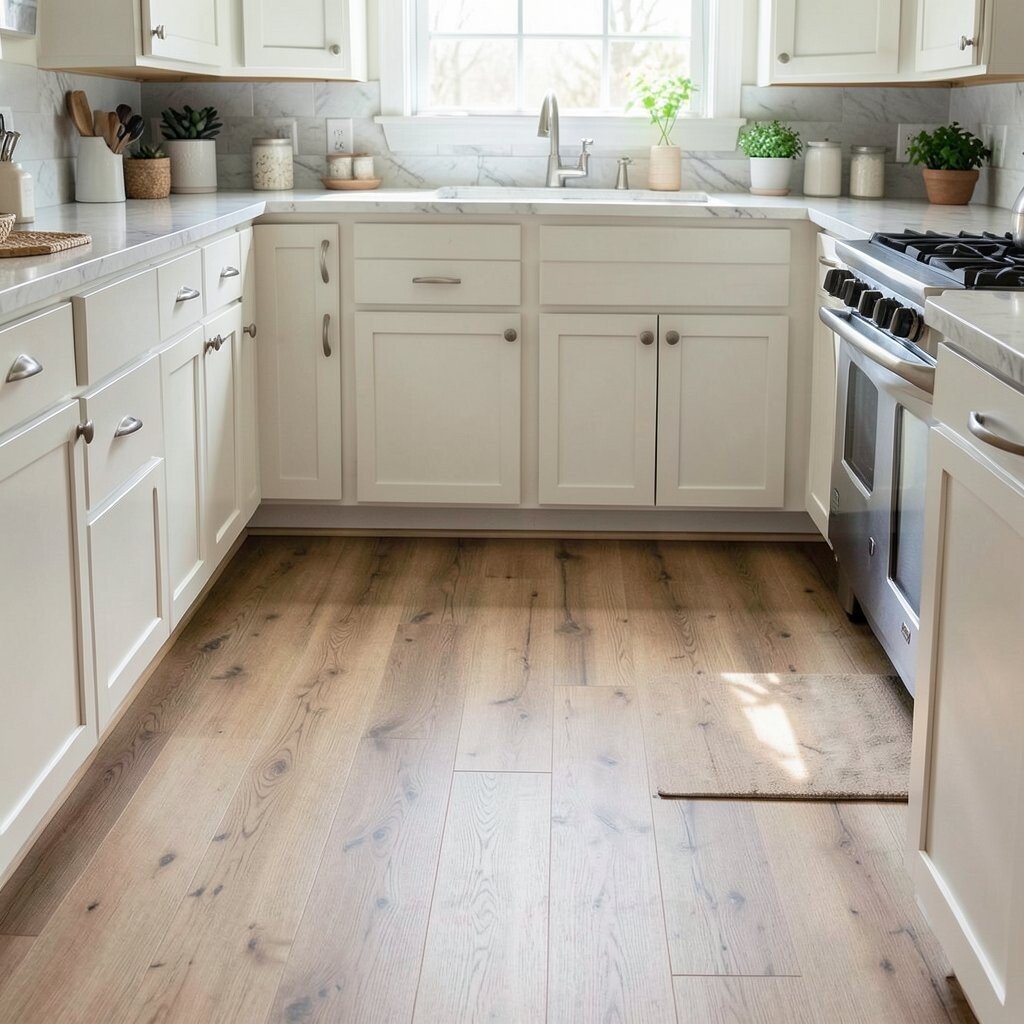
Your flooring should match your daily life, not just a photo. If you cook often, spill often, or host friends, you’ll want materials that handle real moments.
Start by thinking about routine: how fast you clean, how much water gets near the floor, and where chairs roll. Then compare durability ratings, water resistance, and comfort levels for each option. A helpful tip is to pick at least two top favorites and compare them by installation steps and maintenance products.
Cost should include more than the material price, like underlayment, sealing, removal of old flooring, and labor. For personalization, build around your countertops and backsplash, then add a rug plan for style and protection. With the right match, your kitchen can look fresh and feel great every single day.