
Some rooms feel calm the moment your eyes land on the pattern. A well-made mosaic can turn an ordinary wall into a story you want to step closer to.
-
Sunburst Terracotta Tiles
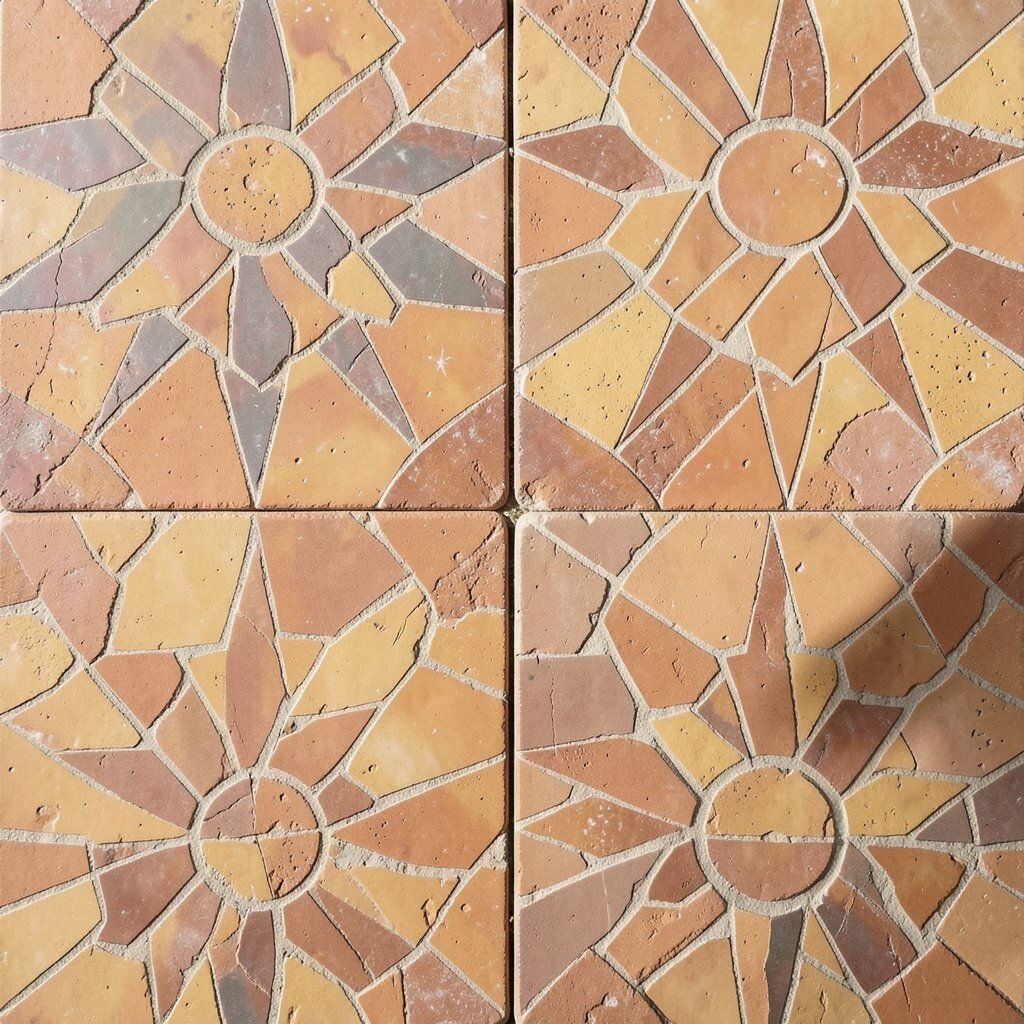
Sunburst Terracotta Tiles The design starts at the center like a warm sunrise, with curved lines spreading outward. You’ll see terracotta reds, clay oranges, and soft creams that glow even in dim light.
This mosaic is great for entryways, where you want a friendly “welcome” feeling. It can hide small wall bumps because the pattern breaks up plain areas visually. To keep it looking neat, use a grout color close to the lightest tile so the design feels smooth.
-
Ocean Wave Blue Panels
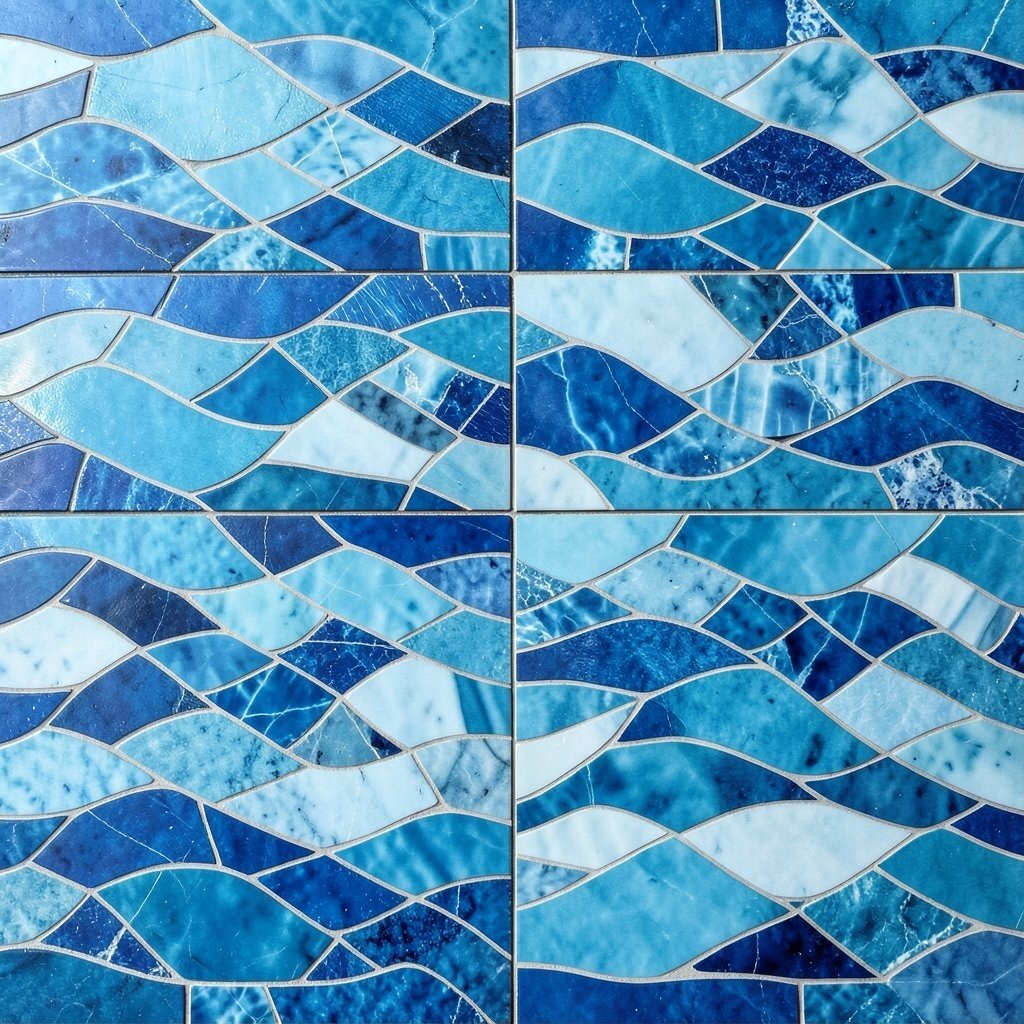
Ocean Wave Blue Panels Imagine gentle waves made from glossy glass pieces in seafoam and deep navy. The shimmer makes the design feel like it moves when light hits it.
This style works especially well in bathrooms, kitchens, and spa-like corners. It also helps brighten a space because the reflective tiles bounce light around. For personalization, add a thin “waterline” band with lighter tiles near the bottom edge to frame the room.
Cost can vary because glass tiles and specialty shapes often cost more than standard ceramics. If you want to save money, use a larger tile for the background and spend extra on the wave pieces. Keep the layout simple and repeat the curve lines so your project stays manageable.
-
Geometric Hexagon Basketweave
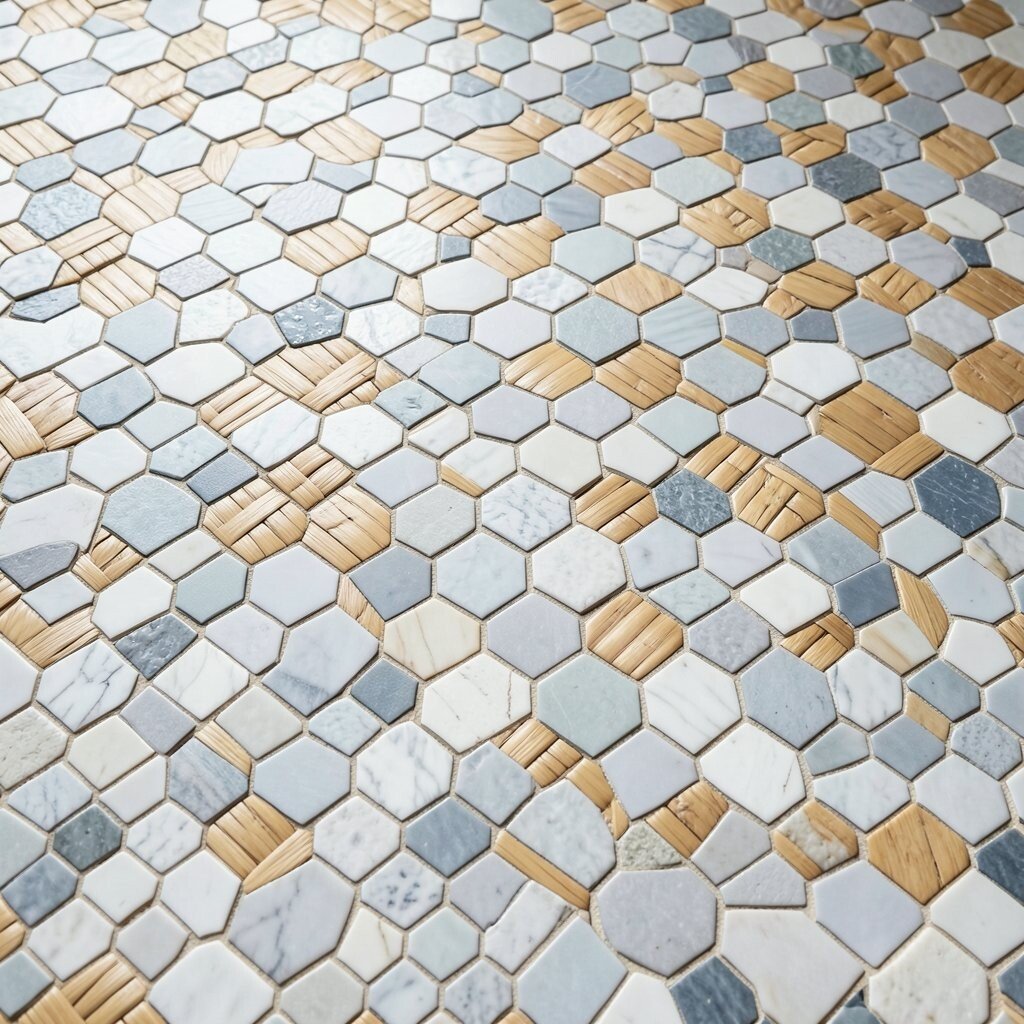
Geometric Hexagon Basketweave Hexagons interlock like a basket, creating a strong, clean rhythm. You can choose bold colors for a modern look or keep it earthy for a cozy feel.
The benefits show up fast: geometric mosaics make walls and floors look organized and crisp. They also work well in small spaces because the repeating shapes give your eye something steady to follow. Try a limited palette—two main colors plus one accent—so it stays stylish instead of busy.
For uniqueness, mix matte tiles with glossy accents at key points, like the center or corners. If you’re placing it on a floor, pick slip-resistant mosaic tiles and use a grout sealer to reduce staining. A simple way to estimate cost is to compare tile prices and then add the expense of extra grout and sealing materials.
-
Rose Garden Floral Medallion
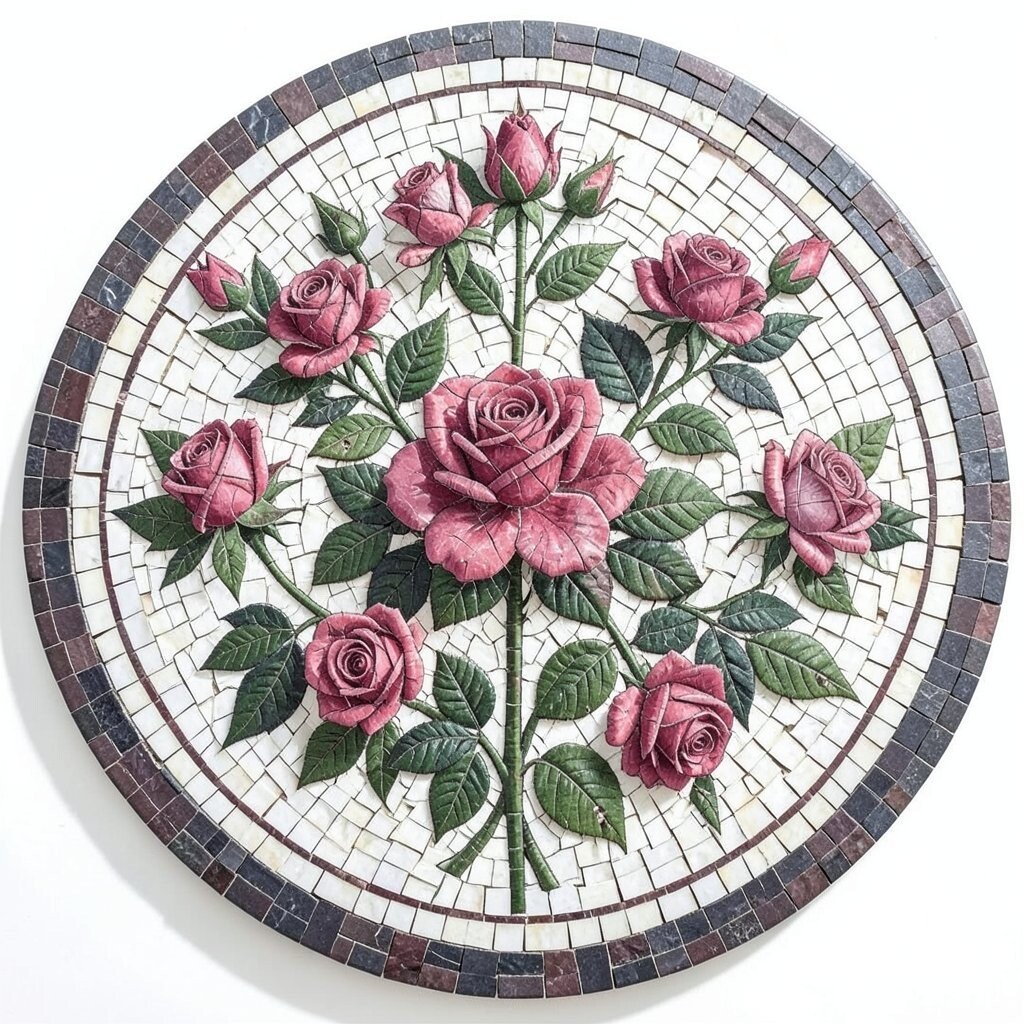
Rose Garden Floral Medallion A floral medallion uses layered petals, leaves, and tiny dots to create a soft centerpiece. Even a small wall panel can look like it holds a garden inside.
This design makes spaces feel romantic and warm, especially in powder rooms or dining areas. It also adds personality because you can choose colors that match your art or curtains. Keep it balanced by thinning the petals near the edge so the center stays the hero.
-
Moroccan Star With Brass Accents
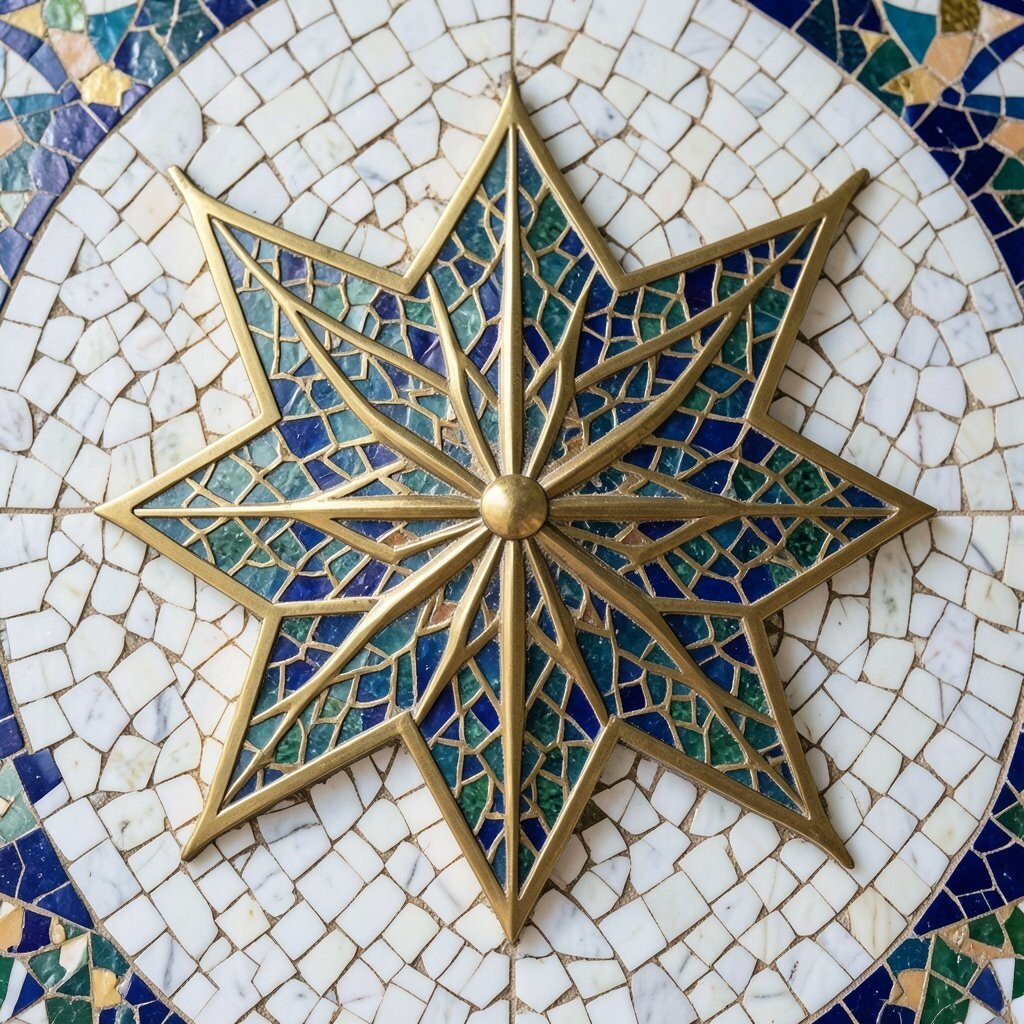
Moroccan Star With Brass Accents Star shapes overlap in a pattern that looks like bright night sky geometry. Moroccan-inspired mosaics often include small cuts and rich contrast.
This option brings a bold style boost without needing a huge area. It also pairs nicely with gold hardware, framed mirrors, and warm lighting. Personalize it by switching traditional tones for your favorites—think emerald, camel, and cream—then add a thin brass-look border tile for extra shine.
Cost considerations matter here because intricate cuts can take time. To control budget, use pre-cut mosaic sheets for most of the pattern and save custom cutting for the star points. A grout color that matches your dominant tile will make the star look sharp and crisp.
-
Soft Ombre Gradient Waterfall

Soft Ombre Gradient Waterfall Ombre mosaics fade from one shade into another like a gentle waterfall. You’ll notice how calm the transition feels, especially with blues or greens.
These gradients help the eye glide across a wall, which can make spaces feel larger and smoother. It’s also a great choice for beginners because the design is easy to plan. Start with your darkest color at eye level and work lighter toward the top for a cozy, upward feel.
To make it unique, add a few “floating” accent tiles—slightly different shades—so it feels natural, not flat. Glass tiles can make the gradient glow, but ceramic mosaics can keep the cost lower. Use consistent tile size and spacing so the fade looks clean and even.
-
Classic Black and White Checker Twist
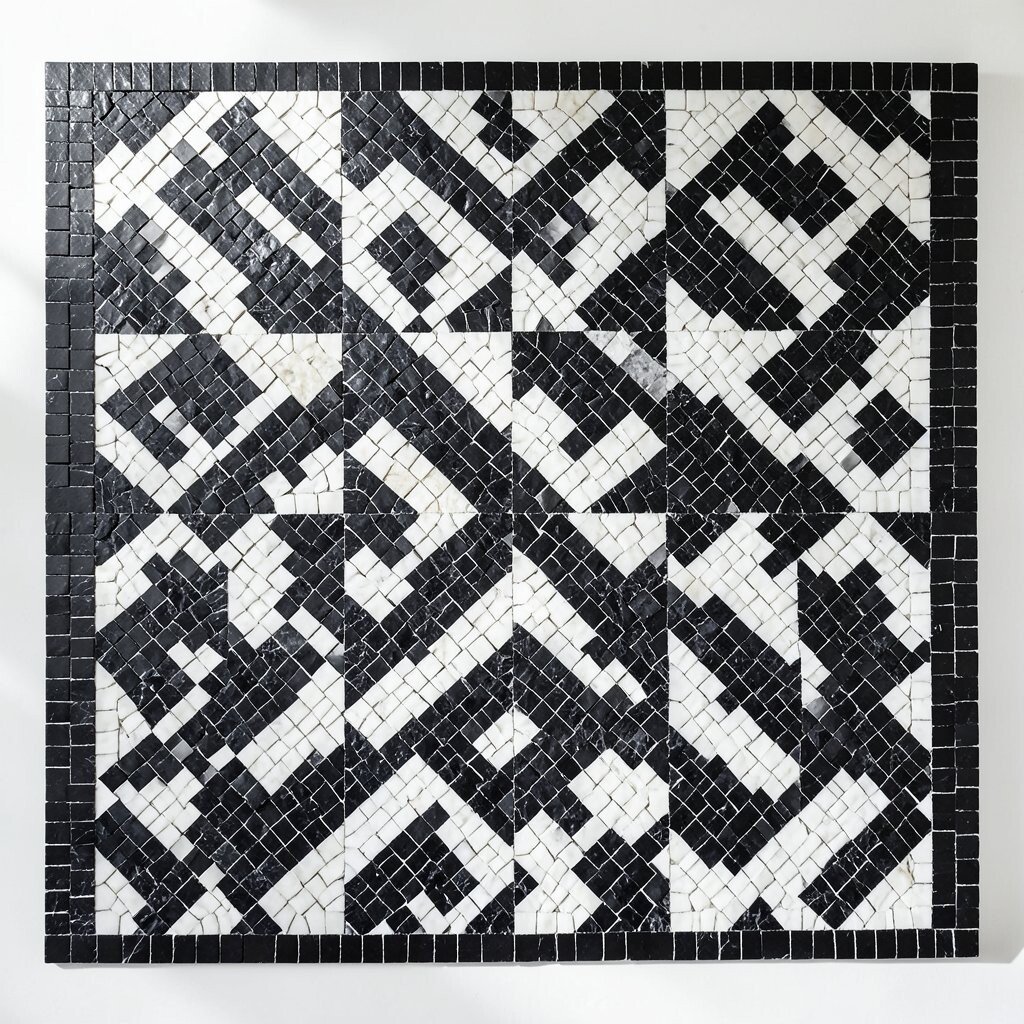
Classic Black and White Checker Twist A checker mosaic looks crisp and timeless, and the “twist” comes from adding diagonal bands or mixed tile finishes. You can go stark with high contrast or soften it with warm creams.
This design is excellent for kitchens, hallways, and backsplashes where you want clear visual structure. It also hides minor wear well because the pattern distracts from small stains or scratches. For personalization, try a thin colored stripe running through the checkers—like muted teal or terracotta.
To keep it budget-friendly, choose standard square tiles and avoid tiny mosaic cuts. If you want it to feel more custom, add a small corner medallion or a border at the edges. Plan your grout color carefully because black grout can look dramatic, while light grout feels airy.
-
Map-Like Coordinates Navigation Pattern
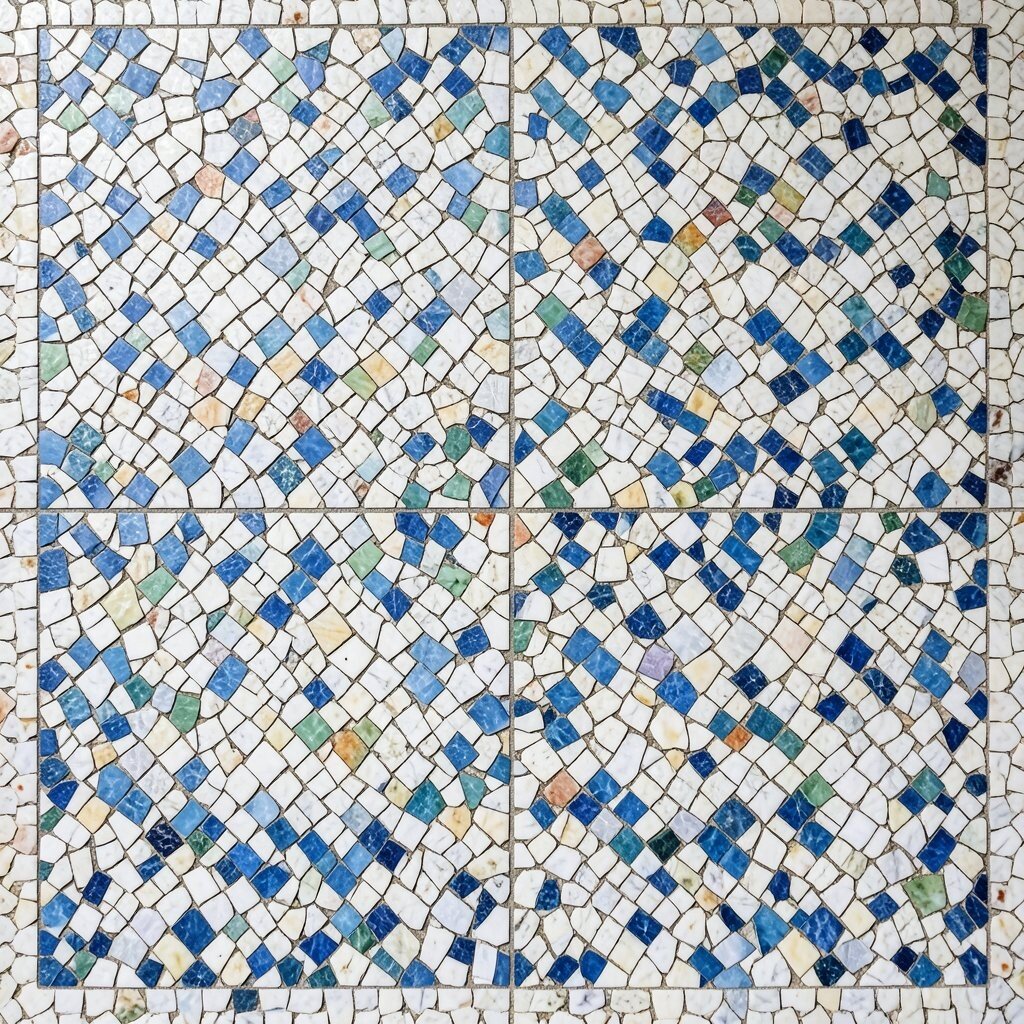
Map-Like Coordinates Navigation Pattern This mosaic looks like a street map with dotted lines and “coordinate” marks. You can use small rectangles for roads and tiny circle tiles for points.
The benefit is focus: it gives a room a sense of direction and a playful theme. It also works beautifully in home offices, entry nooks, and reading corners. Personalize it by using coordinates that mean something to you, like where you met, your favorite hometown, or a dream destination.
Cost can stay controlled if you rely on uniform tile shapes and a simple grid. If you use specialty tiles for dots, keep that section small so the main pattern stays affordable. Sealing is key because map-themed mosaics often include mixed textures that can trap dirt if left unprotected.
For a clean look, sketch your pattern on paper first and decide where the “main lines” will start and end. That tiny planning step saves time later and helps the design feel intentional.
-
Butterfly Wings in Soft Pastels
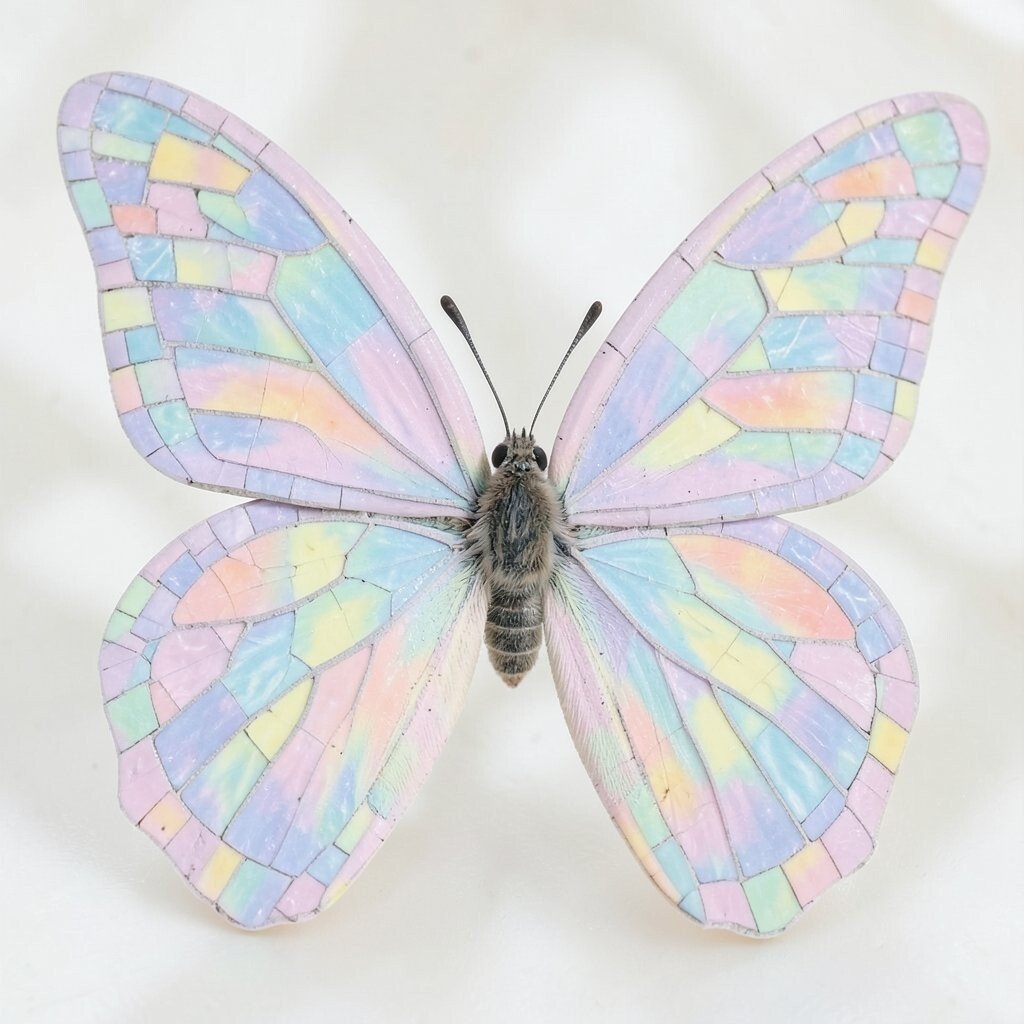
Butterfly Wings in Soft Pastels Butterfly mosaics bring gentle movement, with wing shapes made from curved tile pieces. Pastel pinks, lilacs, and pale blues can make the wings look airy.
This design makes bedrooms and nursery-like spaces feel light and happy. It also gives you easy personalization options, like changing colors to match bedding or curtains. Keep the edges clean by using a darker outline tile where the wing meets the background.
-
Forest Pinecone Texture Relief
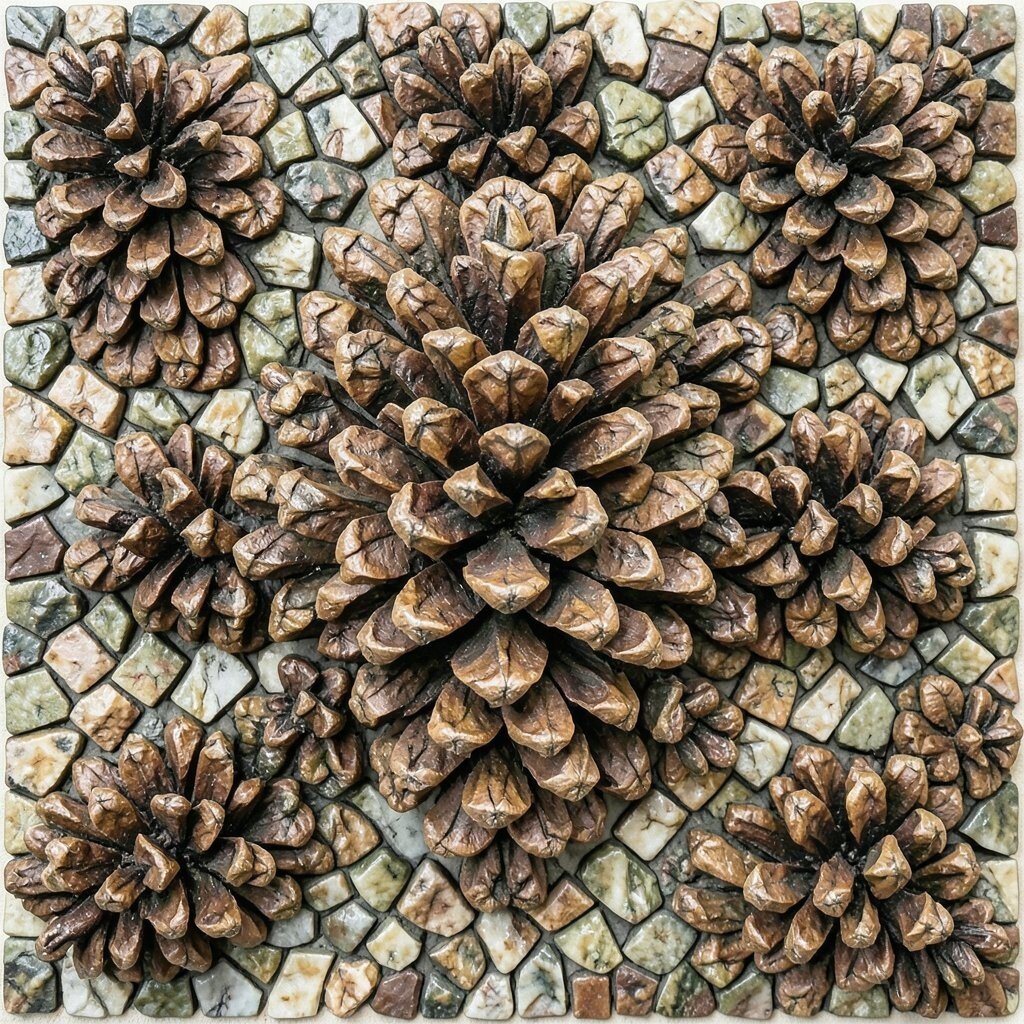
Forest Pinecone Texture Relief This design imitates natural pinecone scales using textured tile or small repeating bumps. You can blend browns, moss greens, and warm sand tones for a grounded feel.
The main benefit is comfort: the pattern feels cozy and tactile, even when it’s flat. It also helps hide minor dust and fingerprints because the texture adds visual depth. For personalization, add tiny “seed dots” with gold or bronze tiles in the darkest areas.
Cost considerations can be higher if you buy textured mosaic tiles, but you can save money by using textured pieces only on the focal section. Pair textured tiles with smooth tiles for the background to keep the design balanced. Seal the final surface well, especially if it’s in a wet area.
-
Sun-Faded Mediterranean Tiles
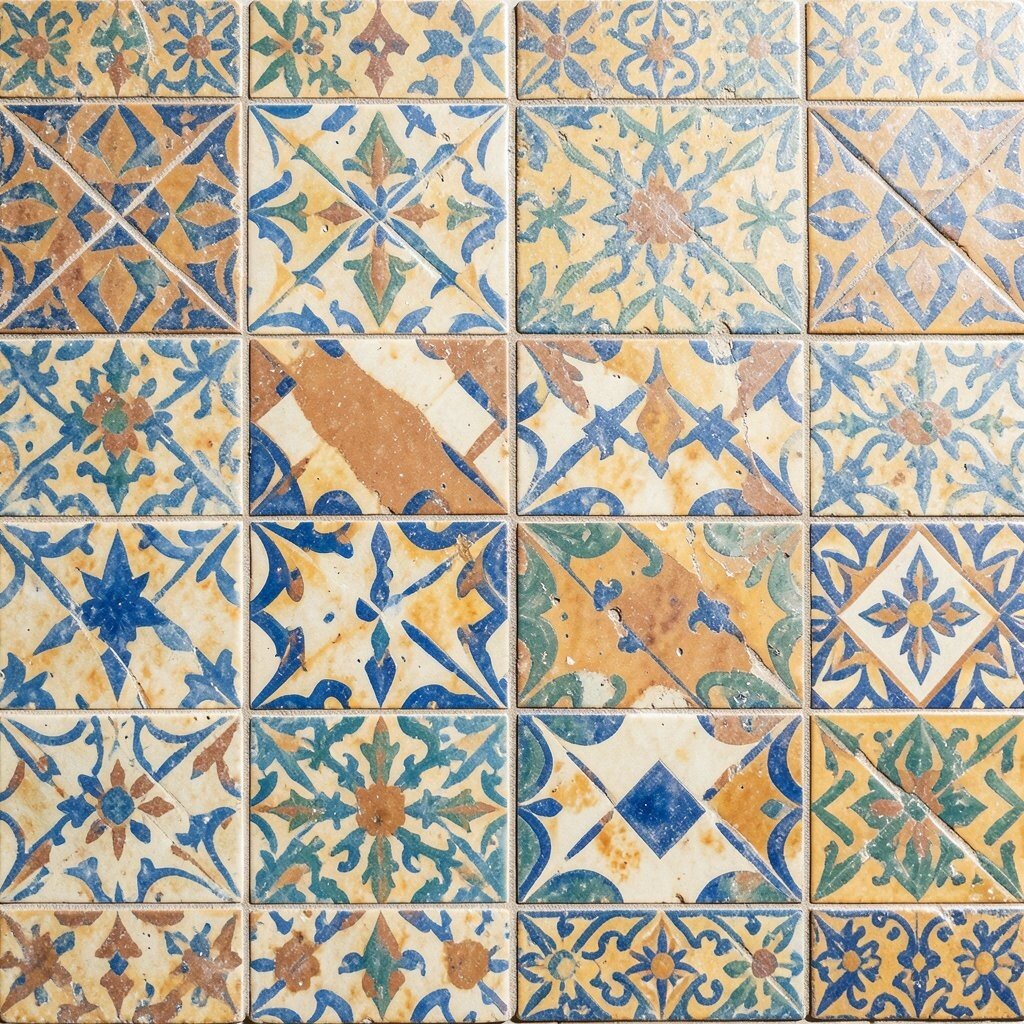
Sun-Faded Mediterranean Tiles This mosaic style uses warm, sun-faded colors like faded yellow, clay, and pale teal. The look feels like old buildings near the coast.
It’s an amazing way to create a vintage vibe without making the space feel cluttered. Because the colors are gentle, it works with many home styles from modern to rustic. Use a simple border around the edges so the faded center looks framed and polished.
Uniqueness comes from tile variation, so don’t worry if some pieces differ slightly. That variation is the charm. For budget control, choose one accent color and keep the rest of the tiles in a small range of shades that look naturally matched.
If you’re adding this to an outdoor patio area, choose weather-ready materials and grout meant for exterior use.
-
Botanical Vines in Olive and Sage
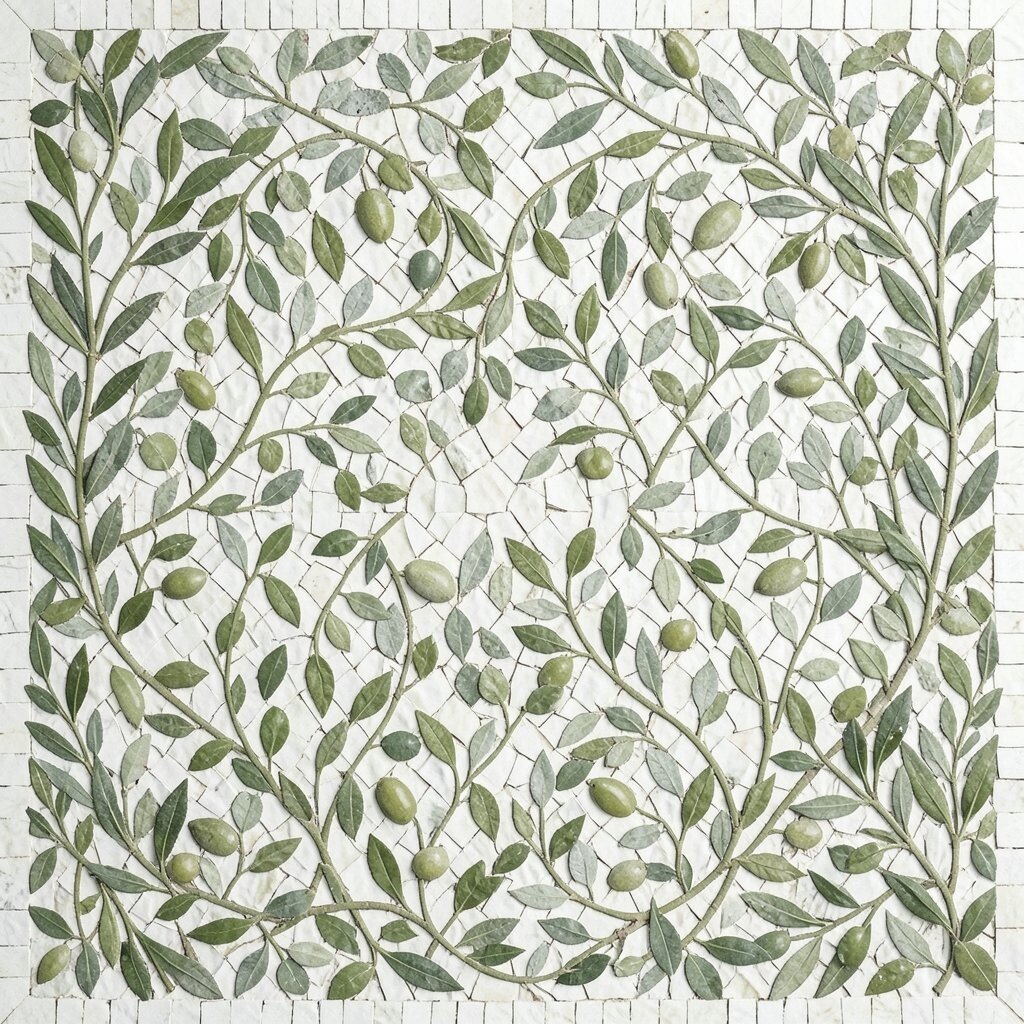
Botanical Vines in Olive and Sage Imagine curling vines, leaves, and tiny blossoms winding across a wall like a garden path. Olive and sage green tiles create a fresh, earthy mood.
This design feels lively but not too loud, which is perfect for living rooms and kitchen walls. It also makes your space feel cared for because the pattern looks hand-crafted. Personalize it by matching the leaf colors to your real plants and adding a few “leaf shadows” with slightly darker tones.
-
Stained Glass Jewel Corner Accent
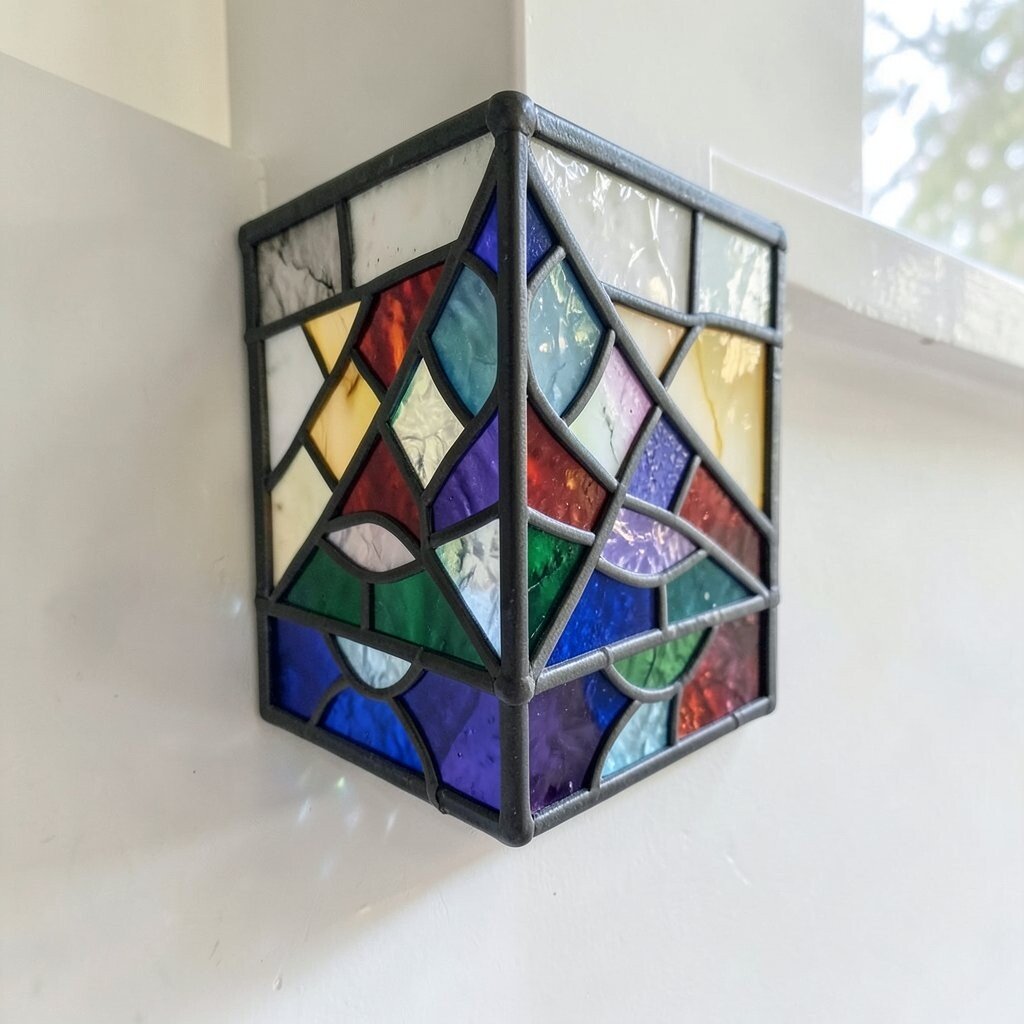
Stained Glass Jewel Corner Accent You can create a stained-glass look by using small jewel-tone tiles in a tight corner frame. Think deep ruby, sapphire, emerald, and amber glows.
This design is powerful even when the area is small, which helps keep costs under control. The benefit is instant glamour, especially behind a lamp or near a window. For personalization, add a central “gem” tile cluster so the corner becomes a focal point.
Cost can rise with glass and metallic tiles, but you can spend on the accent and keep the rest simple. Use a thin border of matching grout lines to mimic stained glass lead. If you want a safer budget, substitute with high-quality ceramic tiles that still match the jewel palette.
-
Art Deco Fan Stripes
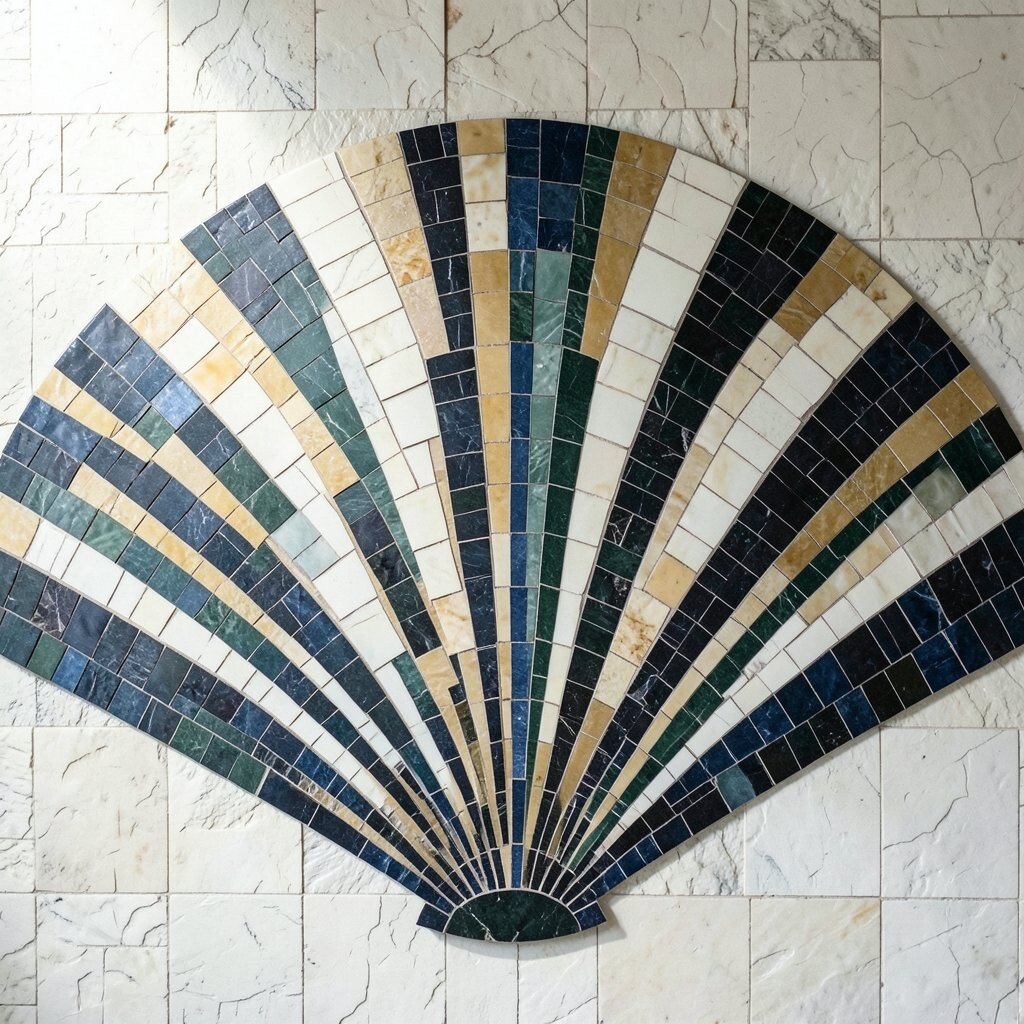
Art Deco Fan Stripes Art deco fan patterns use curved stripes that fan out from a central point. Gold, black, and cream usually look the most classic, but you can choose modern color pairs.
This mosaic makes a space feel elegant and tall because the pattern can guide the eye upward. It also pairs well with mirrors, bold light fixtures, and clean furniture lines. Personalize it by picking one accent color, like teal or burgundy, and using it sparingly for key fans.
To keep it practical, use straight lines as much as possible and save the most curved details for the center. Deco-style tiles can be mid-range in price, so compare sheet bundles versus single tiles. A grout color like warm gray can help the fans look crisp without overpowering the palette.
For installation ease, plan a layout grid before you set any tiles so your stripes stay even across the surface.
-
Little Clouds on a Calm Blue Background

Little Clouds on a Calm Blue Background Cloud mosaics use soft rounded shapes, often made with light blues and creamy whites. You can build clouds in layers for a fluffy, friendly look.
This design adds calm energy and works well in nurseries, kid spaces, and sunny kitchens. It also makes wall areas feel cheerful without needing loud colors. Personalize it by choosing the “sky” color—powder blue, airy gray-blue, or bright morning blue.
Cost considerations are usually manageable because the tiles can be simple shapes and consistent sizes. If you want extra depth, add a few tiny bubble-like tiles under each cloud. Use a sealed grout so the surface is easier to wipe down, especially if the space is a kitchen or bathroom.
-
Storybook Tile Border With Tiny Scenes
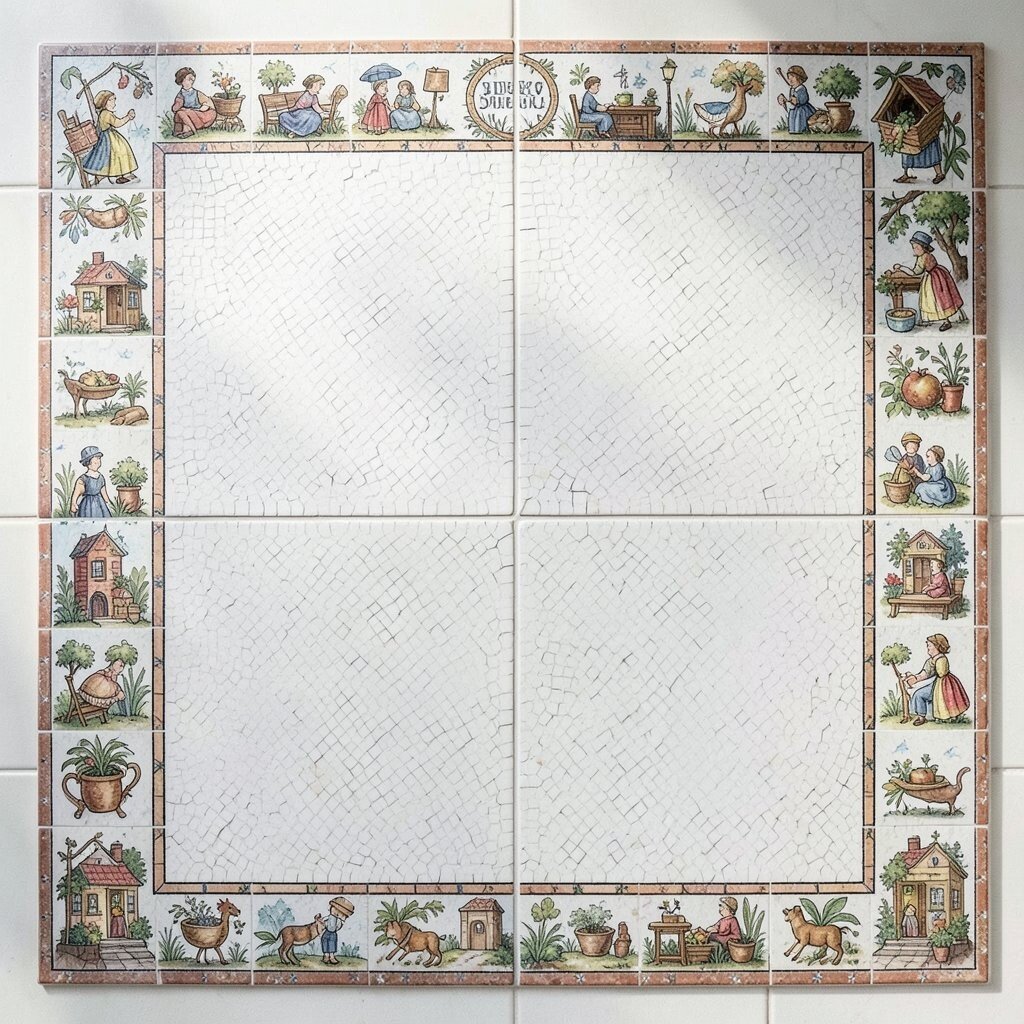
Storybook Tile Border With Tiny Scenes A border mosaic can include tiny repeated scenes like boats, stars, flowers, or abstract characters. The design works like a frame, guiding your eyes around a room.
This style benefits bathrooms and hallways because it adds fun without taking over the whole wall. It’s also unique because you can build a personal theme, like a sailing hobby or a love of astronomy. Start with a simple border height and then decide how many “scene repeats” you want.
For personalization, use symbols that matter to you: shells for beach trips, bookmarks for reading, or favorite leaf shapes. Costs can stay in range if you use mosaic sheets for most of the border. Save custom tile cuts for only a few scene highlights so time and labor don’t climb too high.
-
Warm Linen Neutral Pattern With Subtle Texture
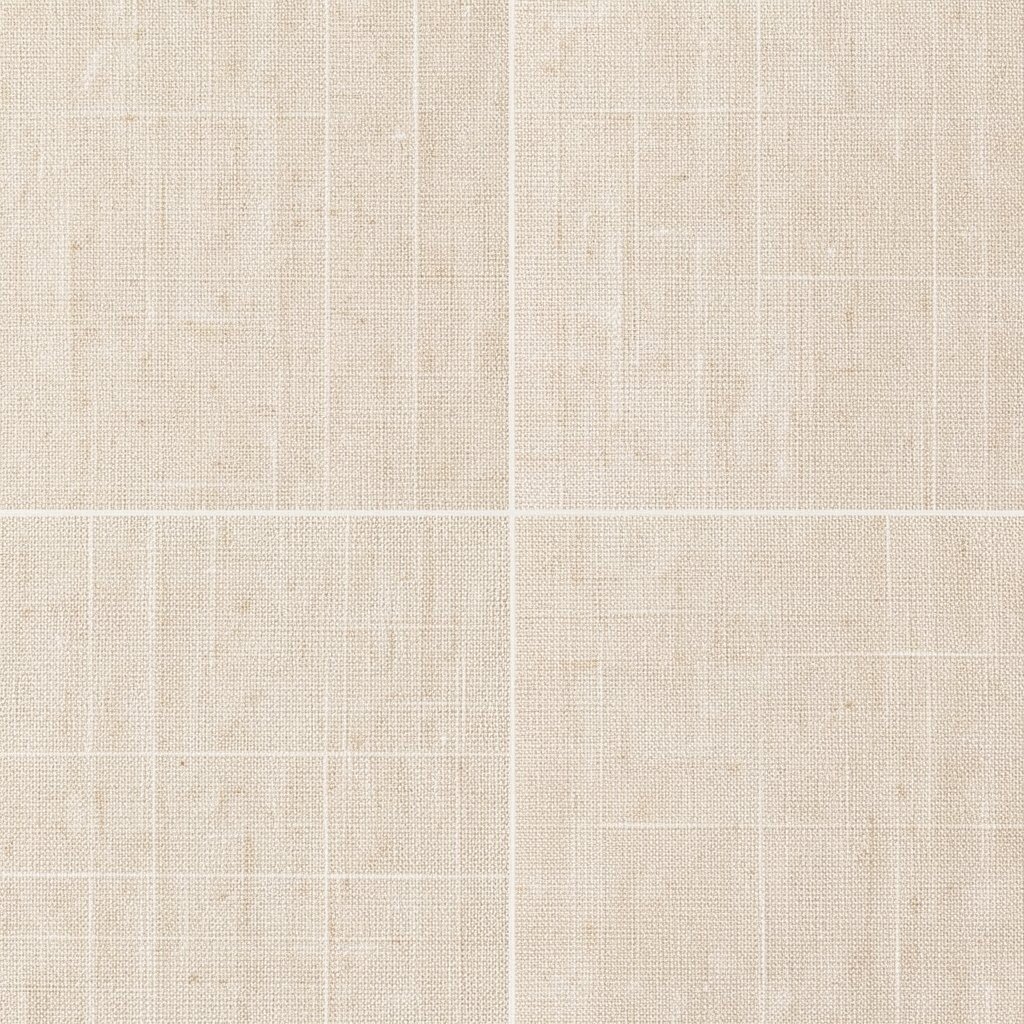
Warm Linen Neutral Pattern With Subtle Texture This mosaic uses neutral tones like beige, taupe, and warm white with subtle texture or slight shade changes. It feels soft, like linen fabric but made from tiles.
The benefit is versatility: it pairs with almost any wall color, furniture wood, and lighting style. It also helps hide imperfections because the subtle variation blends small marks. For personalization, add a thin accent strip in a natural color like terracotta or muted olive.
Cost is often reasonable with neutral ceramic mosaics, which can be less expensive than glass. If you want a high-end feel, choose a few tiles with a slight sheen as an accent. A good sealing routine protects the surface and keeps the neutral tones looking fresh.
-
Galaxy Dots With Night Sky Speckles
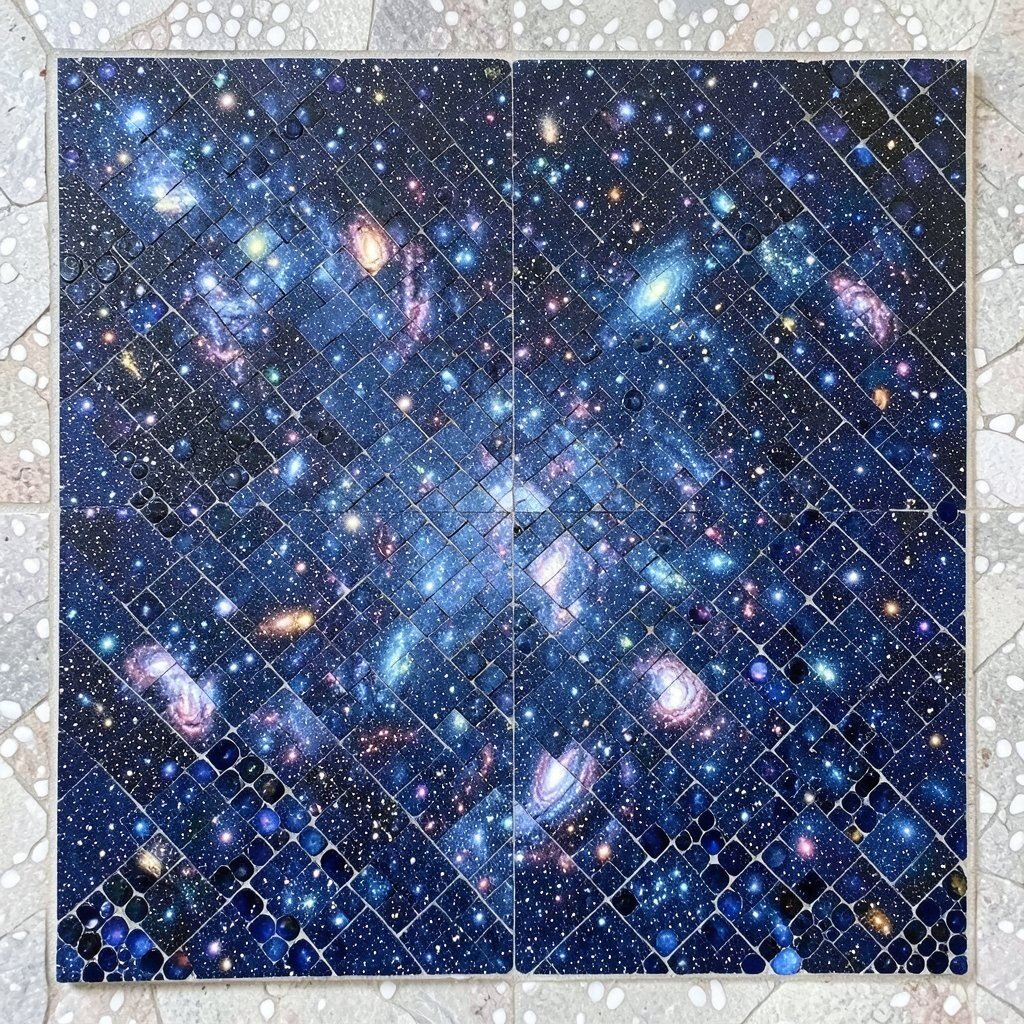
Galaxy Dots With Night Sky Speckles Galaxy mosaics combine dark backgrounds with scattered dot tiles that look like stars. Use small circular pieces and let them vary in size for a real night-sky vibe.
This design feels magical and modern, especially in kids’ rooms and creative studios. It also benefits the layout by adding visual interest without complicated shapes. Personalize it by picking a “nebula” color—purple, teal, or deep red—and weaving a soft swirl through the dark base.
Cost considerations can be flexible because you can make the design with affordable small tiles and fewer accent colors. To save money, use a single dark tile for most of the surface, then add star dots as the special part. For best results, keep grout lines consistent so the dots look intentional rather than messy.
Choose a matte finish if you want a calming night vibe, or a glossy finish if you want extra sparkle under lights.
-
Japanese Seigaiha Blue Waves
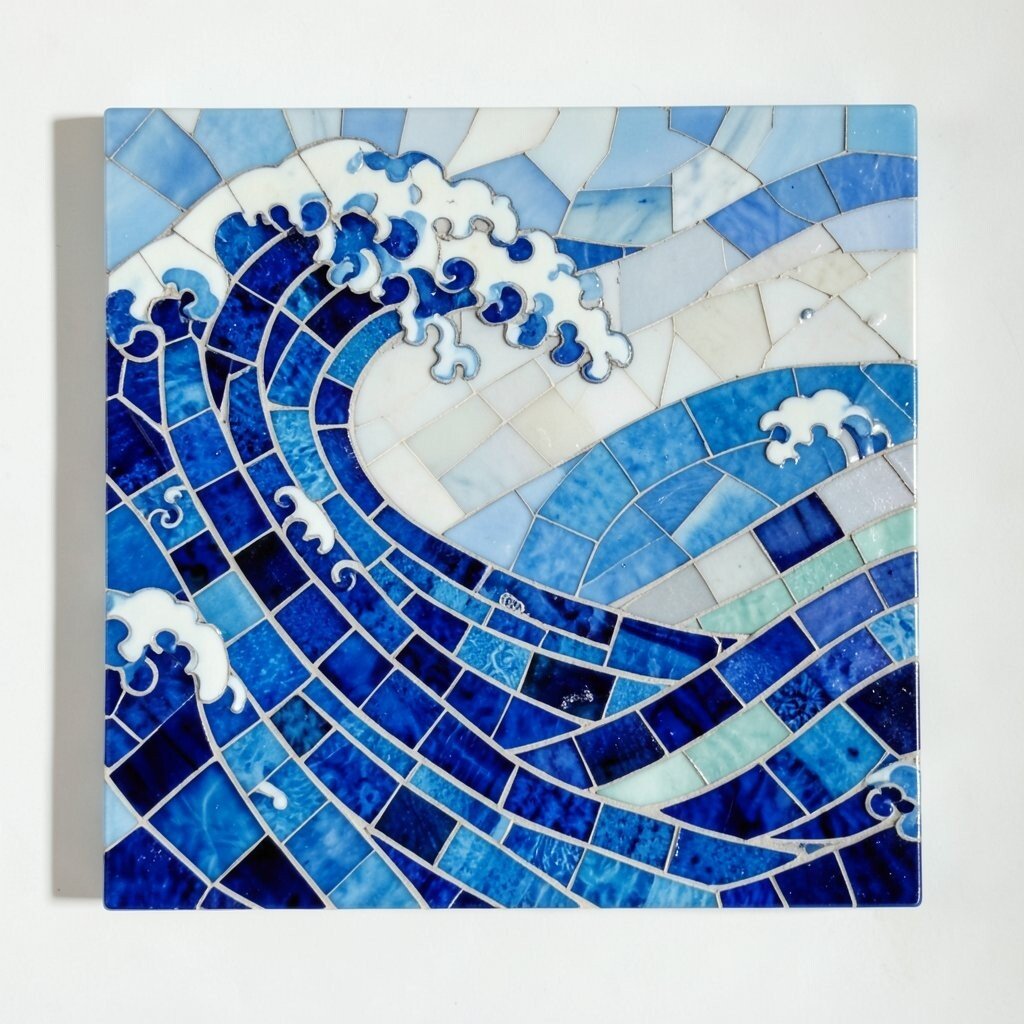
Japanese Seigaiha Blue Waves Seigaiha patterns, inspired by ocean waves, use repeating shapes that look like overlapping curves. The design often uses blues and whites, giving a clean and traditional feel.
This mosaic benefits calm spaces because it looks steady and balanced. It also works great behind sinks, on feature walls, and along a backsplash. Personalize it by using your own favorite wave colors, or by adding a tiny line of darker blue at the top edge for a more layered look.
-
Vintage Tile Patchwork With Mixed Motifs
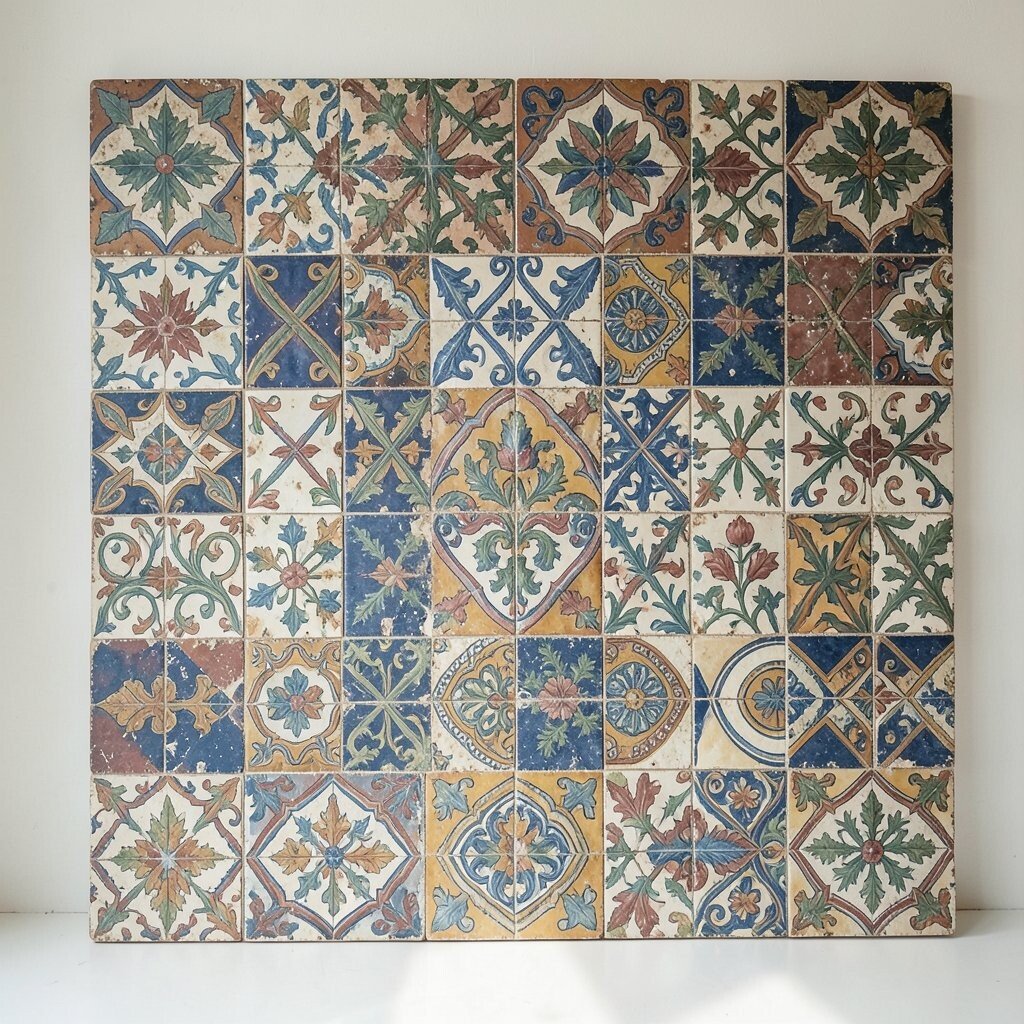
Vintage Tile Patchwork With Mixed Motifs Patchwork mosaics mix small tile squares in different patterns like a quilt. You can include dots, stripes, tiny florals, and simple geometric motifs.
This design is wonderfully unique because no two patchworks need to look the same. It also benefits your style because you can match many colors you already love in your decor. For personalization, pick a main theme—coastal, garden, or artful neutral—and let every tile motif support it.
Cost can vary, but it can be managed by using affordable tiles and focusing on a few higher-cost accent pieces. If you’re mixing, buy tiles in sets or bundles so colors and thickness stay consistent. Use the same grout color across the whole patchwork to unify the look.
-
Ribbon Loop Border in Bright Primary Tones
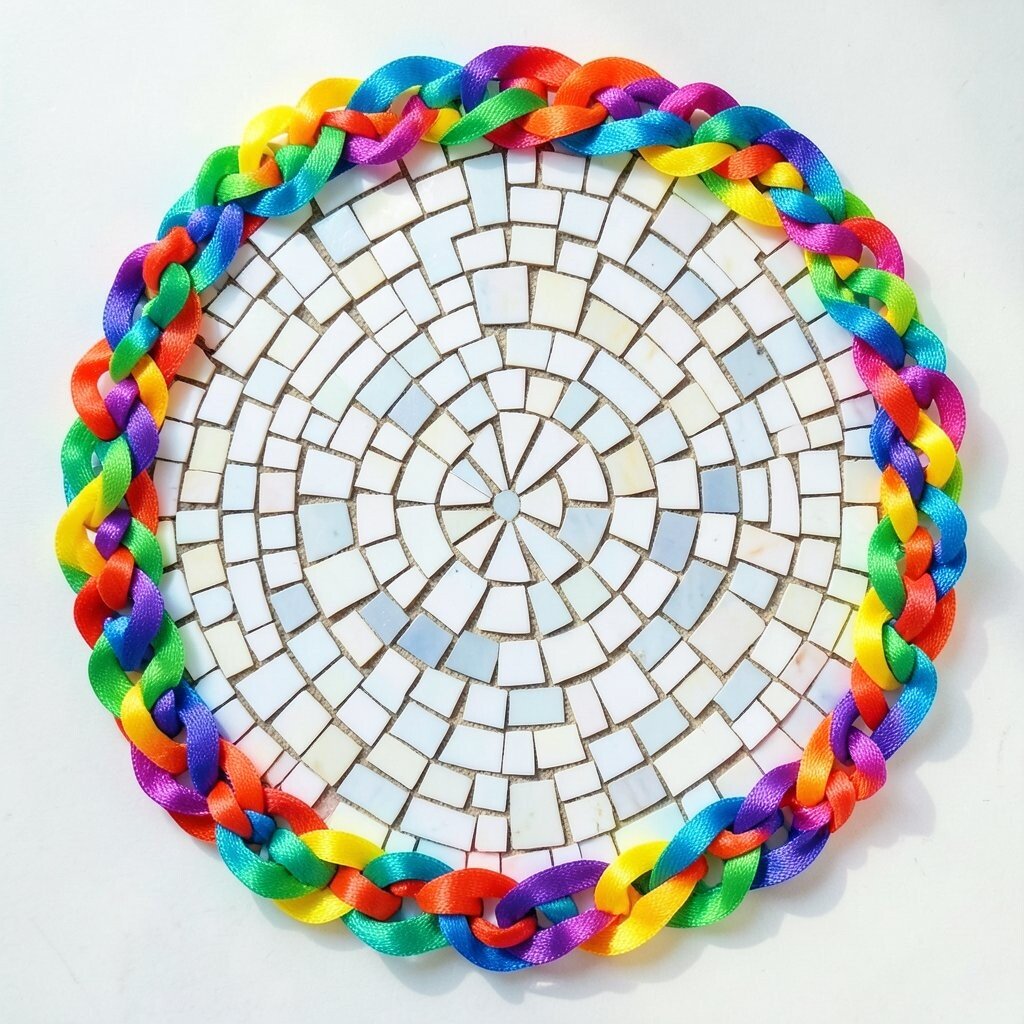
Ribbon Loop Border in Bright Primary Tones Ribbon loops twist like a playful braid, often made from small tiles that form continuous curves. Bright primary tones can create a lively, joyful feel.
This mosaic style is great for kids’ areas, game rooms, and cheerful kitchens. The loops also help define edges and corners so the space looks finished. Personalize it by switching primary colors for softer tones like coral and sky blue, or keep it bold for maximum fun.
-
Coastal Shell Halo Frame
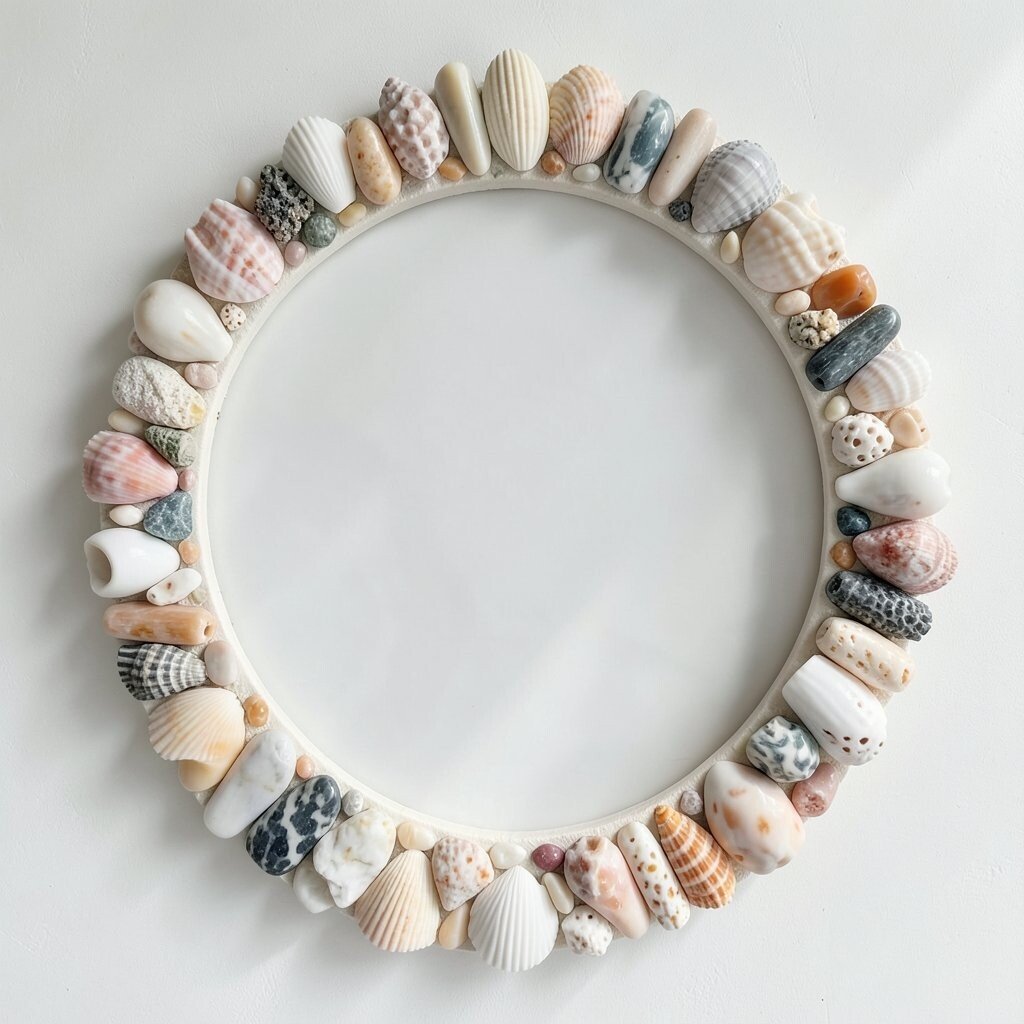
Coastal Shell Halo Frame This design wraps a center shape with shell-like tile curves and small scallop edges. It feels airy, with light creams and pale sandy tones that look like sea foam.
The benefits are both visual and practical: a halo frame makes a focal spot, like a sink wall or mirror area, look intentionally styled. It also helps your eye focus in the middle, which can make a space feel balanced. Personalize it by adding a few “shell highlights” in subtle gold or warm blush pink.
Cost considerations are usually good because you can choose consistent tile shapes and avoid ultra-tiny pieces. Use pre-cut sheets for the shell curves if you want a quicker build. If the mosaic will be in a wet space, choose water-friendly tiles and seal the grout well.
-
Monochrome Marble-Look Veins
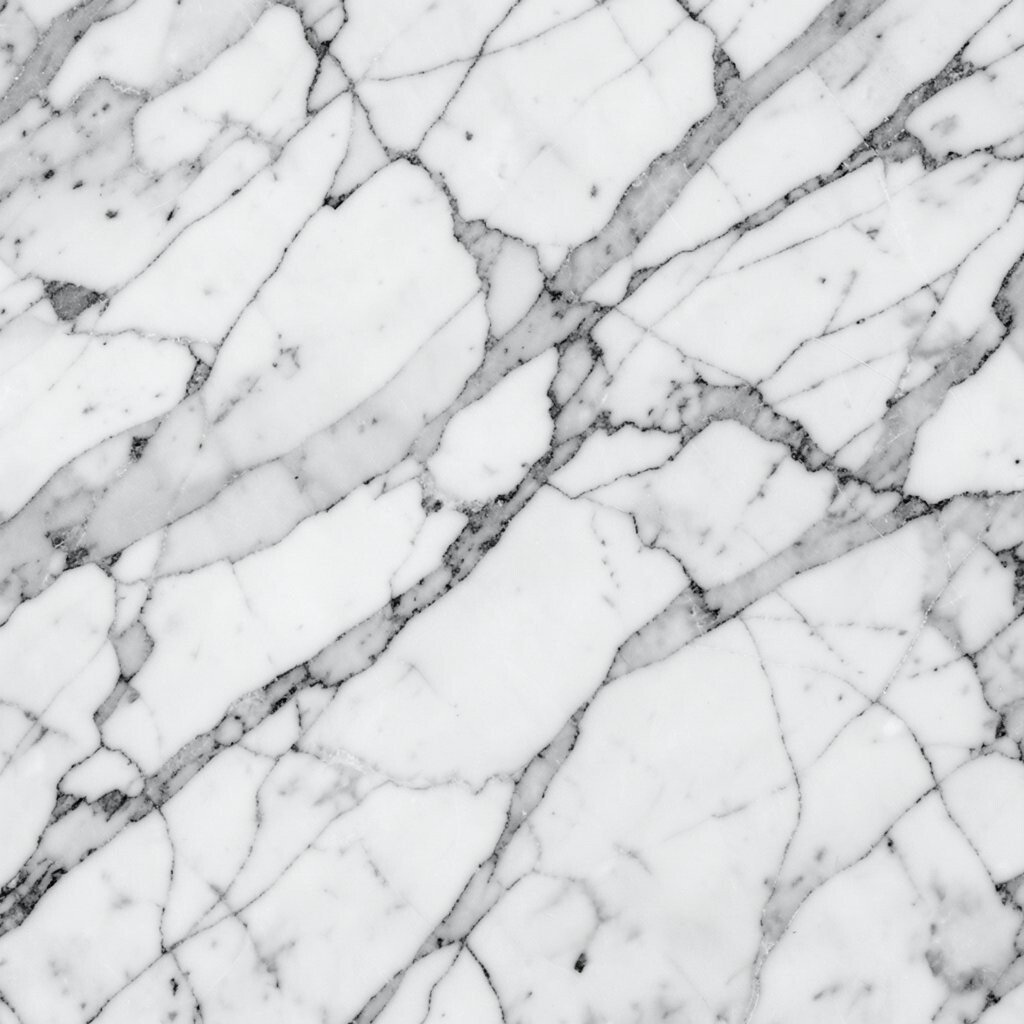
Monochrome Marble-Look Veins Marble-look mosaics show gentle veining in a monochrome palette. Black and white, or gray and cream, can look elegant and calm.
This design benefits modern rooms because it adds high-end detail without loud colors. It also hides dirt better than very light mosaics because the pattern blends small marks. For personalization, add one faint “vein accent” stripe in a warm gray or soft taupe for a natural feel.
Cost varies based on tile quality, especially if you choose premium marble-look surfaces. If you want to save money, look for ceramic mosaics that mimic marble patterns. Keep grout lines slim so the veins appear continuous and not chopped into tiny segments.
-
Garden Terracotta Tile Frame With Tiny Dots
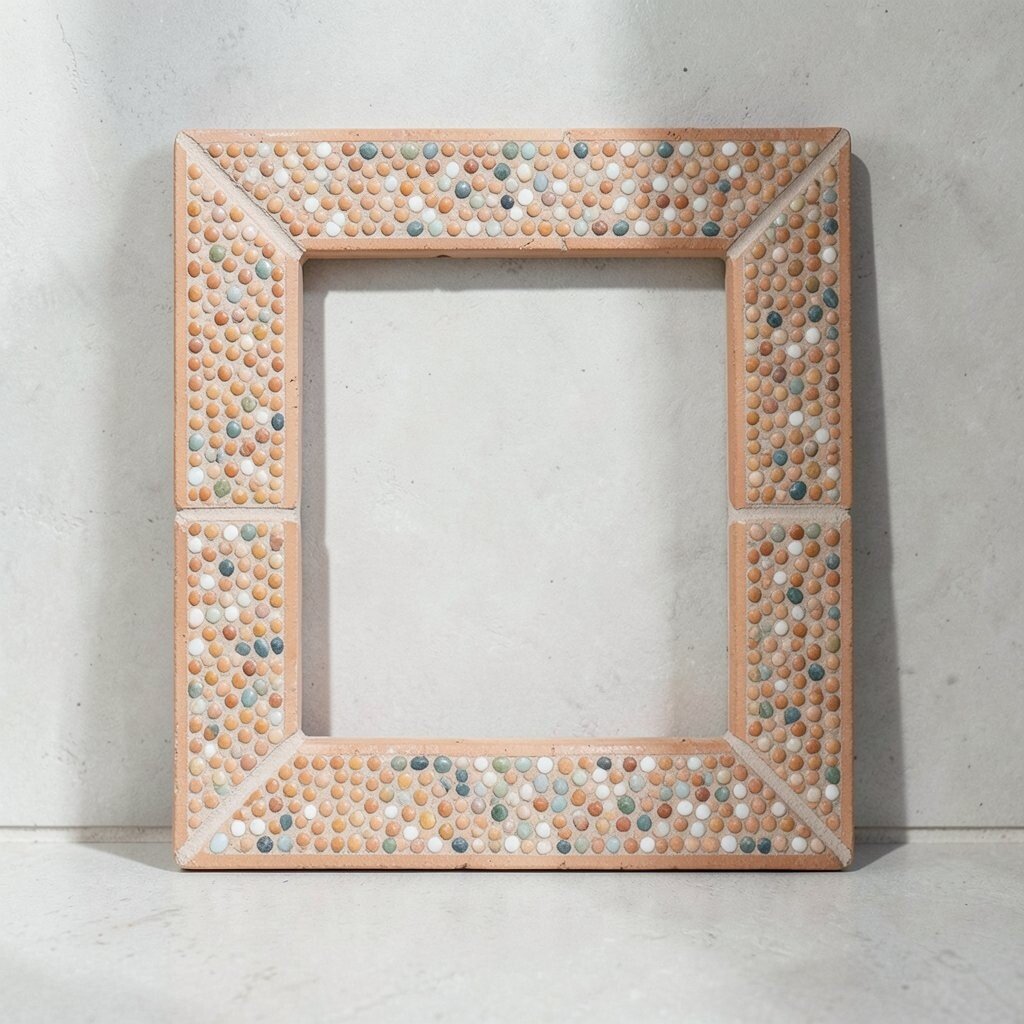
Garden Terracotta Tile Frame With Tiny Dots This design uses a terracotta frame and fills the inside with tiny dot mosaics. The dots can be simple circles or small square “seed” tiles.
The result is warm and inviting, like a little garden bed made from tile. It also benefits small areas such as backsplashes or niches because the frame adds shape while the dots add texture. Personalize it by choosing dot colors that match your wall paint or backsplash accessories.
For cost control, use terracotta as the main tile and spend extra on the dot color that you love most. If you choose textured terracotta, sealing becomes extra important to keep the finish looking rich. Plan your dot spacing carefully so it feels balanced, not random.
This look also works well with plants, since the warm tones mirror the earthy colors around you.
-
Crystal Prism Triangle Scatter
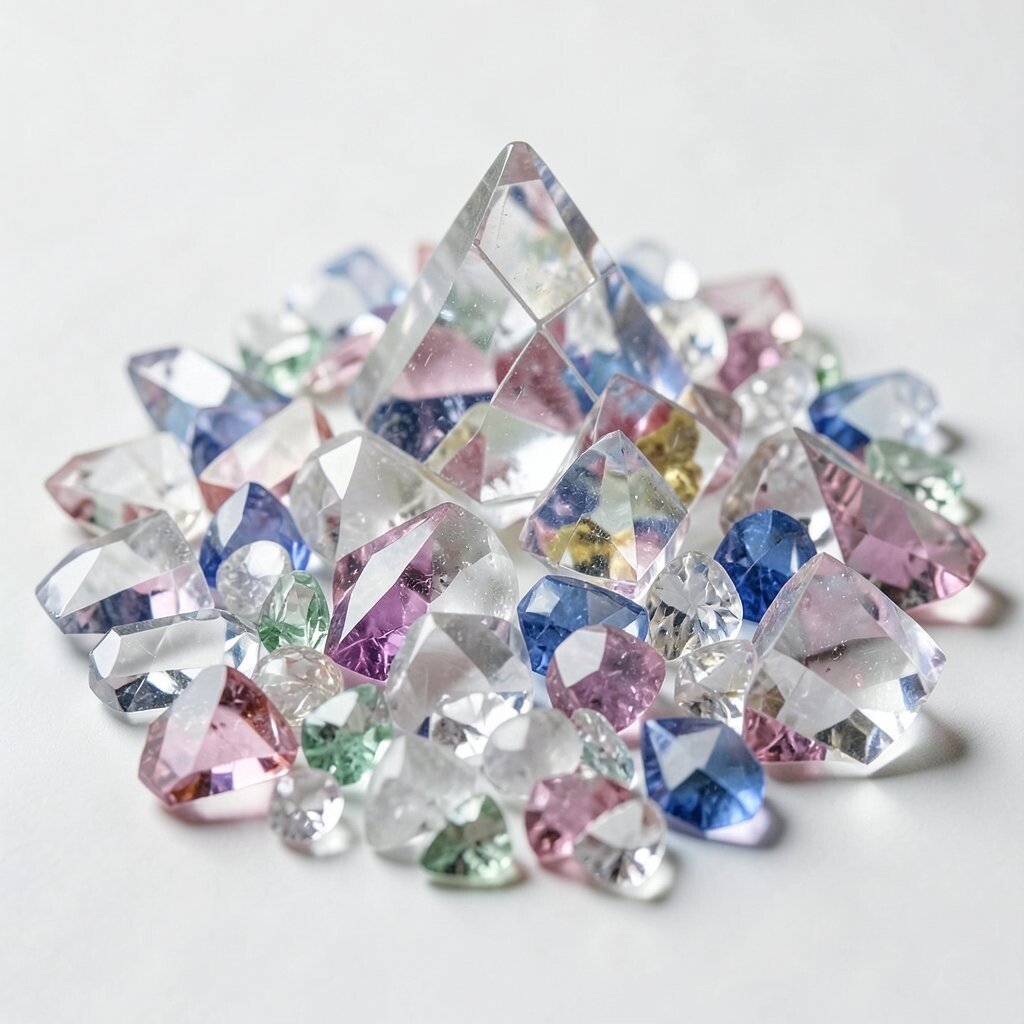
Crystal Prism Triangle Scatter Triangle scatter uses small triangular tiles in a prism layout, like fragments reflecting light. You’ll often see bright specks across the surface, shaped into a larger triangle theme.
This mosaic benefits entryways and feature walls because it feels energetic and modern. It also catches light in a fun way, especially with glossy glass pieces. Personalize it by selecting one “dominant prism” color and letting other triangles appear as gentle highlights.
-
Minimal Linework One-Color Mosaic
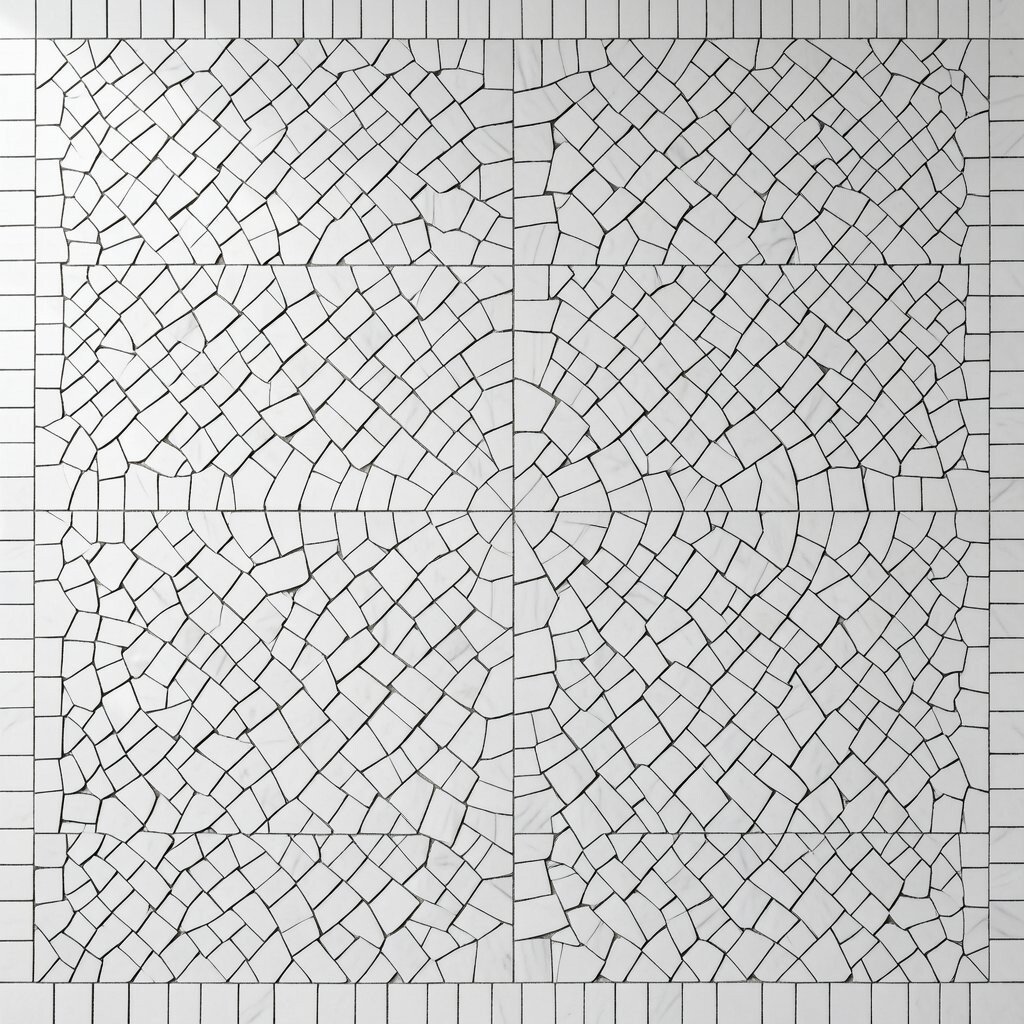
Minimal Linework One-Color Mosaic This design is built from a single color family, using thin linework tiles and simple blocks. It can look like a modern drawing made from stone.
The benefit is calm, since it won’t compete with furniture or art. It’s also a smart way to keep costs lower because the design relies on fewer tile types. Personalize it by changing the direction of the linework—vertical for height, horizontal for width, or diagonal for movement.
If you’re placing it on a small wall section, keep the pattern bold and concentrated so it still feels special. Use a grout tone that matches your dominant tile for a clean “drawn” look. This is a great option if you want mosaic style but prefer a simple, tidy mood.
-
Chocolate Brown Cocoa Bean Pattern
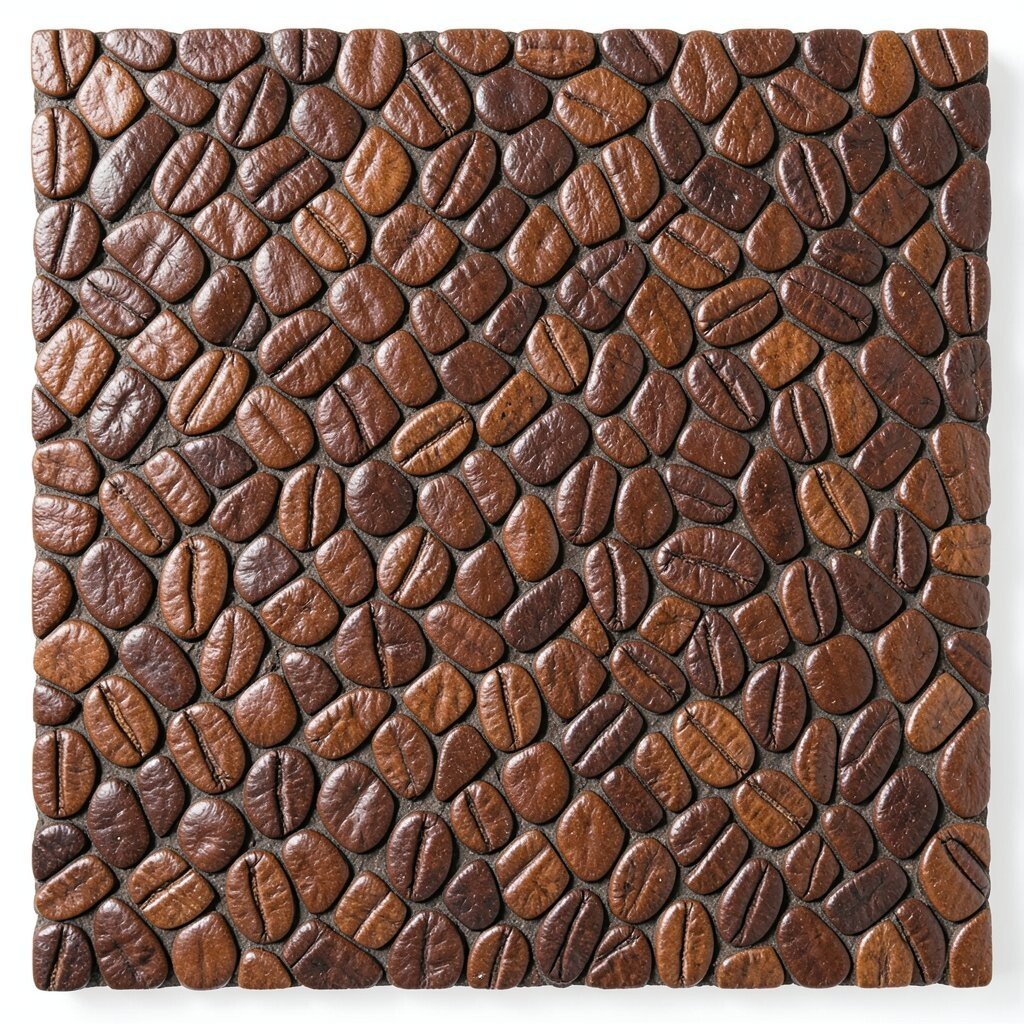
Chocolate Brown Cocoa Bean Pattern Cocoa bean mosaics use oval shapes and dark browns to create a repeating “bean” texture. The pattern looks rich, cozy, and inviting to the eye.
This design benefits kitchens and coffee corners because it matches warm snacks and cozy lighting. It also hides wear since the darker tones blend everyday marks. Personalize it by adding a few lighter “roasted” highlights that look like sunlit edges.
Cost considerations are usually manageable because you can keep the palette small and use consistent shapes. For an easy upgrade, add a narrow border in warm beige so the beans don’t blend into each other. Seal grout well if the area gets splashes, especially near sinks and cooking zones.
-
Rainbow Spectrum Vertical Tiles
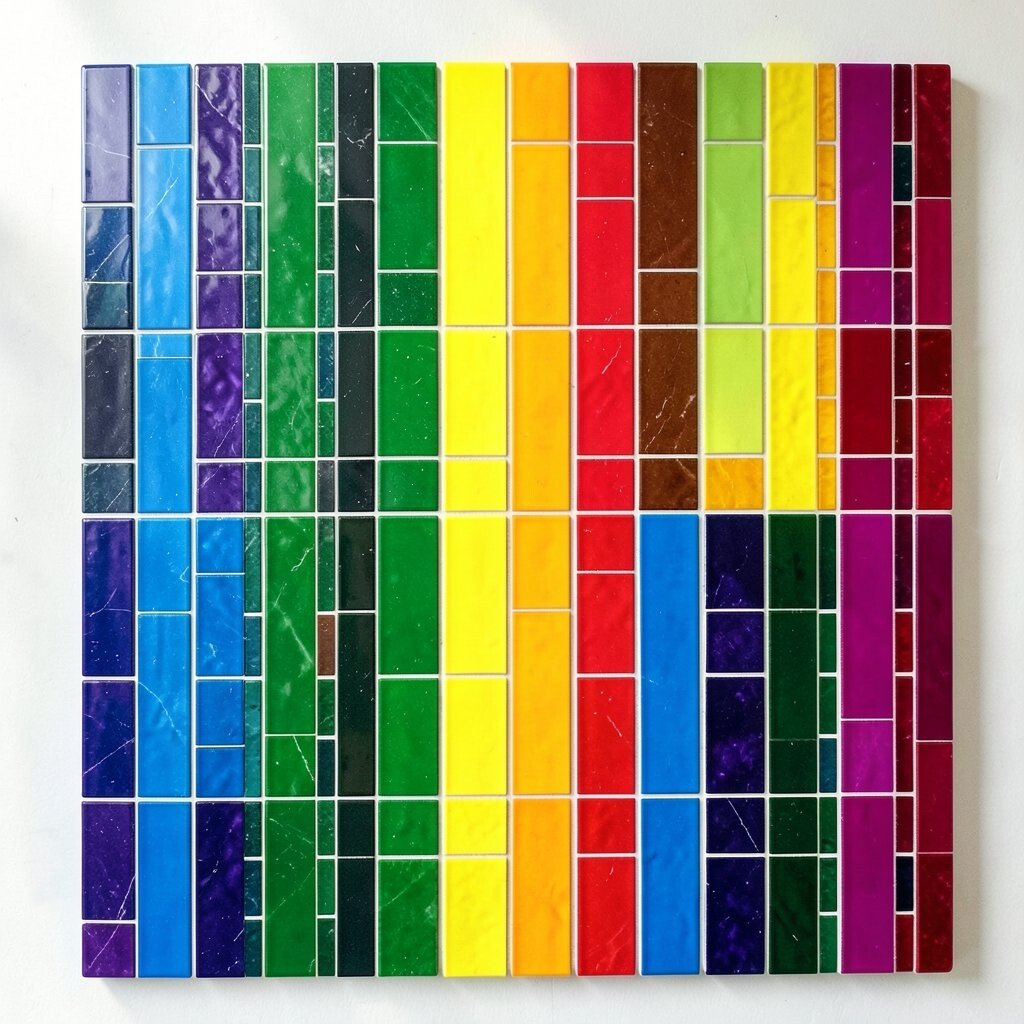
Rainbow Spectrum Vertical Tiles Vertical spectrum mosaics stack colors from warm to cool in tall bands. The stripes feel fun, bright, and full of energy.
This design benefits kids’ bathrooms, creative spaces, and laundry rooms because it adds joy without needing extra decor. It also makes the ceiling feel higher when the stripes run upward. Personalize it by choosing a “soft rainbow” palette that uses muted pastels instead of intense neon tones.
Cost can rise with more colors, so consider using fewer bands or using tile sheets that already mix colors. If you want to stay budget-friendly, pick one main rainbow family and let the accent tones be limited. Keep grout consistent so the stripes look clean and evenly spaced.
Under warm lighting, the colors glow; under cooler lighting, the palette feels crisp and modern.
-
Geode Slice Glow Wall
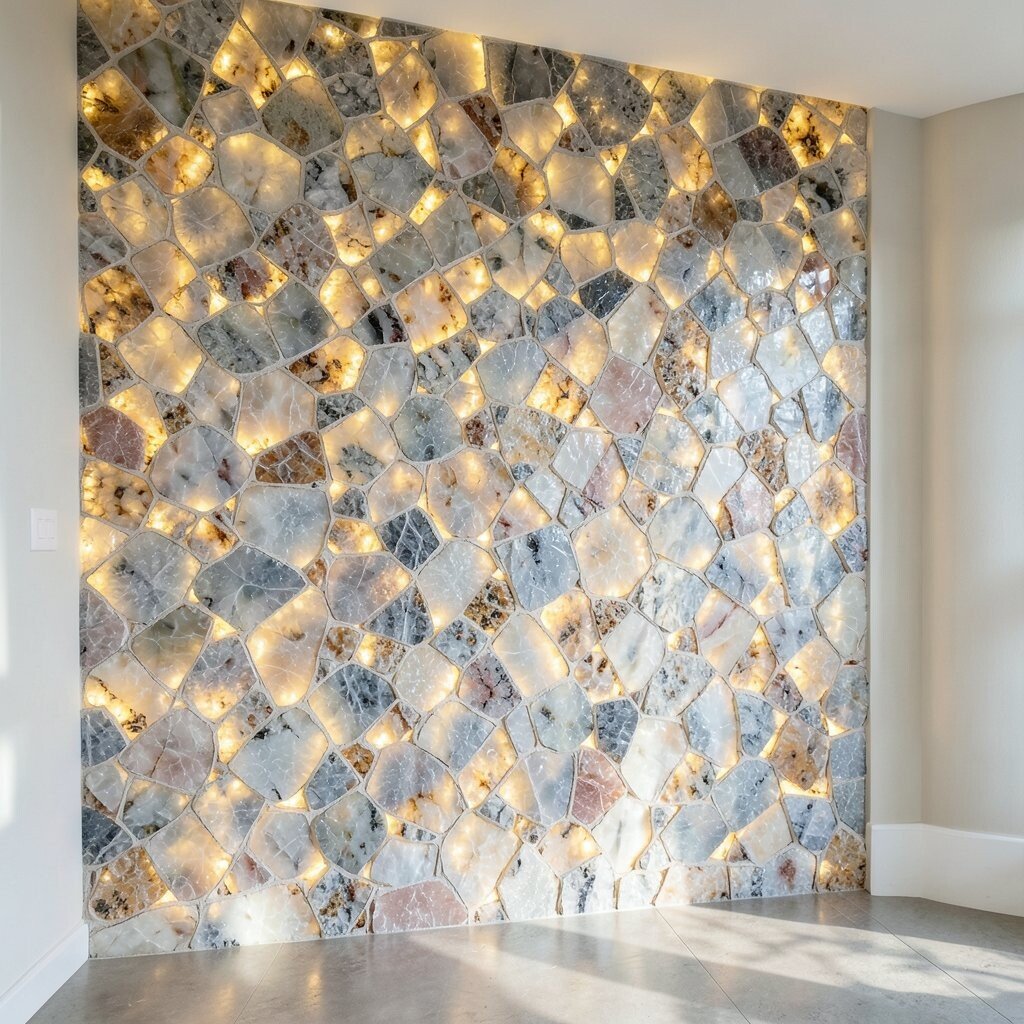
Geode Slice Glow Wall Geode mosaics look like sliced stones with glowing centers, using layered rings and speckled accents. You’ll see bright highlights surrounded by darker, earthy tiles.
This design benefits feature walls because it creates a magical focal point. It also feels unique because every geode pattern can vary in size and color. Personalize it by choosing a geode family—amethyst purple, sea green, or golden amber—and echoing those colors in nearby decor.
-
Mini Kintsugi Gold Repair Lines
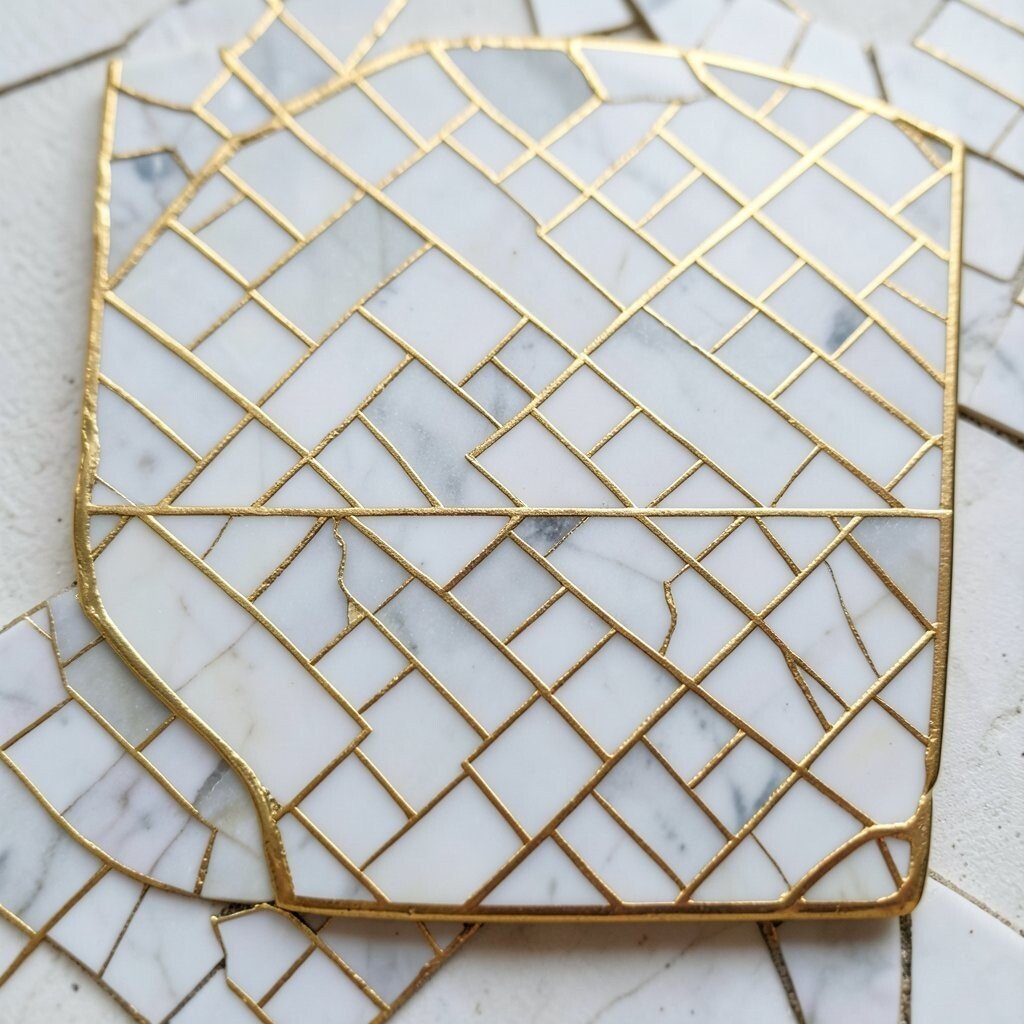
Mini Kintsugi Gold Repair Lines Kintsugi-inspired mosaics mimic “gold repairs” across a cracked surface. The cracked look can be made from thin tile lines, then finished with gold-look trim or metallic tiles.
This design benefits calm, thoughtful spaces because it tells a story of mending. It also adds a premium feel without needing actual ceramic or stone work like traditional kintsugi. Personalize it by picking a base color that matches your space, like soft white, deep charcoal, or warm sand.
Cost considerations: metallic accents can cost more, but you can use them sparingly on the “gold cracks” only. Use grout that supports the base look so the repair lines look like art, not messy seams. If you’re budget careful, choose gold-look paint-like grout additives or metallic tape trim where allowed.
To keep lines crisp, outline your crack pattern first with pencil marks on the surface.
-
Sunlit Citrus Slice Mosaic
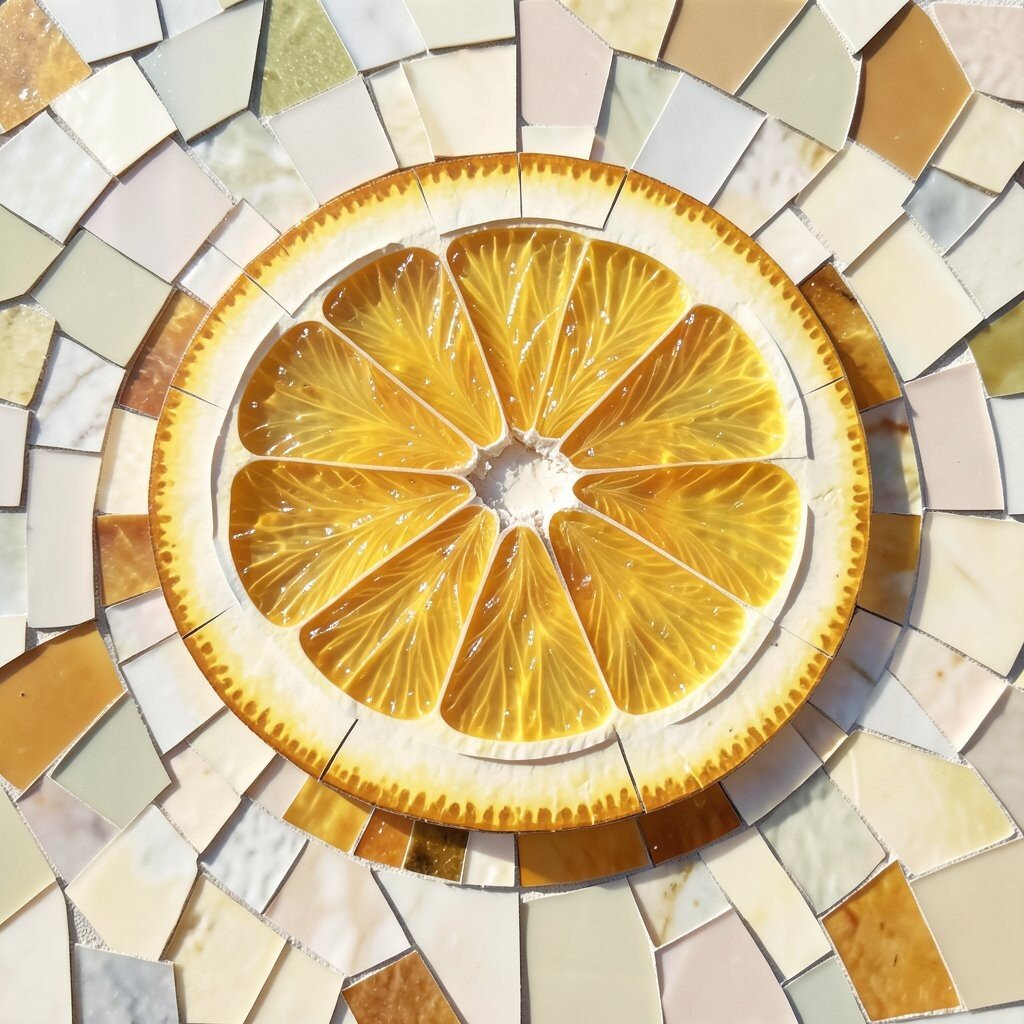
Sunlit Citrus Slice Mosaic Citrus slice mosaics show rounds and segments like orange, lemon, or lime. The bright colors add instant freshness and look great in kitchens and snack areas.
This design benefits everyday life because it brings energy to functional spaces like breakfast nooks. It also helps personalize your home with food-themed art. For personalization, create a larger citrus focal circle near a corner and add smaller segments as scattered accents.
Cost considerations are usually friendly if you keep the segments big and use fewer tiny cut pieces. If you use glass for the “pulp glow,” expect a higher cost for that part only. Seal everything well since kitchen spaces often need frequent wiping and cleaning.
-
Twilight Lavender Moon Phases
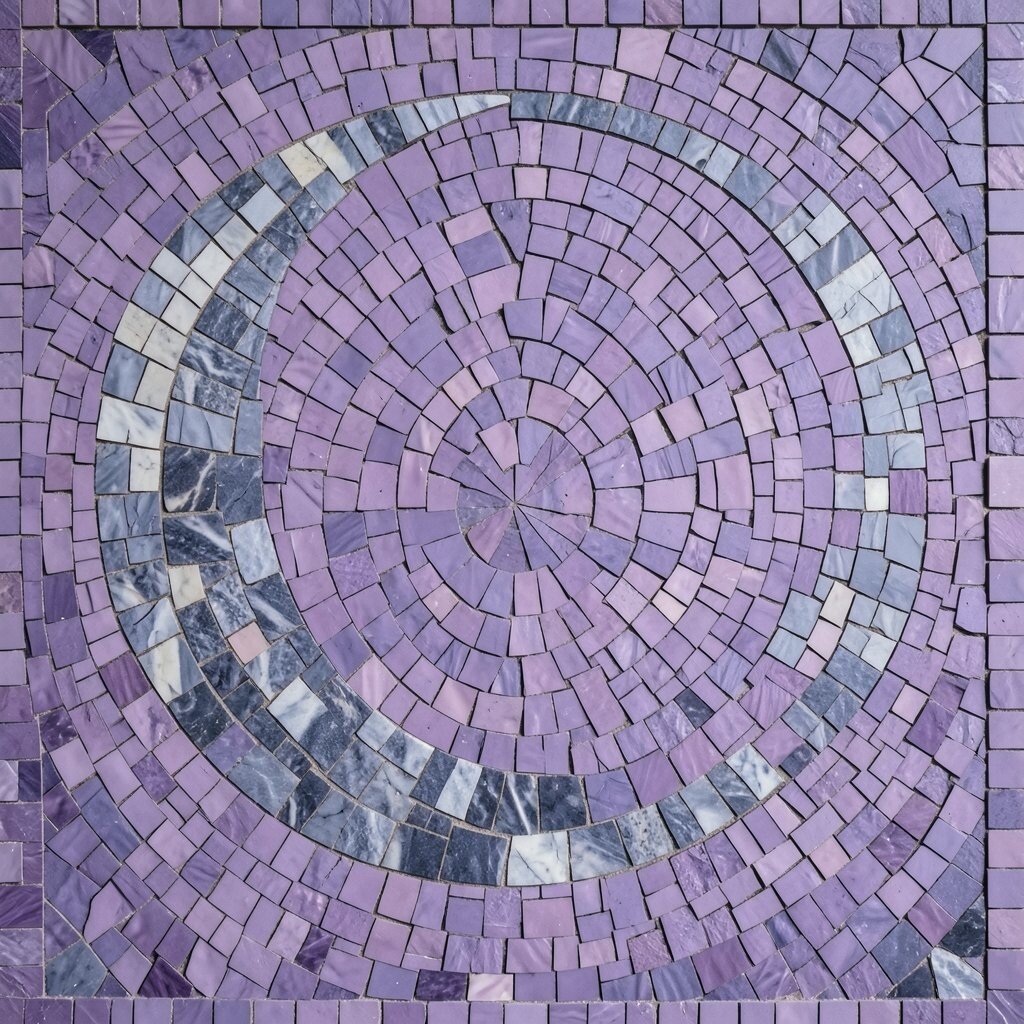
Twilight Lavender Moon Phases Moon phases mosaics use curved tile shapes to show different moon forms. Lavender and soft gray can make the whole design feel dreamy.
This style benefits bedrooms, meditation corners, and cozy reading spaces. It also feels unique because you can choose a “night palette” that matches your lighting and artwork. Personalize it by adding tiny star specks around the moon phases and adjusting the scale to fit your wall size.
Cost can stay steady because the shapes can be created with consistent tiles. Use pre-cut sheets if you want to reduce cutting time. Consider grout color carefully: a light grout can make moons pop, while a darker grout feels more dramatic.
-
Modern Sage Tile Half-Moon Steps
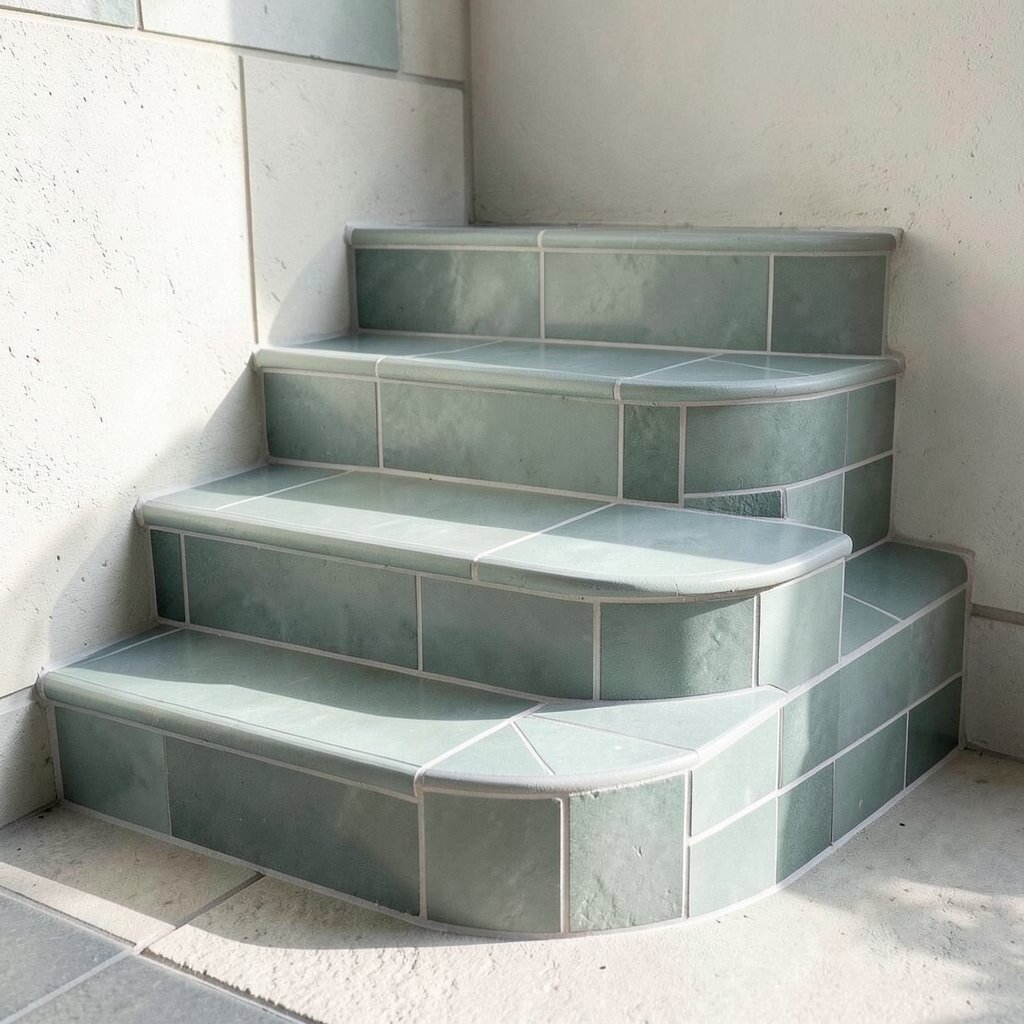
Modern Sage Tile Half-Moon Steps Half-moon step mosaics create a modern look using repeating arcs stacked like gentle stair steps. Sage green adds a calming, nature-like vibe.
This design benefits stair-step niches, bathroom shelves, and small wall panels because it adds dimension. It also works well with clean, modern furniture since the shapes are simple yet stylish. For personalization, pair sage with a warm cream grout line for a softer look.
Cost considerations are often reasonable because you can keep the palette small and use medium-sized tiles. If you want extra impact, add a thin accent band in a slightly darker sage. Make sure your arcs align perfectly at the edges so the steps feel smooth instead of uneven.
-
Soft Geometric Triangle Path
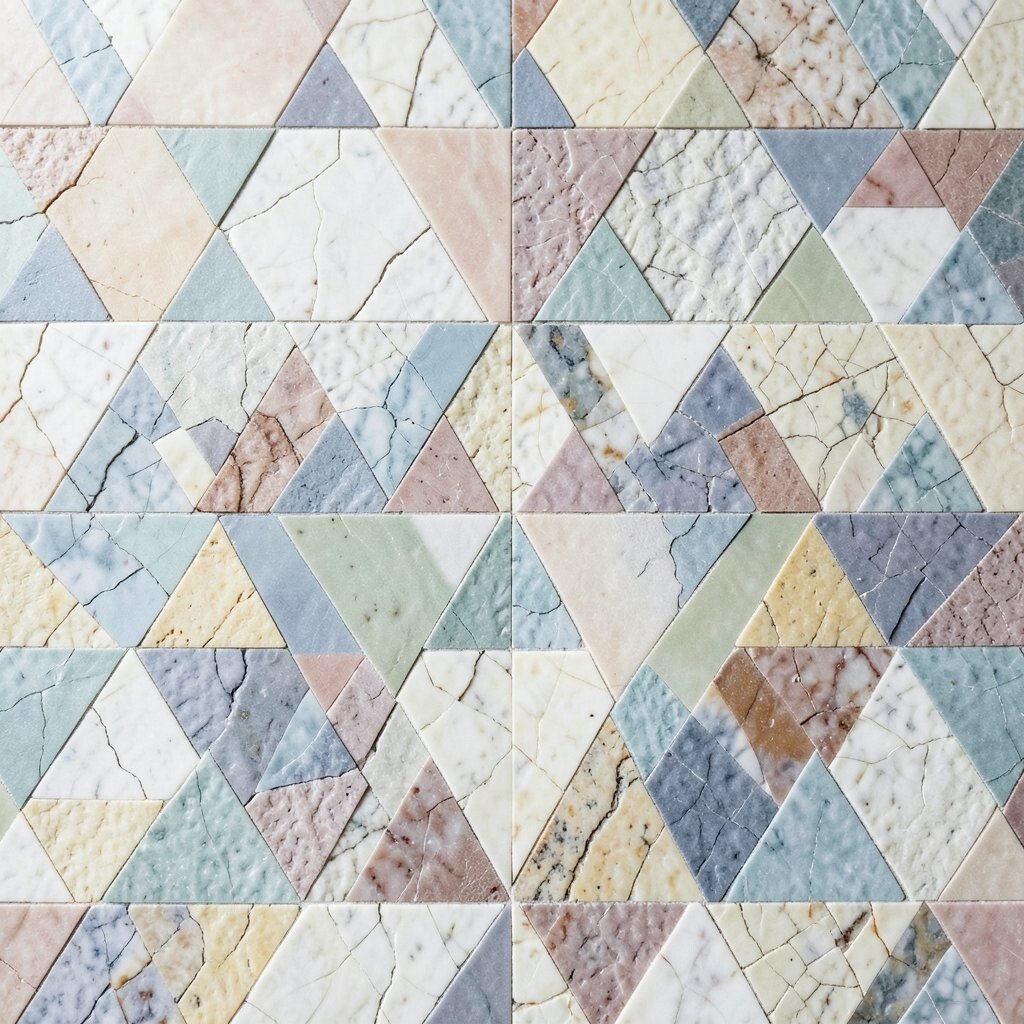
Soft Geometric Triangle Path A triangle path mosaic uses diagonal rows of triangles, making the surface feel like it has a gentle guide line. Colors can be subtle, like cream and warm gray, or bolder for a playful feel.
This mosaic benefits long hallways because diagonal movement helps prevent the space from feeling flat. It also creates a modern pattern that works with many styles. Personalize it by choosing a “path color” that matches your rug or front door paint.
Cost considerations: using uniform triangles can be cost-efficient, especially if tiles come in sheets. Save money by keeping the background tiles simple and only making the triangle rows the main detail. Seal grout well if it’s on a floor area or a wet zone.
-
Enchanted Botanical Mandala
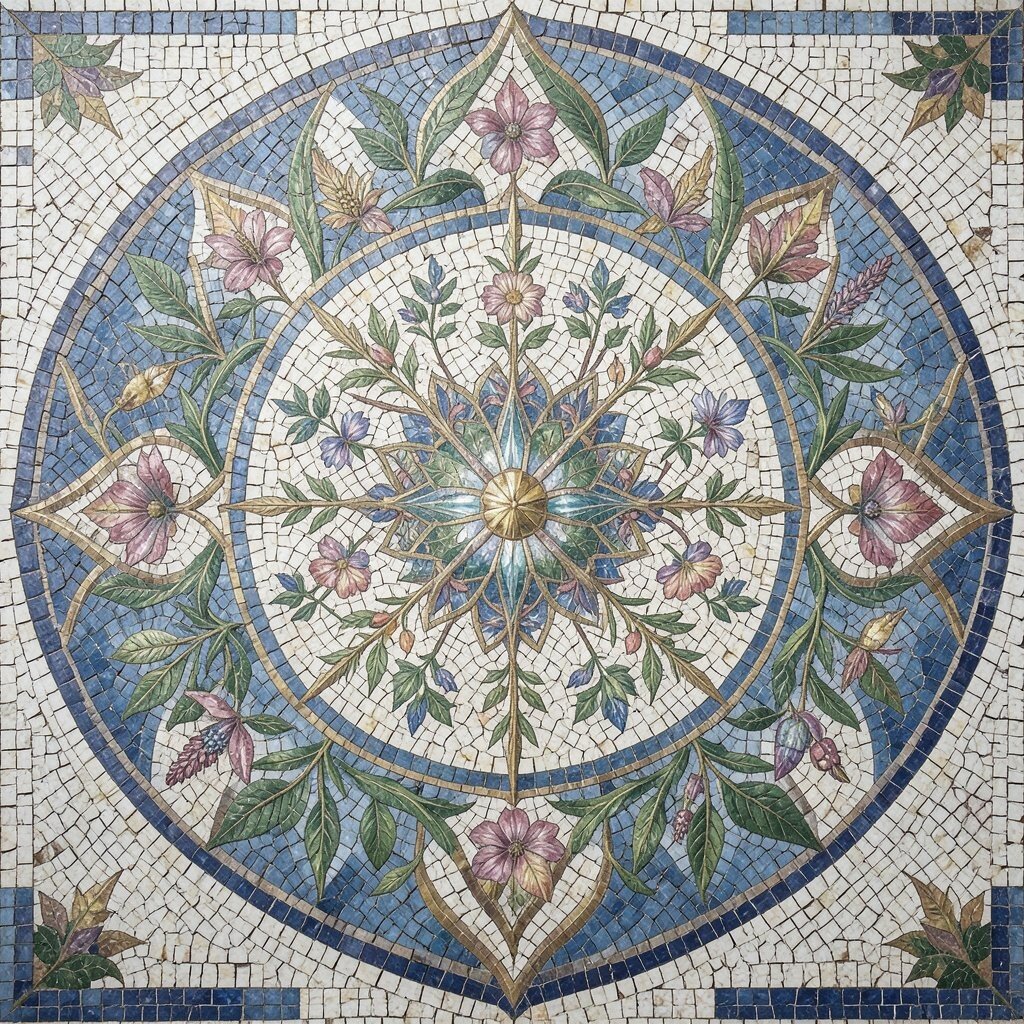
Enchanted Botanical Mandala A botanical mandala combines repeating leaf shapes with circular symmetry. It looks like a calm, living flower made from many tiny pieces.
This design benefits living rooms, spa-like bathrooms, and meditation corners because it feels centered and soothing. It also stands out as unique since mandalas can be customized to include your favorite leaf shapes. Personalize it by blending two greens—one bright and one deep—then adding a small warm accent at the center.
Cost can rise if you build the mandala from many tiny cuts, so consider pre-made mosaic templates. If you want a budget-friendly approach, start with larger leaf clusters and leave more space around them. Choose a grout color that matches your dominant tile so the mandala looks crisp and unified.
-
Artisan Tile Border With Hand-Painted Look
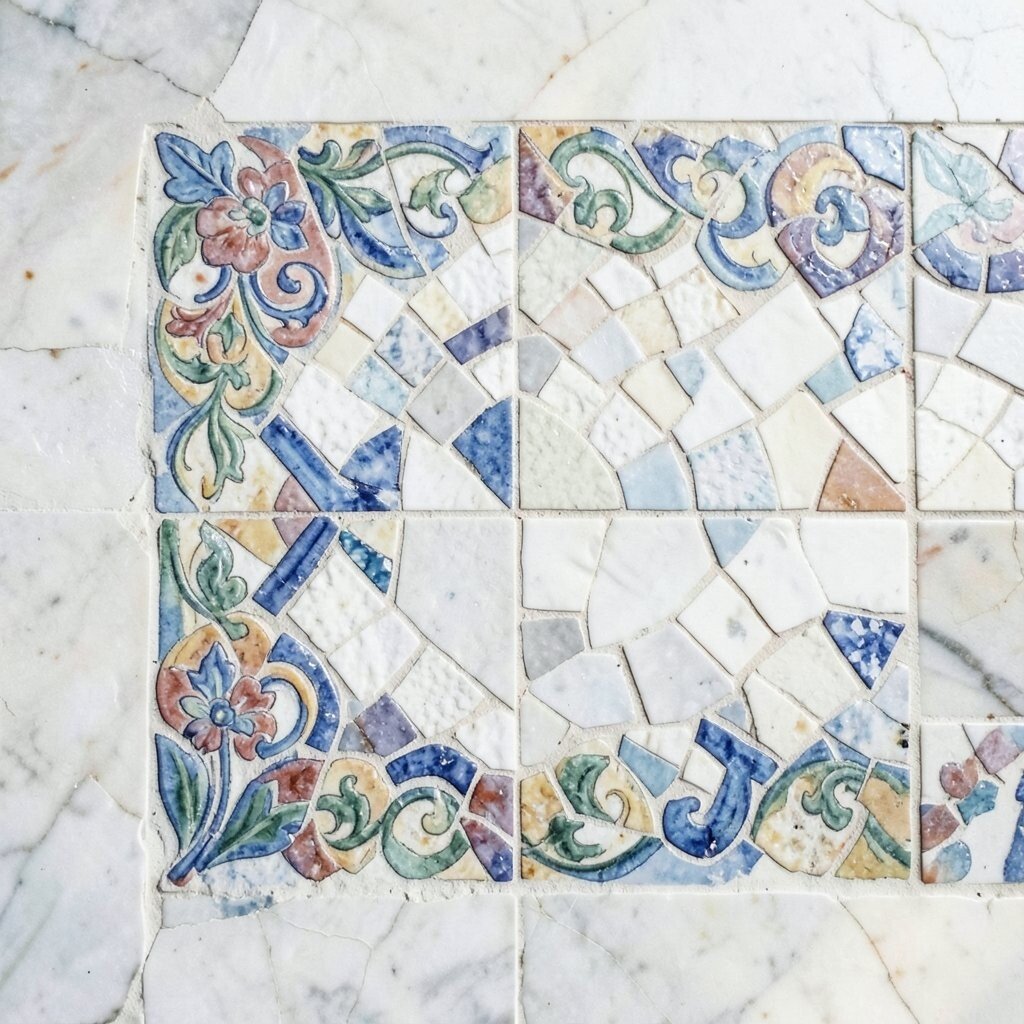
Artisan Tile Border With Hand-Painted Look This style uses border tiles that look slightly irregular, like hand-painted pottery. Even if the tiles are machine-made, the pattern can feel artistic and personal.
The benefit is charm: it adds a handcrafted feeling without needing real hand painting. It also works well for upgrading simple walls or adding detail around mirrors and sinks. Personalize it by matching border colors to your countertop, cabinet shade, or favorite artwork.
Cost considerations are helpful here because border sets are often easier to buy than full-wall mosaics. Look for matching tile systems that already include corner pieces to reduce extra purchases. Seal grout and clean gently so the “hand-painted” look stays vibrant.
For trend alignment, this style is popular because it blends classic artisan vibes with modern clean interiors.
-
Rainy Day Tiny Raindrop Tile Cluster
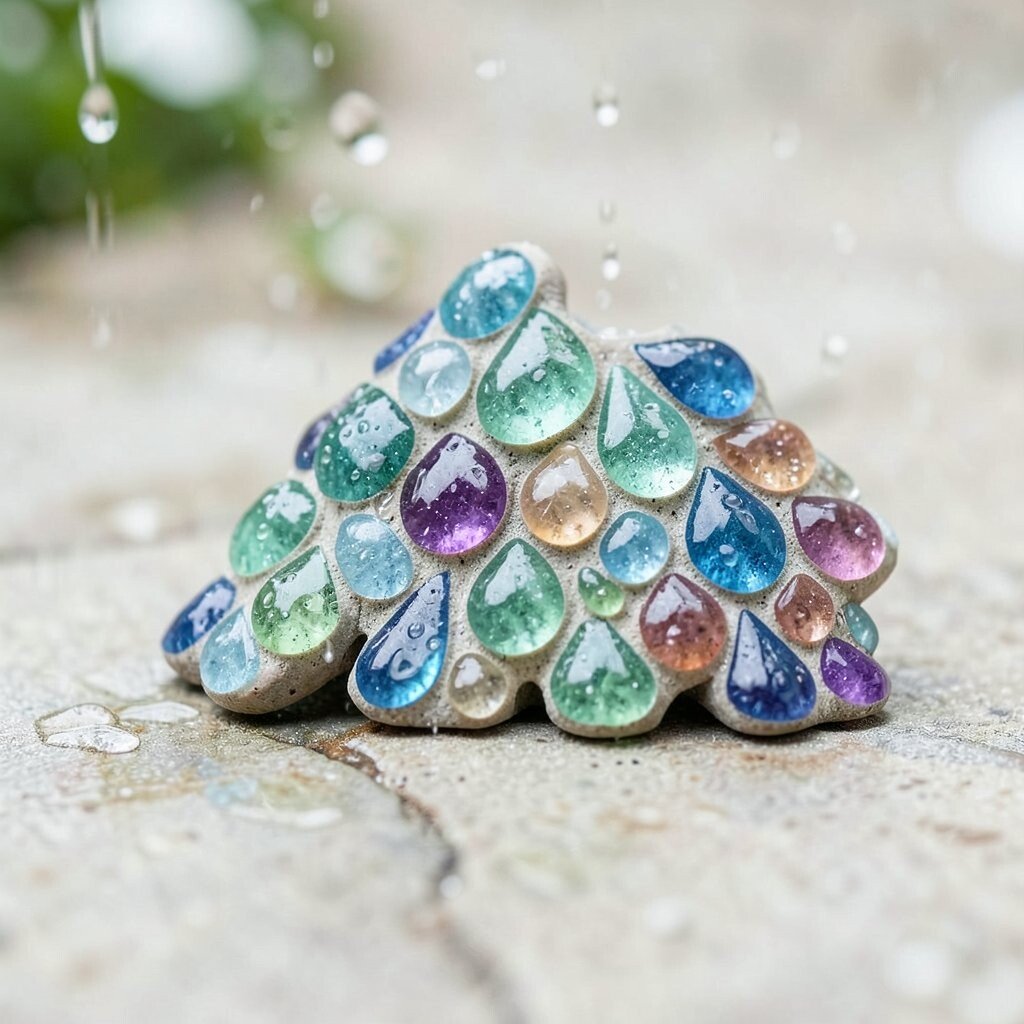
Rainy Day Tiny Raindrop Tile Cluster Raindrop clusters use small teardrop tiles that gather like a soft rain cloud. Blue-gray, soft white, and silver-toned tiles can mimic the feeling of rain without the mess.
This design benefits bathrooms and laundry areas by bringing calm energy and visual softness. It also feels playful in kid-friendly spaces if you keep the palette light. Personalize it by choosing a single accent “storm” blue that appears only at the center of the cluster.
-
Terrazzo Speckle Floor Glow
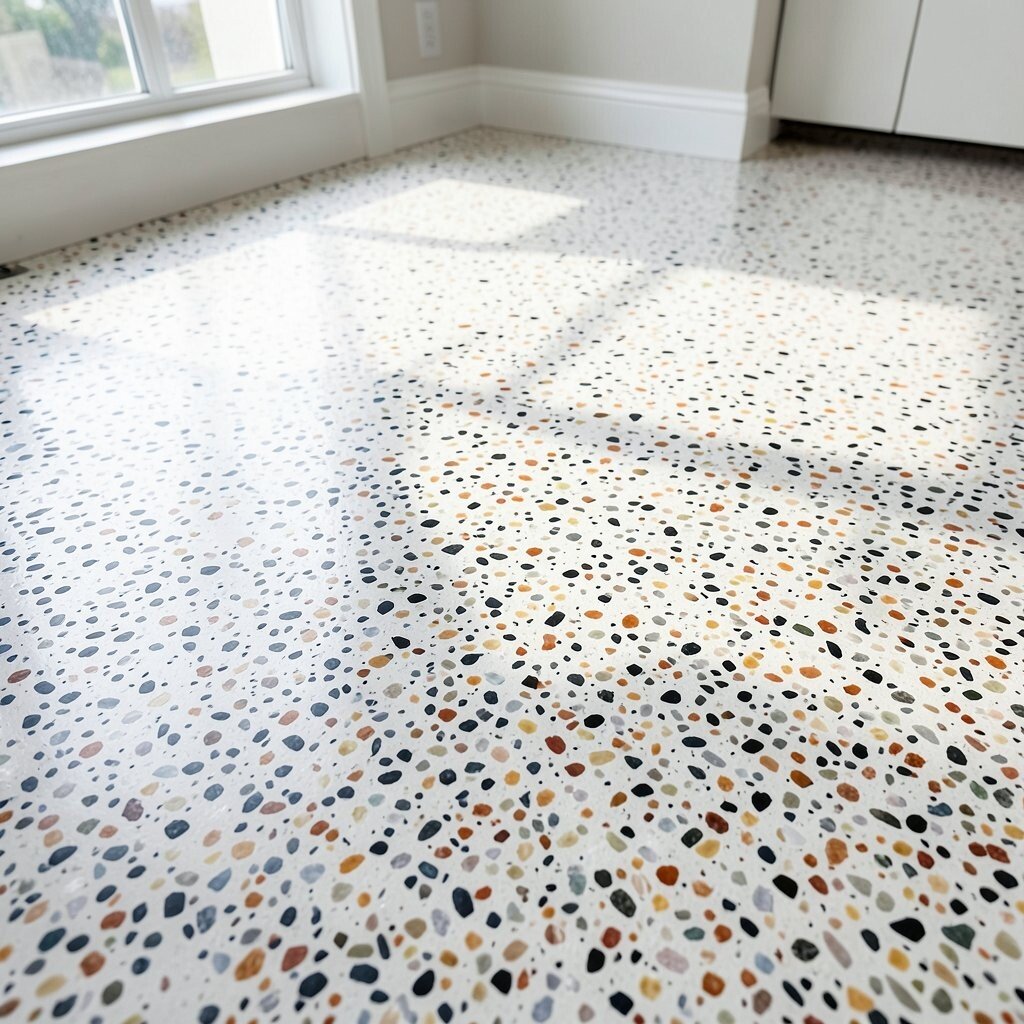
Terrazzo Speckle Floor Glow Terrazzo-style mosaics use speckles across the surface like stone mixed with tiny pebbles. The look is lively and modern, yet still cozy.
This design benefits floors and larger panels because it hides dirt and wear better than solid colors. It also looks unique because the speckle pattern feels natural and never identical. Personalize it by choosing speckle colors that echo your decor—such as warm beige, charcoal, and soft gold flecks.
Cost can be higher if you use custom terrazzo mosaics, but you can also create a similar look with small tile chips. Keep the base simple and let the speckles do the work. For safety and longevity, pick slip-resistant tiles and apply a strong sealer to protect grout from stains.
For a current trend, terrazzo looks great with modern furniture and natural wood tones.
-
Sunrise Paper Fan Mosaic in Peach and Cream
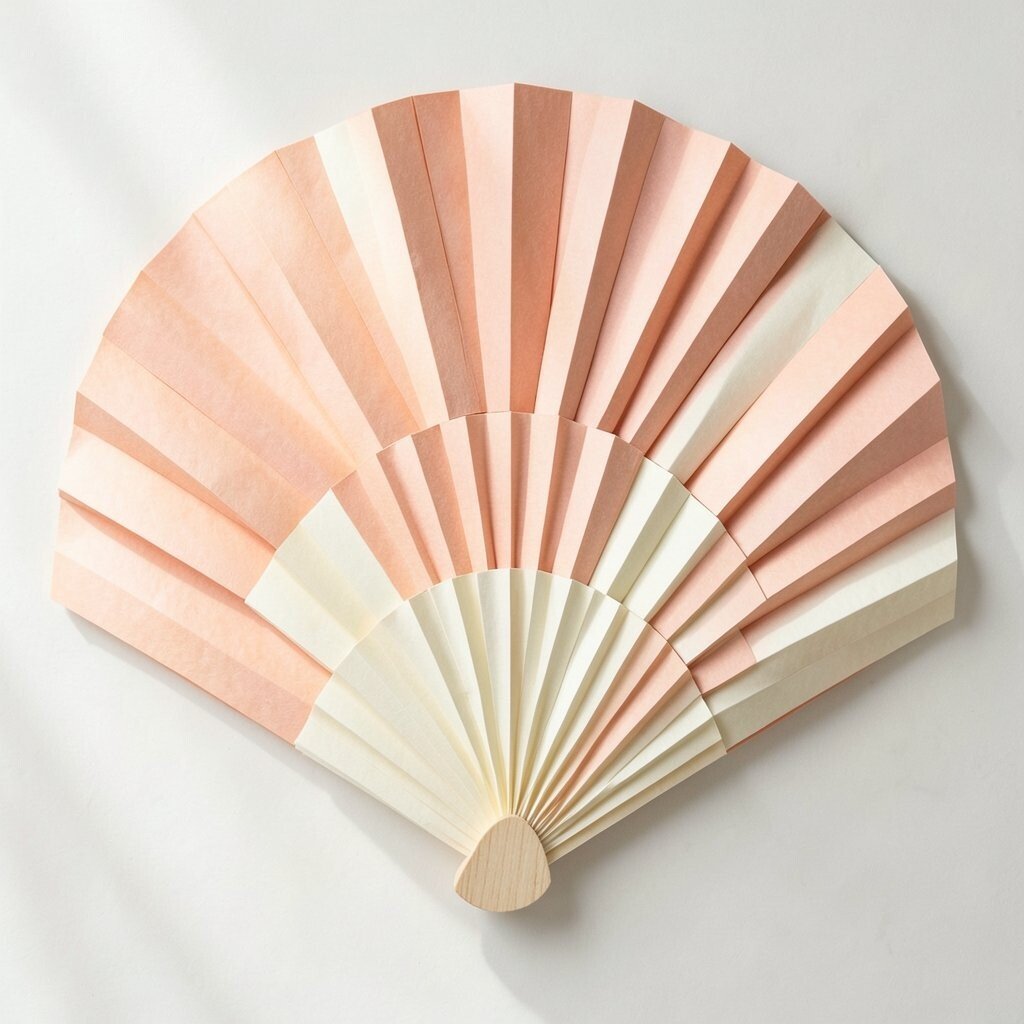
Sunrise Paper Fan Mosaic in Peach and Cream This fan-inspired mosaic spreads in gentle layers like paper folding, with colors that shift like a sunrise. Peach, cream, and soft coral create a warm and uplifting mood.
The benefits include an airy, welcoming feel that works in hallways, dining rooms, and cozy corners. It also provides uniqueness because fan shapes can be scaled up or down depending on your space. Personalize it by adding a thin darker edge band so the fans look crisp and framed.
Cost considerations: fan shapes often work best with mosaic sheets to reduce cutting time. If you want to save money, use the sheet pattern for most of the wall and reserve custom colors for the top or center fans. Pick grout that matches the lightest tile to keep the sunrise glow feeling soft.
-
Minimal Line Wave With Single Accent
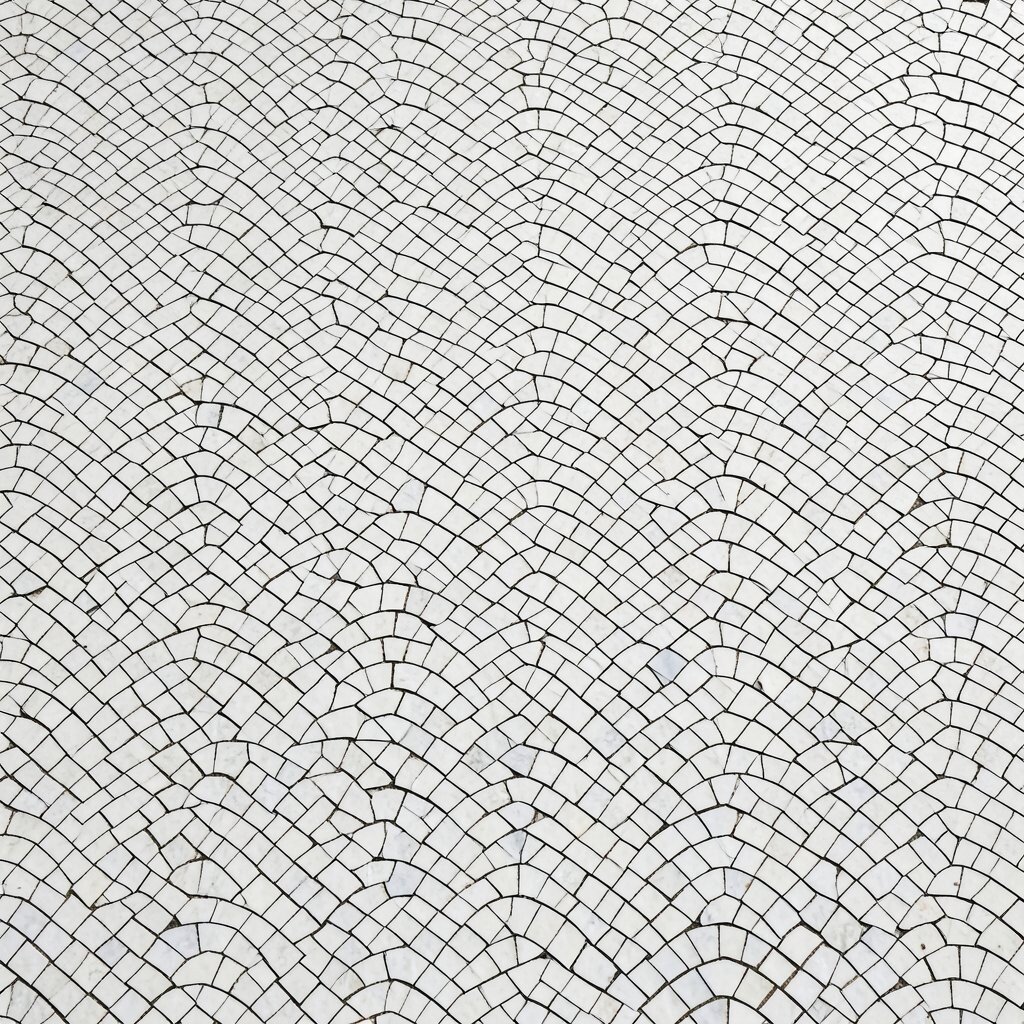
Minimal Line Wave With Single Accent This mosaic uses one or two flowing wave lines made from small tiles, leaving the rest mostly simple. The design feels clean, modern, and easy to live with.
It benefits busy rooms because it adds style without overwhelming the eye. It also helps personalization since you can pick the accent color to match your decor. Try a deep blue line on a light neutral background, or a terracotta line on a creamy base for warmth.
Cost considerations are usually low to mid because fewer tiles are needed and the design is simple. Use consistent tile size so the wave line looks smooth. Seal grout if the area is exposed to moisture, and clean regularly to keep the line sharp and bright.
-
Bold Botanical Burst in Emerald and Ochre
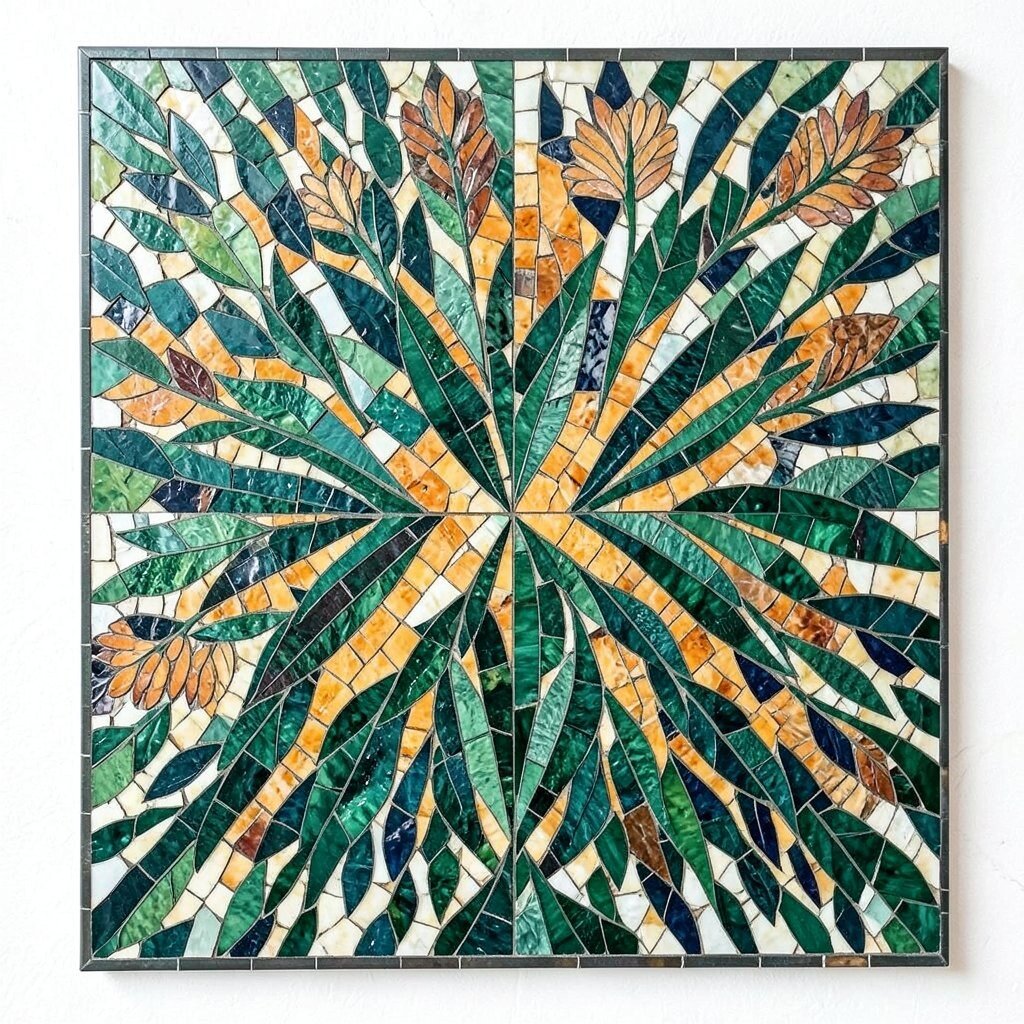
Bold Botanical Burst in Emerald and Ochre This mosaic looks like a botanical burst, with leaves and shapes radiating outward from a center spot. Emerald green with ochre highlights creates a strong, vibrant contrast.
The benefits are big: it becomes a statement piece that still feels natural and not too harsh. It also adds uniqueness because the burst style can be customized to match your favorite plant shapes. Personalize it by using a few “highlight” tiles in warm gold tones to mimic sun on leaves.
Cost considerations: rich color palettes can cost more if you choose specialty glass tiles. To stay on budget, mix high-impact emerald tiles with simpler ceramics for the rest. Plan the burst size so it fits the wall area, and use a border to keep the center from looking floating.
-
Classic Frame Within a Frame Mosaic
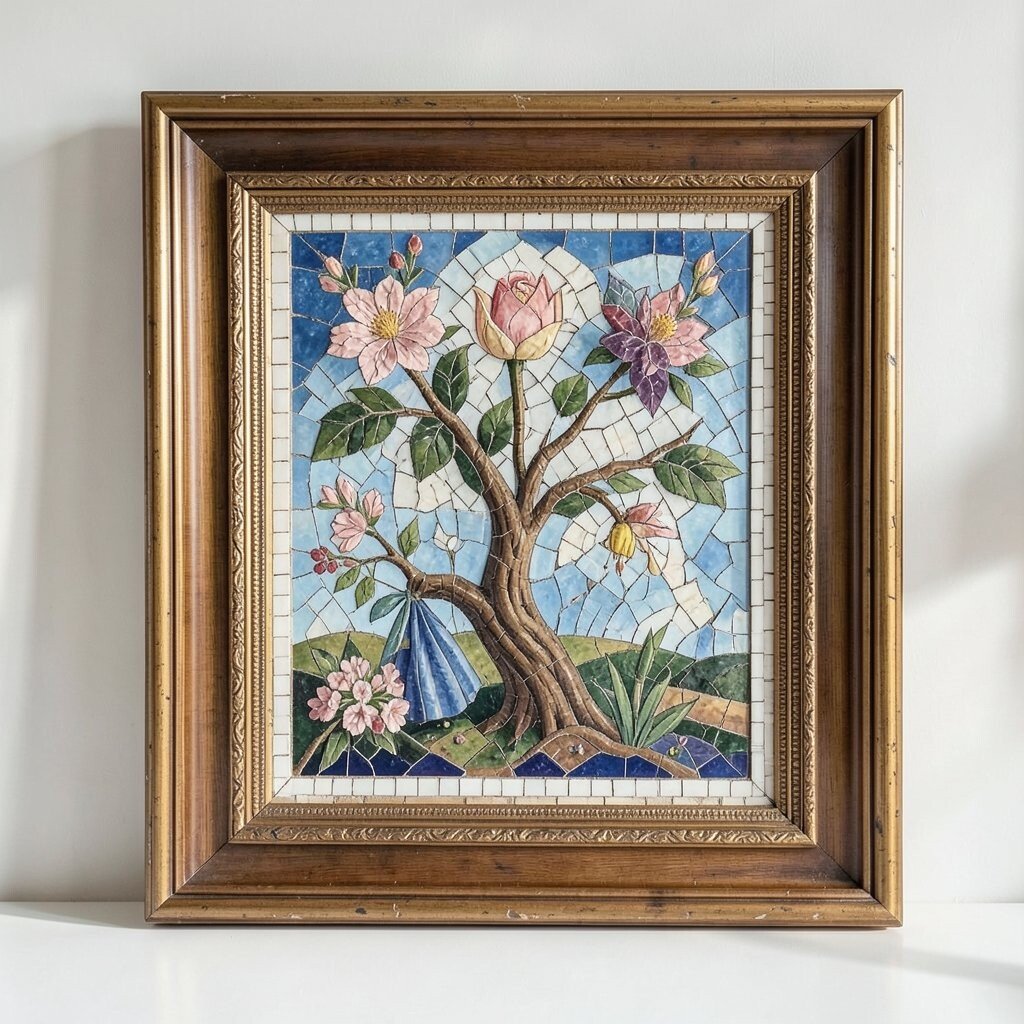
Classic Frame Within a Frame Mosaic This design uses nested borders—like a picture frame—made from mosaic tiles. You can build it with one color family or add contrast between the inner and outer rings.
The benefit is structure: it makes the surrounding space feel designed and finished. It also helps personalization because you can match frame colors to your wall art or furniture. For a modern twist, choose one accent stripe between frames, like a thin line of black or gold.
Cost can be controlled because borders need fewer tiles than full patterns. Buy pre-cut border sections if available, and reserve cutting time for corners only. Choose grout color based on mood: cream grout feels soft, while dark grout feels crisp and dramatic.
This is also a popular trend because it makes mosaics look architectural rather than decorative only.
-
Starry Night City Block Grid
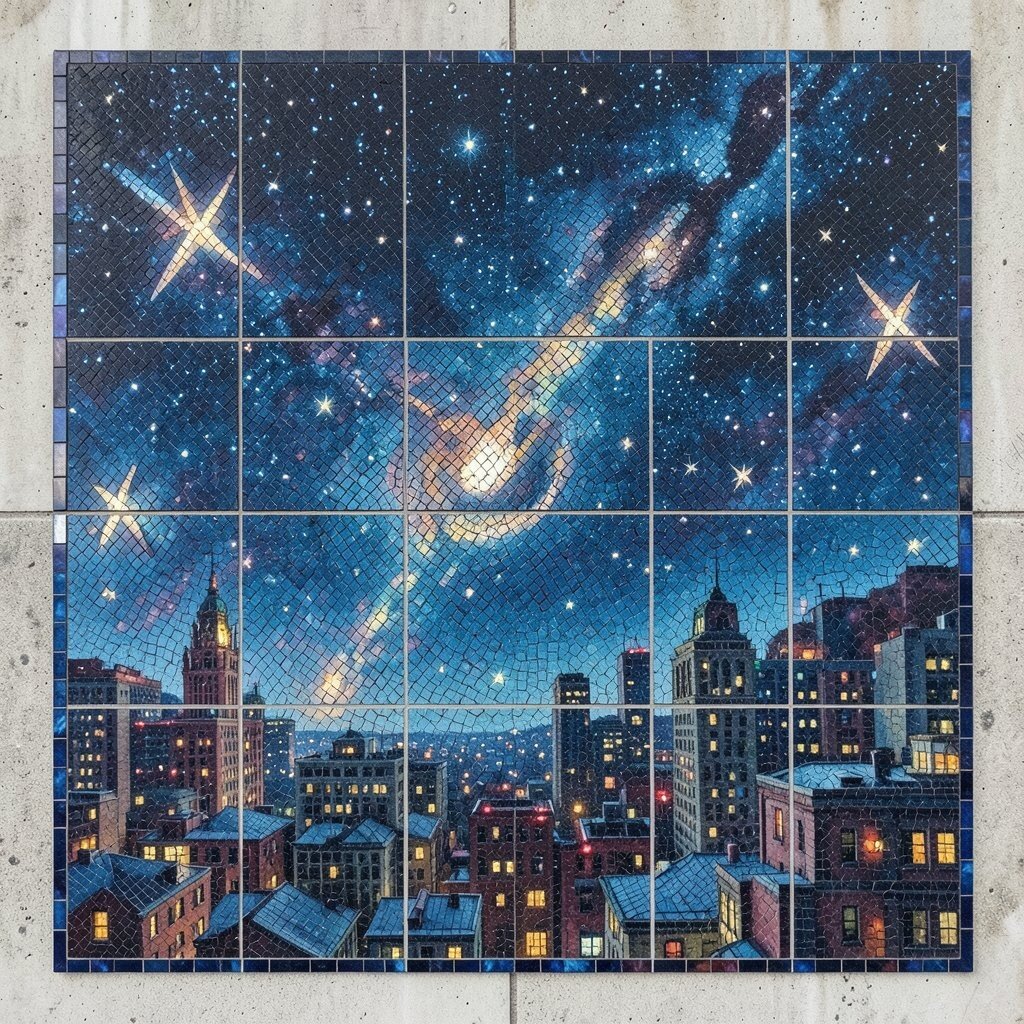
Starry Night City Block Grid This mosaic looks like tiny buildings in a grid, with windows made from bright dots. Dark tile creates night, and the window dots add a cozy glow feel.
The benefit is storytelling: it feels like a miniature city that brings life to a plain wall. It also works well for personal themes, like your hometown or a favorite vacation destination. Personalize it by using colors that match your home’s lighting—warm for a cozy look, cool for a crisp night vibe.
Cost considerations: grids can be budget-friendly because the layout repeats. Use mosaic sheets for most of the blocks, and add only a few custom window “spark” tiles for the best effect. Seal grout well, especially if you place it in a kitchen or bathroom where splashes happen.
-
Warm Linen Corner Lattice
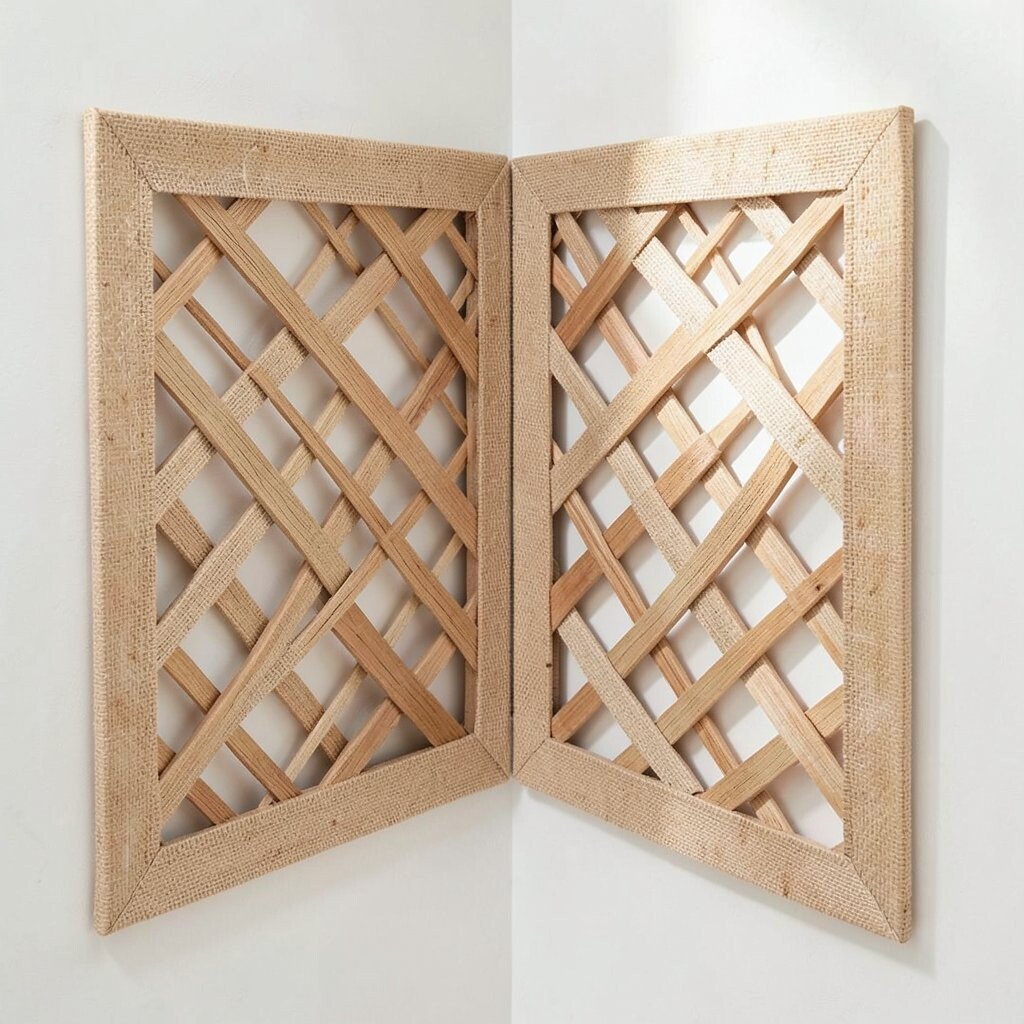
Warm Linen Corner Lattice This style uses a lattice pattern in warm neutral tiles, placed mainly in corners or around a focal area. It creates a subtle “decorative architecture” look.
The benefits include a soft elegance that blends with many design styles. It also helps corners look intentional, which can make rooms feel more polished. Personalize it by adding a small accent tile cluster at the lattice intersection points.