Space can feel bigger without feeling empty. You just need open areas that still look calm, warm, and on purpose.
When your rooms talk to each other smoothly, clutter has less room to grow. The ideas below help you keep things airy while still making life easy.
-
1) Pick one “anchor” color and repeat it often
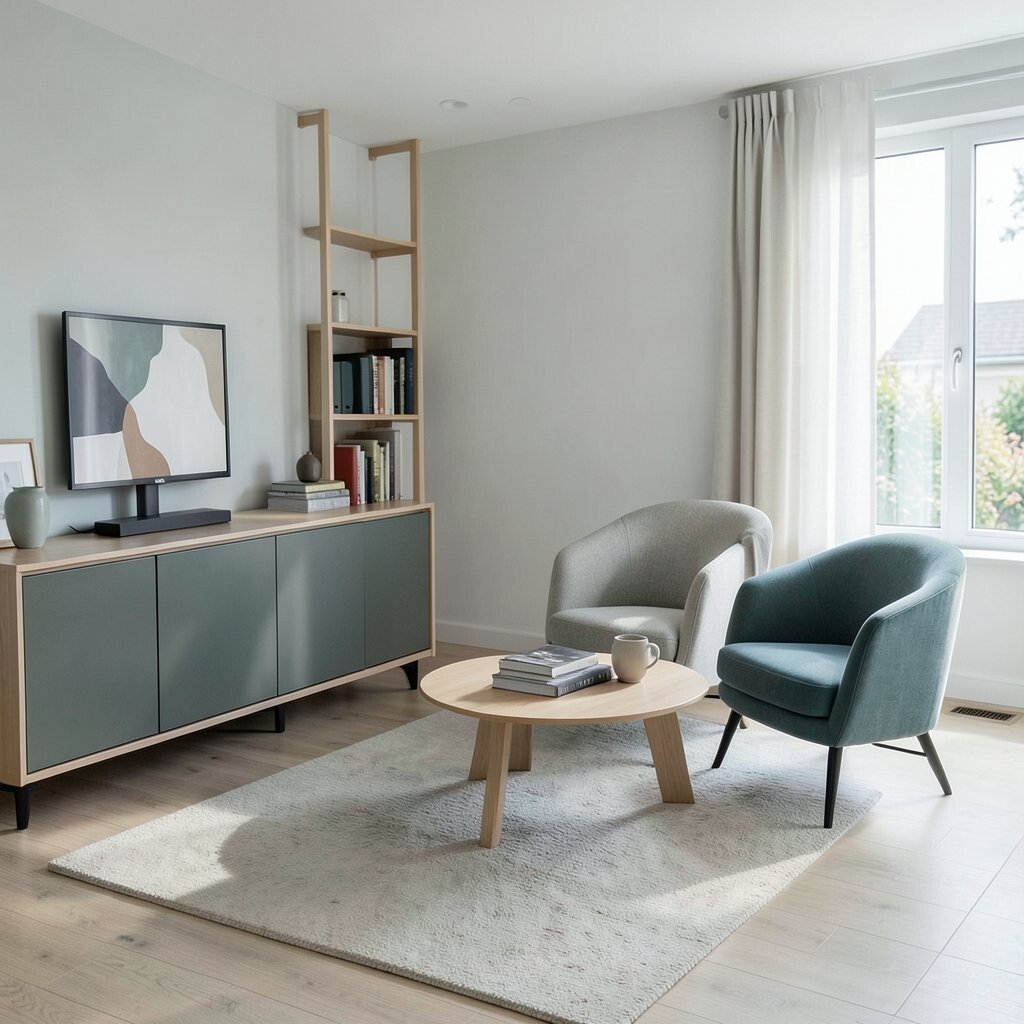
) Pick one “anchor” color and repeat it often Choose a main color that shows up in rugs, throw pillows, art, or even cabinet hardware. Keeping that color consistent makes the whole space feel planned, not messy.
When you repeat the same tone, the eye moves around and settles quickly. This helps clutter look less loud because the room has a steady rhythm.
For personalization, match the anchor color to something you already love, like a favorite blanket or a kitchen tile. Try a paint sample, then test how the color looks in morning and evening light.
-
2) Use floating shelves, but keep them “breathing”
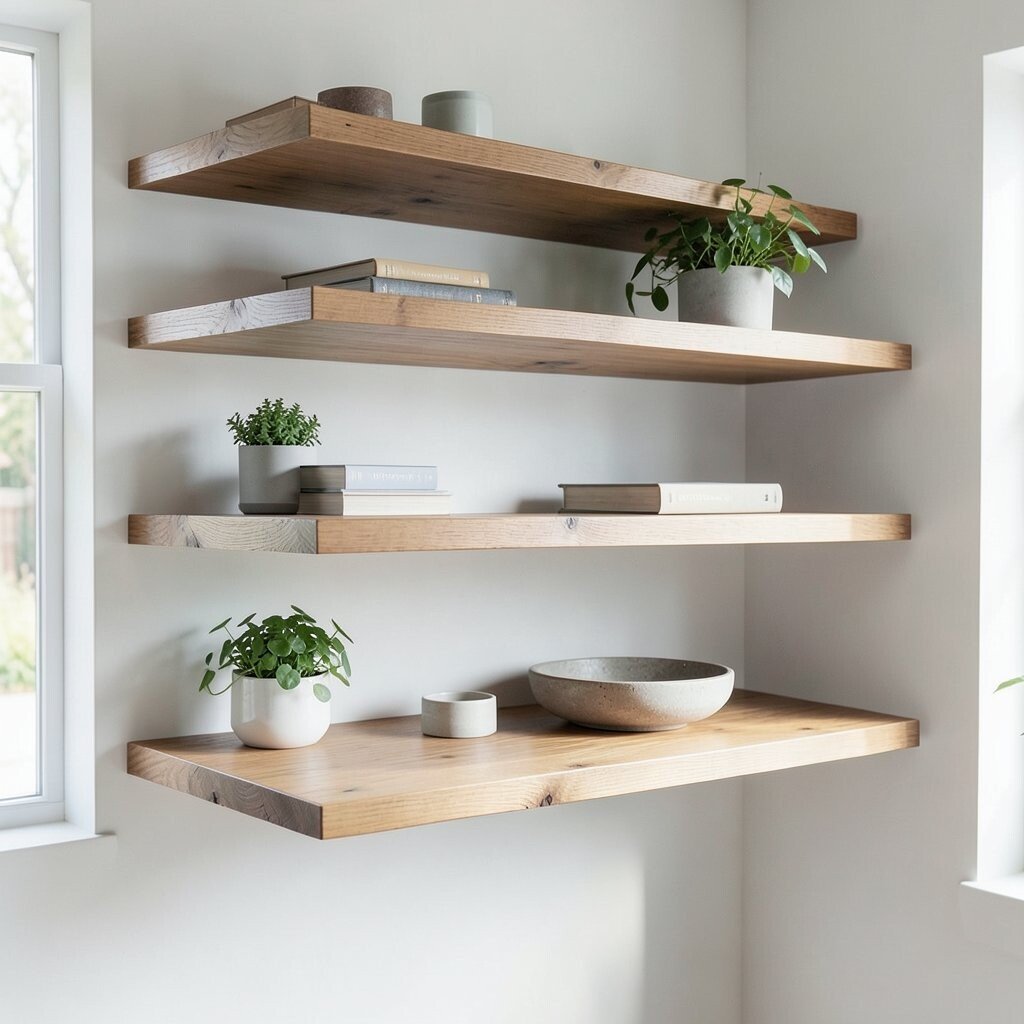
) Use floating shelves, but keep them “breathing” Floating shelves give you storage without bulky furniture taking over the floor. They also keep open sightlines, which is perfect for modern open living areas.
To avoid clutter, style with a few larger items instead of many small ones. Aim for mostly negative space so the shelves look intentional.
Try cost-smart options like secondhand frames, thrifted books, and small planters. A current trend is mixing warm wood with simple black brackets for a clean, updated look.
-
3) Create “zones” with rugs instead of walls
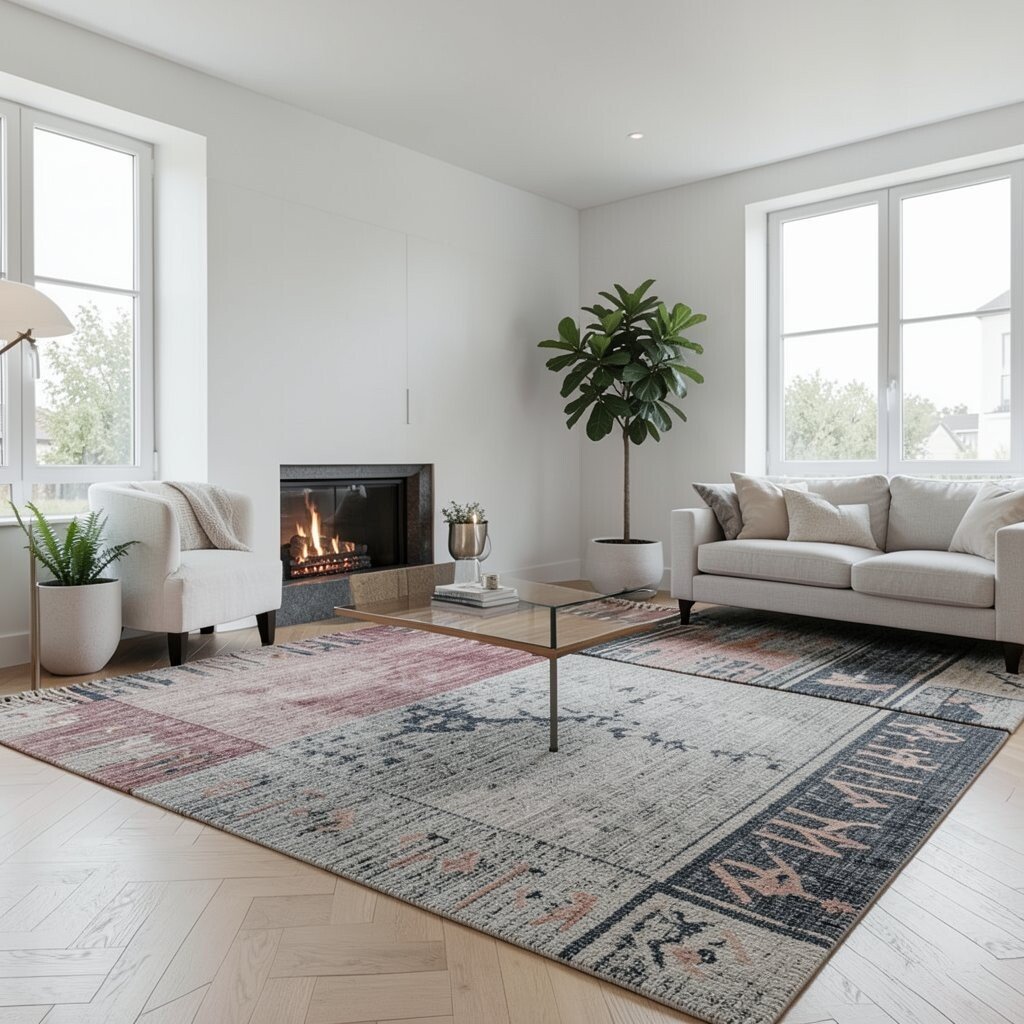
) Create “zones” with rugs instead of walls In open layouts, rugs act like invisible borders for each activity. One rug can define the living area while the kitchen and dining area stay airy.
Pick rugs that share similar tones, so everything feels connected. This makes it easier to style without overthinking every corner.
For tips, place the front legs of your sofa on the rug so it feels anchored. If you have pets or busy life, choose rugs with patterns that hide everyday wear.
Cost considerations matter too, so shop for a larger sale rug and add a smaller runner where needed. When you scale rug sizes correctly, the space feels more organized without extra furniture.
-
4) Hide daily mess with closed storage near high-traffic spots
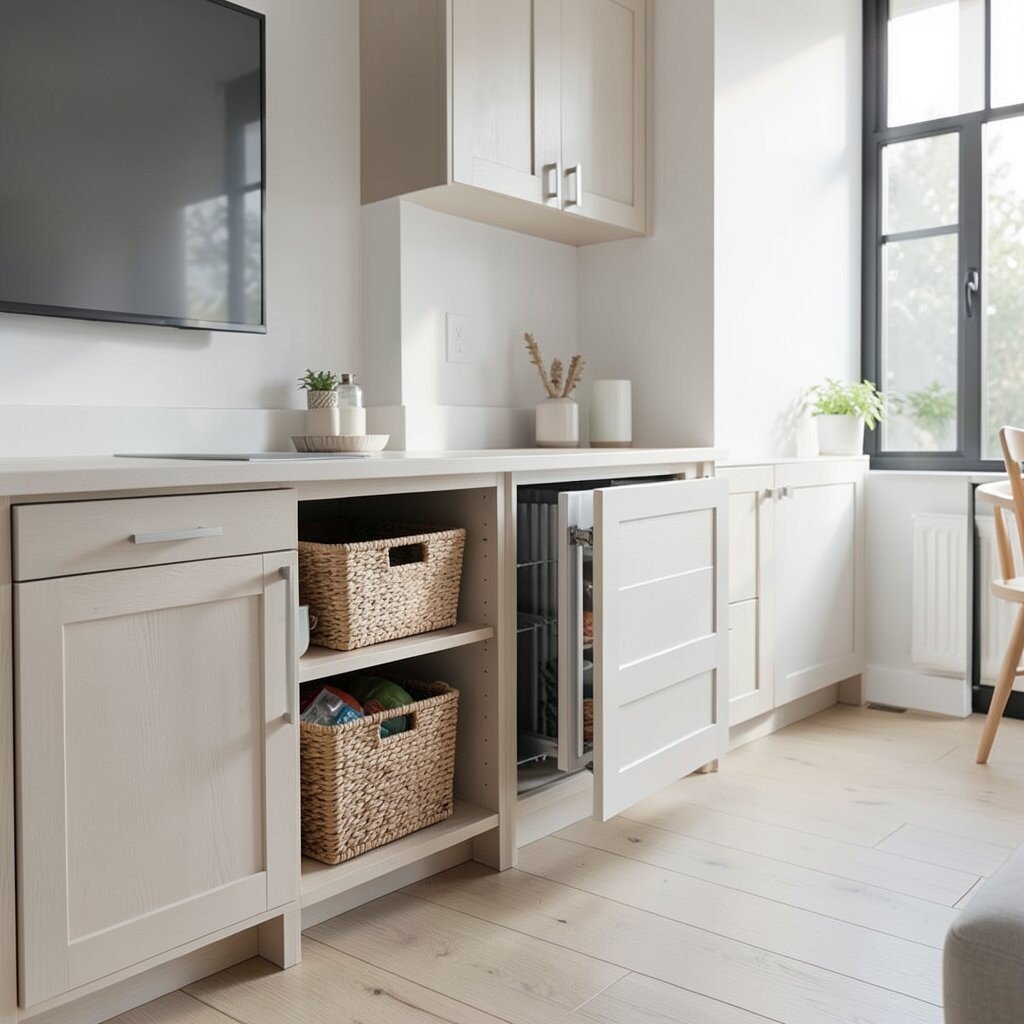
) Hide daily mess with closed storage near high-traffic spots Put bins, baskets, or doors where people naturally drop things. A tidy entryway area, a console with drawers, or a cabinet by the sofa can do wonders.
When “clutter happens,” it gets swallowed quickly instead of spreading across tables. That means your open concept stays calm even on busy days.
Consider slipcover storage ottomans or cabinets with simple hardware to keep the look clean. If you’re working with a tighter budget, use matching storage boxes that blend with your decor.
Personalize by labeling drawers in a friendly way, like “charging,” “reading,” or “coats.” It keeps everyone on the same page without making you feel strict.
-
5) Choose one statement light fixture per area
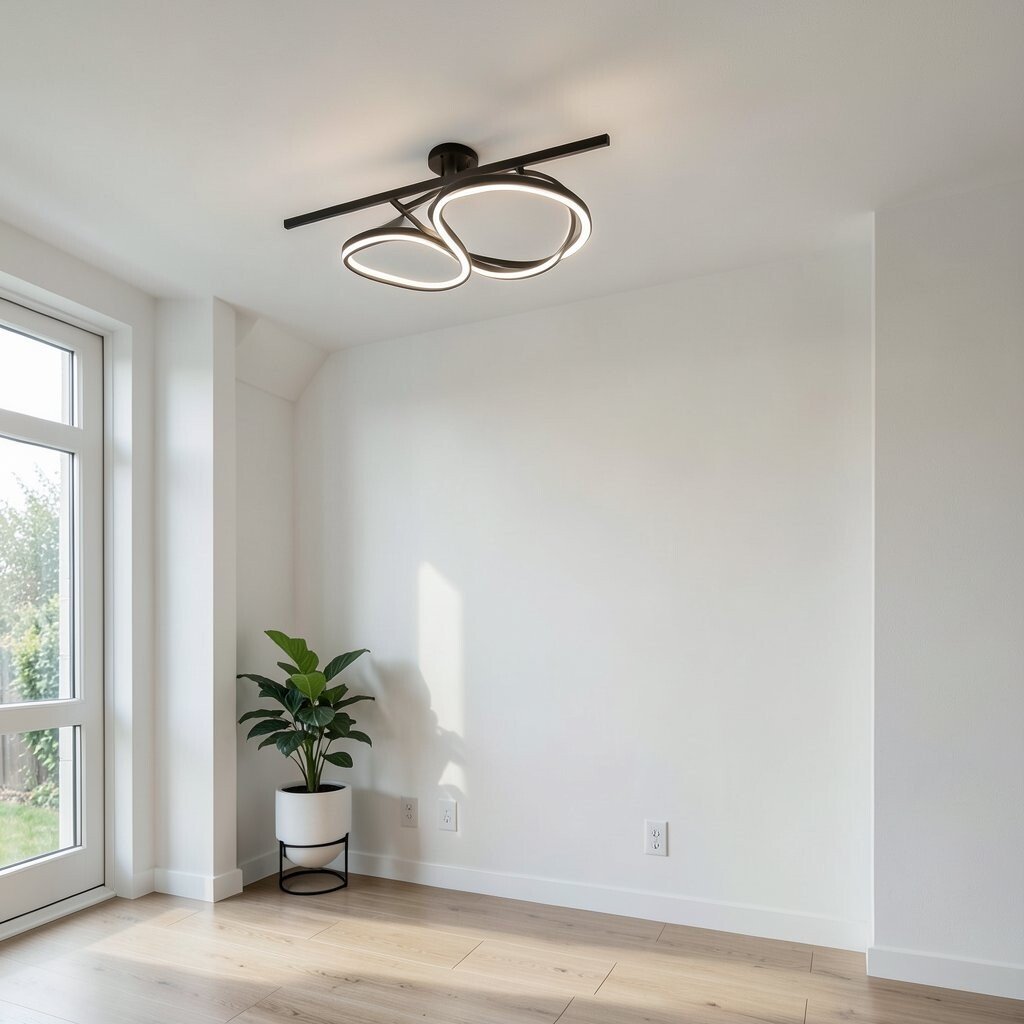
) Choose one statement light fixture per area A bold pendant or chandelier can pull the room together and reduce the need for extra decoration. Good lighting also makes your open space look brighter and more inviting.
Keep the fixture style consistent with your other finishes, like brass, chrome, or matte black. When the lighting matches, the whole room feels more “designed,” not thrown together.
For personalization, use warm bulbs and adjust brightness for different moods. Trends right now lean toward sculptural shapes and globe styles because they look modern without being cold.
-
6) Set up a “landing spot” for essentials
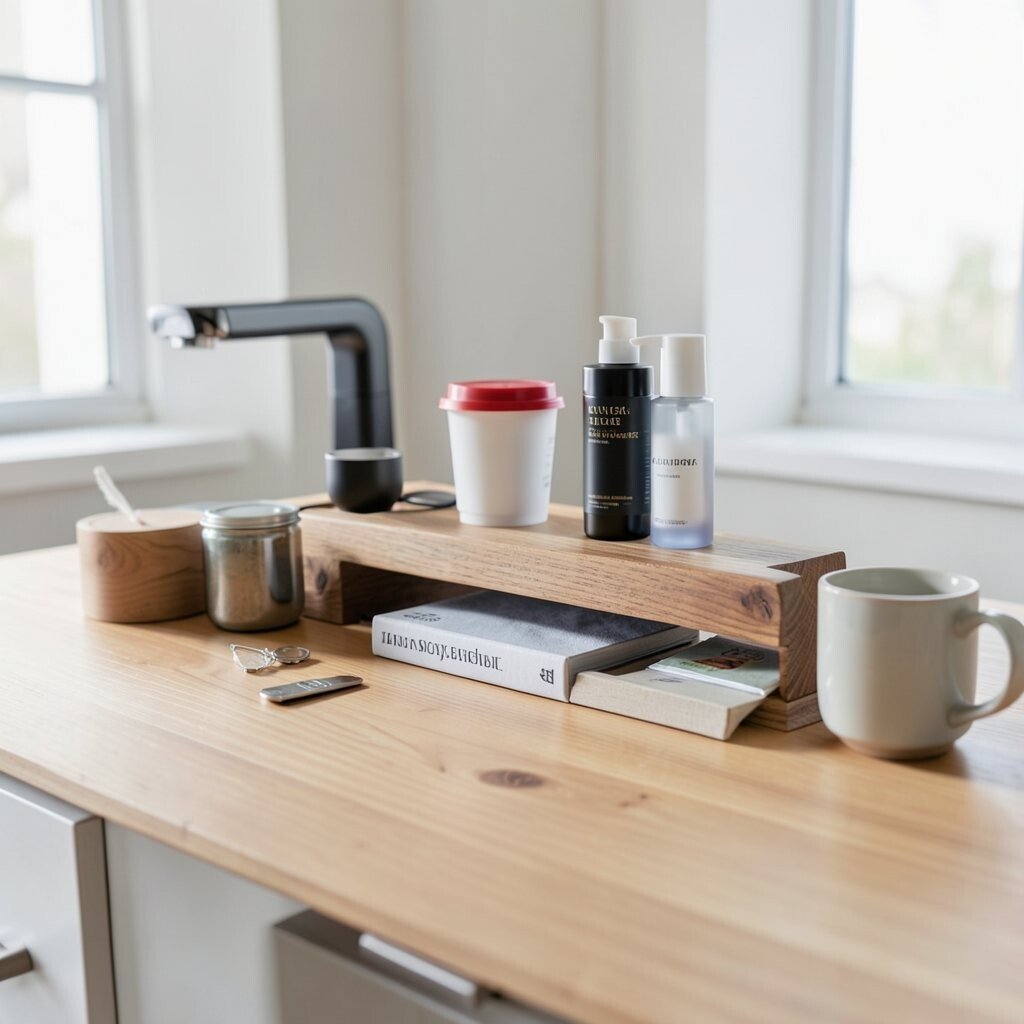
) Set up a “landing spot” for essentials Pick one small table, tray, or wall hook zone for keys, sunglasses, and mail. When items have a home, counters and tables stay clearer.
Use a tray to catch loose items so they don’t wander. This tiny setup makes a big visual difference in open rooms.
For personalization, choose a tray that matches your anchor color or uses a texture you love, like woven rattan. Cost-wise, a simple catch-all tray is usually easier than buying multiple organizers.
-
7) Swap small decor for fewer, larger pieces
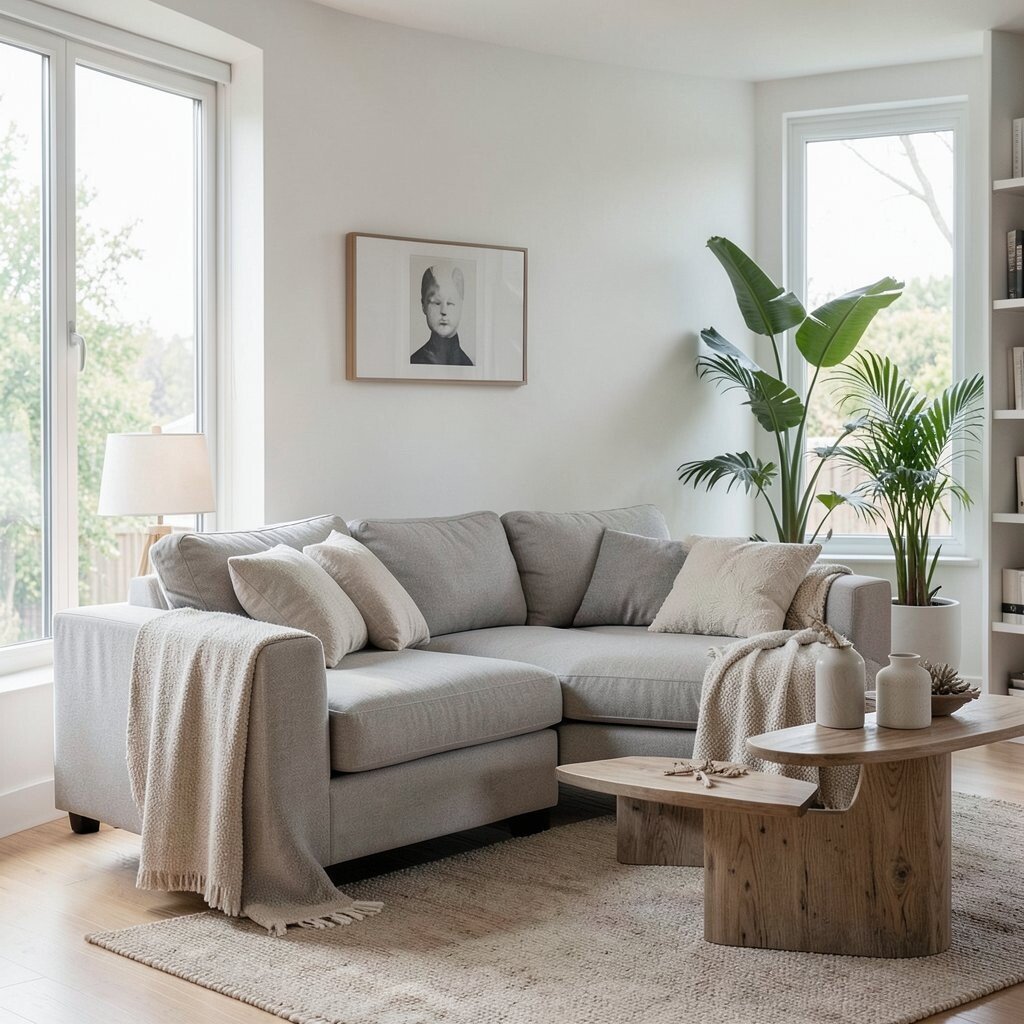
) Swap small decor for fewer, larger pieces Small stuff can pile up fast, especially in open spaces where everything is visible. Larger art, bigger planters, and bigger mirrors create a stronger look with less clutter.
Try one large framed piece instead of several tiny frames. Your walls will look calmer, and your room will feel more finished.
When you style, keep a “one main item” rule for each surface like a console or coffee table. This gives you freedom without chaos.
For personalization, pick shapes that match your taste, like rounded frames for softness or bold rectangles for a modern feel. If you’re watching costs, look for art prints in budget frames or thrifted mirrors.
-
8) Keep the coffee table simple with a rotation plan
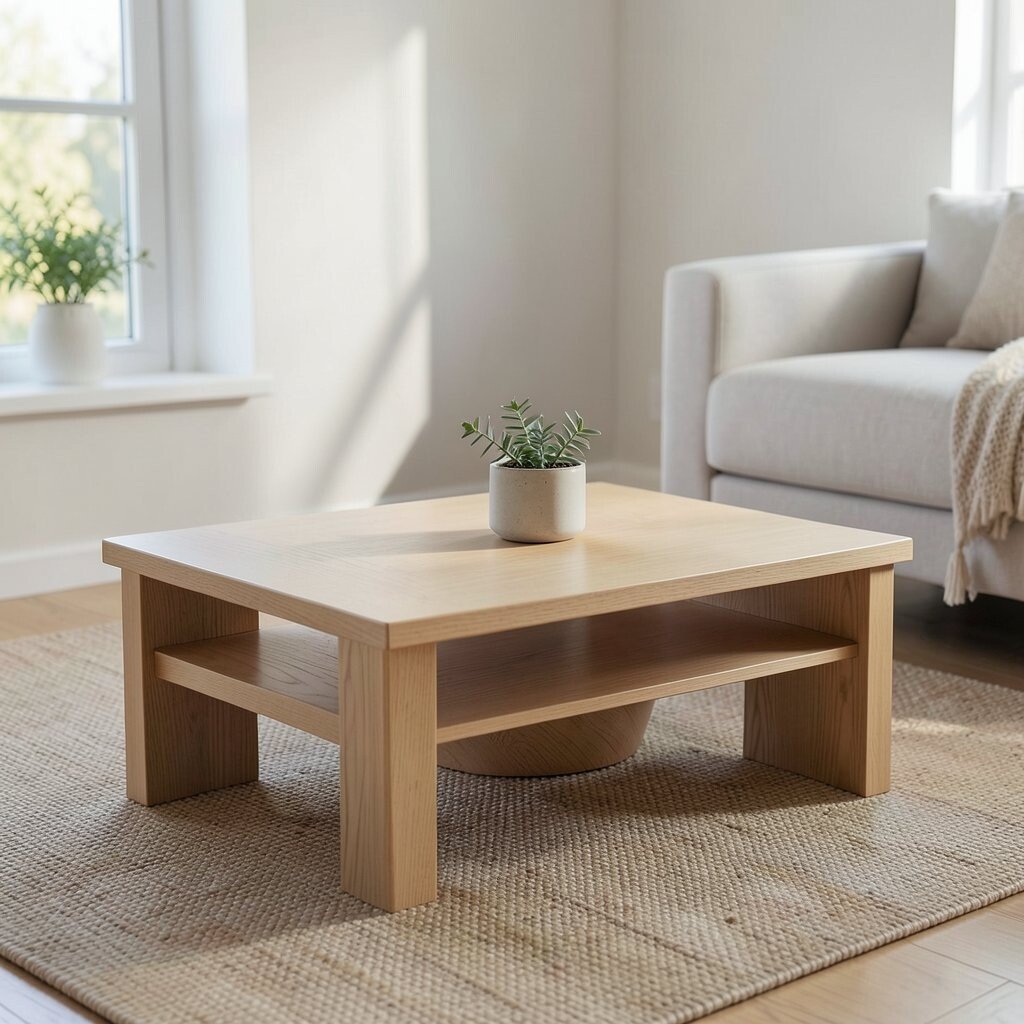
) Keep the coffee table simple with a rotation plan A coffee table can look styled even when you live in your home. The trick is a small, consistent set of items you rotate based on the season.
Use one tray, one stack of books, and one small decor element. When everything else is put away, the open concept feels neat and light.
For tips, store chargers, remotes, and extra coasters in a drawer or basket under the table. This prevents the “temporary pile” that always turns into a permanent mess.
Cost considerations are easy here because trays and basic organizers usually cost less than new furniture. Choose materials that match your room, like wood, stone, or ceramic.
-
9) Add one tall plant to bring life upward
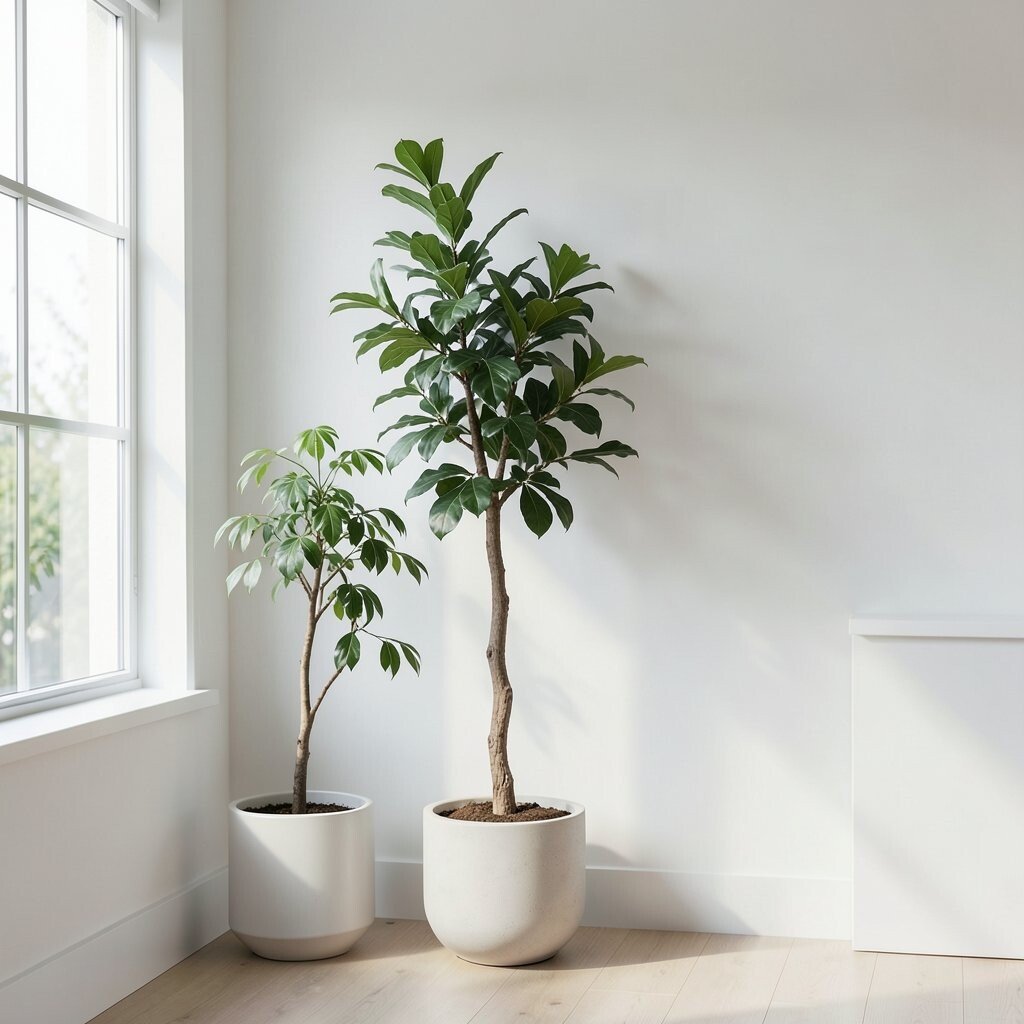
) Add one tall plant to bring life upward Tall plants add height, which balances open spaces and fills awkward empty spots. They also soften the hard lines of kitchens and wide living areas.
Choose a plant that fits your light level, like a snake plant for bright or low-light rooms. The right plant makes the space feel cared for, not bare.
For personalization, use a pot that matches your finishes, such as terracotta, black, or cream. A current trend is using planters with natural textures like woven baskets or matte clay.
-
10) Use a media console that includes cable control
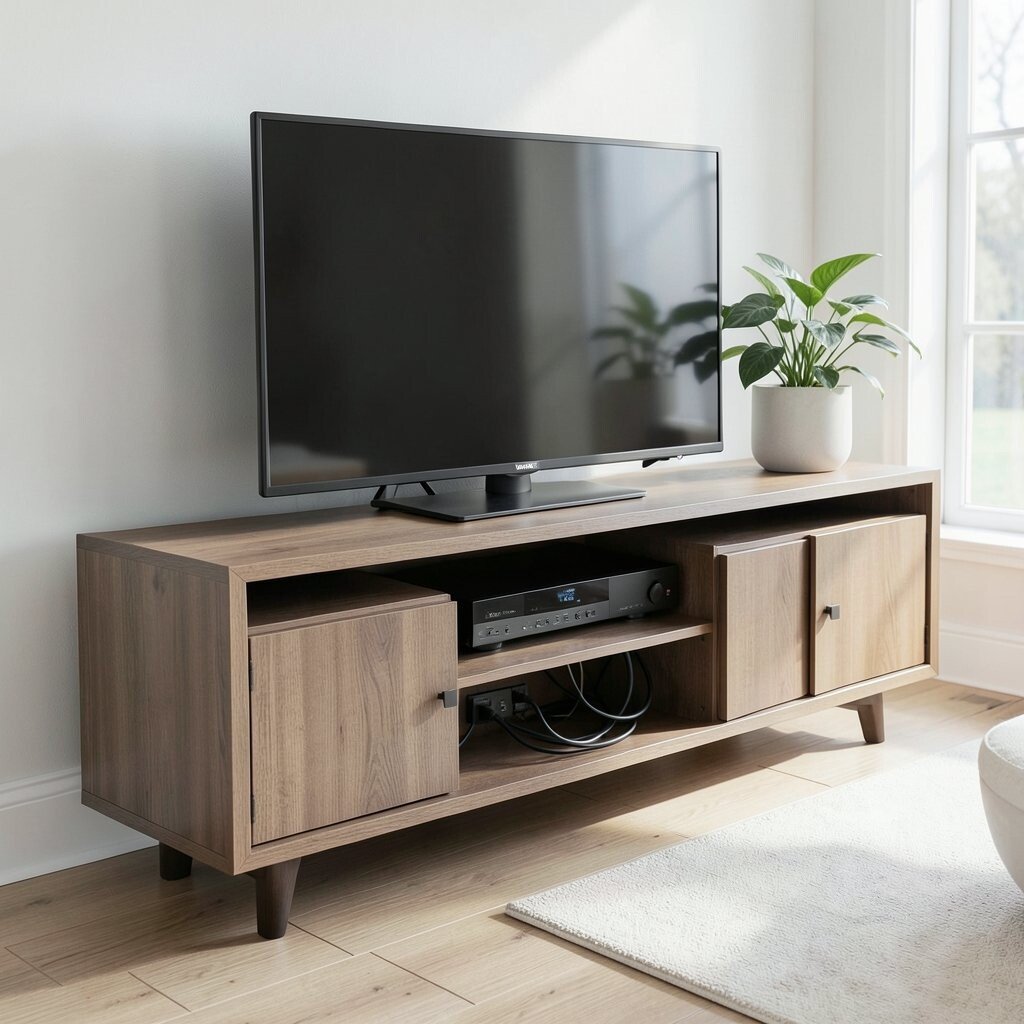
) Use a media console that includes cable control A sleek media console helps your TV wall look clean and intentional. When cables stay hidden, the whole space feels calmer instantly.
Look for built-in openings or trays behind doors so cords don’t escape. This is a small fix with a big visual reward.
Tips: keep only one device visible at a time, like a slim soundbar or a streaming box. Then store extra items in drawers or a closed cabinet.
-
11) Match your metal finishes across rooms
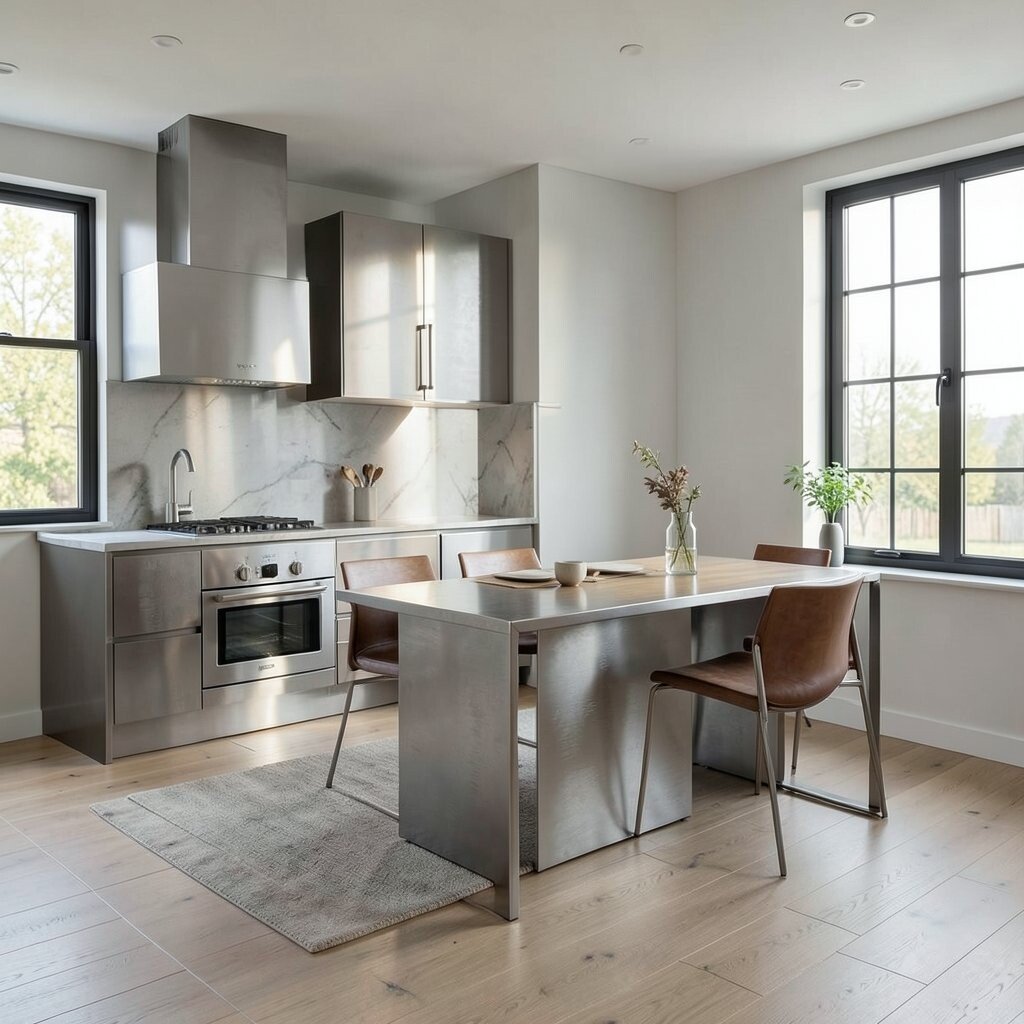
) Match your metal finishes across rooms Open concepts show everything at once, so mismatched finishes can create visual noise. Matching metals, like handles, light fixtures, and faucets, helps your home look cohesive.
If you can’t change everything, start with the most visible areas. Do your most noticeable switches, bars, or lamps first, then build from there.
For personalization, choose a finish you love and build a small “finish map” for each room. For example, keep brass in one zone and matte black in another, as long as they flow smoothly.
Cost considerations: updating small hardware or swapping a lamp is usually cheaper than replacing whole fixtures. This also fits current trends that favor simple, repeated materials.
-
12) Hang curtains high and wide for instant softness
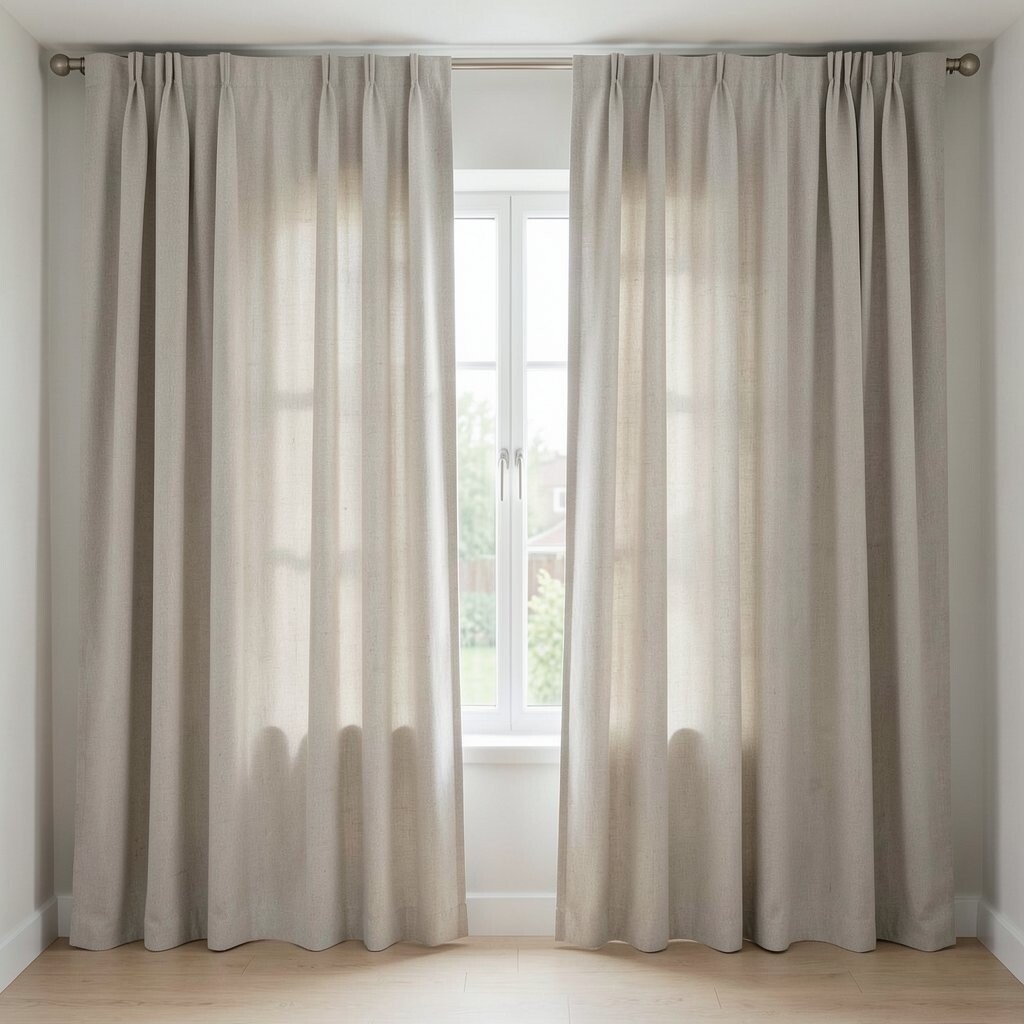
) Hang curtains high and wide for instant softness Floor-to-ceiling curtains make windows look taller and the room feel more elegant. This also gives you an easy way to add fabric without adding clutter.
Mount your rod near the ceiling and extend it past the window edges. The result is a smoother, more “pulled together” look.
For tips, choose a lightweight panel fabric for airflow and a neutral color for an open feel. If you need privacy, look for lined options that still look light on the outside.
Cost considerations: you can hem panels yourself, or buy ready-made panels and use simple rings. Personalize with a subtle pattern if you love texture, but keep it small so the room stays calm.
-
13) Make one wall a gallery, not the whole room
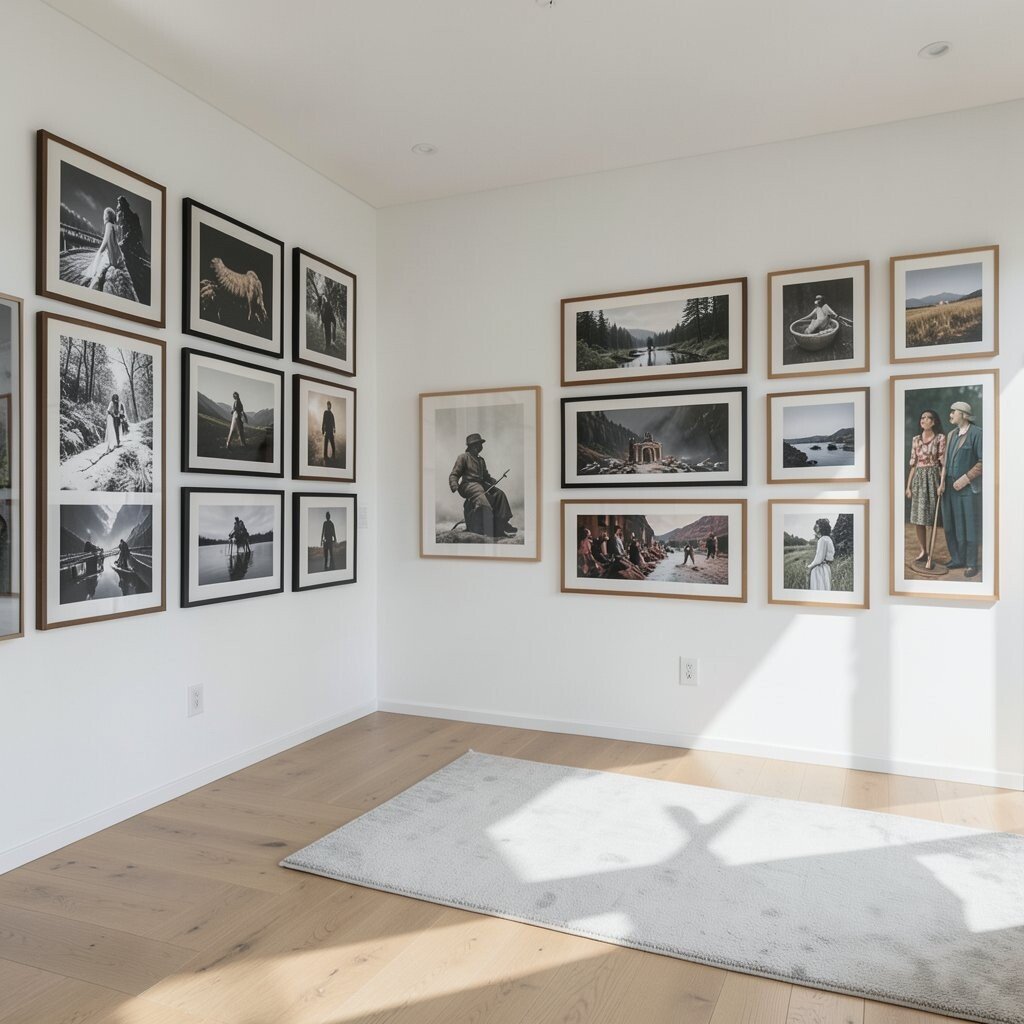
) Make one wall a gallery, not the whole room A gallery wall can be a focal point, and focal points reduce the urge to decorate everywhere. When you choose one place for art, the rest of the room can breathe.
Use frames that look related, even if the art changes. This keeps the wall from becoming a busy patchwork.
For tips, leave consistent spacing and use a level to keep alignment. Try mixing one larger piece with smaller ones to create a friendly balance.
-
14) Style with texture layers: linen, wood, and ceramic
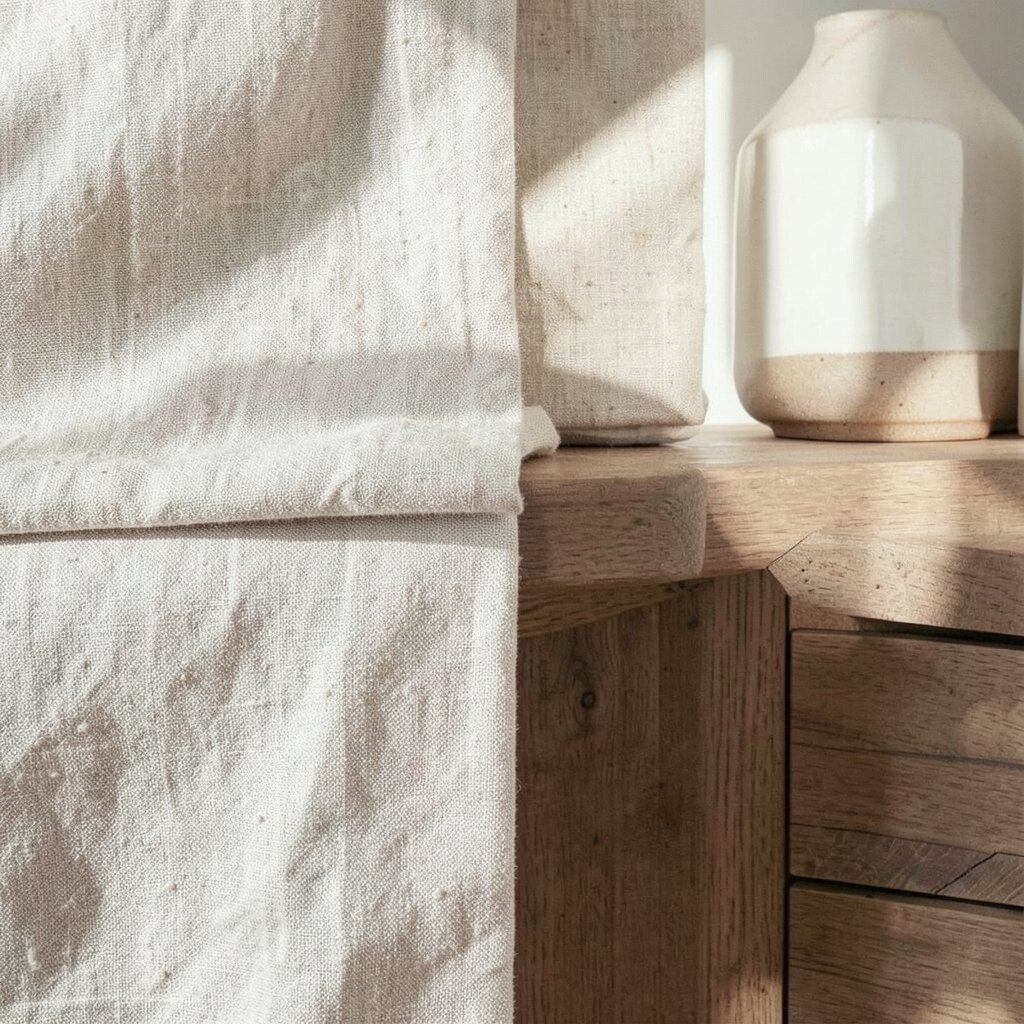
) Style with texture layers: linen, wood, and ceramic Texture makes a room feel rich without adding more items. You can create warmth with layered fabrics, natural wood, and simple ceramics.
Try linen pillows, a chunky knit throw, and a ceramic vase on the same surface. Even if the decor count stays low, it still looks full and cozy.
Personalization idea: choose textures based on how you want the room to feel, like smooth and calm for quiet vibes. If you love a modern look, stick to neutral textures with one gentle accent color.
Cost considerations: thrift stores are great for fabric pieces and small ceramic items. Current trends favor earthy materials and “tactile” decor because it feels lived-in, not staged.
-
15) Keep counters clear by using container systems
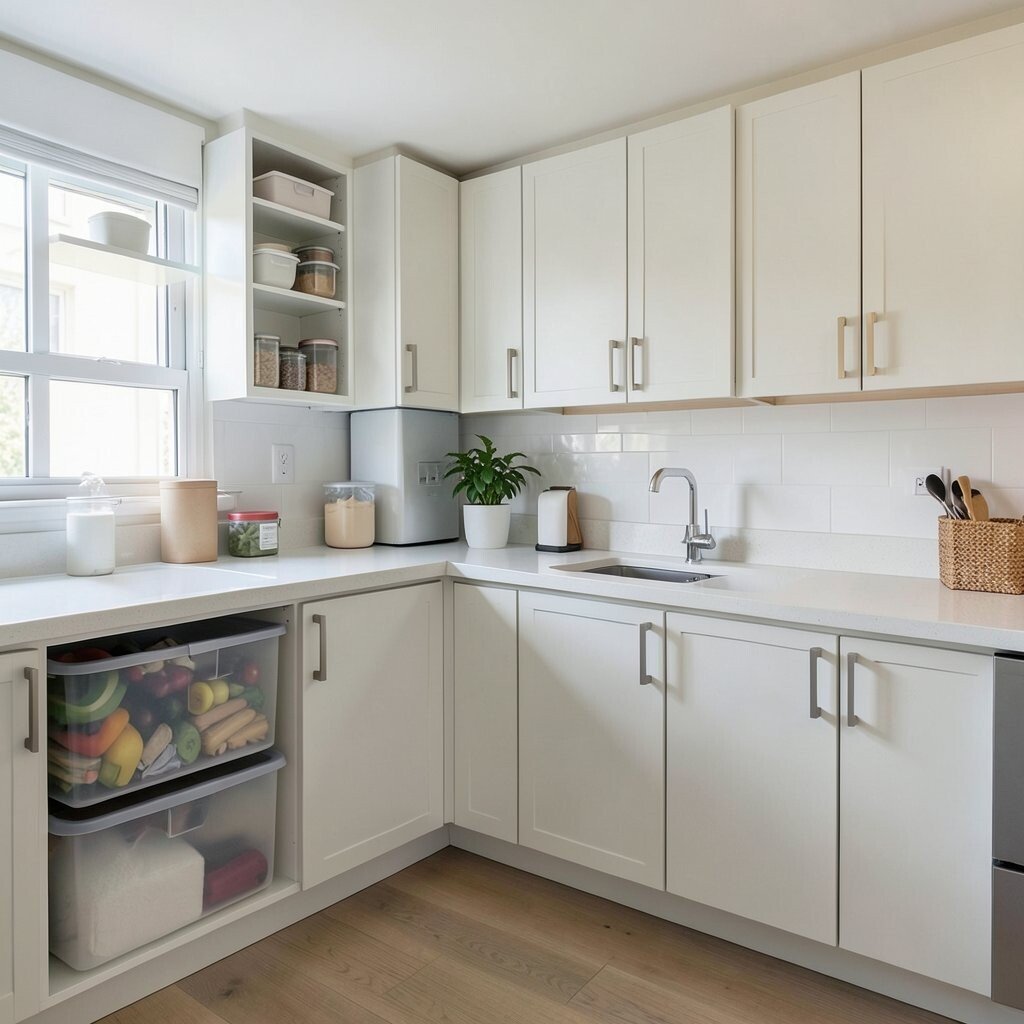
) Keep counters clear by using container systems Open concept kitchens show everything, so counters can become clutter magnets. The easiest fix is using containers that make items look organized.
Use matching jars for staples, a canister set for daily items, and a covered bin for things you don’t need out. When containers look like a set, the kitchen feels designed.
For tips, limit the number of items you show at once and store the rest in cabinets. Personalize by using labels that match your style, like simple handwritten tags or minimal icons.
-
16) Do a weekly “surface reset” in ten minutes
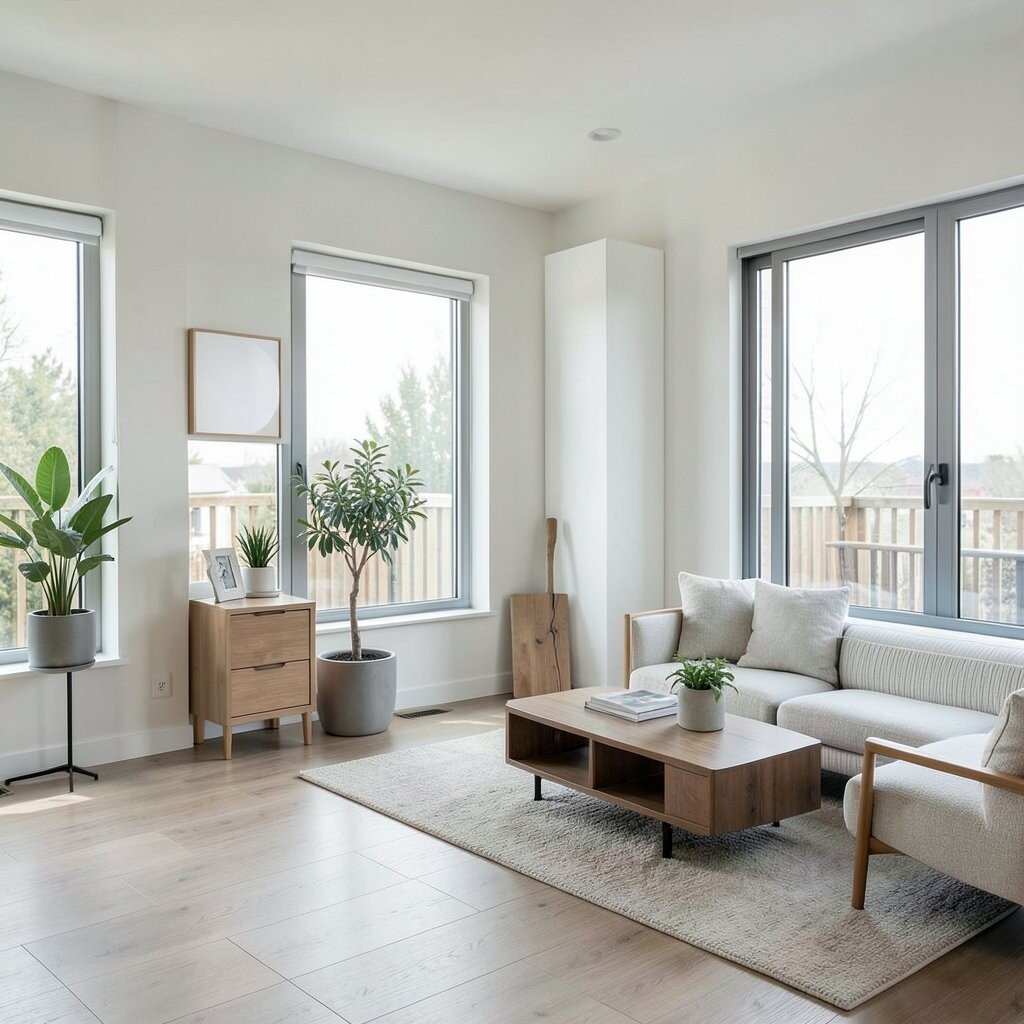
) Do a weekly “surface reset” in ten minutes Open spaces need quick maintenance because everything is visible. A short weekly reset keeps surfaces from becoming a collection spot.
Set a timer and walk around with one goal: put items back where they belong. If you do it regularly, clutter won’t have time to multiply.
For tips, use a small hamper or basket while you tidy, then sort items later. This saves energy and helps you finish without feeling overwhelmed.
Cost considerations are simple here because you only need a few basics like bins, trays, and storage baskets. Personalize the process by playing a favorite playlist so the reset feels like a ritual, not a chore.