Your kitchen can feel warm the moment you step onto the floor. Slate brings a lived-in charm that still looks fresh and strong.
Each slab holds its own mood, from soft grays to deep charcoal tones. The trick is choosing a texture and finish that fits how you cook, clean, and move through your day.
-
1. Tumbled Slate Planks for a Soft, Vintage Feel
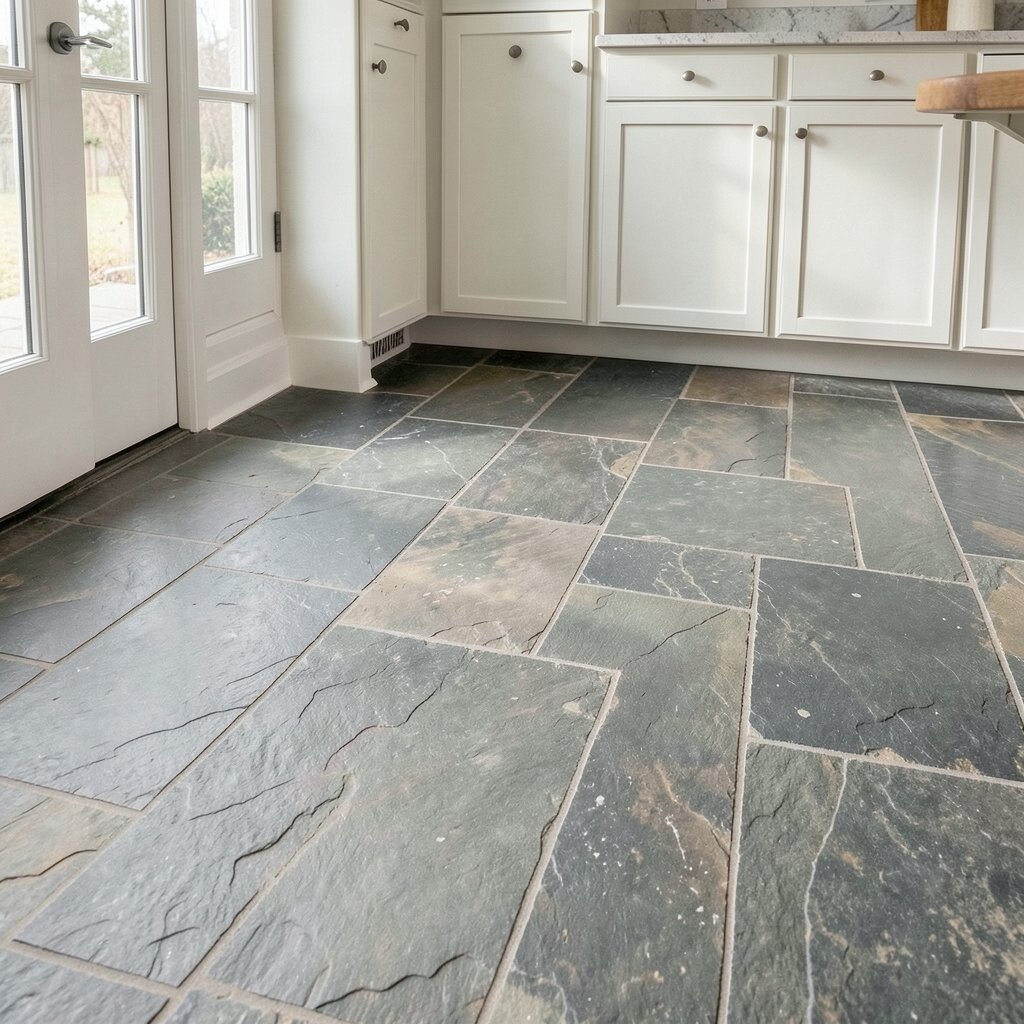
Tumbled Slate Planks for a Soft, Vintage Feel Tumbled slate planks look like they were collected from an old stone path. Their edges feel gently rounded, so the surface looks cozy instead of sharp.
This option helps hide tiny scratches better than some smoother tiles. It also gives you a natural slip resistance that can be comforting in a busy kitchen. Pair it with warm wood cabinets to make the tones feel balanced and inviting.
When you install, ask for a grout color that blends with the slate veining. For cost, tumbled planks can run mid-range because of the shaping and finishing. Personalize by adding a small inlay border in a slightly darker shade for a “finished” look.
-
2. Honed Slate Tiles in Warm Gray for Everyday Elegance
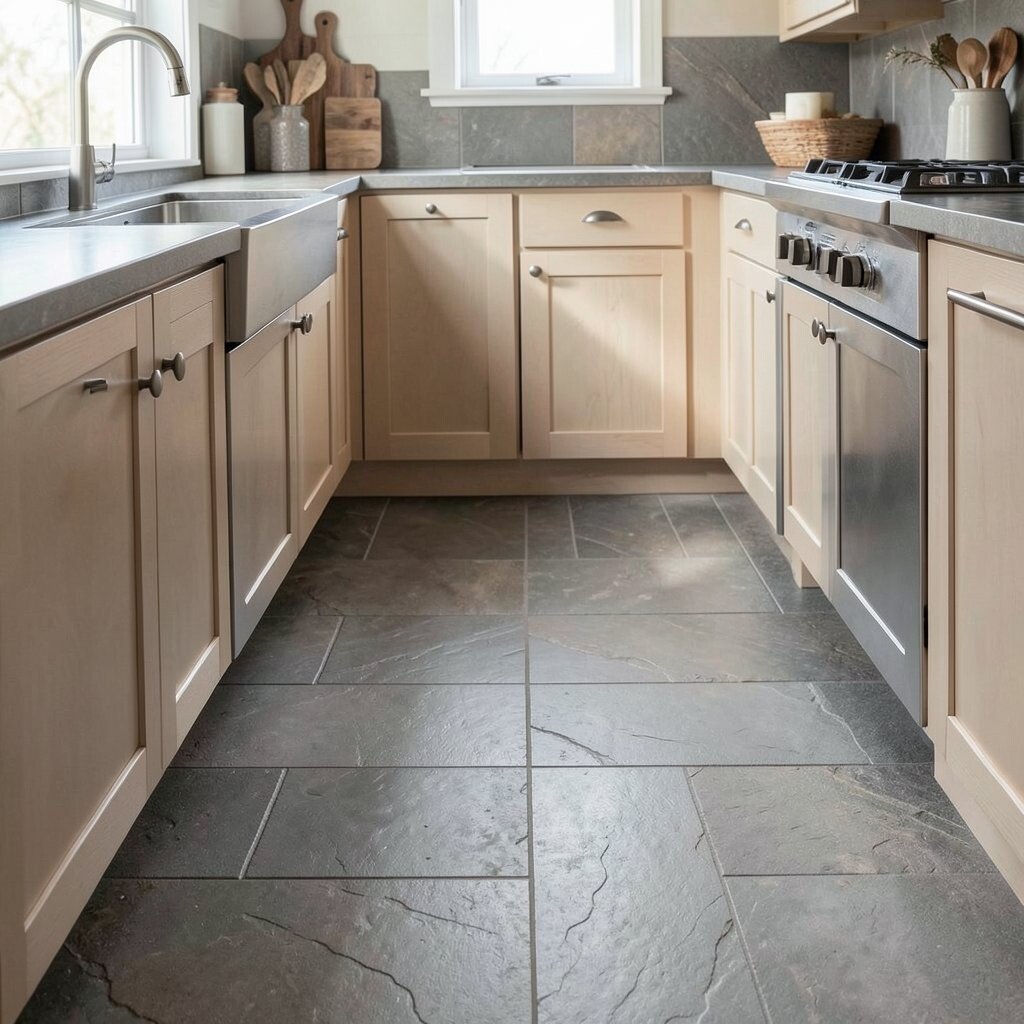
Honed Slate Tiles in Warm Gray for Everyday Elegance Honed slate is smooth to the eye, but still keeps that stone-like character. You’ll see subtle grain lines that give the floor a quiet, natural glow.
This finish is great if you want a cleaner look without going too glossy. It can also feel easier to wipe than heavily textured surfaces. Keep a microfiber mop nearby, and you’ll stay ahead of crumbs and spills.
Choose honed slate tiles in warm gray to make the room feel bright. You can also match cabinet hardware in brushed bronze for a modern rustic vibe. Pricing often lands in the mid to higher range, but the long-lasting surface can be worth it.
-
3. Split-Faced Slate for Dramatic Texture and Strong Character
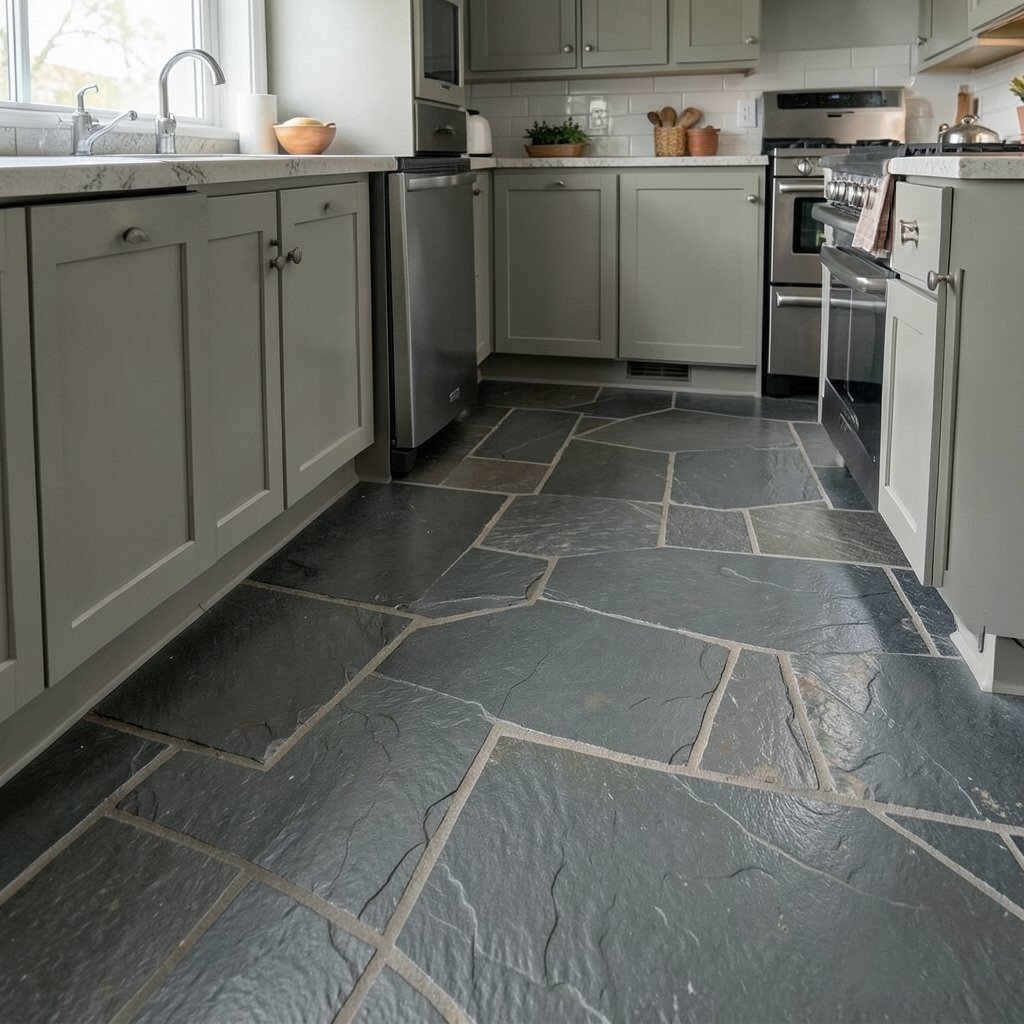
Split-Faced Slate for Dramatic Texture and Strong Character Split-faced slate has a rugged, rock-cottage look that stands out right away. Each tile shows small ridges and folds that catch light like gentle shadows.
That texture adds grip, which is helpful when water splashes near sinks. It also hides wear and makes the floor seem “meant” to age. If your kitchen gets heavy foot traffic, this style can handle it with less worry.
Go for a simple backsplash and calmer cabinet colors so the floor remains the star. For personal touches, add a dark runner where you stand most while cooking. Some split-faced options can cost more because of the labor needed to shape tiles, but you get a wow factor in return.
Use a grout that matches the brightest tone in the slate. That way, the pattern stays balanced instead of busy.
-
4. Rustic Mosaic Borders With Slate and Mini Stone Mix
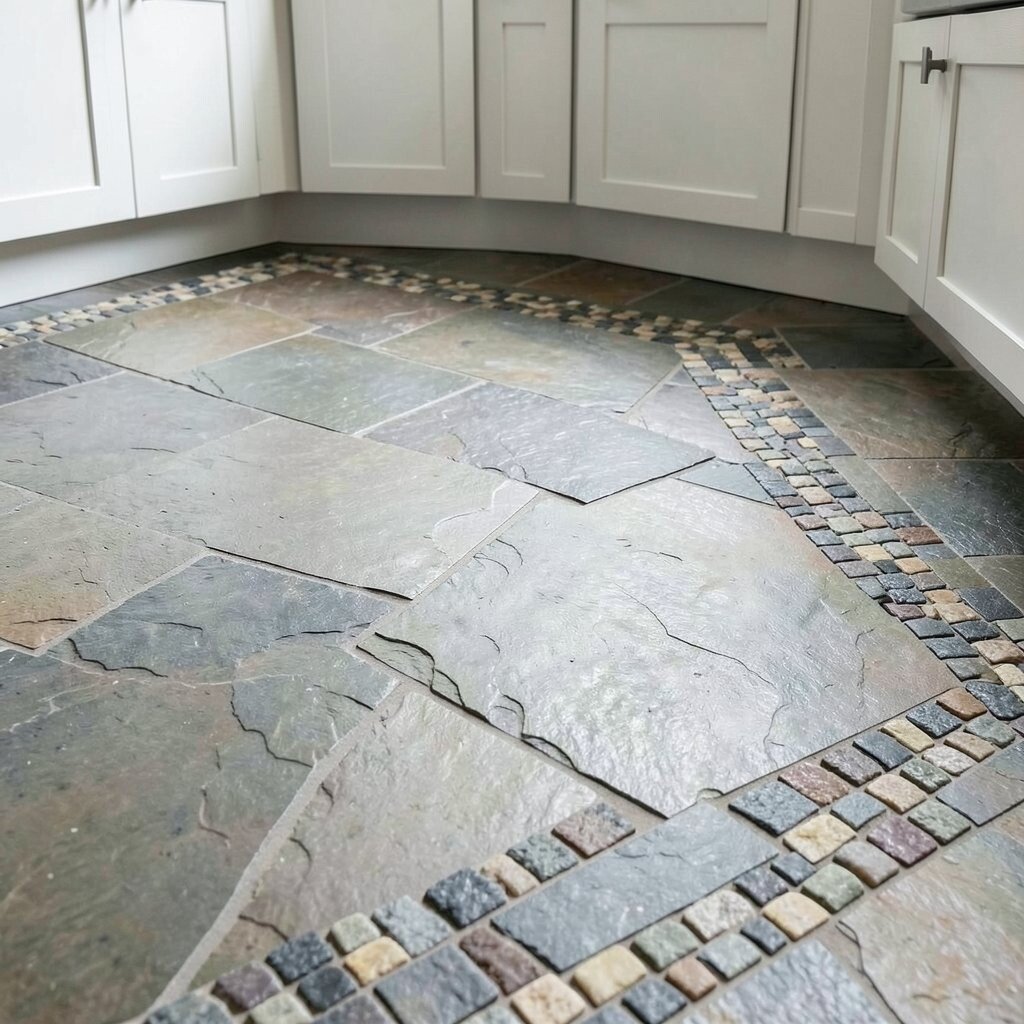
Rustic Mosaic Borders With Slate and Mini Stone Mix A slate mosaic border can turn a normal floor into a design moment. Imagine a thin edge frame that follows the room shape and adds a handcrafted vibe.
Mosaic work can also help cover small layout changes around islands or awkward corners. It’s a smart way to personalize without changing the whole floor. If you like variety, mix subtle tones like light gray, pewter, and smoky charcoal.
For upkeep, sealed slate and grout lines that are properly finished can make cleaning easier. Consider staying with smaller grout seams to reduce places where grime collects. Cost can vary a lot because borders need extra cutting, so plan your budget before you commit.
Tip: take a few photos of your cabinets and backsplash, then choose a border that echoes one of those colors. It will make the kitchen feel “designed,” not just decorated.
-
5. Flecked Slate With Natural Speckling for a Collected Look
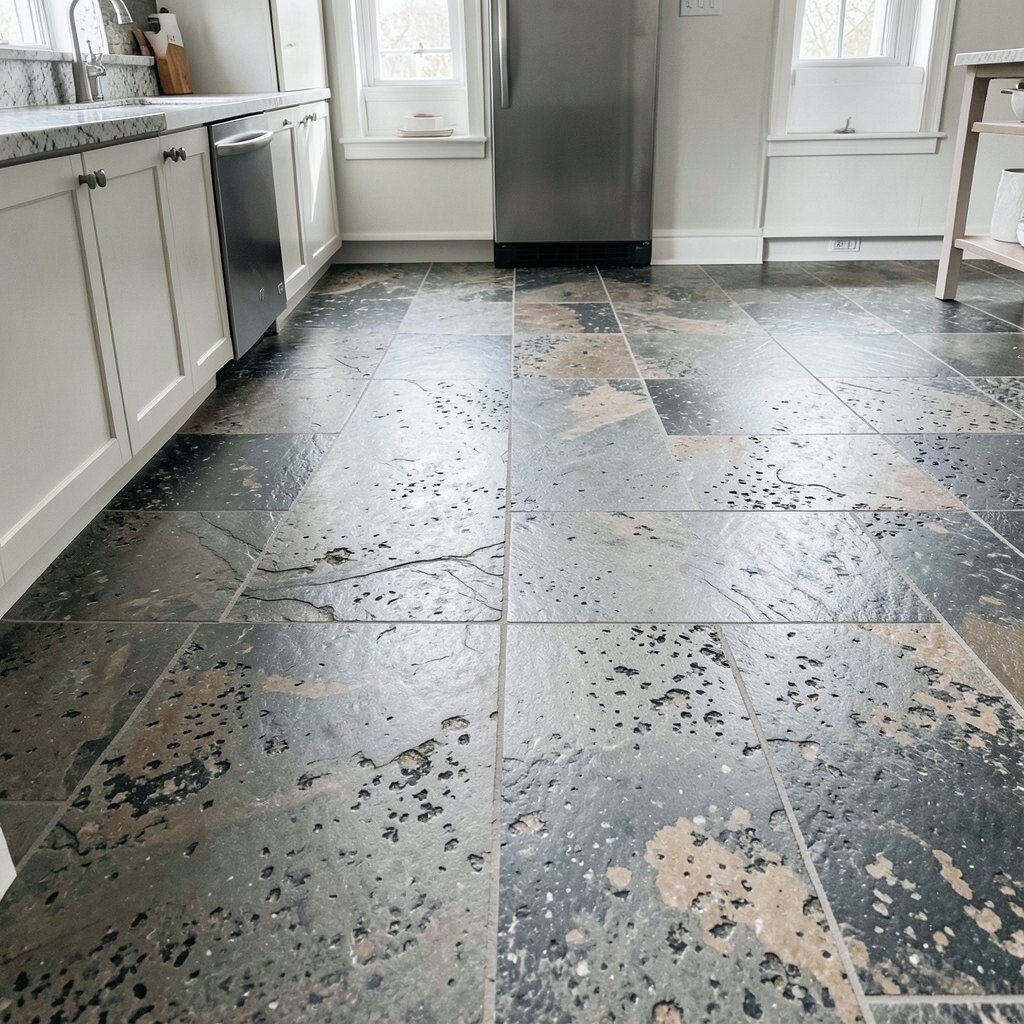
Flecked Slate With Natural Speckling for a Collected Look Some slate pieces have tiny flecks that look like speckles on a winter window. The floor feels lively, even when the rest of the kitchen stays simple.
This style hides everyday marks like small scuffs and dust. It also creates visual movement, so the room feels more interesting without extra décor. When you have an island, the speckling can make the island base look more grounded.
Pick flecked slate in medium tones so it won’t feel too dark in daytime. For personalization, add a metal vent cover in matte black or brushed steel. Costs are usually comparable to standard slate tiles, but more unique color lots may be priced higher depending on availability.
-
6. Weathered Slate Slabs With a Soft, Antiqued Patina
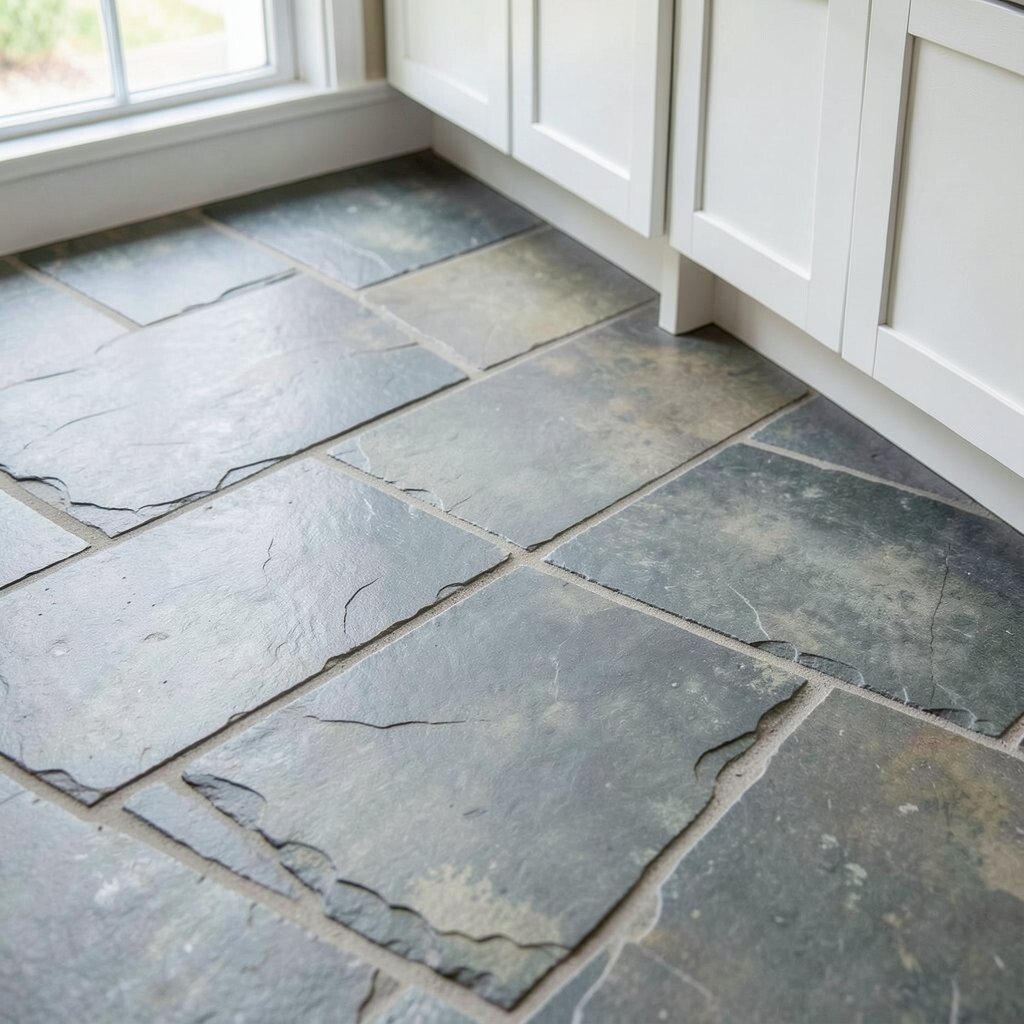
Weathered Slate Slabs With a Soft, Antiqued Patina Weathered slate often looks like it’s been outdoors for years. You’ll see gentle color shifts from light to dark that feel truly natural.
This look can make even a new kitchen feel older and more charming. It’s also great for people who want a “lived-in” style that won’t look dated fast. The worn feel pairs beautifully with antique-style faucets and warm lighting.
To keep the patina looking fresh, use a slate-safe sealer and follow the label timing. Regular sweeping and quick spot cleaning help keep the surface looking even. A pro might charge more for layout because weathered tones can vary, but the final effect looks custom.
-
7. Dark Charcoal Slate for a Bold, Modern Rustic Kitchen
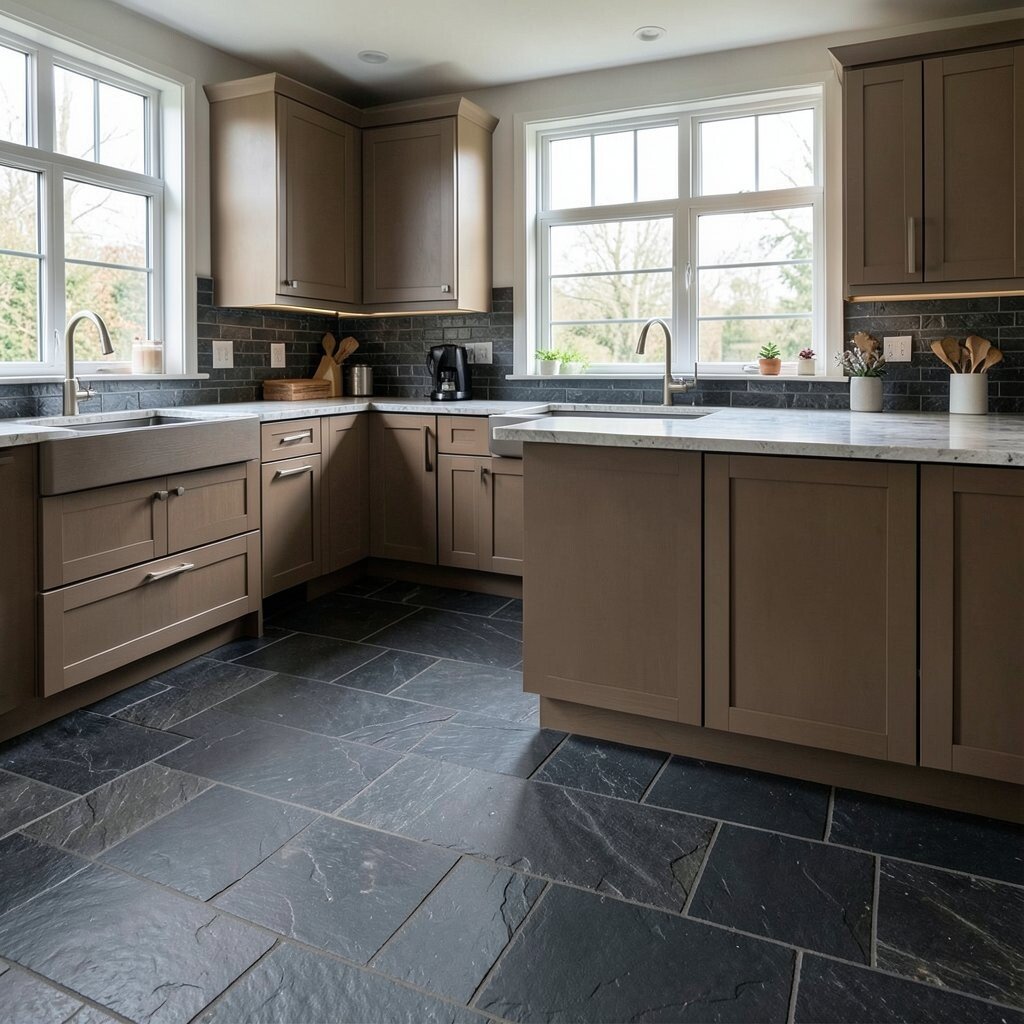
Dark Charcoal Slate for a Bold, Modern Rustic Kitchen Dark charcoal slate brings a strong, modern edge to rustic design. It looks sleek, yet still feels natural because of the stone’s depth.
This choice can hide dirt better than lighter floors, especially in high-traffic areas. It also makes stainless steel appliances look extra crisp. If your kitchen gets lots of daylight, charcoal slate can still feel welcoming.
Personalize it with light wood shelves or creamy cabinetry to avoid a heavy mood. Use warm white lighting so the floor reads rich instead of flat. Costs vary by tile thickness and finish, so compare samples and get a quote that includes sealing and installation.
-
8. Light Limestone-Tinted Slate for an Airy, Bright Feel
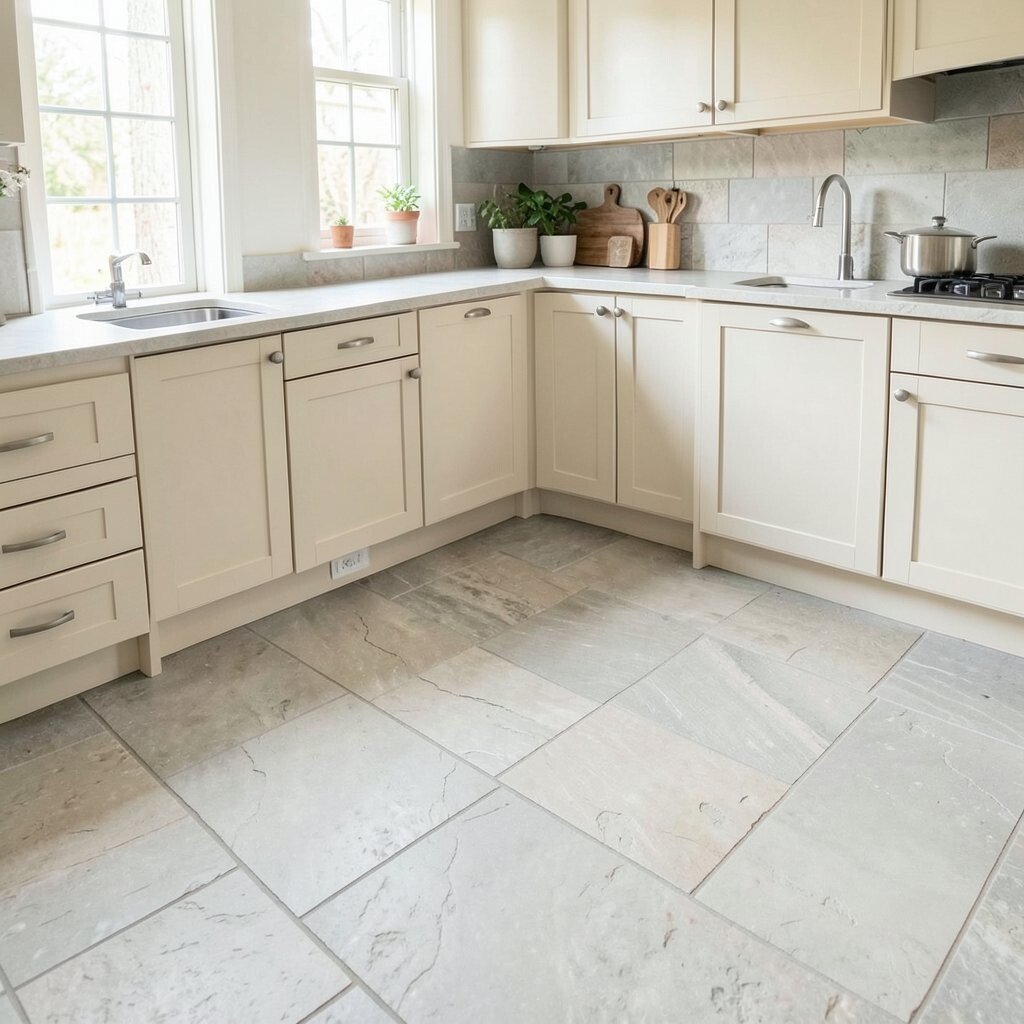
Light Limestone-Tinted Slate for an Airy, Bright Feel If you want rustic but still airy, go for light slate with limestone-like tones. The pale grays and warm whites keep the room feeling open and calm.
This floor style can help kitchens feel bigger, especially if you have small windows. It also works well with farmhouse-style décor and bright, clean countertops. To stay practical, choose a finish that still grips and resists water spots.
-
9. Brushed Slate Texture for Easy Maintenance and Calm Color
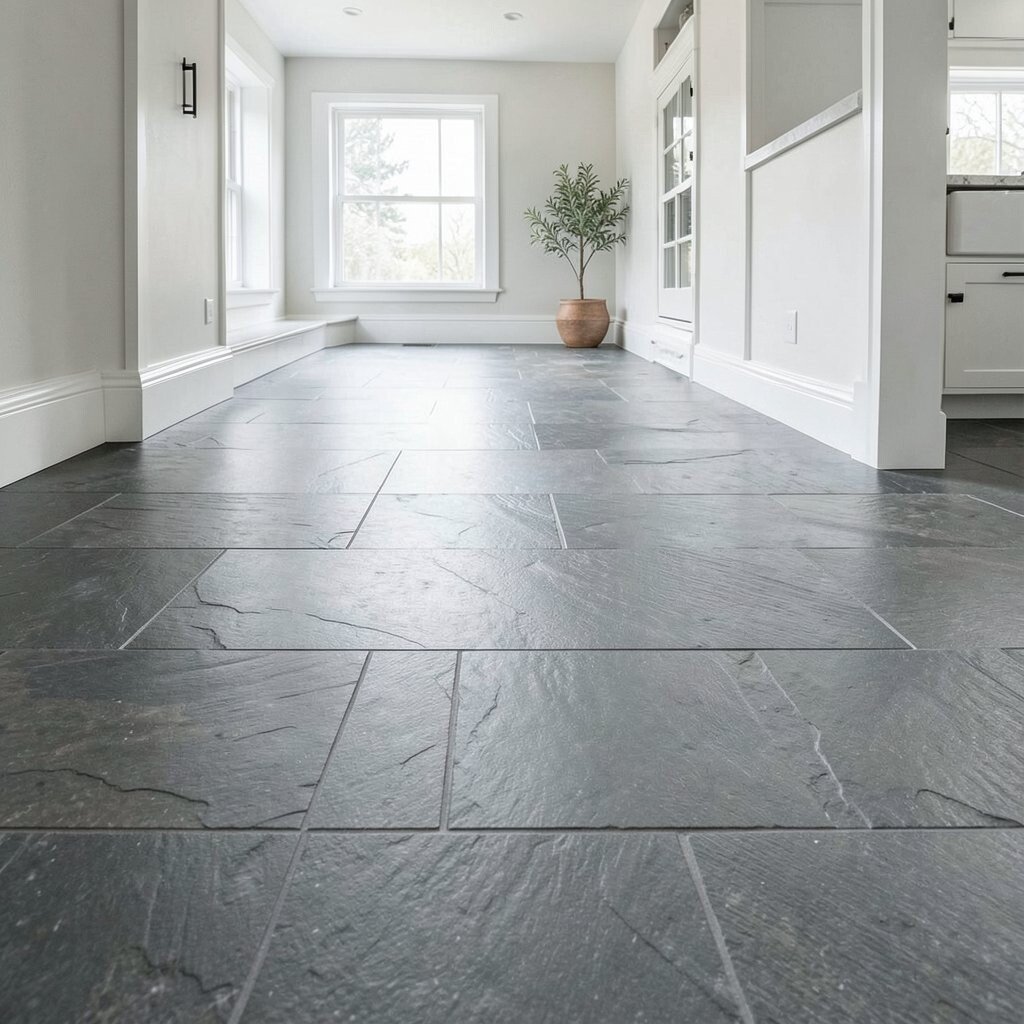
Brushed Slate Texture for Easy Maintenance and Calm Color Brushed slate has a gentle texture that looks natural and feels comfortable underfoot. The surface is not too bumpy, so everyday life stays easy.
This is a great option for kitchens where people move quickly. It tends to hide minor imperfections and helps reduce the look of fingerprints and light smudges. You’ll still want to seal it, but brushed finishes can be friendly for regular cleaning.
Match brushed slate with matte cabinet paint and soft fabrics like linen curtains. For personalization, add a tasteful rug only in the walkway zones. Cost is often mid-range, and it can be a smart balance between beauty and daily practicality.
Tip: test a sample with your lighting at morning and evening times. The brushed texture can shift the way color looks, especially in north-facing rooms.
-
10. Waterjet Pattern Slate for a Custom, Upscale Look
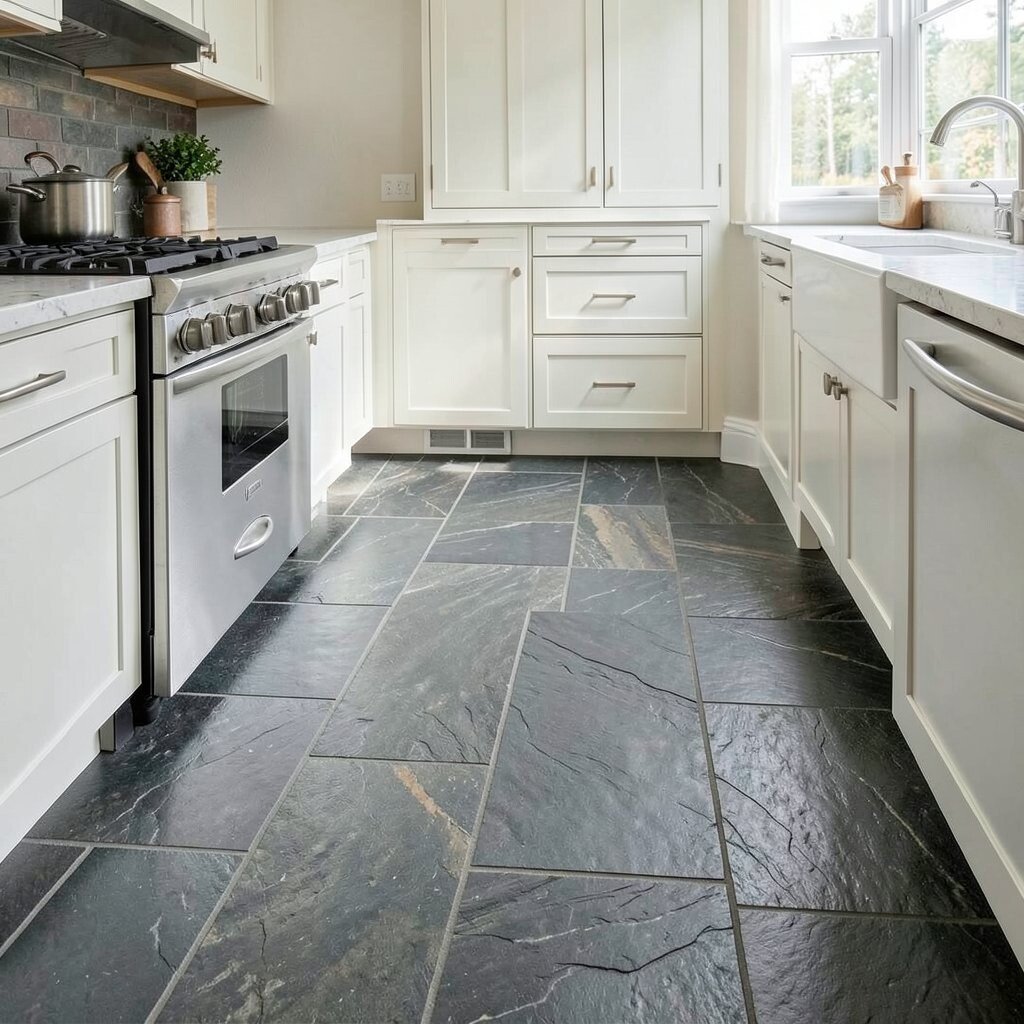
Waterjet Pattern Slate for a Custom, Upscale Look Waterjet patterns cut slate with clean, sharp lines that can look like art. You can create geometric shapes that still respect the stone’s natural color variation.
This is a great pick if you love design details and want the kitchen to feel high-end. The mix of rustic texture and crisp pattern can balance modern cabinets with old-world charm. Plan carefully, though, because the pattern needs precise layout around doors and appliances.
For personalization, repeat one small shape near the kitchen doorway. It can make the whole space feel “cohesive.” Waterjet work can cost more due to custom cutting, but it’s one of the most memorable flooring styles.
-
11. Matte Slate Planks With Narrow Grout Lines for a Refined Rustic Style
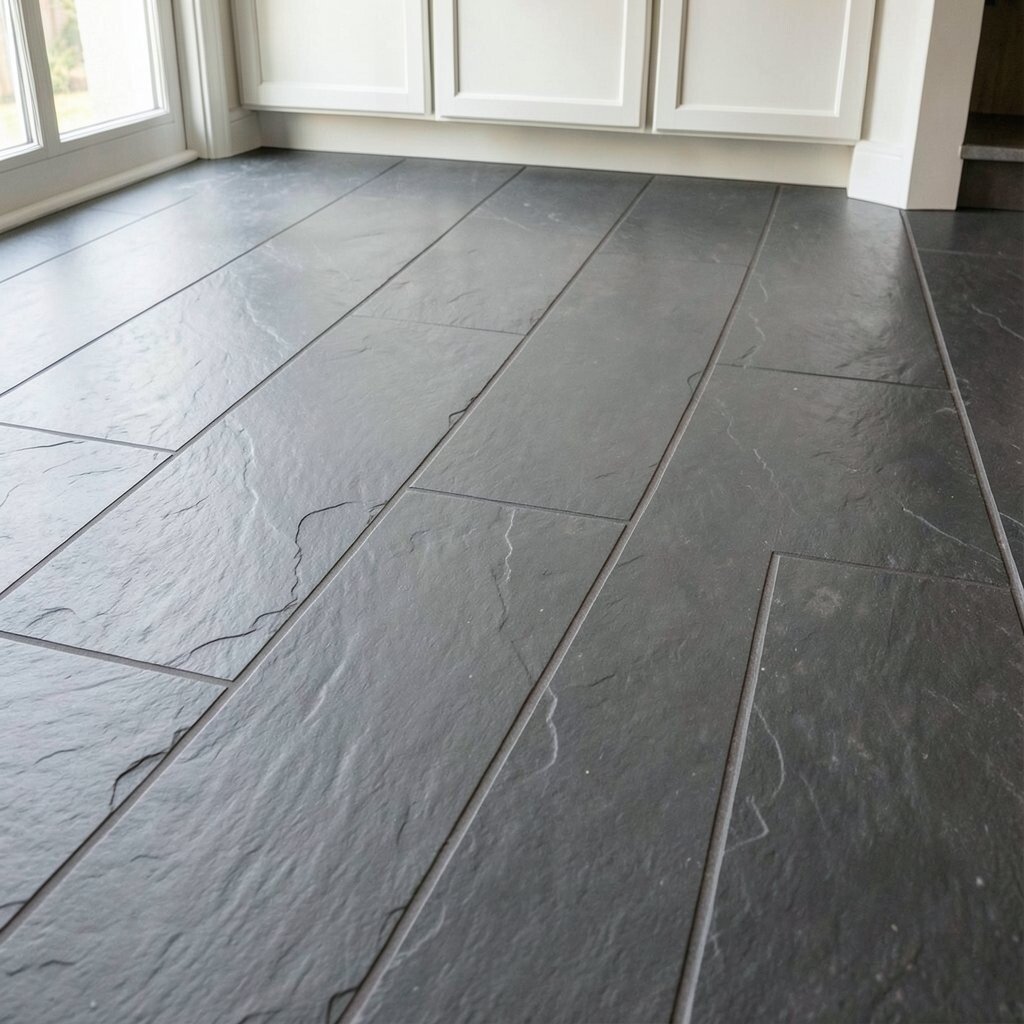
Matte Slate Planks With Narrow Grout Lines for a Refined Rustic Style Matte slate planks look clean and modern, but they still show natural stone depth. Narrow grout lines keep the floor feeling smooth and continuous.
This setup can make smaller kitchens feel more streamlined. Narrow lines also give a calmer look, which pairs well with simple cabinetry. You’ll get a high-end vibe without needing an elaborate pattern.
To personalize, choose a grout color that matches your lightest slate tone. That trick helps the tiles “float” less and feel seamless. Costs can be higher if you go with premium tile sizes and fine grout work, but the final look is worth it for many homeowners.
-
12. Mixed-Size Slate for a Handmade, Patchwork Kitchen Floor
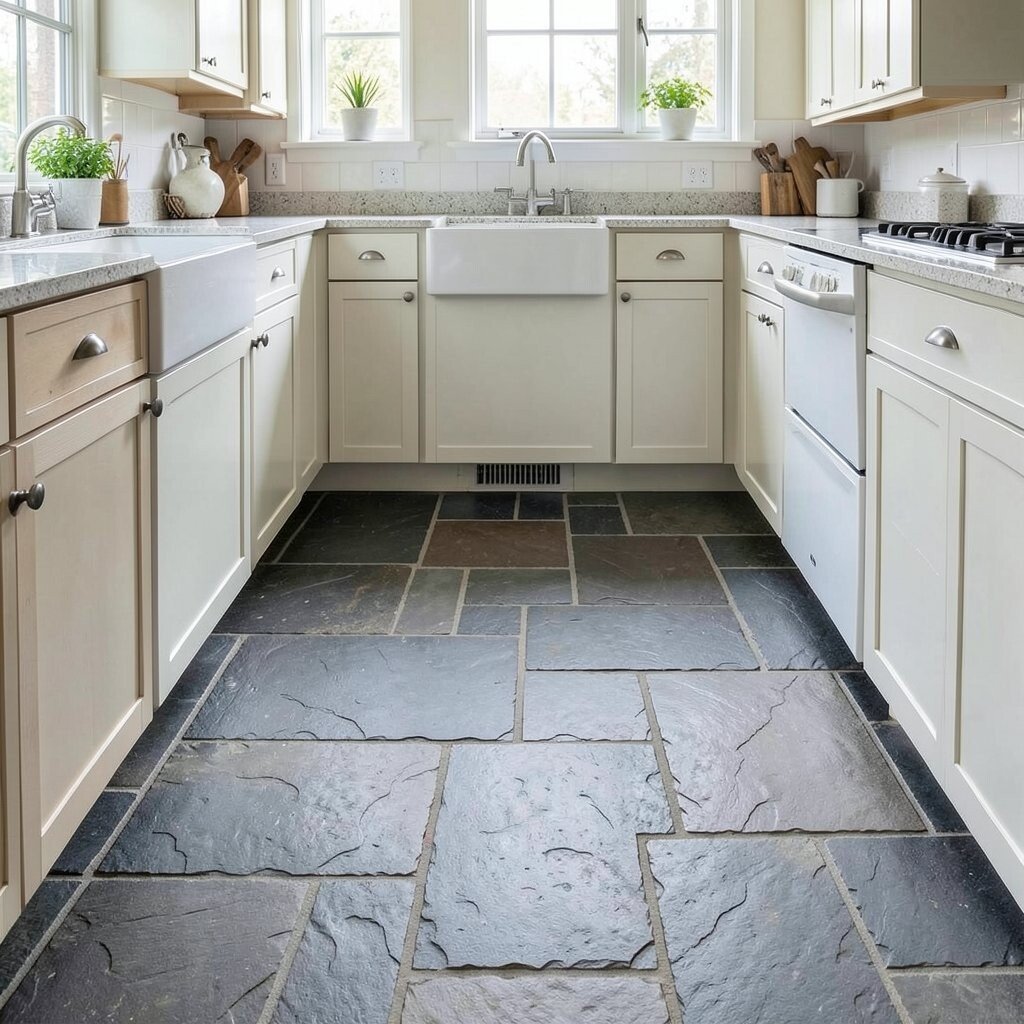
Mixed-Size Slate for a Handmade, Patchwork Kitchen Floor Mixed-size slate tiles can create a patchwork style that feels handcrafted. You’ll see different shapes and sizes that look collected over time.
This flooring works well if your kitchen has a cozy layout with nooks. The variety can also hide uneven transitions because the pattern looks intentional. Choose a consistent color family so the mix stays coordinated.
Ask your installer to lay out a dry pattern first, because mixed sizes need planning. For personalization, repeat one larger tile near the sink for an anchor point. Cost can be slightly higher due to design time, but the uniqueness is hard to beat.
-
13. Random-Pattern Slate With Natural Color Variation for a Lived-In Look
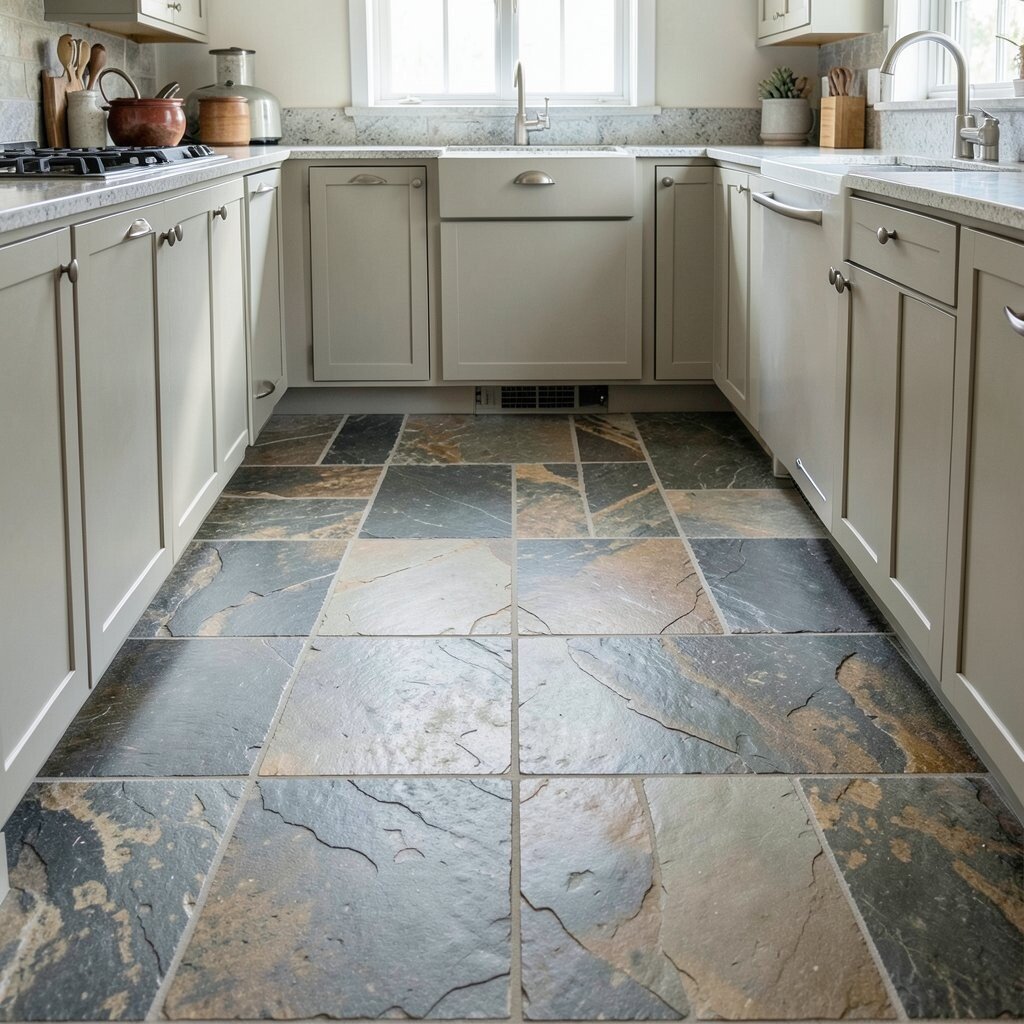
Random-Pattern Slate With Natural Color Variation for a Lived-In Look Random-pattern slate feels like it was laid by an artisan with a great eye. The goal is to place different pieces so they flow and balance each other.
This approach is great for people who love organic design. Color variation can hide scratches and help the floor look great even as time passes. If you’re nervous about matching, random layouts often make it easier.
Personalize by keeping the palette within a few tones, like grays and smoky blacks. Seal the slate so the natural colors stay consistent. Pricing is usually similar to standard slate installation, though extra sorting of tile batches can add labor time.
Tip: ask for a few box samples first so you know what your mix will look like in real light.
-
14. Borderless Slate With a Single Direction for a Modern Rustic Feel
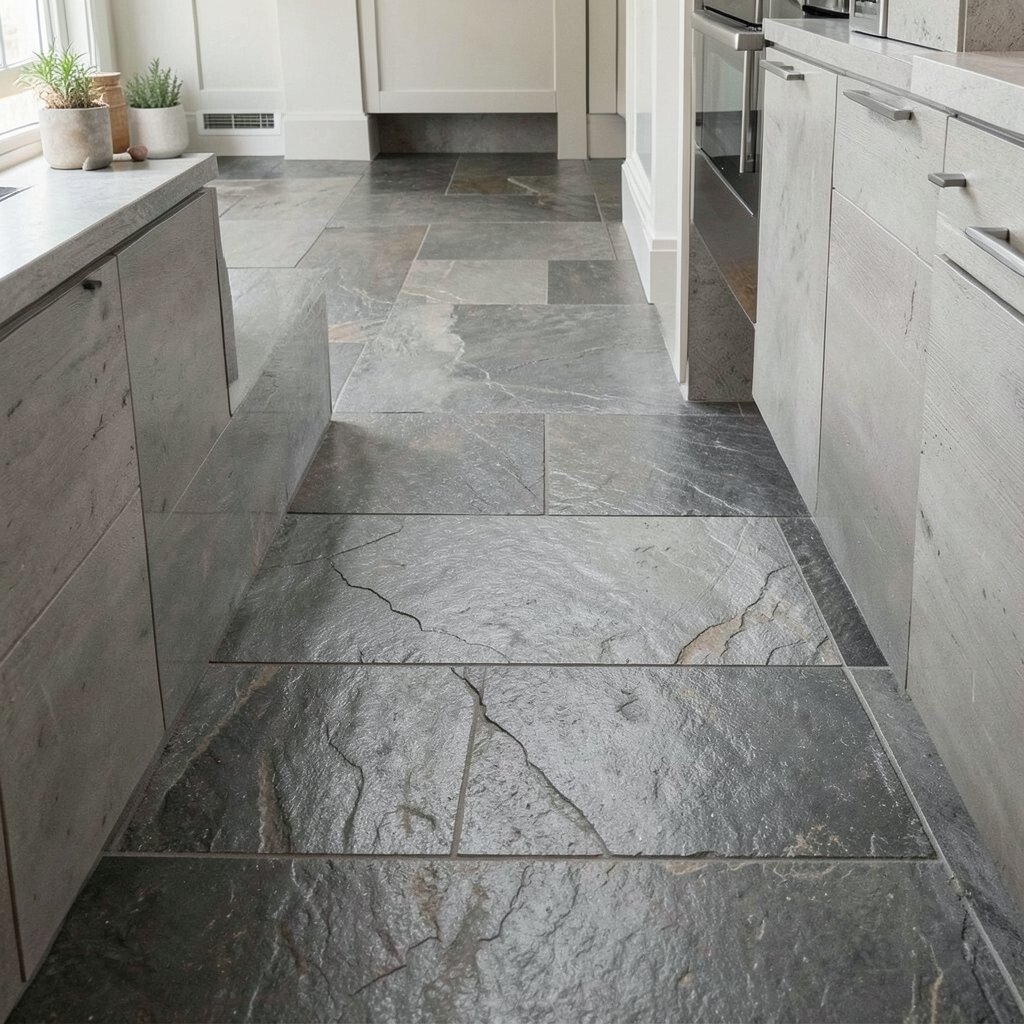
Borderless Slate With a Single Direction for a Modern Rustic Feel If you want rustic but clean, try laying slate in one direction with no obvious border. This style makes the floor feel calm and continuous.
It’s a perfect match for open kitchens where you can see the floor from multiple angles. The grain and veining can stretch across the room, which makes it feel bigger. Choose a finish that suits your lifestyle, like honed or matte.
Personalize with a matching baseboard color and simple trim. A single direction layout can also reduce cutting waste, which may help with cost. You’ll still pay for sealing, but overall labor can be more straightforward than patterned designs.
-
15. Slate With Subtle Veining for Elegant Depth Without Loud Contrast
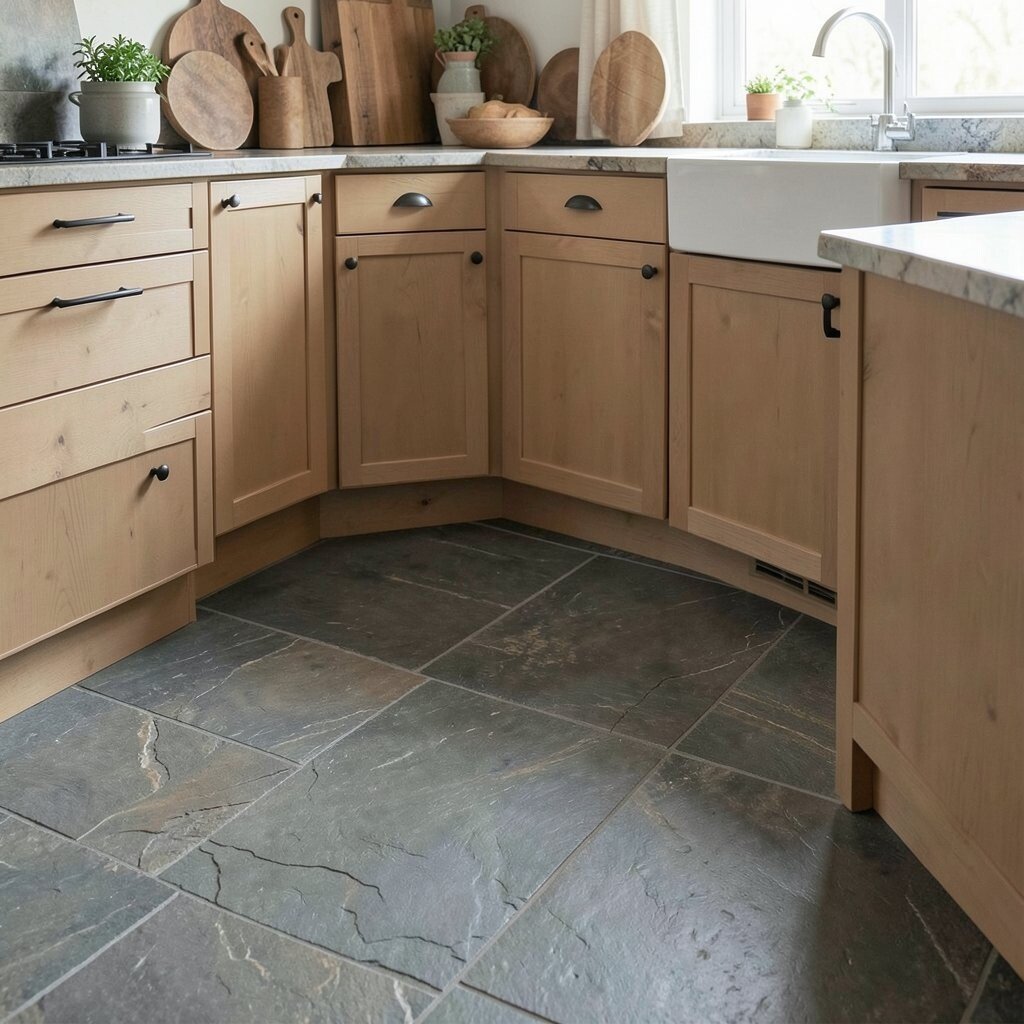
Slate With Subtle Veining for Elegant Depth Without Loud Contrast Some slate looks almost smoky, with veining that appears like fine lines of charcoal. It adds depth without feeling dramatic or loud.
This style helps your countertops and cabinets stay the focus. It also gives you a natural look that won’t fight your décor. If you love a soft, neutral kitchen, subtle veining is a strong match.
To personalize, pair it with off-white cabinetry and a warm stone or quartz countertop. Add a brass faucet and light fixtures to bring in warmth. Cost is often in the typical slate range, and the look can feel “designer” even when it’s straightforward.
-
16. Rustic Slate With a Leathered Finish for Warm Texture
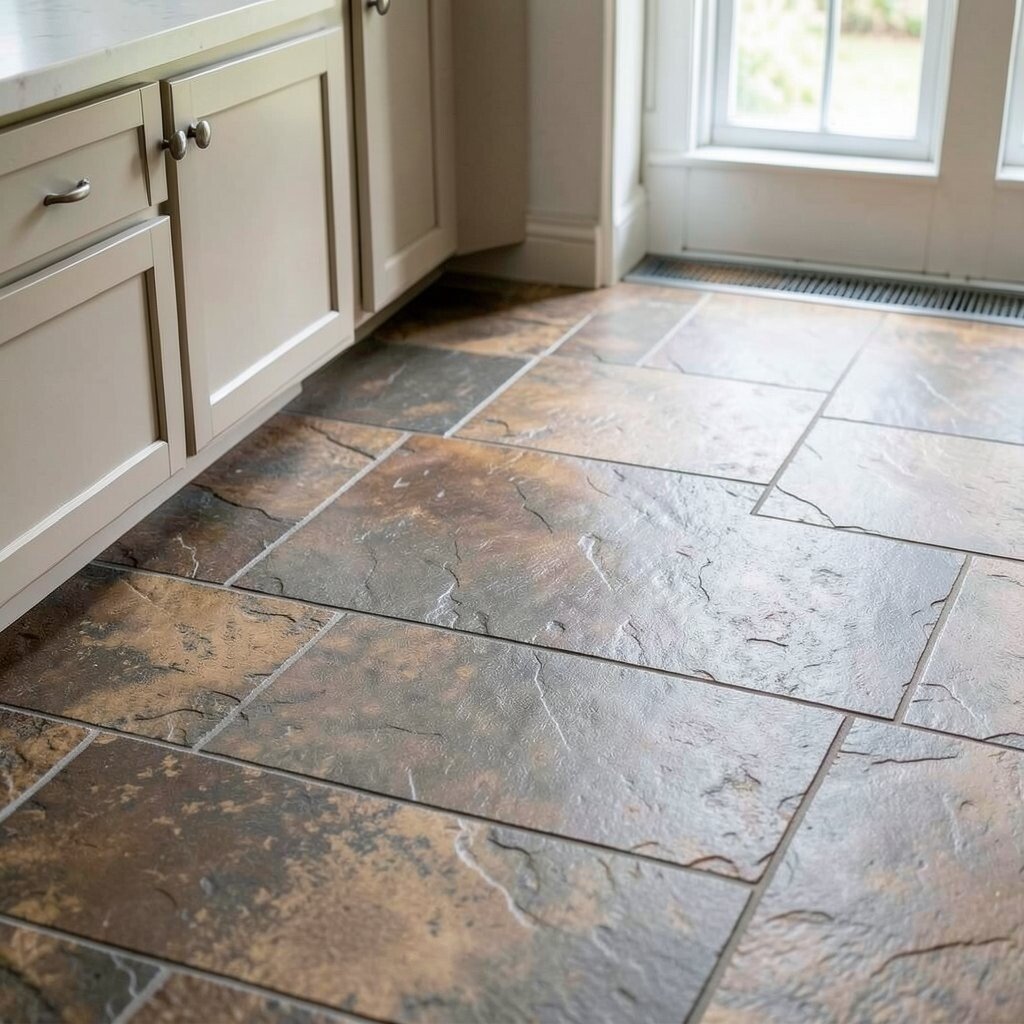
Rustic Slate With a Leathered Finish for Warm Texture A leathered finish on slate looks rich and slightly pebbled. It feels like the surface has a soft grain, not a glossy shine.
This finish can be a trendy choice because it balances style with comfort. It also hides small marks better than super-smooth floors. In a kitchen, that means you’ll spend less time worrying and more time enjoying the space.
Personalize by choosing cabinet colors in creamy beige or soft sage. Leathered slate looks amazing with black accents like handles, light fixtures, and trim. Cost can be higher because leathered finishes are more specialized, but the texture makes it feel unique.
-
17. Slate Herringbone for a Cozy Classic Kitchen Mood
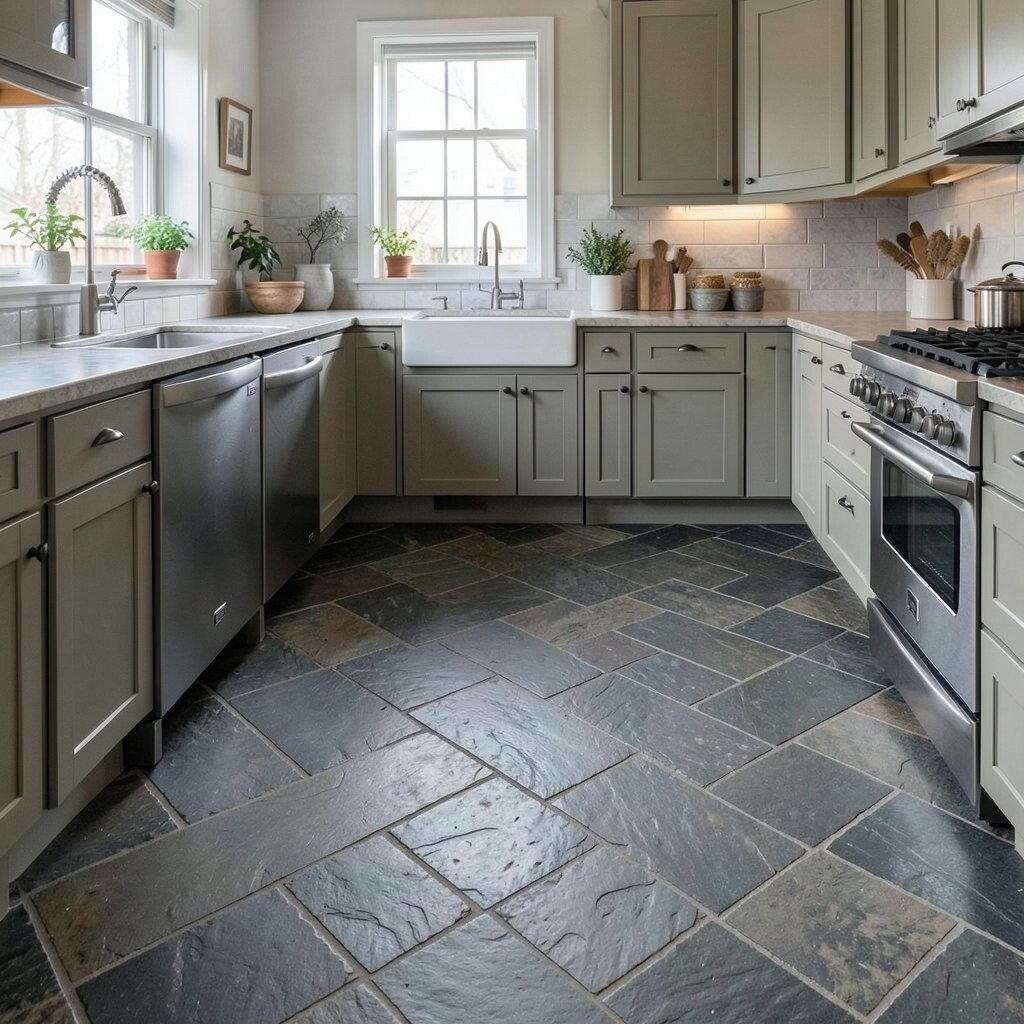
Slate Herringbone for a Cozy Classic Kitchen Mood Herringbone slate creates a rhythm that feels classic and cozy. The pattern makes the floor look like it has movement even when the room is calm.
This style is great if you want rustic charm but also crave a structured layout. It can also add visual height, especially in spaces with simple wall lines. Choose tiles that are consistent in thickness so the pattern stays level.
For personalization, consider using a few darker tiles within the herringbone to form a subtle accent. Sealing matters a lot here, since the pattern lines show every detail. Costs are often higher because herringbone installation requires more precise cutting and careful alignment.
-
18. Oversized Slate Tiles for Fewer Seams and a Calm Look
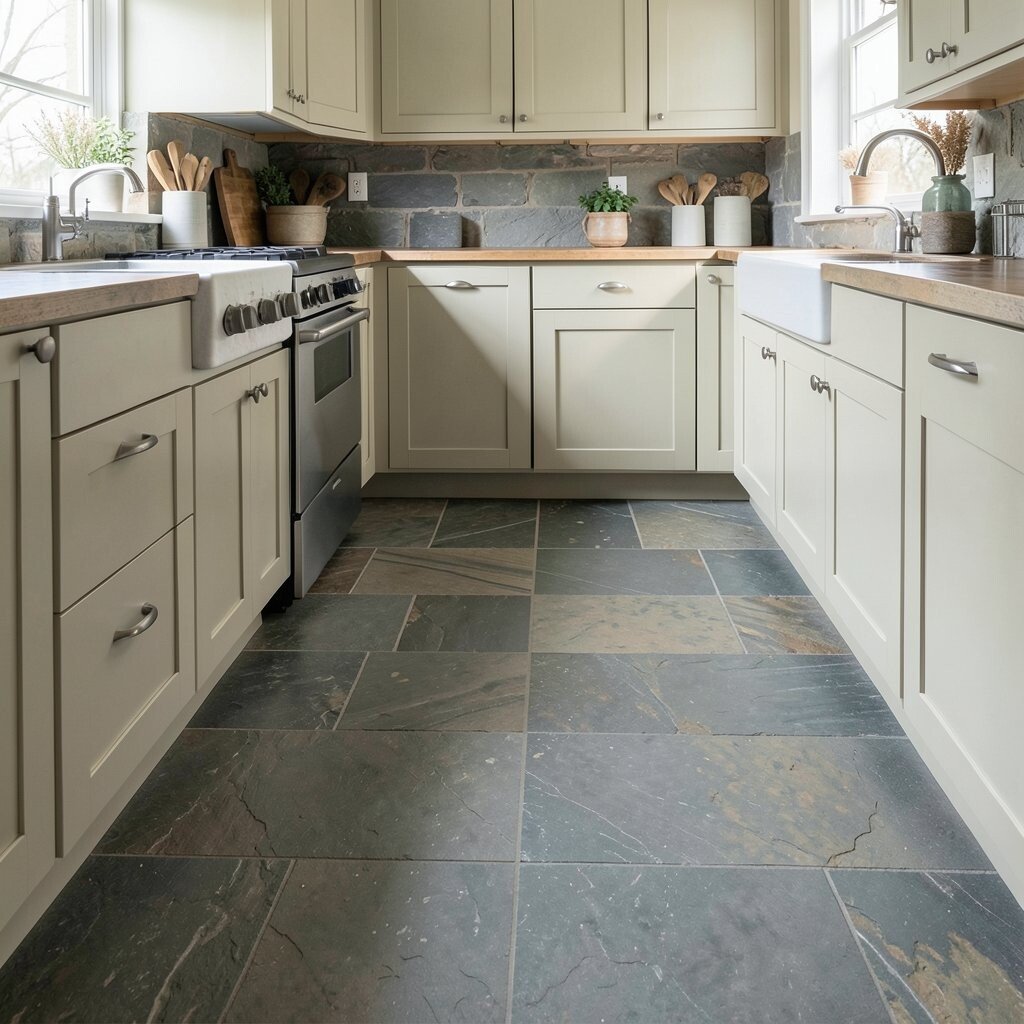
Oversized Slate Tiles for Fewer Seams and a Calm Look Large slate tiles give you fewer grout lines, which can feel clean and modern. The bigger shapes also make the stone texture look more dramatic.
This option works well in kitchens that want a smooth, open vibe. Fewer seams can also mean fewer places for grime to gather if your cleaning habits are busy. You still need sealing and regular sweeping, but the floor stays visually simple.
Personalize by using a grout color that matches the dominant tone. For cost, oversized tiles can be efficient with less labor per area, but premium sizes may cost more per tile. Ask about waste during cutting, since layout around islands can change how much you need.
-
19. Slate With a Natural Cleft Texture for Old-World Charm
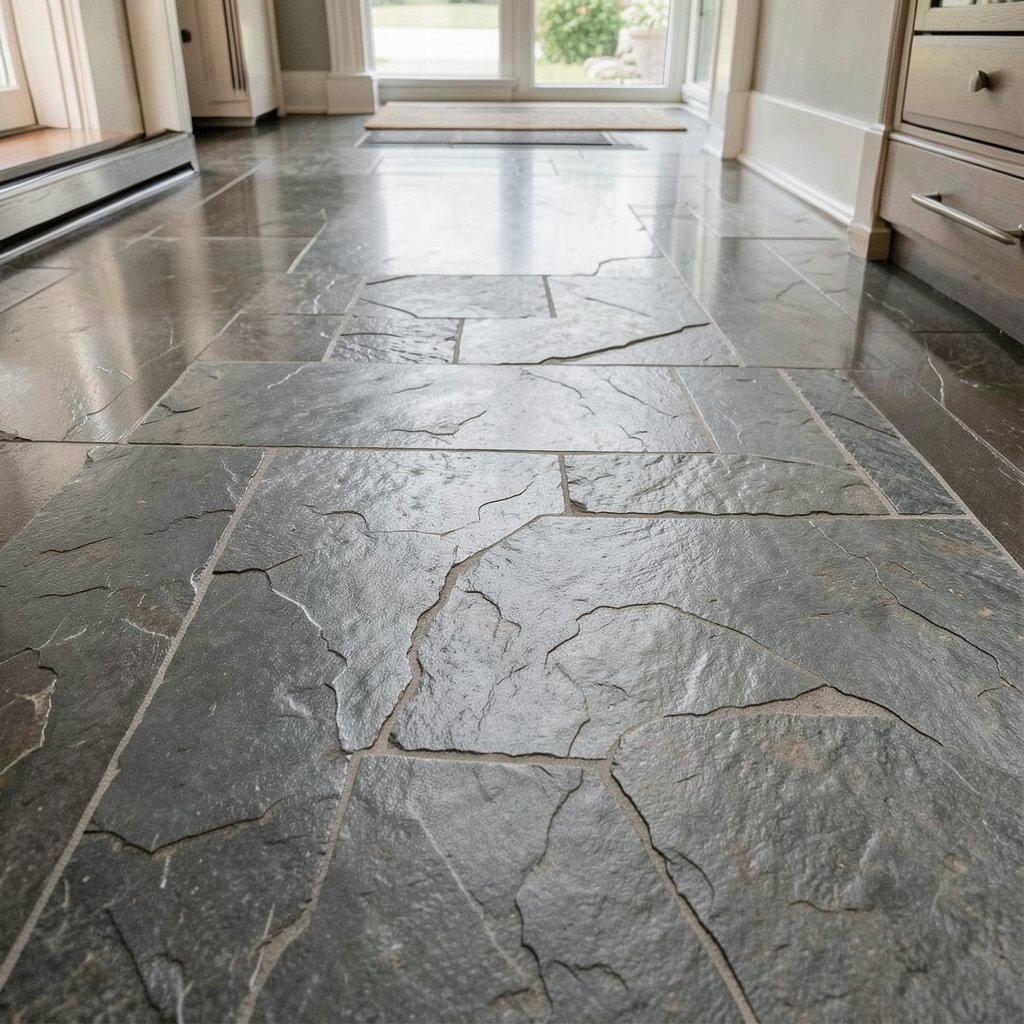
Slate With a Natural Cleft Texture for Old-World Charm Natural cleft slate has a broken-stone look with an old-world charm. The texture feels bold, with small peaks and valleys across the surface.
This style is great if you love rustic architecture and want the floor to match. It can also be a good choice for hiding everyday wear. Just plan on careful sweeping because dust can settle in the tiny texture.
For personalization, keep the walls simple and let the floor carry the character. Use warm rugs with natural fibers like jute or wool for softness. Cost can vary widely, since cleft slate and the installation method can be more demanding.
Tip: choose a high-quality sealer and reapply on schedule for best long-term color and stain protection.
-
20. Slate With Copper or Bronze Inlay Accents
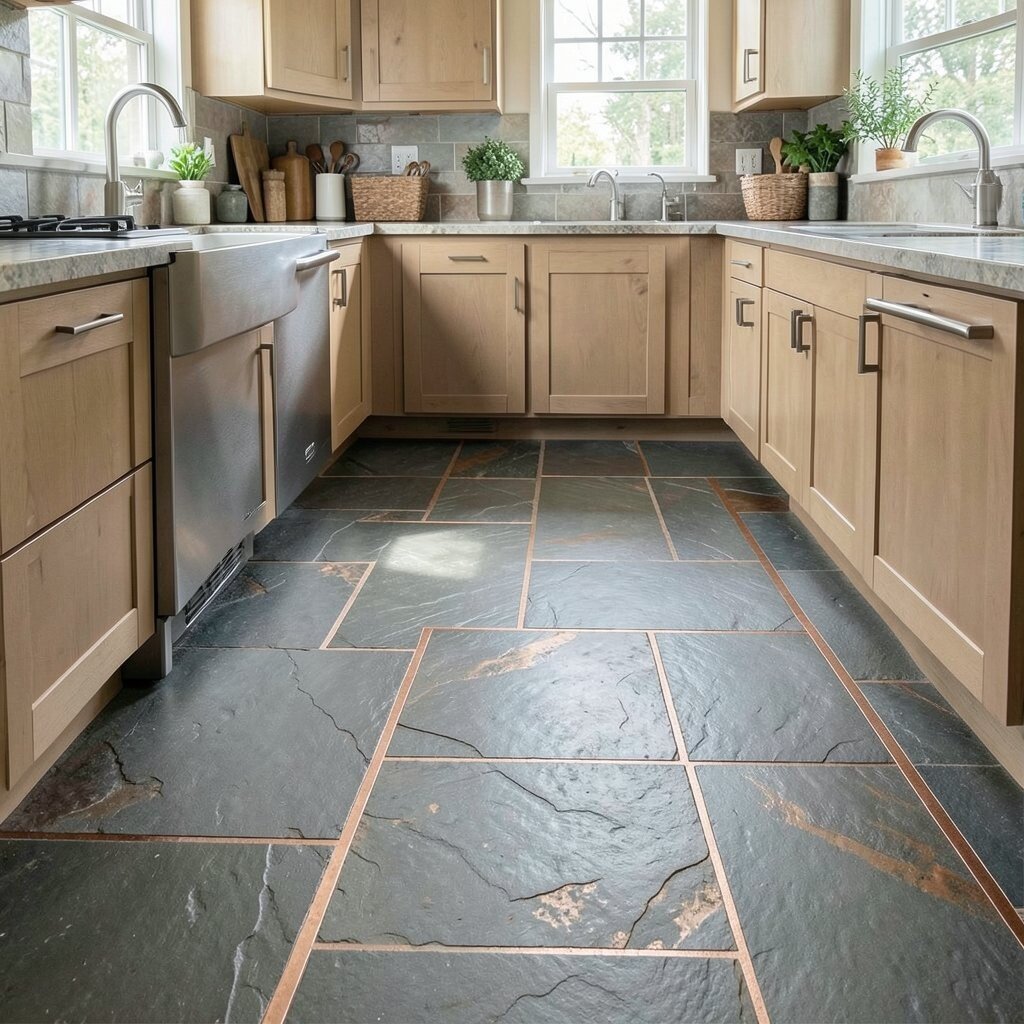
Slate With Copper or Bronze Inlay Accents Adding copper or bronze inlay accents can make slate feel like jewelry. You’ll notice the warm metal glow against cool stone tones.
This idea is perfect for kitchens that have black hardware and warm lighting. The metal highlights can tie together your faucet, cabinet pulls, and light fixtures. It also makes the floor feel custom, even if your layout stays simple.
For personalization, place inlays near the kitchen island or along a front-facing border. Keep the metal accents small so the stone remains the main star. Costs can rise because inlay work needs precision, but the look feels unforgettable.
-
21. Mixed Finish Slate Panels With a Balanced Contrast Plan
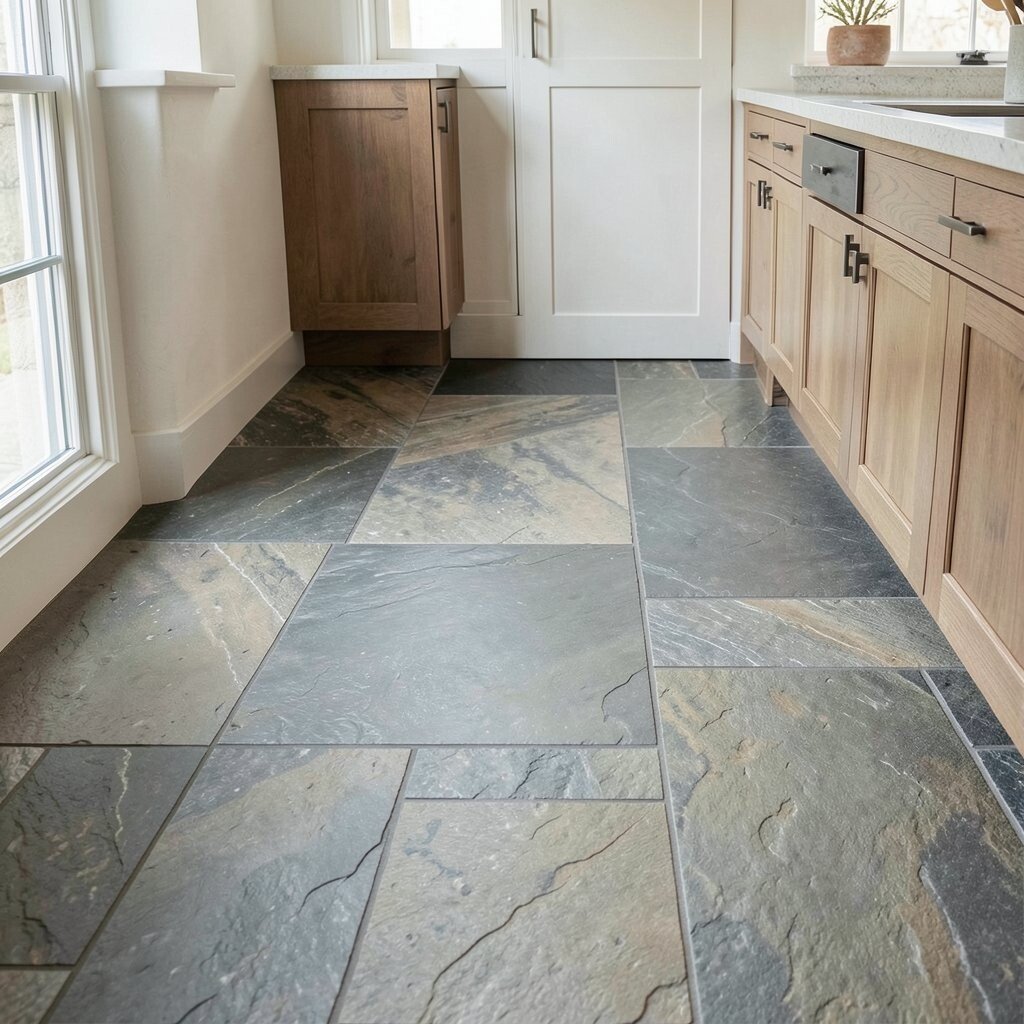
Mixed Finish Slate Panels With a Balanced Contrast Plan Mixed finish slate panels use two or more textures, like honed plus brushed, in a thoughtful plan. The contrast feels intentional and adds depth to the whole room.
This is a smart way to get the best of many textures without going too busy. Use smoother areas where you walk fast, and keep more textured sections near sinks for grip. When finishes are chosen well, the floor looks designed, not random.
Personalize by repeating one finish around the kitchen in a gentle rhythm. That could mean brushed bands near the stove and honed fields across the main cooking path. Cost considerations are important here because mixed finishes often require more planning and extra material orders.
Tip: build a mood board with cabinet color, countertop color, and lighting temperature. Then choose slate finishes that match those tones so everything feels calm together.