Clutter can sneak in quietly, like socks that vanish between the couch cushions. With the right bins, everything feels calmer and easier to reach.
Ready to make your space look neat without making your life harder? Let’s plan some smart storage moves that actually fit your everyday routine.
-
1. Clear Stackable Bins for Quick “Find It” Moments
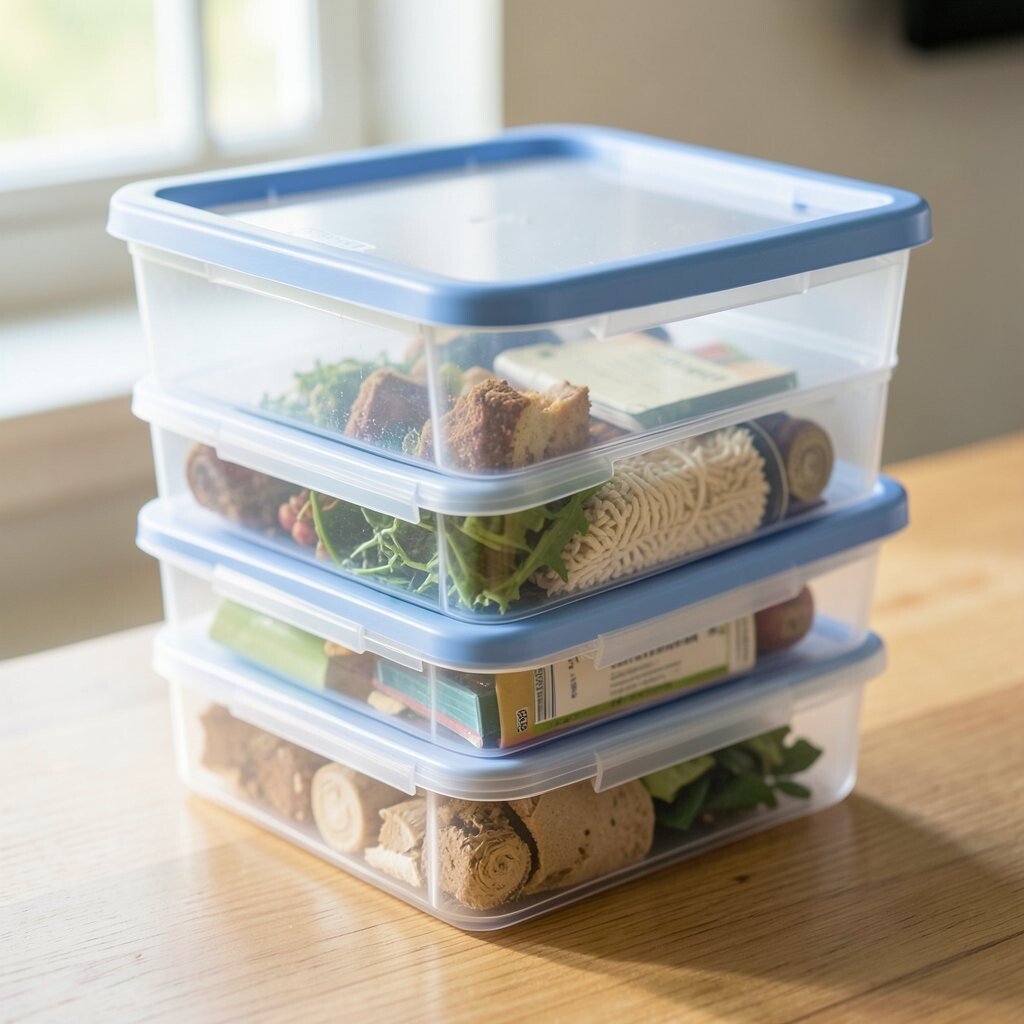
Clear Stackable Bins for Quick “Find It” Moments Clear stackable bins show you what’s inside without opening anything. You can line them up like little see-through drawers along a shelf or closet rod.
They help you spot small stuff fast, like craft supplies, cables, or snack bags. When you can see the contents, you waste less time digging. For best results, label the front with big, readable words or simple icons.
Pick bins that stack smoothly so you don’t end up with wobbly towers. Personalize by adding color stickers to match each room: kitchen, office, or laundry. If you’re on a budget, start with just a few sizes and grow your system later.
-
2. Fabric Drawer Bins for Softer, Cozy Storage
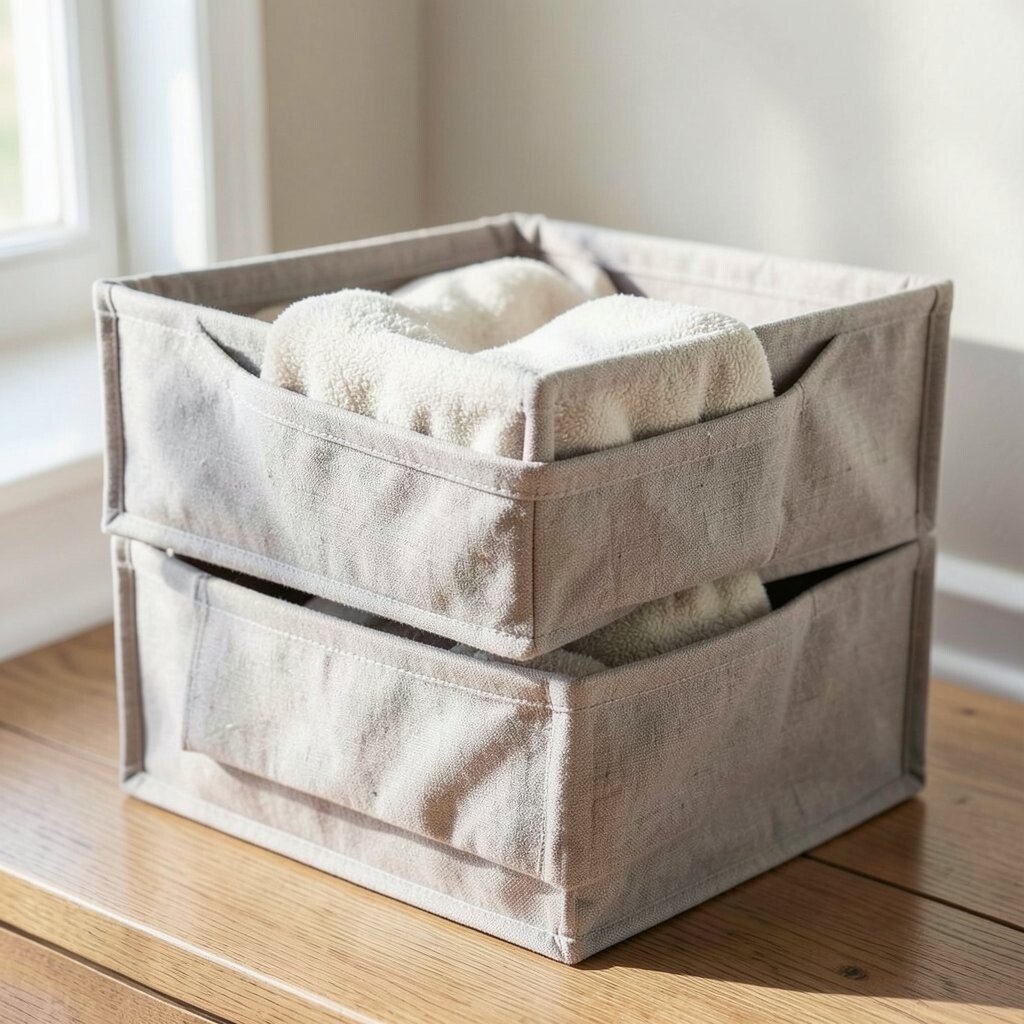
Fabric Drawer Bins for Softer, Cozy Storage Fabric drawer bins look warm and friendly, even in a bright room. They’re great for blankets, kids’ items, and anything that doesn’t need to be fully exposed.
Because they’re soft, they slide in and out easily on open shelves. This reduces “stuff piles” because you can tuck things away without wrestling with rigid containers. Try using bins that fit under a console table or inside a closet cubby.
Choose fabric bins with sturdy handles so you can carry them without tearing. Personalize by picking patterns that match your room style, like tiny dots or calm stripes. Budget tip: check store seasonal sales, because fabric options often go on discount.
-
3. Lidded Plastic Bins for Dust-Free Season Switching
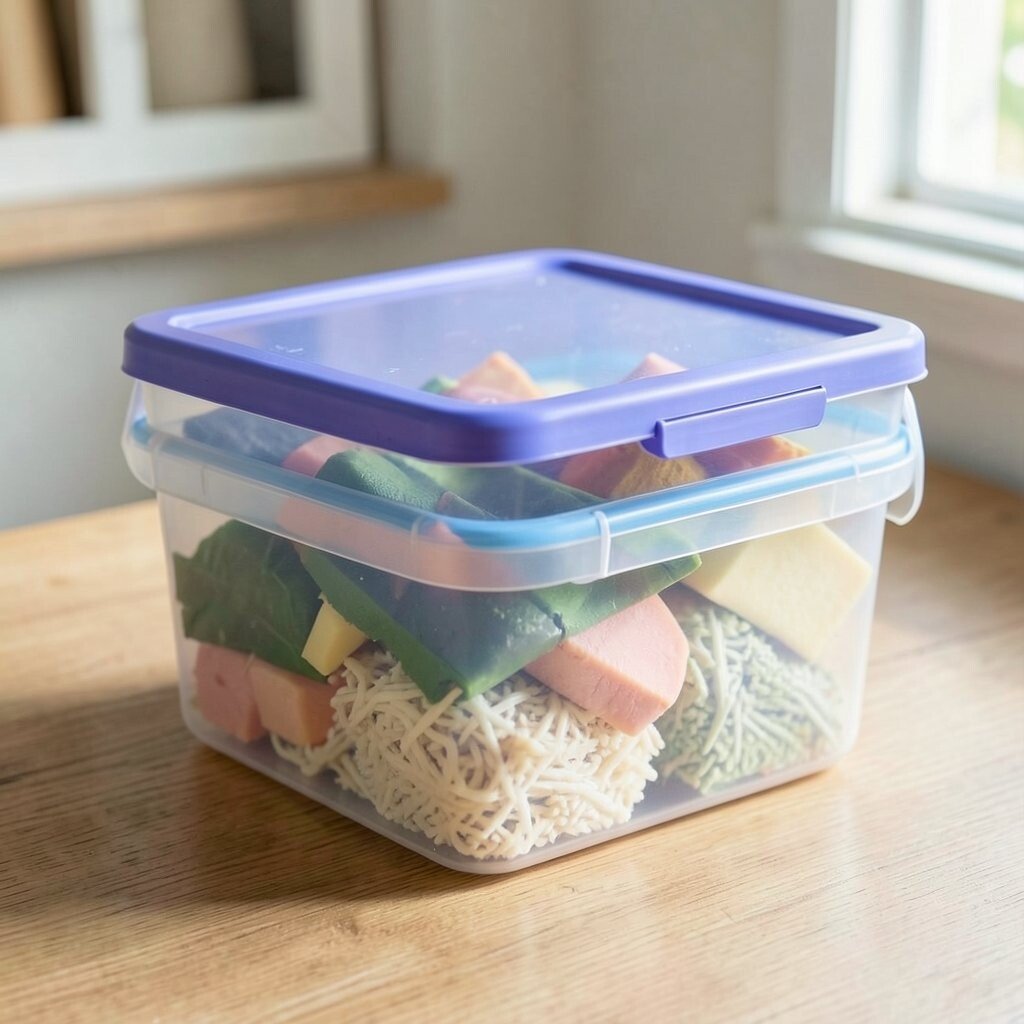
Lidded Plastic Bins for Dust-Free Season Switching Lidded plastic bins protect items from dust and help you store out-of-season stuff. You can stack them in a closet, garage corner, or under-bed area.
These bins are perfect for winter hats, holiday decor, or extra linens. When everything has a lid, it stays clean and ready. Add a quick label strip on the lid edge so you can grab what you need without guessing.
Make it unique by grouping items by theme, like “movie night extras” or “summer picnic gear.” A smart tip is to keep a small inventory list on a clipboard inside the bin storage area. Cost-wise, buy fewer larger bins when you can, since they usually hold more for the price.
If you want a current trend, many people are using matching sets for an organized look. It makes shelves feel intentional instead of random. Aim for a tidy color family so the storage blends into the room.
-
4. Pegboard Bins for Tools, Cords, and Daily Essentials
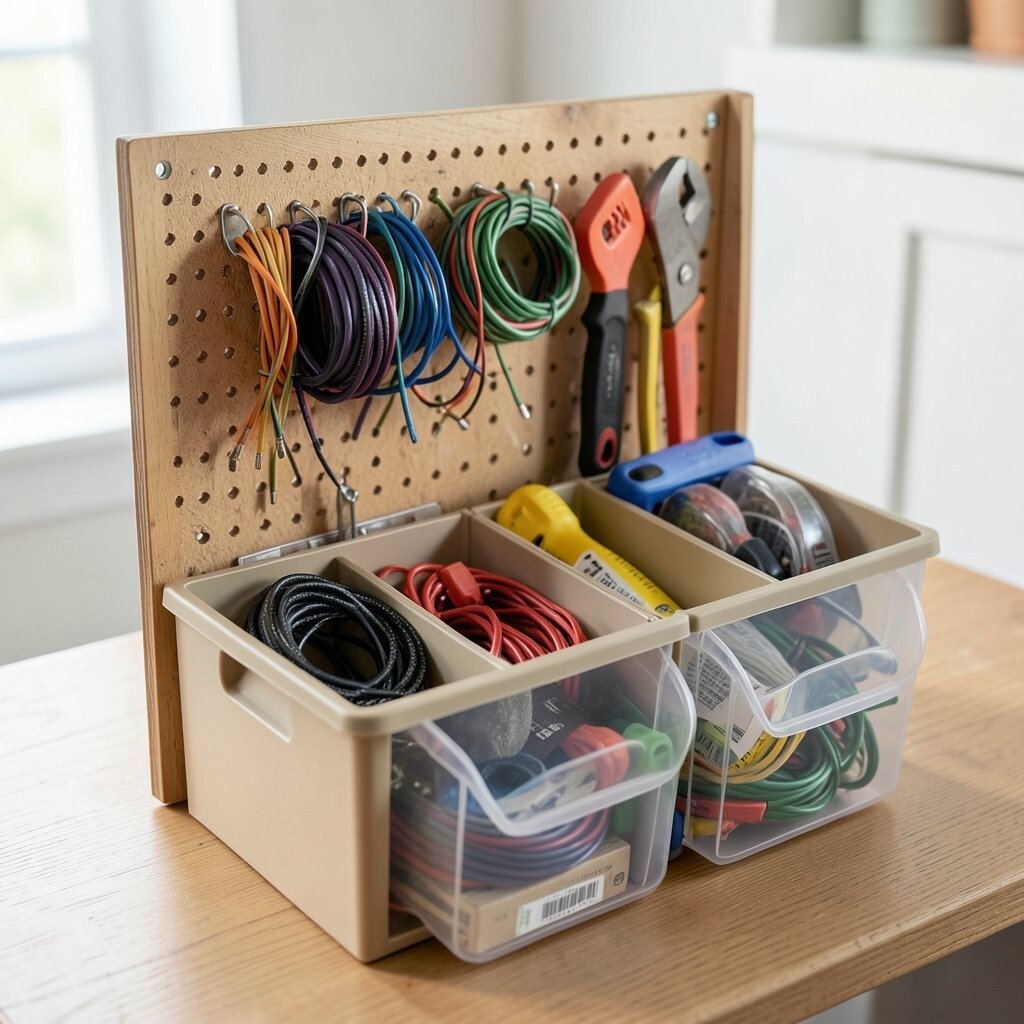
Pegboard Bins for Tools, Cords, and Daily Essentials Pegboard storage feels neat and modern because it turns walls into smart organizing zones. Small bins mounted on a pegboard keep tools and everyday items in plain sight.
It’s helpful when you have lots of small items that like to wander. With bins on hooks, you can keep chargers, tape, scissors, or nail supplies easy to reach. Use a simple color code by assigning one color per category.
Personalize the system by drawing tiny labels that match the bin contents. For example, a battery symbol for batteries and a paintbrush for craft paint. If you’re cost-conscious, start with a handful of bins and add more as you gather what needs organizing.
-
5. Under-Bed Bins for Hidden Bulk Storage
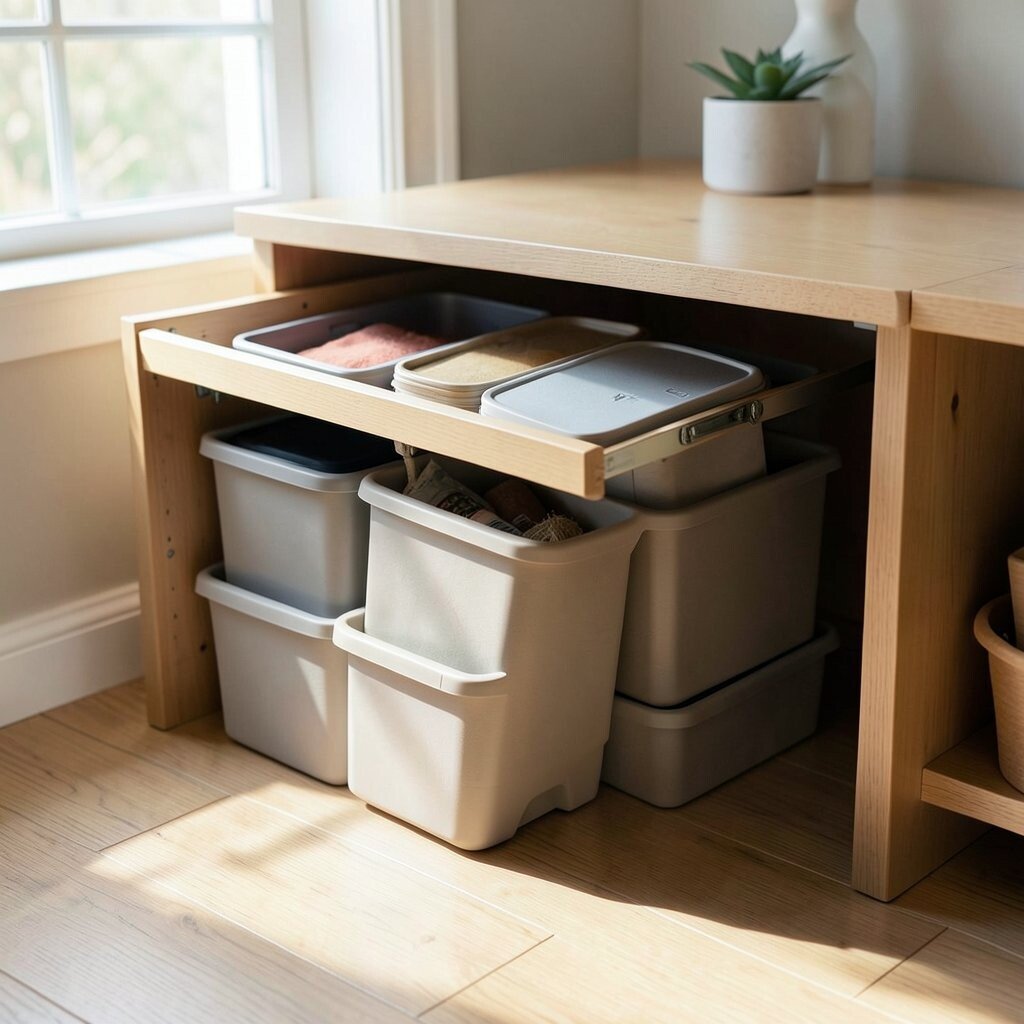
Under-Bed Bins for Hidden Bulk Storage Under-bed bins use space you already have, which makes your room feel bigger. They’re ideal for bulky items like winter shoes, extra bedding, or spare electronics.
Because they slide out, you can reach items without moving furniture. This helps you keep your floor clear and your room looking clean. Choose bins with wheels or smooth handles for easy pulling.
Personalize by using fabric covers or neutral colors so they blend with your bedroom style. A useful tip is to store “regular” items in a front row and “rarely used” items in the back. Budget-friendly option: use sturdy containers and add matching labels instead of buying everything at once.
-
6. Bathroom Bin Sets for Calm Countertops
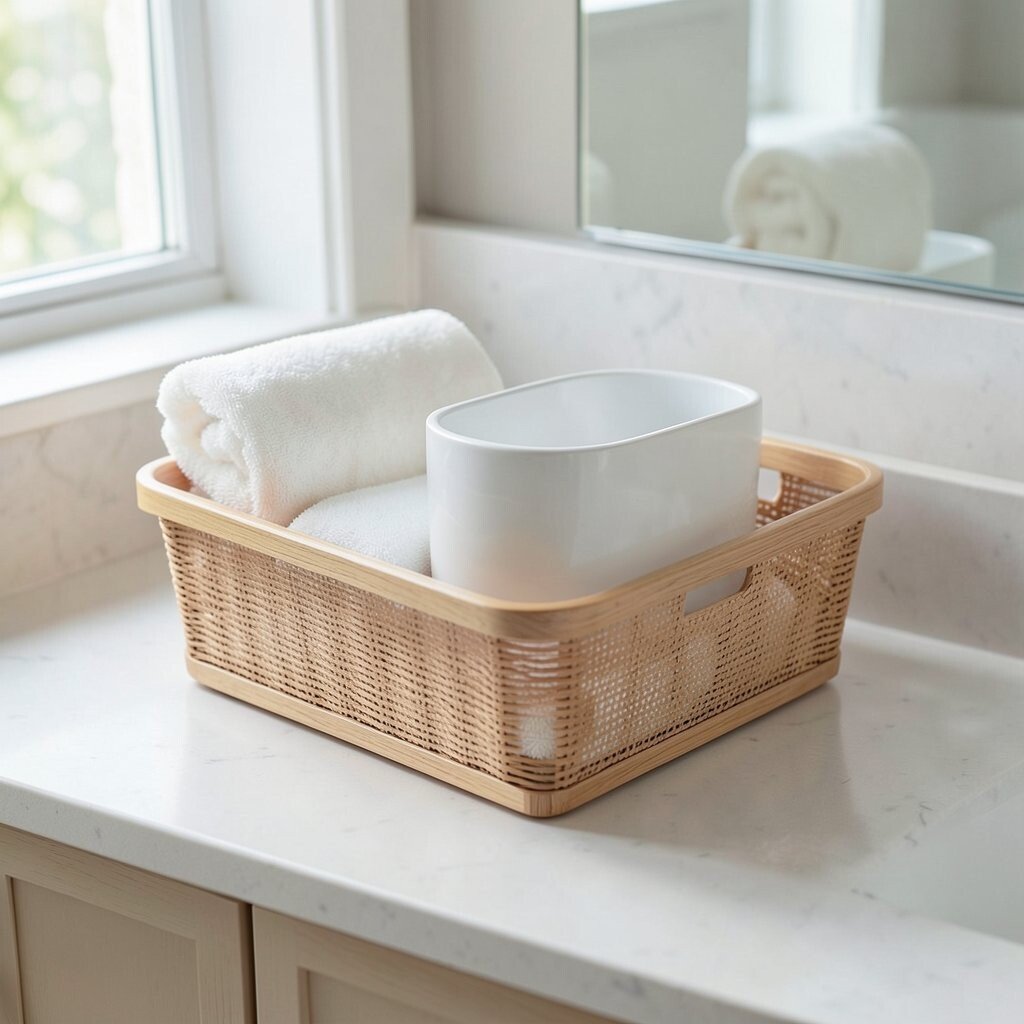
Bathroom Bin Sets for Calm Countertops Bathroom clutter can happen fast, especially with bottles and tiny tubes. A set of storage bins helps you keep skincare, hair tools, and everyday toiletries in one tidy zone.
Use small bins for makeup, brushes, and cotton pads, and bigger ones for towels or hair products. When everything has a home, your counters stay clearer. Try adding a bin by the sink and another near the shower.
For uniqueness, use bins that match your bathroom theme, like bamboo textures or soft pastel colors. A tip: keep “morning” items in one bin and “night” items in another to reduce decisions. Cost consideration: start with the most crowded drawer or shelf, not the entire bathroom.
-
7. Kitchen Pantry Bins for Ingredient Order
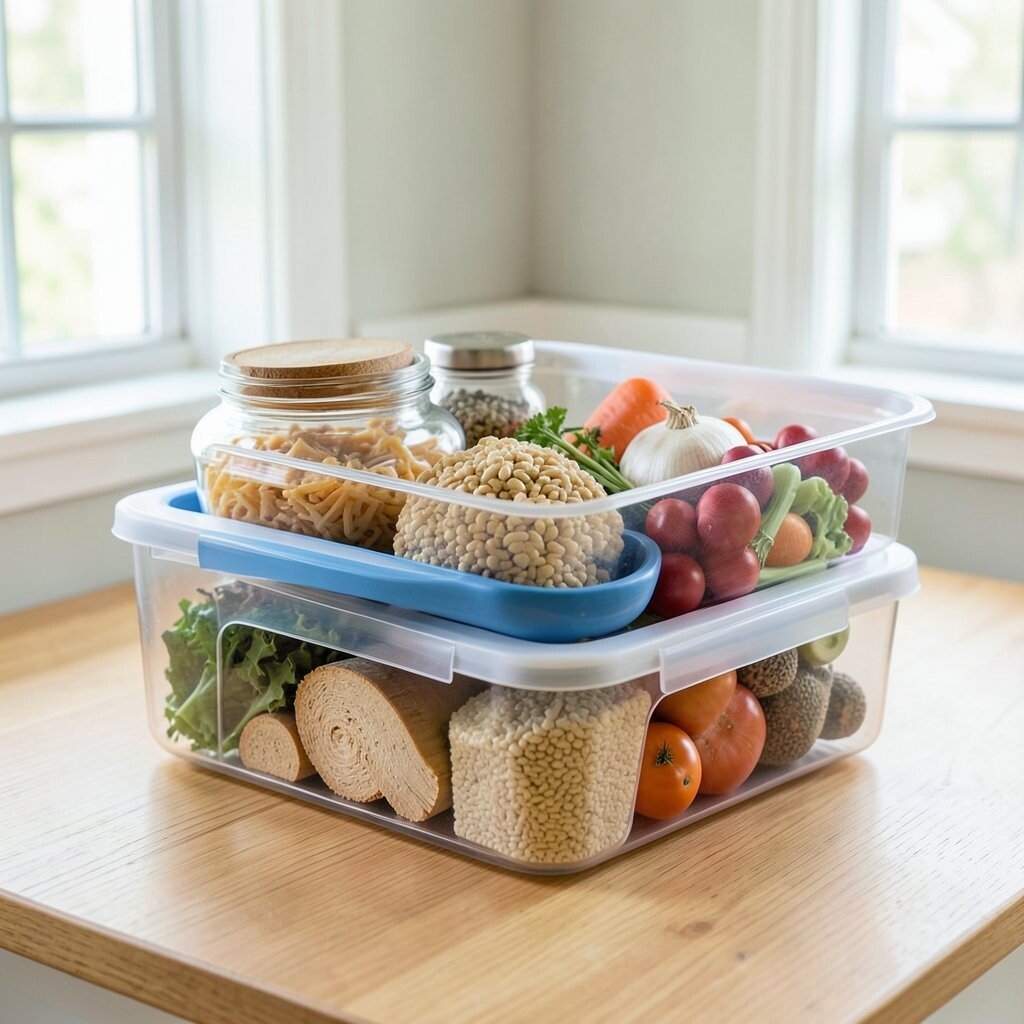
Kitchen Pantry Bins for Ingredient Order Kitchen bins can make your pantry feel like a well-organized shop. They help group similar foods so you’re not hunting for the same spice twice.
Try using bins for snacks, baking supplies, and backup staples. When you can see what’s there, you cook more confidently. Labeling is key, and it’s also a fun way to personalize.
Use clear bins for things like pasta, but use darker bins for flour to help keep the look tidy. A great tip is to create “grab-and-go” bins for quick meals. If you’re watching costs, reuse clean containers first and buy matching bins later.
To follow current trends, many people now use uniform labels and color-coded categories. It looks clean and makes restocking easier. Choose one label style you enjoy and stick with it for a neat, consistent feel.
-
8. Entryway Shoe and Gear Bins for a Faster Comeback
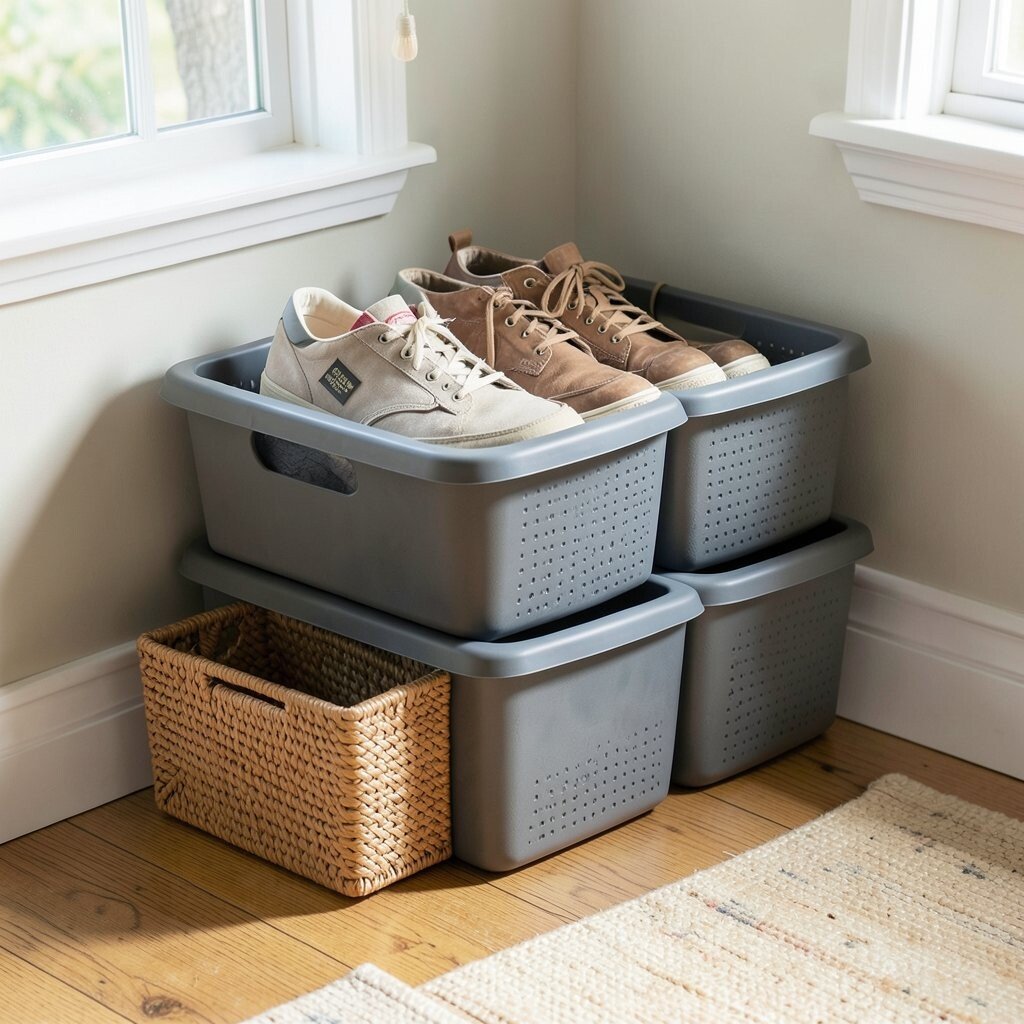
Entryway Shoe and Gear Bins for a Faster Comeback An entryway is where mess starts, and storage bins stop it quickly. Use bins for shoes, hats, leashes, and the little things that appear after you walk in.
Shoe bins with slots or stacked sections help keep pairs together and off the floor. You’ll notice fewer piles near the door. Add a small bin for keys, sunglasses, and small daily items so they don’t disappear.
-
9. Desk Organizer Bins for Papers That Stop Spreading
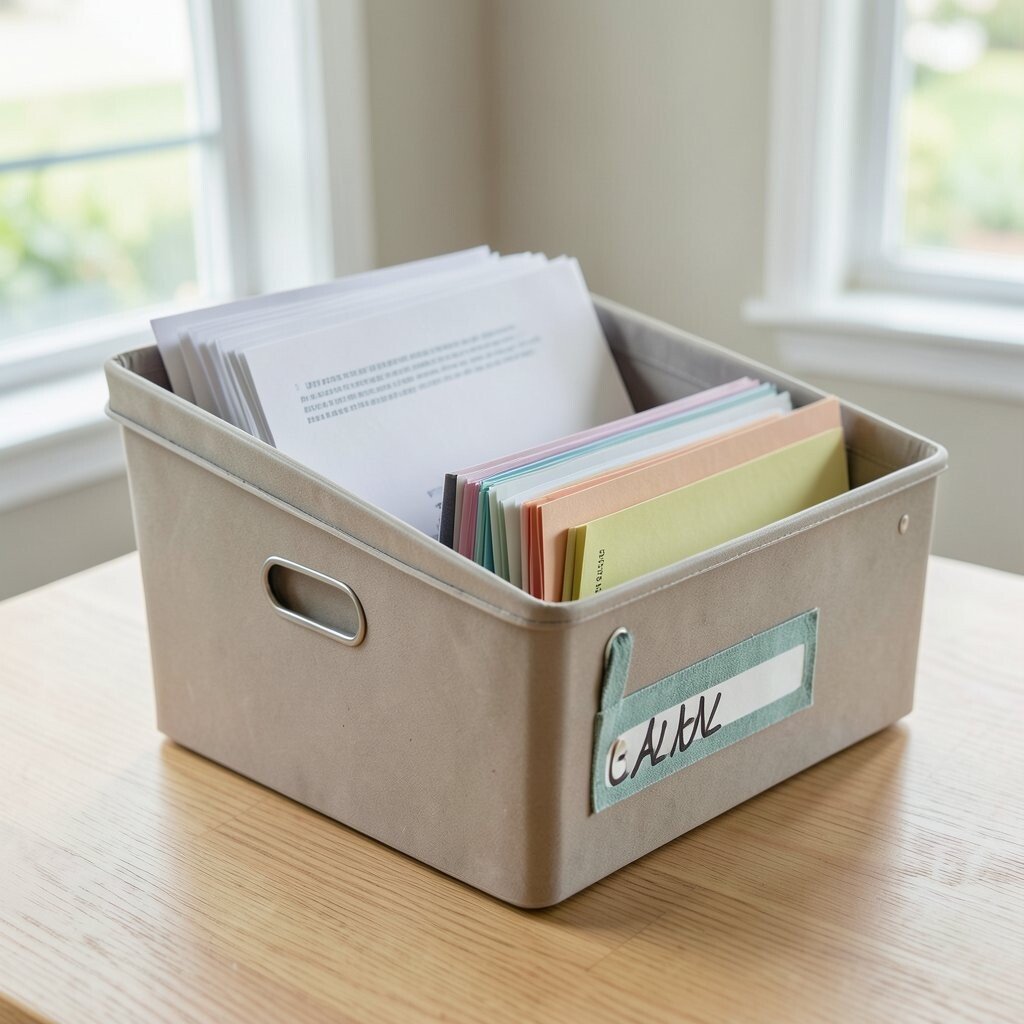
Desk Organizer Bins for Papers That Stop Spreading Your desk can go from tidy to messy in a blink. Desk bins help keep papers, sticky notes, and supplies in simple stacks.
Use one bin for “in” items, one for “to file,” and one for “finished.” This supports good habits without extra effort. When papers have a home, you spend less time searching.
Personalize with fun label colors or a style that matches your workspace. A tip: keep a pen cup bin nearby for quick note-taking. Cost considerations are easy here since you can start with small bins that fit your existing drawer.
-
10. Toy Storage Bins by Activity, Not by Size
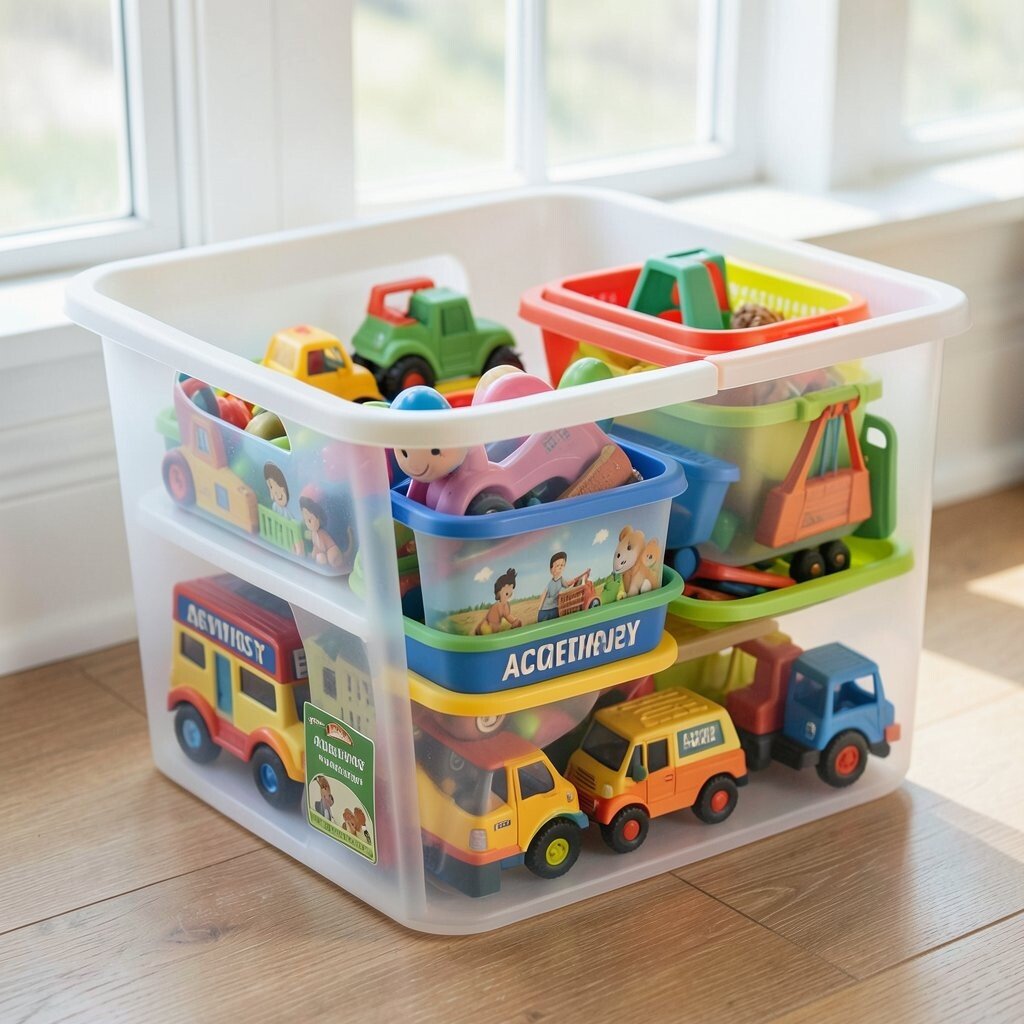
Toy Storage Bins by Activity, Not by Size Toys can feel impossible to manage because they’re tiny and everywhere. Storage bins work best when they match the way kids actually play.
Use bins for “building,” “pretend play,” “cars,” and “art time.” This helps kids clean up faster because they know where each type belongs. You’ll also see fewer mixed piles on the floor.
Uniqueness comes from making bins fun: use bright colors, themed bins, or printed pictures on the labels. Try adding a picture label so little ones can recognize the bin content. Budget tip: use a mix of store-bought bins and repurposed containers as you build your system.
For a current trend, many families now add visual sorting like image cards on cubbies and bins. It’s friendly for kids and reduces arguing during cleanup. Keep bins at kid height so they can return toys without help.
-
11. Closet Cubby Bins for Color-Perfect Wardrobes
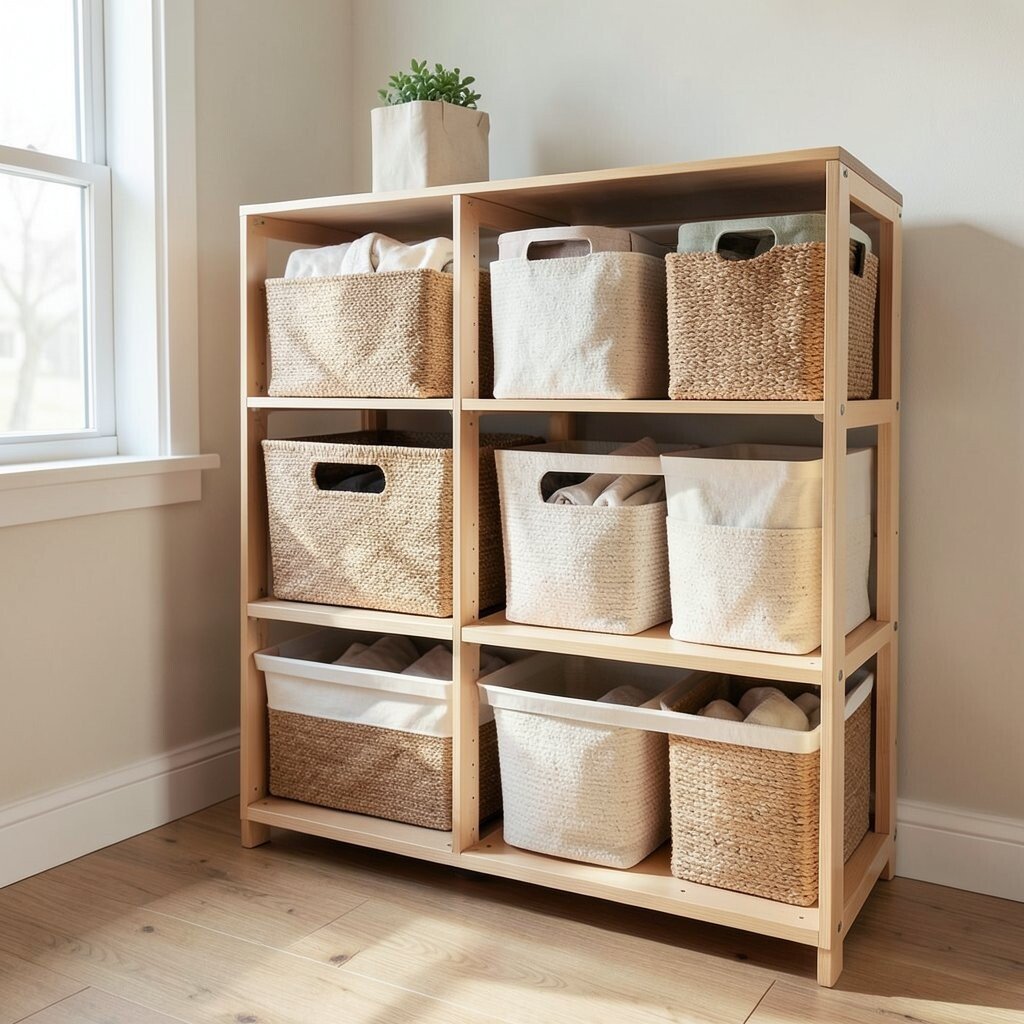
Closet Cubby Bins for Color-Perfect Wardrobes Closet cubbies make it easier to keep clothes tidy, especially when each item has a bin. Bins also protect delicate items from dust and snagging.
Try using bins for socks, belts, scarves, and workout gear. When you can grab the bin you need, you’ll fold less and hunt less. Label each cubby with a simple category word.
To personalize, choose bins in matching shades so the closet looks calm and put together. A tip: store seasonal items in lidded bins and keep everyday items in open bins for quick access. Cost considerations: if you already have cubbies, you may only need a few new bins to start.
-
12. Laundry Bin Sets for “Sort Once” Habits
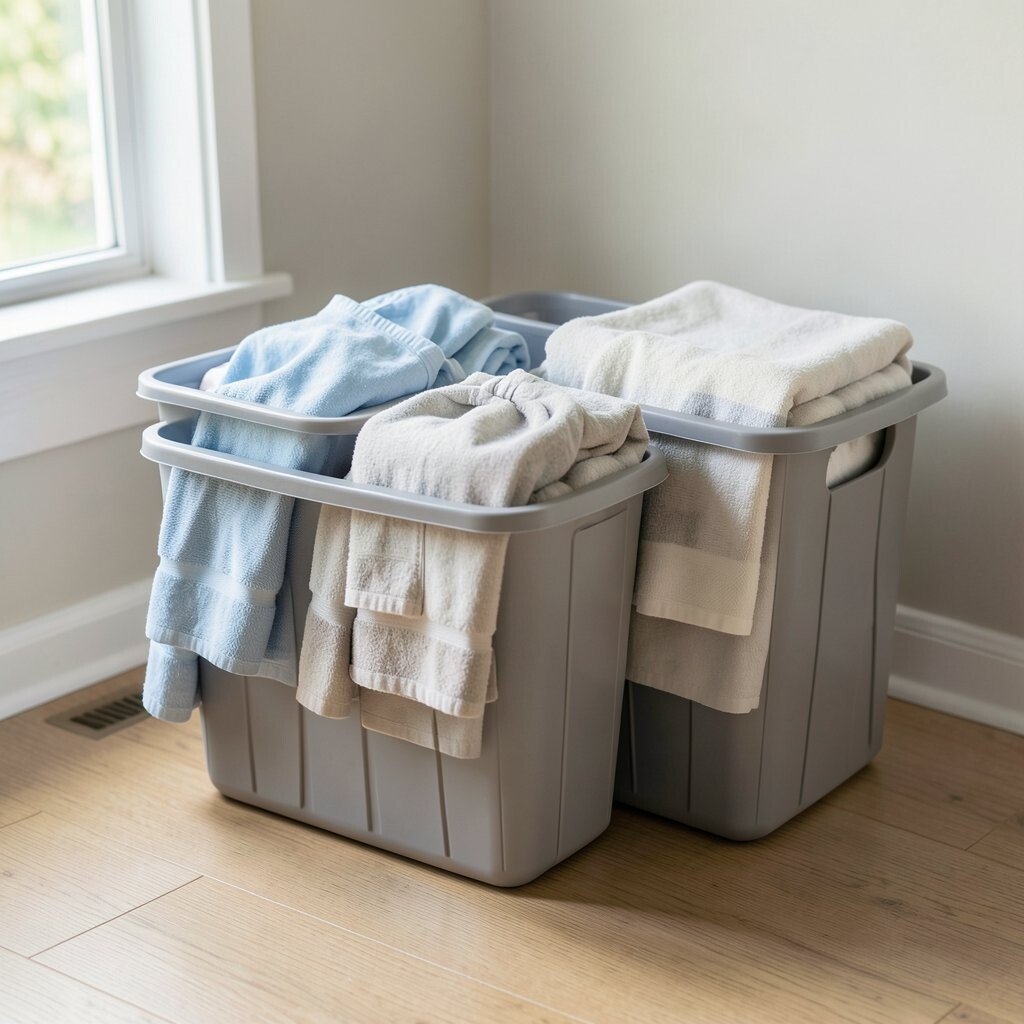
Laundry Bin Sets for “Sort Once” Habits Laundry bins are one of the best ways to keep chores from taking over your home. Multiple bins help you sort by color or type as clothes come off.
Use a small bin for delicates, a bin for dark items, and another for light items. The benefit is simple: fewer mixed loads and less re-sorting later. Place the bins near your hamper or laundry area so sorting is easy.
Make it unique by using foldable bins with cute patterns or sleek matching colors. A tip: use labels that are easy to read from across the room. Budget-wise, you can start with two bins and add a third when you feel ready.
If you want a trend, many people are using compact, space-saving bins that fit in corners. This keeps the laundry area neat without needing extra furniture. Choose bins with handles so you can move them quickly to the washer.
-
13. Craft Supply Bins with “Project Zones”
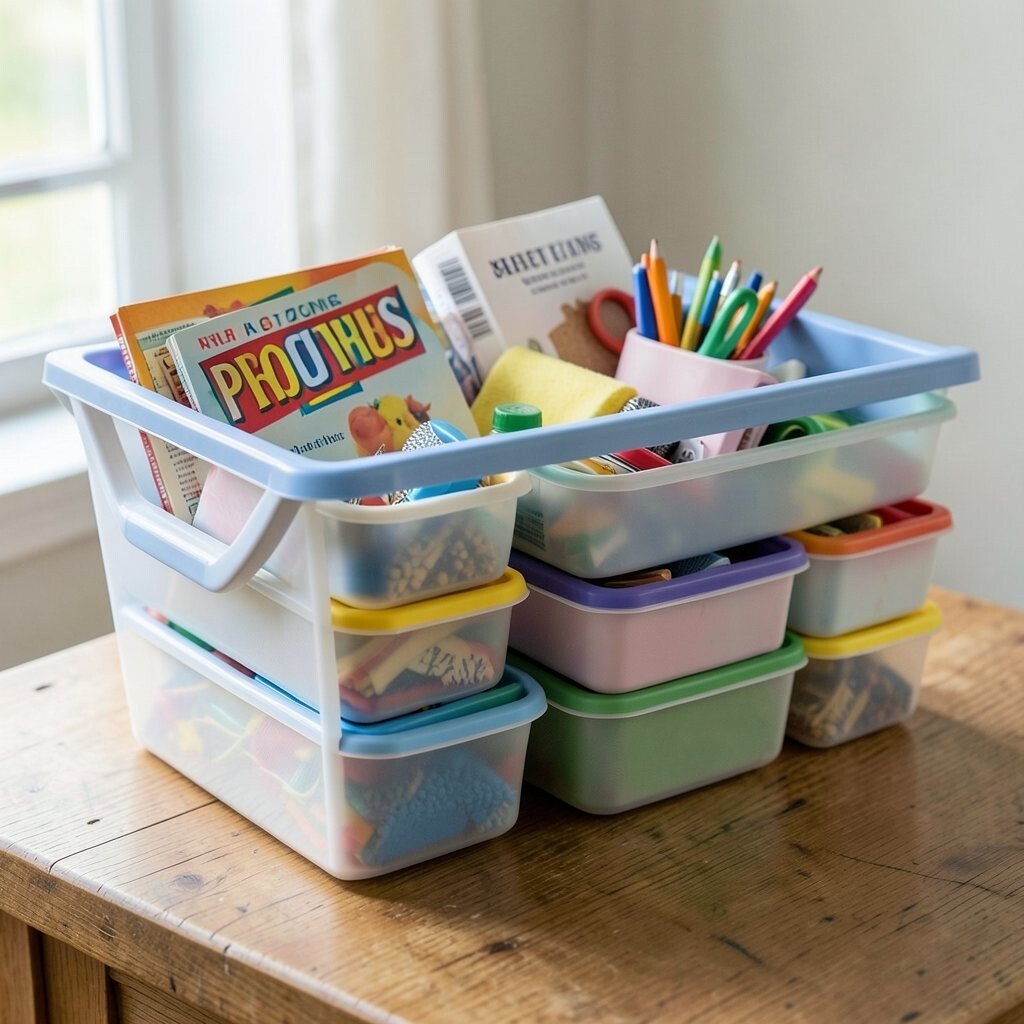
Craft Supply Bins with “Project Zones” Craft supplies love to spread, but project zones keep them calmer. Use storage bins to group supplies by what you plan to make next.
For example, keep a bin for scrapbooking, a bin for drawing, and a bin for kids’ school projects. When you’re ready to craft, you grab one bin and start. This makes the whole process feel smoother and more fun.
Personalize by adding a small card that says what’s inside and when you last restocked it. A tip: store scissors, glue, and tape in separate pencil-style compartments inside the bin. Cost considerations: buy bins based on what you already own, not what you want someday.
-
14. Linen Bin Cubes for Easy Bed Refreshes
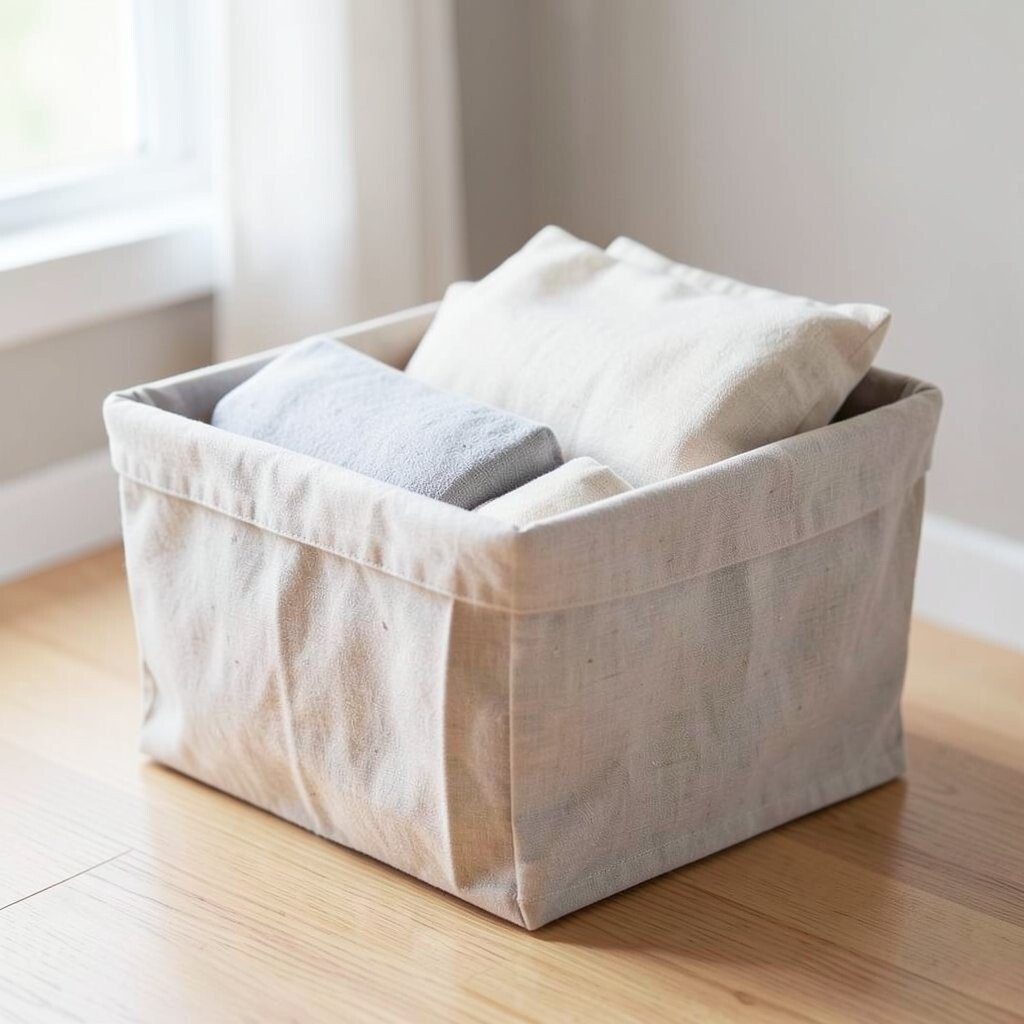
Linen Bin Cubes for Easy Bed Refreshes Linen bins help you manage towels, sheets, and extra pillowcases without messy stacks. Cube-style bins slide neatly into closet shelves or under cabinets.
They keep everything in one place so your bed refresh is faster. When you have spare linens ready, you don’t scramble at the last minute. Use one cube for towels and another for bedding so you can grab what you need quickly.
Make it unique by matching bin colors to your room palette. A useful tip is to keep “everyday” sets on top and “spare” sets inside. Budget tip: start with the most used category, like towels, and expand later.
For personalization, add a small label that includes the size, like “queen sheets” or “bath towels.” This tiny detail prevents mix-ups. It also makes guests feel welcomed when they see your tidy system.
-
15. Garage Storage Bins for Tools and Hardware
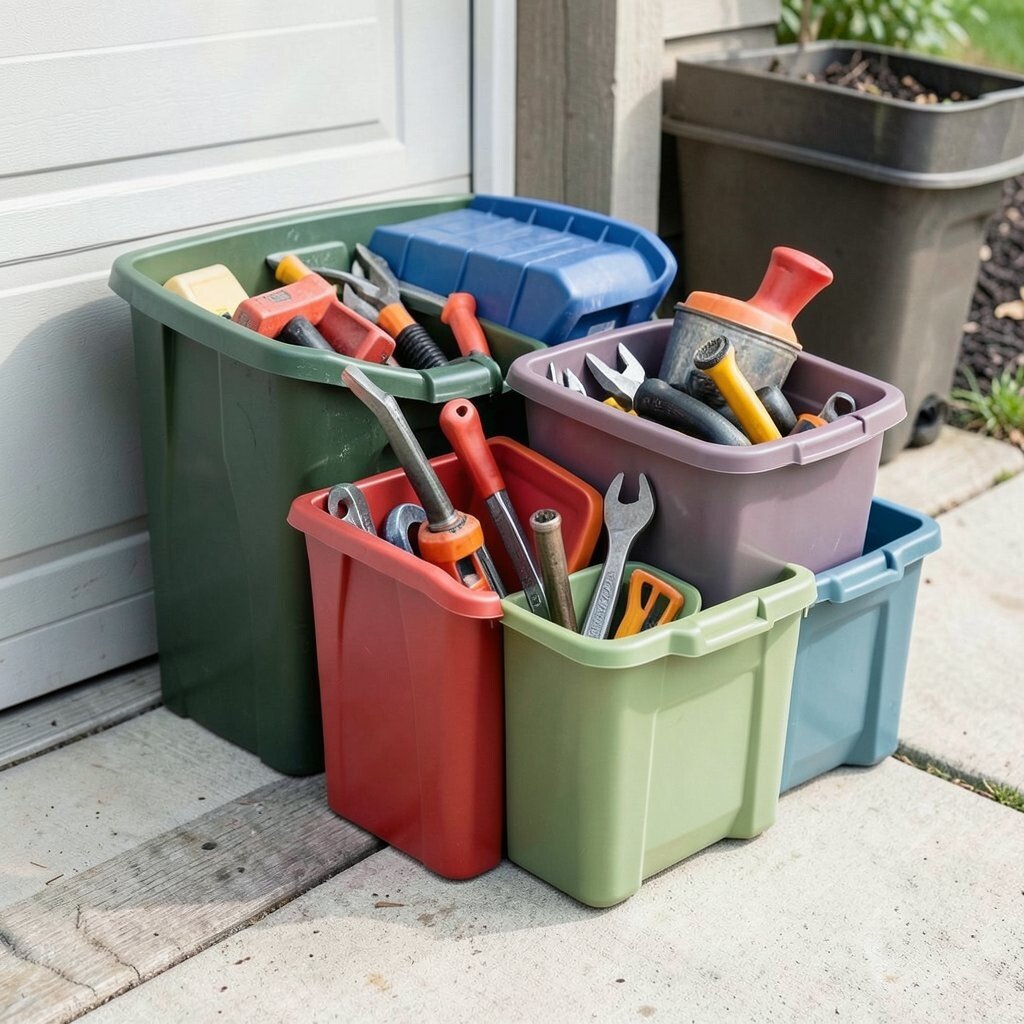
Garage Storage Bins for Tools and Hardware Garage mess can feel huge, but bins bring order one section at a time. Use larger storage bins for gardening items, and smaller bins for hardware.
Group nails, screws, and bolts by size so you don’t dump everything every time you need one piece. When tools and hardware have clear homes, projects go faster. Add labels with numbers or simple words.
Uniqueness can come from using bins with different materials, like plastic for wet items and sturdy fabric for dry tools. A tip: put a “quick grabs” bin near the door for items you use most. Cost considerations: compare prices by how much space you get, not only by the bin size.
-
16. Cable Management Bins for the Tech That Multiplies
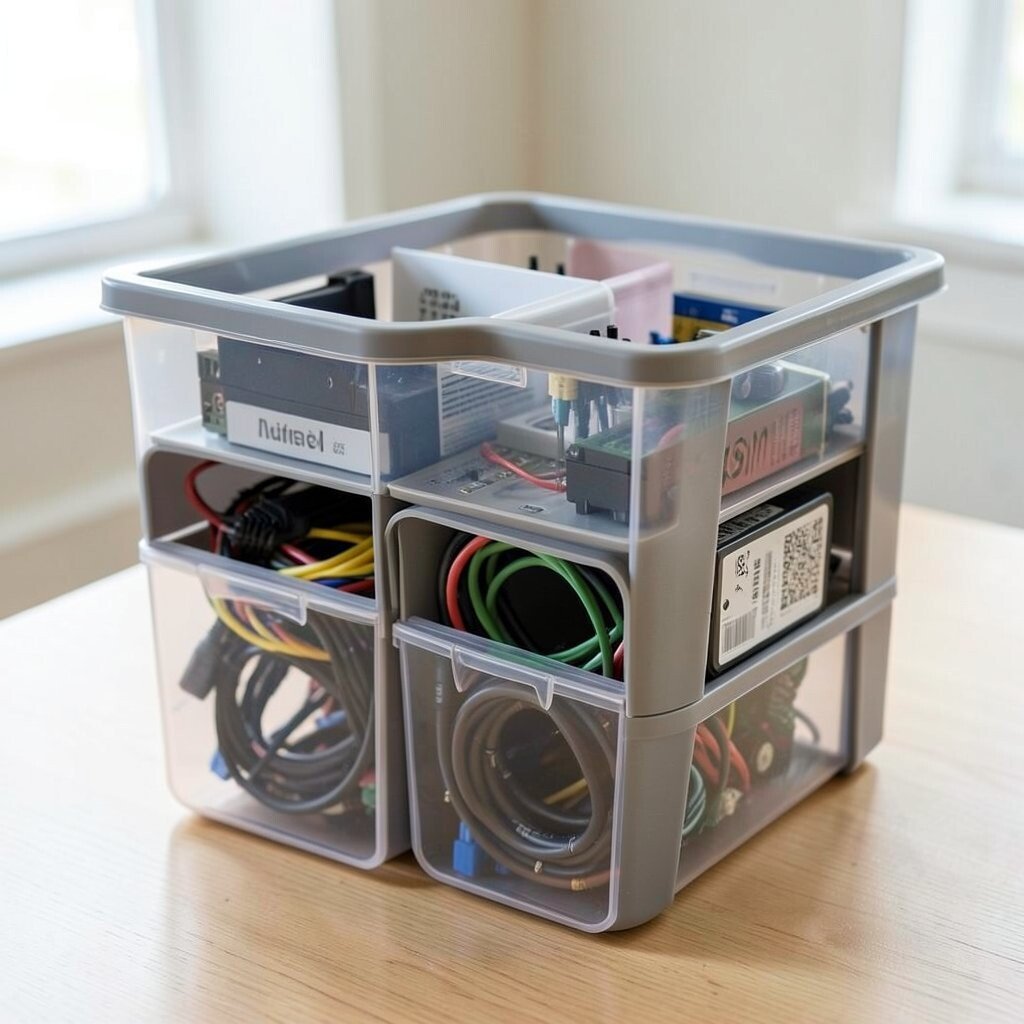
Cable Management Bins for the Tech That Multiplies Cables are sneaky clutter makers, and they tangle when they’re not stored well. Cable bins keep chargers, cords, and small tech accessories in one neat spot.
Use a bin with compartments or small zip pockets inside so each item doesn’t mix. You’ll save time when a device needs power or an extra cord. Label the bin for each category, like “phone,” “tablet,” or “gaming.”
Personalize by adding a tiny tag with the device name or the length of the cord. A tip: keep a small reusable bag inside for adapters. Budget-wise, you can start with one cable bin and grow as you find more duplicates.
Current trend: many people now use “tech drawer” systems with labeled pouches instead of loose cords. It looks clean and reduces the stress of untangling. Choose a bin that fits in a drawer or shelf for a hidden, tidy look.
-
17. Linen Closet Bins for “Gifts” and “Emergency” Items
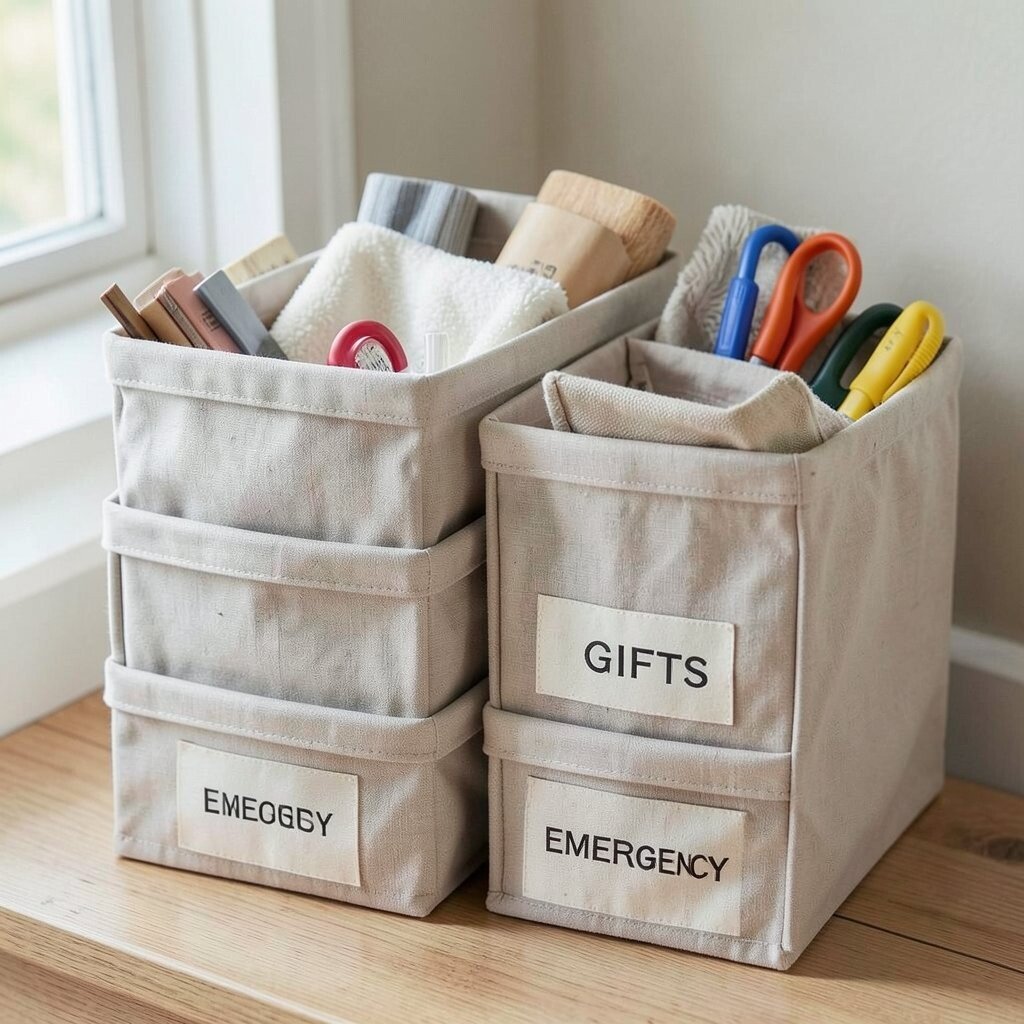
Linen Closet Bins for “Gifts” and “Emergency” Items Sometimes you want a place for things that feel special but not daily. Storage bins can hold gift wrap supplies, extra cards, and emergency basics.
Try one bin for wrapping paper and tape, and another for extra gift bags. For emergencies, add a bin with batteries, small light bulbs, and a mini first-aid set. This keeps your closet helpful instead of just storage.
Make it unique by choosing bins with a clean, modern look so they don’t feel hidden clutter. A tip: include a small checklist inside the lid so you know what’s running low. Cost considerations: focus on bins that match the shelf width so you avoid wasted space.
-
18. Spice and Snack Bins for Family Style Convenience
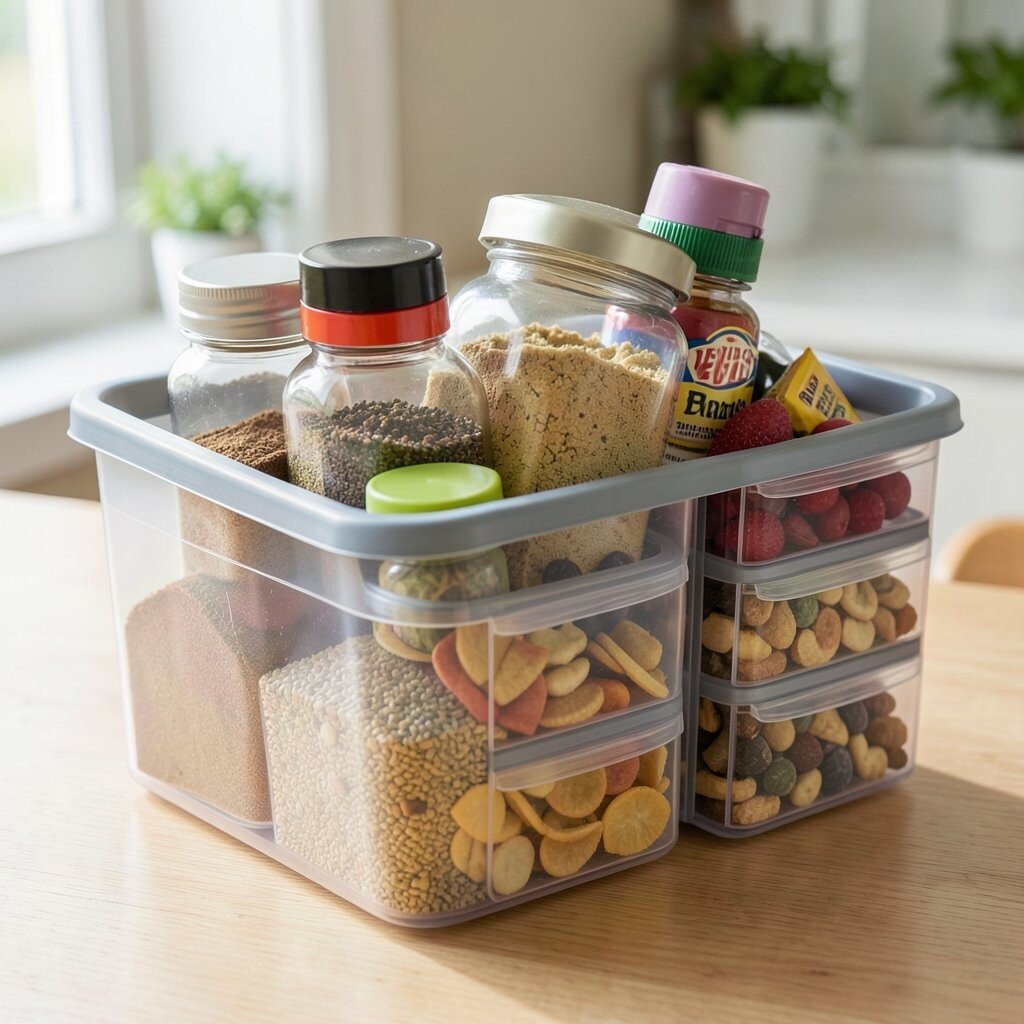
Spice and Snack Bins for Family Style Convenience Food storage can be neat and still feel easy for everyone. Spice and snack bins help your kitchen run smoothly, especially with family meals.
Use bins to separate spices by cooking style, like “baking,” “tacos,” or “breakfast.” For snacks, keep kid favorites in one bin and healthy backups in another. This makes it easier to grab something without opening multiple containers.
Personalize by using labels that match the labels you already use, or by adding a fun emoji for each category. A tip: keep a small “refill” space so you can swap items when they run low. Budget-wise, start with bins for the most-used area, like near the stove.
If you want a trend, many kitchens now use uniform containers and consistent labeling. It gives a clean look and reduces food waste. Choose bins that fit your shelves perfectly so everything stays aligned.
-
19. Entry Drawer Bins for Small “Daily Drop” Habits
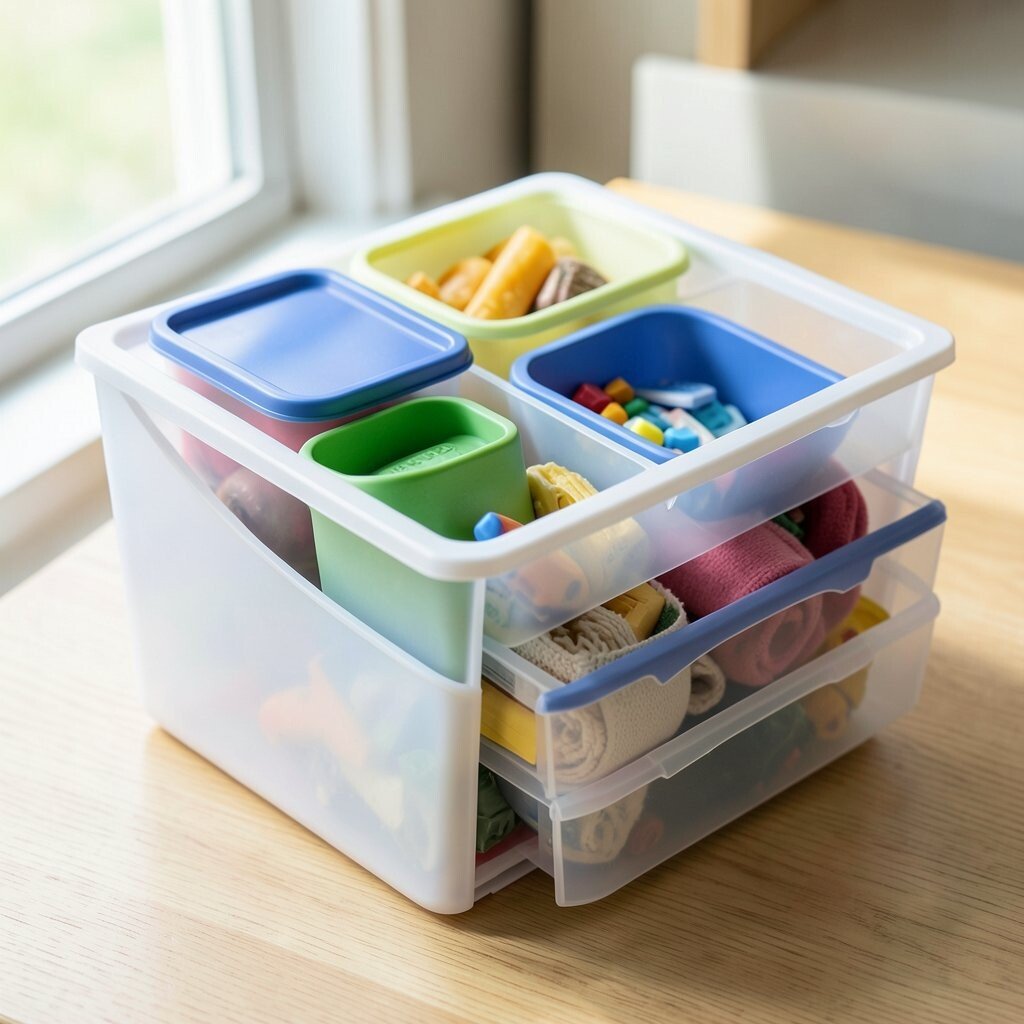
Entry Drawer Bins for Small “Daily Drop” Habits A drawer near the entry can save your day when everyone comes and goes. Put bins inside for keys, wallets, sunglasses, and small everyday items.
This creates a daily drop zone, so items don’t end up on random surfaces. You’ll feel calmer because your most-used things are always in one place. Use a bin shape that matches the drawer space for a smooth, organized look.
Personalize by color-coding family members, like one color for each person’s items. A tip: keep a tiny bin for loose change and a small envelope for important papers. Cost considerations: you can often get a great start with a few inexpensive bins.
-
20. Bookshelf Bins for “Reading Pile” Control
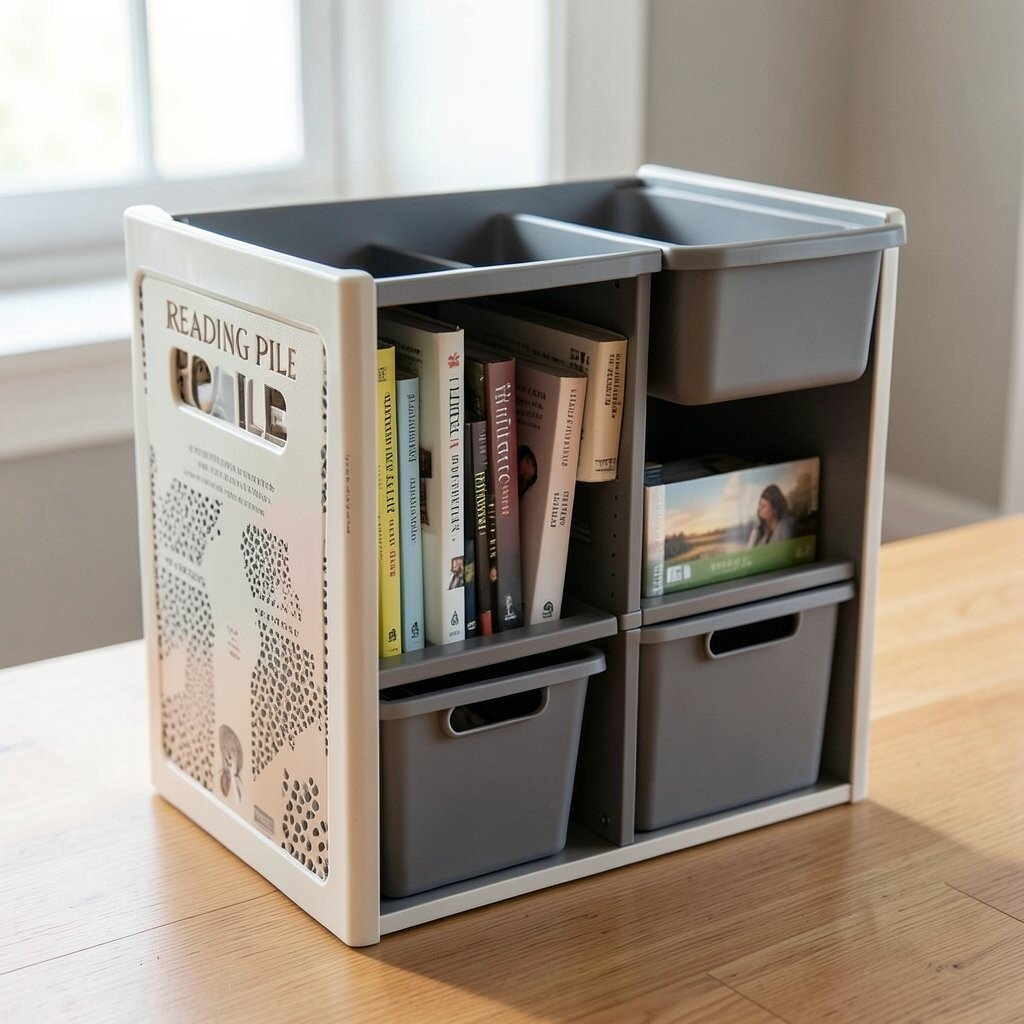
Bookshelf Bins for “Reading Pile” Control Bookshelves can get messy when magazines and reading piles grow. Storage bins help you sort reading items so the shelf stays neat.
Use one bin for current reads and another for “to return” or “to donate.” This reduces the clutter that makes shelves look crowded. It also keeps your home feeling ready for guests.
Personalize by matching bin color with your book spines or by choosing bins with a pattern you enjoy. A tip: add a small label that says “now reading” to encourage easy cleanup. Budget-wise, thin bins work well because you don’t need deep storage for books and papers.
Current trend: many people are using stylish bins as part of decor, not hidden storage. Choose bins that look good even when they’re in the open. It’s a simple way to make organization feel like design.
-
21. Bathroom Under-Sink Bins for Maximum Hidden Order
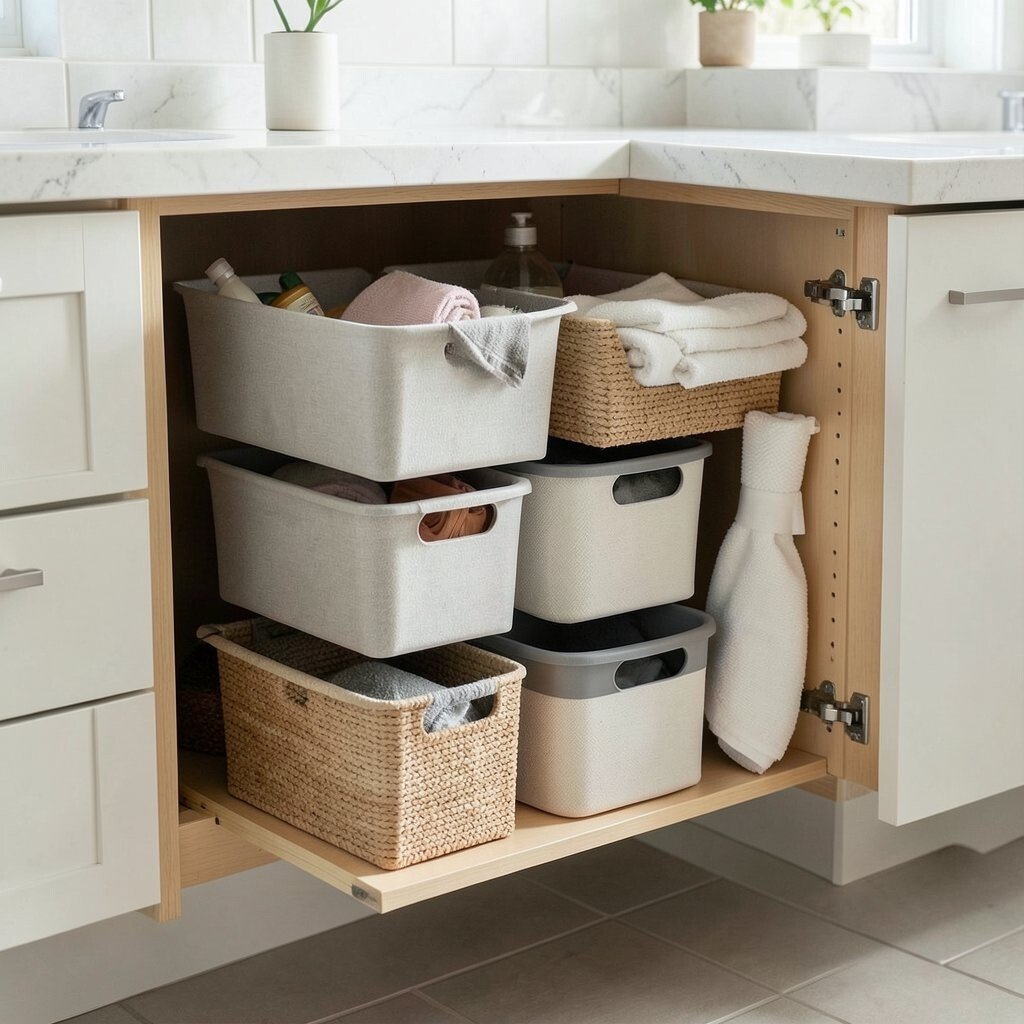
Bathroom Under-Sink Bins for Maximum Hidden Order The under-sink area often becomes a messy “catch-all” zone. Bins make it easy to keep cleaning supplies and personal items sorted and easy to reach.
Use bins for backups like extra soap and refills, and separate bins for cleaning tools. This keeps bottles from rolling around and makes spills easier to handle. Labeling helps you restock quickly without guessing.
Uniqueness comes from using stackable bins that fit the exact space under your sink. A tip: keep a bin for “daily use” supplies at the front and one for “bulk” supplies in the back. Cost considerations: measure your space first so you buy bins that fit well the first time.
-
22. Seasonal Theme Bins for Holiday Calm and Quick Returns
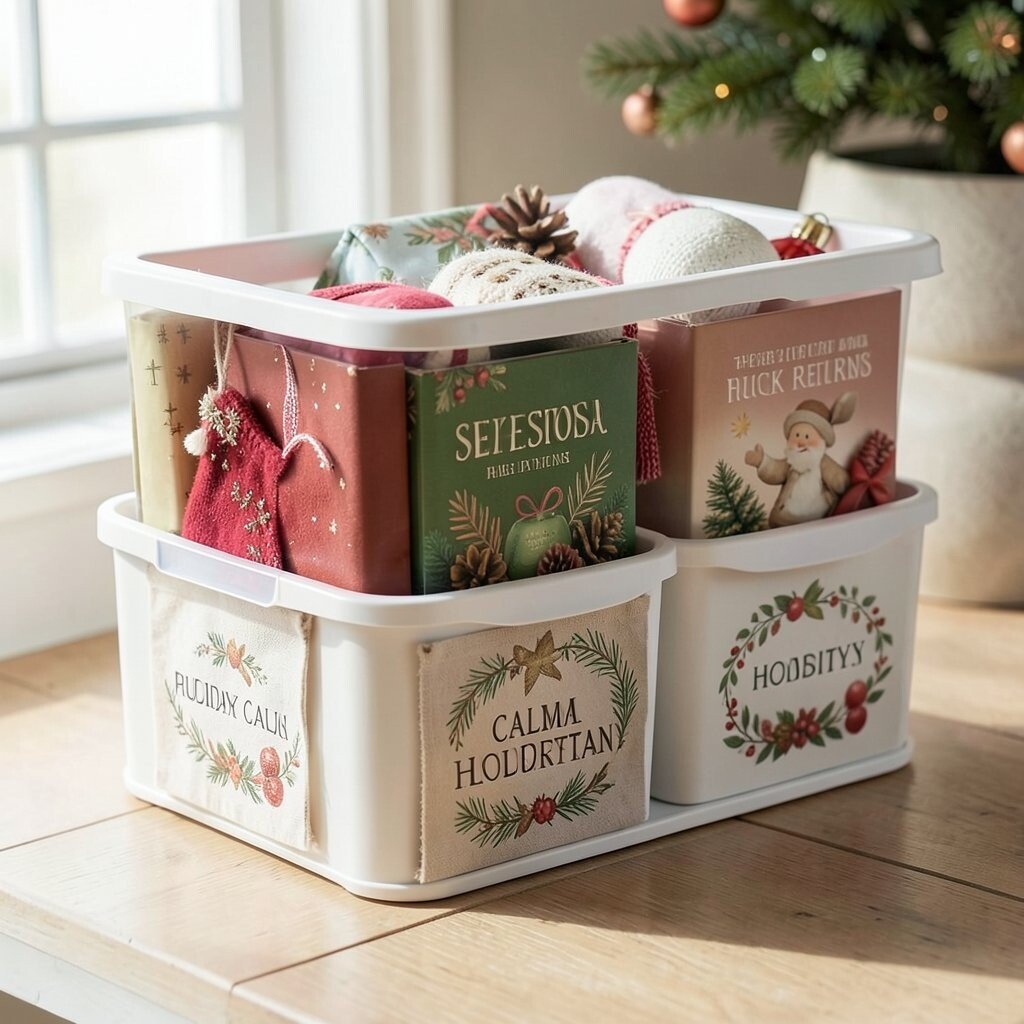
Seasonal Theme Bins for Holiday Calm and Quick Returns Seasonal theme bins keep holiday decor and event supplies from turning into year-round clutter. Instead of mixed boxes, use bins that match each season’s style and purpose.
Try one bin for decorations, another for wrapping supplies, and one for storage-friendly lights. When everything has a theme, packing up feels faster and unpacking feels exciting. Add clear labels so you don’t forget what’s inside each bin.
Personalize by choosing bins in a seasonal color, like red for winter and green for spring. A useful tip is to wrap fragile items in soft cloth and place them in a dedicated bin for extra protection. Budget-wise, reuse boxes you already have and upgrade only the bins you handle most.
Current trend: many people use color-coded storage so the whole home feels organized during busy months. If you’re aiming for that look, choose a small set of matching bins and keep the labels consistent. The result is a tidy home that’s ready when the season changes.