
Some kitchens feel like a warm invitation the second you step inside. Others make you slow down, smile, and admire the details.
This list looks at transitional elegance and classic elegance side by side. You will see how each style can feel comfortable, useful, and stunning at home.
-
1. Soft-Edge Colors in Transitional Elegance
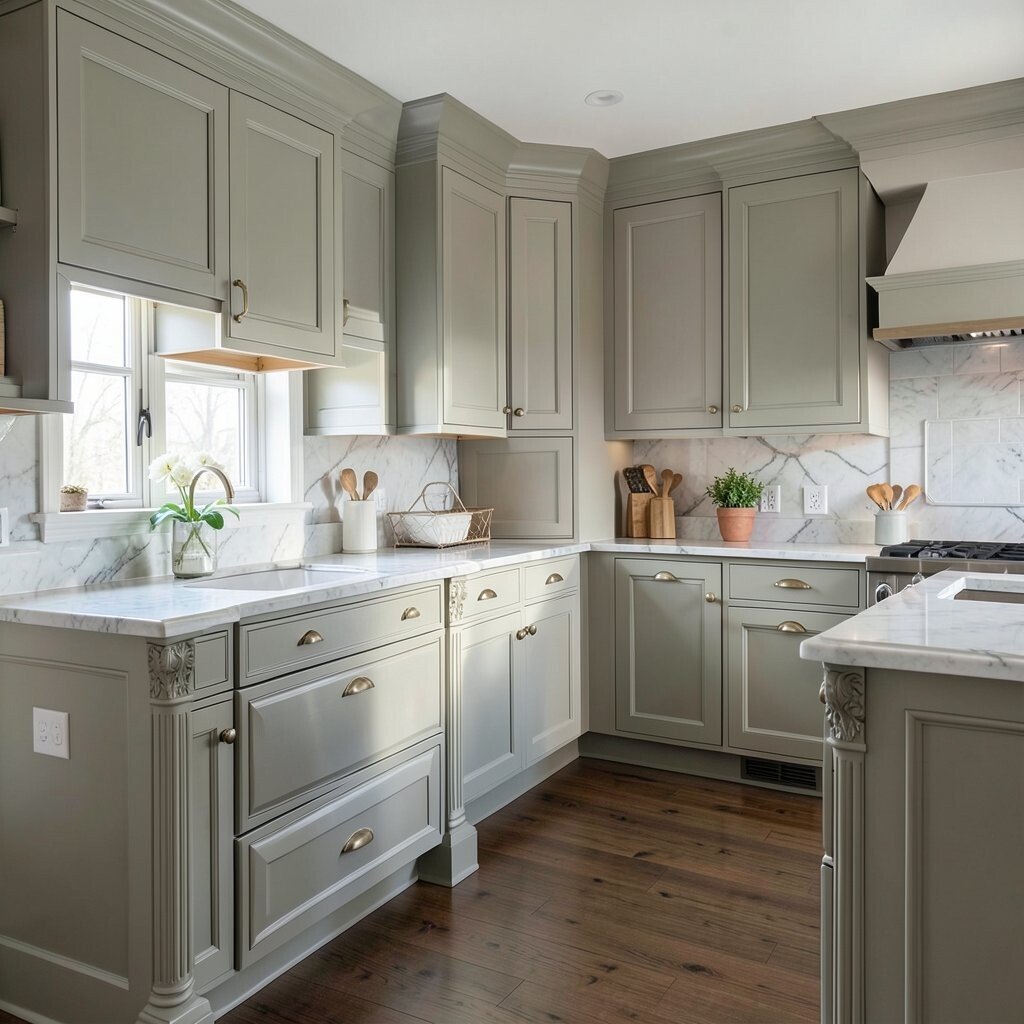
Soft-Edge Colors in Transitional Elegance Think creamy whites, pale greige, and gentle taupes that glow in the morning light. Picture cabinet doors with relaxed lines, paired with warm wood flooring and light metal pulls.
Transitional kitchens shine because they look calm, yet still feel special. You get a “fresh and lived-in” vibe without losing the elegant feel. Keep benefits in mind: the light colors can help rooms look bigger, and they make everyday messes less noticeable.
To make this idea work, choose one main color for cabinets and one supporting shade for walls. Add a third accent through hardware, a backsplash, or a rug runner. Personalize it by matching the tone to your existing flooring and countertop, then repeat the color in small spots.
Cost can vary based on paint versus full cabinet refacing. If you want a budget-friendly start, paint is often the quickest upgrade. For a splurge, pick custom millwork or premium drawer boxes for smoother daily use.
-
2. Ornate Accents in Classic Elegance
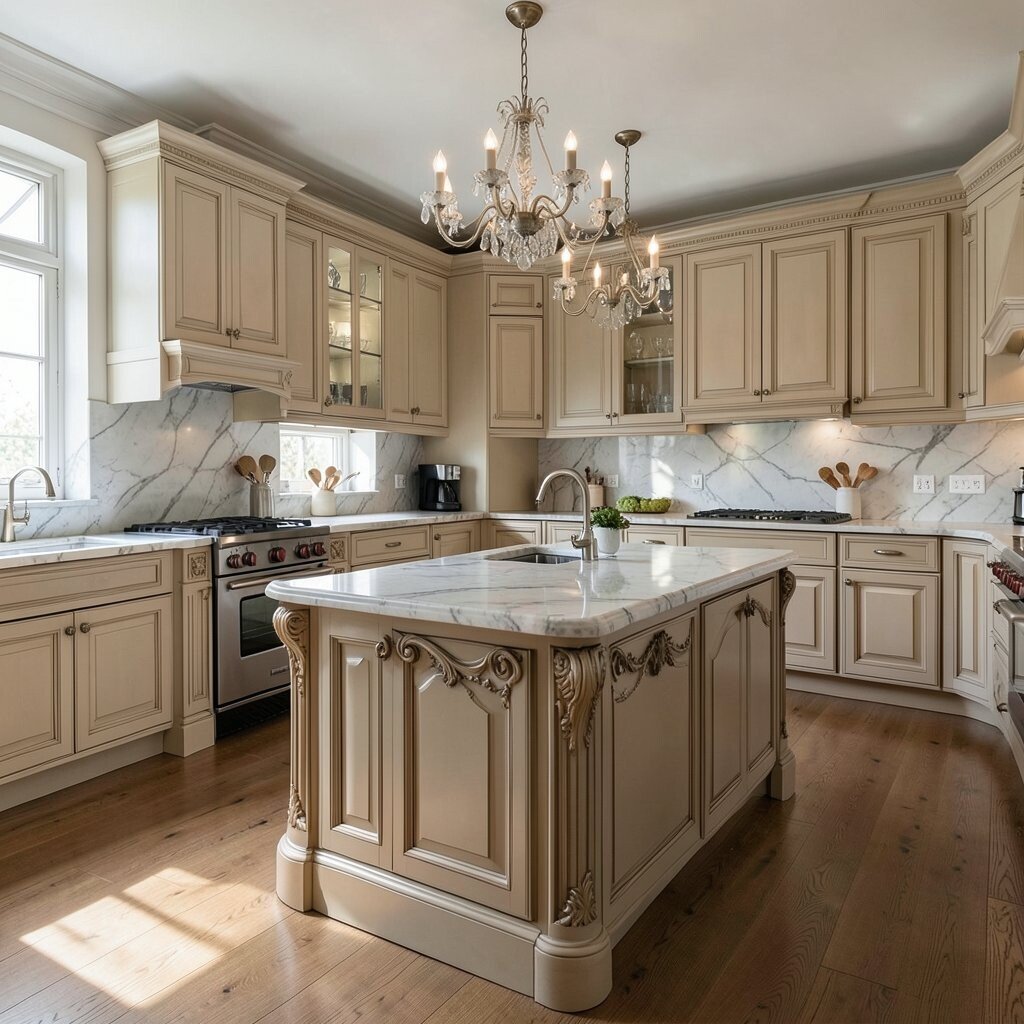
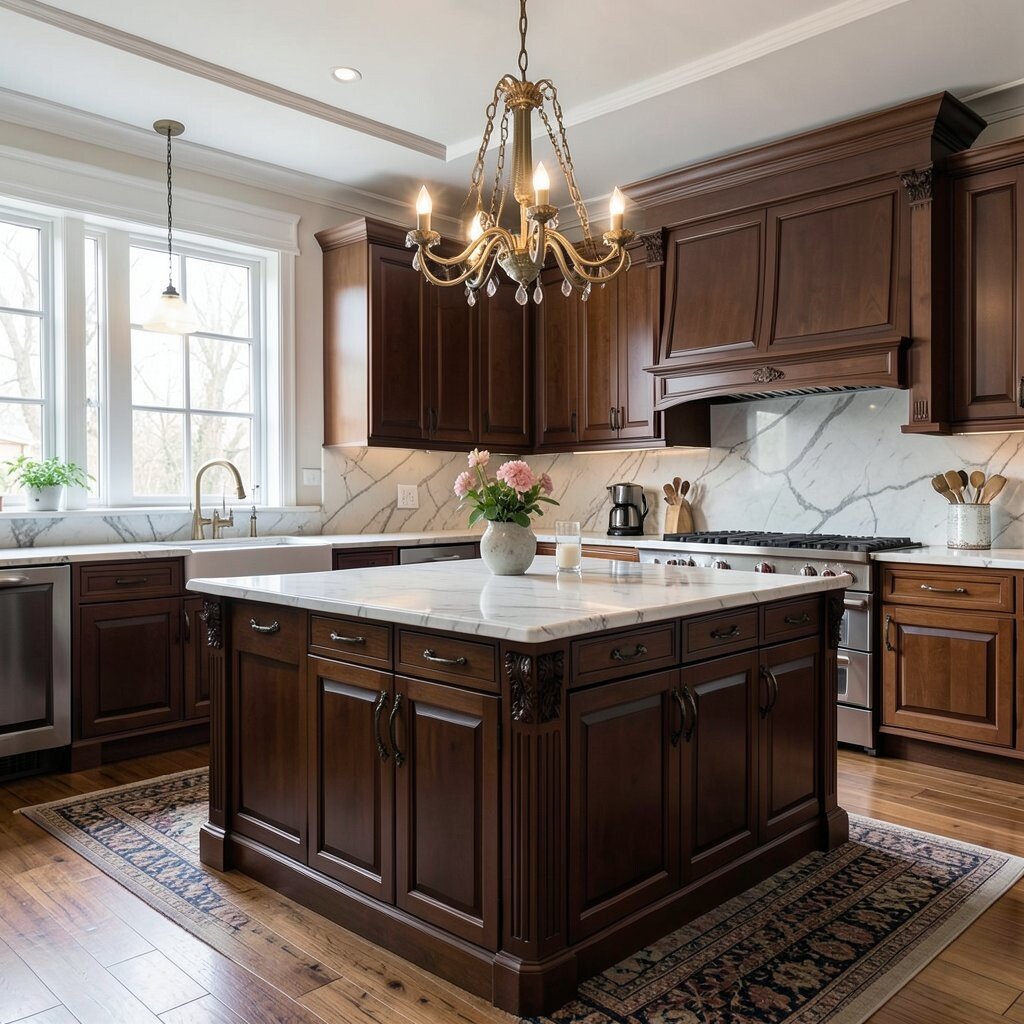
Ornate Accents in Classic Elegance Imagine tall cabinets with decorative panels, crown molding, and gentle curves near the ceiling. The room feels like it has always been beautiful, even when the kitchen is busy.
Classic elegance brings a “heritage” feeling that many people love. It also helps create strong structure, so the kitchen looks finished even when trends change. Choose a timeless range, then let the details do the talking.
Tip: pick one ornate feature rather than decorating everything. For example, a carved hood or a raised-panel island can give the look without overwhelming the room. Personalize with your favorite finish—oil-rubbed bronze for depth or polished nickel for brightness.
Budget note: ornate cabinets, moldings, and custom trim can raise costs. If you want the look for less, use decorative molding kits and upgrade cabinet hardware first. Planning changes during layout can also save money later.
-
3. Transitional Cabinet Hardware That Feels Modern

Transitional Cabinet Hardware That Feels Modern Picture simple drawer pulls that look sleek but not cold. Pair them with soft-close drawers and a clean cabinet finish so the kitchen feels smooth to use.
This style is unique because it blends comfort with function. You get the benefits of ease—no rattling doors and less daily frustration. It also makes the kitchen look updated without changing the whole room.
Suggestion: measure your handle placement before you buy. Look for a pull length that matches the cabinet proportions so it sits nicely. Personalize by mixing finishes in a controlled way, such as matching pulls on base cabinets and using knobs on uppers.
Cost considerations are friendly here because hardware upgrades often start small. Plan for the price of screws, new hinges if needed, and possibly a fresh coat of paint. This is also a great moment to ask about warranties and longevity.
-
4. Classic Hardware With a Polished, Regal Finish

Classic Hardware With a Polished, Regal Finish Think knobs and pulls with a refined shine, like brass or polished chrome. Add a subtle texture so the metal catches light when you reach for a cabinet.
Classic elegance benefits from hardware that feels like jewelry. It draws the eye to the cabinets and makes the kitchen feel intentional. Since classic style relies on detail, the right finish can do a lot.
-
5. Transitional Backsplashes With Gentle Pattern
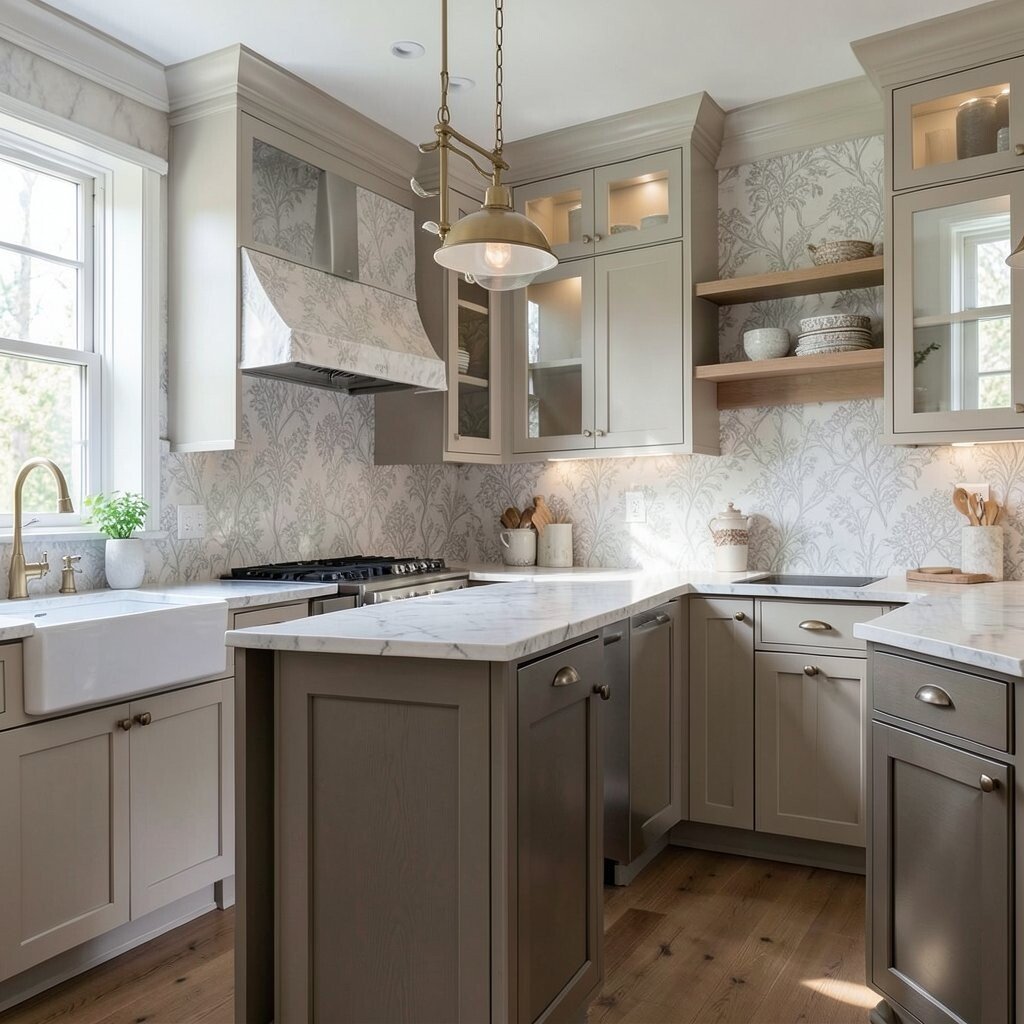
Transitional Backsplashes With Gentle Pattern Imagine a backsplash in soft subway tile, warm marble-look slabs, or small mosaics with a calm rhythm. The pattern should feel like it moves quietly behind the stove.
Transitional kitchens often look best with designs that are interesting but not loud. The benefit is balance: you get visual depth and easy cleaning. Choose materials that resist stains so daily cooking stays simple.
Tip: match grout color to tile tone for a clean, seamless look. Personalize by adding a single decorative border or a slim strip of glass tile. If you like a seasonal vibe, keep decor on open shelves instead of changing the tile.
Cost varies by tile size and installation complexity. If your wall is uneven, leveling can add labor costs. For a smart choice, ask about backsplash coverage areas so you budget for exactly what you need.
-
6. Classic Backsplashes With Timeless Tile Choices
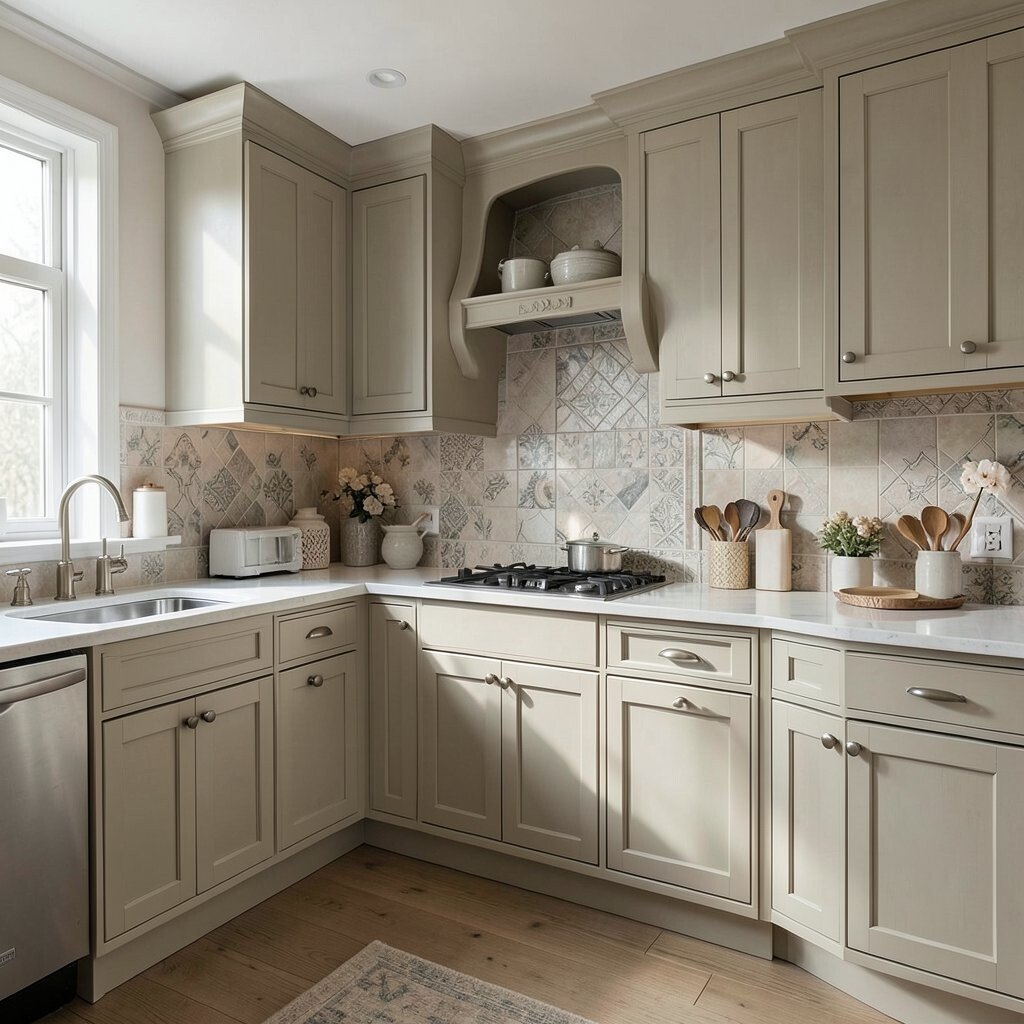
Classic Backsplashes With Timeless Tile Choices Picture a backsplash made of elegant ceramics, decorative medallions, or traditional herringbone shapes. The style looks old-world and steady, like it belongs in a well-loved home.
Classic elegance brings strong “era” energy, and tile is one of the best ways to show it. You benefit from durable surfaces that handle cooking life. A classic backsplash also makes the rest of the kitchen feel more cohesive.
Suggestion: choose one focal area behind the range or under wall cabinets. Personalize by picking a color that echoes your counters, like soft gray with warm undertones. If you use a patterned tile, keep cabinet colors calmer.
Cost considerations matter because decorative tile can be more expensive and labor-heavy. Buying extra tiles for cuts prevents delays. If you want to save money, use the fancy design in a narrow band and keep the rest simple.
-
7. Transitional Countertops With Warm Stone Looks
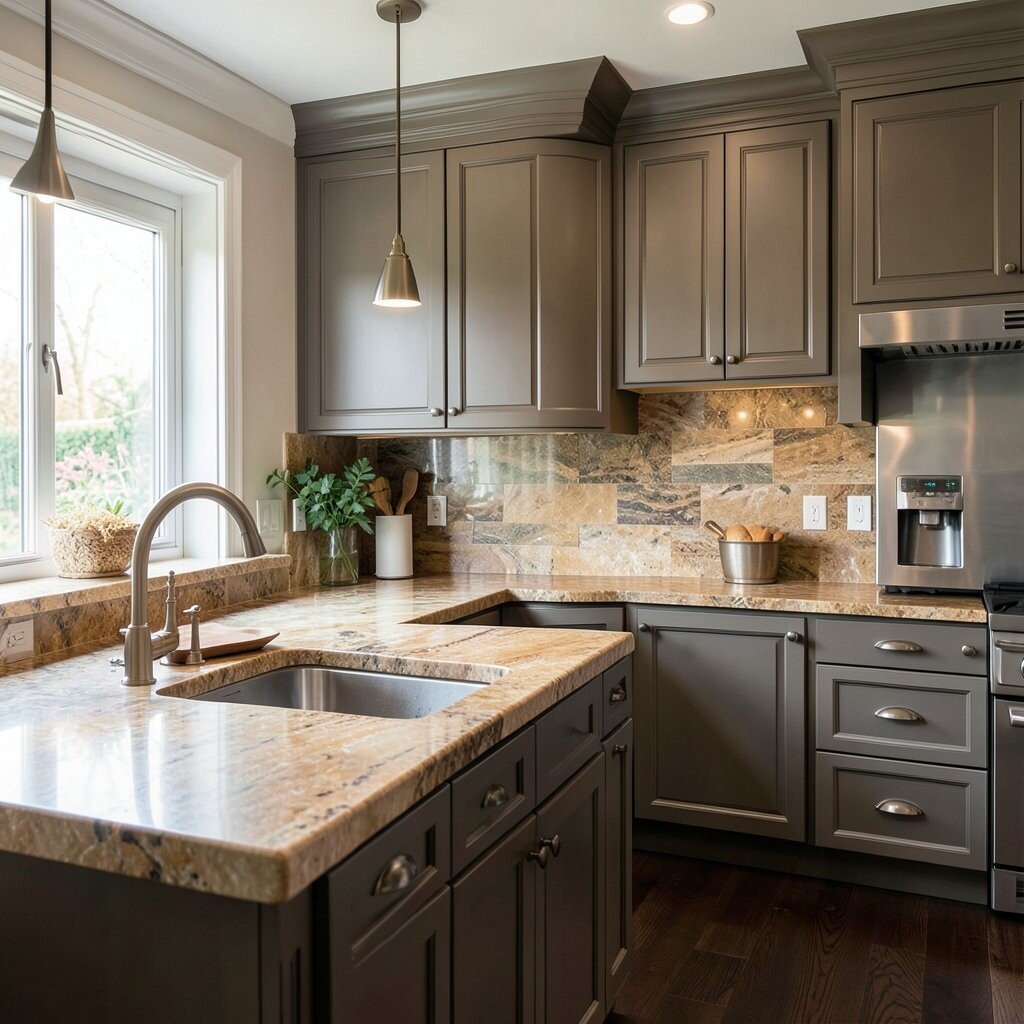
Transitional Countertops With Warm Stone Looks Imagine countertops that look like stone but feel practical for daily tasks. Warm quartz or marble-look surfaces can bring elegance without constant worry.
This idea is unique because it blends beauty and ease. You get benefits like stain resistance and a surface that wipes clean fast. Warm tones also make the kitchen feel welcoming, especially during winter evenings.
Tip: bring home samples and compare them with your lighting. Warm stone looks can shift from creamy to gray depending on the bulb. Personalize with a slightly darker edge profile to hide tiny chips.
Cost can be managed because quartz often offers predictable pricing. If you pick real marble, expect higher maintenance and potential sealing. Plan for backsplash matching and consider where seams will land.
-
8. Classic Countertops With Honed Neutrals
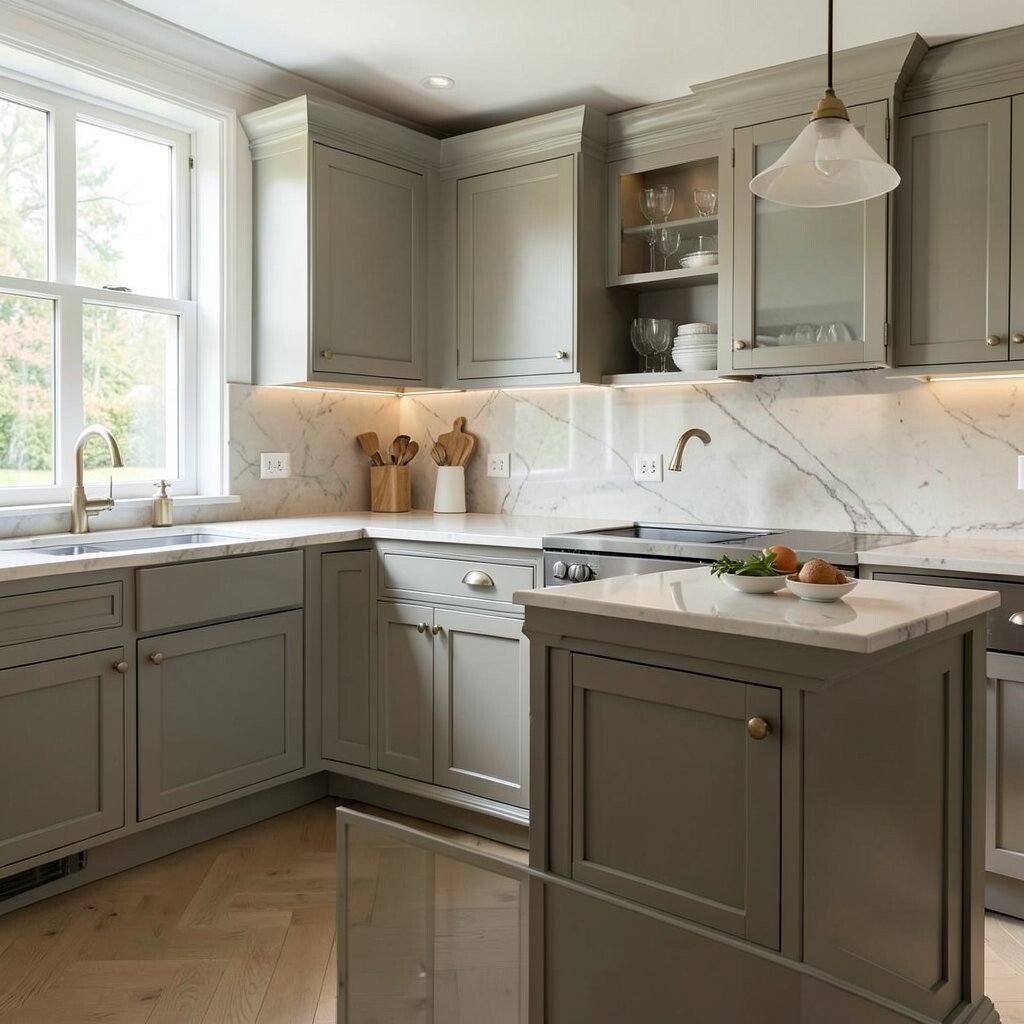
Classic Countertops With Honed Neutrals Picture honed marble or a classic, gentle solid surface with a soft sheen. The surface looks elegant even when nothing is happening on it.
Classic elegance benefits from muted shine and steady colors. You also get a timeless feel that never seems “too trendy.” To keep the look crisp, use accessories in simple shapes and avoid clutter.
Suggestion: choose a backsplash and trim finish that match the countertop undertone. Personalize with a cutting board that sits nicely on a corner ledge or by the sink. When you cook, the countertop becomes part of the style story.
Cost note: natural stone can be pricier, plus sealing may be needed. If you want a similar look with less upkeep, consider a high-quality engineered slab. Always ask about heat and scratch resistance before you commit.
-
9. Transitional Lighting With Layered Warmth
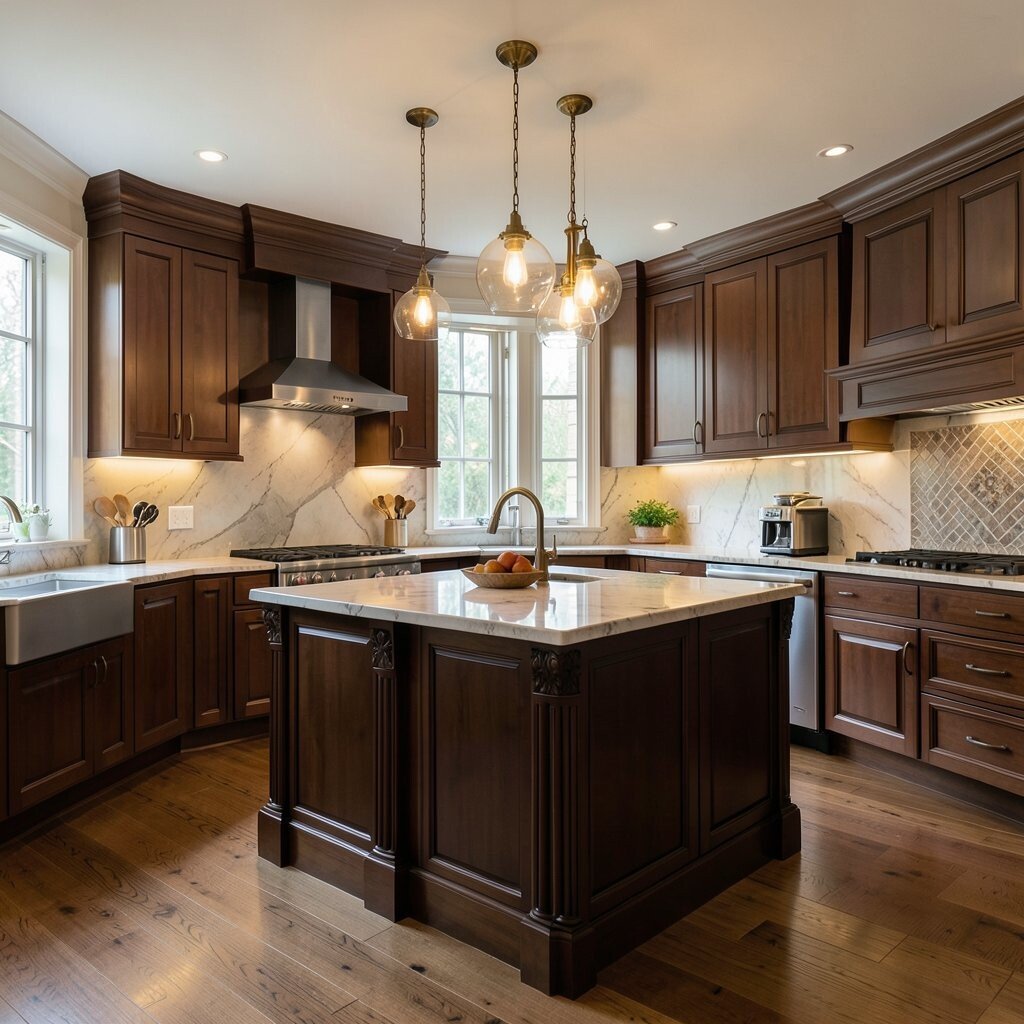
Transitional Lighting With Layered Warmth Imagine pendant lights over the island, soft under-cabinet glow, and a ceiling fixture that feels gentle. The kitchen looks brighter without feeling harsh.
Transitional elegance stands out when lighting is layered. Benefits include better visibility for chopping and a mood that feels cozy at night. Layering also makes the kitchen feel more designer-made.
Tip: pick bulbs with a warm color temperature so cabinets look rich. Personalize by choosing shades that match your style—linen for softness or glass for shine. Consider dimmers so the kitchen can shift from cooking mode to dinner mode.
-
10. Classic Lighting With Chandelier-Like Charm
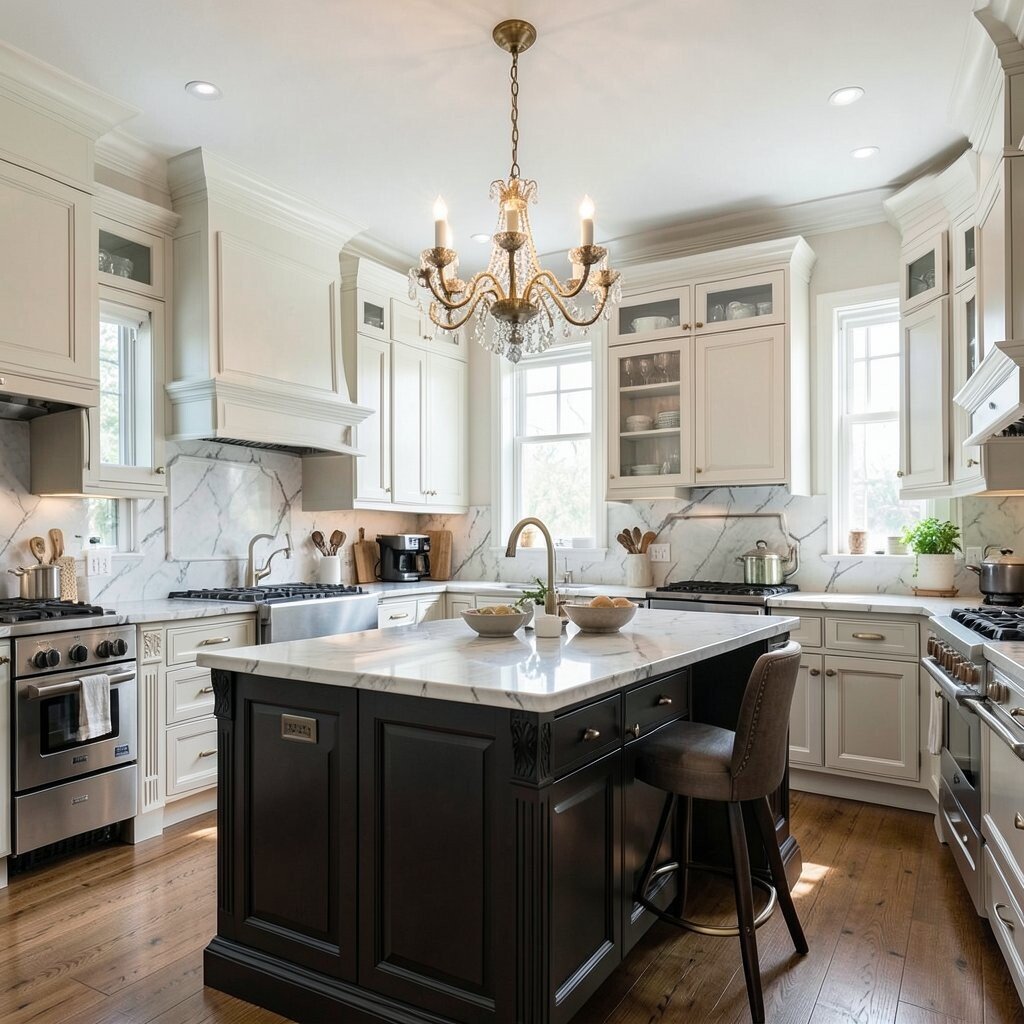
Classic Lighting With Chandelier-Like Charm Picture a statement chandelier or refined semi-flush fixture with crystal-like details. The room feels dressed up, even on normal weekdays.
Classic elegance benefits from light fixtures that act like focal art. They also pair well with ornate trim and traditional cabinet styles. If you love the “grand home” feeling, lighting helps you get it fast.
Suggestion: match the metal finish to cabinet hardware so everything looks connected. Personalize with shades that glow warm and hide harsh glare. Make sure the fixture height is safe for everyday movement and cooking.
Cost can rise when installing heavy fixtures or needing electrical updates. Plan for potential wiring adjustments, especially if you change the placement. If you want a calmer budget, choose a simpler traditional fixture and upgrade bulbs and wattage controls.
-
11. Transitional Open Shelving With Select Charm
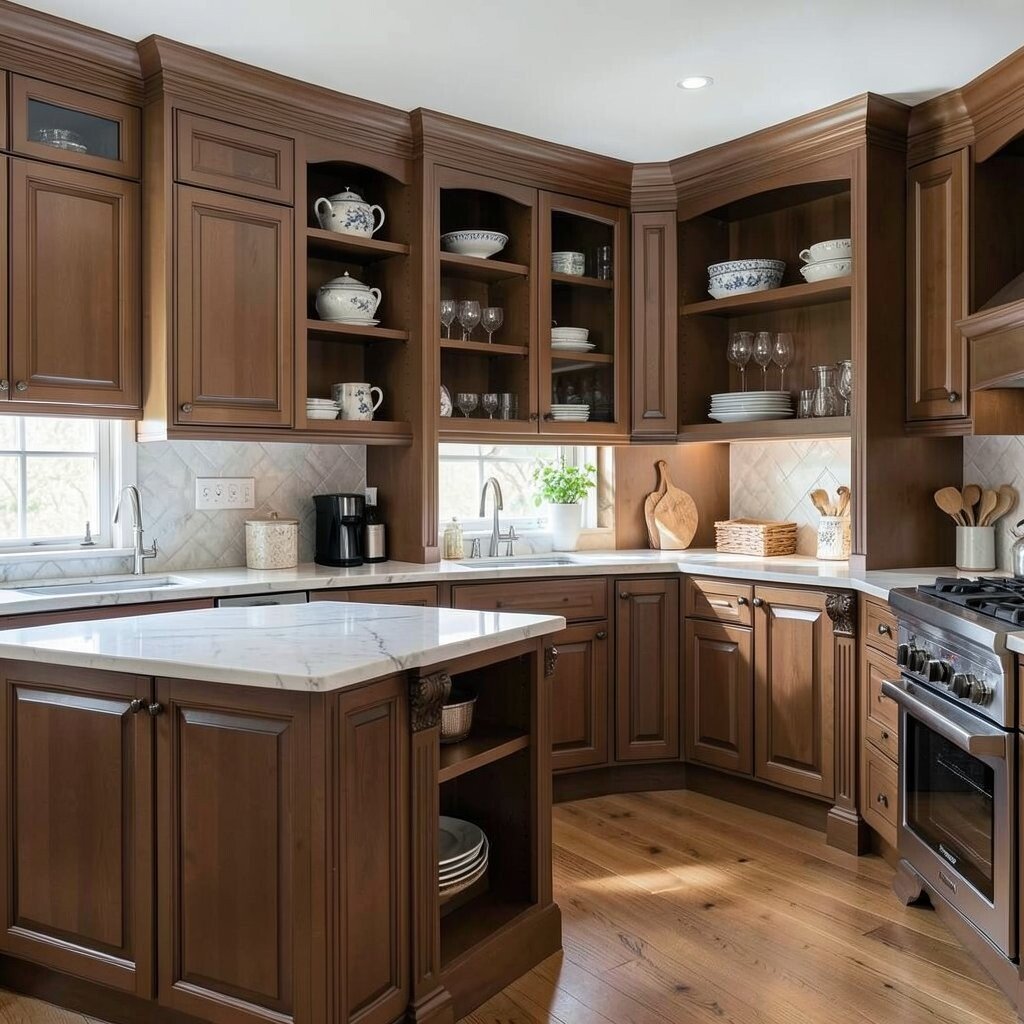
Transitional Open Shelving With Select Charm Imagine a few shelves with beautiful dishes, books, and neatly arranged jars. The look feels casual, but still elegant because it is styled with care.
Transitional elegance often loves “some open, some closed.” The benefit is flexibility: you can show your favorite items while keeping the rest tucked away. It also helps break up a heavy wall of cabinets visually.
Tip: style shelves in small groups of three, and repeat materials such as white stoneware and warm wood. Personalize by adding a family heirloom bowl or a local pottery piece. Keep everyday items off the top row to preserve the polished feel.
Cost considerations include shelf hardware, brackets, and matching finishes. If you are changing layouts, carpentry can add expense. For a budget-friendly version, open just one section and use doors for the rest.
-
12. Classic Open Display With Careful Symmetry
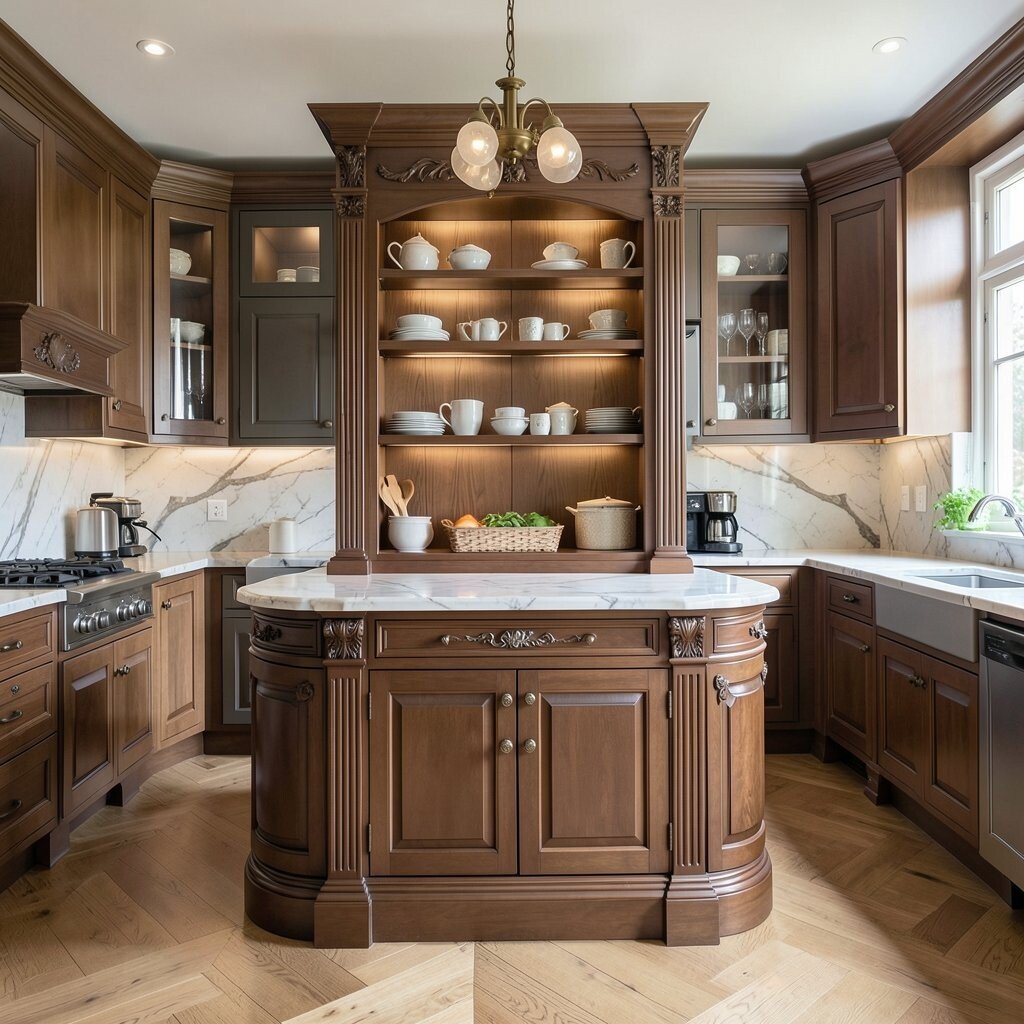
Classic Open Display With Careful Symmetry Picture glass-front cabinets or structured open bays with matching spacing. Each item feels placed like it belongs in a traditional showpiece.
Classic elegance benefits from symmetry because it feels stable and formal. It also shows off beautiful dishes without needing loud decor. Keep glass cabinets clean so they maintain that elegant clarity.
Suggestion: choose matching frames or mullions for a cohesive look. Personalize by lining shelves with solid-colored liners so patterns don’t clash. Use a mix of taller and shorter pieces to keep it interesting.
-
13. Transitional Island Design With Practical Seating
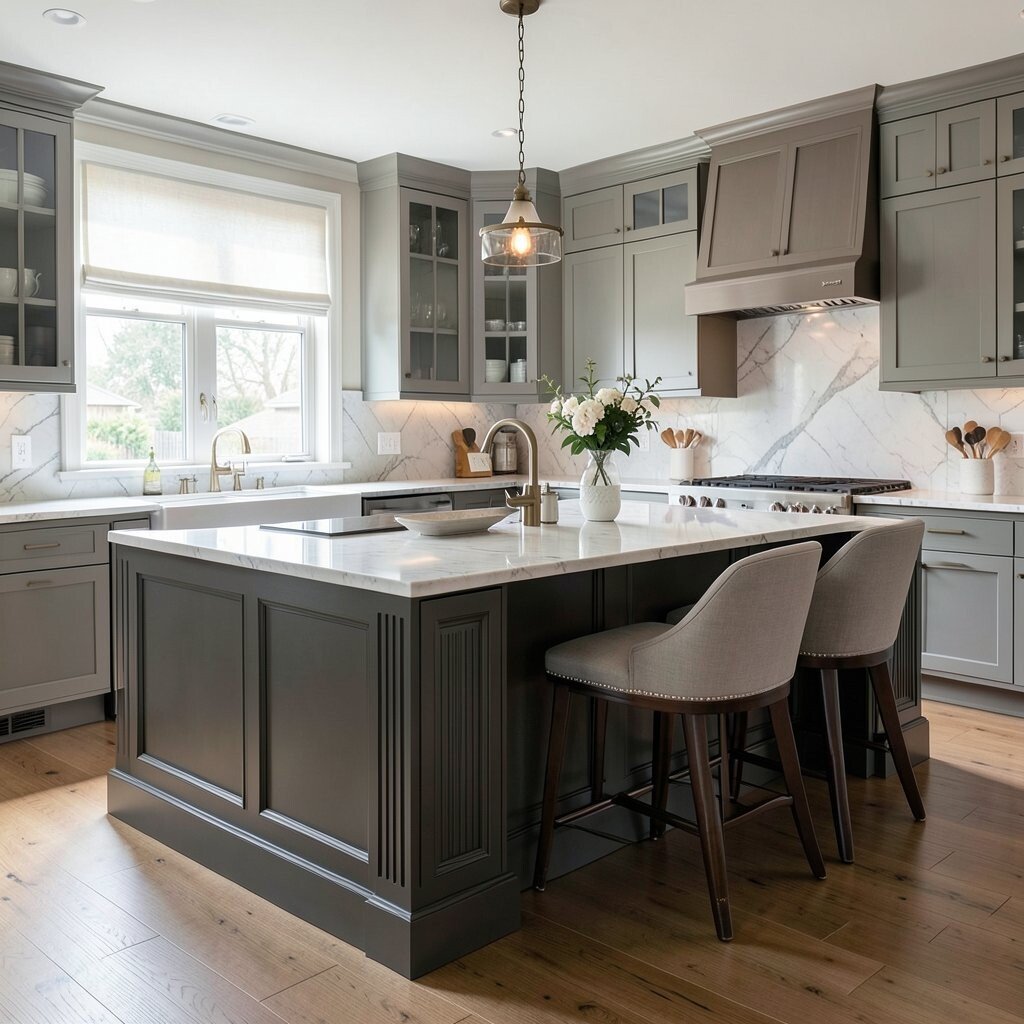
Transitional Island Design With Practical Seating Imagine an island with a comfortable overhang for stools and a countertop finish that looks inviting. The island becomes a place for coffee, homework, and quick chats.
This idea is unique because the style focus supports real life. Benefits include extra prep space and a natural gathering spot for family. A well-designed island also helps the room flow better for cooking and cleanup.
Tip: plan for stool height, clearance, and walkway space. Personalize by adding a built-in charging station or a hidden drawer for small gadgets. Choose a finish for the island that stands out, like a different cabinet tone or a bold countertop edge.
Cost considerations depend on island size, plumbing, and electrical for outlets. If you already have hookups nearby, costs may stay more manageable. For saving money, keep plumbing simple and upgrade finishes first.
-
14. Classic Island With a Statement Hood-Like Presence
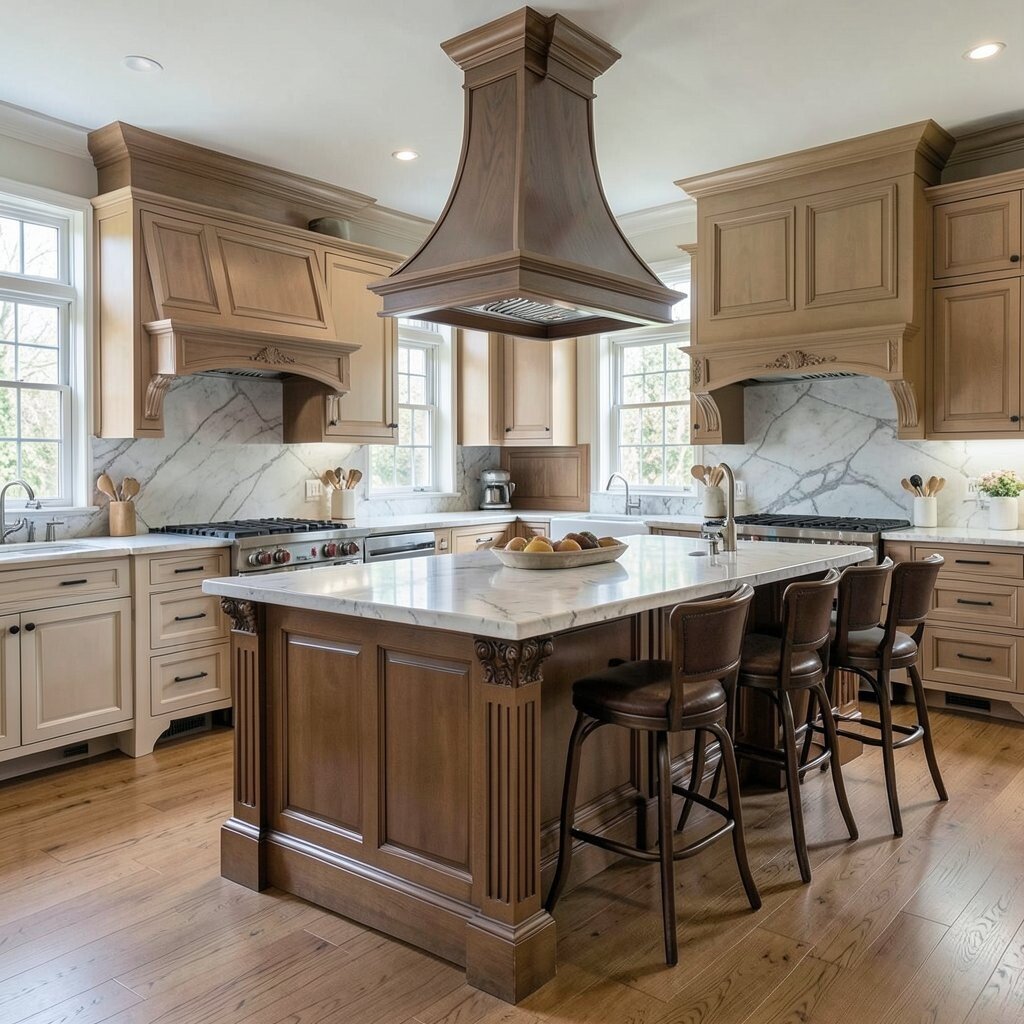
Classic Island With a Statement Hood-Like Presence Picture a large island with detailed trim, balanced proportions, and a strong centerpiece feel. It looks like the kitchen’s anchor, like the home built around it.
Classic elegance benefits from solid shapes and structured details. This look also makes the kitchen feel “complete” and grand. Choose island seating that matches the cabinet finishes for a connected style.
Suggestion: incorporate a decorative corbel or pilaster-like detail on at least one face of the island. Personalize with a finish that reminds you of your favorite furniture piece, such as warm cherry tones. If you entertain often, plan for extra counter space and a nearby serving area.
Cost note: larger islands, decorative trim, and custom cabinetry increase pricing. If you want the classic vibe on a budget, start with a simpler island base and upgrade the countertop and lighting. You can add trim later once you know how you live.
-
15. Transitional Flooring With Easy Color Matching
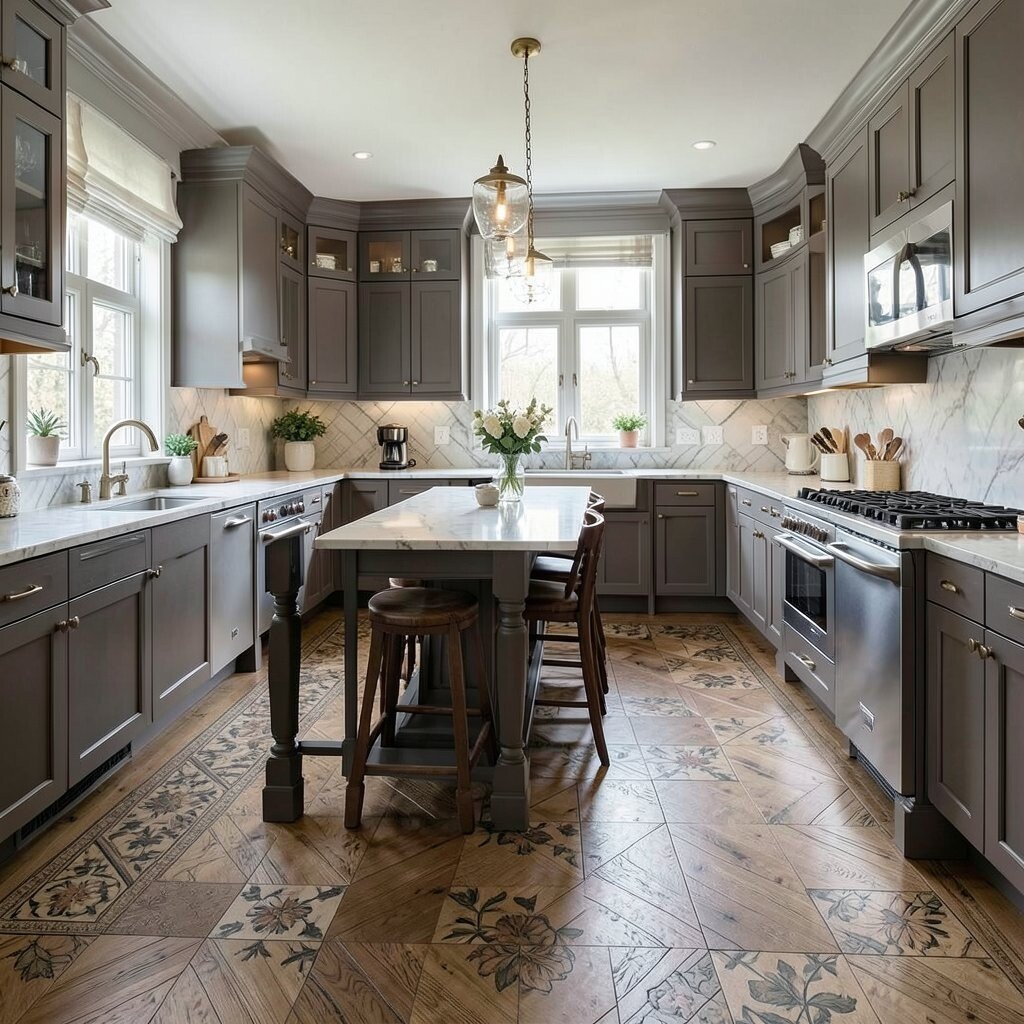
Transitional Flooring With Easy Color Matching Imagine wide-plank wood-look floors or soft neutral tile that feels warm underfoot. The color blends with cabinets while still adding character.
Transitional elegance benefits from flooring that supports both modern and classic elements. Wood tones add softness, and neutral floors make it easy to switch accessories. The right floor also helps sound feel calmer in the kitchen.
Tip: match undertones, not just colors. If your cabinets lean warm, choose flooring with warm undertones too. Personalize with a runner that adds pattern in small doses, like a subtle geometric or understated floral.
-
16. Classic Flooring With Timeless Materials
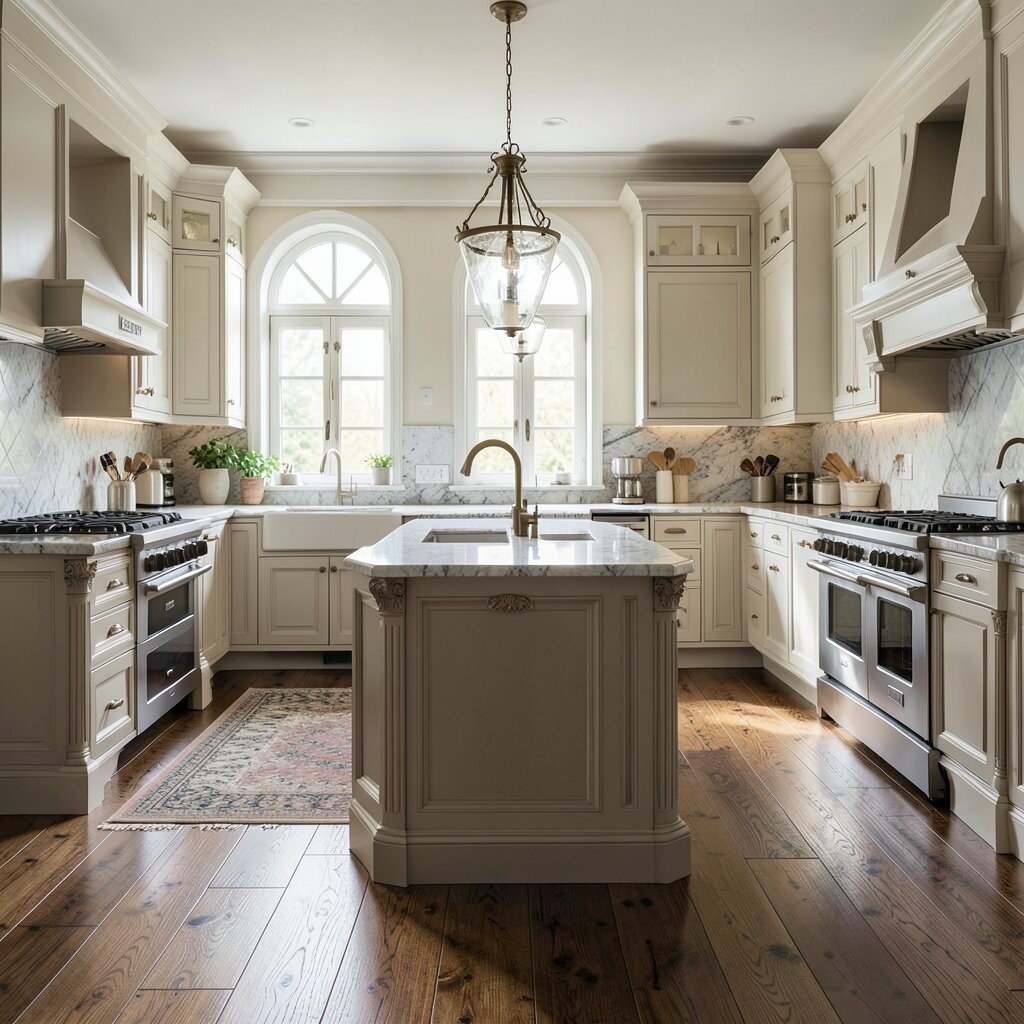
Classic Flooring With Timeless Materials Picture natural hardwood with a classic finish or elegant patterned tile with a traditional rhythm. The floors make the whole kitchen feel grounded and established.
Classic elegance benefits from heritage materials that age beautifully. They also create a “forever” look that fits many cabinet styles. With classic flooring, you can change paint or hardware later without losing the foundation.
Suggestion: if you choose wood, think about stain tone and sheen. Personalize with area rugs that bring color near the seating zone. Keep rugs sized so they stay centered and don’t curl at the edges.
-
17. Transitional Hardware Pairing for a Designer Look
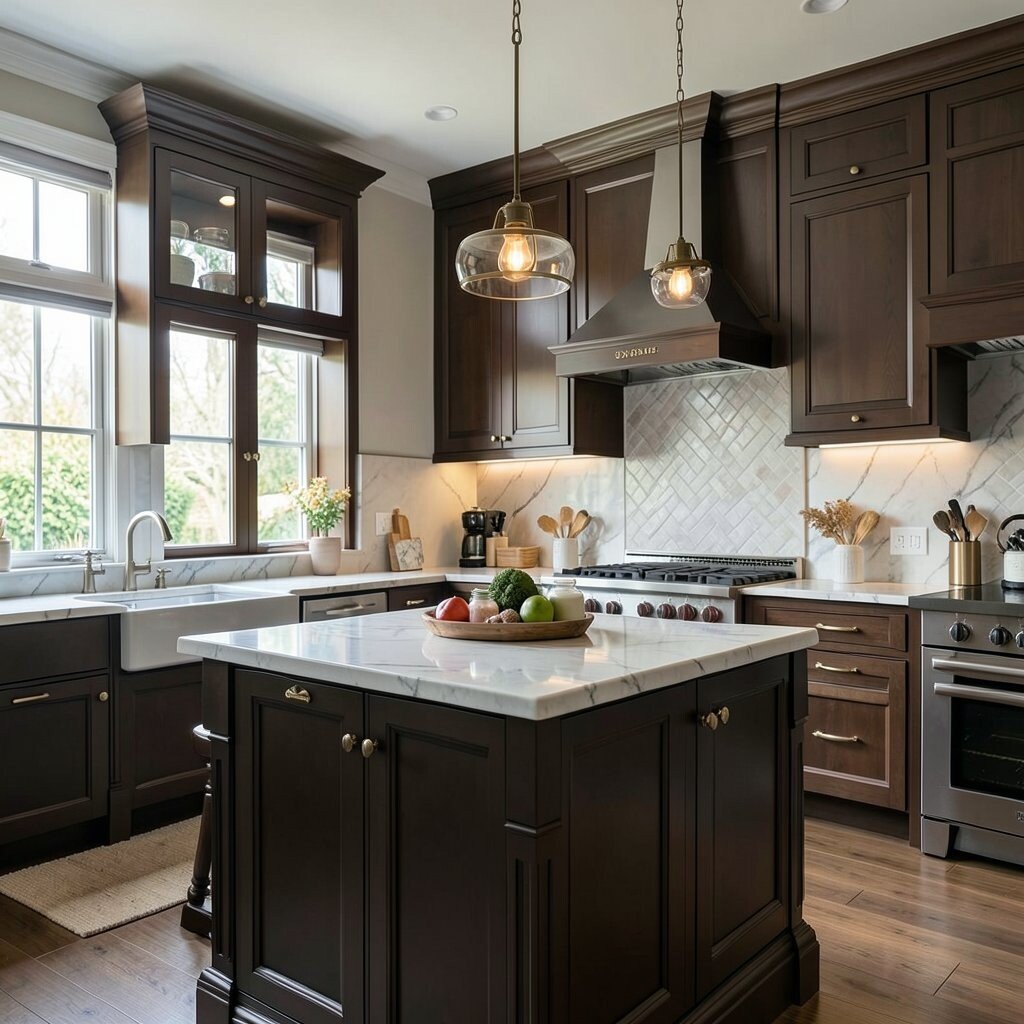
Transitional Hardware Pairing for a Designer Look Imagine mixing matte black pulls with brushed brass accents, used in small but confident ways. The kitchen looks stylish without feeling random.
This idea is unique because the contrast feels planned. Benefits include visual interest and a kitchen that feels curated. When you repeat metal tones around the room, everything looks intentional.
Tip: repeat each metal tone at least two to three places. Examples include faucet, cabinet hardware, and a light fixture element. Personalize by choosing one “signature” metal that you love and building the rest around it.
Cost considerations include faucet upgrades and the price of premium hardware finishes. If you want to control spending, upgrade the most visible pieces first. Then add smaller accents later as your budget allows.
-
18. Classic Hardware Sets for Uniform Elegance

Classic Hardware Sets for Uniform Elegance Picture a matching suite of pulls, knobs, and faucets with one consistent finish. The kitchen feels calm, polished, and balanced.
Classic elegance benefits from uniformity because it feels refined. It also reduces the risk of mismatched styles that can happen with too many finishes. When hardware matches, the cabinets look like a coordinated set.
Suggestion: choose a finish that will patina in the way you want. Personalize with a faucet shape that matches the room, like a graceful gooseneck for a traditional vibe. Keep the sink area tidy so the classic details stay front and center.
Cost note: full hardware sets can be pricey, but they usually look better together. If you want a budget step, start with knobs and pulls first. Then upgrade faucet and accessories after you live with the layout for a bit.
-
19. Transitional Styling With Rounded Decor and Soft Textures
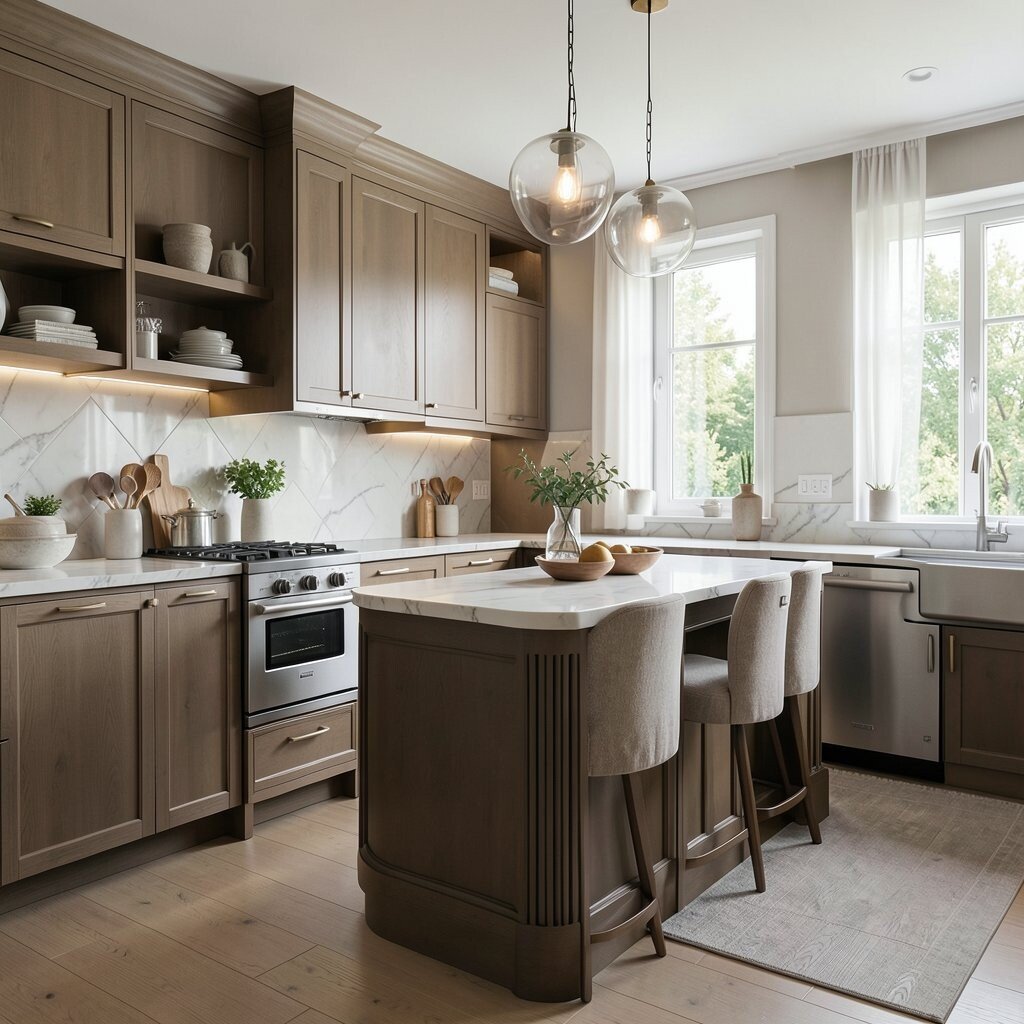
Transitional Styling With Rounded Decor and Soft Textures Imagine curved bowl shapes, soft linen towels, and a warm ceramic canister set. The surfaces look smooth and inviting, not sharp or stiff.
Transitional kitchens feel unique because they mix lines and materials with kindness. Benefits include a kitchen that feels welcoming for guests and comfortable for daily routines. Soft textures also make hard materials, like counters and tiles, feel more friendly.
Tip: limit decor to a few repeating categories, like ceramics, wood, and neutral fabric. Personalize by using your favorite cookbook style stand or a framed art print near the breakfast corner. Keep the color palette steady so the room looks calm.
Cost considerations are flexible because decor can be upgraded in phases. You can shop for accessories at sales, and you can swap items seasonally. The best value is choosing a few high-quality pieces you will use every day.
-
20. Classic Styling With Formal Touches and Refined Pieces
Classic Styling With Formal Touches and Refined Pieces Picture a mantel-style shelf, framed prints, and a neat collection of vintage-inspired jars. The kitchen feels composed like a room you want to show off.
Classic elegance benefits from decor that feels intentional and not too casual. The advantage is that you can maintain the look even when you are busy. Add one or two formal touches and let the rest of the kitchen details carry the weight.
Suggestion: choose decor with straight lines and classic finishes, like black frames or warm wood frames. Personalize by adding a family crest piece, a traditional clock, or a set of matching serving platters. Keep countertops clear except for one “hero” item that you love.
-
21. Transitional Finishing Touches With Current, Practical Trends
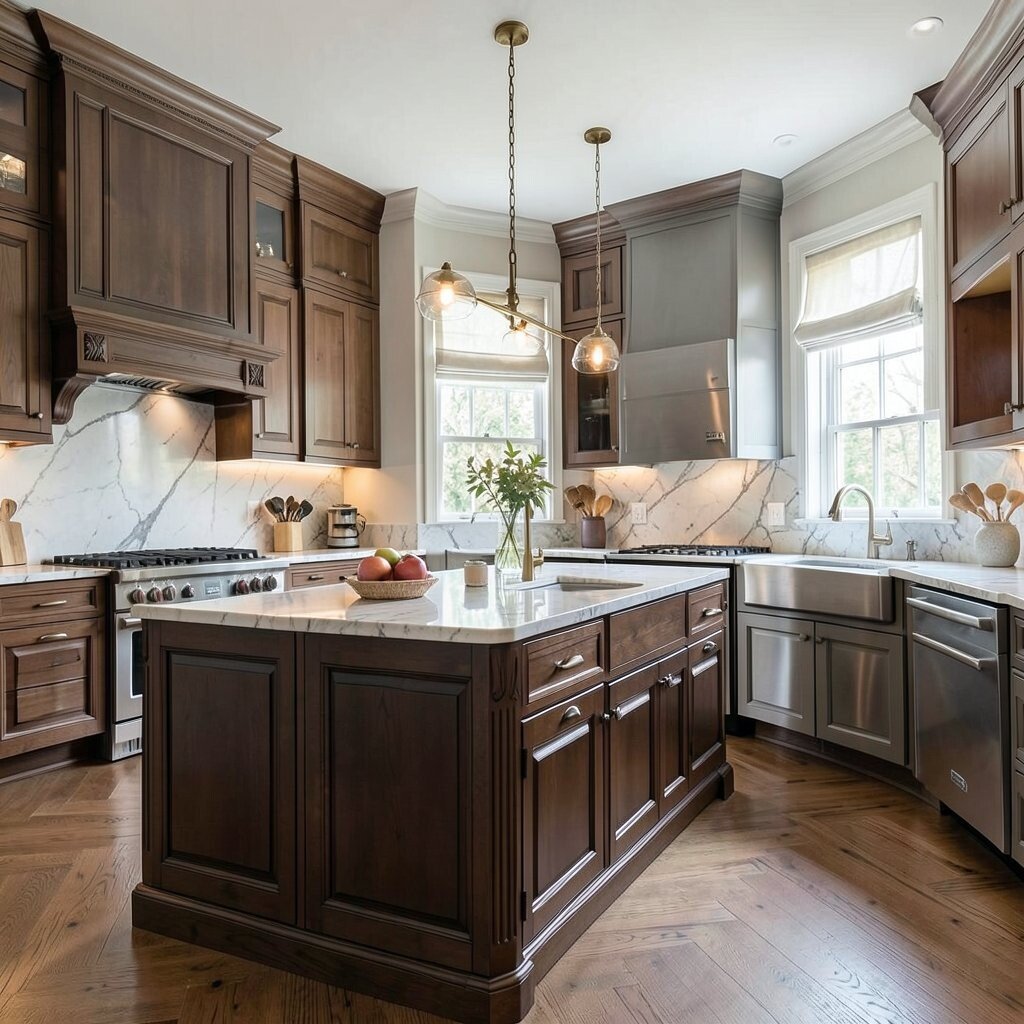
Transitional Finishing Touches With Current, Practical Trends Imagine matte cabinet finishes, sleek modern faucets, and a backsplash that looks like stone but keeps cleanup easy. Add a touch of greenery and warm metals so the room feels fresh and current.
This approach is unique because it nods to today without losing timeless comfort. Benefits include better everyday function, like improved storage organizers and soft-close upgrades. Current trends also often focus on durability, which means your kitchen stays pretty longer.
Tip: update storage first by using drawer dividers, pull-out trays, and under-sink organizers. Personalize with a small display that reflects your lifestyle, like a coffee station or a spice lineup. Choose finishes that feel modern but not too trendy, so you will still love them years from now.
Cost considerations: storage upgrades may feel smaller than new cabinets, but they can change daily life a lot. If you want a splurge, place it where you notice it most, like a faucet or a lighting upgrade. Plan your budget by separating must-haves from nice-to-haves so the project stays comfortable.