
Old materials have a way of telling stories in your home. The right barstool can turn those stories into something useful and beautiful.
When you choose upcycled pieces, you cut waste and add real character to everyday meals.
-
1) Turn a Vintage Dresser Drawer Into a Barstool Seat
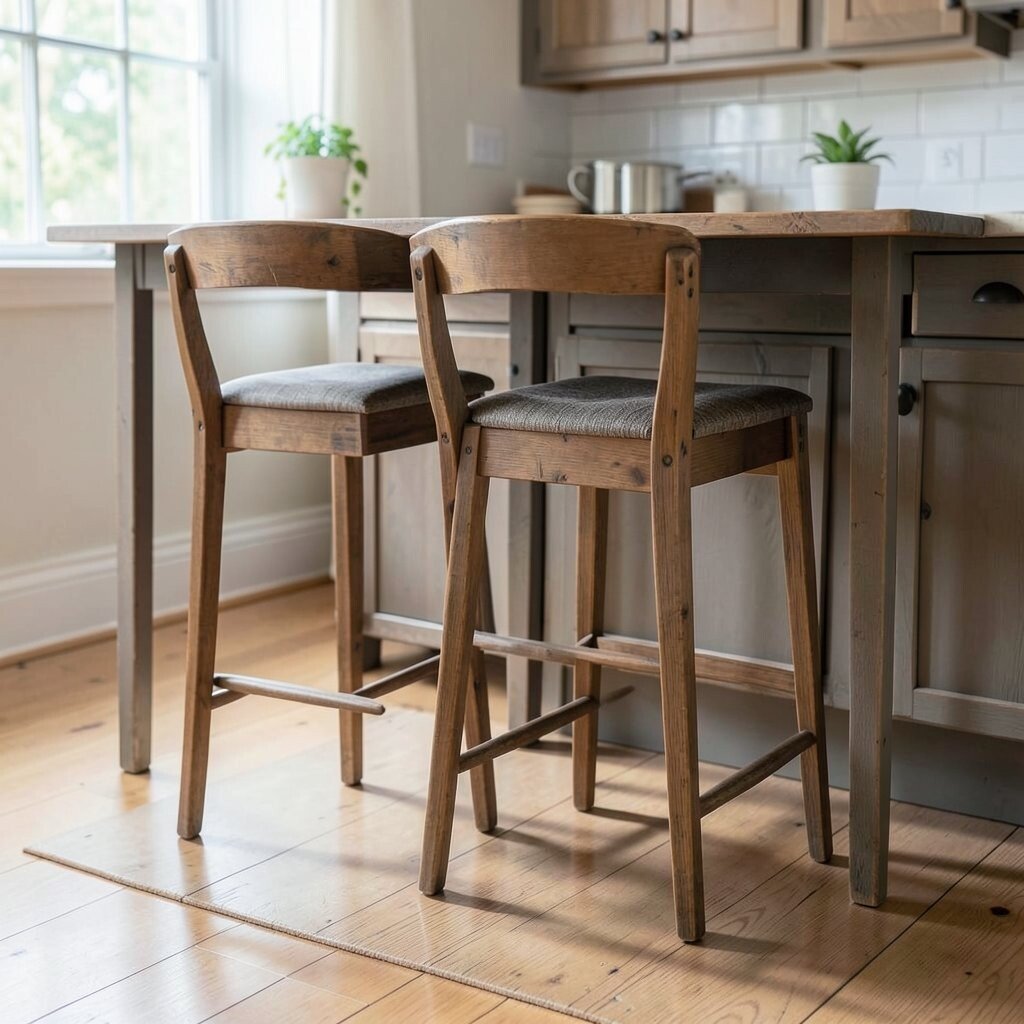
) Turn a Vintage Dresser Drawer Into a Barstool Seat Picture a small dresser drawer lying flat, its front panel facing up like a neat little stage. The wood grain shows through and the hardware gives it a cozy, vintage glow.
Use the drawer front as the seat and attach it to sturdy reclaimed legs. This keeps bulky furniture parts out of the landfill while giving your kitchen a warm, handmade look. For extra comfort, add a thin cushion underneath and cover it with a durable fabric.
To make it feel personal, paint the drawer front in a color that matches your cabinet frames or countertop edge. If you keep the original finish, seal it with a food-safe clear coat to help it handle daily life. Budget-wise, you may spend mostly on hardware, screws, and a sealant, while the main “body” is already there.
-
2) Rebuild Barstools From Broken Chair Frames
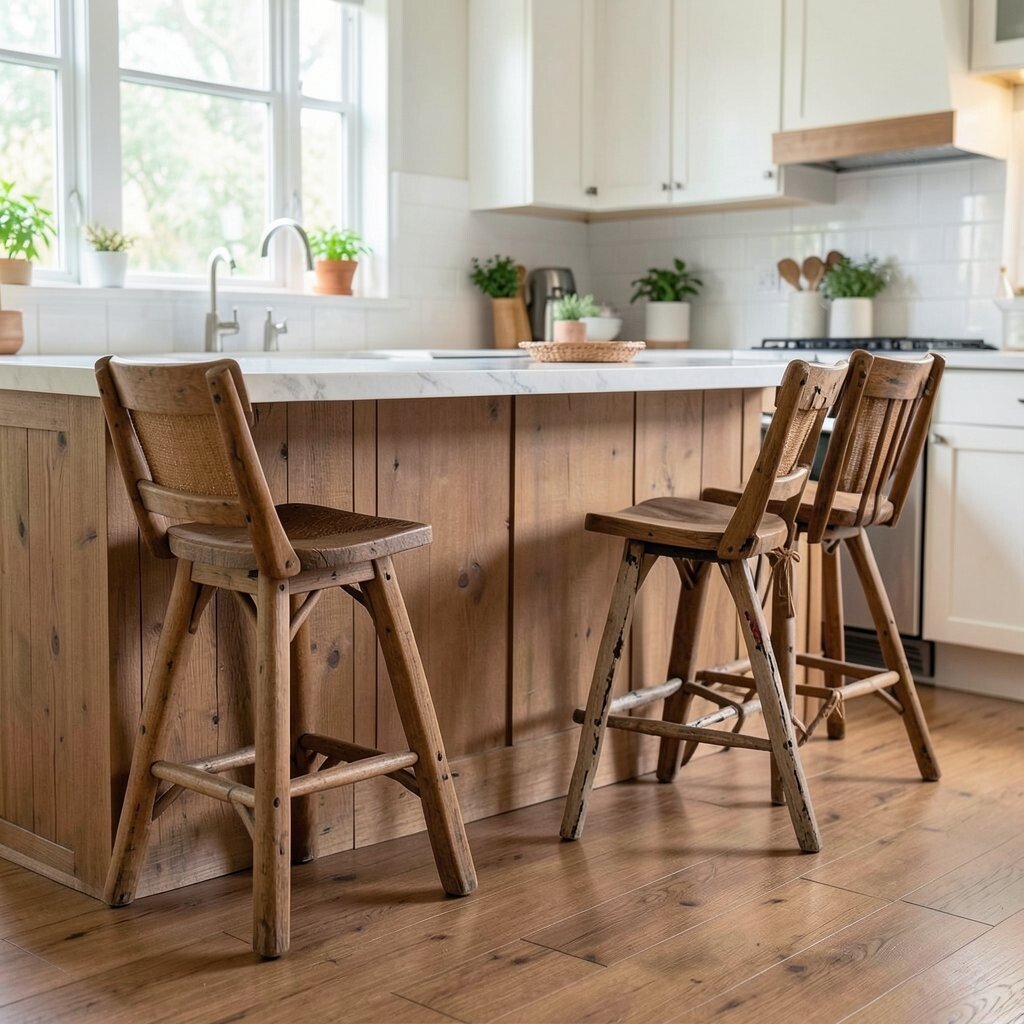
) Rebuild Barstools From Broken Chair Frames Imagine finding a chair that has seen better days, but its frame is still strong. The spindles and rails can look like tiny art pieces when they’re upright and paired with fresh seats.
Take the chair frame, remove the old seat, and fasten a new plywood or reclaimed-wood top. This is a smart way to reuse materials that still have good structure, which can save money compared to buying brand-new stools. You also get a unique shape that no store display will ever copy.
For tips, check the joints first and reinforce anything that wiggles. Use sandpaper and a wood-friendly primer before you stain or paint. If you want a modern trend vibe, keep the frame natural and use a simple, flat seat in a solid color.
-
3) Make Oversized Seats From Old Coffee Table Tops
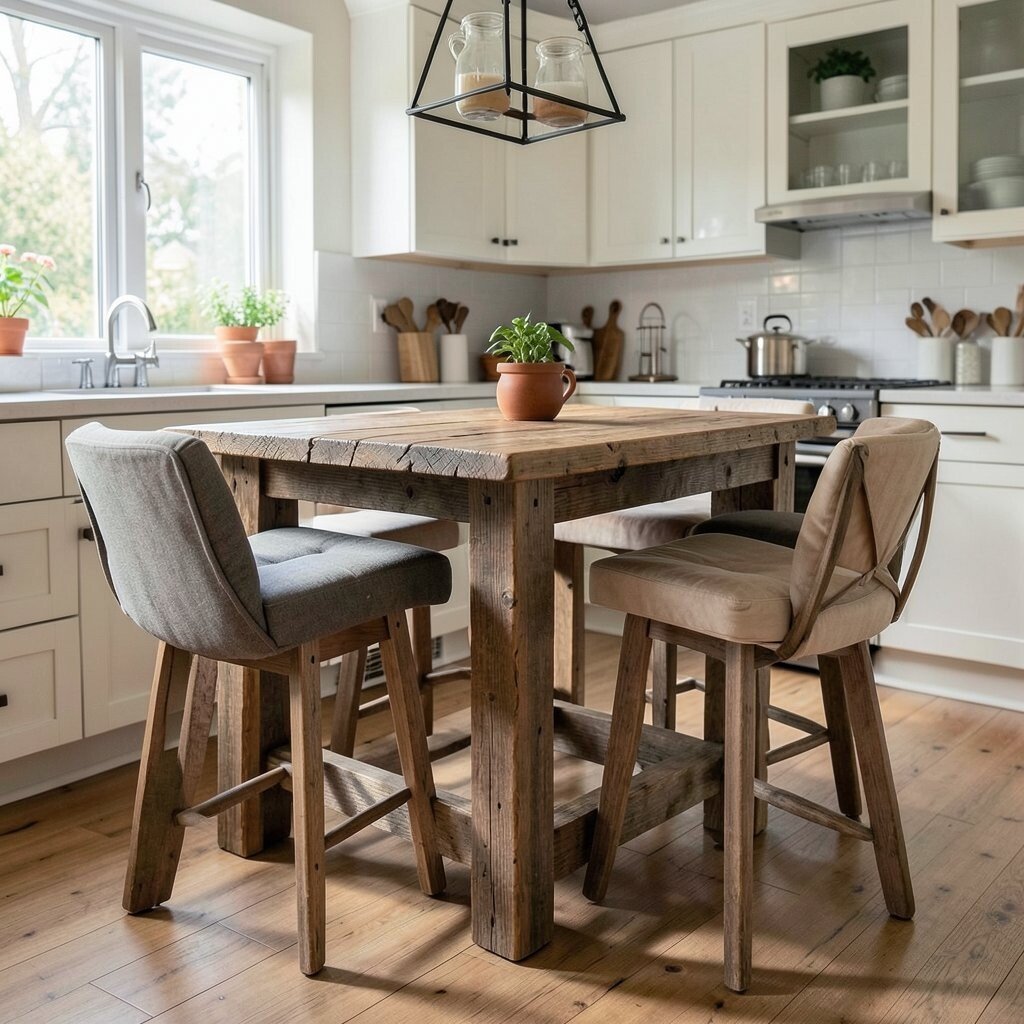
) Make Oversized Seats From Old Coffee Table Tops Think about a coffee table top with a thick edge and a slightly worn finish. When you flip that tabletop into a seat, it looks bold and inviting from across the kitchen.
Cut the top into round or square seat sections, then attach metal legs or reclaimed base parts. This method is popular right now because chunky, statement shapes are trending in kitchens. The benefits are clear: you reuse solid wood and create a seat that feels sturdy and substantial.
To personalize it, keep the patina on the sides and refinish only the top surface. Add a removable cover so you can refresh the look season to season. Cost usually stays lower because you’re using the main material already, but plan for cutting tools and new fasteners if the piece needs extra work.
If you like a friendly, cottage style, add a soft cushion and choose a fabric with a subtle pattern. If you prefer sleek style, use a matte sealant and keep the seat clean and simple.
-
4) Create Backless Stools Using Salvaged Bed Slats
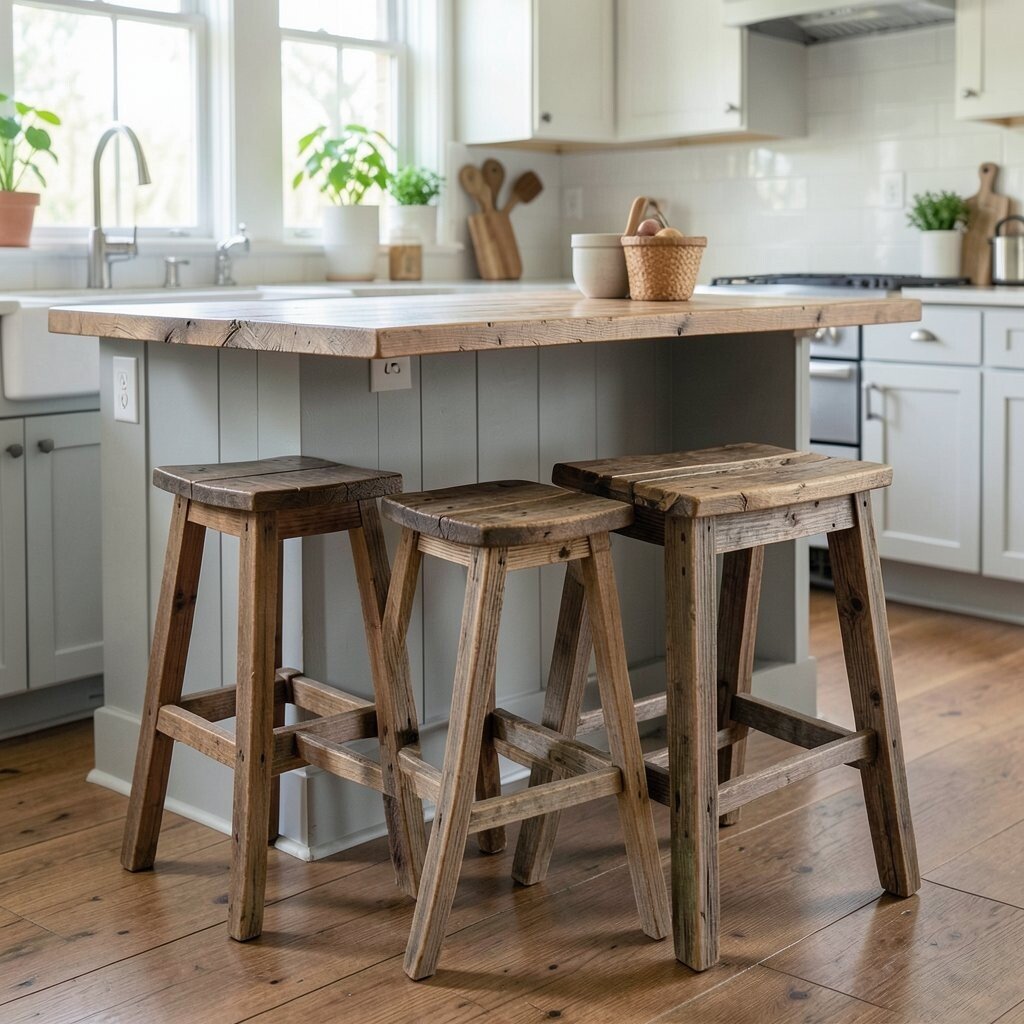
) Create Backless Stools Using Salvaged Bed Slats Bed slats can feel like they were made for barstools, especially when they have clean spacing and strong wood. You get a rhythmic, slatted pattern that looks airy and cool in bright kitchens.
Build a simple base from scrap wood or reuse a sturdy stool frame, then attach the slats as a seat platform. The benefits include better airflow under cushions and an easy-to-clean surface. You also reduce waste by using parts that might otherwise be thrown away.
For suggestions, sand the slats well and round the edges so it feels comfortable. Paint only the base and leave the slats stained for contrast. If you’re working on a budget, use what you have for the frame and spend your money on quality cushion foam.
-
5) Upcycle Metal Legs From Exercise Equipment Into Industrial Stools
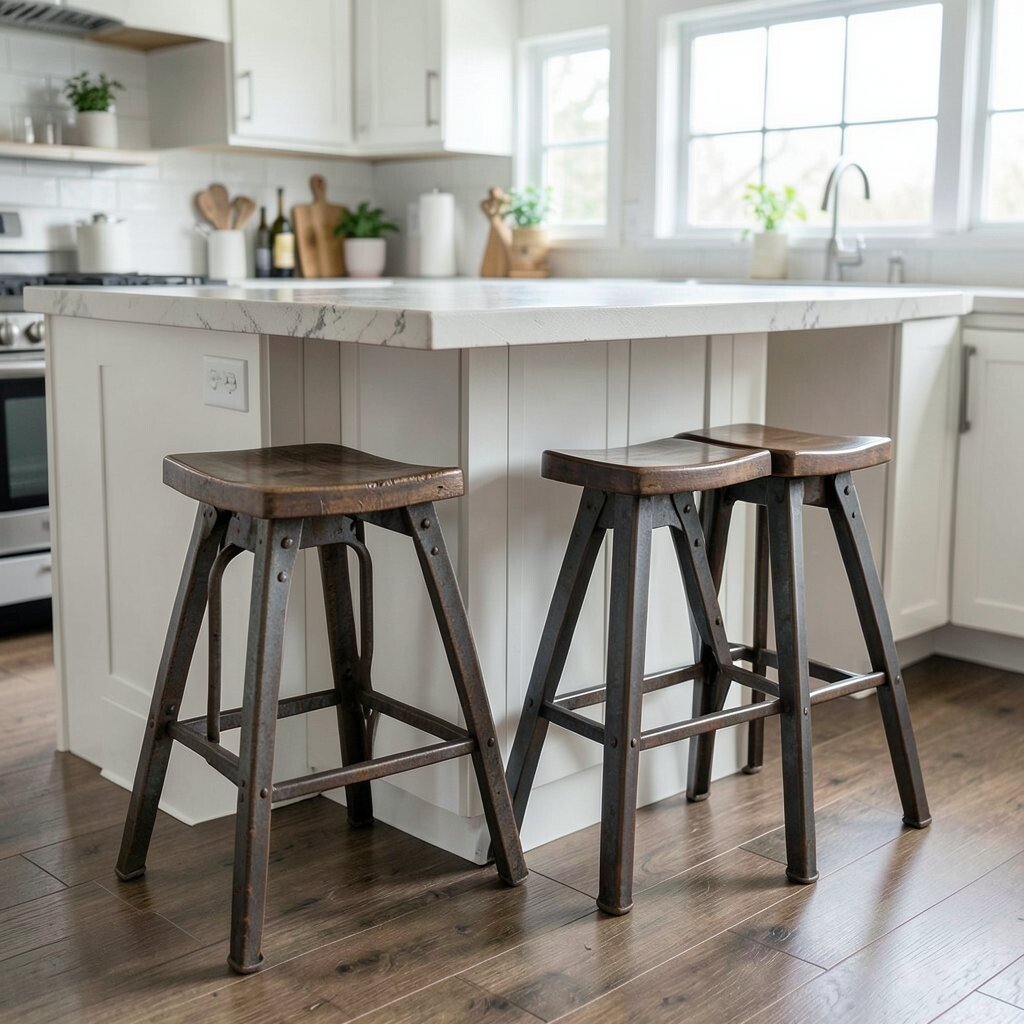
) Upcycle Metal Legs From Exercise Equipment Into Industrial Stools Picture tall metal legs with a sturdy, slightly scuffed surface. That “just lived in” look can fit perfectly in an industrial kitchen.
Attach a reclaimed wooden seat to the metal frame and use bolts or brackets for a tight fit. This gives you a mixed-material style that feels current and confident. Plus, you’re reusing metal that would be hard to recycle properly.
To personalize, add a wood seat with a stencil design or a small engraved label. Keep the metal finish matte or touch it up with spray paint that matches your hardware. Cost is usually moderate because you’re focusing on seat materials and protective coatings rather than buying new stools.
-
6) Use Old Cutting Boards as Seat Tops for Small-Bar Stations
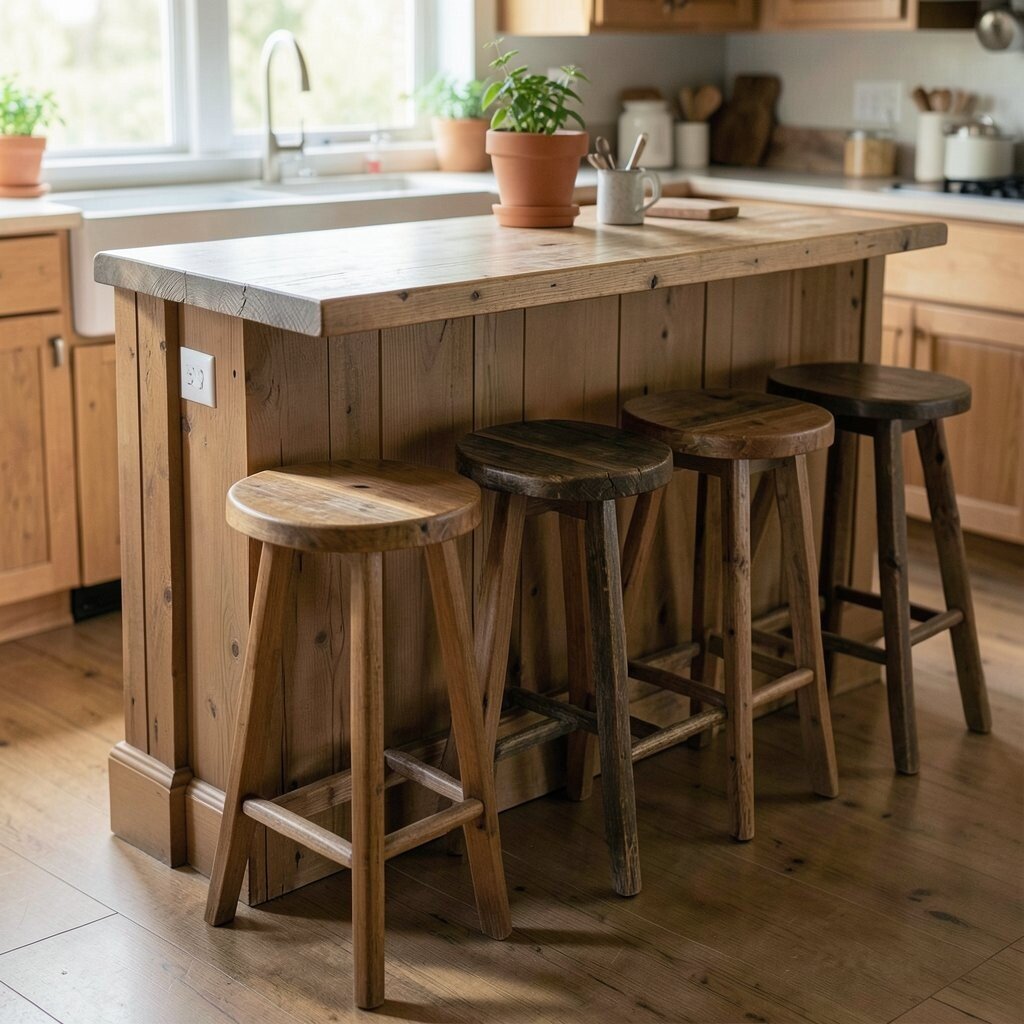
) Use Old Cutting Boards as Seat Tops for Small-Bar Stations Old cutting boards can look charming with their carved edges and worn corners. When they’re turned into seat tops, they bring a kitchen-first theme that feels natural.
Mount cutting boards onto reclaimed legs with strong screws and corner brackets. This is an easy upcycle idea because many boards already have a handle area that can line up as a visual focal point. The benefit is simple: your stools look like they belong in the cooking zone.
For tips, seal the board edges with food-safe varnish if you plan to keep the natural wood look. Add a small cushion for comfort during longer hangs. Budget-wise, you might only need legs and mounting hardware, especially if you already have boards saved.
Personalize by painting the undersides in a color that pops against your kitchen wall. This also matches the current trend of “hidden color” and playful accents.
-
7) Build Stools From Reclaimed Floor Boards With Visible Texture
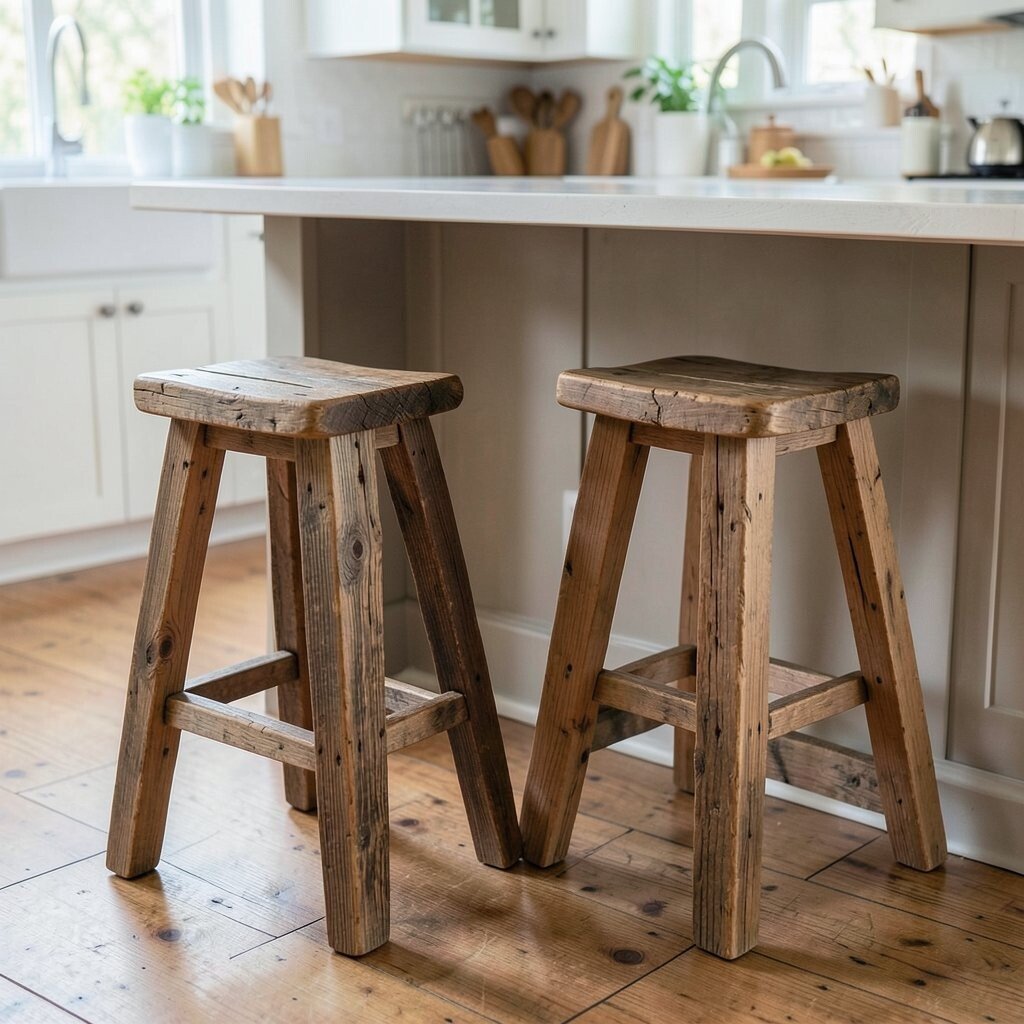
) Build Stools From Reclaimed Floor Boards With Visible Texture Reclaimed floor boards often have knots, dents, and subtle color shifts. When you slice them into seats, the texture shows like a map of places they’ve been.
Use thick boards for the seat so the grain won’t feel too fragile. Pair them with simple legs and add a clear sealant so the wood stays protected from spills. The big benefit is durability plus a one-of-a-kind pattern no store item can match.
For personalization, choose two contrasting boards for different stools so you get a “matching set” that still feels eclectic. Consider adding a slight chamfer on the edges to keep it comfy. Cost is often low because reclaimed boards can be found at salvage yards, but account for time spent cutting and sanding.
-
8) Turn an Old Tool Caddy Into a Barstool Storage Seat
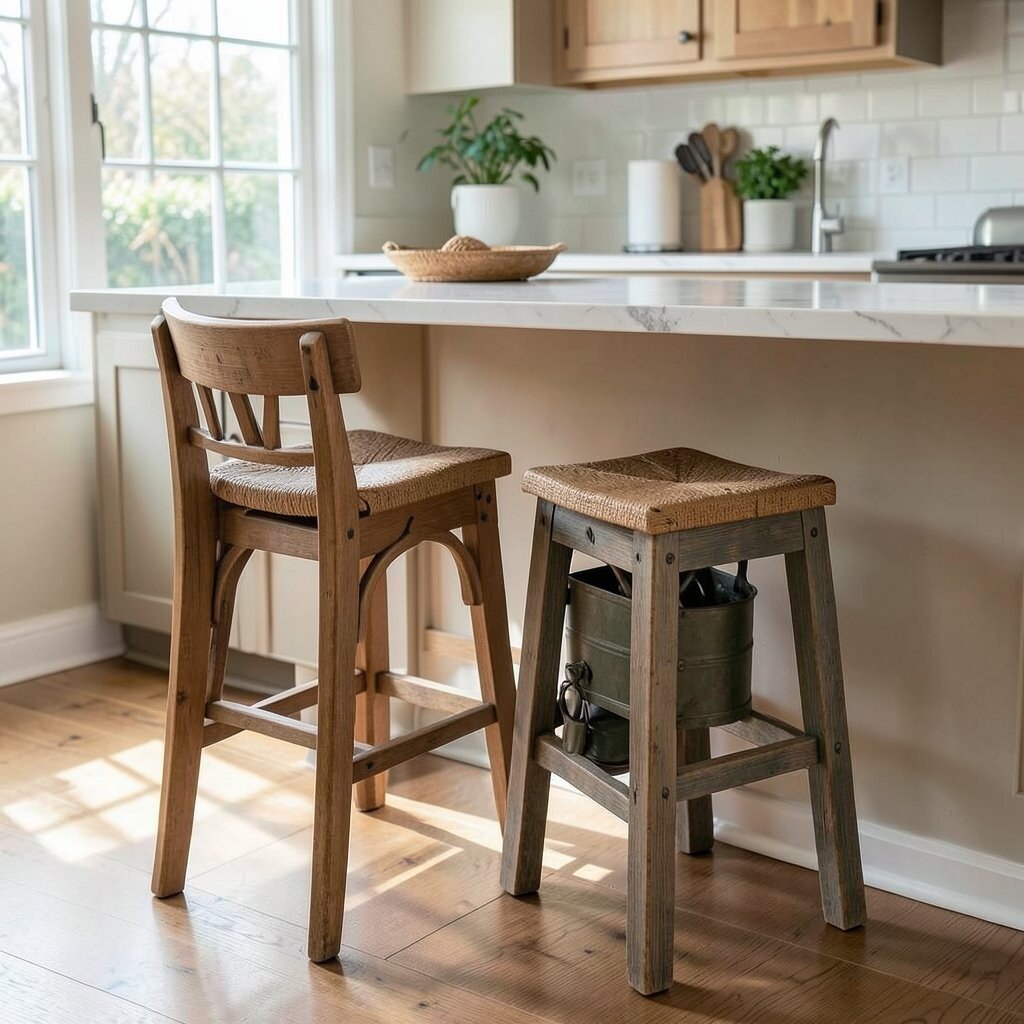
) Turn an Old Tool Caddy Into a Barstool Storage Seat Some old tool caddies have a sturdy lid and cool metal details. If you add a seating top, you get a stool that also holds napkins, chargers, or kitchen tools.
This style helps clutter feel organized instead of scattered. You can mount the caddy onto a frame made from scrap wood and reinforce the corners for safety. The uniqueness comes from turning something meant for the garage into something that belongs at your counter.
To keep it eco-friendly, look for a caddy with a solid body and no heavy rust. Paint the outside in a calming neutral and leave a few metal parts visible. Cost is usually reasonable because you may only need a new seat cushion, screws, and a protective topcoat.
For trend ideas, choose a “utility chic” look with matte finishes and simple labels on storage compartments. Personalize by adding a chalkboard sticker for quick note reminders.
-
9) Upcycle Old Shutters Into Decorative Backrest Barstools
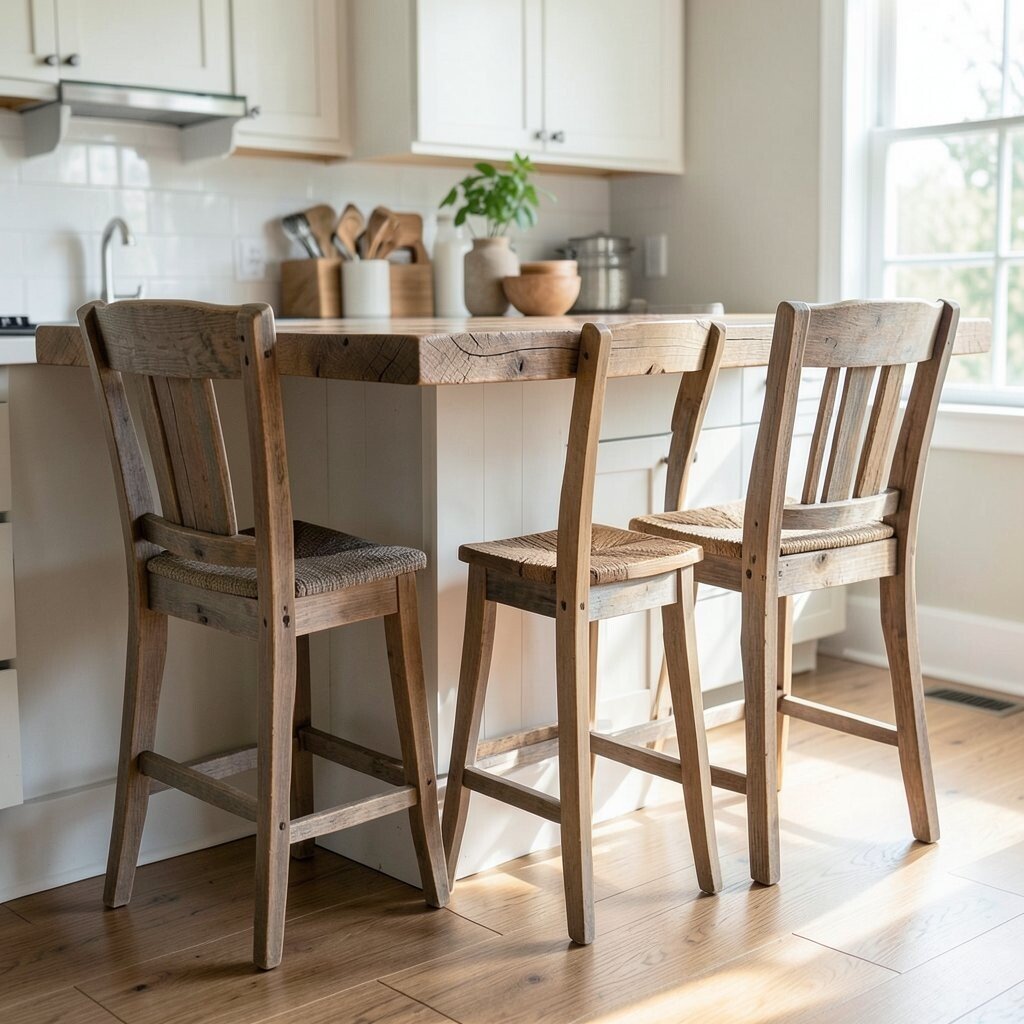
) Upcycle Old Shutters Into Decorative Backrest Barstools Shutters can bring instant charm with their long panels and classic lines. When mounted as a backrest, they create a gentle frame around you while you sit.
Cut a shutter section to fit the back and attach it to a sturdy base with a comfortable seat. This is a great option if you want a dining area vibe, but you still want eco-friendly choices. The benefit is visual interest from every angle, which makes your kitchen feel designed, not accidental.
Try sanding lightly to soften rough spots, then paint or stain in a color that echoes your backsplash. Personalize by adding small hooks for towels or hanging spoons. Budget considerations: shutters sometimes need new hardware and a bit of paint, but they can be cheaper than new furniture.
-
10) Make Barstools Using Reclaimed Window Panels as Backs
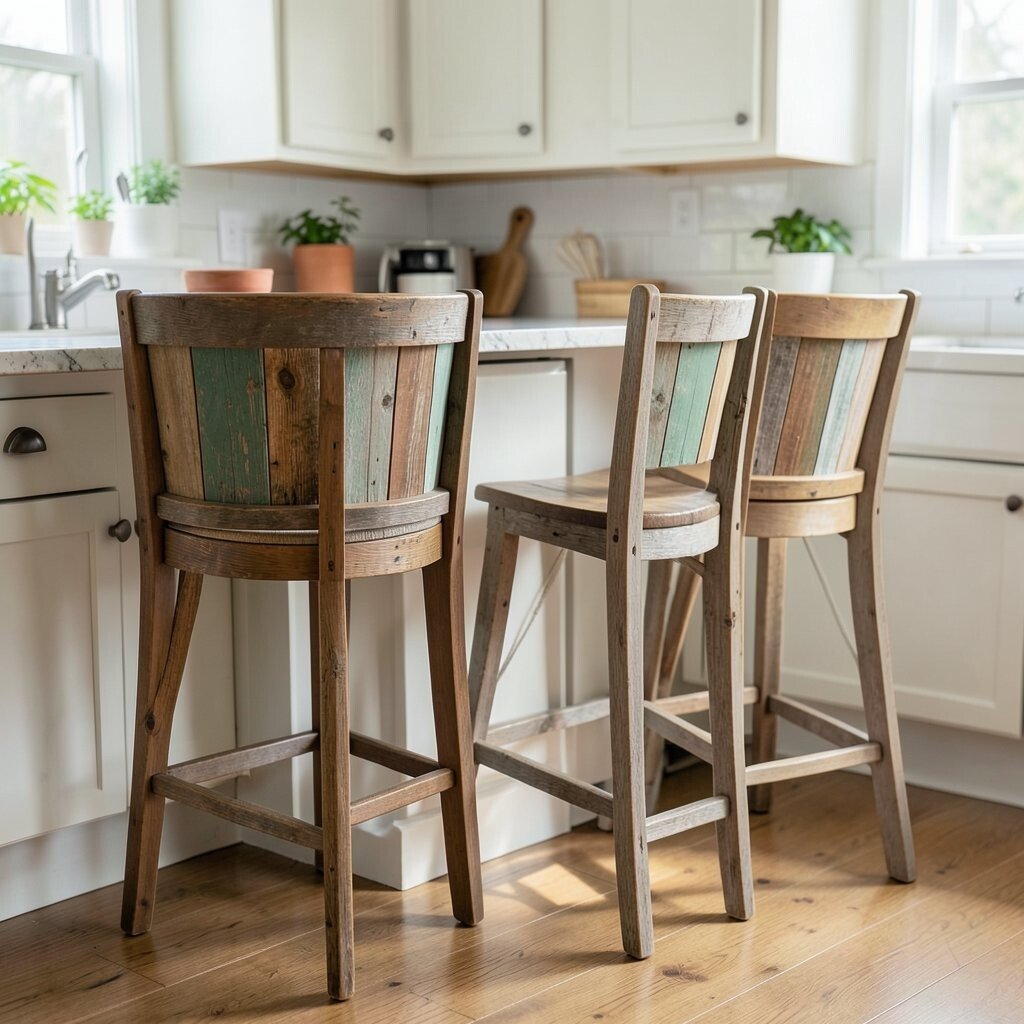
) Make Barstools Using Reclaimed Window Panels as Backs Think of an old window panel with glass or wooden grid lines that catch the light. As a backrest, it can make your kitchen look bright and artsy.
Use the panel as the back and attach a solid seat to a frame beneath it. If the glass is intact, it can add a subtle shimmer, but you can also remove glass for a safer, solid look. This creates a one-of-a-kind piece that feels more like a small gallery moment than a regular stool.
For tips, reinforce the panel connections with brackets so it feels stable. Use a cushion with a washable cover so daily life doesn’t worry you. Cost depends on how much repair is needed, but upcycled windows often cost far less than new furniture.
Personalize by choosing a paint color that matches your kitchen trim or by adding a simple decal to one corner. This fits the trend of “architectural details” that bring old world character to modern spaces.
-
11) Upcycle a Broken Table Base Into a Barstool Set
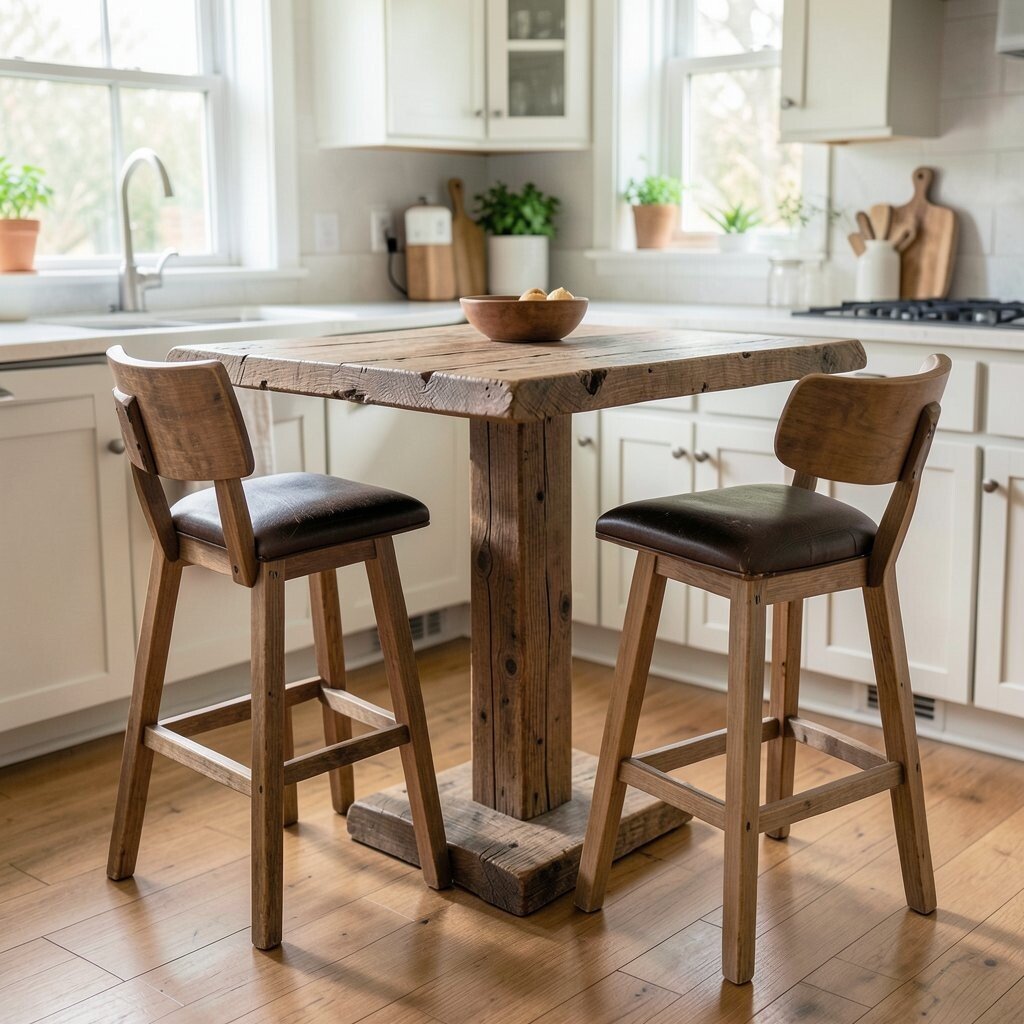
) Upcycle a Broken Table Base Into a Barstool Set A table base can be dramatic, especially when it has curved lines or strong legs. Even if the tabletop is ruined, the base can still be the perfect foundation for a stool.
Attach a new seat on top, and adjust the height by using extra reclaimed boards or a custom spacer. This approach is helpful when you want a matching look across multiple stools without buying new legs. It’s also a good way to reuse heavier materials that might be hard to repurpose otherwise.
For personalization, stain the seat and paint the base in two tones for a lively style. Add foot caps if the metal or wood needs extra protection on floors. In terms of cost, you’re likely saving on legs, but plan for sanding and possibly refinishing so everything looks clean.
-
12) Reuse Old Ladder Rungs as Seat Support and Detail
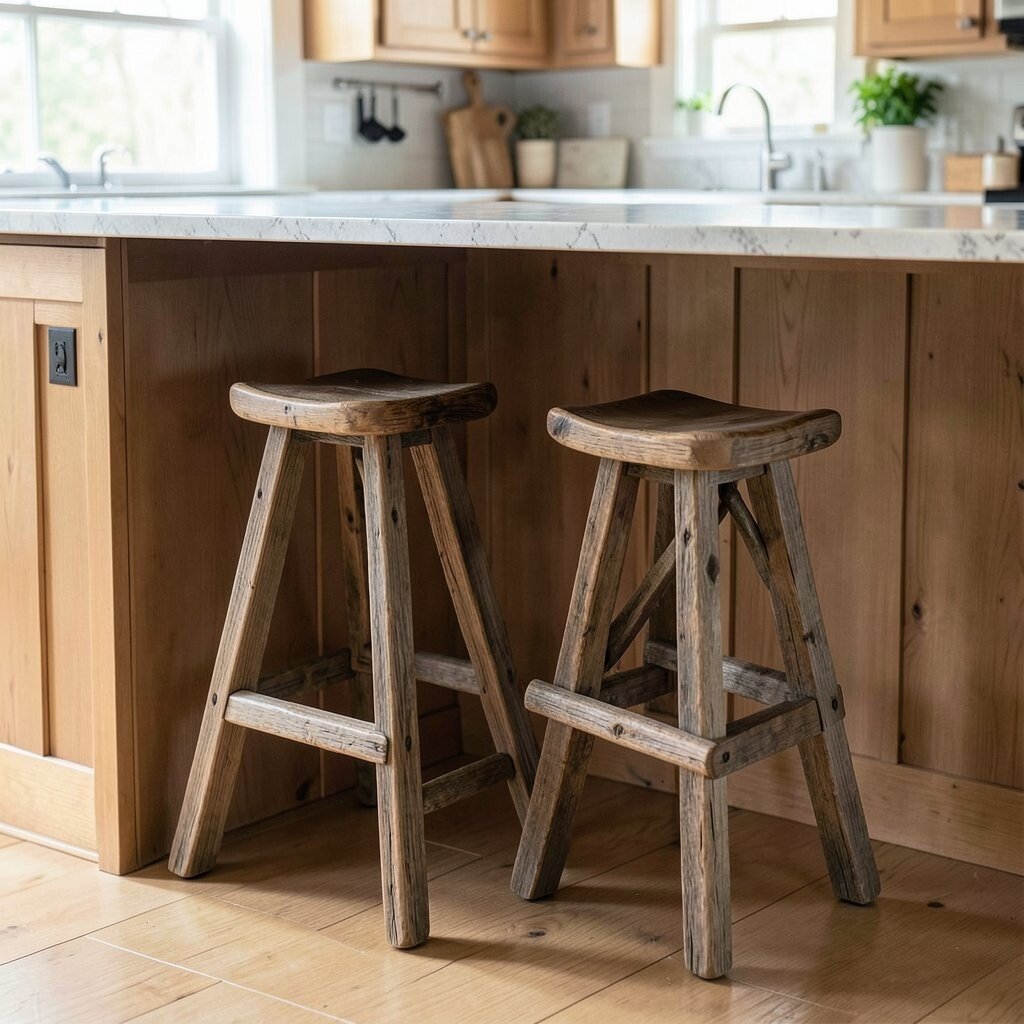
) Reuse Old Ladder Rungs as Seat Support and Detail Ladder rungs have a natural, geometric look that instantly feels handmade. When you use them as part of the stool frame, they create a cozy rhythm under the seat.
Build a compact stool by using ladder rungs as cross supports and attach a seat made from plywood or reclaimed wood. This provides strength and also gives you a design element that feels both modern and rustic. The benefit is that ladder wood is often thicker than you expect, so it can handle daily use.
Try leaving the rungs natural and staining the seat to darker tones for contrast. If you want a softer look, paint the rungs a warm color like cream or sage. Cost-wise, ladder parts are sometimes easy to find at salvage centers, and the main spending will be on finishing products and seat cushions.
-
13) Turn a Reclaimed Door Section Into a Wide Seat Stool
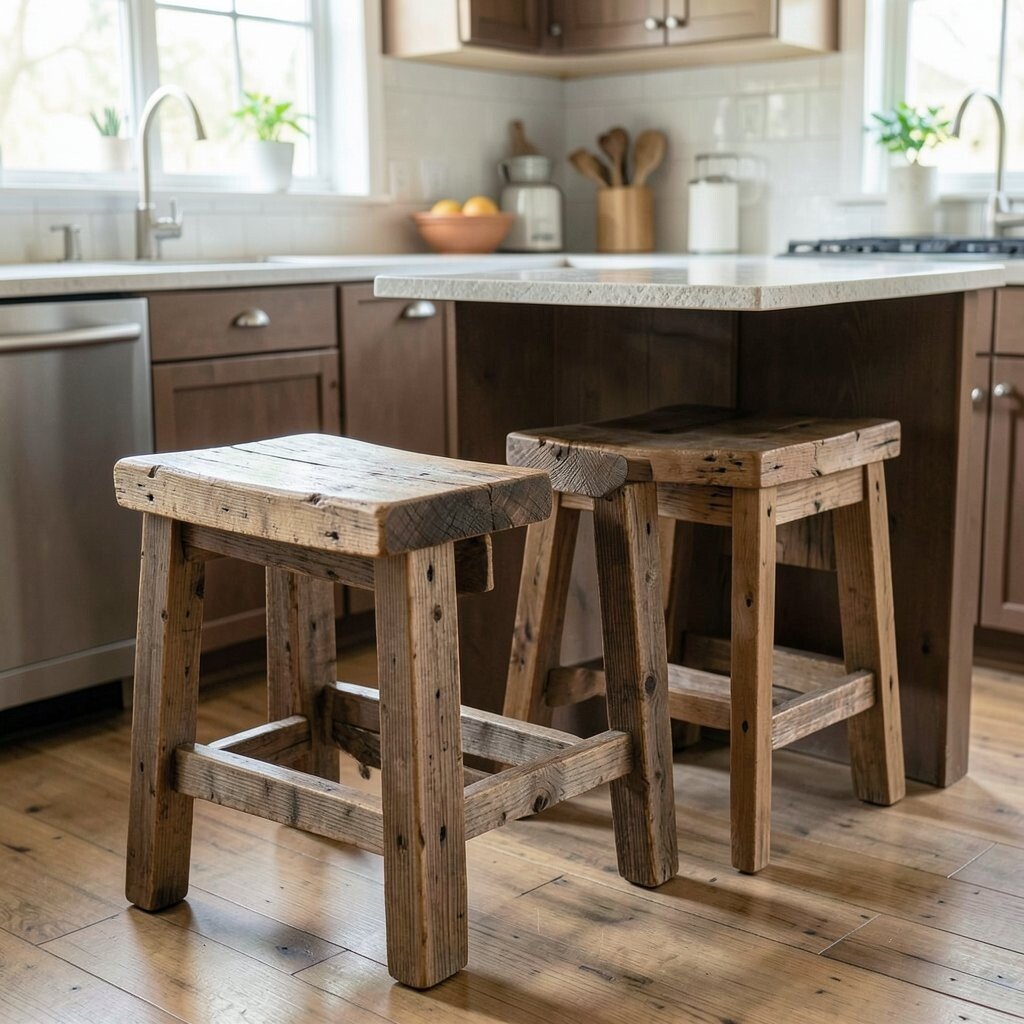
) Turn a Reclaimed Door Section Into a Wide Seat Stool Old doors have great thickness, which means the seat can feel solid and confident. Visualize a door panel cut into a wide top that looks like a mini stage for your bar area.
This idea works especially well for breakfast nooks where people sit close to each other. Use a strong frame underneath and finish the door surface with a durable topcoat. The benefits are comfort, stability, and a dramatic “wow” look that’s still eco-friendly.
Personalize it by keeping the original hardware holes as decoration, or fill them and create a clean modern face. For tips, check the door’s straightness before cutting, because warping can happen with reclaimed wood. Budget considerations depend on how big the door is, but reclaimed doors often cost less than premium hardwood.
Current trends support chunky seating and bold grain, so this design fits right in. Add a cushion in a simple solid color to let the door texture do the talking.
-
14) Upcycle Cable Spools Into Stools With Turned-Word Charm
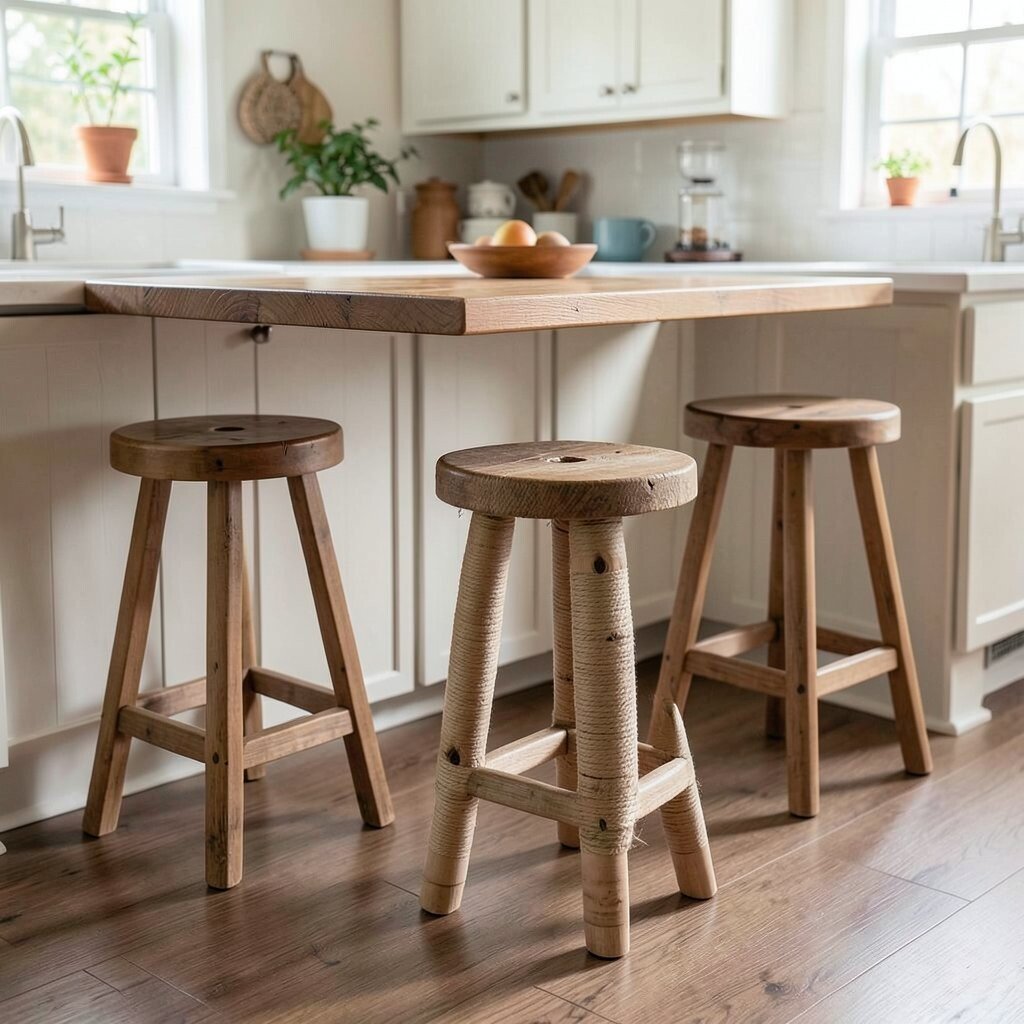
) Upcycle Cable Spools Into Stools With Turned-Word Charm Cable spools are built to last, and their round shape looks like furniture already. When cut down and topped with a flat seat, they look bold and friendly at the same time.
Sand the surface, reinforce the top, and attach a cushion with a washable cover. The benefit is a sturdy base with strong material, plus a very unique shape that makes your kitchen feel special. If you want a trend vibe, cable spool style fits the popular “industrial farmhouse” look.
For personalization, paint the spool bands in a muted color and leave one band natural. Add a small tag or label with your family name or favorite kitchen saying. Cost can be lower than buying new stools because you’re using a large base for free or low price, though you may spend on sanding supplies and sealant.
-
15) Make Barstools From Upcycled Spinning Chair Bases
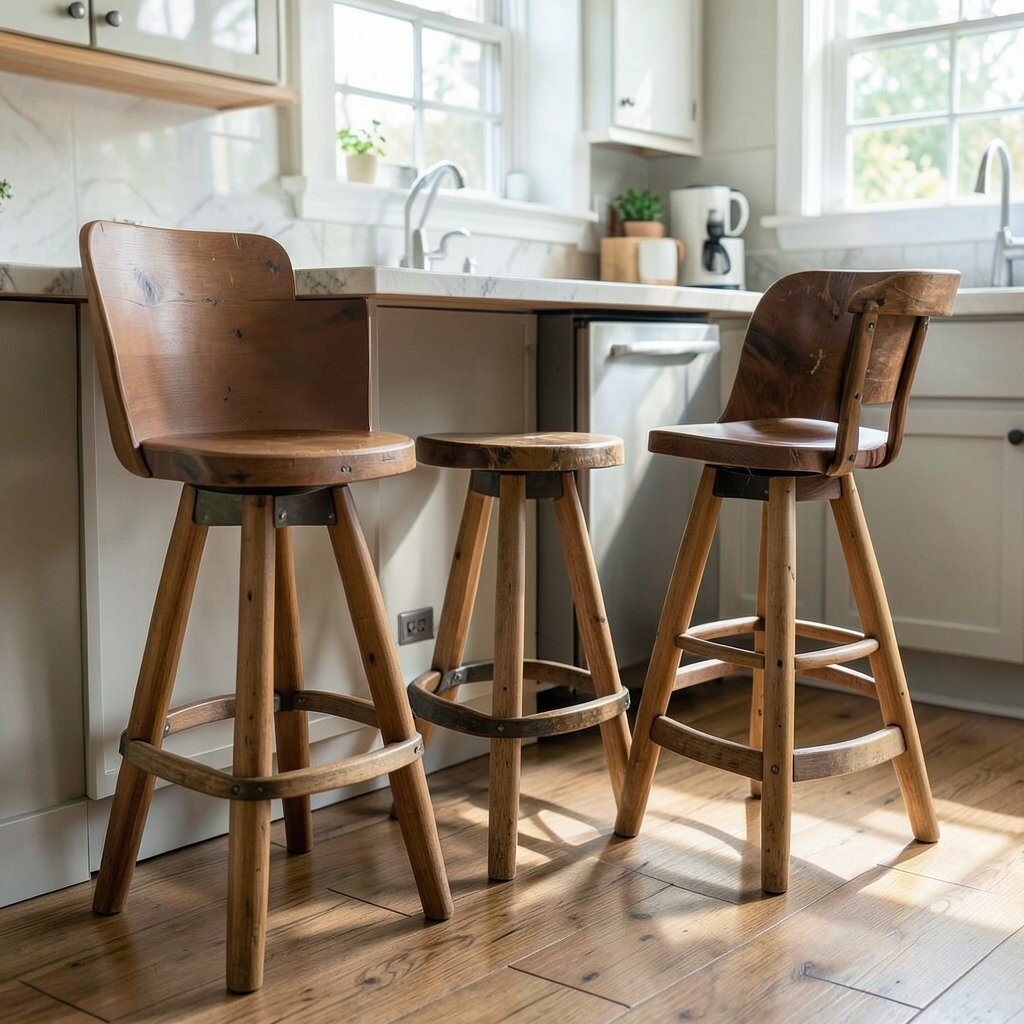
) Make Barstools From Upcycled Spinning Chair Bases Some chair bases rotate, which means they can offer a fun twist for bar seating. When you reuse the base and add a fixed seat, you get a clever motion without the wobble.
Attach a reclaimed seat on top and lock the rotation if you prefer steady sitting. This method is unique because it brings a bit of play into your kitchen, while still reusing old materials. The benefit is easy comfort with a base that’s designed to support weight.
To personalize, choose seat fabric that matches your dining chair cushions or curtains. Consider a quilted cover for a cozy feel that’s popular right now. Budget-wise, you can keep costs down by focusing spending on a quality seat cushion and protective finish.
Quick safety tip: inspect screws and replace worn parts so the stool feels firm. If the base has rust, treat it with a rust neutralizer before painting.
-
16) Upcycle Old Rope-From-Storage Ideas Into Textured Seats
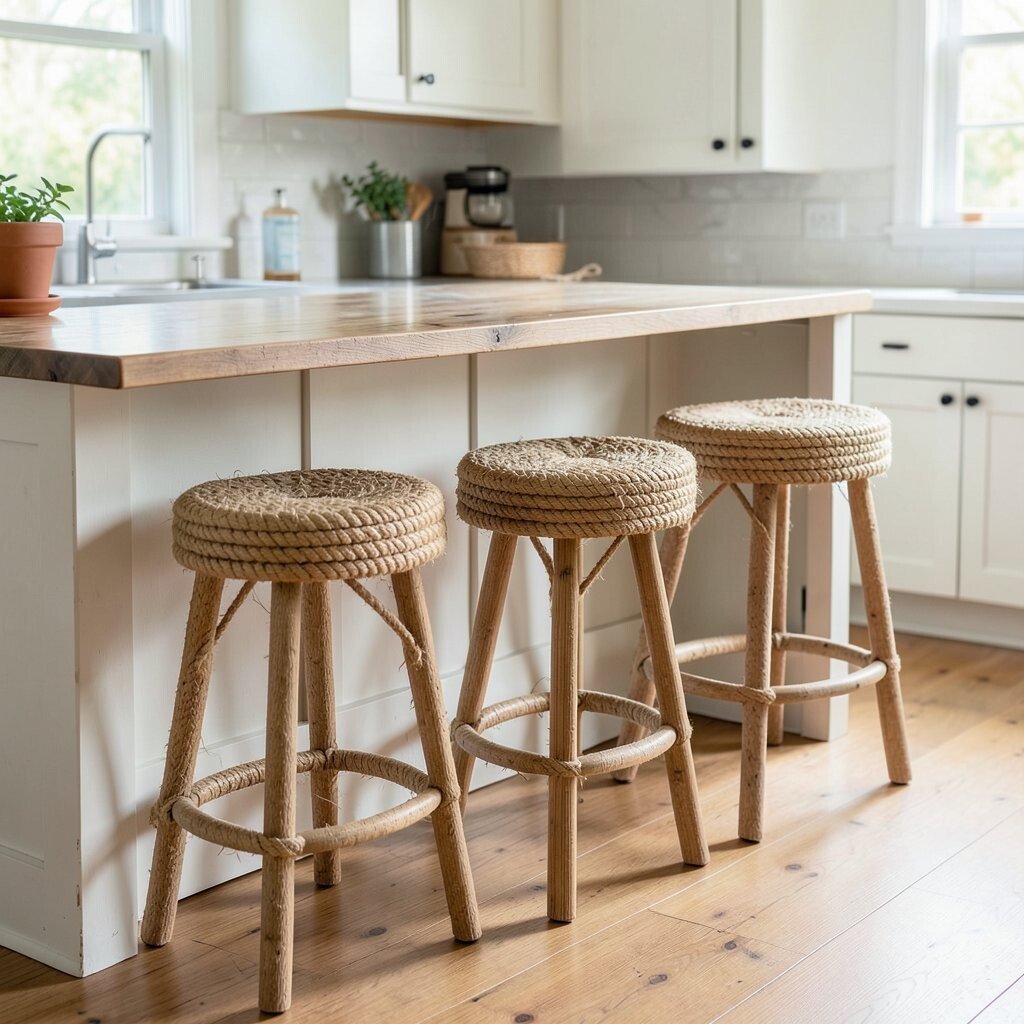
) Upcycle Old Rope-From-Storage Ideas Into Textured Seats Rope can look fun and textured, especially when wrapped neatly around a frame. When you use it to create seat support or a back detail, it feels warm and coastal.
Wrap rope around a wooden frame using strong, food-safe glue or mechanical fasteners. Add a flat seat topper if you want extra comfort, and seal any wood for spill resistance. The benefit is visual texture, plus you’re reusing materials that might otherwise sit unused.
For tips, keep rope tension even and let glue fully cure before use. Personalize by using rope colors that match your kitchen palette, such as natural jute or muted navy. Cost considerations are usually low because rope can be affordable, but expect some time and patience for neat wrapping.
-
17) Use Vintage Brass or Iron Hardware as Seat Accents
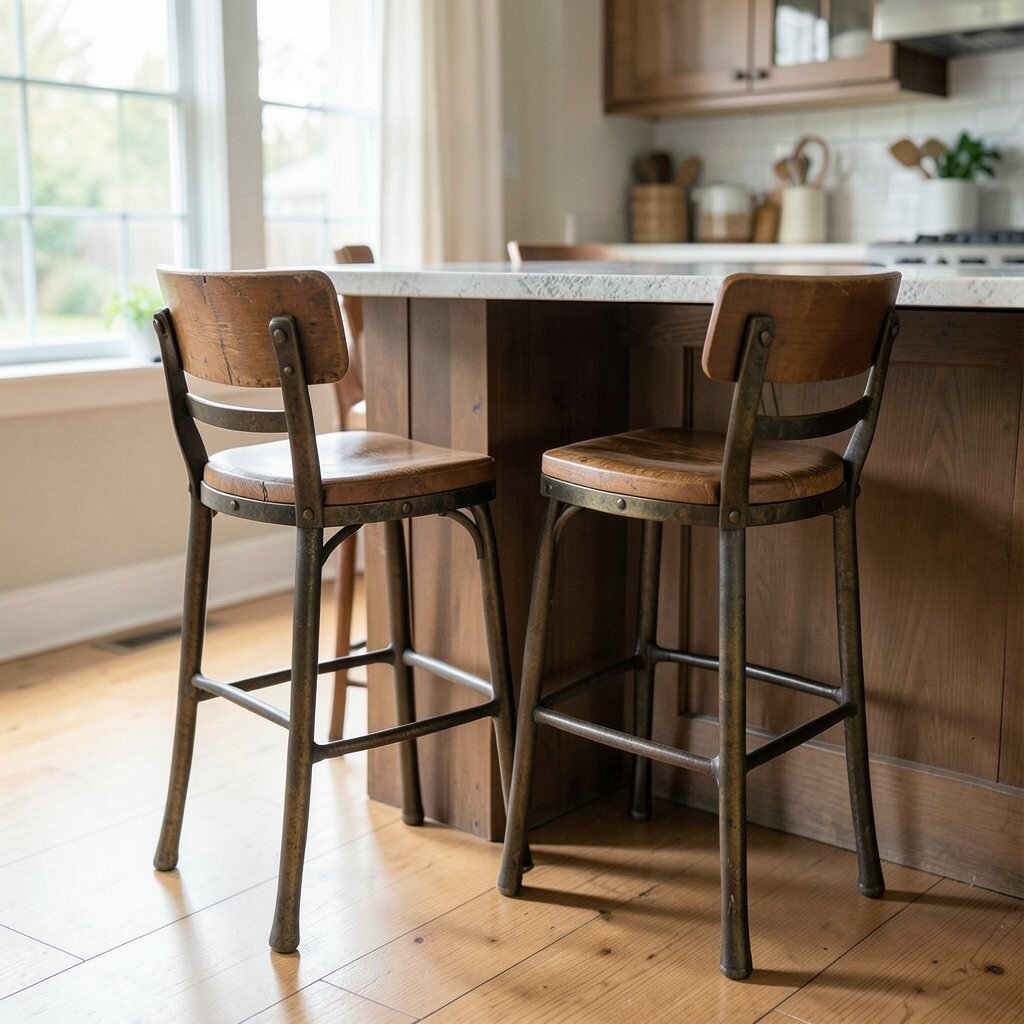
) Use Vintage Brass or Iron Hardware as Seat Accents Sometimes the best part of a reclaimed furniture find is the metal hardware. Hinges, handles, and brackets can look like jewelry when you use them as seat accents.
Start with a reclaimed seat base, then attach decorative hardware at the corners or along the edge. This creates a unique look even if the stool is simple in shape. The benefits include making the piece feel special without needing heavy redesign.
To personalize, mix hardware finishes: a warm brass with a darker wood can look rich. Keep it consistent across a set so it feels like a designed collection rather than random parts. Cost is often manageable since small hardware pieces can be saved from old items or found cheaply at salvage shops.
For a current trend, lean into “mixed metals” by choosing one main metal and one supporting metal. Add a clear coat to protect the hardware and keep your stool easy to wipe clean.
-
18) Build Stools From Salvaged Barrels Into Raised Counter Seating
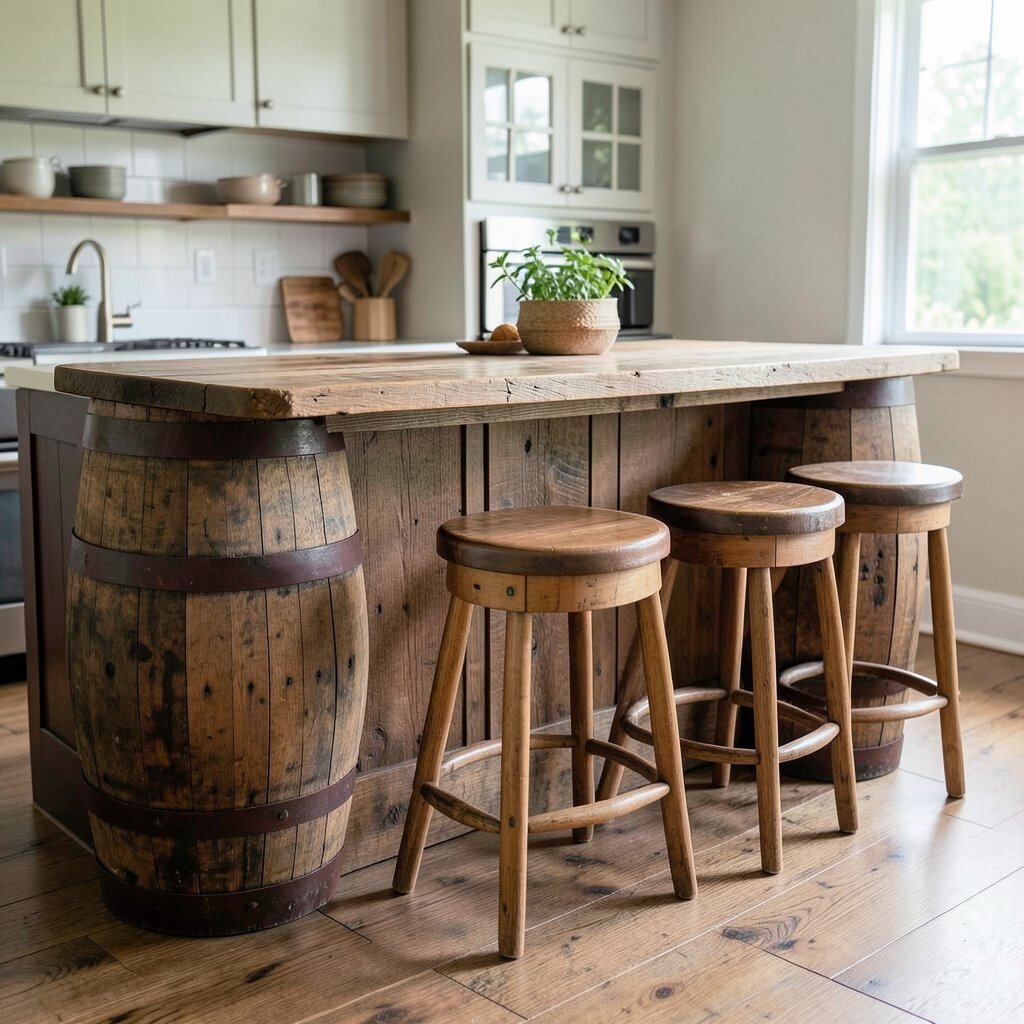
) Build Stools From Salvaged Barrels Into Raised Counter Seating Wooden barrels have a curved body that looks strong and welcoming. When you cut them into seats or build a stool top, the hoops and grain give instant depth.
Mount barrel staves to a base and secure a flat seating surface on top. This idea is great for kitchens that love rustic charm, and it offers a very unique texture you can’t recreate with new wood. The benefit is durable material that handles everyday knocks and bumps better than you might expect.
For tips, sand the seating area smooth and treat the wood so it stays protected from moisture. Add a cushion with a tie-on cover for easy removal. Cost considerations vary, but barrel pieces can be found at salvage stores, and you may only need moderate spending on finishing products and foam.
-
19) Upcycle Old Bench Slats Into a Matching Trio of Stools
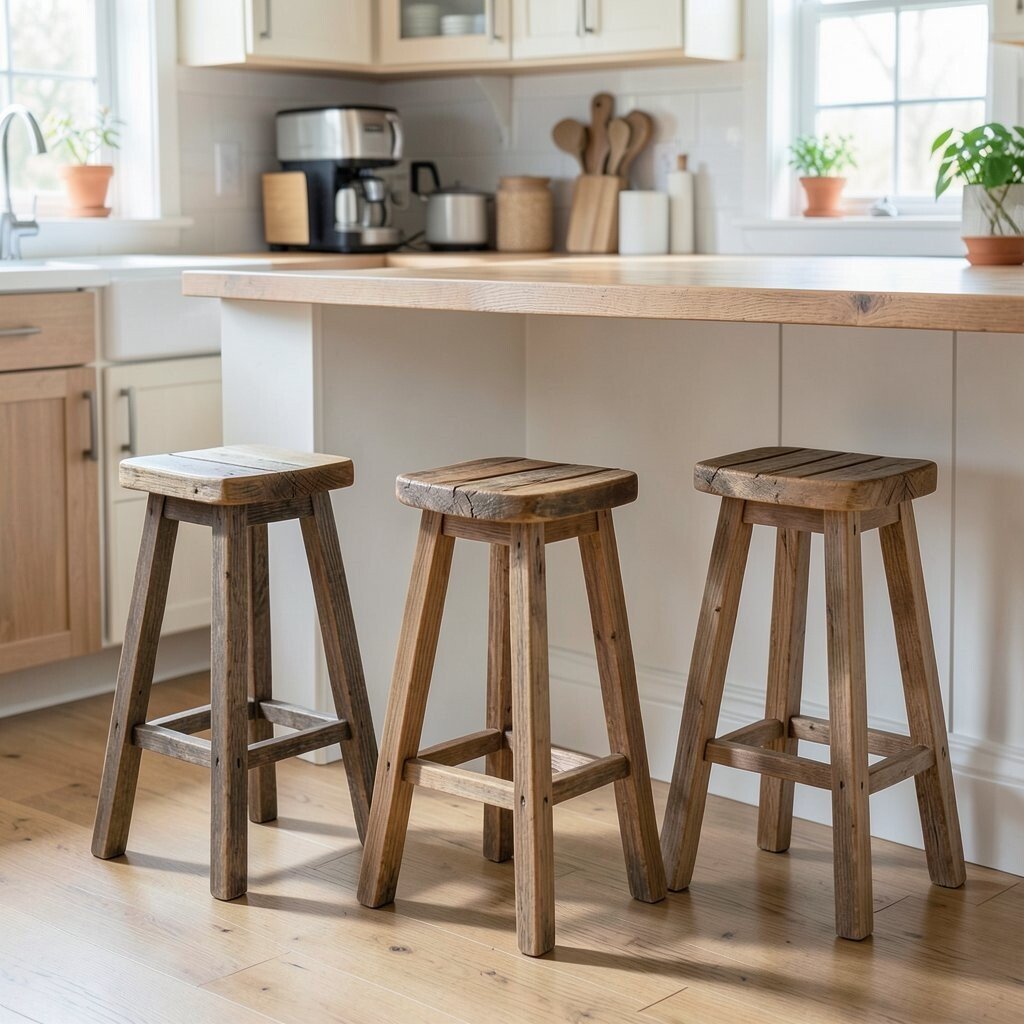
) Upcycle Old Bench Slats Into a Matching Trio of Stools Bench slats are already aligned, which makes them perfect for building a tidy bar set. The look is clean, and it feels like your stools belong together.
Cut slats into seat frames and attach a top layer of reclaimed wood or plywood for stability. Create multiple stools from one bench so your kitchen gets a coordinated, intentional look. The benefit is style consistency plus a strong sense of craftsmanship.
To personalize, stain each stool slightly different shades so the trio feels curated. Add small different cushions or choose one fabric pattern for all of them. Budget-wise, one long bench can be cheaper than buying separate pieces, and you can reuse the same tools and supplies for every stool.
For trend alignment, consider a “neutral layering” look with warm wood tones and light, textured cushion covers. Keep edges rounded for comfort and to prevent snagging on clothes.
-
20) Turn Old Plank Signs Into Barstool Seats With Handwritten Flair
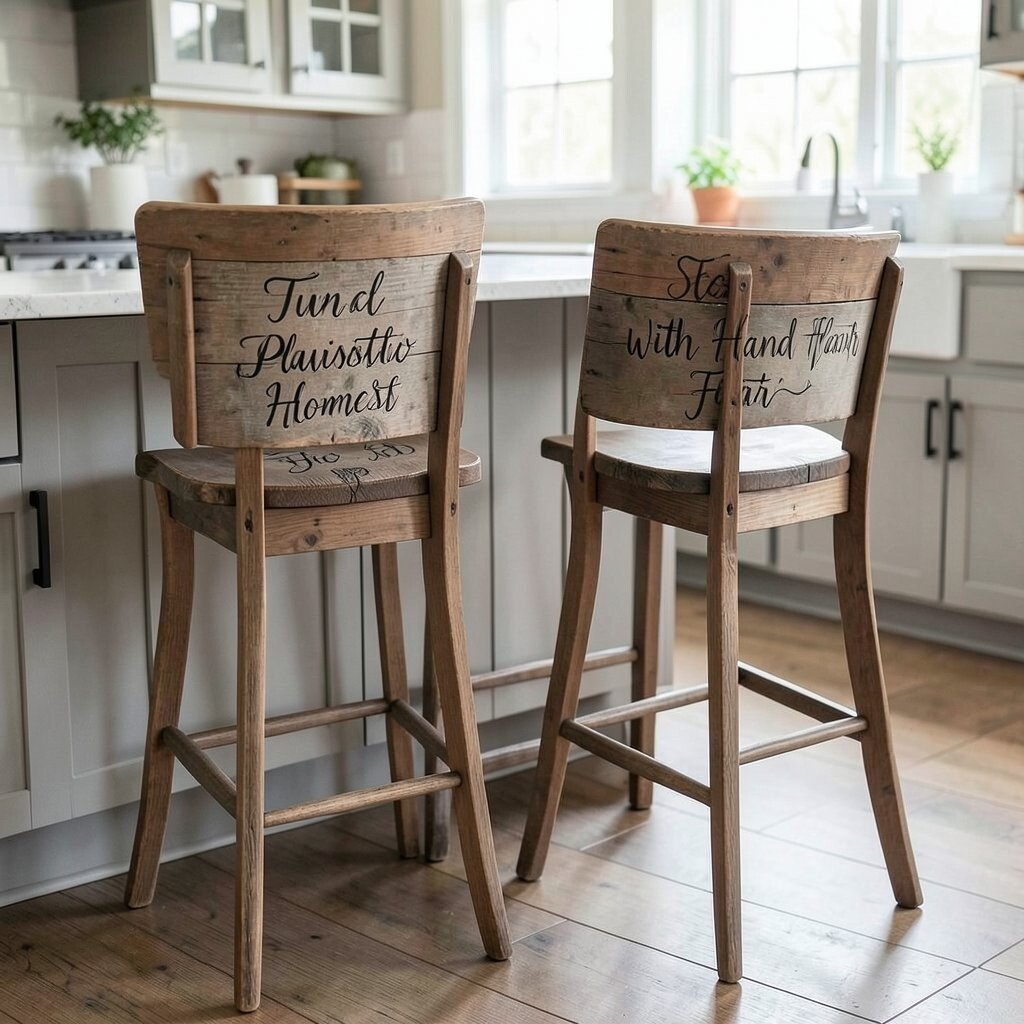
) Turn Old Plank Signs Into Barstool Seats With Handwritten Flair Old plank signs often carry faded letters and marks that feel like memories. When used as seat tops, the message can sit underfoot while still adding personality from above.
Attach a reclaimed sign plank to sturdy legs and seal it so it can handle spills and daily cleaning. This is unique because you get story-driven decor that also serves a practical purpose. The benefit is that your kitchen becomes more expressive without adding clutter.
For tips, clean the surface gently, then apply a clear protective finish in several thin coats. Personalize by repainting a new phrase, a favorite recipe name, or your family’s “kitchen motto” in a simple font. Cost considerations are usually low since the sign is already the main material, and you’re mostly paying for legs, screws, and sealant.
Current trend: personalization that feels handmade, like small typography and warm color blocks. Choose colors that match your kitchen accessories so it looks planned.
-
21) Upcycle Farmhouse Crate Wood Into Easy-Clean Barstool Seats
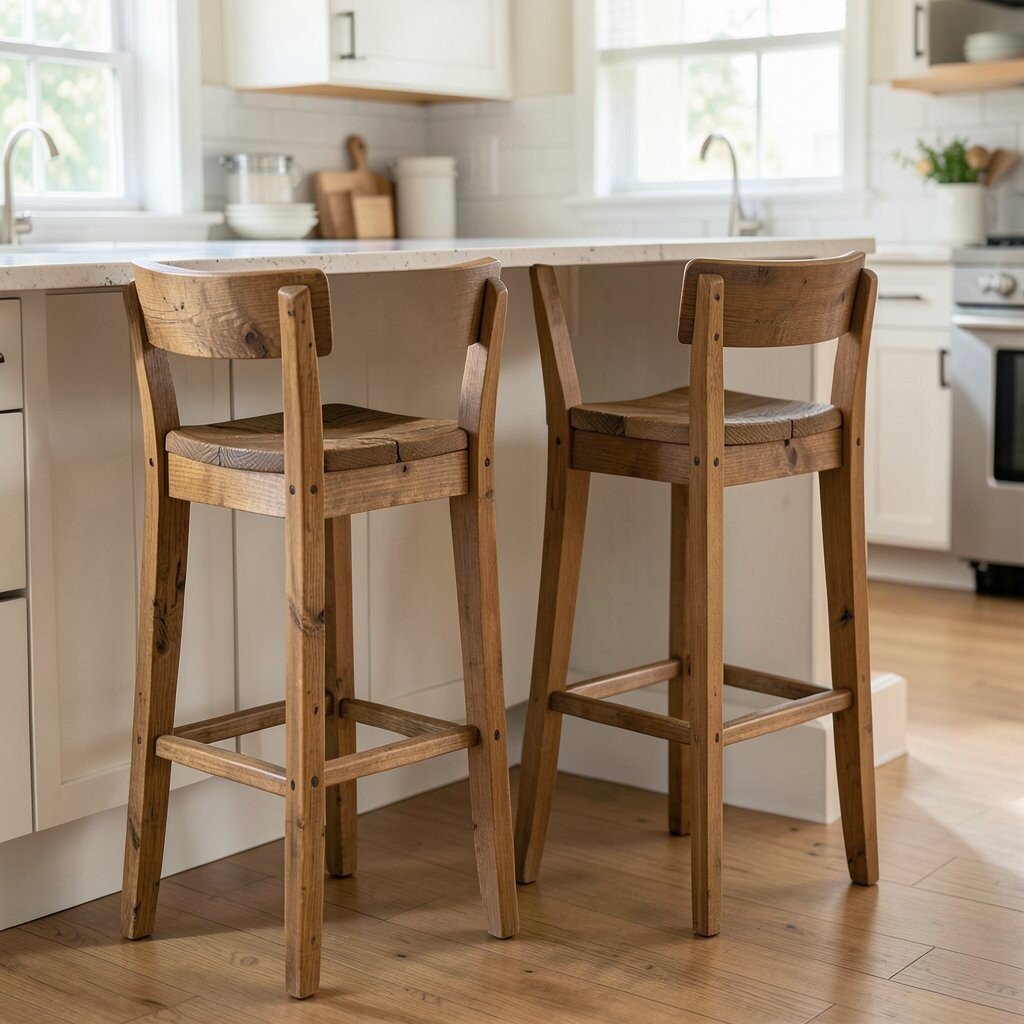
) Upcycle Farmhouse Crate Wood Into Easy-Clean Barstool Seats Crate wood has that fun, grid-like pattern that feels rustic and lively. When you build a stool seat from crate boards, it can look like a tiny wooden basket for your feet.
Use the crate boards to make a seat surface, then reinforce underneath with scrap wood so it stays solid. Add a cushion on top if you want extra comfort, and choose a cover fabric that can be wiped quickly. The benefit is a breathable design that also looks great in kitchens with open shelving and natural decor.
For personalization, stain the crate boards in honey tones or paint them in a soft farmhouse white. Add a small felt pad under the cushion corners to prevent slipping. Cost-wise, crates are often affordable, but check sturdiness before you build so you don’t waste time on pieces that are too weak.
To match current trends, pair the crate texture with clean, minimal frames and simple matte finishes. Your stools will look stylish while still being friendly to the planet.