Bright color choices can make a youth space feel welcoming right away. When walls, corners, and rooms work together, energy spreads in a good way.
-
1. Sunburst welcome wall
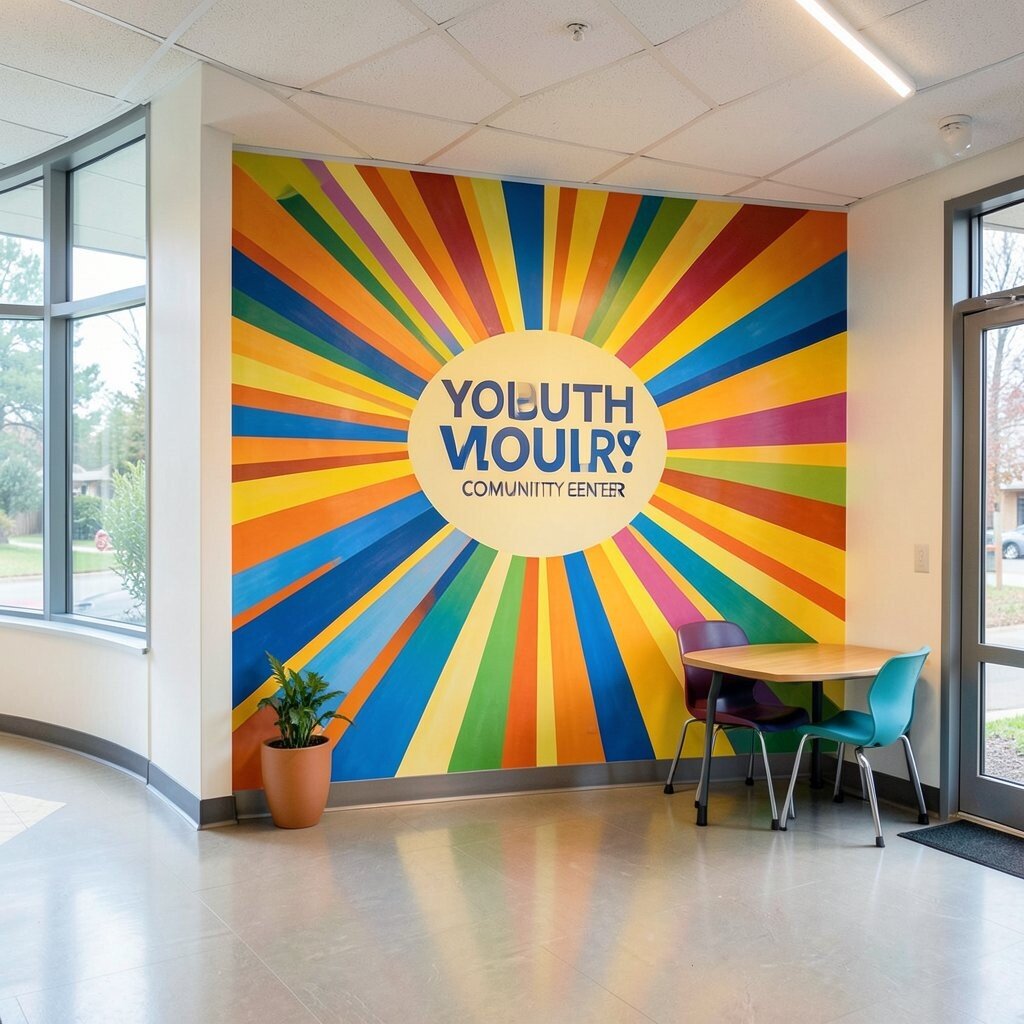
Sunburst welcome wall Start with a warm, sunny wall near the front door. Think soft yellow mixed with orange streaks so it looks like light is shining inside.
This color works great because it makes visitors feel noticed and safe. It can also help staff spot where people gather, which makes the space feel more organized.
Try using paint samples first, or use removable decals if you want an easy change later. Add a simple “Today’s drop-in times” board in a contrasting color so it stays readable.
For personalization, let each youth group contribute a small painted paper tile shaped like a star. Budget tip: ask a local art club to help paint, then use low-cost craft brushes and painter tape for crisp edges.
Current trend: bright accent walls plus natural wood frames. You can also pair the sunburst with simple signage in bold navy so the whole area looks sharp.
-
2. Ocean teal reading nook
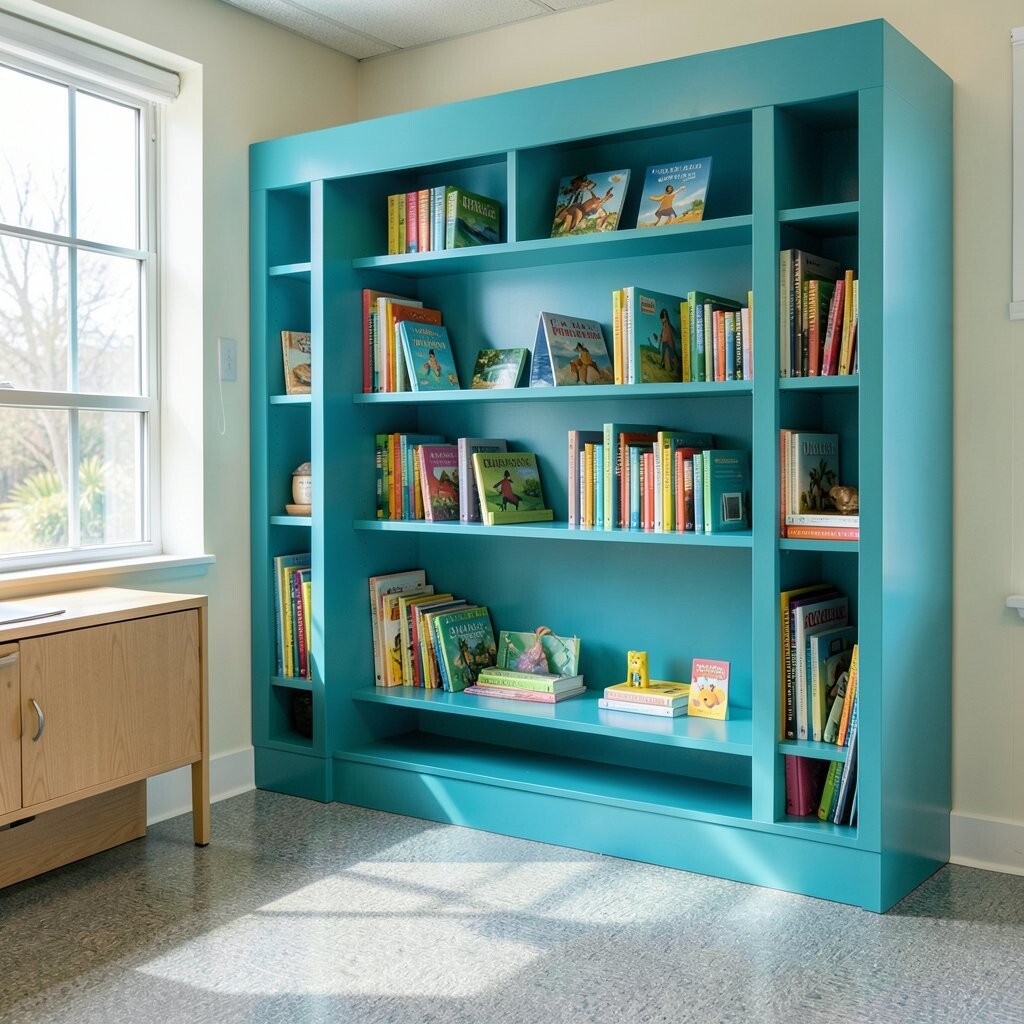
Ocean teal reading nook Choose ocean teal for a reading nook or quiet corner. It feels calm like a day at the beach, but it still looks lively on the wall.
This helps with focus, since teal often feels steady and comfortable. Youth tend to linger longer when the area looks inviting and not too loud.
Add a mix of cushions and throw blankets in seafoam and white to keep the space soft. Put book bins in bright coral or lime so the room has a pop without feeling messy.
For tips, use a warm lamp with a shade in a fun color, like aqua or amber, to make night hours feel cozy.
For cost considerations, paint is usually cheaper than wall panels, and you can upgrade later with inexpensive fabric covers. A trend that many centers like now is “color zones,” where each room has one bold background plus accents that match the vibe.
-
3. Bright mural of community icons

Bright mural of community icons Commission a mural that shows community icons like buses, sports balls, musical notes, and handmade crafts. Use bright pink, bright green, and bright blue so it feels full of stories.
A mural is unique because it turns a blank wall into a living map of what young people care about. It also creates a great photo spot for events and performances.
Keep the design youth-led by holding a short design night with paper sketches. Then choose a final set of images based on votes and themes.
Personalization idea: add names or symbols of the groups that use the center, like “Youth Tech,” “Dance Crew,” or “Garden Club.”
For cost, consider a “paint-by-section” approach where local artists and volunteers paint small panels. You can also use weatherproof outdoor paint if the mural is near windows.
Current trend: murals that include simple shapes and bold outlines. They stand out from far away, which is useful for signage and safety viewing.
-
4. Neon accent trim on doors and hallways

Neon accent trim on doors and hallways Use neon trim—like electric green or hot pink—along door frames and hallway edges. Small lines can make a whole corridor feel more fun without repainting everything.
This helps with wayfinding because the eye naturally catches bright borders. Kids and teens can find rooms faster, and visitors know where to go.
Tips: apply the trim with vinyl tape for a cleaner look, or use narrow craft molding for a sturdier feel.
For personalization, let each wing have its own neon color, such as blue for arts, green for activities, and purple for wellness. Budget-wise, trim materials cost less than murals, and you can swap colors later.
-
5. Purple creativity wall for art drop-offs

Purple creativity wall for art drop-offs Paint a section in medium purple to create a creativity “drop zone” for art projects. Purple is bold, and it sends a message that making things is welcome.
This color benefits youth by making it easy to understand what belongs where. It can also reduce clutter when bins and labels match the wall theme.
Try adding taped outlines on the floor so youth know where to place finished work or supplies.
For personalization, paint a few open spots like mini canvases where new pieces can be hung. Consider using clip rails so kids can rotate artwork every week.
Cost considerations: a purple accent wall is often enough, and removable label stickers keep updates affordable.
Current trend: “gallery walls” that mix paint, clips, and simple frames. This makes the space feel like a real studio, not just a storage area.
-
6. Coral team color for sports and movement

Coral team color for sports and movement Choose coral for the space where sports, movement, and games happen. Coral feels energetic and warm, like cheering for a team.
Benefits include improved mood during active sessions, and it can motivate people to join in. It also looks great against darker floors because it stands out clearly.
Decorate with colorful cones, bibs, and posters in matching shades. Add a simple scoreboard board with a coral frame so achievements look official.
For personalization, let teams pick a “season color story” that uses coral plus one of their own colors.
Tips: use matte paint to avoid glare, especially if you have bright lights overhead. Budget-wise, you can start small with one wall and upgrade with printed signs and banners.
-
7. Teal-and-lime maker lab stripes

Teal-and-lime maker lab stripes Put teal-and-lime stripes on a maker lab wall or storage wall. Stripes feel playful, and lime adds a modern pop.
This idea is unique because stripes guide attention without being chaotic. They also make tools and bins look more organized because everything has a “system.”
Use wide painter tape to create the stripes, then paint in two coats for crisp edges. Add labeled drawers and put matching bins near the stripe colors.
Personalization idea: add a “today’s build challenge” sign in a third color, like navy or white, so the message stays clear.
For cost considerations, stripes can be done with simple paint, and they look upgraded even when the budget is tight. Current trend: bold geometry, especially stripes and color-blocked corners, shows up in many youth spaces right now.
-
8. Bold orange accent for event boards

Bold orange accent for event boards Choose bold orange for bulletin boards and event display areas. Orange feels upbeat and can make announcements look more important.
It helps benefits by drawing attention quickly, so people notice updates and schedules. You also get a cheerful vibe that fits after-school hours.
Tips: use white or cream paper inserts for readability, and add a thin blue border so the board looks neat.
Personalization: rotate event posters and youth-made flyers in matching orange frames. Cost tip: buy a few cheap frames and update them instead of replacing the whole board each season.
-
9. Mint green calm room lighting corners

Mint green calm room lighting corners Add mint green to small corners near calming seating. Keep it light so it feels like fresh air rather than a loud statement.
This color supports benefits like relaxation and lower stress. Youth often feel more comfortable practicing breathing or quiet routines when the room looks gentle.
Try painting only the lower half of a wall or adding mint panels behind a chair. Then use soft gray or white accessories to keep it balanced.
For personalization, create a “mood menu” poster with color swatches where youth can choose how they feel.
Budget considerations: focus on one calm area first, then add smaller accents later. Current trend: calming “micro-zones” with soft colors and simple wall signage.
-
10. Vibrant blue classroom style wall for lessons
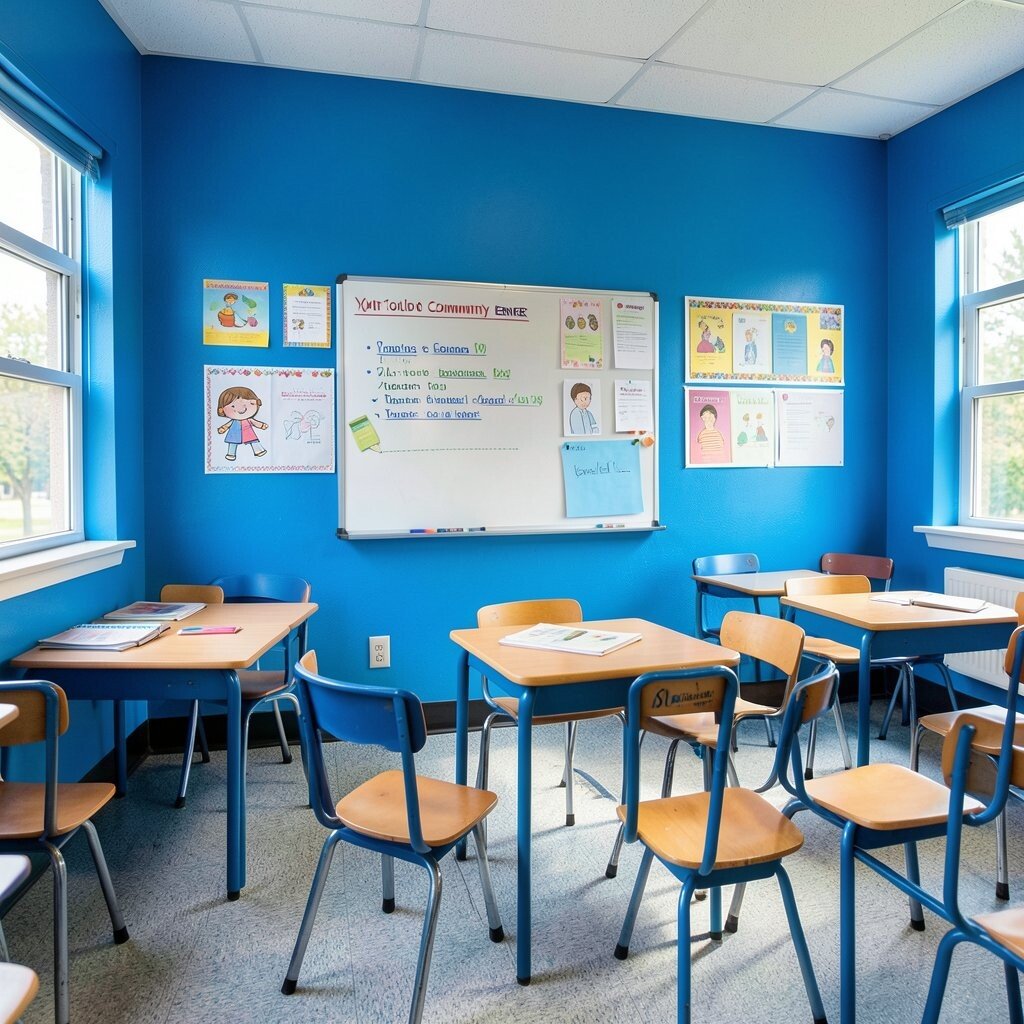
Vibrant blue classroom style wall for lessons Choose vibrant blue for a teaching wall, like the place where announcements, lessons, or skill workshops happen. Blue can feel focused and organized when used with the right accents.
Benefits include clearer thinking during group activities and a tidy visual layout. It also looks strong in photos when you host workshops or performances.
Pair the blue with bright white markers, colorful magnets, and simple grids for schedules. Add a cork board with bright yellow push pins to keep things easy to use.
For tips, avoid extremely dark blue if the room is already dim, because it can feel heavy.
Personalization: let each facilitator pick one “signature color” for their weekly theme while keeping the main wall blue. Cost tip: magnetic paint or basic whiteboards can be a helpful upgrade without huge spending.
-
11. Yellow gallery rail for badges and achievements

Yellow gallery rail for badges and achievements Use yellow for a gallery rail where youth can hang badges, certificates, or team trophies. Yellow is bright and friendly, like a high-five in wall form.
This helps benefits by celebrating effort, not just results. When young people see their achievements out in the open, they often stay motivated.
Add small frames, cloth banners, or clip strips in matching yellow. Keep the items in neat rows so the wall stays tidy even when new things are added.
For personalization, allow youth to design one badge per month for a “center spotlight” display.
Cost considerations: you can start with inexpensive clip rails and upgrade to custom frames later. Current trend: “recognition walls” with color-coded categories, like arts, sports, leadership, and community service.
-
12. Red accent chalk wall for quick messages

Red accent chalk wall for quick messages Paint a section in red where youth can write with chalk or markers. Red brings excitement and makes messages feel alive.
Benefits include fast communication, especially for “meet here” notes or short reminders. It also gives youth a creative space to speak up.
Tips: use a chalkboard paint product if you want easy clean-ups, and add a clear border in black or dark gray for contrast. Place a low shelf for chalk, erasers, and extra markers.
Personalization idea: add a themed “red of the week” prompt like “Favorite song lyric” or “One thing I’m proud of.”
Cost considerations: this is usually affordable, and you can replace chalk supplies regularly. Current trend: interactive message walls that encourage youth to add content during the day.
-
13. Green garden mural for sustainability days

Green garden mural for sustainability days Add a green garden theme in a space used for workshops, like sustainability or science clubs. Use different greens—leaf green, forest green, and soft sage—for a layered look.
This is unique because it connects color with real activities like planting, composting, and recycling. Youth often remember lessons better when the space matches the topic.
Try a mural with potted plants, roots, and small critters. Then add a real plant shelf nearby so the mural becomes a backdrop for real growth.
Personalization: hang a “growth log” in bright white paper behind a green frame where youth can track projects.
Tips: choose paint that is easy to clean if kids will be close to it. If you can’t paint, use large reusable posters with green tones instead.
Budget considerations: indoor plants cost less than fancy decor, and you can swap them each season.
-
14. Pink performance corner with stage curtains

Pink performance corner with stage curtains Make a performance corner using pink walls or pink curtain panels. Pink feels bold and expressive, perfect for dance, spoken word, and storytelling.
Benefits include stronger confidence because the space feels special. Youth are more likely to practice when there’s a “stage-like” spot.
Tips: use striped or patterned curtains for movement, and add a simple microphone stand prop for fun.
Personalization: ask performers to bring one color accessory, like a bright ribbon or themed banner, to match their show. Cost tip: curtains and removable wall decals are often cheaper than full paint, and you can change them often.
-
15. Gray-and-gold tech wall for coding nights

Gray-and-gold tech wall for coding nights Combine soft gray with gold accents for a tech-friendly wall. Gray keeps things neat, and gold adds a modern glow without being too loud.
Benefits include a clean look that suits laptops, posters, and demo tables. It also helps eyes rest, which is useful during longer workshops.
Tips: add a gold star pattern on one section, and use dark gray for labels and borders.
Personalization: create a “team badges” area with gold frames where youth can post project titles. You can also add a color-coded legend for levels like beginner, builder, and mentor.
Cost considerations: use printed vinyl or heat-transfer numbers for labels instead of custom signage.
Current trend: “industrial modern” style with metallic accents. Many youth centers are using muted backgrounds plus bright interactive details, and it looks very polished.
-
16. White wall with rainbow floor decals

White wall with rainbow floor decals Keep walls light and fresh with white, then add rainbow floor decals in the center of activity spaces. Floor color guides where people move and gather.
This is unique because it uses color like a map, not just paint. It helps benefits like better flow during events and fewer bumps during busy hours.
Put a rainbow path leading to key areas like the sign-in table, the snack spot, and the main activity room. Use arrows and shapes to point toward workshops.
Personalization idea: let youth vote on new decal themes each quarter, like “rainbow galaxy” or “sunset carnival.”
Tips: use outdoor-style, non-slip decals if you have heavy foot traffic. Budget considerations: decals can be cheaper than repainting, and they peel off if you want updates later.
Current trend: color-on-the-floor wayfinding, especially in busy learning spaces. It looks playful and modern at the same time.
-
17. Orange-and-navy lounge seating zones

Orange-and-navy lounge seating zones Create lounge zones with orange-and-navy pillows and seat covers. Even if you don’t paint, color shows fast and makes the space feel welcoming.
Benefits include better comfort and clearer grouping, so youth know where to relax or chat. Orange pops while navy keeps the vibe grounded.
Personalization: allow each group to choose one “main pillow color” for the week. Add a small card beside each zone describing the group rules, like “quiet voices” or “collab talk.”
Tips: use removable covers for easy washing, because youth spaces get messy in normal ways.
Cost considerations: check thrift stores, sale racks, and community donation drives for pillows. Current trend: mixing bold accent colors with durable, simple patterns for a fresh look that lasts.
-
18. Gold and teal mural-sticker ceiling idea

Gold and teal mural-sticker ceiling idea Add gold and teal details up high by using removable ceiling stickers or hanging shapes. When people look up, they see color and feel curious.
This helps benefits by bringing joy without taking space away from activities. It also creates a unique “wow” moment that kids remember.
Try gold star stickers with teal cloud shapes, or use a ceiling banner that follows the room’s theme. Pair this with bright table signs so the color story stays connected.
Personalization idea: create a “sky vote” where youth choose the next ceiling theme, like constellations or ocean bubbles.
Tips: place stickers away from lights if possible, and use safe, lightweight materials. Budget considerations: removable decor is often lower cost than construction, and you can update it often.
-
19. Multi-color maker table with labeled bins

Multi-color maker table with labeled bins Make the main maker table a multi-color center using painted trim or colorful table sleeves. Add labeled bins in matching shades so everything looks tidy and fun.
This idea is unique because color becomes part of how the table works, not just how it looks. The benefits are big: fewer lost items and quicker clean-up after projects.
Tips: use color labels like “blue pens,” “green paper,” and “yellow tools,” so youth can learn the system fast.
Personalization: let youth design one bin label each month with their own handwriting style. Add a small “welcome to the table” sign in bright colors that matches the bin set.
Cost considerations: bins can be reused, and you can print labels on standard sticker paper. Current trend: learning-friendly organization with color-coded resources that supports independence.
For a finishing touch, add a soft, washable table mat in one bold background color, like turquoise. This makes the table feel clean, ready for the next project, and easy to love.