Walls can feel like blank pages until you add something that talks back. The right installation makes your space feel alive and ready for new ideas.
Below are bold artwork installations you can use in studios, offices, classrooms, and even home corners.
-
1. The Hanging “Skyline” of Layered Paper Forms
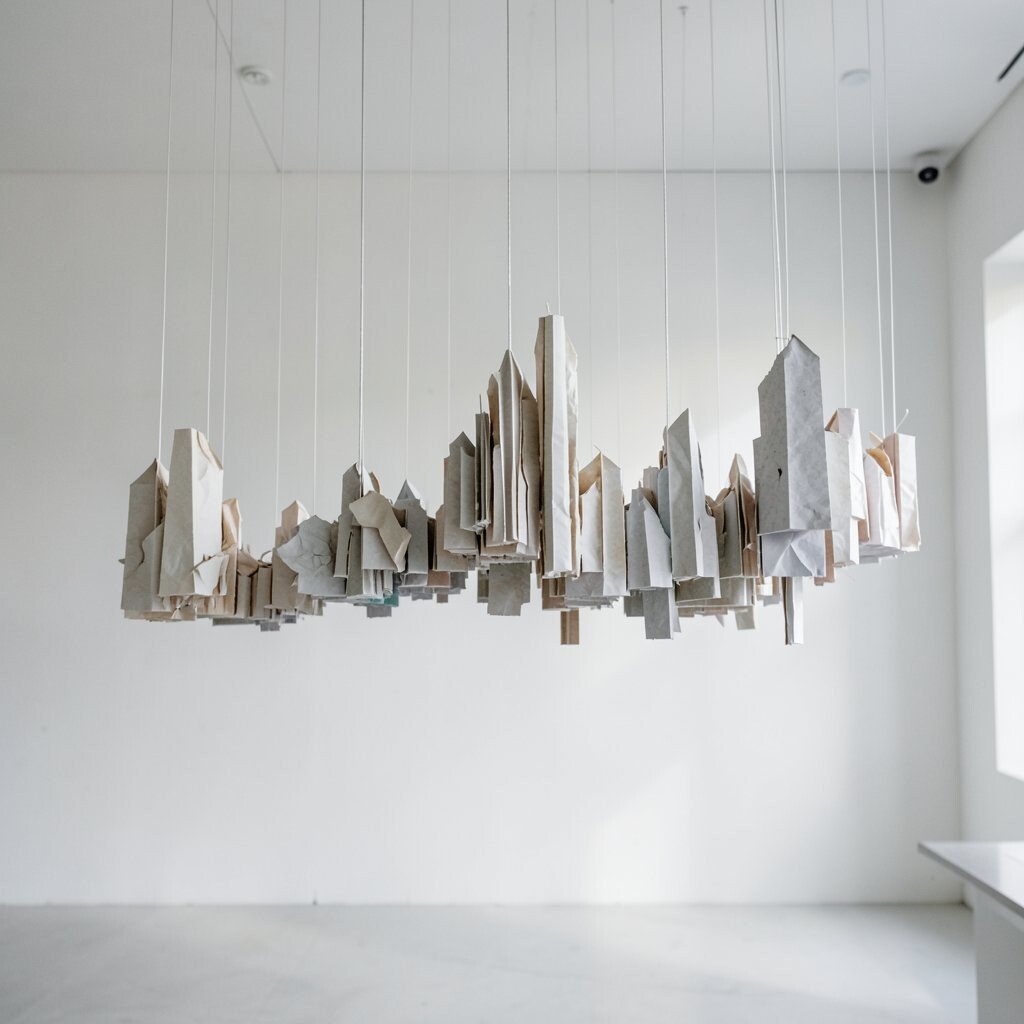
The Hanging “Skyline” of Layered Paper Forms Imagine a ceiling-to-wall scene made of layered paper shapes that catch light like tiny sails. As you move, the pieces shift shadows and make the room feel bigger.
This installation is great for creative spaces because it adds motion without heavy materials. It also helps people focus by giving the eyes something calm to rest on.
For a tip, use a few consistent colors so it looks planned, not messy.Personalize it by naming a theme for your work, like “ocean moods” or “city nights,” then pick shapes that match that mood. If you want to keep costs low, choose thicker craft paper or lightweight foam sheets instead of expensive custom prints. A current trend is “shadow art,” where the design is as much about light and silhouettes as it is about the objects.
Consider placing the skyline above a desk or meeting area so the artwork becomes a natural backdrop. You can also add a small label card with your idea process, like color experiments or sketch notes.
That simple extra step turns the installation into part of your creative story. -
2. A Floor Mosaic With Hidden Messages Under Glass
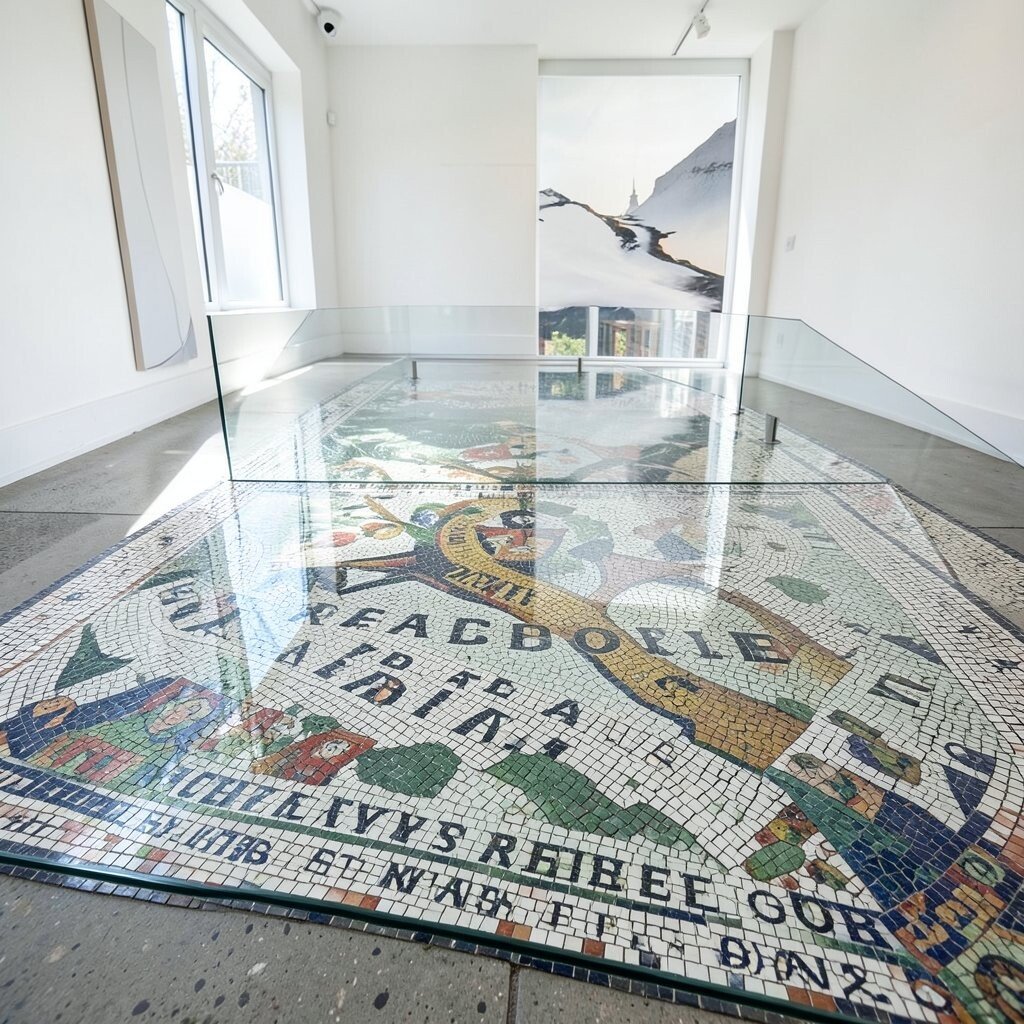
A Floor Mosaic With Hidden Messages Under Glass Picture a mosaic walkway that looks ordinary until you spot faint words in the grout. Then you notice a clear layer that makes the message glow under certain light.
This kind of installation benefits creative spaces because it invites people to slow down and pay attention. It also supports brand building, since the hidden notes can match your logo or mission.
To keep it practical, make sure the surface is sealed and easy to clean, especially in busy rooms.For personalization, include short prompts like “Try again” or “Make it messy first” in a font that feels like you.
Cost-wise, you can use ceramic tiles for durability, or use smaller pieces of thrifted tile for variety.
A trend you’ll see more often is “interactive typography,” where text becomes a visual and tactile element, not just decoration. -
3. Giant Framed “Process Maps” From Your Own Sketchbook
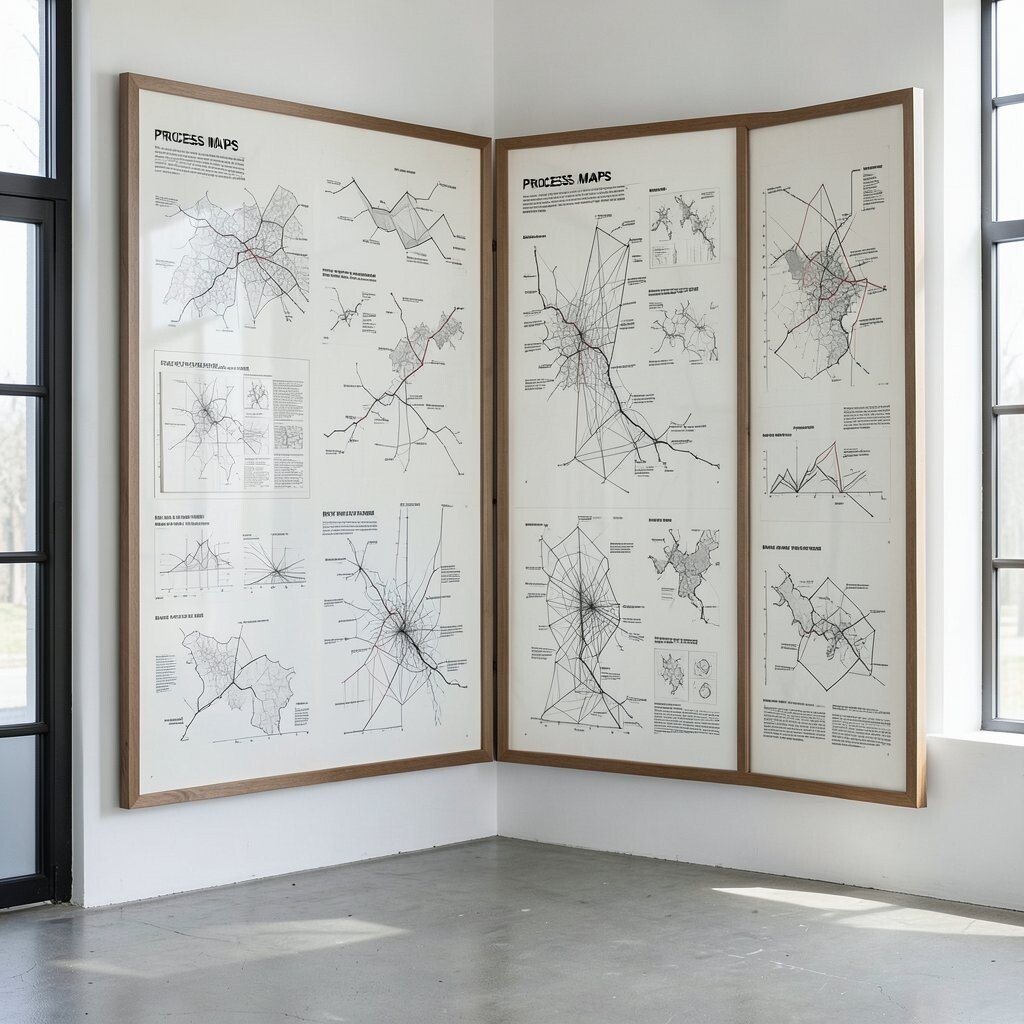
Giant Framed “Process Maps” From Your Own Sketchbook Think of huge frames showing your sketches like they are gallery art, not notes. You can arrange them as a map of experiments, revisions, and final decisions.
This works well in creative spaces because it celebrates learning in a visible way. It also helps new visitors understand your style faster than a paragraph ever could.
A practical tip is to protect the art with archival sleeves or UV glass so it stays crisp.Personalize it by mixing pencil, marker, and pasted textures, then add a short key for each panel.
If your budget is tight, print your sketches and frame them in mixed thrift frames for a curated look.Right now, many studios are using “behind-the-scenes walls” that show drafts, failures, and iterations. That trend builds trust and makes your space feel honest.
Plus, it’s an easy way to rotate content when you finish a new project. -
4. A Wall of “Living” Metal Cutouts With Moving Air Shadows
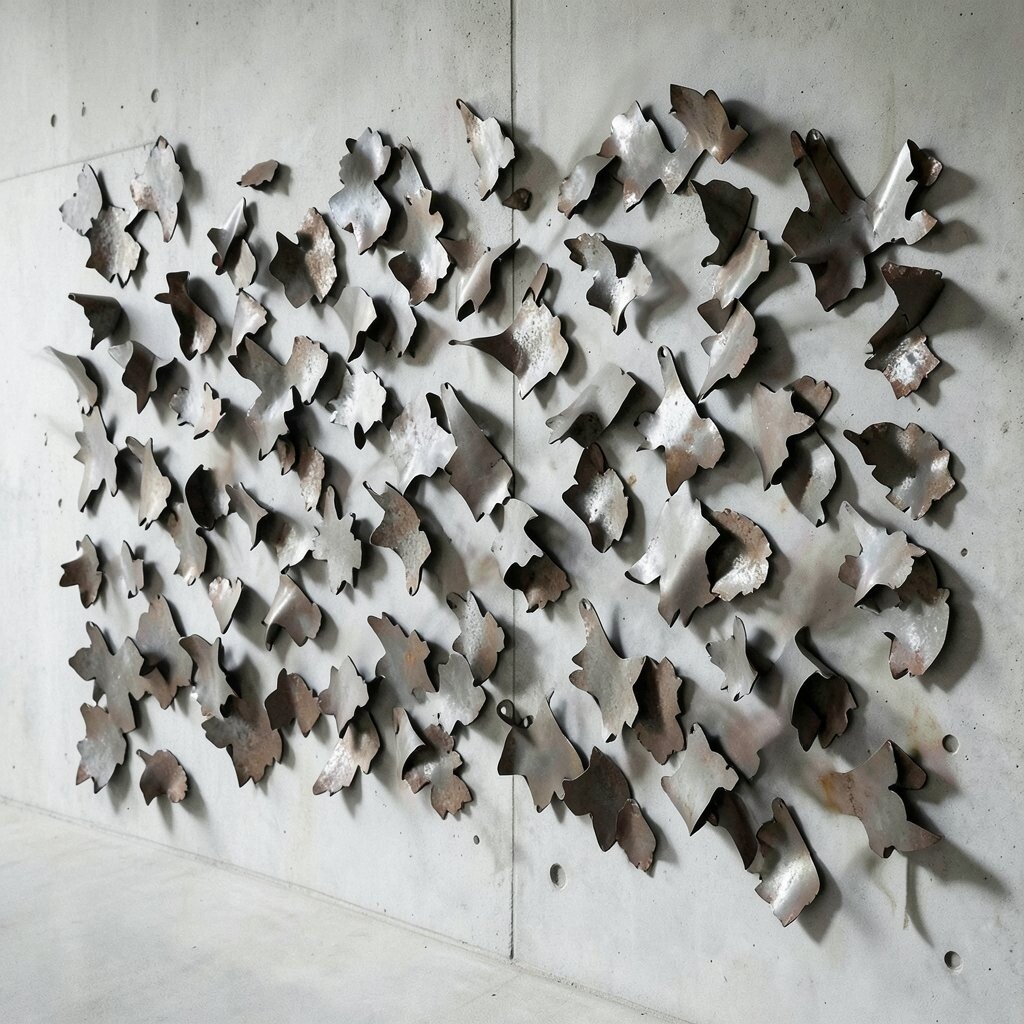
A Wall of “Living” Metal Cutouts With Moving Air Shadows Imagine metal cutouts mounted like a calm pattern, but with tiny gaps that let air create shifting shadows. From a distance, it looks like still art; up close, it breathes with movement.
The visuals feel modern and bold because the shadows change through the day.This installation benefits creative spaces by adding a dynamic layer without distracting chaos. It can also lower noise in a room by breaking up flat surfaces with texture.
For tips, place it near a window or near an air vent so the motion feels natural. -
5. Color-Poured Acrylic Panels Hanging Like Art Weather
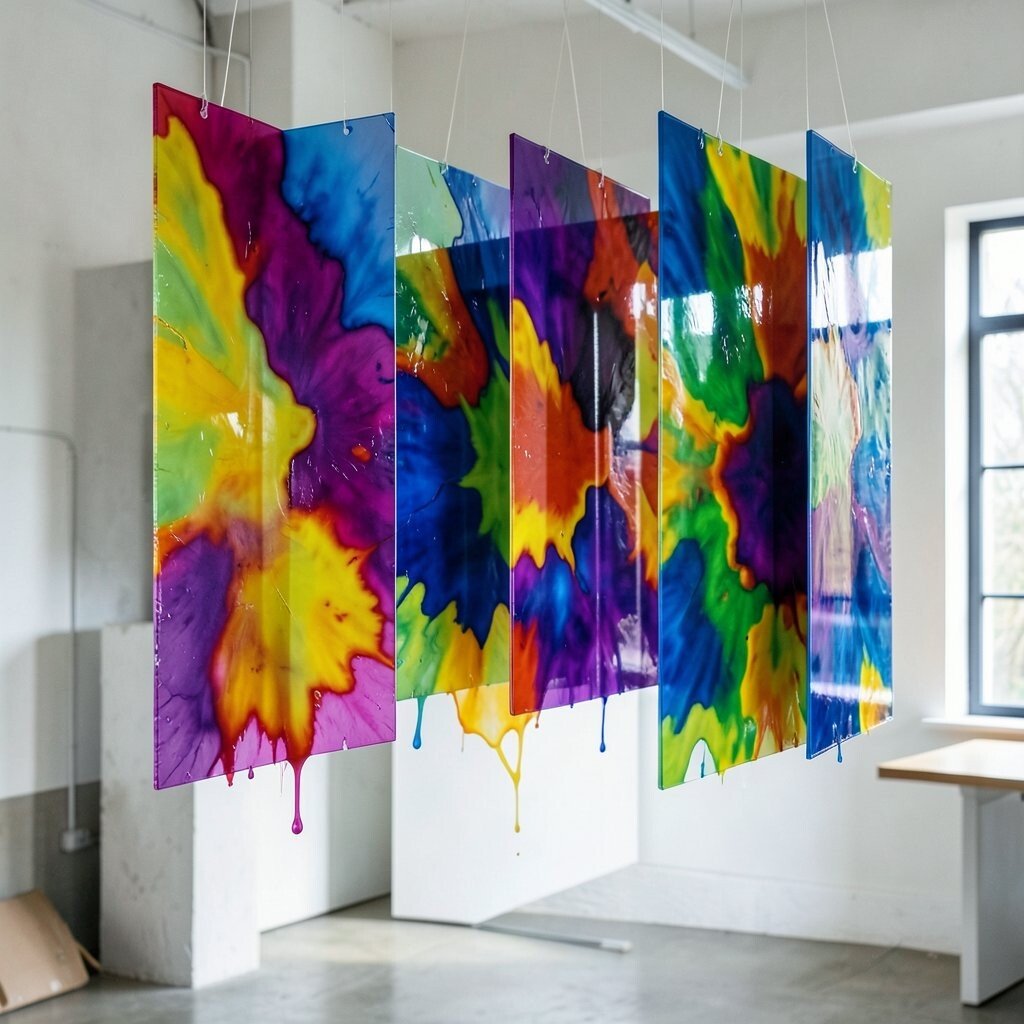
Color-Poured Acrylic Panels Hanging Like Art Weather Picture translucent acrylic panels that look like paint storms frozen in time. When light hits them, they glow with soft edges and bright layers.
The effect feels both playful and professional.This helps creative spaces because it adds color depth and encourages emotional energy. It can also make a plain room feel like it belongs to a creative brand.
A tip is to keep the palette limited, then vary the mixing style in each panel.Personalize by making each panel match a project stage, like “draft,” “refine,” and “final.”
Costs vary, but you can reduce them by using smaller panels and reusing mounting hardware.
A trend here is “resin and fluid color,” where the beauty comes from imperfect flows, not perfect lines.If you want a safer setup, use clear protective film on the front surface and keep cleaning gentle with a microfiber cloth.
Over time, you’ll build a collection that looks new even after years. -
6. A Ceiling Installation of Fabric Flags That Match Your Soundtrack
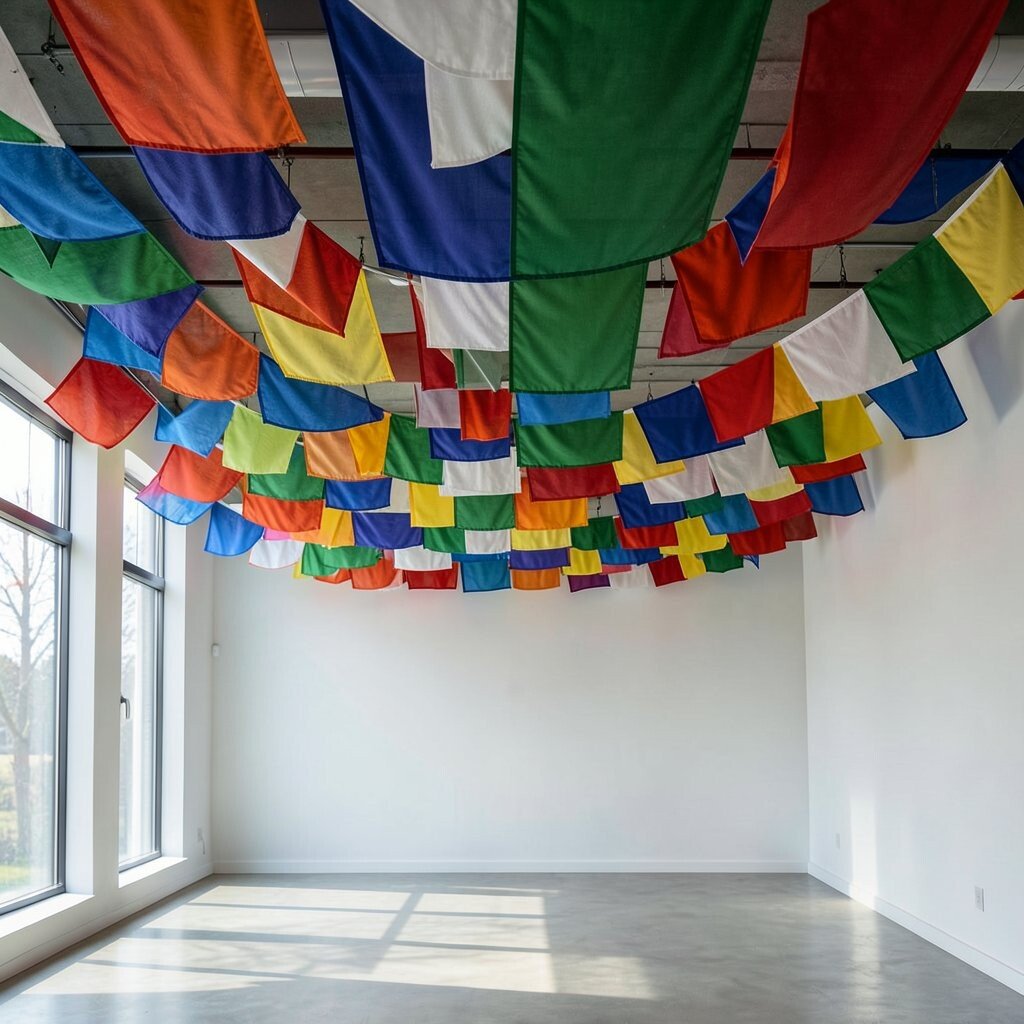
A Ceiling Installation of Fabric Flags That Match Your Soundtrack Imagine a cluster of fabric flags hanging from the ceiling, each one slightly different in width and color. As people walk by, they sway like quiet dancers.
The room instantly feels more alive.This installation benefits creative spaces because it adds soft movement that feels calm, not harsh. It also works like a visual mood board, so you can set the vibe for different events.
For a tip, tie each flag to a “mood” such as focus, celebration, or rest.Personalize the colors using your playlist artwork or the theme of your latest collection.
Budget-friendly options include using dye-able muslin or secondhand fabric cleaned and cut to size.
Current trends favor “textile motion” because it looks warm and flexible, especially in hybrid work setups.To keep it tidy, use a simple mounting grid and label the string lengths so adjustments take minutes, not hours.
You can then swap only a few flags when your style changes.Want it extra irresistible? Add a small card that suggests a short listening prompt while people sit beneath the flags.
That tiny ritual makes the artwork feel like an experience. -
7. Oversized “Shadow Portraits” Created With Cut-Out Stencils
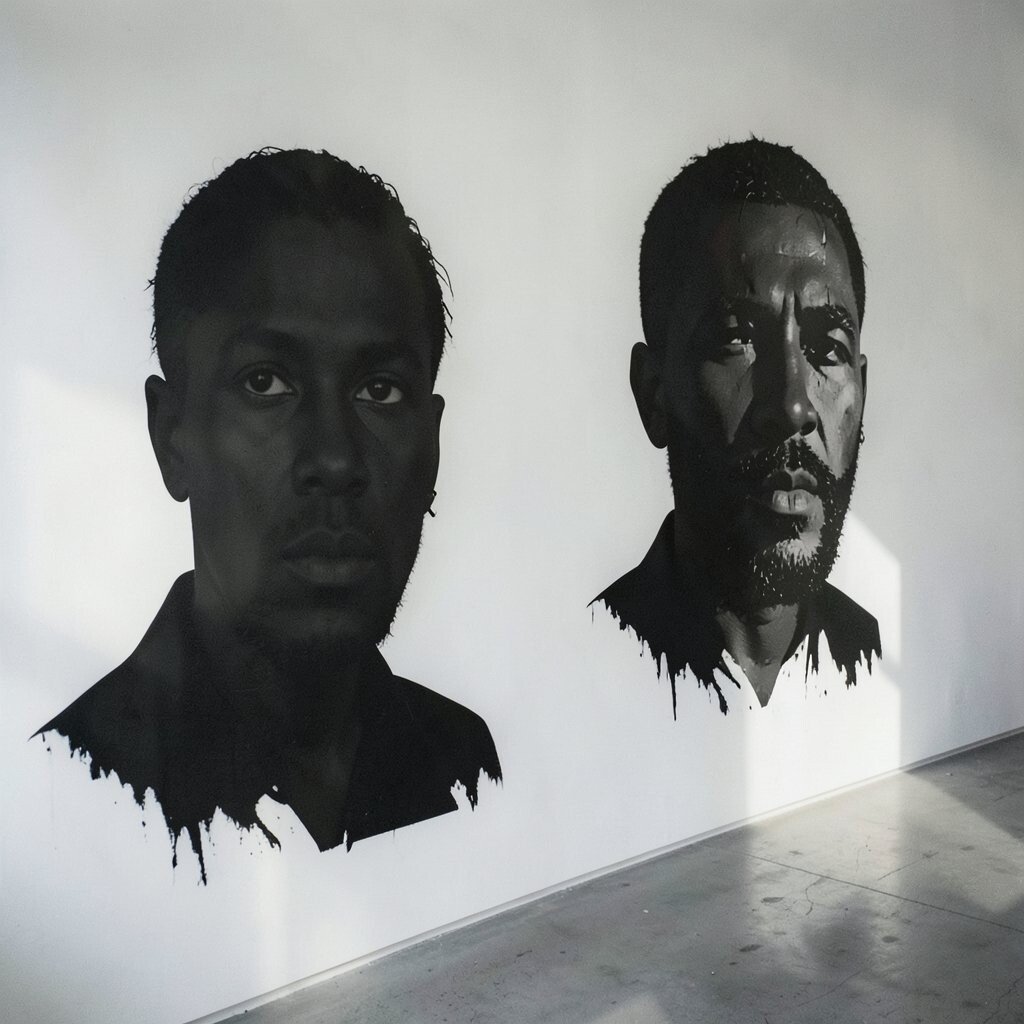
Oversized “Shadow Portraits” Created With Cut-Out Stencils Picture a set of portrait silhouettes on the wall, but the faces are made from layered stencils. When the light angle changes, the portrait edges look different, like a living photo.
This benefits creative spaces because it turns simple lighting into part of the art. It also adds personality, since portraits can reference your team, your characters, or your inspirations.
A tip is to place a lamp or track light so you can shift the shadow angle.Personalize it by choosing silhouettes that connect to your work, like founders, local landmarks, or symbols from your sketches.
Cost can stay low if you use durable stencil film and a strong matte finish paint.
A trend that fits this idea is “light-based illustration,” where the installation feels different at morning versus evening. -
8. A Modular Wall System of Playful Display Nooks
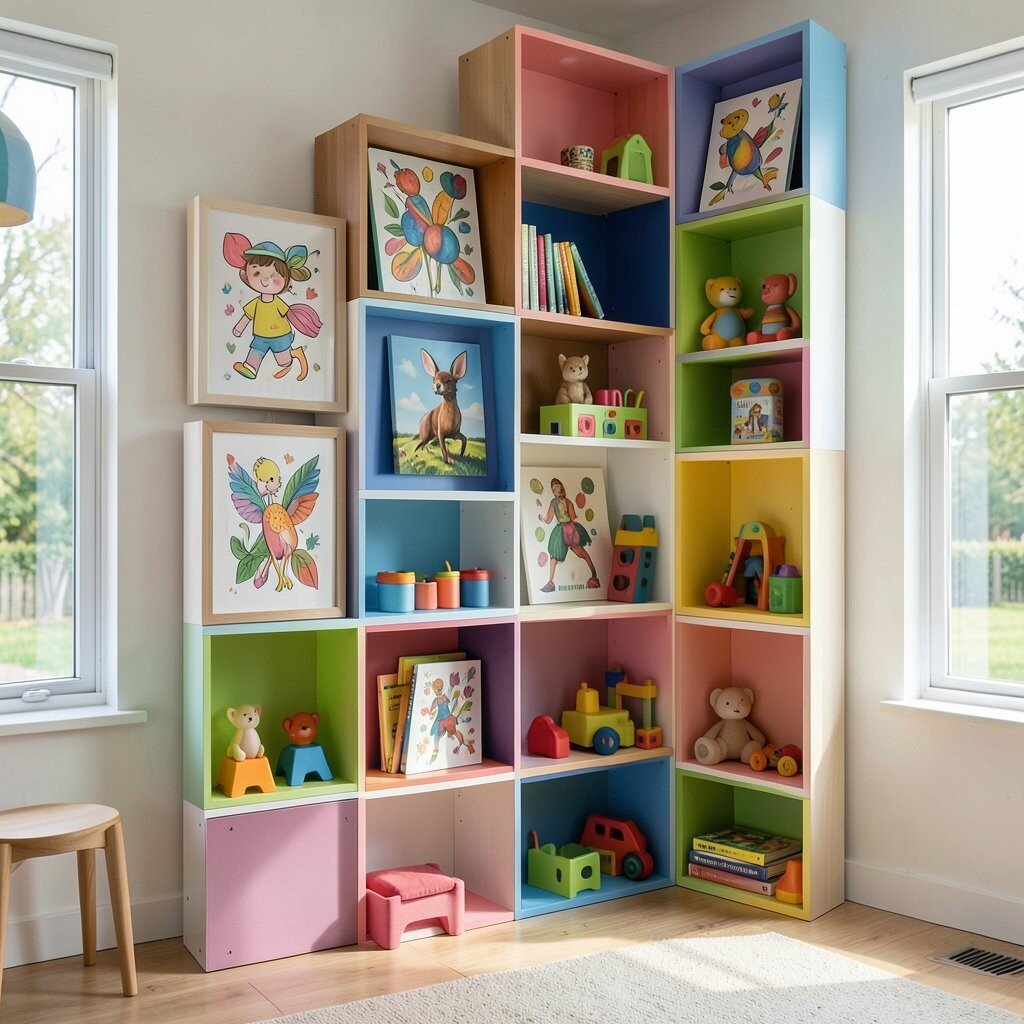
A Modular Wall System of Playful Display Nooks Imagine shelves and niches that look like a wall made for small artworks, objects, and experiments. Each nook can hold a different piece, so the wall becomes a living gallery.
The best part is that it adapts when your ideas change.This benefits creative spaces because it reduces clutter by giving items a home. It also helps visitors understand what you do by showing snapshots of your process.
For tips, keep your spacing consistent and group items by color or material for quick visual order. -
9. The “Gallery Floor” of Repeating Photo Tiles
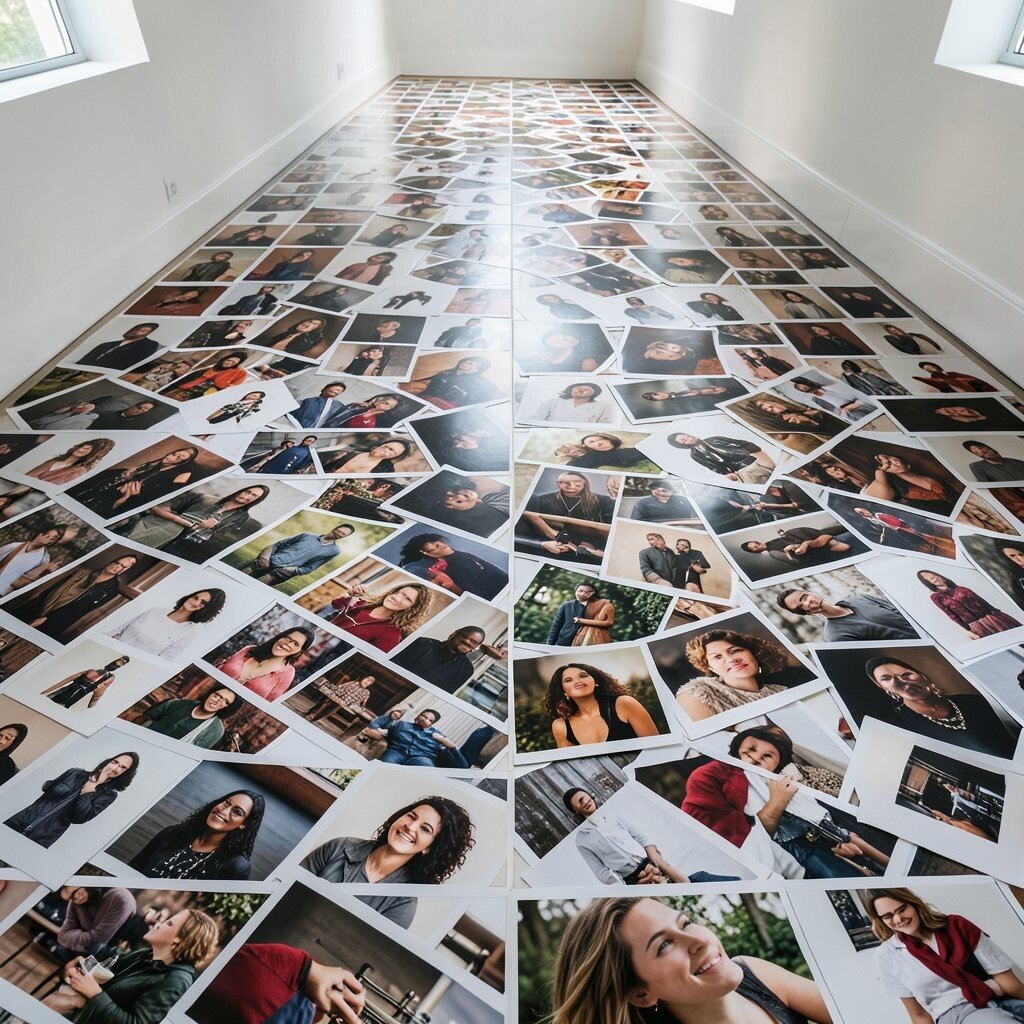
The “Gallery Floor” of Repeating Photo Tiles Picture a floor installation made from repeated photo tiles that form patterns when you step back. Up close, each tile shows a tiny detail from your work.
It’s bold, but not loud.This benefits creative spaces by making movement part of the design. It also gives you a strong visual brand anchor in areas like lobbies, maker rooms, and entryways.
A tip is to choose photos with good contrast so the pattern reads clearly.Personalize it by using photos from your own studio—tool textures, sketches, hands working, and final products.
Cost considerations matter here, so consider vinyl-backed prints with clear top seal for lower expense.
A current trend is “step-in storytelling,” where art meets paths and turns daily routines into a mini exhibition.If you worry about slipping, use slip-resistant coating and ensure the tiles are installed professionally.
This lets the artwork stay safe and durable while still looking striking. -
10. A Live “Weather Board” of Pins and Fabric Swatches
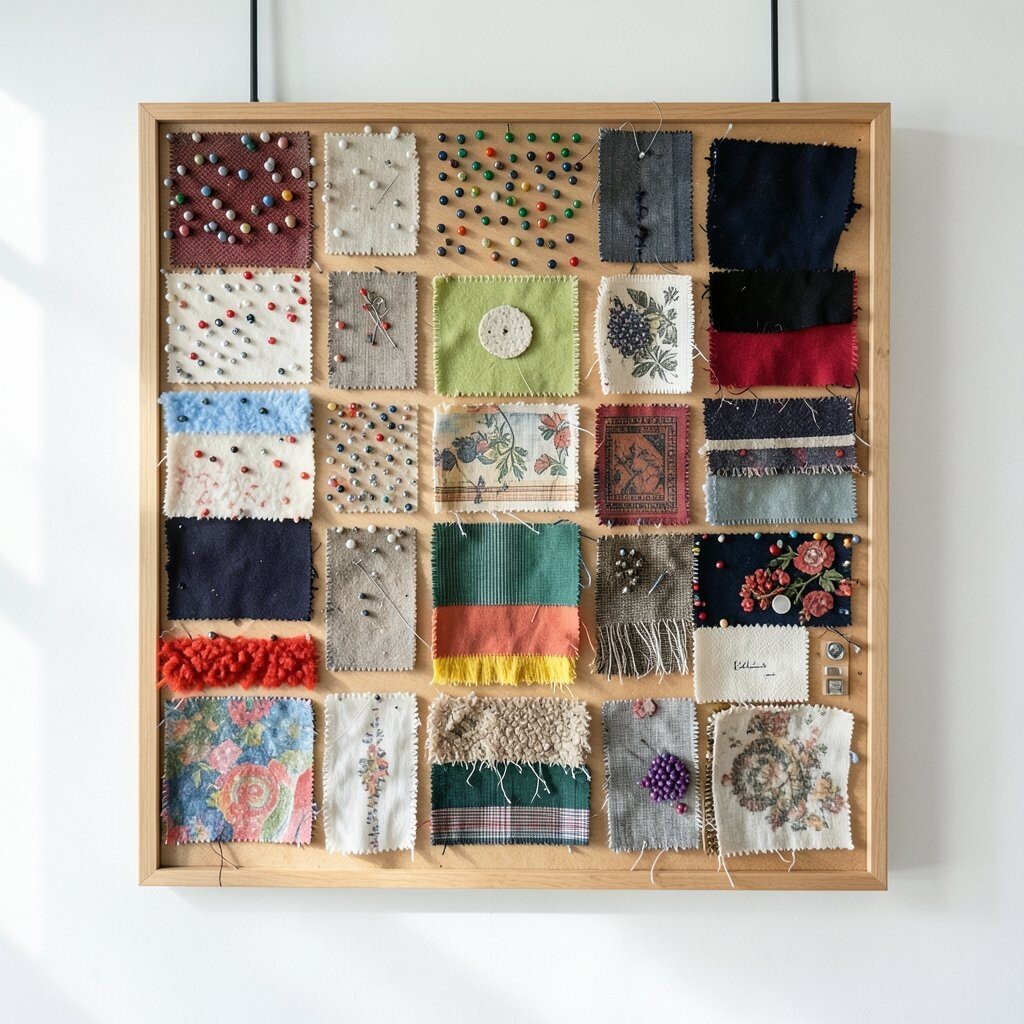
A Live “Weather Board” of Pins and Fabric Swatches Imagine a big board covered in pinned fabric swatches, like a bulletin board that actually looks designed. Different textures and colors create a “weather map” of your moods and materials.
It’s practical, colorful, and seriously engaging.This benefits creative spaces because it supports planning while also acting like artwork. People can see what you’re thinking and how your palette evolves.
For tips, use a consistent grid system so the board stays readable even when it grows.Personalize it by adding small tags with dates, notes, or short questions such as “What feels brave today?”
Costs can be kept reasonable with a pegboard base and affordable fabric scraps, even from old clothes.
A trend you’ll see more now is “maker documentation,” where work-in-progress becomes a visible and inviting wall. -
11. A Freestanding Sculpture Wall Made From Collected Objects
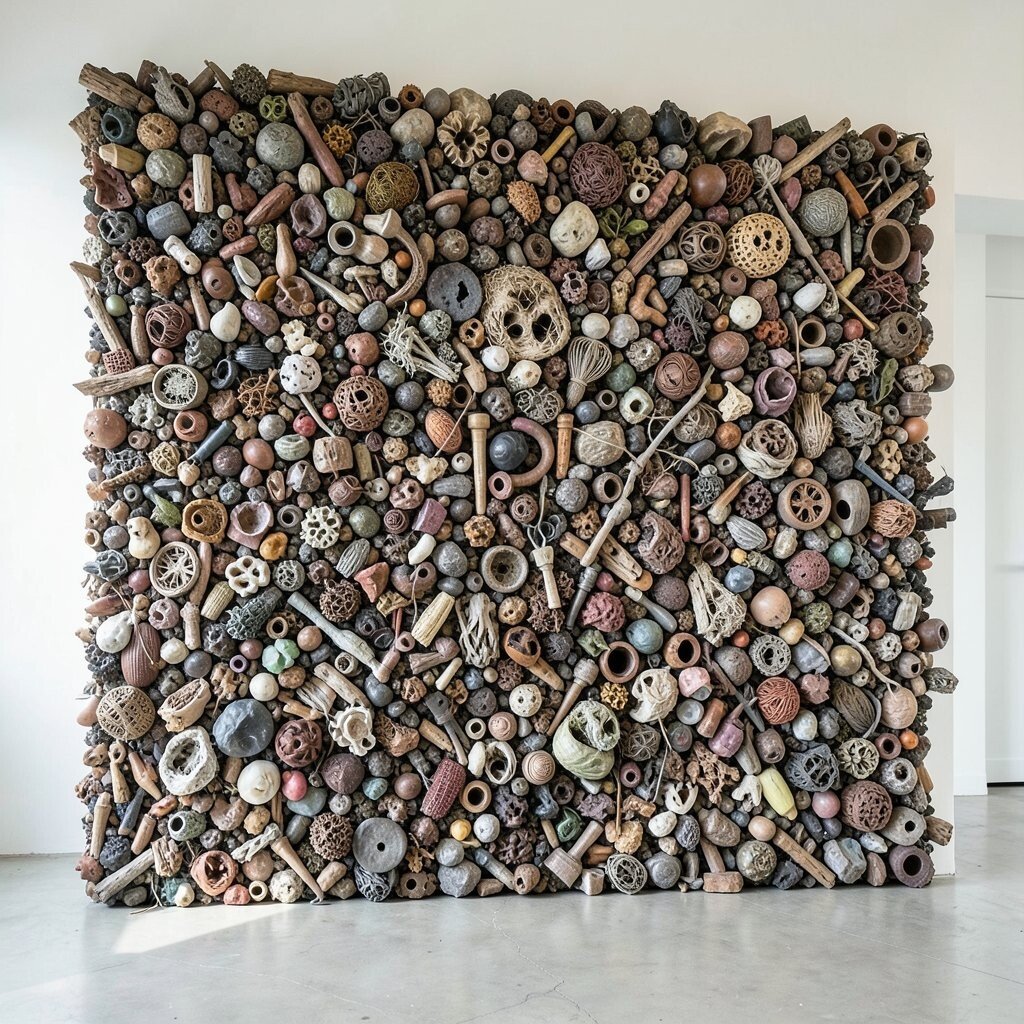
A Freestanding Sculpture Wall Made From Collected Objects Picture a wall that stands on its own, made from sticks, metal scraps, ceramic bits, or wood offcuts. From far away it looks like a sculpture; from close up it looks like a story of finds.
It feels earthy and imaginative.This benefits creative spaces by making visitors look closer, which supports creativity and conversation. It also reduces the pressure to buy new art, since collecting can become part of your process.
A tip is to build it with sturdy bases and anchor points so it stays safe and stable.Personalize it by collecting materials tied to your travels, your community, or your personal history.
Cost considerations can be surprisingly low if you use thrifted items, hardware store leftovers, and found wood.
Current trends highlight “slow craft,” where handmade, imperfect objects feel more meaningful than mass-made decor.To make the installation feel intentional, arrange objects by color families or by repeating shapes.
Then add a small sign that explains what each cluster represents. -
12. A Giant Interactive Lightbox With DIY Circuit Patterns
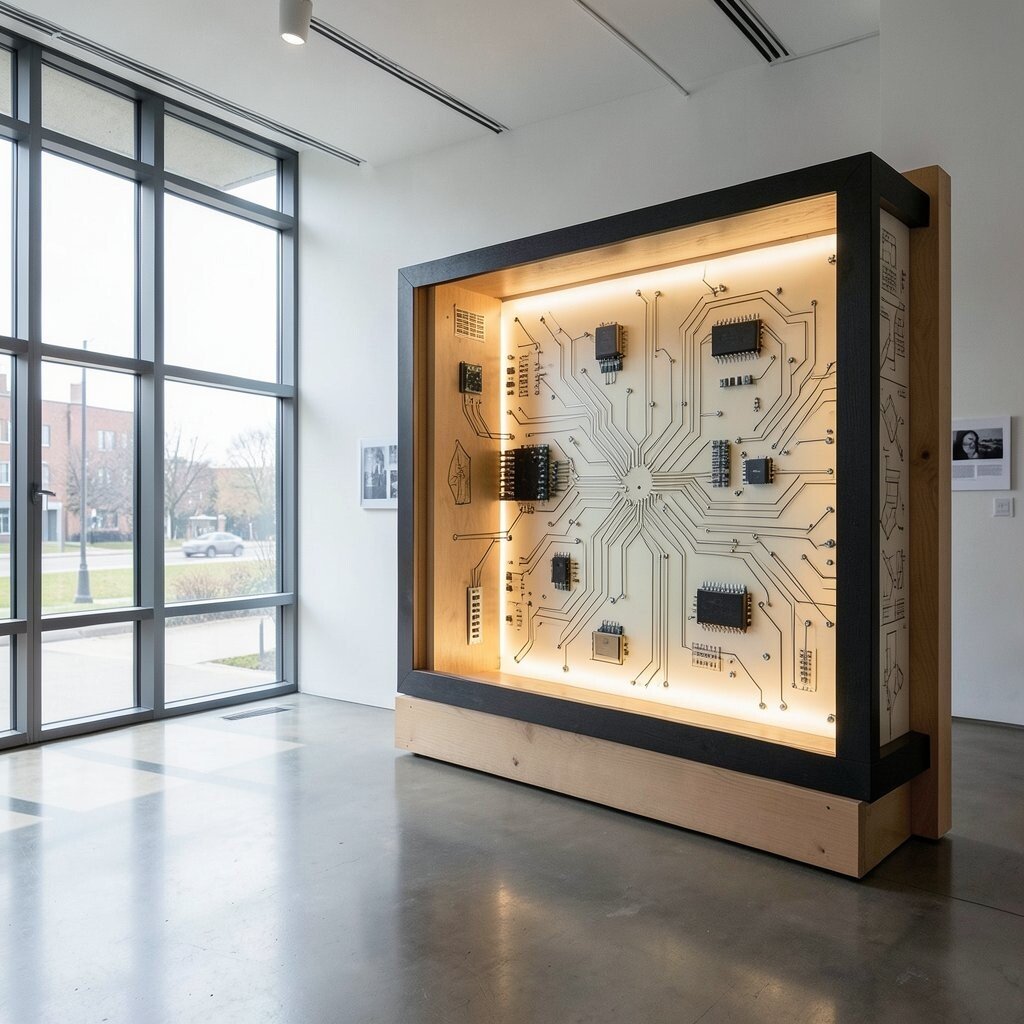
A Giant Interactive Lightbox With DIY Circuit Patterns Imagine a lightbox on the wall where colored strings and cut shapes create changing patterns. When someone taps a spot, the light pulses like a visual heartbeat.
It turns your space into an invitation.This benefits creative spaces by encouraging play, which helps ideas show up faster. It’s also great for workshops because it gives people something fun to interact with.
For a tip, start simple with safe materials and test the power setup carefully.Personalize it by using shapes linked to your work, like letters from your brand name or symbols from your sketches.
Cost can vary widely, but you can keep it manageable by using LED strips and simple controllers.
A trend is “maker-friendly tech art,” where everyday electronics become a creative medium. -
13. A “Curated Grid” Wall of Small Frames With One Big Twist
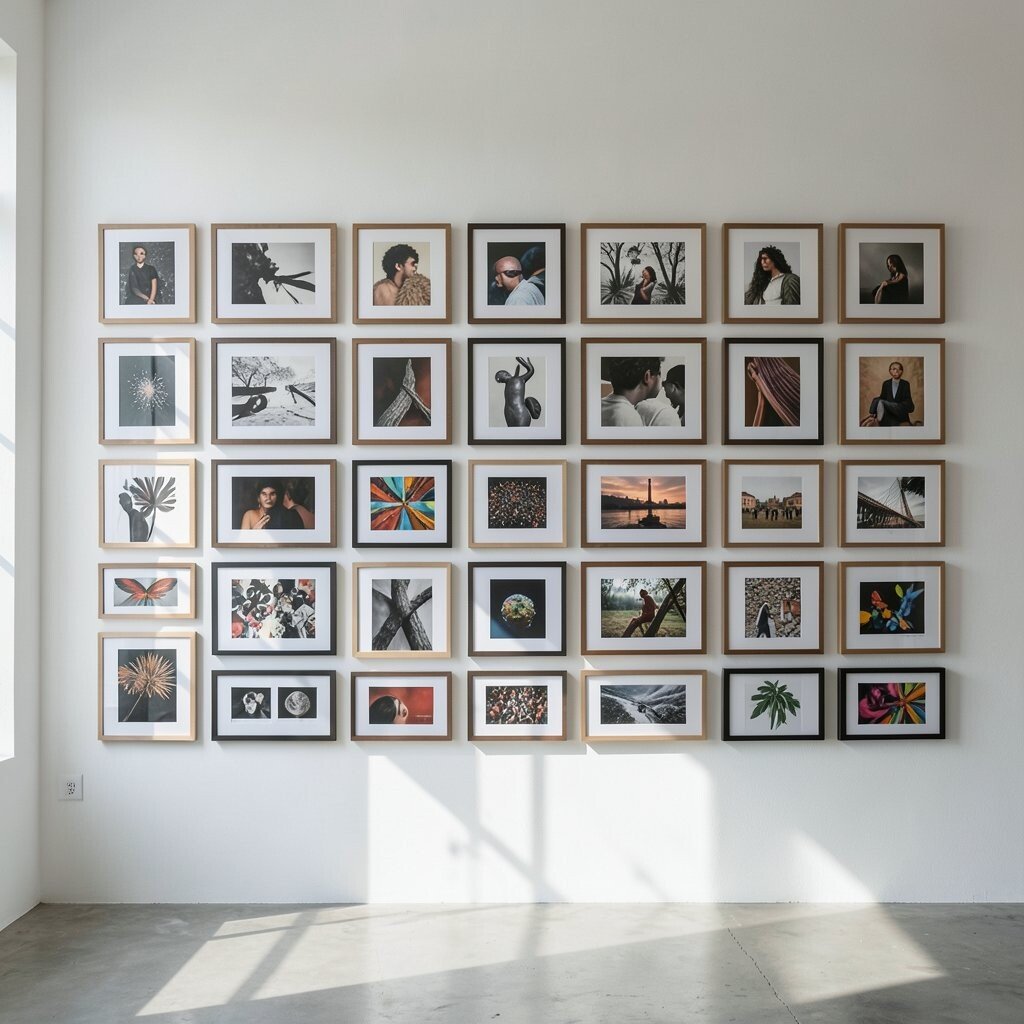
A “Curated Grid” Wall of Small Frames With One Big Twist Picture dozens of small frames arranged in a clean grid, like a gallery you can walk into. Then, in the center, one frame is different—maybe it’s reflective, textured, or filled with a moving element.
That twist grabs attention immediately.This benefits creative spaces because it creates order while still feeling lively. The consistent grid supports quick scanning, and the twist gives people a reason to linger.
For tips, choose frames that share similar thickness, even if colors vary.Personalize it by mixing art types such as prints, fabric squares, postcards, and photos from your process.
Cost considerations are easy here because you can buy frames gradually, not all at once, and swap artwork later.
Current trend energy comes from “mixed media clustering,” where traditional frames hold modern materials and textures.To make maintenance simple, use uniform hanging hooks and add clear plastic covers to protect the pieces.
That way, the wall stays fresh and durable for everyday use.If you want a stronger personalization moment, rotate one frame each month with a note about what you learned.
It turns the grid into a timeline of growth. -
14. A “Reading Portal” Installation With Art Panels and Soft Seating
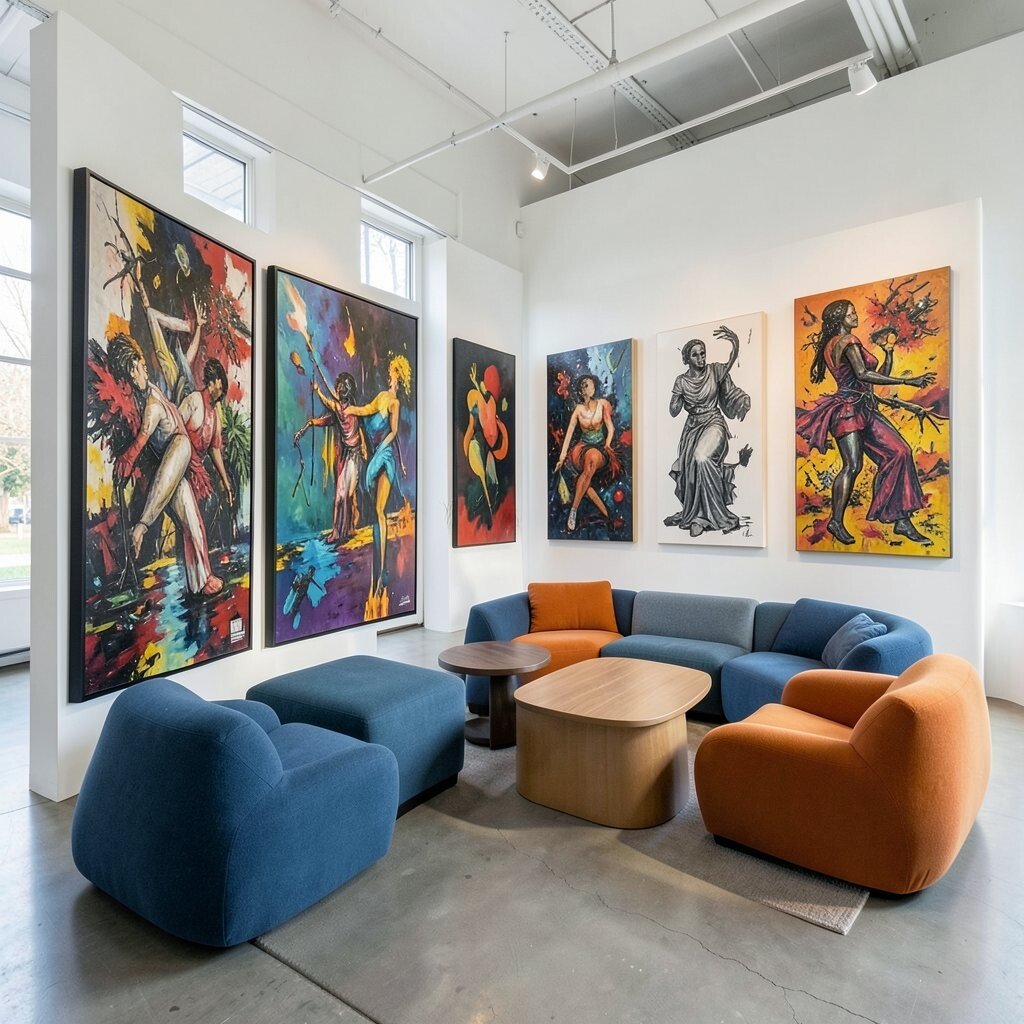
A “Reading Portal” Installation With Art Panels and Soft Seating Imagine walking into a corner that feels like a small portal, built from tall art panels and soft lighting. Behind it, a comfy seat faces a rotating selection of mini artworks.
The whole space says, “slow down and think.”This benefits creative spaces because it creates a calm place for focus and reflection. It also helps collaboration by giving teams a shared spot that feels welcoming.
For tips, use warm lighting and add subtle texture so the area feels safe and cozy.Personalize it by building the panels from your own prints, painted boards, or fabric stretched over frames.
Budget-wise, you can start with foam board and thrift lamps, then upgrade over time.
A current trend is “creative micro-zones,” where small areas inside a room serve different creative needs.