
Cooking feels lighter when your pantry works like a good helper. When everything has a place, you can grab ingredients fast and get dinner done sooner.
Here are pantry ideas that look great, hold a lot, and make daily cooking easier.
-
1. The “Zone-By-Use” Pantry Layout
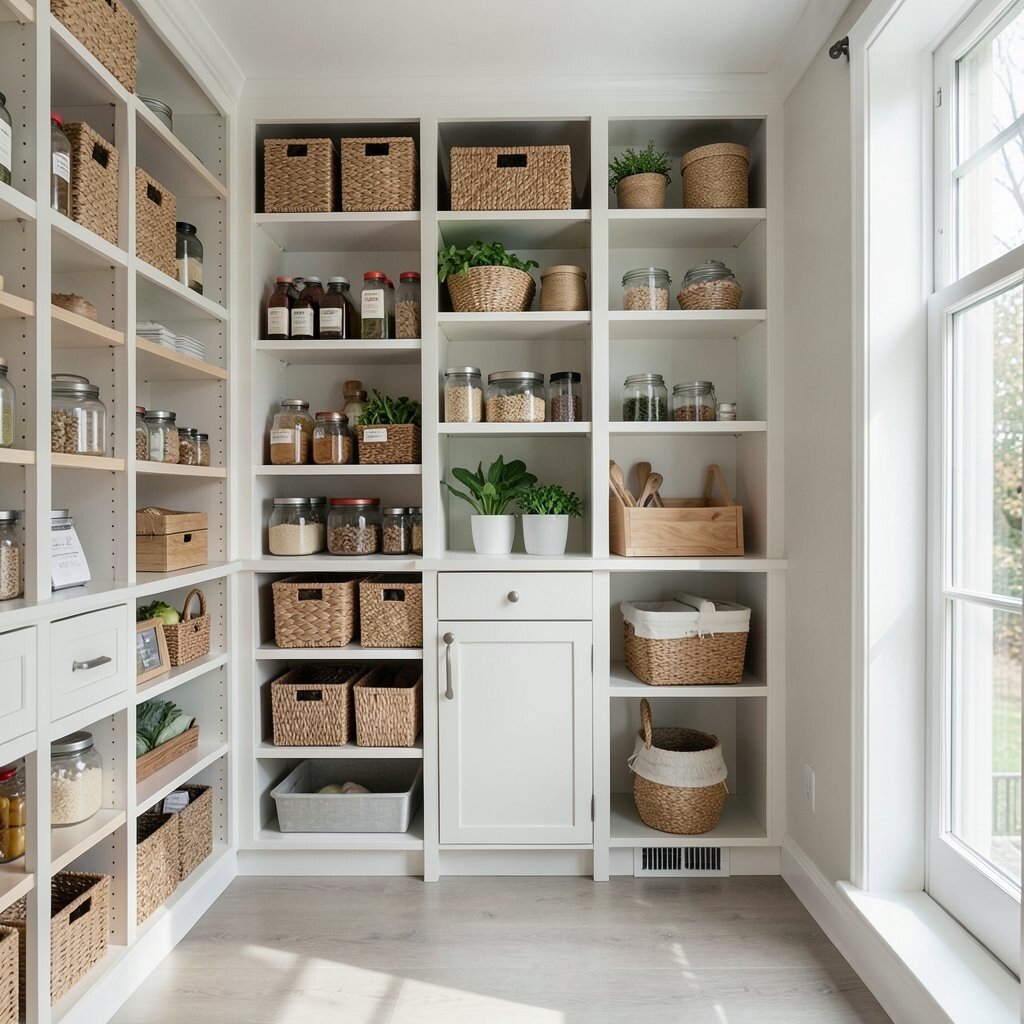
The “Zone-By-Use” Pantry Layout Picture your pantry split into clear zones: baking on one side, snacks up top, and cooking staples at eye level. You’ll see labels, jars, and boxes lined up like a neat little store.
This setup helps you find things quickly, so you spend less time searching and more time cooking.Start by grouping items you use together, like pasta with sauces, or baking flour with sugar and cocoa. Keep the most-used items on middle shelves so they’re easy to grab.
If you have kids, make a kid-friendly snack shelf that is reachable and visible.To personalize it, use a color rule, like blue for breakfast items and green for snacks. Add small bins for sauces, spice packets, and packets of broth so everything stays tidy.
For cost, you can begin with simple bins and labels before buying bigger organizers. -
2. Pull-Out Shelves With Soft-Close Drawers

Pull-Out Shelves With Soft-Close Drawers Imagine sliding out a shelf and seeing everything at once, like a friendly pantry drawer display. Soft-close drawers keep things calm and quiet, even on busy nights.
You’ll waste less food because older items are easier to spot.Use pull-outs for cereal, canned goods, and meal kits so you don’t have to crouch or reach into the back. For safety, store heavier bags, like rice or flour, in the lowest pull-outs.
Add a handle style you love—matte black, brass, or wood—so it feels like your kitchen.A smart trend right now is “full visibility” storage, where you can scan shelves in seconds. To keep costs lower, add pull-outs to just one or two key shelves first.
When you expand later, follow the same sizing so upgrades feel smooth. -
3. Door-Mounted Storage for Spices and Extras

Door-Mounted Storage for Spices and Extras Look at the inside of your pantry door and think of it as prime real estate. Door shelves and racks can turn wasted space into a tidy spice station.
You’ll cook faster because tiny items won’t hide behind bigger containers.Try a magnetic strip for metal lids, a slim rack for spice jars, and a clear pocket organizer for packets. Keep the spices you use most near the front so you don’t hunt.
If you hate clutter, choose containers with matching lids so the door area stays neat.For personalization, use a label maker and add a “seasoning” theme, like Italian, taco, or baking blends. A helpful tip is to group spices by meal type rather than alphabetical order.
Cost-wise, door organizers can be affordable, especially when you start with one panel.This style also fits current trends like “small-space optimization,” where every inch counts. If you rent, look for adhesive options that remove easily.
The goal is simple: make your door a tool, not a forgotten shelf. -
4. Clear Canisters for a “You Can See It” Pantry
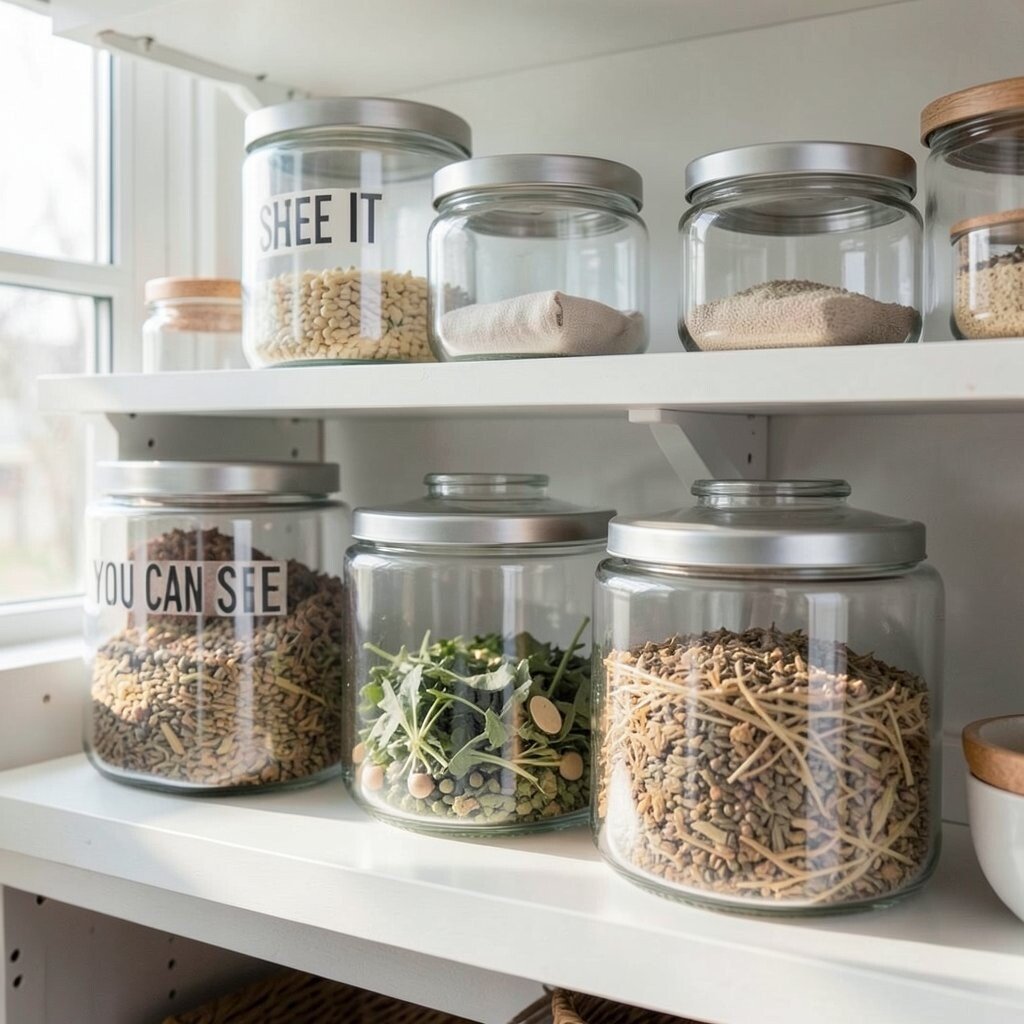
Clear Canisters for a “You Can See It” Pantry Picture your pantry with clear containers lined up, so flour, pasta, and cereal look bright and uniform. The visual rhythm makes it easier to spot what’s low.
You’ll also feel calmer because the shelves look organized every day.Use matching canisters for dry goods, but mix sizes for balance: one big jar for flour, smaller ones for baking chips. Put labels on the front and include dates when possible.
For a practical touch, store a refill bag or spare jar in the back of a shelf so you’re never stuck mid-recipe. -
5. A Baking Counter-Ready Pantry With Ready-to-Go Tools
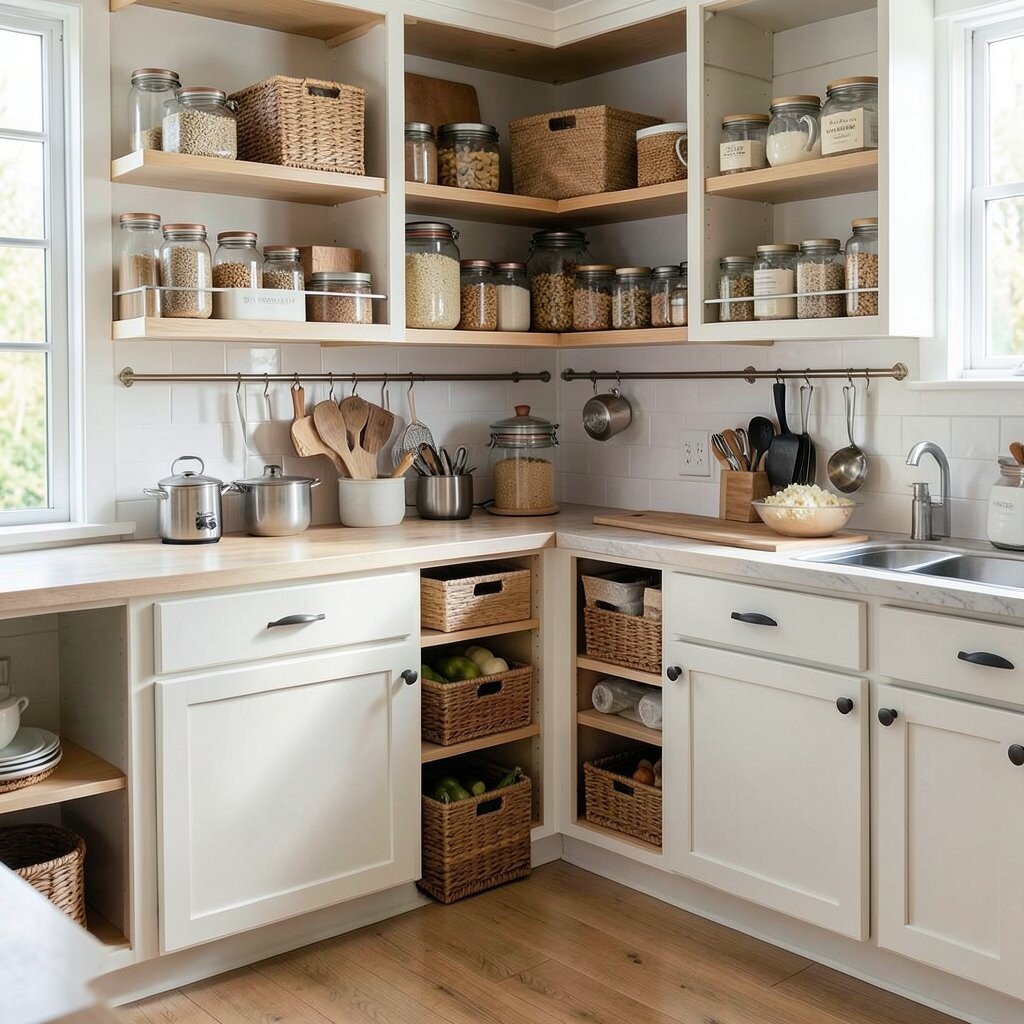
A Baking Counter-Ready Pantry With Ready-to-Go Tools Imagine opening your pantry and seeing baking tools and ingredients grouped like a mini kitchen station. There’s a “ready-to-go” shelf with measuring items, parchment, and cookie mix.
This design helps you start recipes without digging around for tools.Keep flour, sugar, cocoa, and baking powder together, and place items you need often at your shoulder height. Add a small caddy for vanilla, extracts, and sprinkles so bottles don’t roll away.
If you bake weekly, consider a dedicated tray shelf for sheets and cooling racks.Personalize it with themed labels like “cakes,” “cookies,” and “brownies.” If you want to save money, reuse jars you already own and buy only a few matching canisters first.
A current trend is “recipe-first organizing,” where the pantry is arranged around the most common meals you cook. -
6. The Vertical-Stack Organizer for Tall Shelves
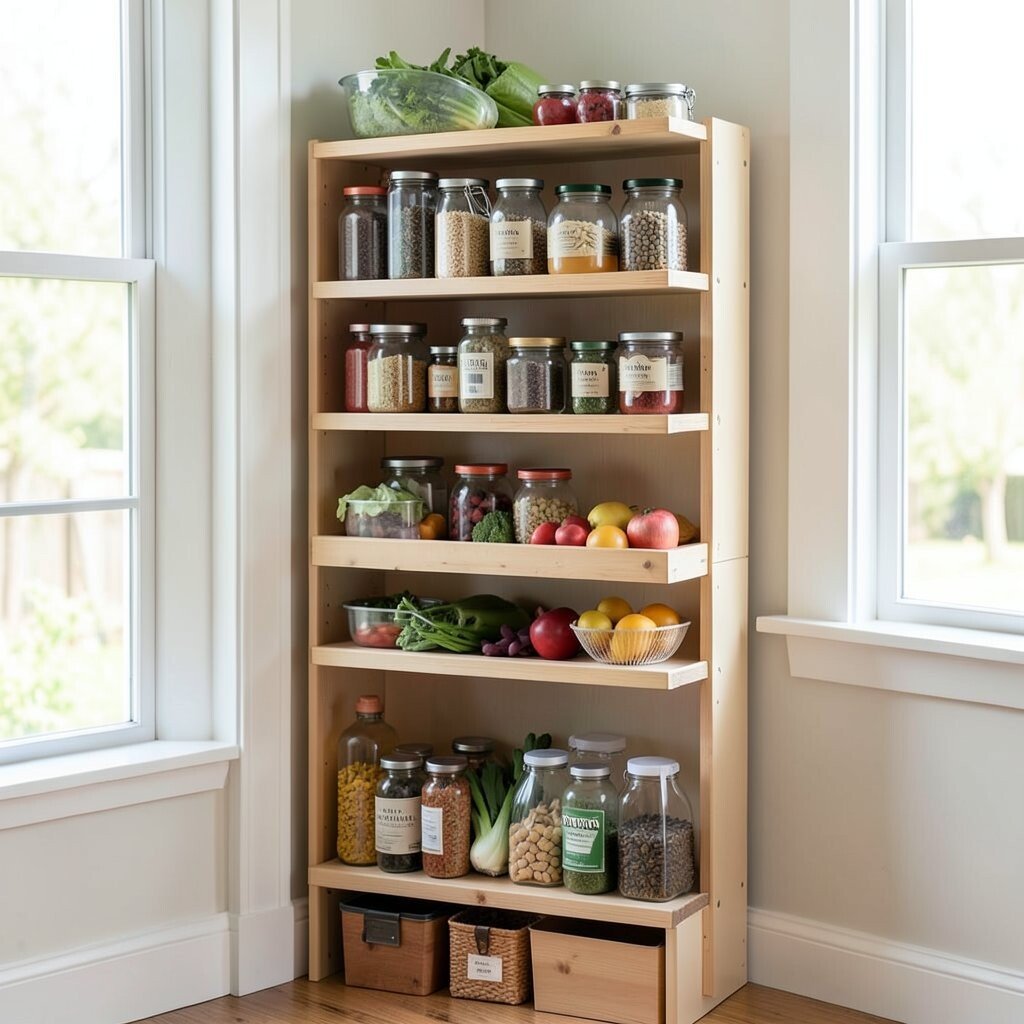
The Vertical-Stack Organizer for Tall Shelves Think tall shelves that don’t feel dangerous or messy. A vertical- stack pantry uses slim dividers and tiered shelving so items stand upright and stay easy to reach.
You can store more without losing the “wow” look.Try stacking items by size: place tall cans in one column, boxed mixes in another, and snacks in smaller tiers. Use shelf risers for cans so you can see the labels and grab without shifting everything.
Add a stop strip at the back edge so tall items don’t slip during quick pulls.For personalization, use a mix of heights that matches your body comfort, like slightly higher tiers for frequent grab items. When buying dividers, measure twice so everything lines up with your shelf width.
Cost can stay low by using simple shelf inserts before upgrading to custom shelving. -
7. The Pantry “Assembly Line” for Meal Prep Days

The Pantry “Assembly Line” for Meal Prep Days Picture your pantry as a work bench for meal prep. One shelf becomes your grain zone, another becomes your canned sauce zone, and another holds spices for quick mixes.
This makes cooking feel like a smooth flow, not a scattered hunt.Set aside space for containers you already own, like reusable food tubs and mason jars. When you plan ahead, you can pull everything in one trip.
Add a small label sheet holder so you can write “breakfast,” “lunch,” or “dinner” meal tags.Uniqueness comes from how you match your pantry to your schedule. If you prep on Sundays, keep ingredients and tools for that day at the front.
A cost-smart tip is to reuse empty containers and only buy a few matching organizers for the biggest visual clutter.Today’s trend is “prep-friendly storage,” where containers are used right after purchase. If you store lentils, rice, or beans, set aside a scoop tool near the containers for faster portioning.
You’ll feel proud when your kitchen steps stay organized all week. -
8. Corner Pantry With Lazy Susans and Deep Storage
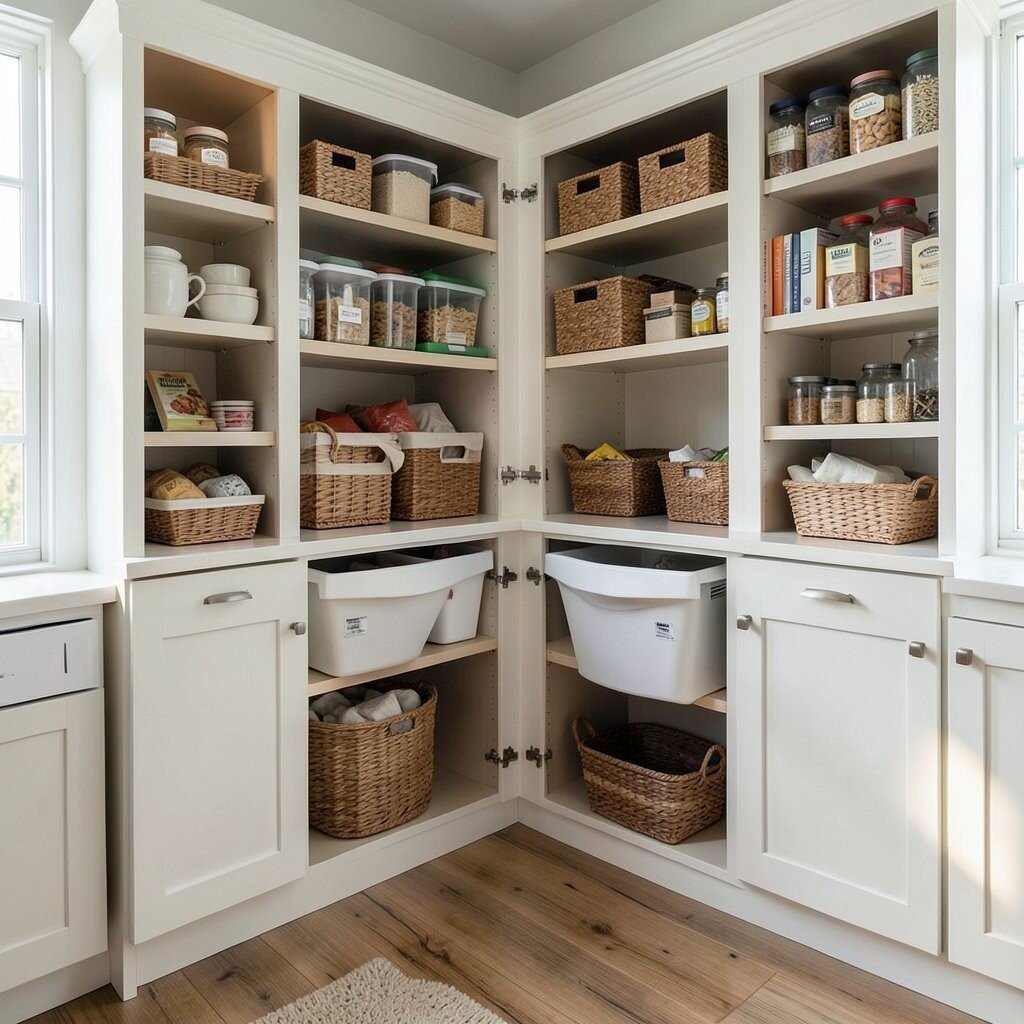
Corner Pantry With Lazy Susans and Deep Storage Corner pantries can look tricky, but they can become the easiest spot in your home. With a lazy Susan, you get smooth rotation and you can reach items without twisting your body.
The visual effect is like a carousel of ingredients waiting for your next recipe.Use the top tier for snacks and everyday condiments, while deeper tiers hold backup supplies. Place oils and vinegar bottles on a secure ring or tray to prevent tipping.
Personalize it by adding a small “backup zone” where you store extra paper towels, foil, and plastic wrap. -
9. Temperature-Smart Storage: Pantry Vs. Cooler-Style Items

Temperature-Smart Storage: Pantry Vs. Cooler-Style Items Some pantry items don’t want to sit in the hottest spot, and that’s where temperature-smart design helps. Visualize one area for stable dry goods and another for items you prefer to keep cooler.
This can help your pantry work better for months, not just weeks.Keep oils, nut butters, and sauces where heat stays steadier, like the middle shelves away from the oven wall. Put baking flour, rice, and cereal in the more stable area where you don’t worry about softening or flavor changes.
If your pantry runs warm, use clear bins so you can check contents without removing everything.For personalization, create a “heat note” label style that reminds you where things belong. A budget tip is to start with simple shelf rearranging before buying new equipment.
Current trends in home food storage focus on freshness and “right-place storage,” which is exactly this idea. -
10. Color-Coded Shelves With Simple Labeling

Color-Coded Shelves With Simple Labeling Picture each shelf marked with a soft color band and matching labels. When you open the door, your brain gets a quick map, and finding items feels instant.
You’ll also keep the pantry tidy because everyone can put things back correctly.Choose a label style like simple black text with colored dots, or use color-coded shelf tape for categories. For example, red dots for snacks, green dots for baking, and blue dots for dinner staples.
Use clear bins for sticky or small items like tea packets, broth cubes, and seasoning blends.Uniqueness comes from how you pick colors that fit your kitchen vibe. If your kitchen is warm and cozy, use earthy tones; if it’s modern, choose clean neutral shades.
Cost stays friendly because label tape and sticker systems are often cheaper than big hardware upgrades. -
11. Hidden-Tech Pantry: Built-In Lighting and Inventory Tricks
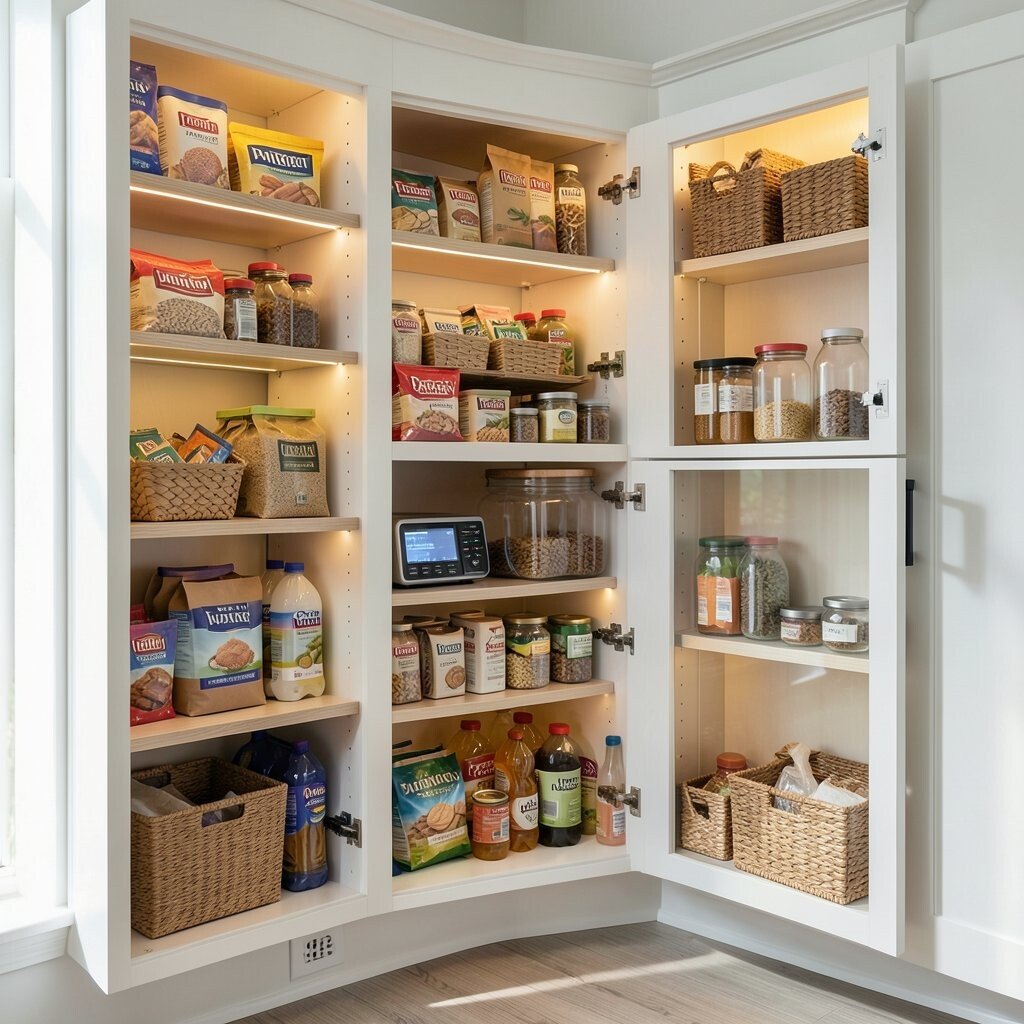
Hidden-Tech Pantry: Built-In Lighting and Inventory Tricks Imagine the moment you open the pantry and soft light fills the shelves right away. Built-in lighting makes everything easy to see, even at the back.
You’ll notice what you already have, so you buy less by mistake.Add small LED strips under shelves or use motion-activated lights so it’s bright without extra steps. Pair lighting with an “inventory” method using a checklist card on the inside door.
When you finish an item, check it off and add it to your list right then.For personalization, use different brightness settings if your system supports it, like brighter light for cooking prep and softer light for late-night snacks. Cost considerations depend on installation, so you can start with plug-in LED options before hiring help.
Current trends include “smart organization,” where visibility and tracking combine to reduce waste.A simple tip is to keep labels near the front edge so you can scan quickly during dinner rush.
This design feels high-tech but still stays beginner-friendly. -
12. Modular Pantry Cubes for Flexible Storage
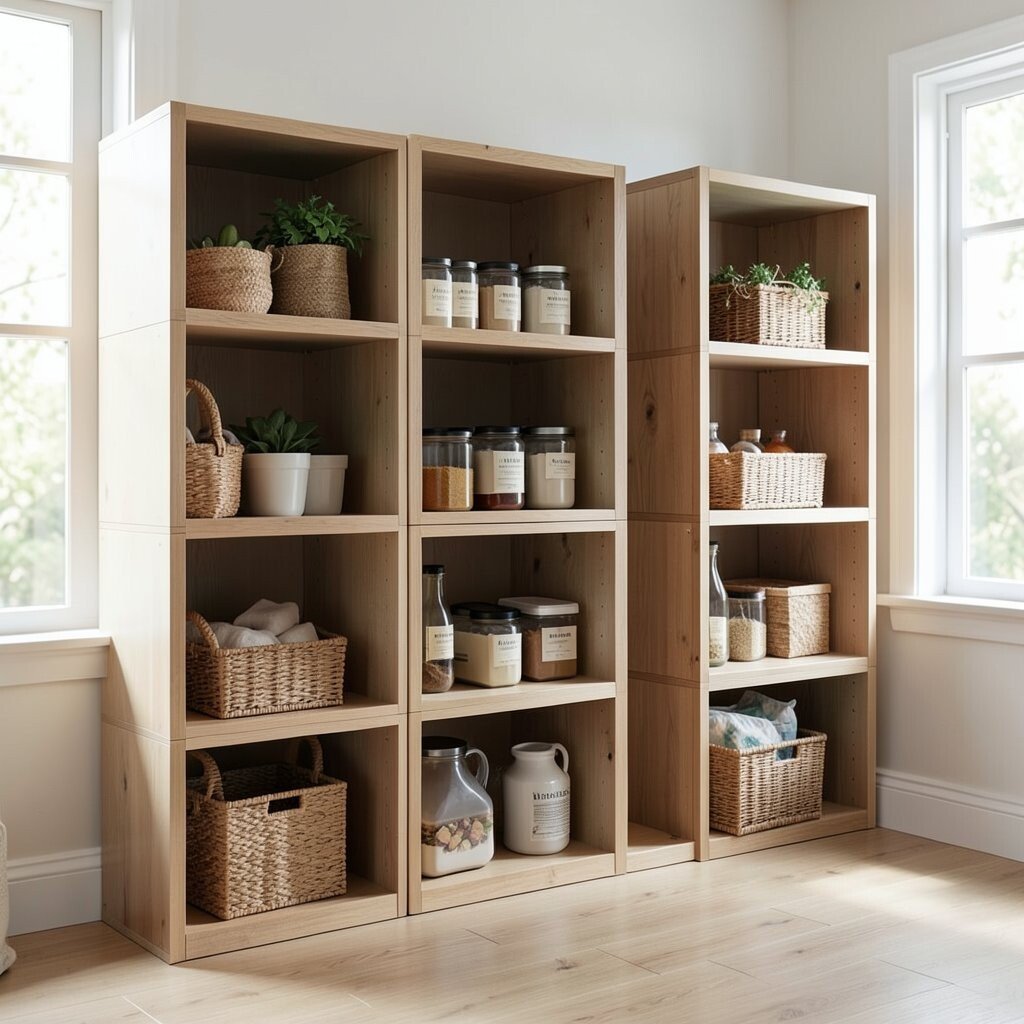
Modular Pantry Cubes for Flexible Storage Picture a pantry built from modular cubes that you can rearrange as your needs change. One month it holds snacks and cereal, and the next it holds meal prep boxes and baking supplies.
This makes your pantry feel alive, not locked in one layout forever.Choose a mix of open cubes for quick grabs and closed bins for items you want to keep out of sight. Make a rule that each cube holds one category so things don’t mix.
For personalization, use baskets with handles for a soft look or use sleek storage boxes for a modern style.