
Fresh herbs can make your kitchen feel alive. Small setups can still look bold and taste amazing.
-
1. Mason Jar Window “Herb Wall” With Color-Coded Twine
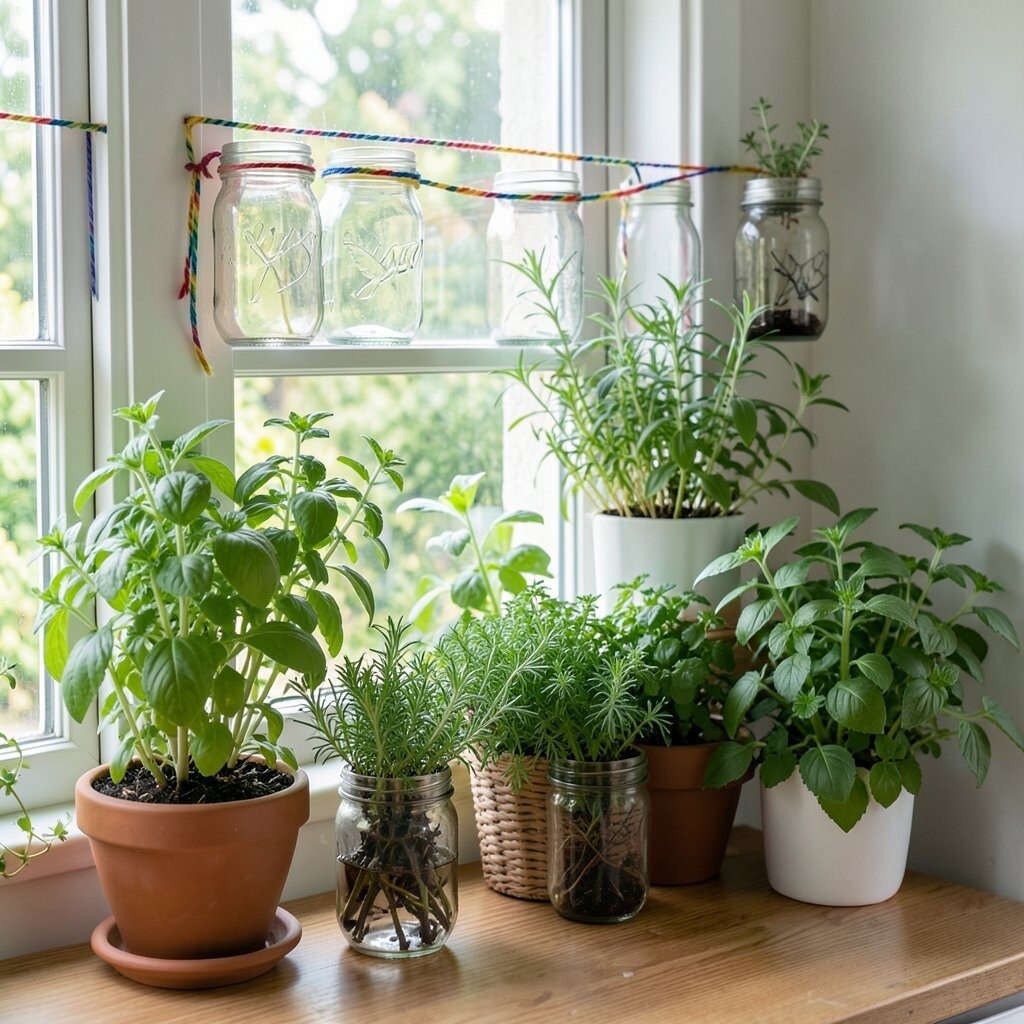
Mason Jar Window “Herb Wall” With Color-Coded Twine Line up clear mason jars on a sunny windowsill, then tie twine around each lid in a different color. You’ll see tiny green shoots pop through the glass like a neat little gallery.
This setup is great for quick cooking, since herbs are right where you reach for them. You also get better control over watering because each jar holds its own amount of soil.
For uniqueness, label jars with fun names like “Pizza Mint” or “Taco Thyme” and keep a mini care note inside the cabinet.Start with easy herbs such as basil, parsley, chives, or mint-friendly varieties that do not try to take over. Use potting mix, not plain garden dirt, and trim leaves often so plants stay bushy.
Cost is usually low if you reuse old jars, and you can upgrade later with better grow lights. A current trend is “visible gardening,” where plants are part of the decor instead of hidden away.
-
2. Teacup and Spoon Planters for a Vintage Herb Corner
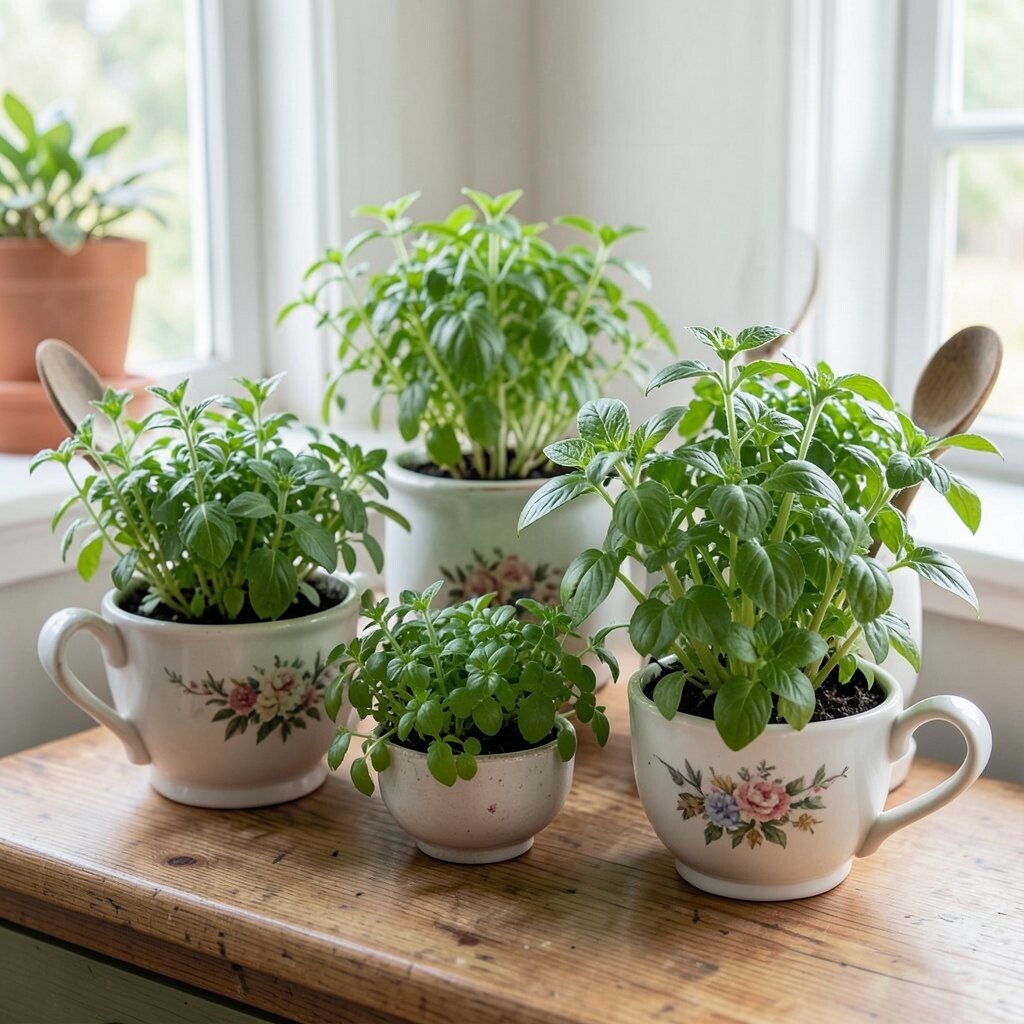
Teacup and Spoon Planters for a Vintage Herb Corner Pair mismatched teacups with small saucers and even hang a tiny spoon charm nearby. The look feels cozy and creative, like your kitchen has its own vintage shop.
Herbs grown in cups can make daily cooking simpler because you harvest from a small cluster. It also adds charm to the space, which is a real mood booster.
Keep each cup with one herb so it stays neat and easier to care for.Personalize by matching the teacup pattern to the herb flavor you love most. Try dill for a pickling mood, or basil for a pasta day.
To reduce cost, hunt for thrift-store cups and drill drainage holes carefully if the cups lack them. -
3. Recycled Spice Tins With Seed-Starting Lids
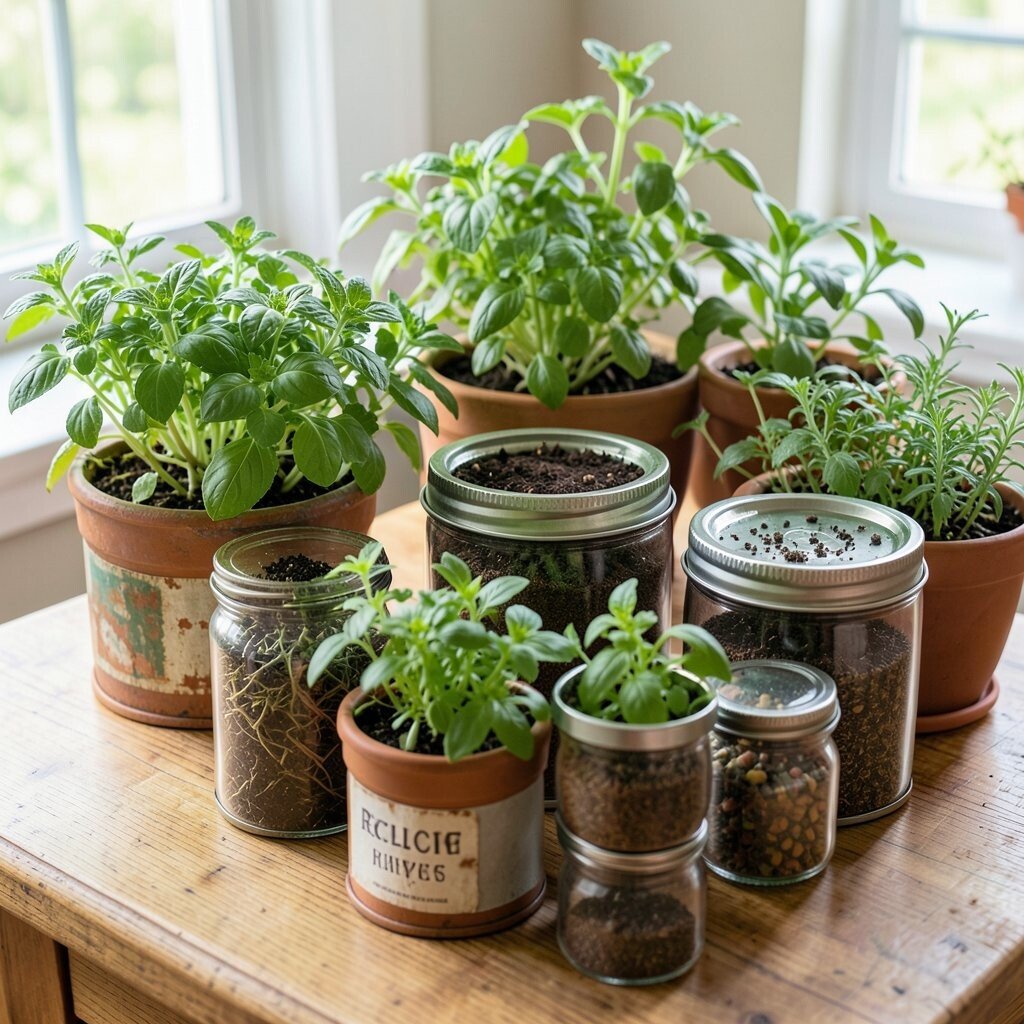
Recycled Spice Tins With Seed-Starting Lids Clean out empty spice tins, then use them as mini planting stations with lids that help manage moisture. When the tins sit on the counter, they give a bright, organized “farm stand” feeling.
This approach is unique because it turns kitchen clutter into a living system. It also helps seedlings get a gentle start before they move to bigger pots.
You’ll benefit from fast access during busy meal prep.For tips, poke drainage holes and add a thin layer of gravel or mesh before soil goes in. Label each tin with a date and herb name so you don’t forget what’s growing.
Keep tins near a window, and mist lightly instead of soaking.Cost is low because you are reusing items you already have. A current trend is “upcycle gardening,” which fits right into today’s reuse-first habits.
-
4. Hanging Herb Pouches on a Curtain Rod

Hanging Herb Pouches on a Curtain Rod Hang fabric pouches on a curtain rod so herbs can spill down like a green waterfall. The sight is playful, and it keeps plants off the counter if space is tight.
Hanging gardens also help air move around leaves, which can lower the risk of soggy soil.Choose pouches with good drainage and use a lightweight potting mix. Plant compact herbs like thyme, oregano, chives, and small-leaf basil types for best results.
Personalize the look with patterned fabric, painted dowel ends, or a seasonal ribbon.Cost can be modest since you can sew or repurpose cloth bags, and the rod may already be there. A trend right now is vertical herbs, because many people are living with smaller kitchens and want clever solutions.
-
5. Spiral Countertop Planter Using Stacking Pots
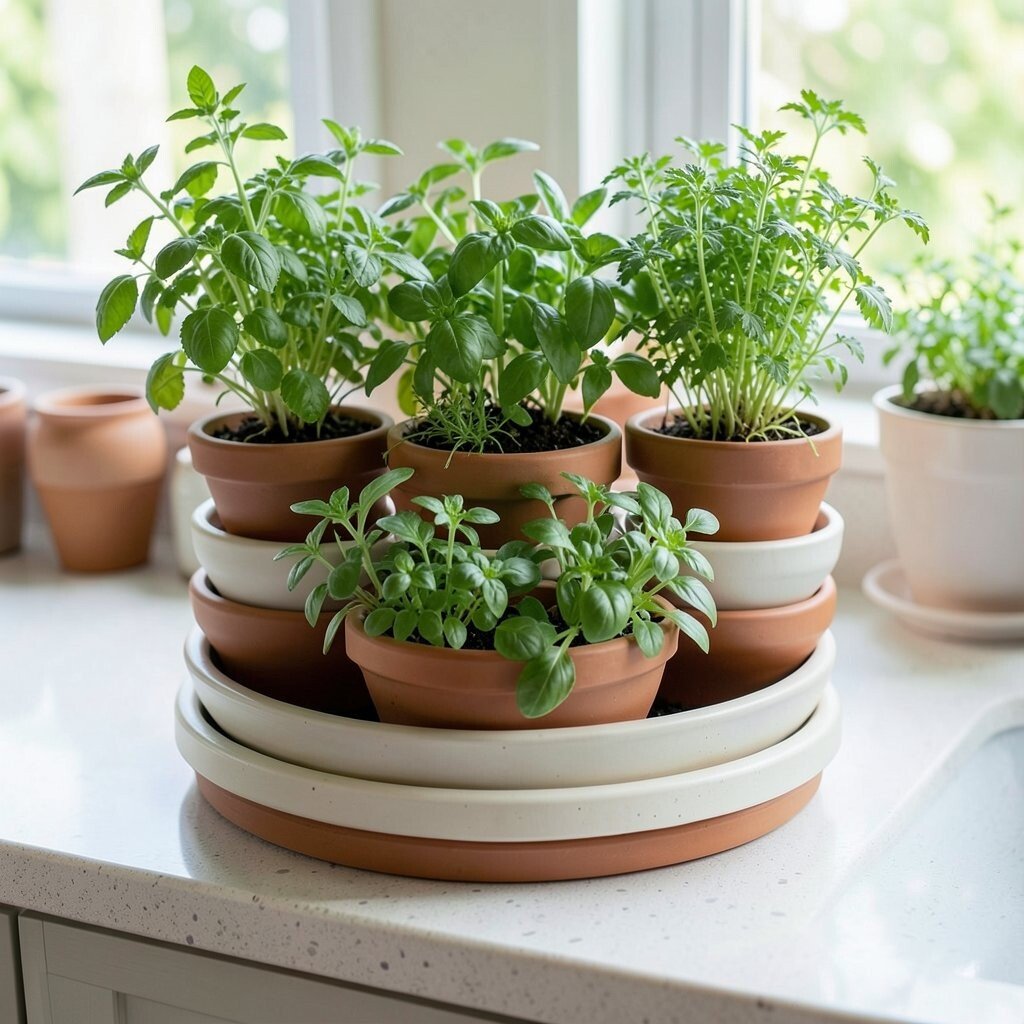
Spiral Countertop Planter Using Stacking Pots Build a spiral using stacked pots or nested planters, like a tiny herb staircase. You get a tall, eye-catching shape that looks tidy and fun.
This is helpful because each level can hold different sunlight needs. One tier can be for cilantro, another for basil, and the top can hold thyme where it warms up.
That means better growth and less fighting over space.Tip: place the planter where it gets steady light and rotate it every few days. Use mulch-like top dressing to slow evaporation.
For personalization, paint the pot rims with your favorite kitchen colors.
Costs are flexible: buy a ready spiral kit or piece together pots you already own. -
6. Vintage Bottles Filled With Water and Rooted Cuttings
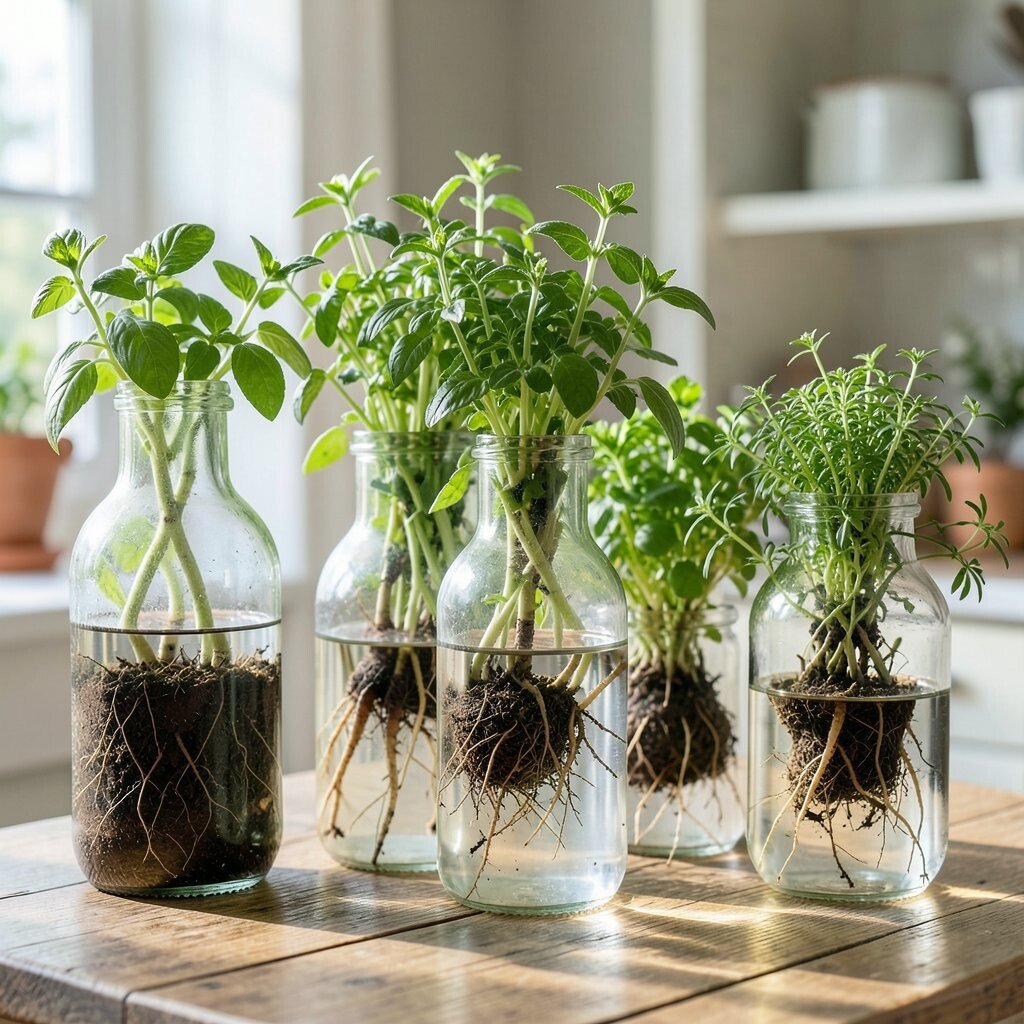
Vintage Bottles Filled With Water and Rooted Cuttings Fill clear bottles with clean water and root herb cuttings right on your shelf. Seeing roots grow is like watching a slow motion science movie, and it looks very modern.
This method is great for people who want quick results without repotting right away. It can also reduce mess because water stays contained.
Once roots are strong, you can move cuttings into soil pots for long-term growth.Choose herbs that root well in water, such as basil cuttings and mint-family types. Change water often and keep bottles out of harsh heat.
Add tiny labels so you know which bottle is for cooking today.Personalize with bottle shapes you love, like old olive oil bottles or colorful glass finds. Cost can be low if you reuse glass, and a trend is “root watching” because people enjoy visible progress.
-
7. Citrus Peel Herb Mini Pots for Bright Summer Flavor
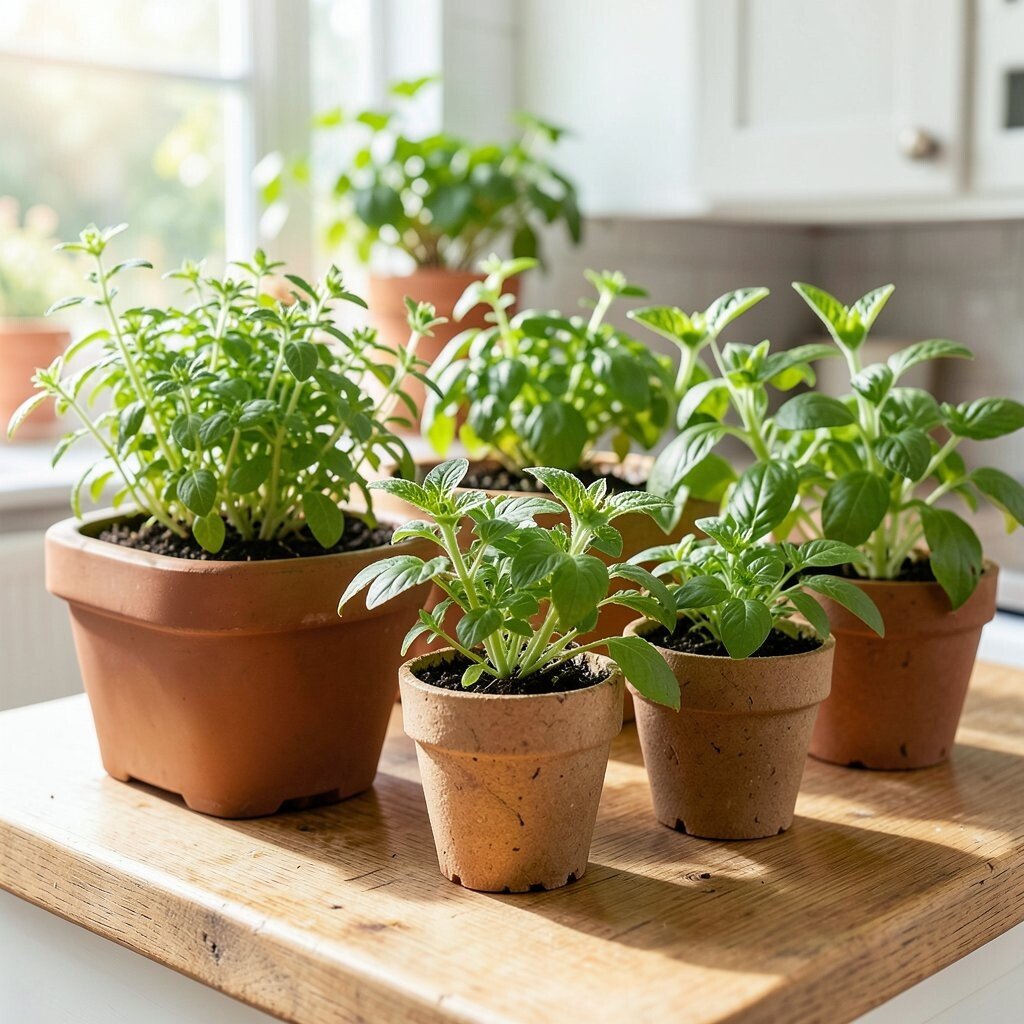
Citrus Peel Herb Mini Pots for Bright Summer Flavor Hollow out orange, lemon, or grapefruit peels and use them as tiny biodegradable planters. The kitchen smells sweet and fresh, and it looks like edible art.
This idea benefits both plants and people: citrus can feel uplifting, and the small pot size encourages quick, fresh harvests. It also helps you use kitchen scraps in a smart way.
Keep a close eye since these containers dry out faster than regular pots.Use herbs that match the mood, like lemon balm, thyme, or small mint leaves. Mix potting soil with a little compost for steady nutrition.
Personalize by drawing faces or writing herb names on the peels with edible-safe markers.Cost is usually near zero because you use peel you would throw away. A current trend is “kitchen-to-garden” composting and scrap gardening, and this fits right in.
-
8. “Window Box, But Make It Art” With Patterned Containers
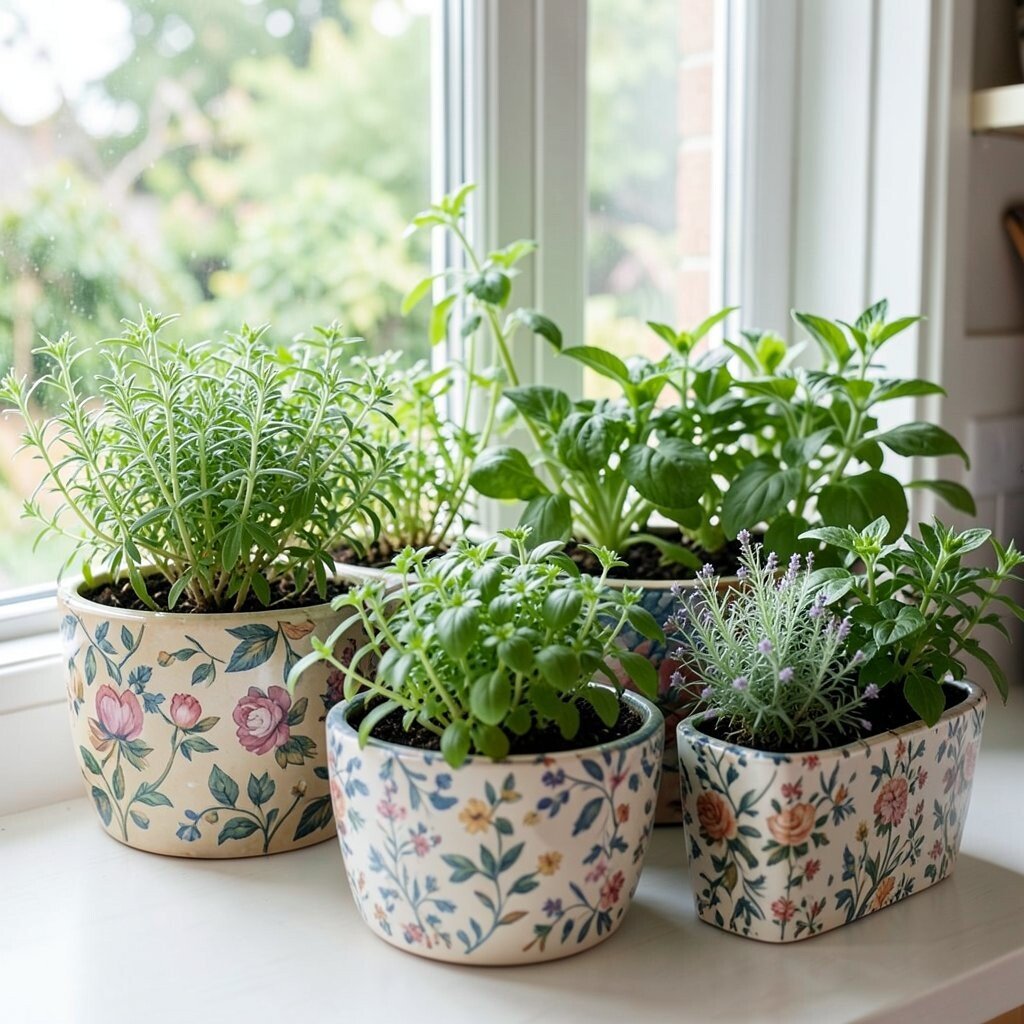
“Window Box, But Make It Art” With Patterned Containers Put a few shallow planters under the window and decorate them with bold patterns, like stripes or tiny dots. When the sun hits, the painted edges make the herbs feel like part of the artwork.
The main benefit is easy harvesting, since leaves are at a comfortable height.Pick herbs that like bright light, such as basil, dill, and cilantro. Use a tray underneath to catch water and keep your windowsill clean.
Personalize by painting each planter with a color tied to the dish you cook most.Cost can range from budget to mid, depending on whether you paint thrifted containers or buy new ones. A trend is “maximalist kitchen decor,” where plants add color and texture, not just green.
-
9. Hanging Chalkboard Labels and Herb Notes
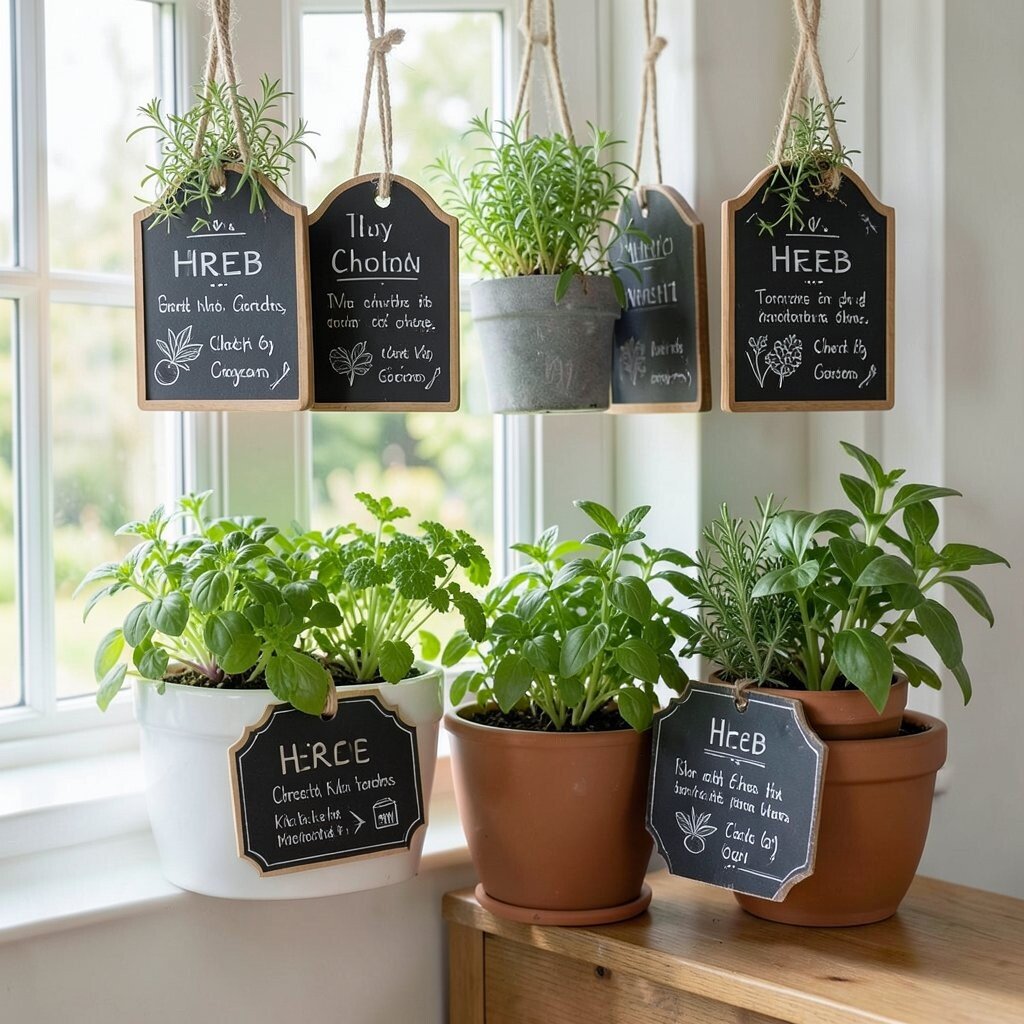
Hanging Chalkboard Labels and Herb Notes Add a small chalkboard near your herb spot and write quick notes like “Pinch basil after flowering starts.” It makes your kitchen garden feel like a helpful station, not a mystery.
The benefit is practical: you learn faster and waste less time guessing. When herbs are labeled, you harvest at the right time, and plants last longer.
You also get a fun, changeable look as seasons change.Tip: use chalkboard paint on a scrap of wood or buy a small board. Write gentle reminders, like how often to water or how tall the plant should be before trimming.
Personalize with a daily “herb of the day” and a recipe idea.
Cost stays low if you upcycle scrap wood, and the trend is using plants as part of everyday routines. -
10. Vertical Ladder Planter With Small Clip Pots
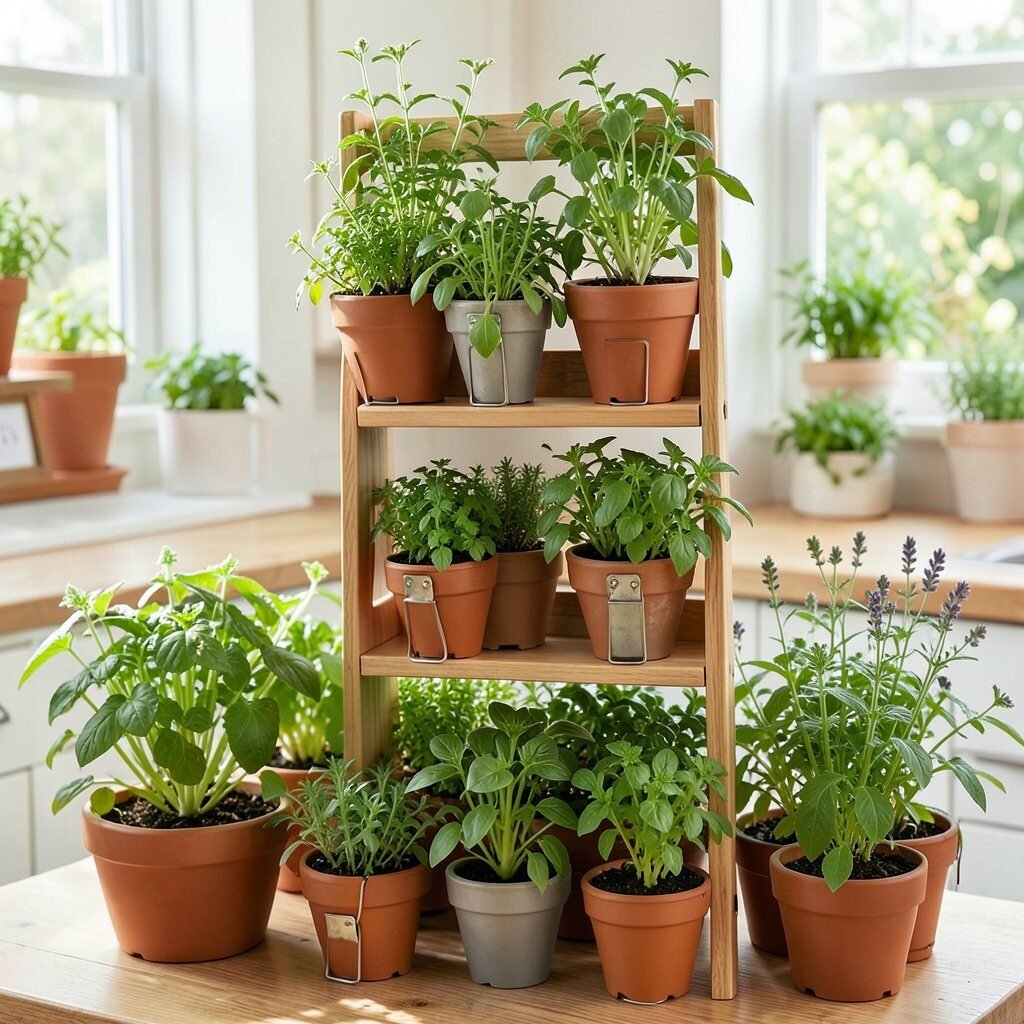
Vertical Ladder Planter With Small Clip Pots Lean a small wooden ladder near a wall and clip lightweight pots onto the rungs. The result is a tall, tidy look that turns your herbs into a living display.
This setup helps because you can separate herbs by height needs and sunlight. It also keeps airflow around leaves and makes watering feel simpler.
You’ll enjoy the visual rhythm of green tiers across the kitchen.Choose herbs like oregano, thyme, parsley, and chives that handle indoor containers well. Use clips or brackets designed for plants, and keep a drip tray below.
Personalize by staining the ladder the same color as your cabinets or adding matching hooks.Cost can be moderate if you buy a ladder, but thrift stores often have them cheap. A current trend is “vertical living,” where people build mini ecosystems without needing floor space.
-
11. DIY Grow-Light Shelf With Clear Plastic Covers
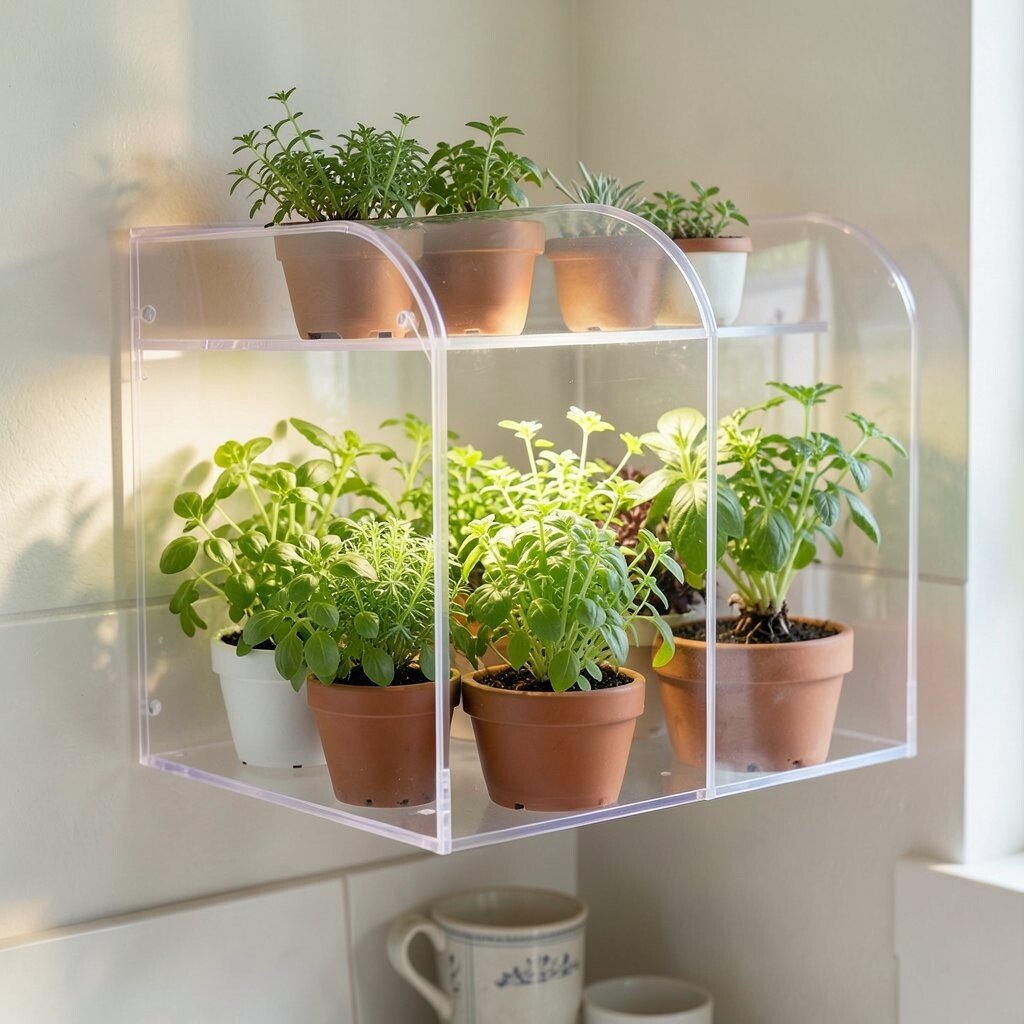
DIY Grow-Light Shelf With Clear Plastic Covers Place a simple shelf over your herbs and add a small grow-light strip above them. The clear cover idea helps keep humidity steady while still showing plants clearly.
This benefits indoor gardeners who struggle with winter light. Herbs grow more evenly, and you can plan harvesting with less stress.
Uniqueness comes from building a mini “indoor sky” that looks futuristic but cozy.Tip: keep lights on a timer and choose plants that respond well indoors, like basil, parsley, mint (contained), and cilantro in cooler spots.
Make the covers removable so you can ventilate and prevent mold.
Personalize by color-coding the plant trays to match your cooking style.Cost depends on the grow light, but it can pay off in reliable harvests. A trend you’ll see more often is controlled indoor growing, especially for people who want fresh herbs year-round.
-
12. Living Herb “Lunch Box” Box Garden for Kids and Adults
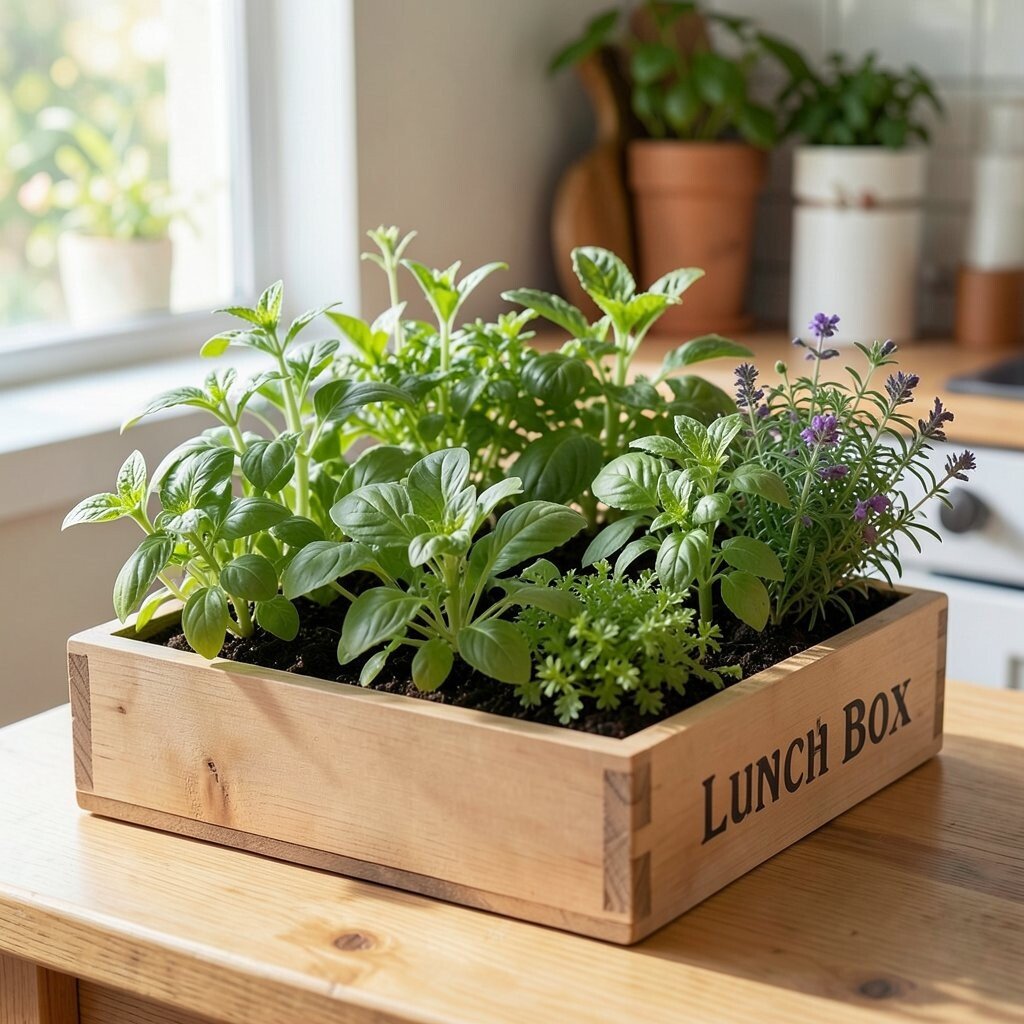
Living Herb “Lunch Box” Box Garden for Kids and Adults Use a small reusable lunch box or tackle box as a mini herb garden. Line it with a tray, add soil, and plant a few herbs, then keep it near where you eat.
This is unique because it feels like a playful project, not just a plant chore. The benefit is that herbs stay close to daily meals, which means you harvest more often and enjoy flavors sooner.
It also helps people learn what each herb looks and smells like.Tip: include one “fast” herb like basil or chives plus one longer plant like thyme. Add a simple watering schedule card so everyone can help.
Personalize with stickers, small photos, or a “today’s snack ideas” list.Cost is low since many boxes are inexpensive, and you can reuse one from years ago. A trend is family-friendly micro gardening, where plants become part of learning and bonding.
-
13. Terracotta Planters Sealed With Patterned Silicone Bands

Terracotta Planters Sealed With Patterned Silicone Bands Use terracotta pots but wrap them with patterned silicone bands so they look stylish and stay protected. The texture of terracotta plus the bright bands makes the herbs feel warm and modern.
This method helps because terracotta can dry out quickly, and bands can slow water loss around the pot’s surface. You also get easy grip for moving plants without slipping.
It’s a small change that makes care feel easier.Choose herbs that like a bit of dryness between waterings, such as thyme, rosemary (if it fits your indoor conditions), and sage in small containers.
Personalize by picking bands in your kitchen color palette, like teal, coral, or black and white patterns.
Cost can be mid because terracotta is affordable, and silicone bands are an optional upgrade.A current trend is “functional style,” where everyday materials get decorative upgrades. People love it because it looks good and helps plants live better.
-
14. Herb “Collage” Wall With Clip Frames and Rotating Pots

Herb “Collage” Wall With Clip Frames and Rotating Pots Create a herb collage wall using clip frames mounted on a board, each holding a small pot. The plants become a patchwork of green, and the wall looks like a living mood board.
This benefits your kitchen because it saves space and keeps plants visible for daily checks. When herbs are easy to see, you can notice drooping early and fix it fast.
For uniqueness, rotate pots like art swaps and adjust the layout by season.Tip: use lightweight pots and secure clips firmly so nothing falls. Add drip trays or a hidden liner behind the frames to protect your wall.
Personalize with herb names, tiny recipe magnets, or a theme like “Mediterranean favorites.”Cost can be moderate depending on frames, but you can start with a few clips and expand later. A trend right now is turning home walls into functional garden displays, especially in apartments.