Warm kitchens start from the floor up. The right eco-friendly choice can feel good under your feet and look amazing in daylight.
-
Reclaimed Wood Planks With a Fresh Finish
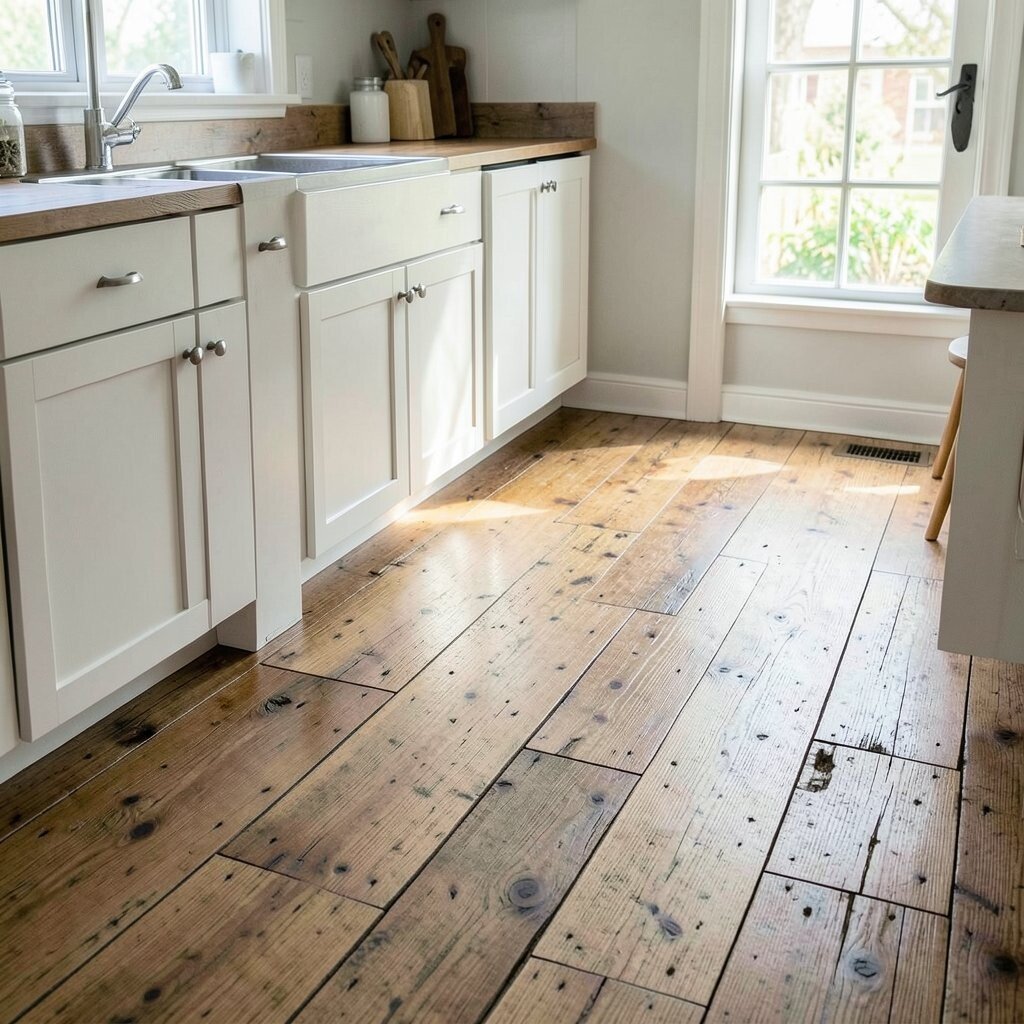
Reclaimed Wood Planks With a Fresh Finish Reclaimed wood has a lived-in look that feels like a story you can walk on. You’ll see warm grains, tiny knots, and natural color shifts that make each board one of a kind.
This option is great because it keeps usable material out of landfills while adding strong character. It also brings a cozy, homey mood that many people want in kitchens. To make it kitchen-ready, choose a durable topcoat and seal any joints well, especially near the sink.
For personalization, mix light and dark planks so the floor feels balanced instead of matchy. If you love a modern vibe, sand only lightly and use a matte finish to keep the wood texture visible. Budget-wise, reclaimed wood can vary a lot depending on availability and thickness, so get quotes for several grades.
-
Bamboo Flooring That Balances Strength and Style
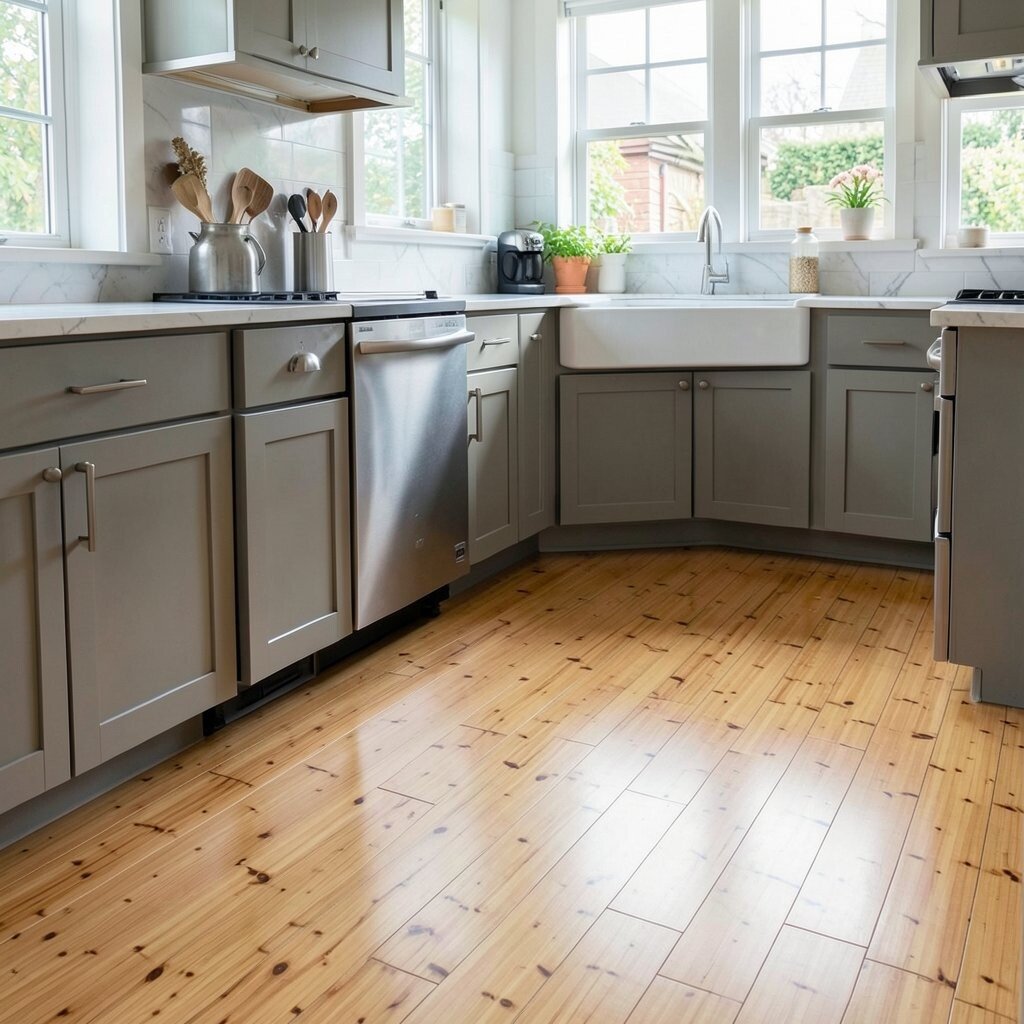
Bamboo Flooring That Balances Strength and Style Bamboo flooring often looks clean and smooth, with a gentle, straight grain that catches sunlight. It can feel bright and airy, especially in kitchens that get lots of window light.
One big benefit is that bamboo grows fast, so it’s a popular eco-friendly choice. Many styles are engineered for stability, which helps reduce swelling when kitchen humidity changes. For best results, use mats at the entry and near the stove to cut wear from daily traffic.
You can personalize the look by choosing horizontal or vertical grain patterns, which change the mood instantly. Try a warm honey tone if you want comfort, or pick a darker stain for a bold, grown-up feel. Costs can land anywhere from mid to higher depending on brand quality and installation method, so compare warranties too.
-
Cork Flooring for Soft Comfort Underfoot
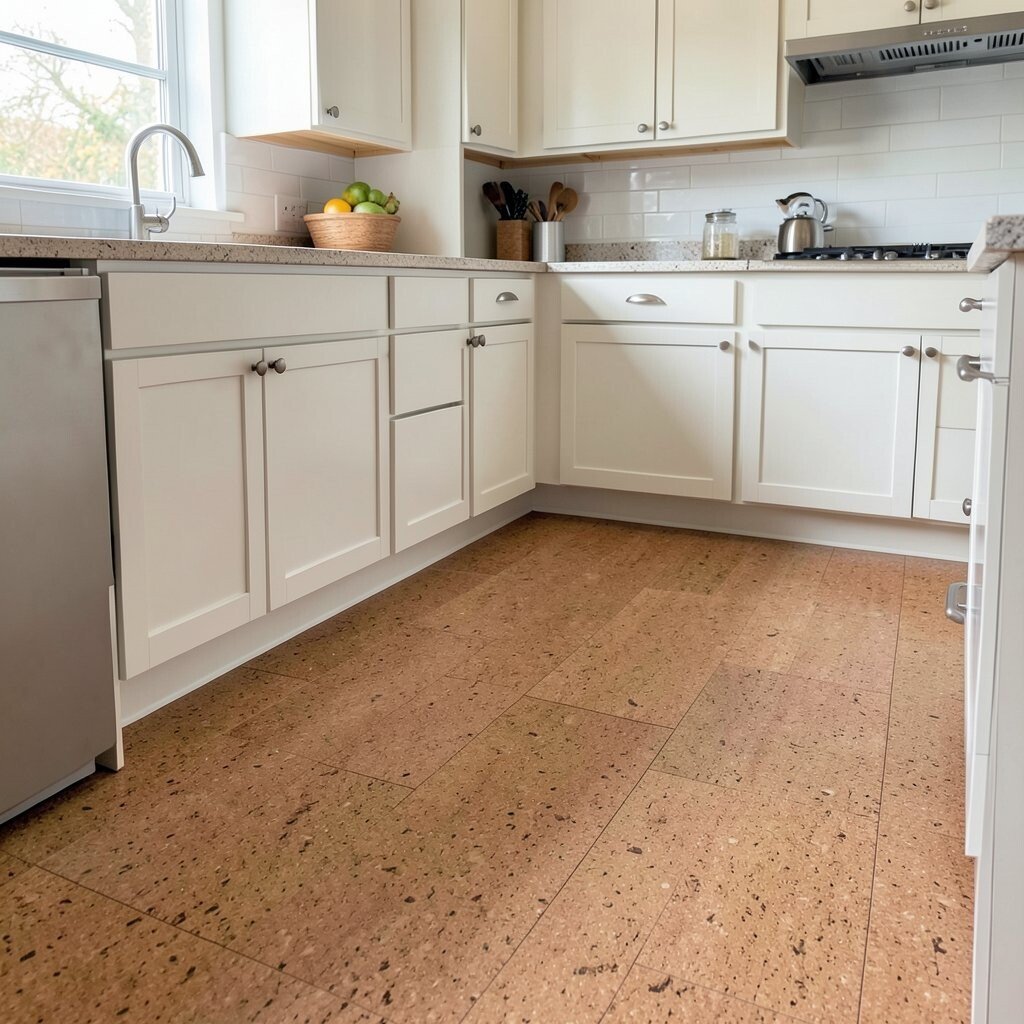
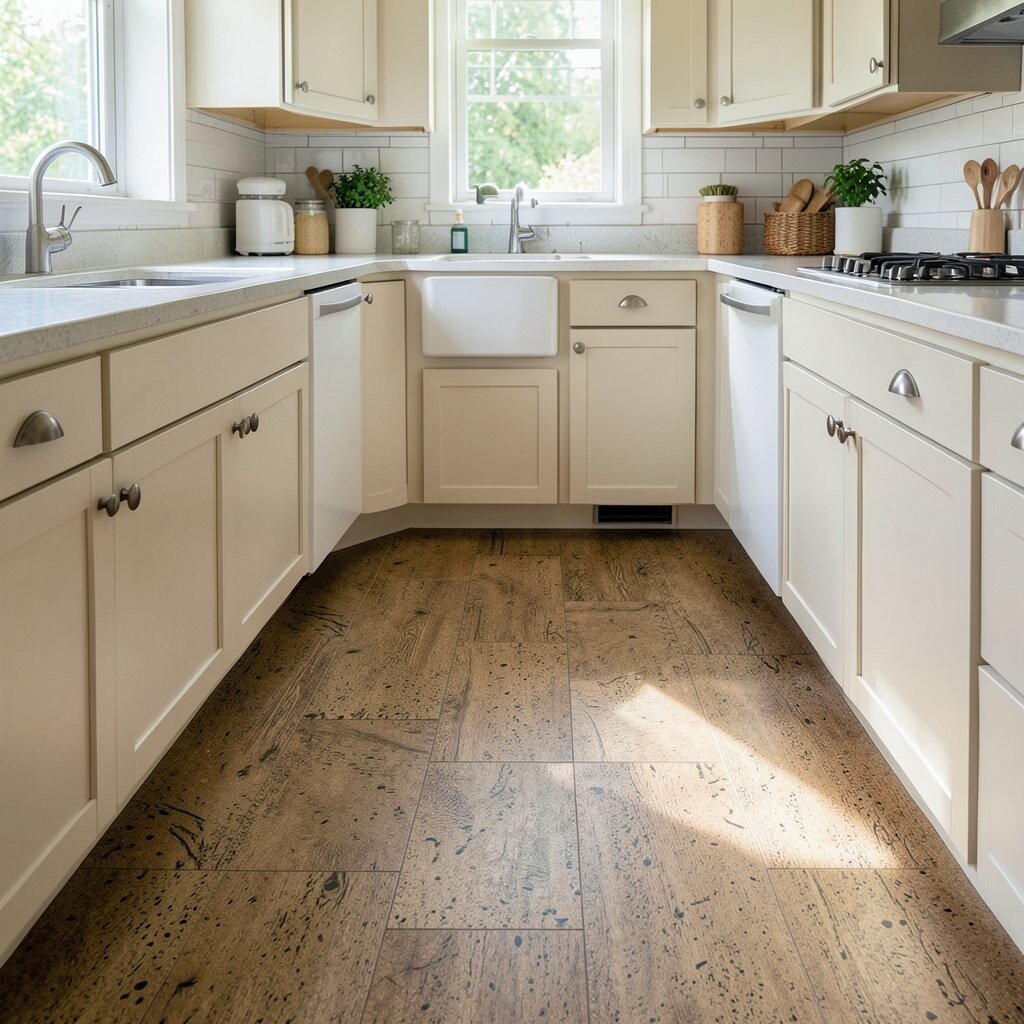
Cork Flooring for Soft Comfort Underfoot Cork looks light and speckled, like a cozy fabric surface, even though it’s built like flooring. When you step on it, it feels springy, and the room can sound quieter.
Cork is a great pick for kitchens because it helps with comfort during long cooking days. It also offers natural insulation, which can help rooms feel more even in temperature. For tips, keep it sealed with a kitchen-safe finish and wipe spills quickly to protect the top layer.
For a unique style, choose patterned cork tiles instead of plain planks. If you want a modern look, pair cork with simple cabinet hardware and a clean backsplash. Prices can vary based on thickness and whether you choose floating or glue-down installation, so check both options.
A current trend is mixing comfort flooring with simple, sleek kitchen design, so cork fits right in. It also pairs well with area rugs, letting you switch your style without replacing the whole floor. Plan to budget for sealing and possibly underlayment if your subfloor needs leveling.
-
Linoleum Made From Natural Materials
Linoleum Made From Natural Materials Linoleum has a smooth, matte look and can show subtle speckles that feel artistic. You’ll often notice color that looks deep and even, not just a flat paint layer.
This flooring is a friendly eco choice because it’s made from natural ingredients, and many versions include renewable materials. It’s also known for being durable with the right care, which is helpful in busy kitchens. Keep a broom nearby, use a pH-neutral cleaner, and wipe up moisture fast to prevent damage.
Personalize by selecting bold colors for a statement kitchen, or choose earthy tones for a calm vibe. If you like vintage style, look for classic palette options that resemble old-world kitchens. Cost can be mid-range, but pricing depends on sheet size, brand, and whether you need professional installation.
-
Sheep’s Wool Underlay With Durable Top Flooring
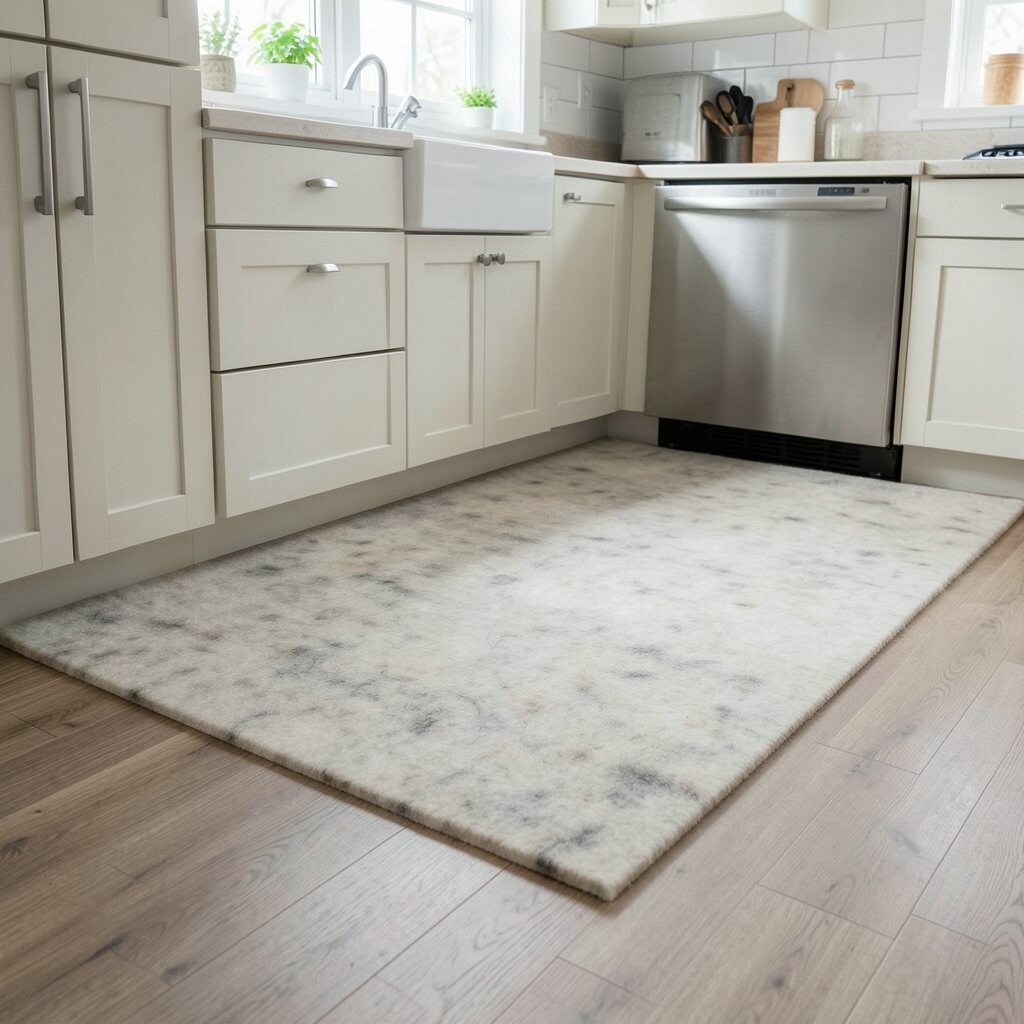
Sheep’s Wool Underlay With Durable Top Flooring Wool underlay doesn’t always show in photos, but it changes how the floor feels right away. Under a top layer like wood or laminate, it can soften sound and make steps feel warmer.
The benefit here is comfort plus quiet, which many kitchen lovers notice quickly. Wool can help handle small moisture swings, and it’s naturally breathable. For best results, use a system that matches your subfloor and keeps the underlay flat with no gaps.
Personalization is easy: you can pair wool underlay with your favorite eco-friendly surface on top. Choose lighter top floors for an airy look or darker ones for a dramatic mood. Costs vary, but underlay is often a smart upgrade because it can last years and improve everyday feel.
-
Recycled Glass Tiles for a Bright, Artistic Look
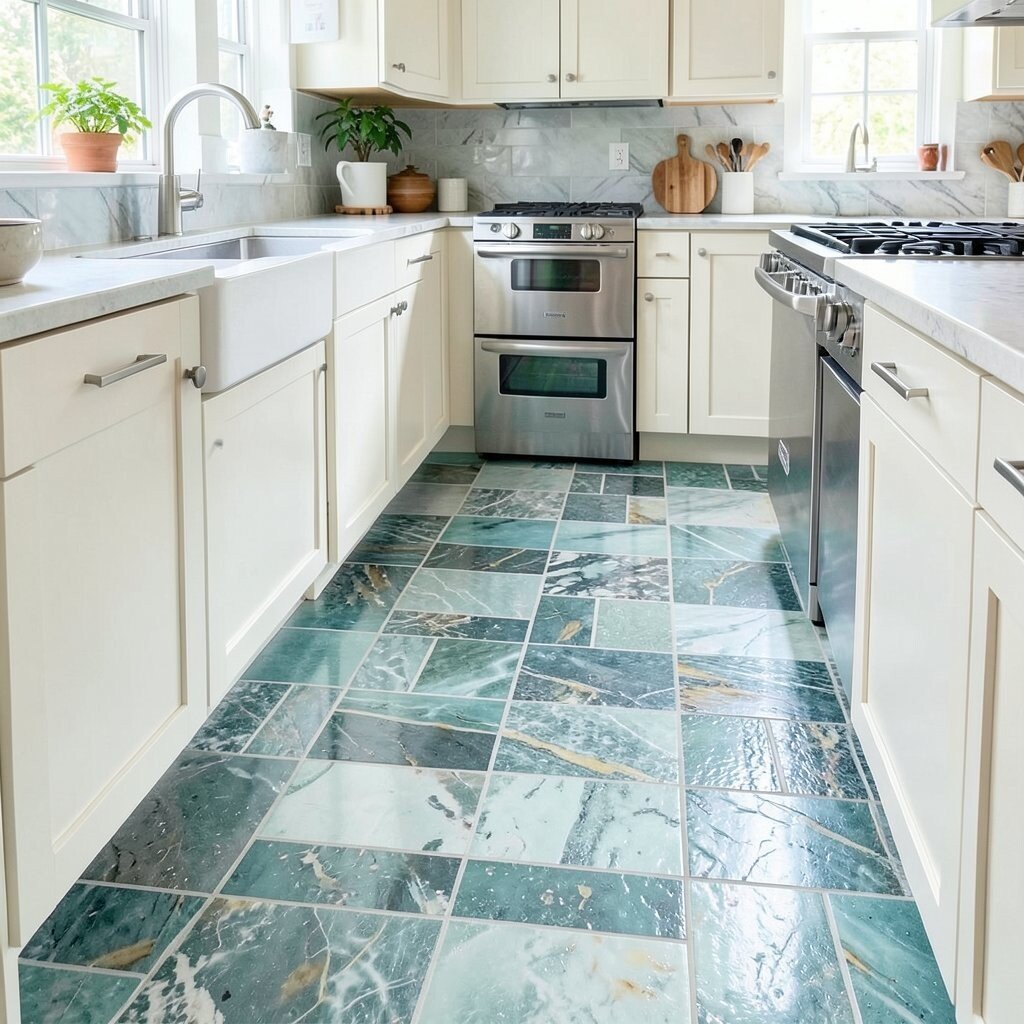
Recycled Glass Tiles for a Bright, Artistic Look Recycled glass tile can sparkle softly, like little gems set into the floor. You might see swirls of color and subtle reflections that look different at different times of day.
A big benefit is that glass tiles are easy to clean and resistant to stains, which is helpful in kitchens. They also give a custom look when you plan patterns like waves, borders, or a simple geometric center. For tips, seal any grout and choose grout that’s made for high-traffic areas.
Personalize with a mosaic stripe that matches your cabinets or your backsplash. If you want trend-forward design, consider mixing glass tiles with natural stone for a layered look. Cost considerations can be higher because tile and installation labor add up fast, so price out smaller featured areas if you’re budget-smart.
-
Terrazzo Made With Recycled Content
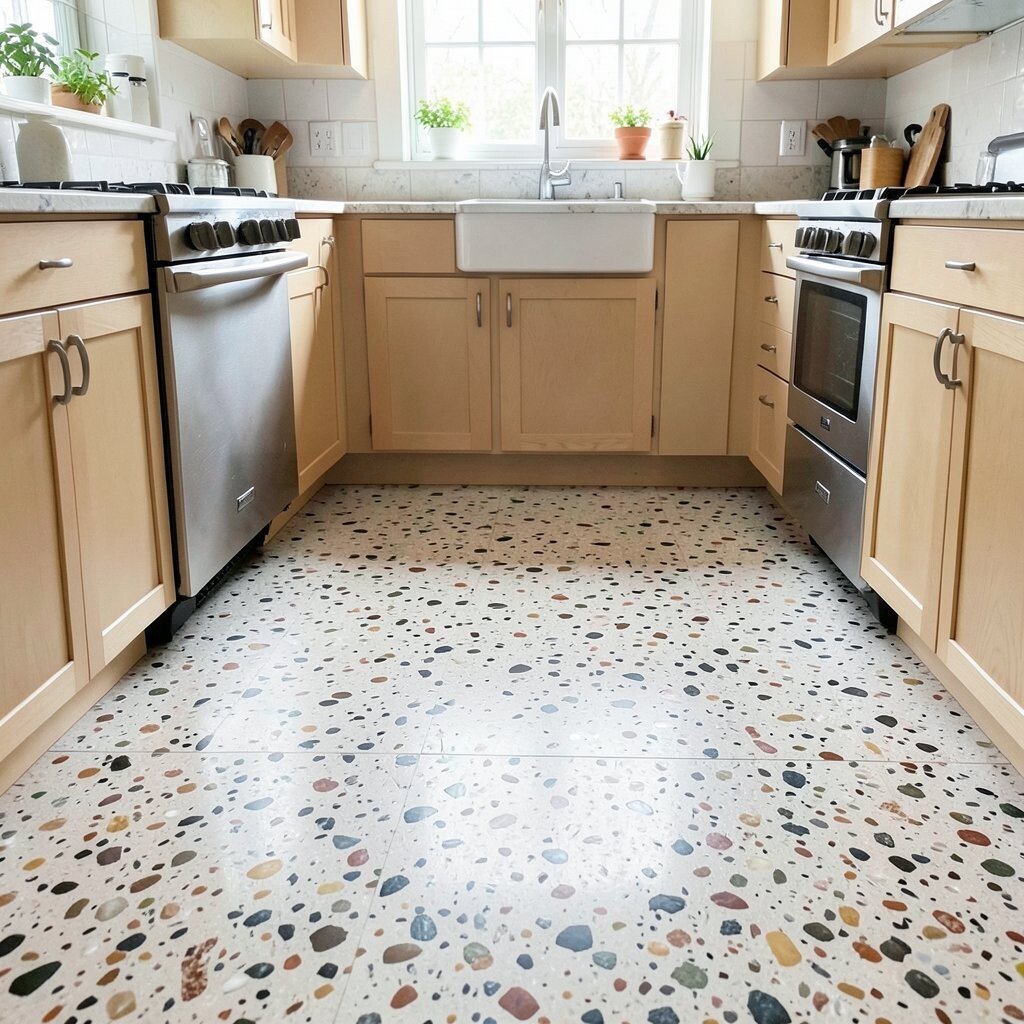
Terrazzo Made With Recycled Content Terrazzo looks like polished pebbles set into a smooth surface, often with specks that form a friendly pattern. It can feel sleek and grown-up while still bringing a playful speckled texture.
This flooring is unique because it can include recycled materials and often lasts a long time. It’s a strong pick for kitchens since it resists many daily messes when sealed properly. For tips, use mats and avoid dragging heavy items across the floor during moves or rearranging.
Personalize by choosing colors that match your kitchen palette, like warm browns, cool grays, or even hints of green. A current trend is using terrazzo in modern spaces because it looks classy without being plain. Costs vary depending on whether you choose pre-finished tile or custom pours, and that choice can change your budget a lot.
If you want a practical compromise, you can do terrazzo only in a main work zone and keep the rest in another eco-friendly option. That way you get the wow factor where you need it most. Always ask about sealing schedule and maintenance before you commit.
-
Natural Stone With a Mindful Sealant Choice
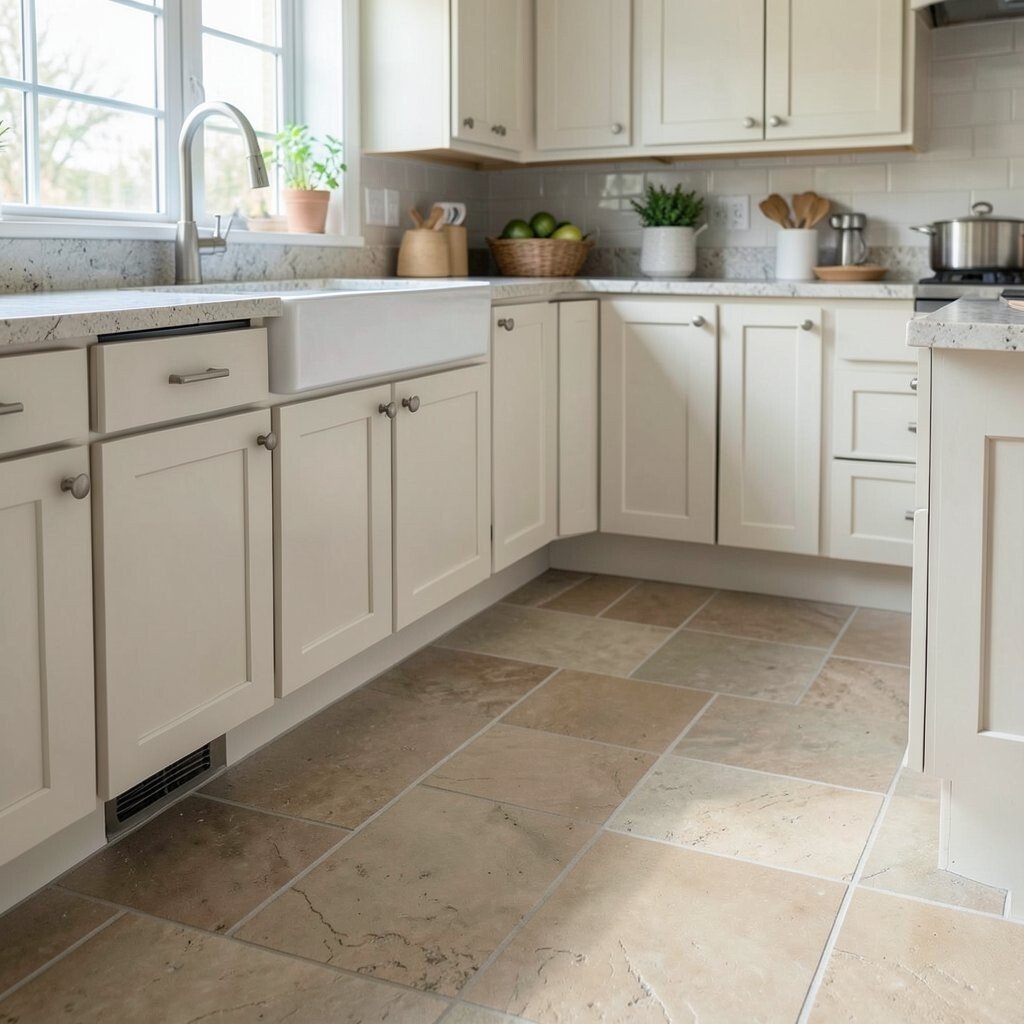
Natural Stone With a Mindful Sealant Choice Natural stone like slate or travertine brings earthy color and dramatic texture that looks like it belongs outdoors. In a kitchen, it can feel sturdy, timeless, and connected to nature.
The benefit is strength and long lifespan, which can be a big eco advantage over time. When you pick a mindful, low-tox sealant and keep it well maintained, stone can handle spills and heavy traffic better. For tips, clean with gentle methods and avoid harsh acids that can harm the surface.
To personalize, pick a finish that matches your style: honed for a soft look or tumbled for a gentler texture. Want trend energy? Many homeowners pair stone floors with light cabinets and matte black fixtures for a fresh, modern contrast. Costs can be higher because stone and installation are not usually cheap, so consider smaller formats if you’re working with a tighter budget.
-
Soy-Based or Plant-Forward Vinyl (Eco-Labeled)
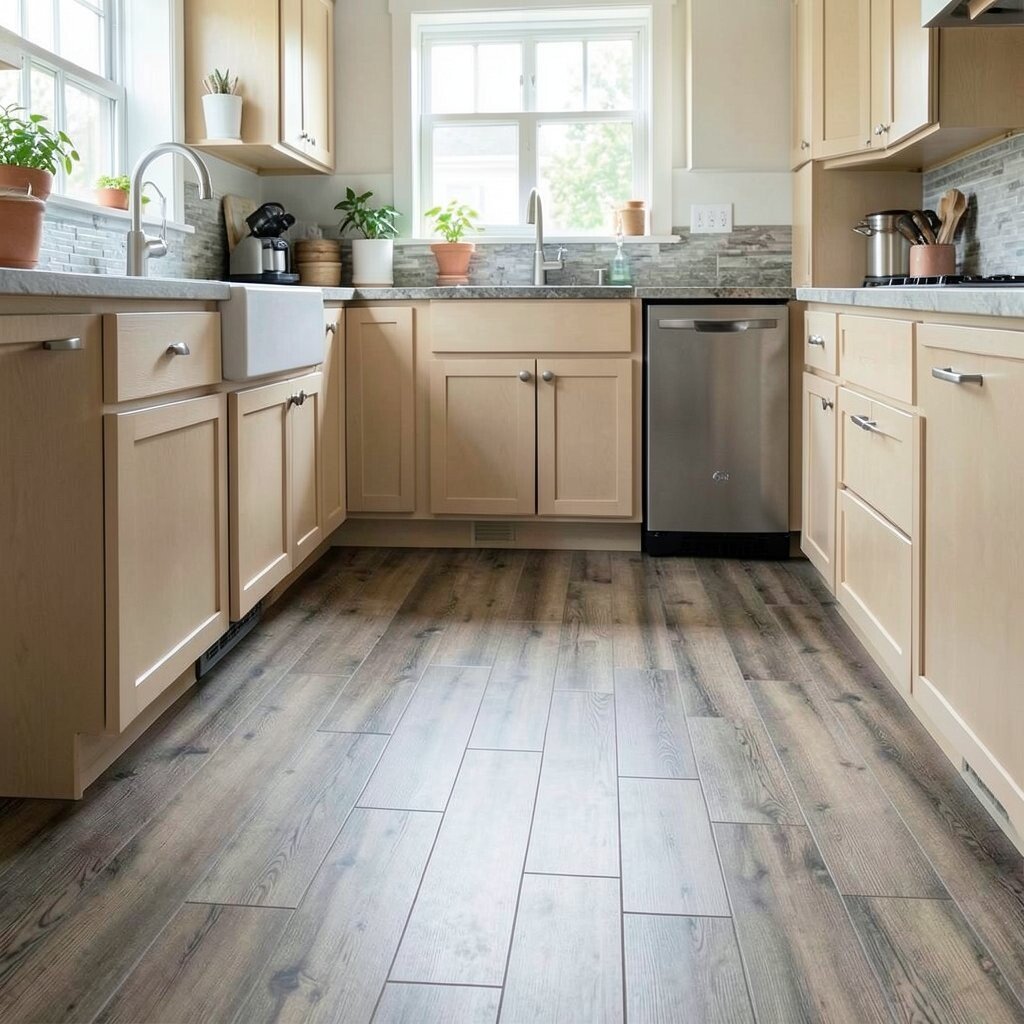
Soy-Based or Plant-Forward Vinyl (Eco-Labeled) Eco-labeled vinyl can look smooth and even, with patterns that range from wood-look planks to stone-like visuals. You’ll often see sharp lines and consistent color that makes kitchens feel neat and polished.
The benefit is that some plant-forward options are designed for easier maintenance and comfort underfoot. Vinyl can also be a practical choice if you want water resistance and simpler cleaning for busy households. For tips, choose a quality product with clear eco certifications and make sure the subfloor is level for the best long-term results.
Personalize with wide plank designs for a modern look or choose small tile patterns for a classic feel. Current trends include realistic “hand-scraped” wood textures, which can make vinyl look more natural. Cost considerations are often mid-range, but you should compare the price per square foot plus any underlayment or leveling needs.
-
Cultivated Wood Composites From Better Sourcing
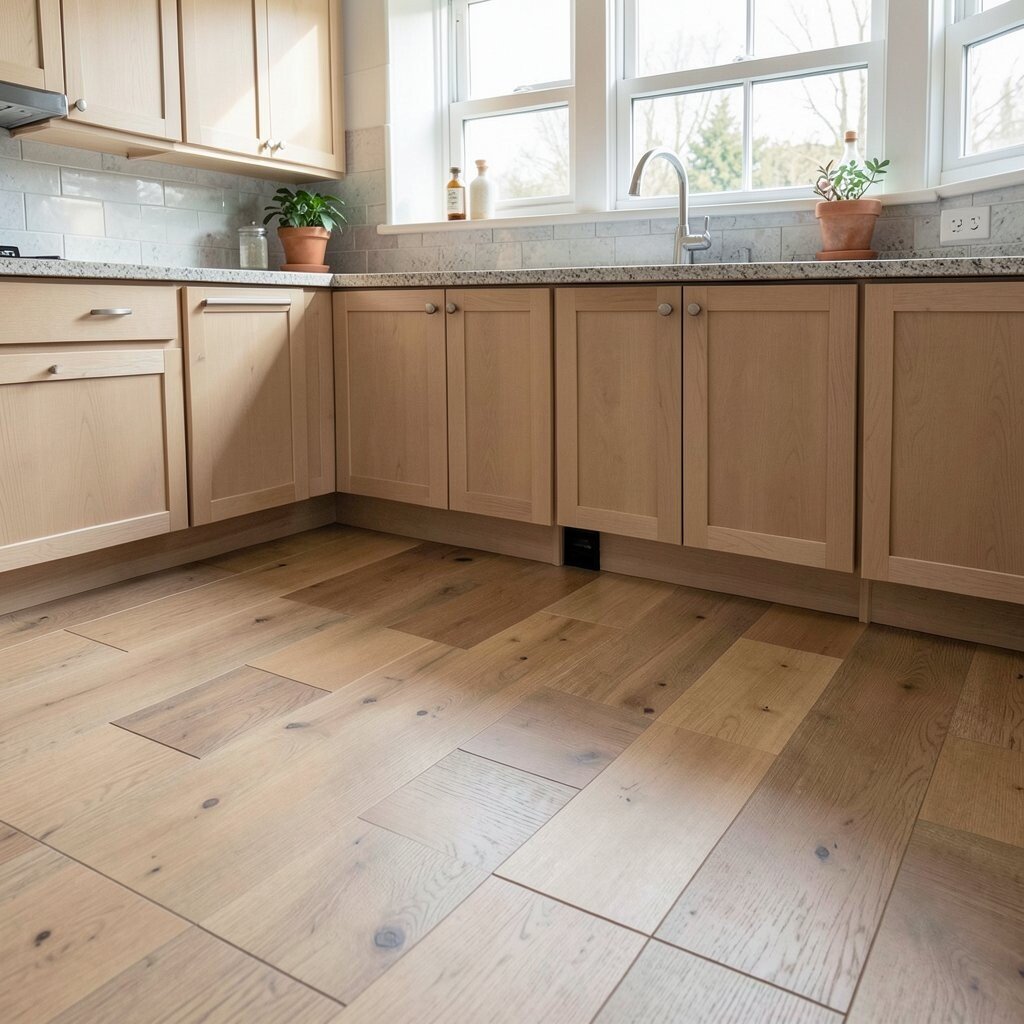
Cultivated Wood Composites From Better Sourcing Cultivated wood composites can look like real wood, with layered textures that feel warm and friendly. Depending on the product, you may see subtle variation that keeps it from looking too perfect.
This flooring can be unique because it uses engineered layers made from wood fibers and resins, often aiming to reduce waste. It can also handle everyday kitchen life with less warping than some solid options. For tips, read the moisture rating carefully and follow the installation instructions exactly for that product.
Personalize by choosing a finish that suits your kitchen, like matte for a calm look or semi-gloss for a brighter feel. Many people pair composite flooring with eco-friendly paint and natural cabinet stains for a cohesive style. Costs can be competitive, but quality varies widely, so check wear layers and longevity claims.
-
Recycled Rubber Flooring for a Playful, Tough Surface
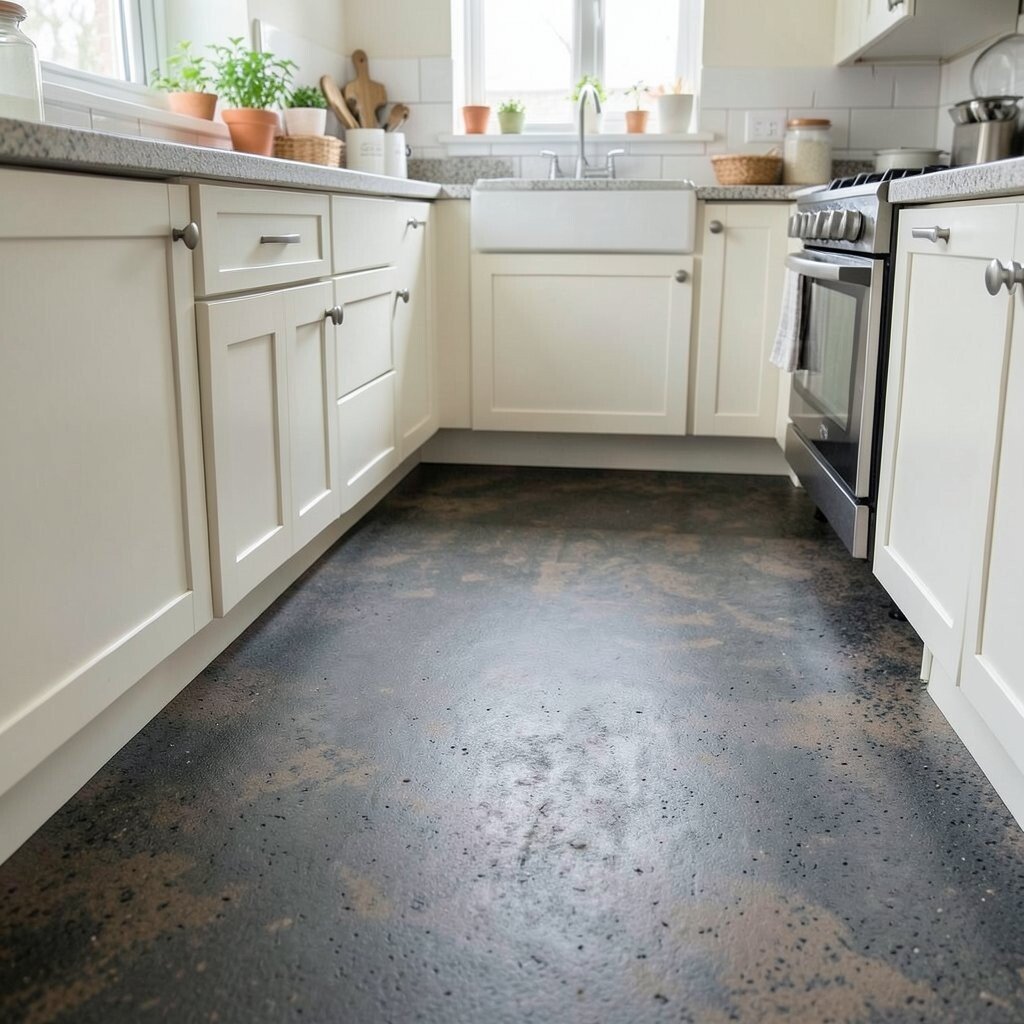
Recycled Rubber Flooring for a Playful, Tough Surface Rubber flooring often looks bold and sporty, with colors that range from muted earth tones to bright accents. It can feel slightly textured, like a comfortable grip, which helps with safety during busy cooking.
The benefit is toughness and comfort, especially if you drop things sometimes or stand for long hours. Rubber is also known for reducing noise and helping with impact softness. For tips, choose a kitchen-safe, low-odor product and keep it clean with gentle soap.
Personalize with border strips or color-blocking so the floor feels custom without needing expensive tile. If you love a modern look, try black or charcoal with light cabinets for strong contrast. Cost considerations are usually mid-range, but remember that thicker options can cost more and may need proper planning for door clearance.
A current trend is using rubber in creative ways, like matching a “work zone” near the sink and stove. It also pairs nicely with natural wood accents and clean, simple lighting. Always check the finish type and whether it needs periodic re-sealing or special cleaners.
-
Eco-Friendly Laminate Crafted With Recycled Layers
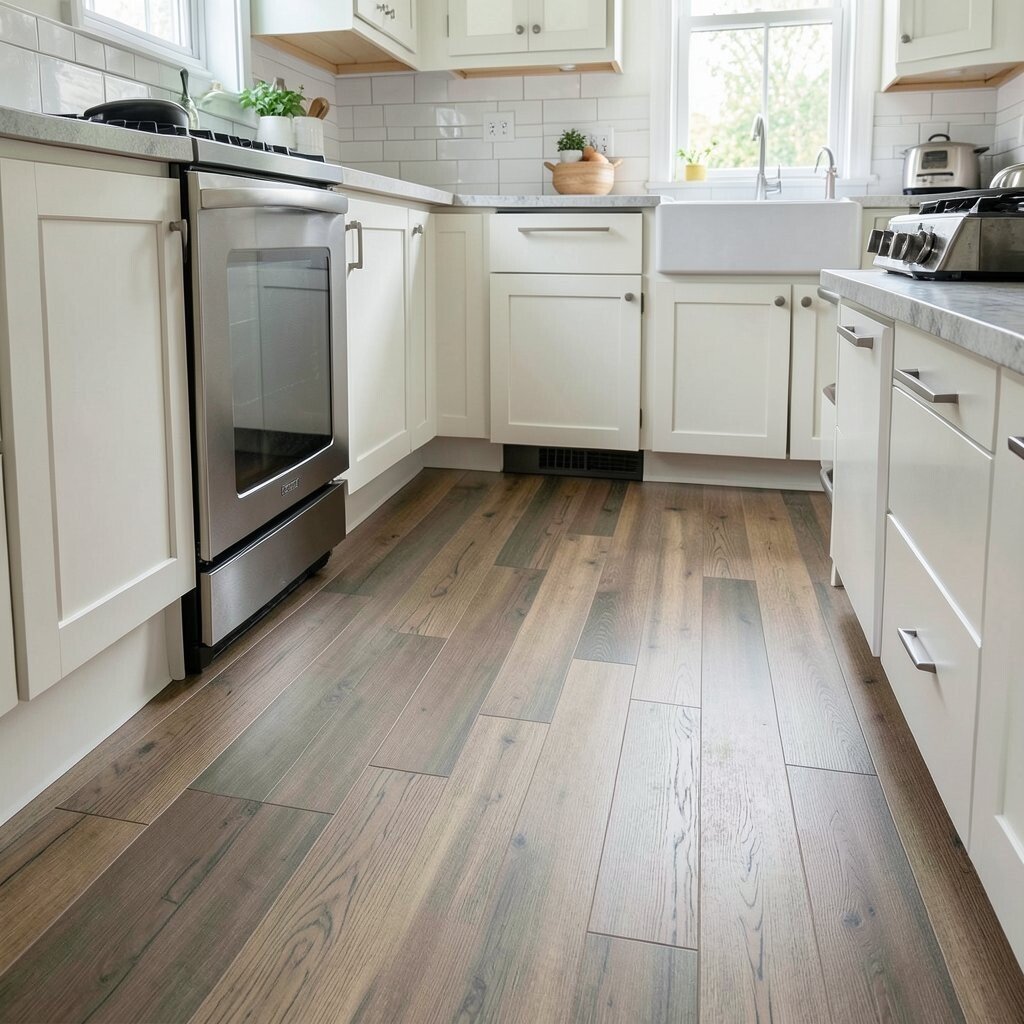
Eco-Friendly Laminate Crafted With Recycled Layers Laminate can look strikingly like wood or stone, with photo-real patterns and crisp edges. Under kitchen light, the surface usually looks smooth and tidy, which many homeowners love.
One of the big benefits is that good laminate can use recycled layers and is built for everyday wear. It also tends to be easier to install, which can save money if you want a DIY approach. For tips, choose a water-resistant or water-proof core and use seam-safe underlayment to protect against spills.
Personalize using plank sizes and colors that match your cabinet style, from pale oak looks to deep walnut shades. A trend right now is mixing “warm wood” laminate with minimal, sleek design for a modern but cozy feel. Costs can be lower than real wood, but you should still check brand reputation and warranty length because quality changes the story.
-
Natural Bamboo Veneer Over an Eco Core
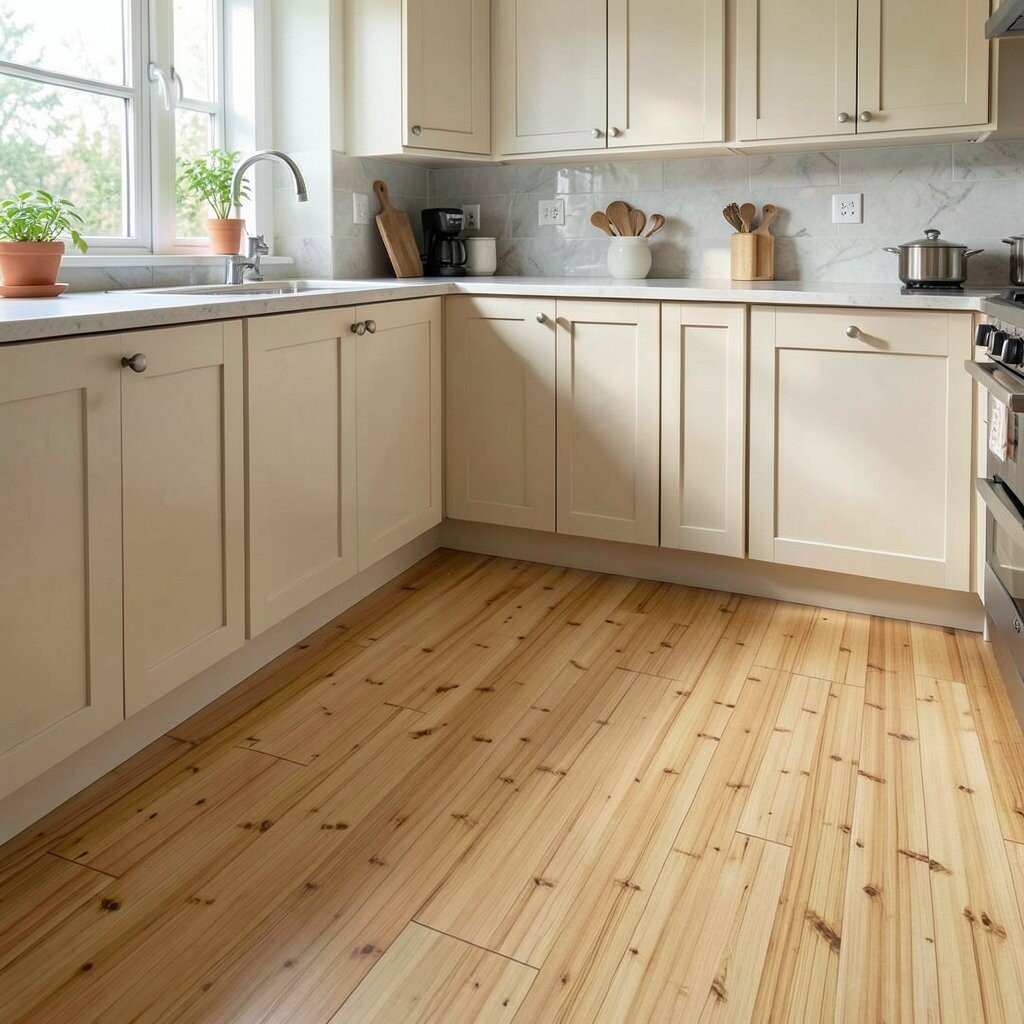
Natural Bamboo Veneer Over an Eco Core Bamboo veneer floors look like real bamboo on top, with a refined grain that feels premium. You’ll see delicate lines and gentle color variation that can make your kitchen feel upscale.
This option can be unique because it uses only a thin layer of bamboo while keeping the base made for stability. That can help reduce how much bamboo is needed compared to thicker solid products. For tips, check the backing material and choose a system rated for kitchen moisture.
Personalize by choosing lighter tones for a fresh look or darker tones for a dramatic mood. If you want trend-ready style, match the floor color with your countertop undertones for a seamless feel. Cost considerations often sit in the mid-range, but the price depends on the thickness of the veneer and how realistic the finish looks.
-
Wood Tiles From Fast-Growing Species With Sealed Protection
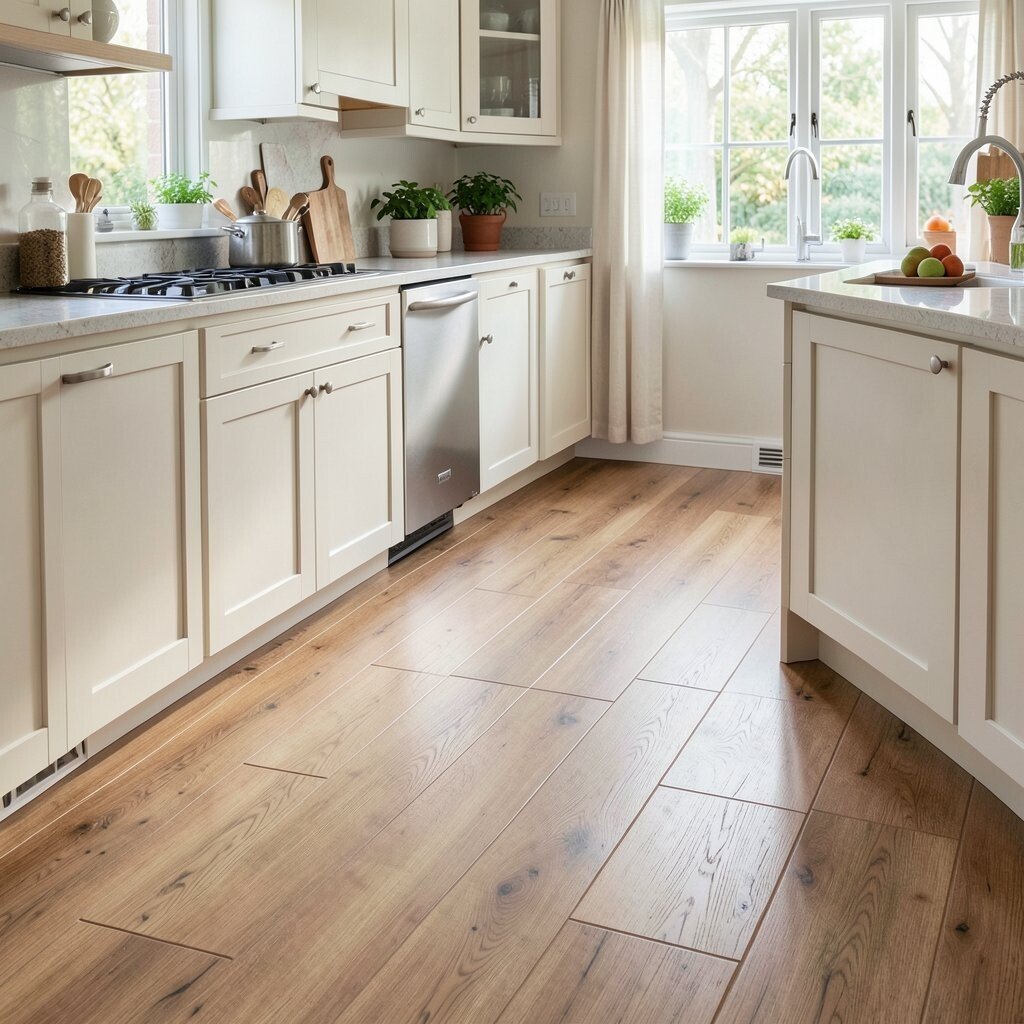
Wood Tiles From Fast-Growing Species With Sealed Protection Wood tiles can give you the charm of wood with the tidy feel of tile, especially when they’re installed in a grid. You’ll notice warm color and a natural texture that still looks organized and intentional.
The benefit is flexibility: you can arrange tile patterns, mix colors, or create a custom border. If you choose fast-growing species and seal them properly, they can handle kitchen traffic well. For tips, use a high-quality sealant and keep water exposure minimal around wet zones.
Personalize with a small herringbone or a classic straight set pattern depending on your style. Many current kitchens look great with wood tile plus simple backsplashes and clean hardware, so this flooring fits the look. Cost can vary because tile materials and grout or adhesive choices affect the final total, so get a full install quote early.
-
Ceramic or Porcelain Tile With Recycled Content and Low-VOC Grouts
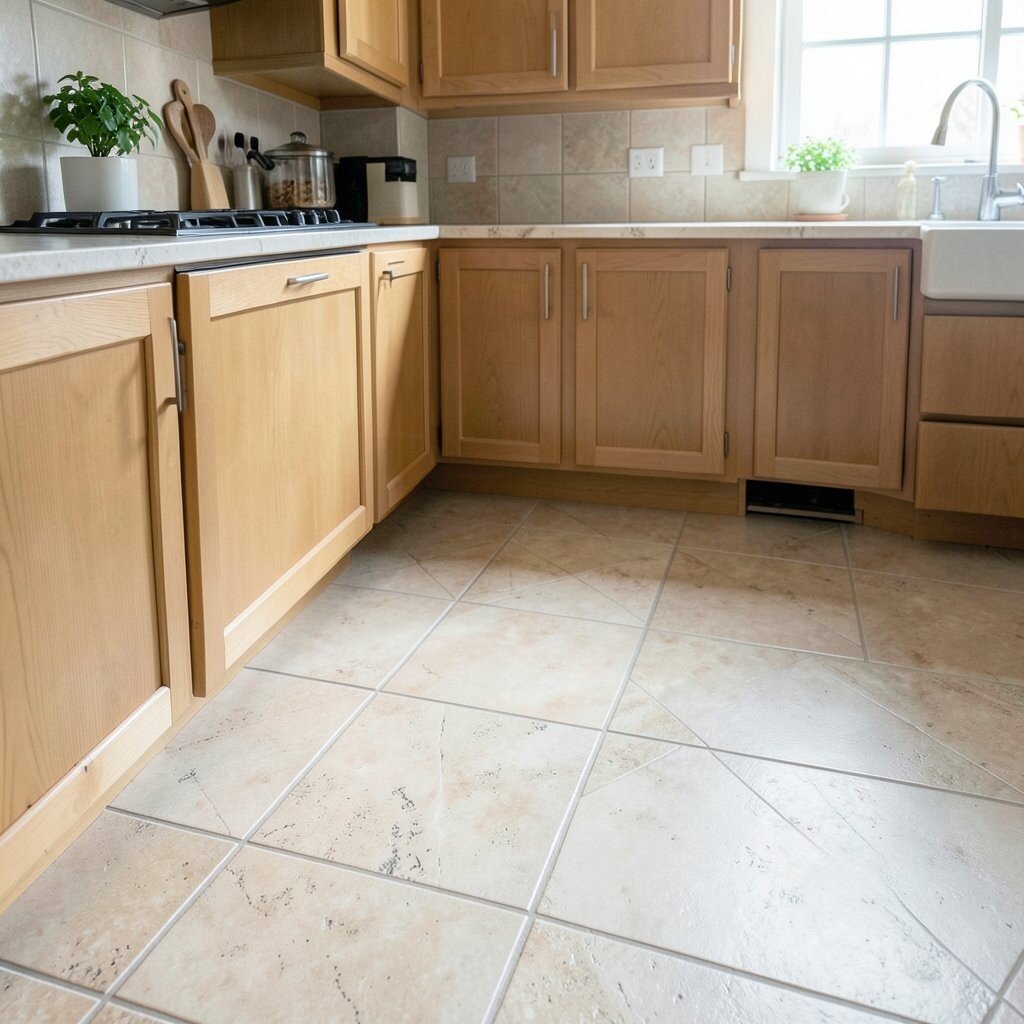
Ceramic or Porcelain Tile With Recycled Content and Low-VOC Grouts Ceramic or porcelain tile can look crisp and timeless, with endless colors and finishes. You may even find tiles with recycled content that bring both style and better material use.
The benefit is that tile is easy to clean and handles water well, which is a big deal in kitchens. When you pair it with low-VOC grout and the right cleaning routine, it can stay beautiful for years. For tips, plan your layout carefully so cuts around the room look neat and balanced.
Personalize with a patterned medallion in the center or a subtle border along the edges. Current trends include large-format tiles that make the kitchen feel calmer and more open. Costs can be mid to high depending on tile type and installation complexity, so compare quotes and consider focusing tile in key areas if you want to stay flexible.
If you’re worried about comfort, add an eco-friendly anti-fatigue mat near the sink or choose a tile with a slightly warmer finish. That small detail can make daily cooking feel nicer. Keep an eye on maintenance needs too, because grout color and sealing products affect long-term look.