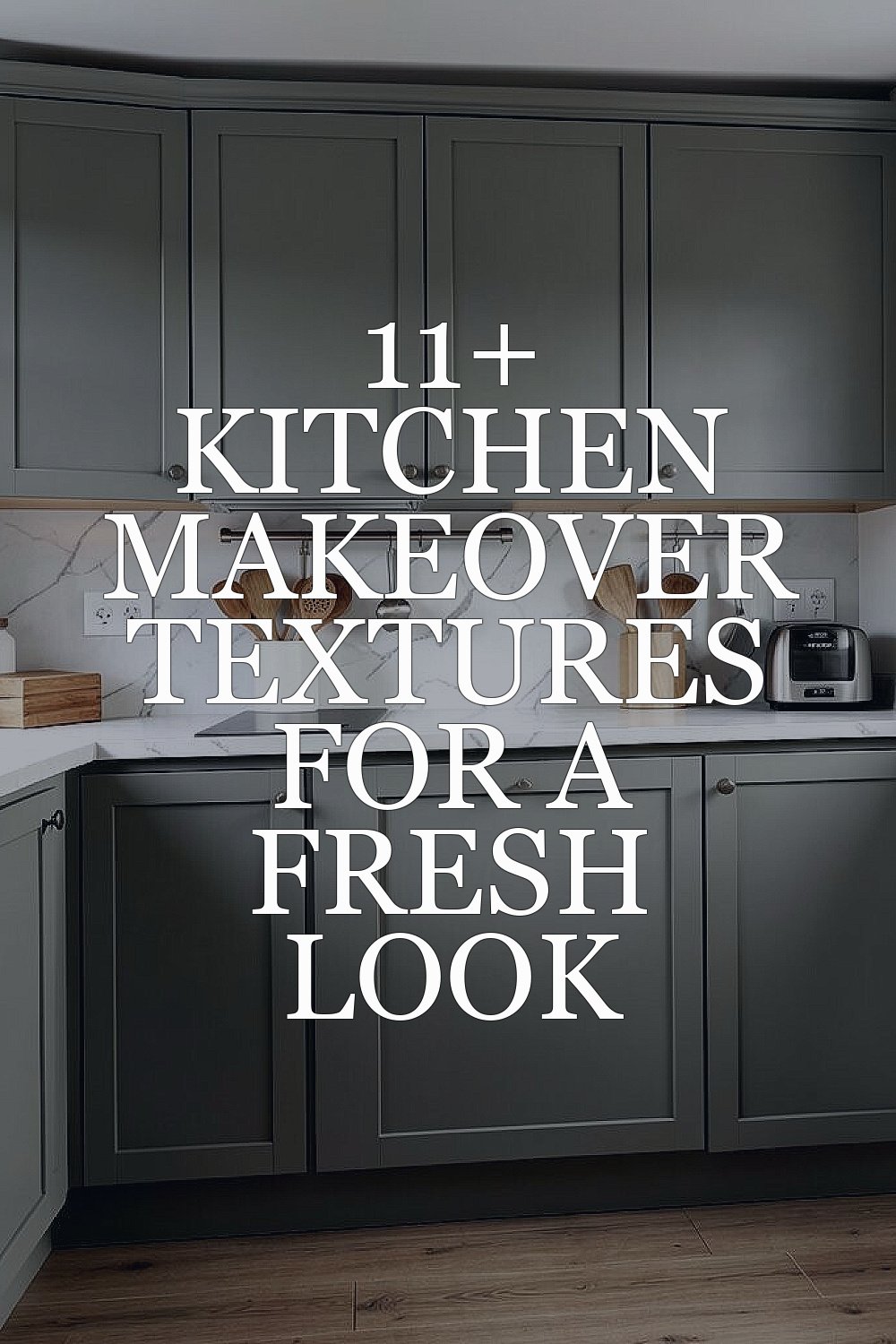
Small changes can make your kitchen feel brand new. The right texture adds warmth, depth, and a little wow factor.
Ready to give your space a fresh look without a full rebuild? Use these kitchen makeover textures as your guide, one irresistible idea at a time.
-
1. Matte Cabinet Paint With a Soft “Velvet” Feel

Matte Cabinet Paint With a Soft “Velvet” Feel Matte paint makes cabinets look calm and modern, like a piece of clothing that never shines. You’ll notice how fingerprints show less, and light spreads evenly across the room.
Choose a velvety matte finish for an extra cozy vibe, especially in kitchens with bright windows. Pair it with warm hardware like brushed brass or oil-rubbed bronze for a rich contrast. If your cabinets are glossy right now, lightly sand and use a quality primer so the texture stays smooth.
For personalization, pick colors that match your mood: creamy off-white for airy calm, sage green for a gentle nature feel, or a soft greige for something in between. Cost can be friendly if you paint yourself, and prices can vary based on brand and color depth. A small update like one accent cabinet (like a pantry door) can still give a big visual jump.
-
2. Textured Wood Panels for a Cozy, Crafted Look

Textured Wood Panels for a Cozy, Crafted Look Textured wood panels bring a handcrafted feel that looks good in both modern and farmhouse kitchens. You’ll see the grain and tiny shadows that make walls feel deeper and more inviting.
Consider adding wood slats behind open shelves or along a breakfast nook wall. This texture helps hide scuffs better than smooth paint and gives your space a natural “lived-in” charm. Keep it consistent by choosing one wood tone and using it in more than one area.
For a budget-friendly plan, use thin veneer panels or pre-finished slats instead of solid lumber. In current kitchen trends, wood accents stay popular because they warm up sleek countertops and stainless appliances. Personalize by staining one section darker or leaving the wood lighter for a custom contrast that looks intentional.
-
3. Rattan or Woven Baskets for Instant Warmth

Rattan or Woven Baskets for Instant Warmth Woven textures make kitchens feel brighter and friendlier, even if you do not change any paint. The tiny loops catch light in a gentle way, like sun through a curtain.
Try using rattan canisters, woven drawer organizers, or a basket-style shelf liner for a quick texture boost. These pieces can help keep things tidy, and that tidy look makes your kitchen feel calmer. They also add personality to counters, pantry shelves, and open display racks.
If you want the texture to feel more “designed,” choose baskets in matching tones, like natural tan plus a touch of honey. You can keep costs moderate by starting with one set for your coffee station or baking corner. For personalization, weave in a style mix—like pairing a rustic basket with a clean modern tray—so your kitchen feels collected, not copied.
Watch for trends that blend natural fibers with simple colors, especially in kitchens that use neutral walls. A few woven pieces can look high-end without the expense of major remodeling.
-
4. Travertine or Stone-Look Backsplash Tiles

Travertine or Stone-Look Backsplash Tiles Stone-look or travertine-textured tiles bring a beautiful, slightly uneven surface that looks luxurious. Up close, you’ll see little natural-looking variations that make the backsplash feel alive.
These textures are great at making the kitchen feel taller and more upscale, especially behind the stove and sink. They can also hide tiny splashes and daily wear better than very glossy finishes. Choose grout color carefully; a warm beige grout can make the tiles blend softly, while a lighter grout can make the pattern pop.
For cost, consider installing tile only where it matters most, like a partial backsplash above counters. If full tile feels too pricey, use peel-and-stick stone-look panels for a temporary upgrade that still feels real. Personalize by pairing stone texture with simple cabinet lines and warm metals for a balanced, modern feel.
In current trends, stone textures keep showing up because they work with many styles, from modern farmhouse to clean contemporary. The texture also pairs beautifully with wood accents and soft matte paint.
-
5. Micro-Concrete Countertop Finish

Micro-Concrete Countertop Finish Micro-concrete offers a modern, smooth texture with a subtle, speckled look. It feels different from standard stone because it has a softer, architectural vibe.
This texture can make your kitchen look sleek while still feeling warm and unique. It’s a great match for kitchens that already use matte finishes and neutral colors. A micro-concrete surface can also help create a seamless, custom look when paired with simple cabinet doors.
For tips, ask about sealing and maintenance before you fall in love with the look. Your benefits include a distinct style and the ability to tailor color tones, from cool gray to creamy sand. Cost can be higher than standard laminate, so plan your budget by comparing local pricing or focusing on one area like an island.
-
6. Linen-Textured Curtains or Roman Shades

Linen-Textured Curtains or Roman Shades A linen-like window fabric adds texture you can see and feel, even from across the room. It softens harsh light and makes the kitchen feel less sharp.
Choose a fabric with a woven pattern, not a shiny finish, for the most natural look. This gives you a cozy, lived-in feel and helps keep the room from looking too “hard.” It also makes your kitchen look styled, especially if your counters are mostly clear.
For personalization, match the fabric to your backsplash or pick a shade that echoes your cabinet color. Cost can stay reasonable if you pick ready-made shades and trim them to fit. Current trends often lean toward warm neutrals and natural fibers, so linen-textured window treatments are a strong, easy win.
-
7. Slab-Style Cabinet Doors With a Clean, Textured Edge

Slab-Style Cabinet Doors With a Clean, Textured Edge Slab doors give a sleek, modern look, but adding a textured edge keeps them from feeling too plain. You’ll notice the extra depth right where your eyes land first.
This texture is ideal if you want a fresh look without adding clutter. A subtle texture can help the kitchen feel more custom while still staying tidy and simple. Pair it with matte hardware so everything stays cohesive.
Consider upgrading just the cabinet doors instead of replacing the full cabinet boxes, which can save money. For personalization, pick a finish like satin lacquer or a smooth matte with a faint grain. Costs vary a lot, so get quotes and ask about door-only replacements if your frames are in good shape.
A current trend is “quiet luxury,” which means fewer decorations but better materials and finishes. Textured slab elements fit that style beautifully.
-
8. Peel-and-Stick Textured Wallpaper Behind Open Shelves

Peel-and-Stick Textured Wallpaper Behind Open Shelves Textured wallpaper can act like a backdrop for your kitchen, even when you only cover one small area. You’ll see raised patterns that add depth behind dishes and glassware.
This idea is great because it’s quick, reversible, and low-commitment. Use it behind open shelves, inside a corner cabinet, or along a fridge zone to add interest without heavy construction. Choose textures like subtle grasscloth or linen weave look for a natural style.
For personalization, match the wallpaper tone to your hardware and counter edges. Cost considerations are usually friendly because peel-and-stick often costs less than tile and you can DIY. Keep an eye on today’s trends: many kitchens now use “soft pattern” textures rather than loud prints.
-
9. Textured Vinyl Flooring or Luxury Plank With Grain

Textured Vinyl Flooring or Luxury Plank With Grain A grain-textured floor can change how your entire kitchen feels. When you walk in, you notice the realistic wood or stone pattern and the warm look it creates.
Luxury vinyl plank or textured vinyl sheets are popular because they can handle busy kitchens well. They also resist everyday mess better than some older floor types. If you choose a plank with a matte finish, it can hide scuffs and fingerprints from shoes and moving chairs.
For tips, measure carefully and plan for expansion gaps if needed. Personalize by picking a tone that balances your cabinets—cool floors with white cabinets can look modern, while warm floors with cream cabinets can feel cozy. Cost can be mid-range, but you can often save by doing part of the flooring yourself.
-
10. Micro-Textured Paint on Walls (Sponged or Rag-Rolled)

Micro-Textured Paint on Walls (Sponged or Rag-Rolled) Wall textures like sponging or rag rolling create a gentle, cloudy look that hides imperfections. From a distance, it looks smooth, but up close, you see movement and softness.
These textures can make your kitchen feel warmer without adding clutter. They are also helpful if your walls have small dents or uneven spots. You can keep everything light by using a tone close to your current wall color, then letting the texture do the work.
For personalization, choose a subtle technique: a light sponged finish looks airy, while a deeper rag finish feels richer. Costs can be low if you DIY, but you may want practice on a spare sheet of drywall. Current trends lean toward warm neutrals and gentle texture, so a micro-textured wall fits right in.
-
11. Patterned, Textured Runner Rugs for a Soft Landing

Patterned, Textured Runner Rugs for a Soft Landing A textured kitchen runner rug brings comfort and a homey feel right where you stand most. You’ll see looping patterns, braided edges, or subtle woven stripes that add depth to the floor.
Rugs also help reduce noise and make the kitchen feel easier on your feet. They can protect floors from spills and dropped utensils, which is a real daily benefit. Choose a rug with a non-slip backing so it stays put during cooking.
For personalization, match the rug pattern to your backsplash shapes or keep it neutral so your cabinets stay the star. Cost can be friendly since you only replace one piece, not an entire room. A current trend is “layering,” meaning rug texture plus a simple base color so your kitchen feels styled, not stiff.
-
12. Decorative Concrete or Ceramic Molding for Statement Areas

Decorative Concrete or Ceramic Molding for Statement Areas Decorative molding with a ceramic or concrete-like texture adds “built-in” drama. You’ll see raised details that cast small shadows, making your backsplash or niche look like a design feature.
This texture is especially good around a coffee bar, above a shelf, or framing a display niche. It gives your kitchen a focal point without needing lots of color. Plus, it can hide small gaps or imperfect edges, which is a practical bonus.
For tips, measure the exact area first and use a level so the lines stay straight. You can personalize by choosing a mold style that matches your cabinets—clean straight lines for modern, more curved profiles for classic. Cost considerations vary, but using molding only in one statement strip can keep it affordable.