
Fresh green leaves can make your kitchen feel calmer right away. Small living touches also bring warmth to busy mornings.
Below is a list of lush indoor plants that look elegant in cooking spaces and still fit real life. Each pick includes easy tips, ways to personalize your setup, and cost notes so you can plan without stress.
1. Snake Plant (Sansevieria) for Clean Lines and Tough Love
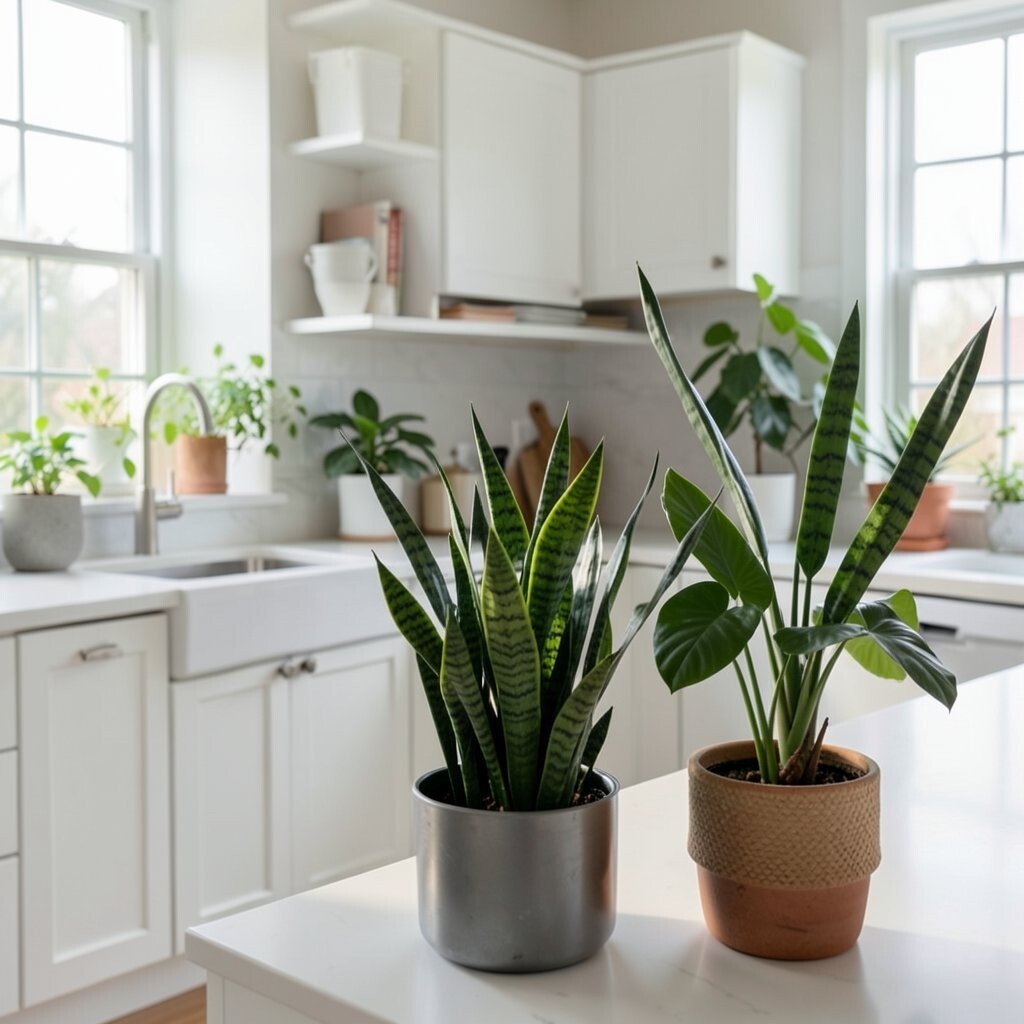
Snake plant leaves stand tall like neat ribbons, with sharp edges and bold stripes. Place it near a bright window and it will look polished even when you forget to water for a bit.
This plant is famous for handling low light and dry air. It can also help soften the look of stainless steel appliances and sleek counters. Try a tall, simple pot in matte white or black for a modern kitchen vibe.
For best results, water only when the soil is dry to the touch. Wipe dust from the leaves so they stay shiny and elegant. If you want extra charm, add small pebbles on top of the soil, or wrap the pot with a natural jute cover.
2. Pothos (Devil’s Ivy) for Soft Hanging Drama
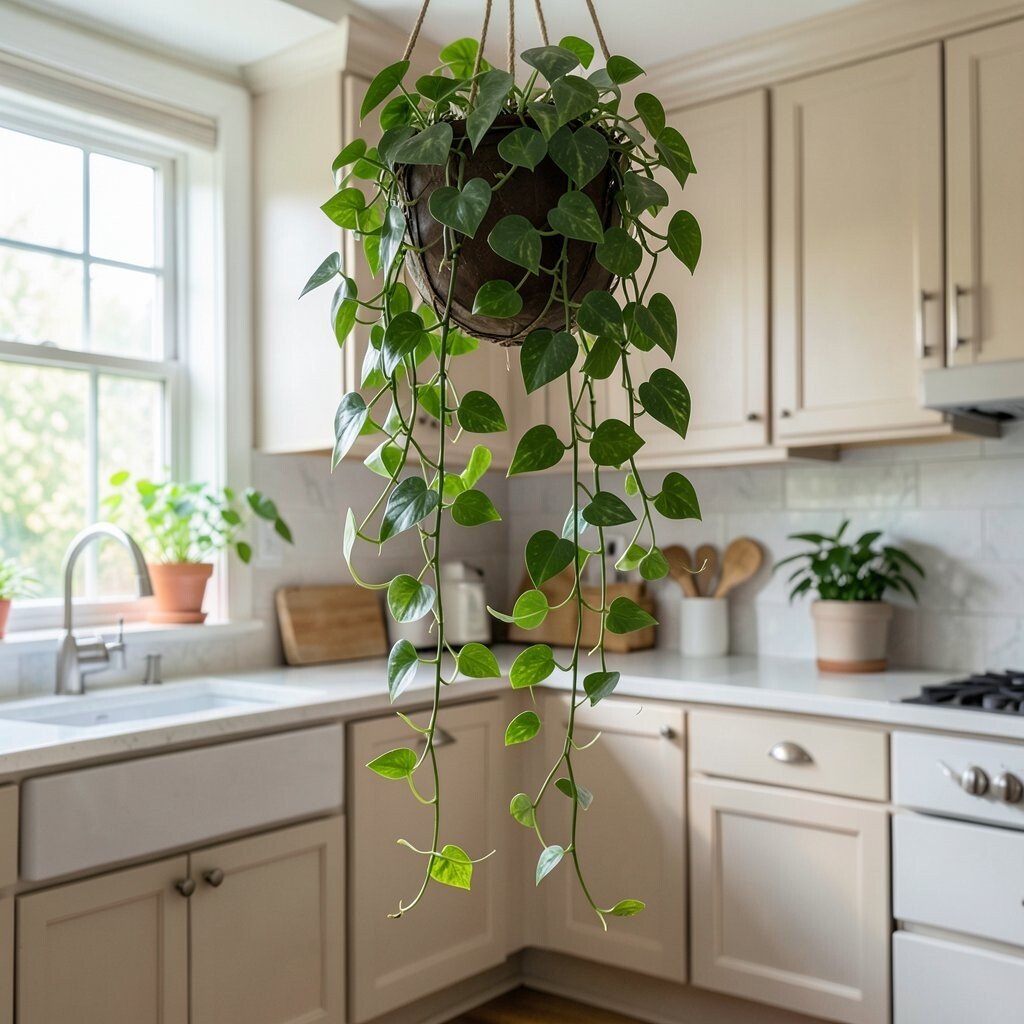
Pothos looks lively and trailing, with heart-shaped leaves that spill over shelves. In kitchens, it adds a cozy feeling next to jars, dish towels, and cookbooks.
It grows fast, which means you can train it along a shelf edge or let it cascade from a hanging basket. People love it because it forgives mistakes and adapts to average indoor light.
Water when the top inch of soil feels dry, and give it a gentle rinse if leaves look dusty. For personalization, choose a pot that matches your cabinet handles, like warm wood tones or brass accents. If you want to save money, start with a small plant cutting and grow it over time.
3. ZZ Plant for Glossy Leaves That Never Seem to Quit
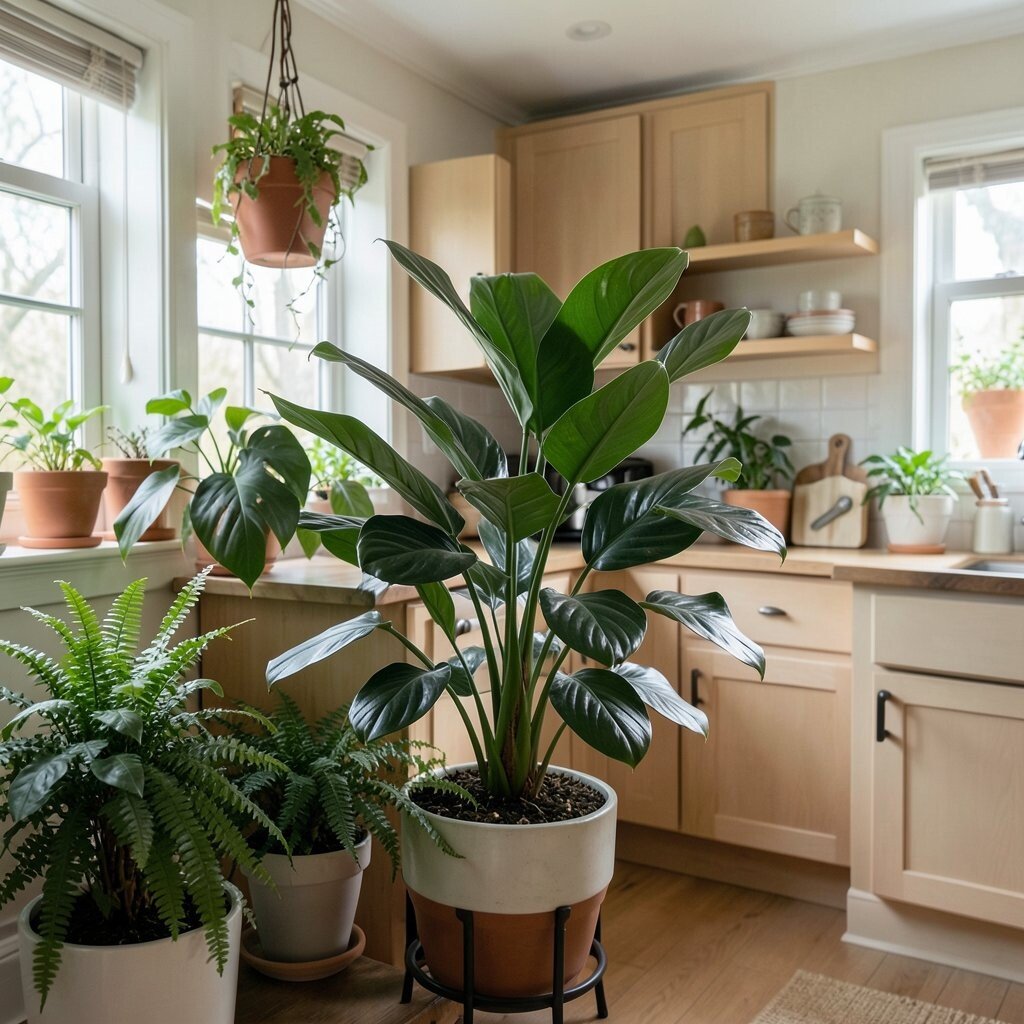
ZZ plant leaves are thick, shiny, and almost waxy, which makes them look fancy without trying. Its upright shape feels tidy on counters or in corners.
This plant is great for kitchens where sunlight comes and goes during the day. It can handle neglect better than many others, so it fits busy households.
Keep it in bright, indirect light, and water sparingly. Use a pot with good drainage, because soggy soil can cause trouble. To personalize, pick a decorative planter with a subtle pattern, or group it with one smaller plant for a layered look.
Cost-wise, ZZ plants can be a bit pricier at first, but they last a long time. Buying a slightly larger plant often saves money later because you won’t have to wait for growth.
4. Peace Lily for Elegant Blooms and Easy Calm
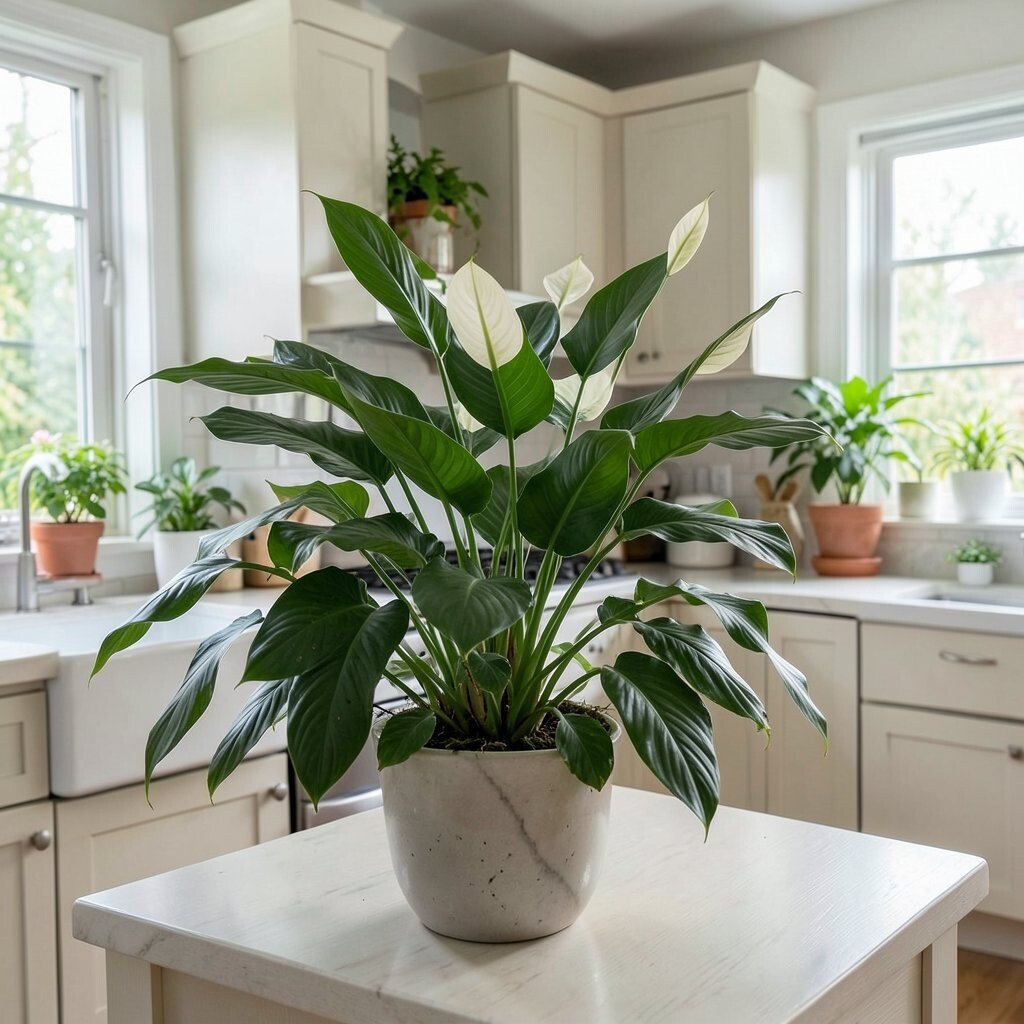
Peace lily leaves are deep green and velvety, and the white flowers look like clean little ornaments. It brings a soft, classy mood right where people gather for tea or breakfast.
This plant likes consistent care and shows you when it needs water by drooping a bit. That simple sign helps you learn your kitchen’s rhythm, like how warm it gets near the stove.
Place it in medium light and water when the soil starts to dry. Wipe leaf surfaces occasionally and remove spent flowers to keep it looking fresh. For personalization, set it in a ceramic pot that echoes your tile color, and add a small saucer underneath for neatness.
As for cost, peace lily plants are often easy to find in stores. You may even get them in starter sizes that fit countertops or windowsills.
5. Herb Basil (Living Kitchen Herb) for Fragrance and Food Magic
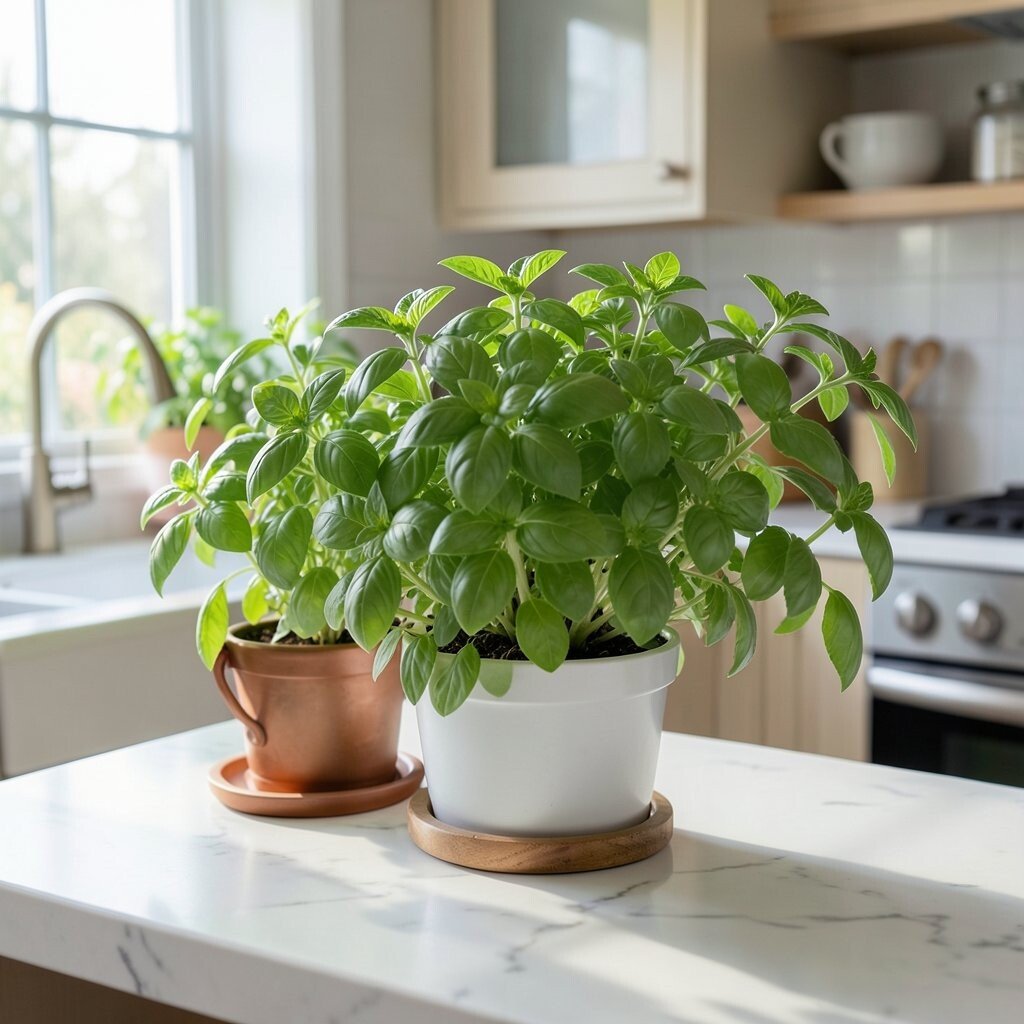
Basil brings bright green color and a wonderful smell that makes cooking feel special. Even a small pot makes your kitchen feel like a tiny garden.
It’s not just pretty; it’s useful. Harvesting leaves can boost flavor in meals, and many people find they cook more at home when herbs are close by.
Keep basil in a sunny spot with plenty of light, and water when the top soil dries. Trim often to encourage new growth, and rotate the pot so all sides get light evenly. For personalization, use a matching set of small herb planters, or label your pots with chalk markers for a charming touch.
6. Coastal Fern for Airy Texture and Soft Green Movement
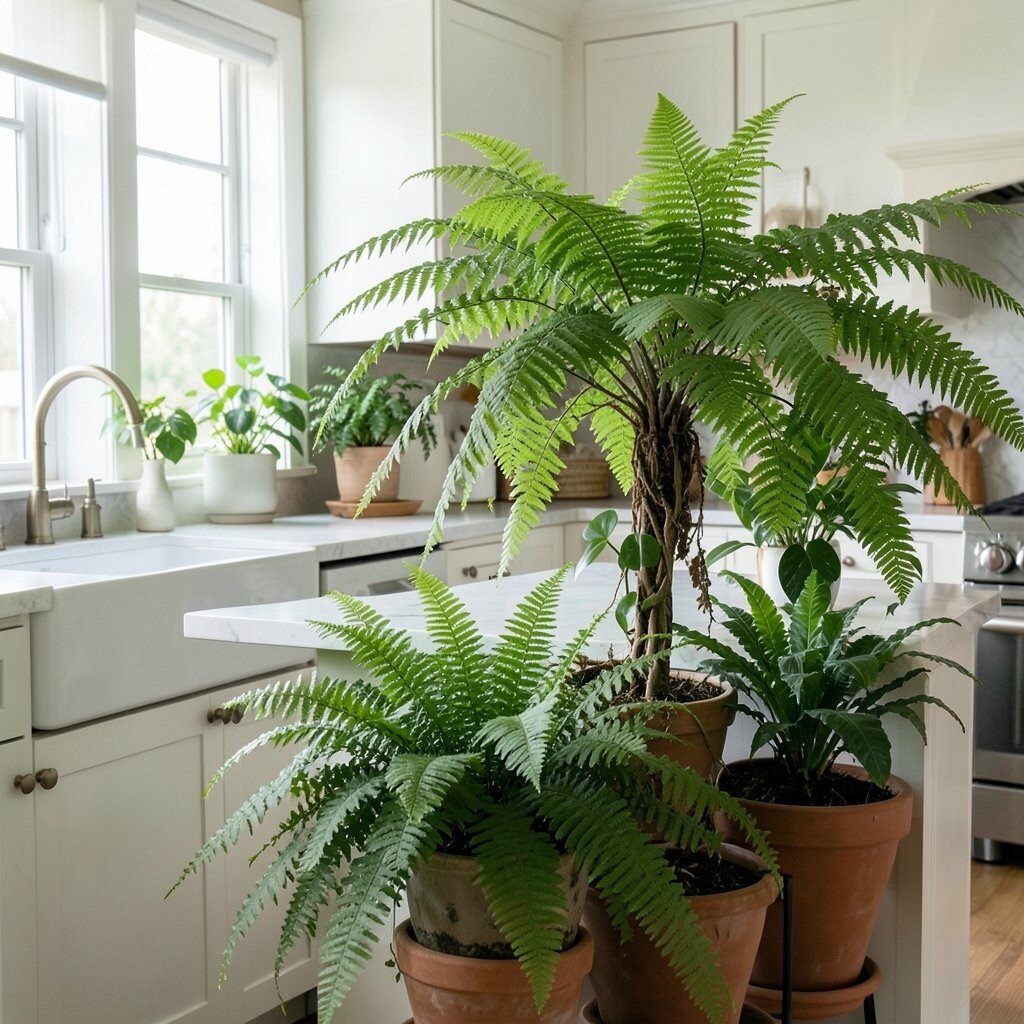
Fern fronds look delicate and layered, like tiny feathers spreading through the air. When placed near a window, they create a gentle, breezy look.
This plant adds texture that makes kitchens feel less boxy. It also loves humidity, which can be a fun match for bathrooms and kitchens with good steam from cooking.
Use bright, indirect light and keep soil lightly moist, not soggy. Mist the leaves if your home is dry, or set the pot near a humid spot away from direct heat. For personalization, choose a hanging fern stand so the fronds drift downward like natural curtains.
Cost can vary, but smaller ferns may be cheaper and still look great. A starter plant plus a decorative pot often looks more “designer” than a plain one.
Watch for browning tips, which can mean low humidity. Adjust misting or move it slightly away from the stove to protect the leaves.
7. Rubber Plant for Bold Leaves and Strong Presence
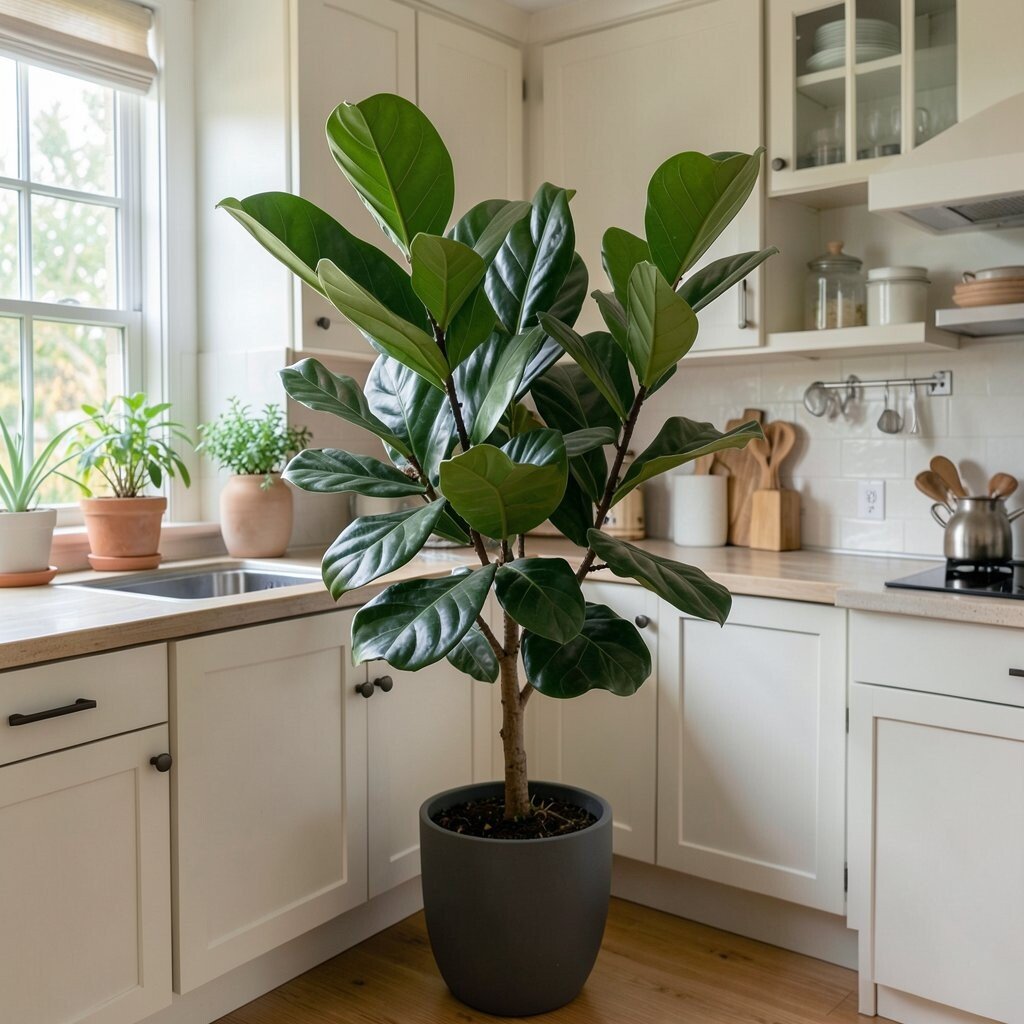
Rubber plant leaves are thick, glossy, and wide, giving instant elegance. It feels like a living sculpture in a corner.
This plant works well when you want a more dramatic look instead of lots of small plants. It can also make the kitchen feel more grounded and balanced.
Place it in bright, indirect light and water when the top layer of soil dries. Dust the leaves with a soft cloth to keep them shining. For personalization, pick a large pot with a clean silhouette, like a tall cylinder, and add a top layer of light-colored soil mix or moss.
8. Bamboo Palm for Tropical Calm Without Too Much Fuss
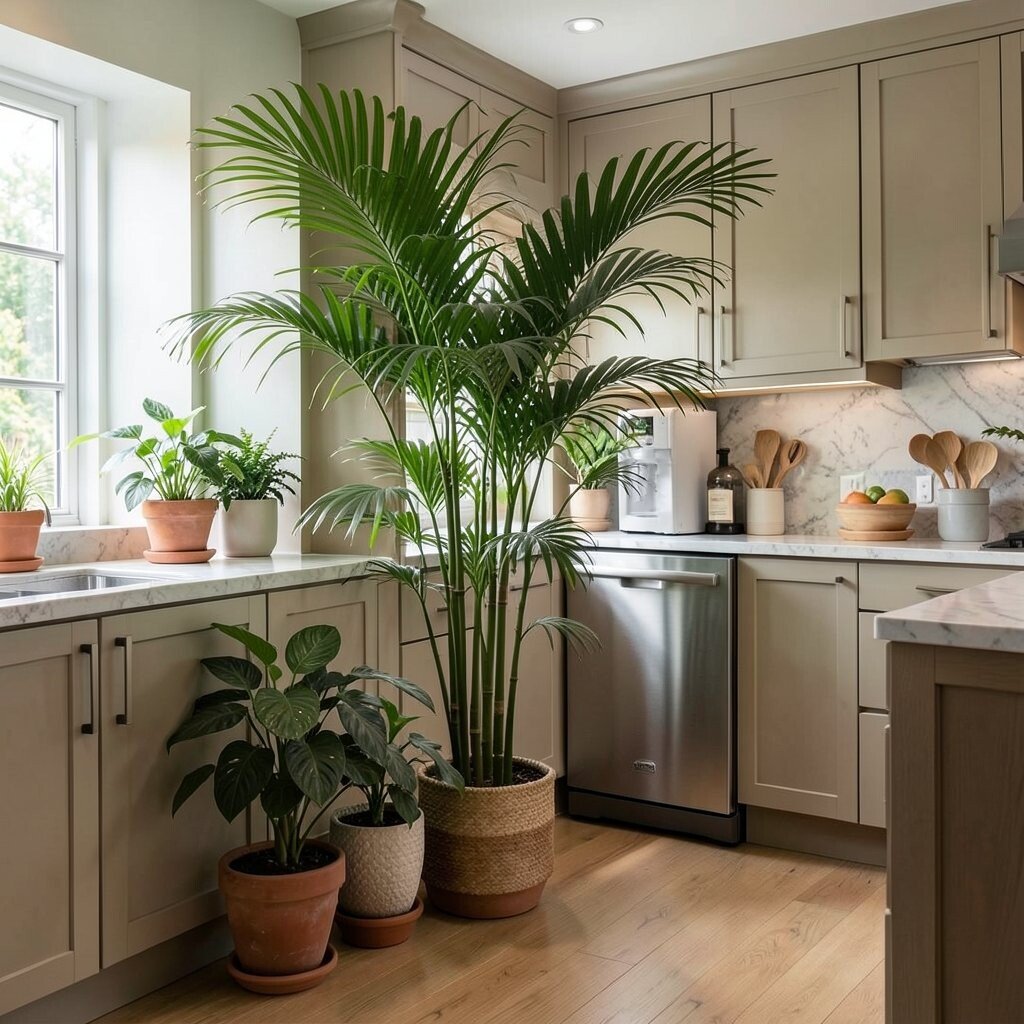
Bamboo palm brings a gentle tropical vibe with feathery fronds. In a kitchen, it can make the space feel like a sunny retreat.
This plant likes bright light and steady watering, and it tends to grow in a way that looks neatly full. It also creates privacy in open layouts by softening sightlines from nearby rooms.
Water when the soil feels slightly dry, and make sure the pot has drainage holes. If your kitchen gets hot from cooking, keep it a little farther from the stove. Personalize with a woven basket cover or a pot that matches your wood tones for a natural feel.
Costs can be moderate, and larger palms tend to be the most eye-catching. If you’re watching budget, start with a smaller plant and use a statement planter to lift the look.
9. Jade Plant for a Chic Mini “Tree” Look
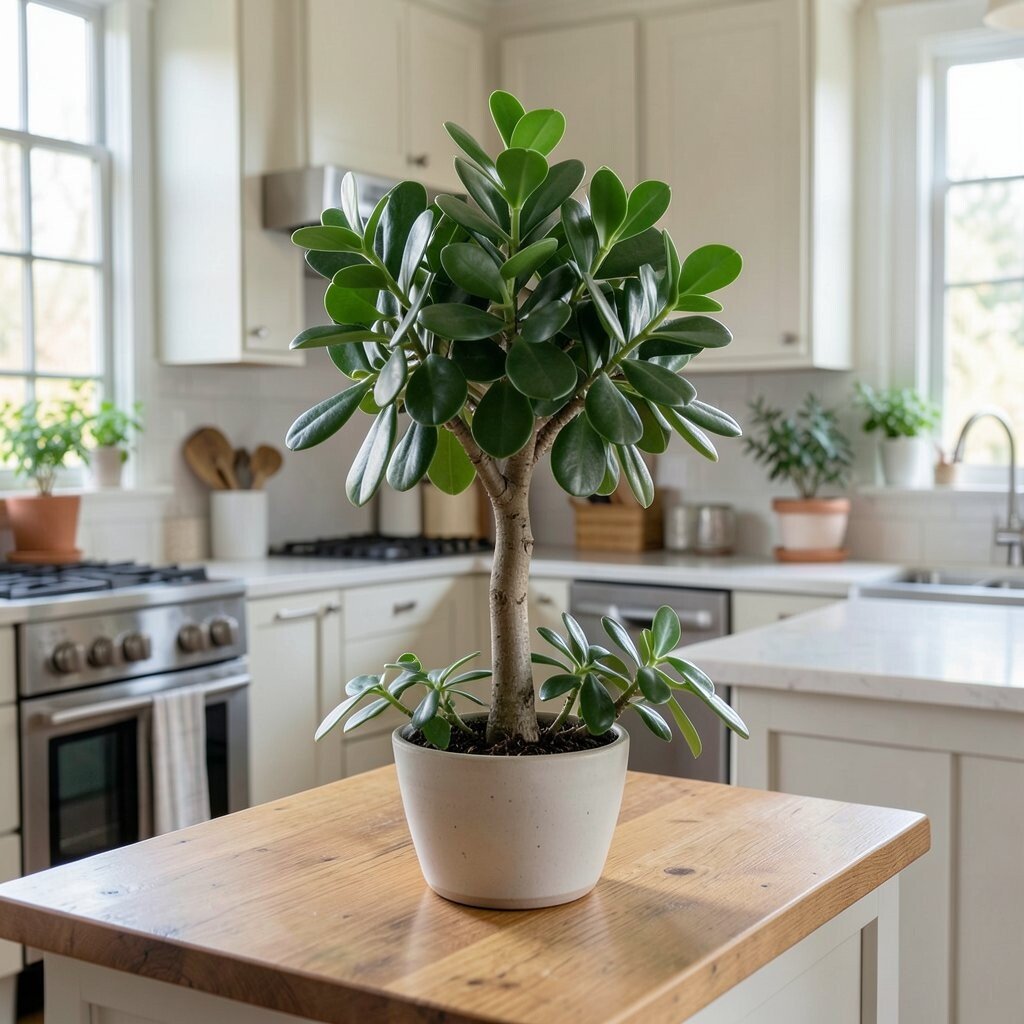
Jade plant has round, thick leaves that make it look like a tiny tree. Its tidy shape is perfect for tabletops and windowsills that need structure.
This is a great choice for kitchens that get bright sunlight and dry air. It can also pair well with natural materials like wood trays and stone countertops.
Use a cactus or succulent soil mix, and water deeply only when the soil is fully dry. Avoid overwatering because jade stores water in its leaves. For personalization, place it in a small terracotta pot and keep it near a bowl of fruit for a warm, lived-in look.
If you want to keep costs down, jade plant cuttings can be easier to find and cheaper than full grown plants. Buying one solid plant can also last for years, with slow but steady growth.
10. Swiss Cheese Plant for Big Leaf Drama and Modern Style
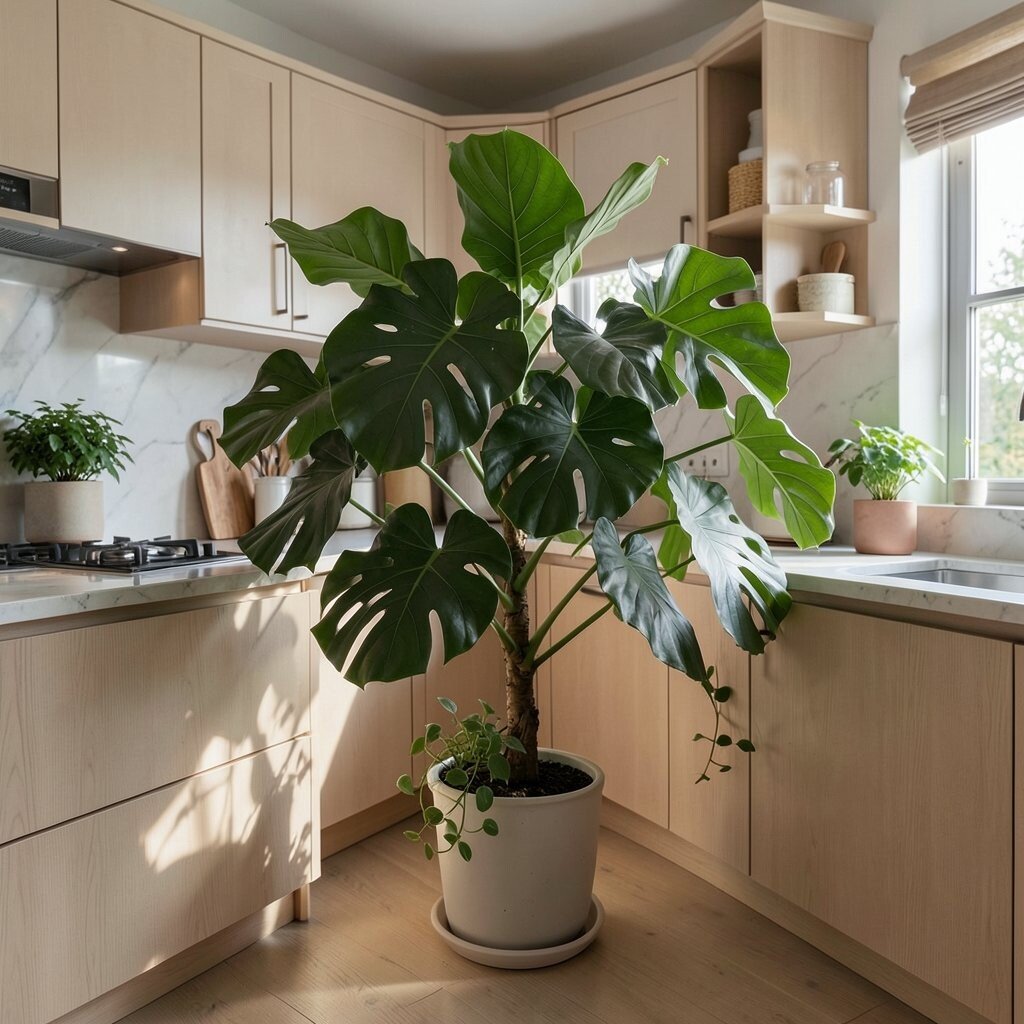
Swiss cheese plant gets its name from the holes in its leaves, which look stylish and airy. It instantly gives your kitchen a modern, artistic feel.
The unique leaf pattern helps your kitchen look less flat, especially if you have plain walls. Many people also love it because it grows into a shape that fills space beautifully.
Give it bright, indirect light and water when the top inch of soil dries. Use a sturdy pot because the plant can get heavy. Personalize by training it on a moss pole for a vertical look, or let it climb near a window for a living feature.
11. Calathea for Colorful Leaf Art and Gentle Attention
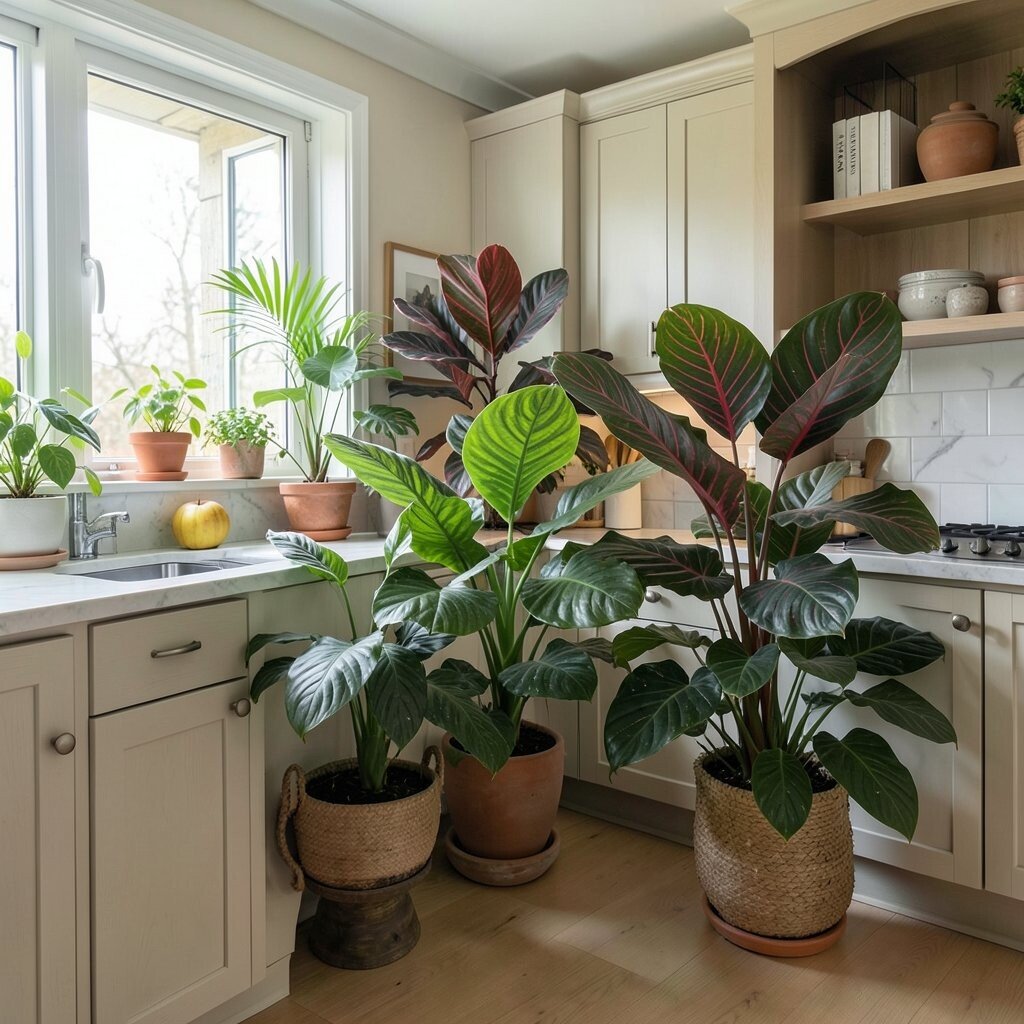
Calathea is known for patterns that look painted, with stripes and swirls on green leaves. It feels like natural artwork in your kitchen.
This plant also tends to react to light, so the leaves can shift beautifully throughout the day. It’s a fun choice if you enjoy watching small details while you cook.
Use medium to bright indirect light and keep the soil lightly moist. Try to use filtered or non-chlorinated water if your tap water is hard. For personalization, pair it with a simple tray and keep it away from hot drafts from windows or air vents.
Cost can be higher for calathea, but the looks are worth it. Buying a smaller plant and upgrading the pot later is a smart way to manage budget.
12. Aloe Vera for Clean Lines and Practical Green
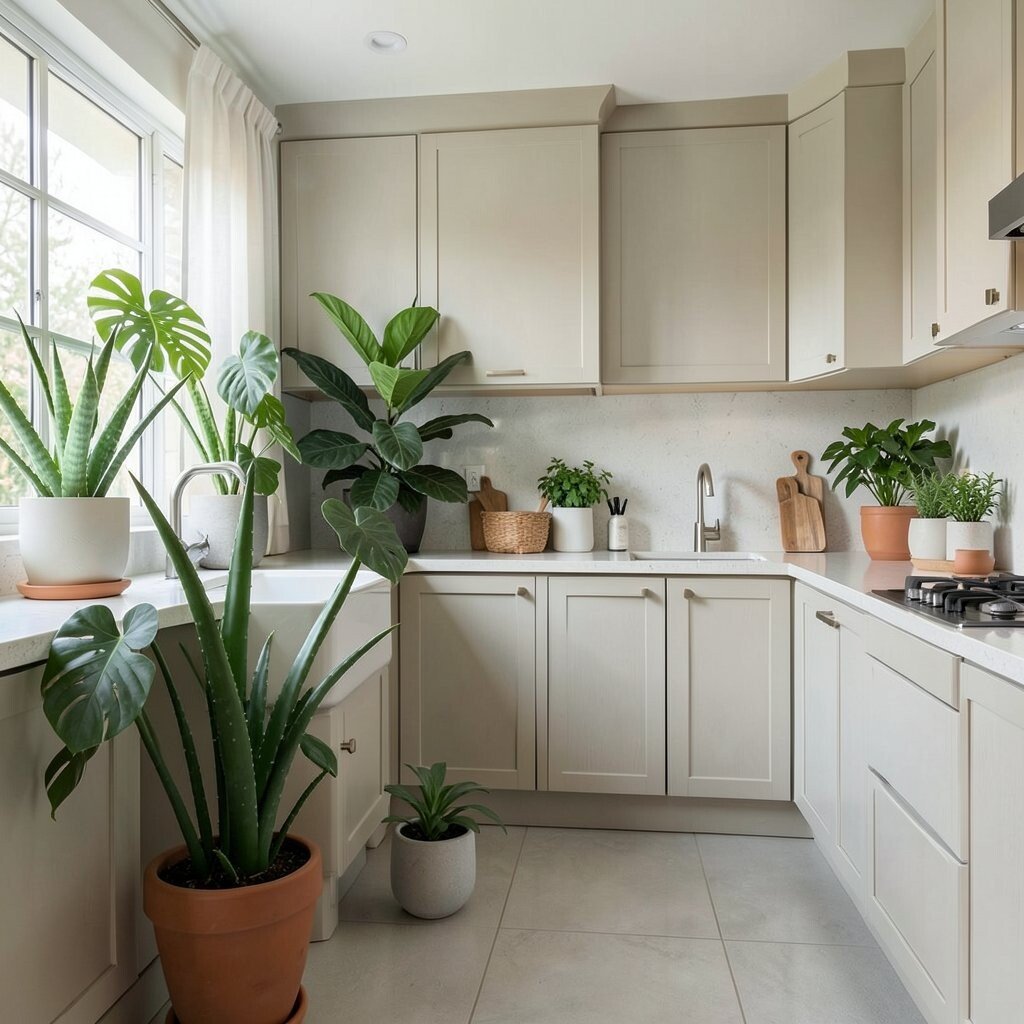
Aloe vera has spiky, thick leaves that look neat and minimal. It’s a plant that fits both modern kitchens and cozy ones.
Beyond beauty, aloe is famous for its usefulness, and many people enjoy having it on hand. It also tends to be low maintenance if you remember the key rule: let it dry between waterings.
Place aloe in bright light, ideally near a sunny window, and use a gritty soil mix. Water only when the soil is completely dry, because too much water can cause root problems. For personalization, try a small ceramic pot in a soft neutral color so it blends with countertop decor.
13. String of Pearls for a Fun Look That Hangs Like Jewelry
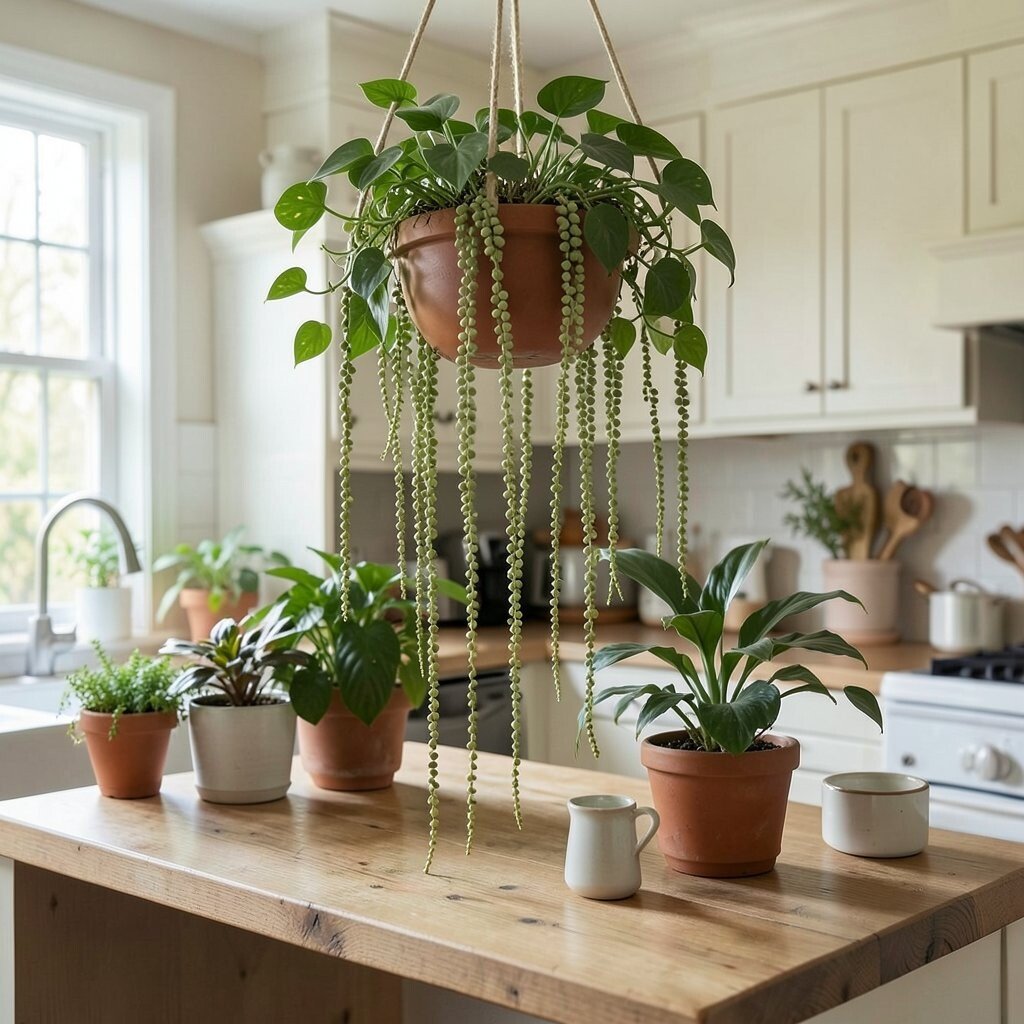
String of pearls has trailing stems with bead-like leaves, so it looks like green jewelry. Hanging it near light makes it sparkle with movement.
This plant is unique because it gives you a different shape than most kitchen plants. It also works great in bright corners where you want something that drapes and softens sharp edges.
Give it lots of bright light and water lightly when the soil fully dries. Let excess water drain completely, since it dislikes sitting wet. For personalization, use a hanging macramé holder or a sleek metal planter that matches your kitchen lighting style.
Cost can be reasonable for starter plants, and propagation is possible from cuttings. If you buy one, you can grow a fuller look over time with simple care.
14. Bird of Paradise for Big Leaf Elegance
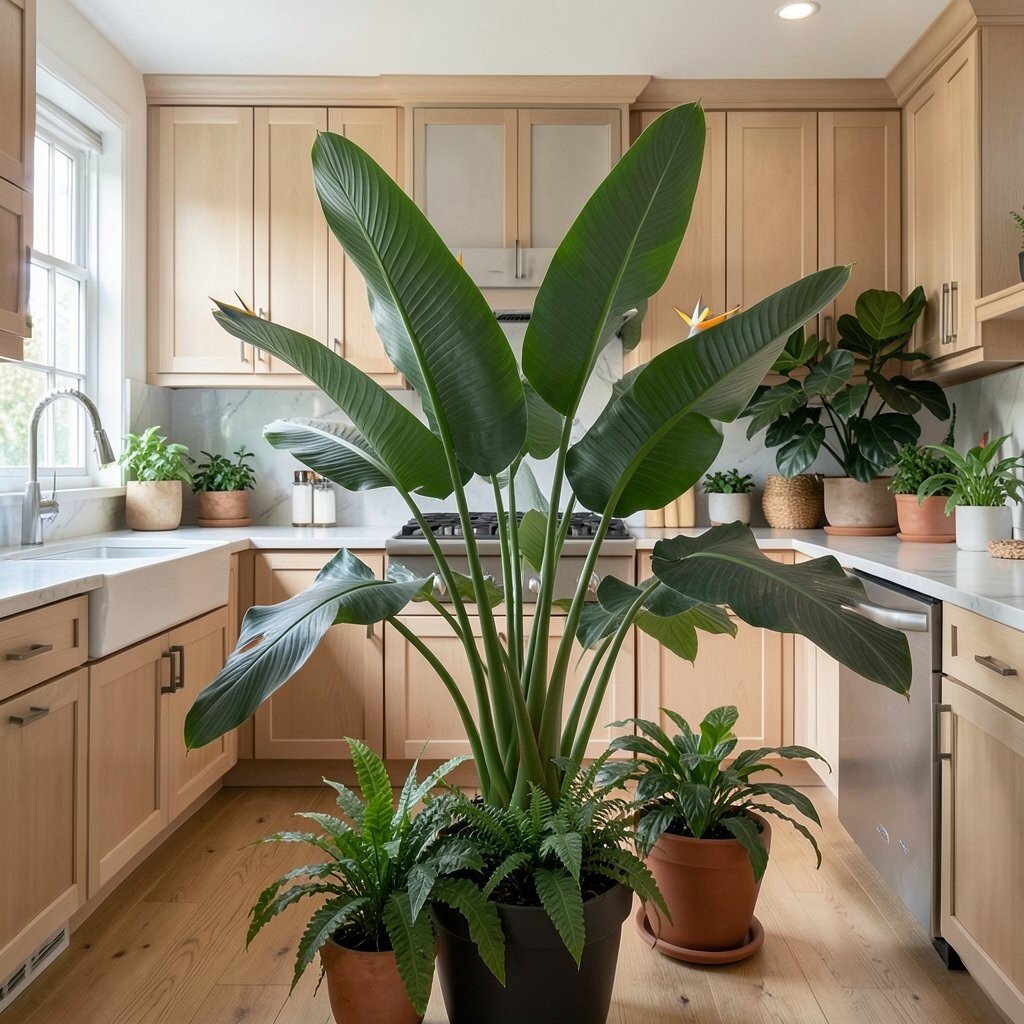
Bird of paradise has bold leaves that fan out like tropical fans. Even without flowers, it looks like it belongs in a stylish magazine kitchen.
This plant helps a kitchen feel grand, especially if you have tall ceilings or an open dining area. It also creates a strong natural focal point near windows.
Place it in bright light and water when the top few inches of soil dry. Avoid letting the roots sit in water, and use a pot with drainage. For personalization, pair it with a large textured planter like clay or woven fiber for a nature-forward look.
Costs are often on the higher side because it can be a larger plant. A smaller starter can still look good if you choose a dramatic pot that adds elegance right away.
Keep it away from direct blasts of heat, like from a vent or right next to the stove. That small placement change can help the leaves stay smooth and strong.
15. Peace Lilies’ Cousin: Mauna Loa Peace Lily Type for a Softer Bloom Look
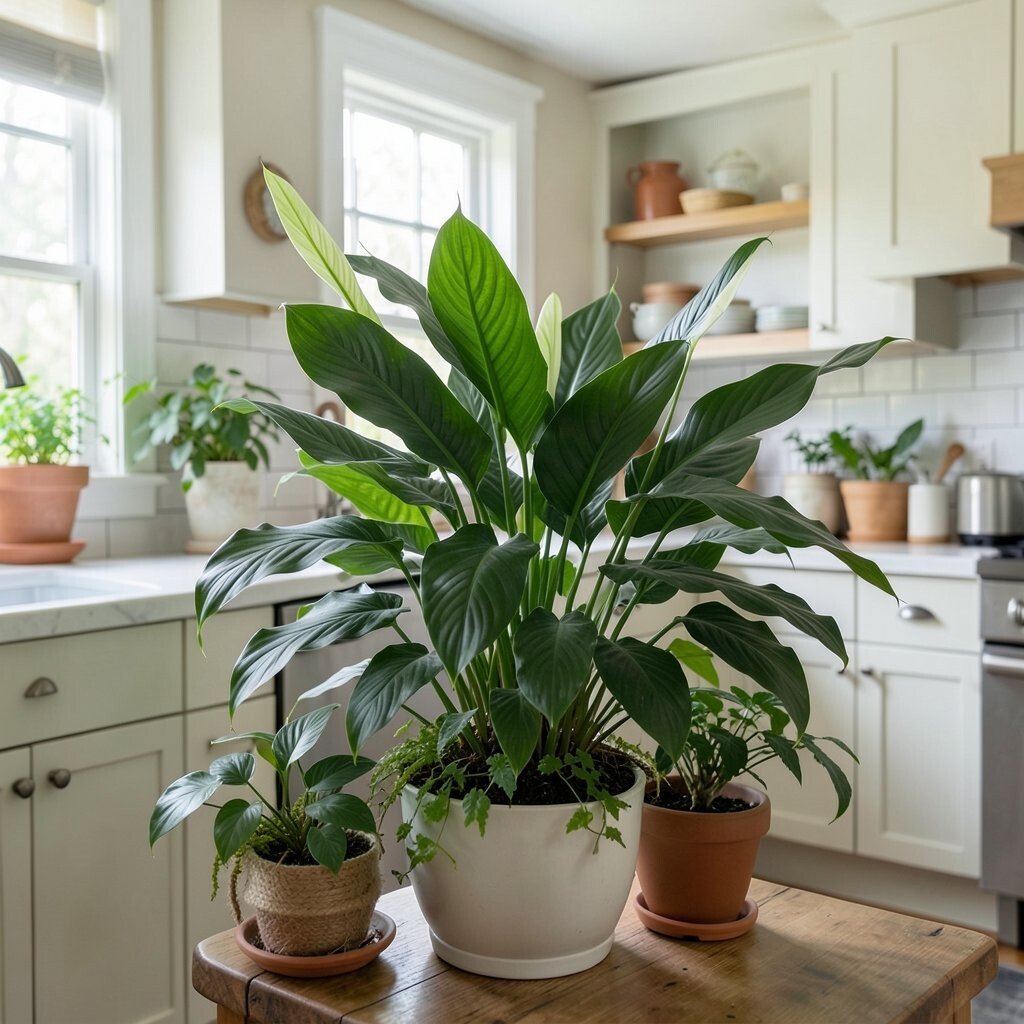
If you love peace lily blooms but want a slightly different vibe, try a Mauna Loa variety. It tends to keep flowers looking smooth and bright for a longer time.
It adds the same calming green feel while giving you an extra layer of elegance. In kitchens, the white blooms look great beside clear glass jars and light-colored dishware.
Give it medium light and water when soil feels slightly dry under the top layer. Wipe the leaves and remove spent blooms to keep the plant neat. Personalize with a white pot for a crisp look, or choose a soft sage color to blend with natural themes.
16. Spider Plant for Easy Green and Quick Offsets
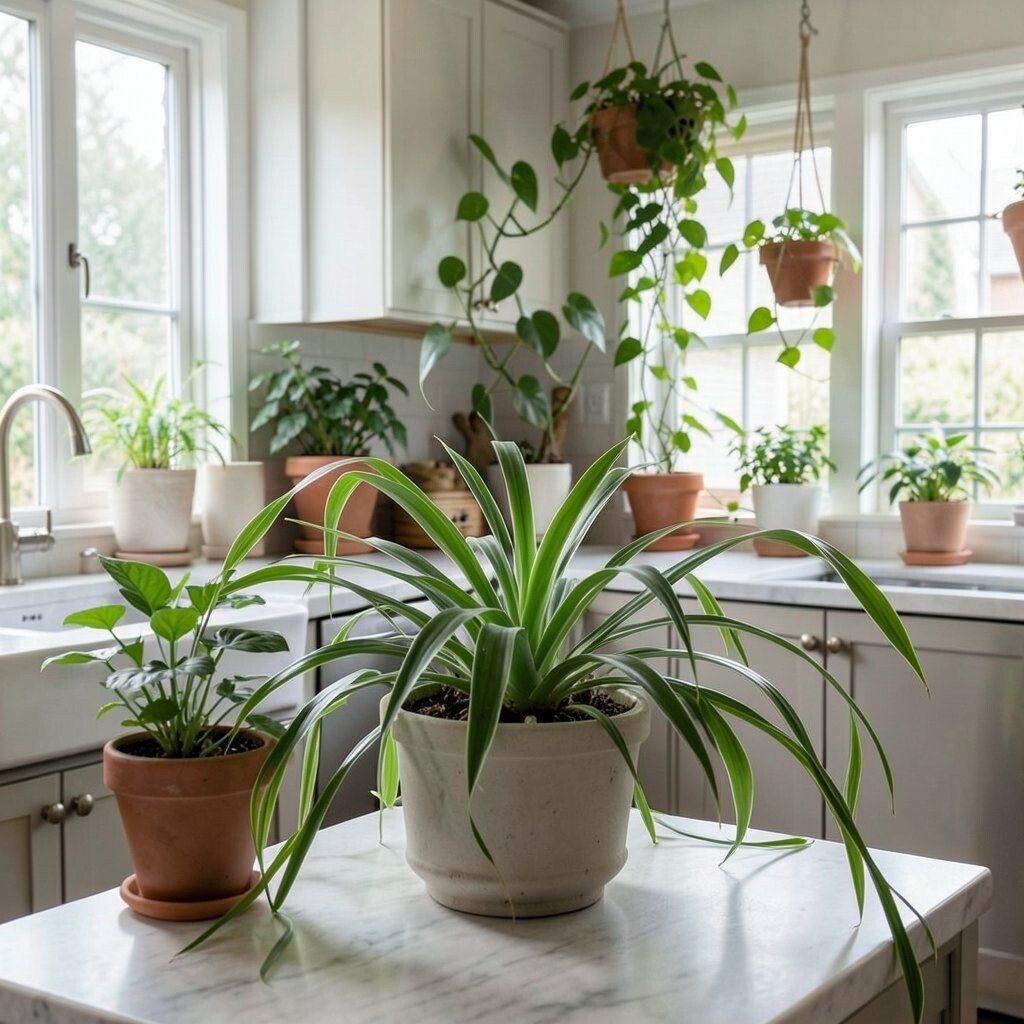
Spider plant forms arching leaves, and it can produce little “baby” plantlets. That makes it feel playful and rewarding.
In a kitchen, it looks tidy and fresh, especially on shelves above counters. Plus, it handles everyday conditions pretty well, which makes it beginner-friendly.
Place it in bright, indirect light and water when the top soil dries a bit. For personalization, use a hanging pot and let the arching leaves create a gentle waterfall effect. If you like budget ideas, share plantlets with friends or grow more from your own offsets.
17. Philodendron Heartleaf for Easy Charm and Rich Green Color
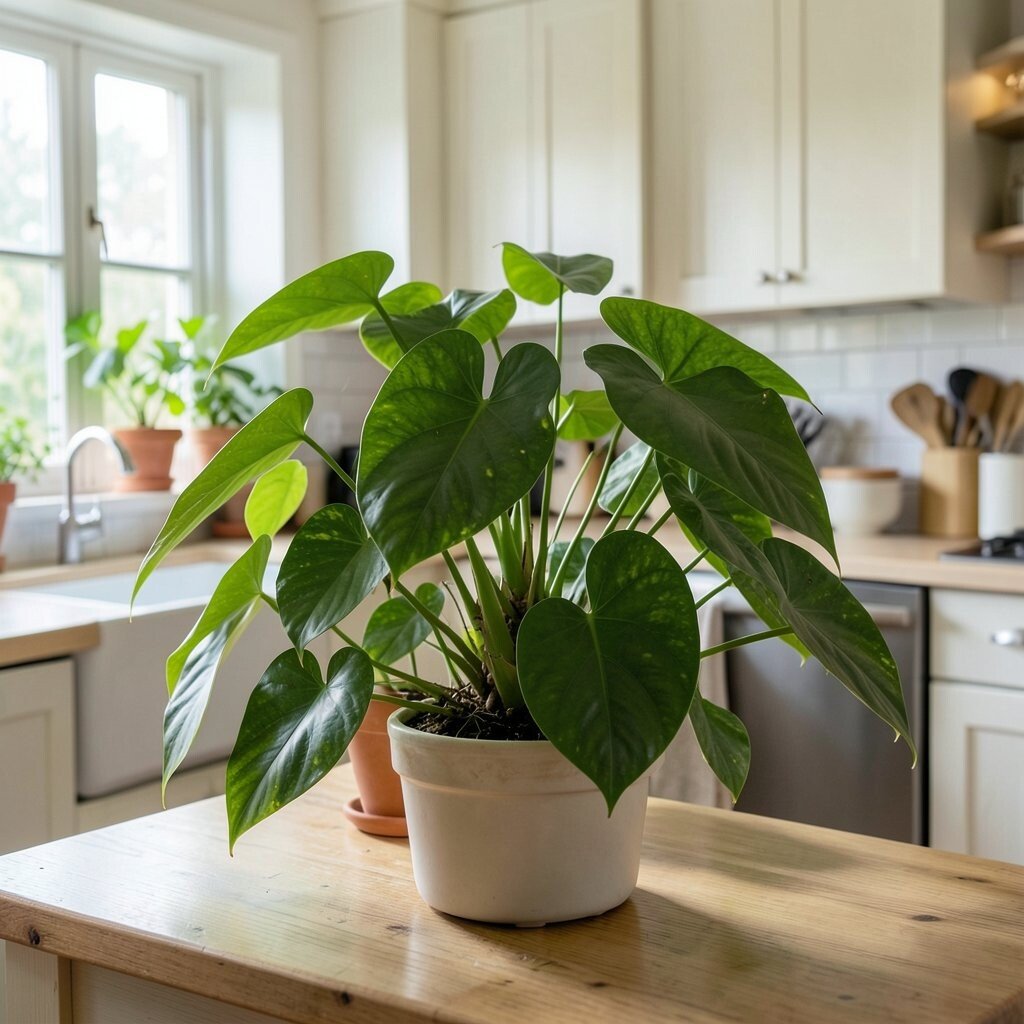
Heartleaf philodendron has glossy leaves shaped like little hearts. It looks warm and inviting, which is perfect for kitchens where people gather.
It can trail from a pot, climb a pole, or spill from a shelf, so you can match your space. Many kitchens have different lighting spots, and this plant adapts nicely to common indoor light.
Water when the top inch of soil dries, and avoid overwatering. If leaves look dull, it may need brighter light. For personalization, guide it up a small moss pole, or keep it low and let it cascade over the edge of a stand.
18. Money Tree for a Lucky Look and Strong Stem Structure
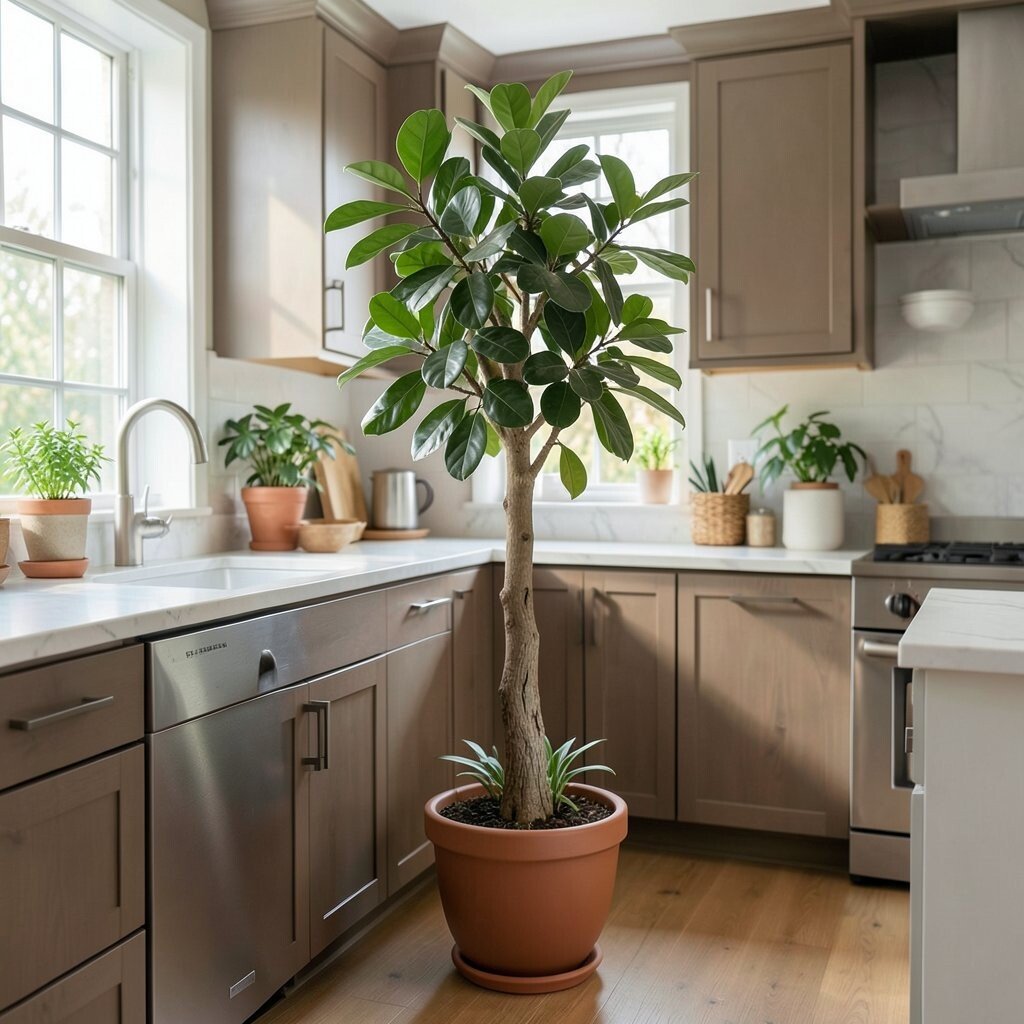
Money tree usually has braided stems and an elegant, tree-like form. Its look feels neat and lucky, adding a sense of style to a kitchen corner.
This plant often grows slowly, so it won’t overwhelm your space quickly. It’s also a good pick if you want something that looks “designed” without needing daily attention.
Use bright, indirect light and water when the soil is dry, especially toward the root area. Keep the plant away from strong heat sources like ovens. For personalization, choose a pot with a slightly wider base so it stays stable and looks balanced.
19. Peace Lily + Light Humor: Keep It Near a Window Without Harsh Sun
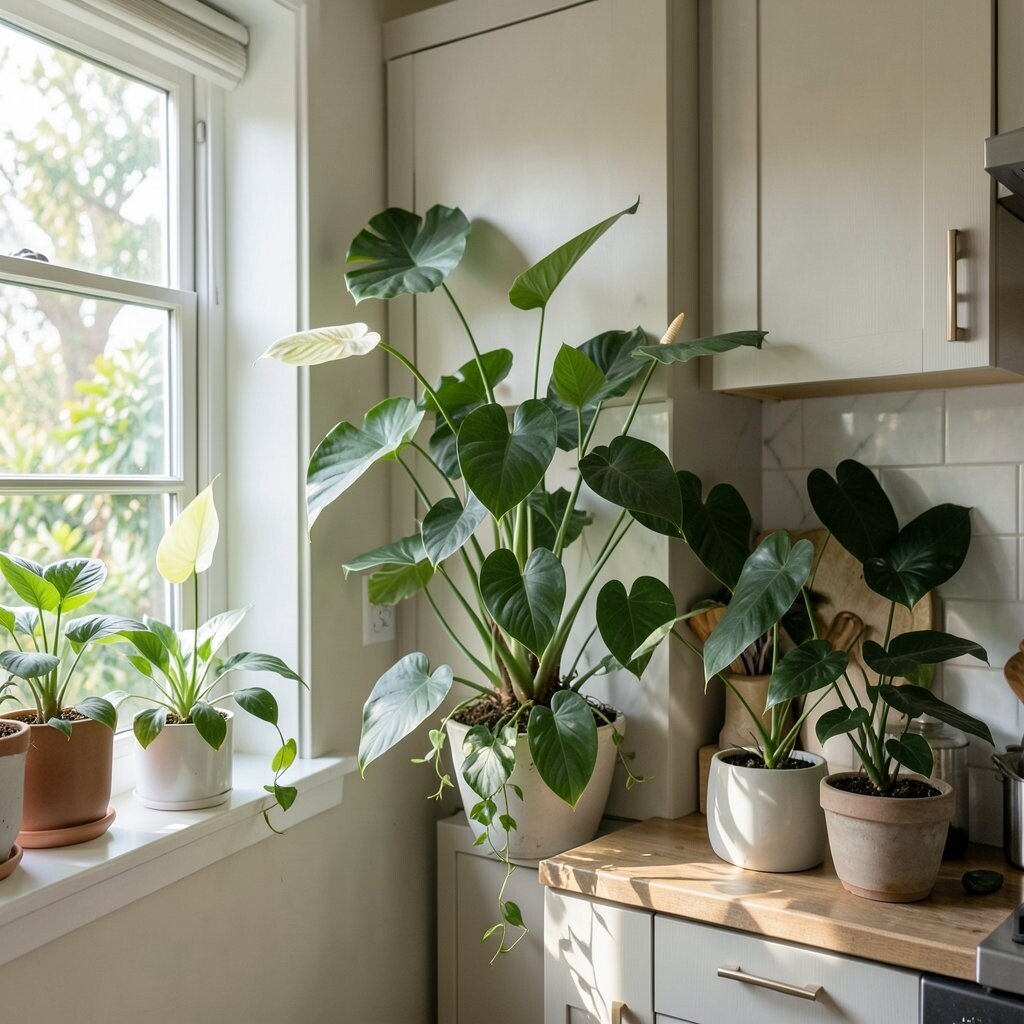
Peace lily care is simple, but placement matters for that elegant look. Put it where it gets medium light, not harsh direct sun, and you will see healthier leaves.
When it is happy, the flowers stand up like fresh decorations, which is why it fits kitchen decor so well. It also helps add softness to tile, metal, and hard surfaces.
Water using a consistent schedule based on soil dryness. If the leaves droop, water right away and it often rebounds quickly. For personalization, rotate the plant every couple of weeks so growth stays even and the blooms face the room nicely.
If you want to manage costs, buy one good peace lily and keep it thriving with simple habits. A long-lasting plant usually beats frequent replacement.
20. Maidenhair Fern for Fine Texture and a “Boutique” Feel
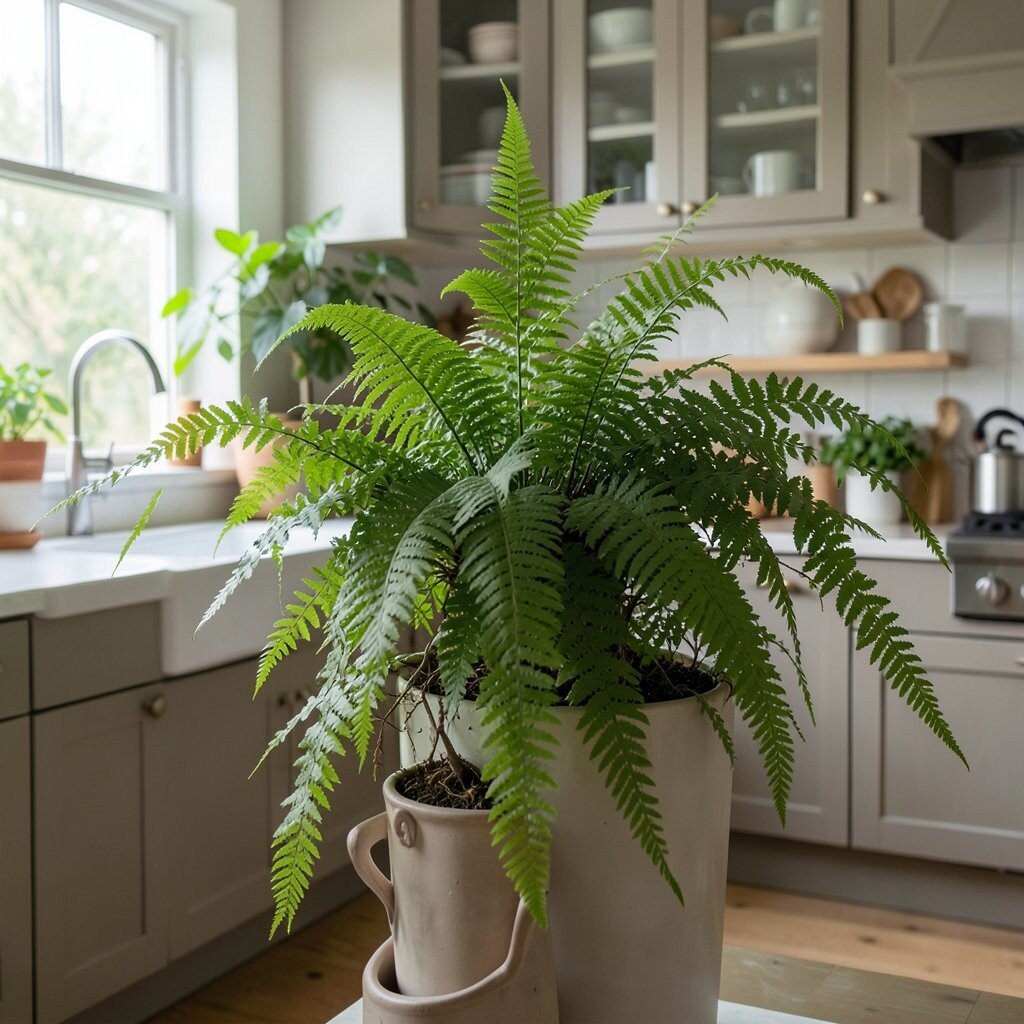
Maidenhair fern has delicate, lacy fronds that look like green lace. In a kitchen, it creates a boutique, high-end look, especially near windows.
It brings softness that pairs well with natural elements like wood, linen, and ceramic bowls. Because it loves humidity, kitchens that get steam from cooking can be a great match.
Use bright, indirect light and keep the soil slightly moist at all times. Mist gently, and consider a pebble tray with water under the pot to raise humidity around it. For personalization, tuck it into a stylish pot with a saucer so it looks polished on open shelves.
Costs can be a little higher because the plant can be delicate. Buying a smaller plant may be smarter at first, and improving humidity can help it settle in.
21. Donkey Tail (Sedum Morganianum) for Thick Drama and Easy Style
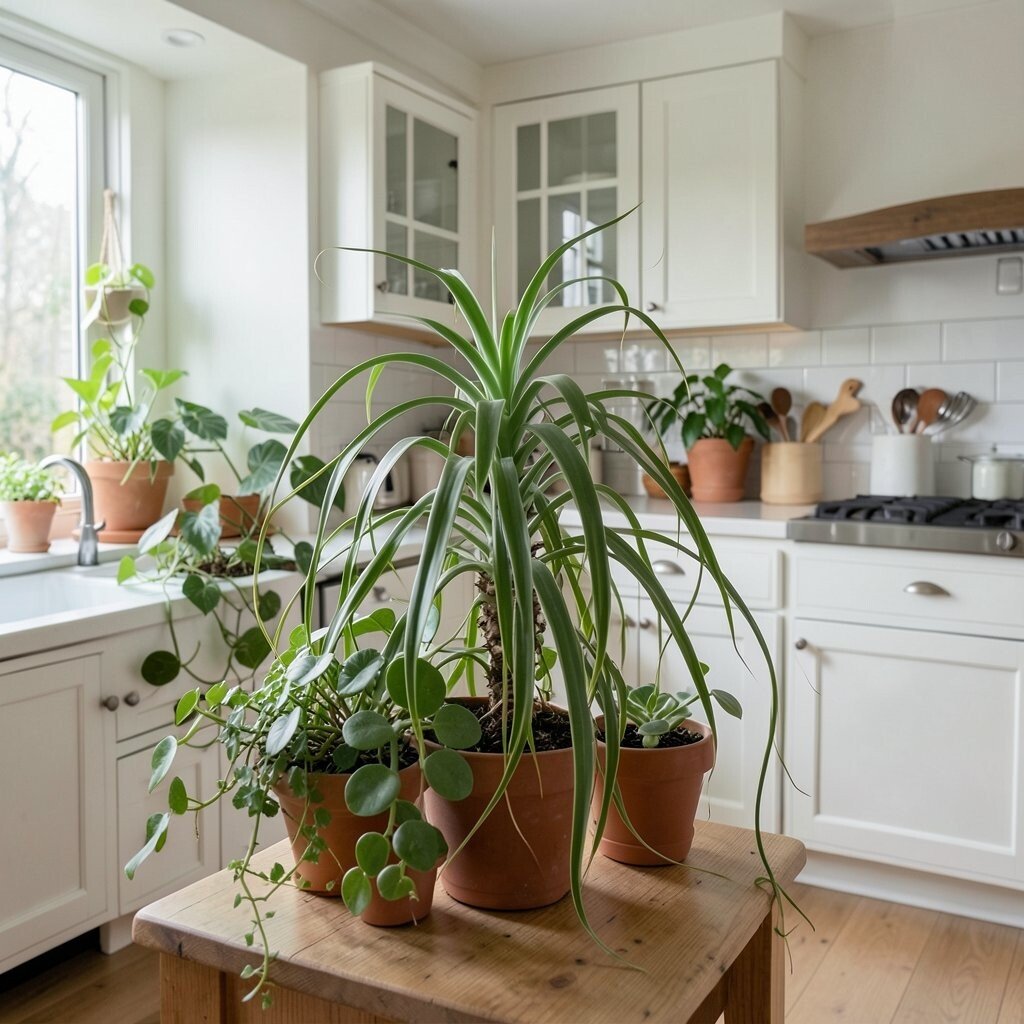
Donkey tail has trailing stems with plump leaves that look like little beads of green. It’s a plant that makes shelves feel styled, not cluttered.
This is a succulent, so it likes dry conditions and bright light. It also adds a different texture from leafy plants, which helps your kitchen feel layered and rich.
Water sparingly, and let the soil dry fully before watering again. Choose a pot with drainage holes and a well-draining mix. For personalization, hang it where light hits from the side, so the leaves look extra bold.
Cost is often reasonable, and it can be easy to start from cuttings. Over time, it forms long, elegant trails that make the investment feel worth it.
Keep it away from harsh direct sun if your kitchen gets very hot, since leaf scorch can happen. With the right light balance, it stays gorgeous and full.
22. Caladium for Bold Color Accents That Feel Like Art
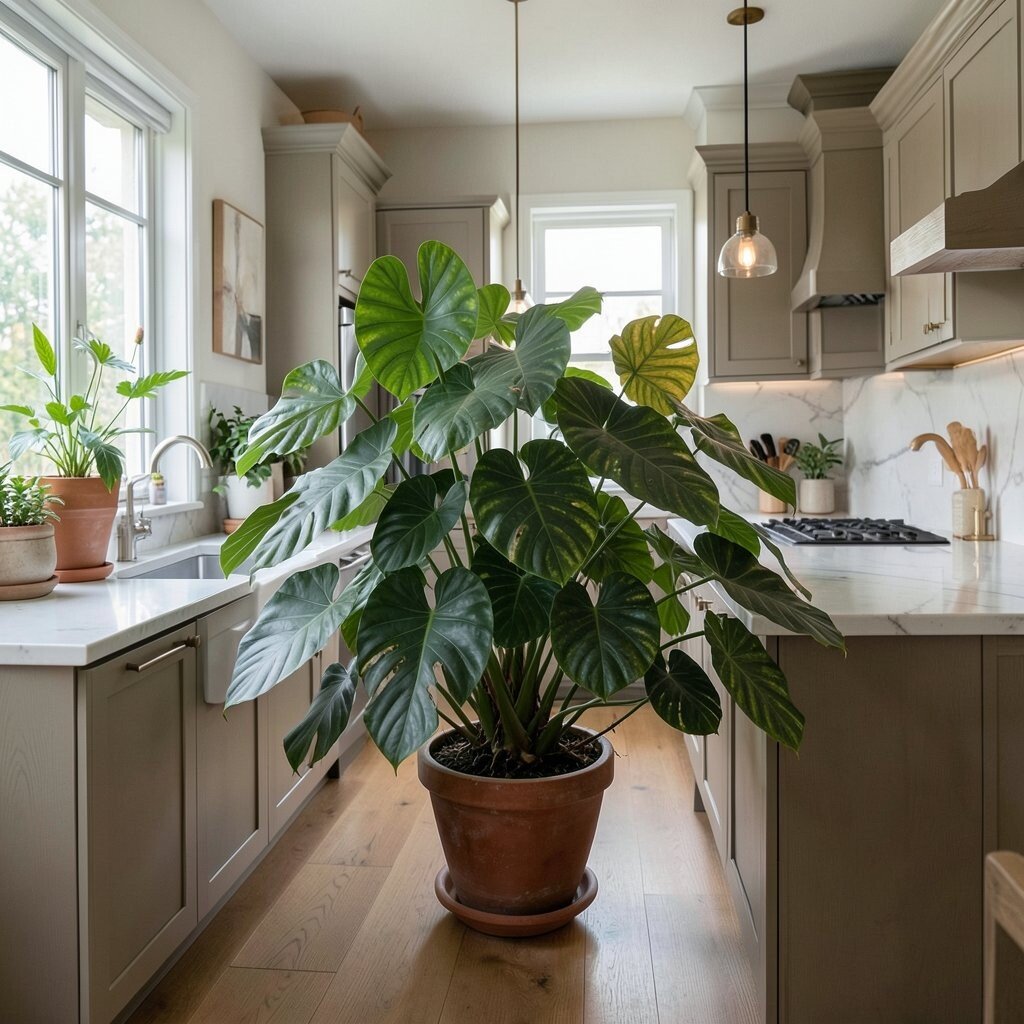
Caladium leaves can show bright patterns in green, pink, red, or white. In a kitchen, it adds color without needing flashy decor.
This plant is unique because the leaves are often heart-shaped and covered with bold markings. It’s a great choice if your kitchen decor is neutral and you want a living pop of color.
Give caladium bright, indirect light and keep the soil evenly moist during growth. Follow a gentle routine, and remember that it may slow down as seasons change. For personalization, place it in a colorful ceramic bowl or a patterned planter that matches your tableware.
Costs can vary depending on the variety and size, and seasonal availability is common. If budget matters, choose smaller plants and treat them as “seasonal art,” refreshing your look as colors change.