
Work feels better when your space helps you focus, not distracts you. The best part is that open layouts can still feel calm and organized.
-
1. Zoning with a Half-Wall Desk Nook
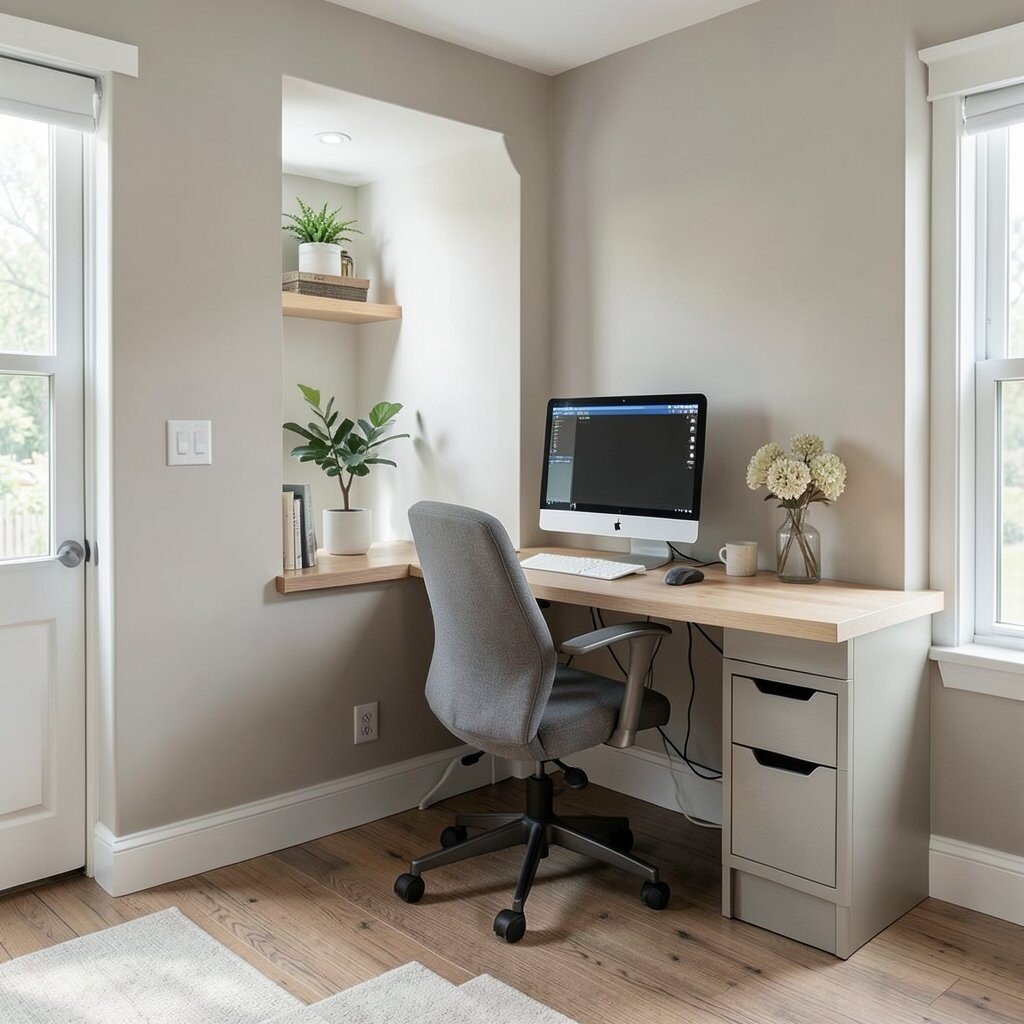
Zoning with a Half-Wall Desk Nook A low half-wall can frame your desk without shutting the room down. Imagine sitting with warm light in front of you, while the rest of the living area stays visible.
This setup keeps your work area feeling separate, which helps your brain switch modes. It also adds privacy during calls and reduces the urge to wander.
Choose a desk that matches the wall tone so it looks built-in. Add a small plant and a tray for daily items to keep the space tidy.For personalization, pick one color accent for the wall side, like sage, clay, or navy. If you want to stay on a budget, use a pre-made divider or simple shelving instead of construction. Recent trends favor “soft separation,” meaning barriers that feel airy rather than heavy.
-
2. Flexible Bookshelf Screen for Quick Privacy
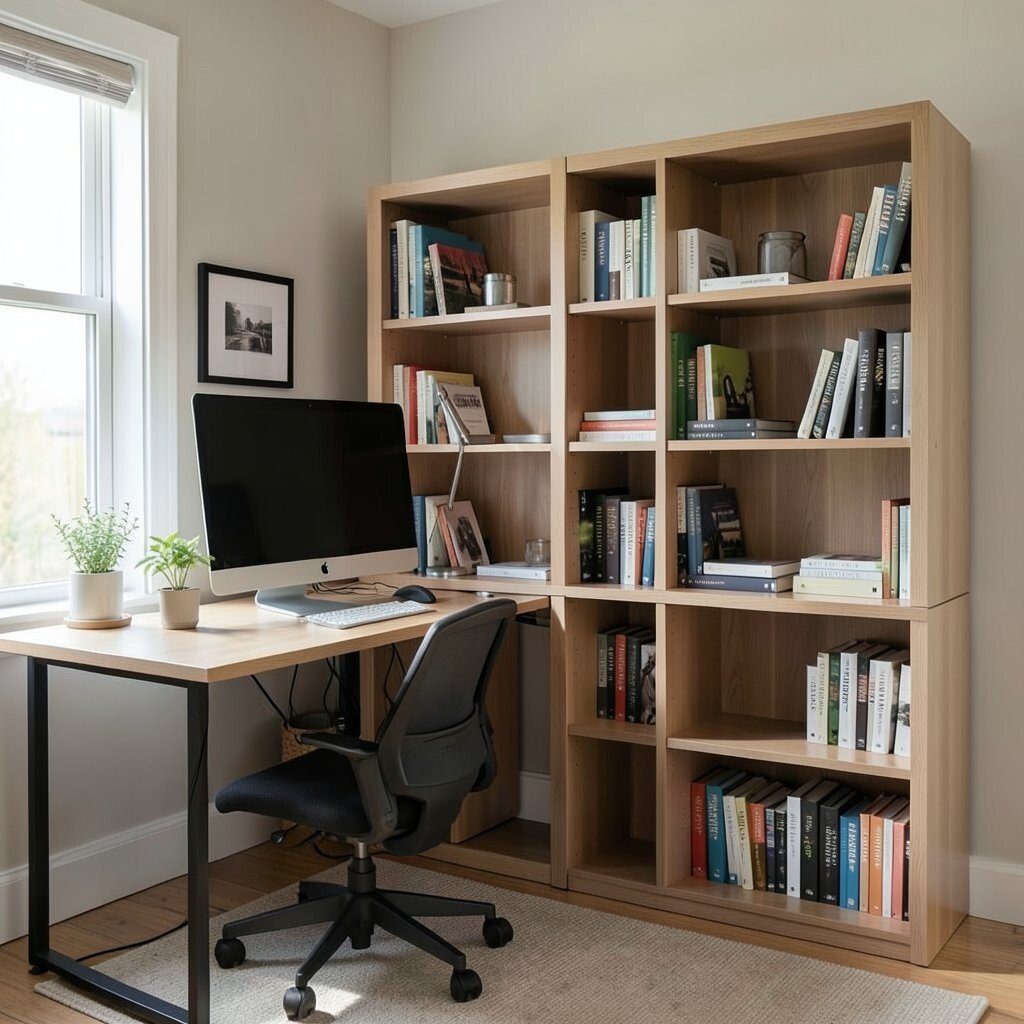
Flexible Bookshelf Screen for Quick Privacy Picture a bookshelf that stands slightly away from the wall, creating a gentle boundary. You can see the room’s style, but your workspace gains a friendly shield.
This idea is great for open concept homes because it gives privacy only when you need it. During video calls, you can arrange books to block glare and show a cleaner background.
Use adjustable shelves so you can fit folders, storage baskets, and decor over time. To make it feel cozy, add a cork board on one side for notes and goals.
Cost can stay reasonable if you buy a ready-made unit and style it well. Choose a lighter color frame for a modern look, which is popular right now in open-plan spaces.
-
3. Ceiling Track Lighting with Adjustable Task Focus
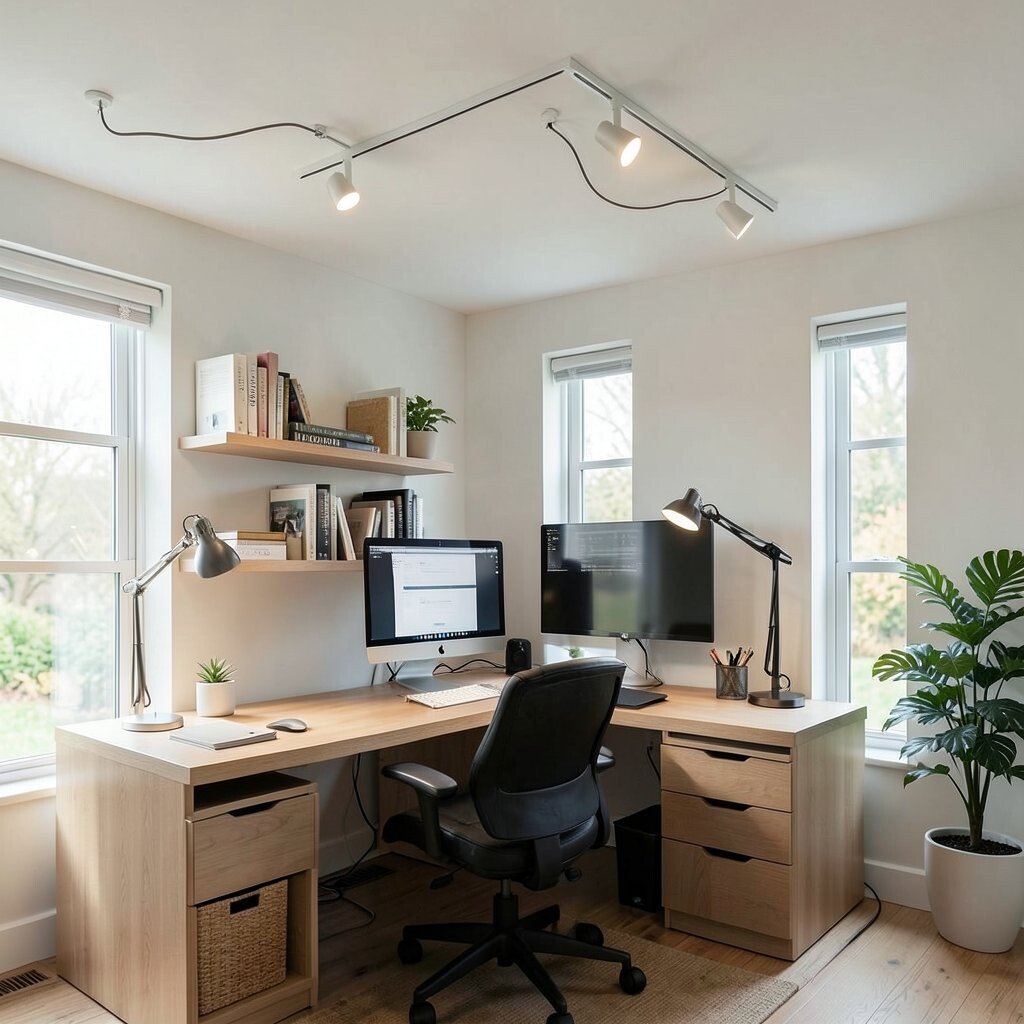
Ceiling Track Lighting with Adjustable Task Focus Bright overhead light can flatten a room, but adjustable track lighting adds control. Think of warm spotlights that land right where your keyboard sits.
Clear task lighting improves comfort, especially during early mornings and late evenings. It also helps you see papers, labels, and screens without leaning or squinting.
When you can aim the light, you can reduce screen glare on reflective surfaces.Pick bulbs that are comfortable to your eyes, and use dimmers if you can. For personalization, add a small lamp with a shade that matches your favorite color.
This approach is often mid-range in cost, but you can start small with a single upgrade. Smart lighting is trending too, so consider a simple app-controlled setup for easy routines.
-
4. Rolling Cabinet That Moves Between Work and Life
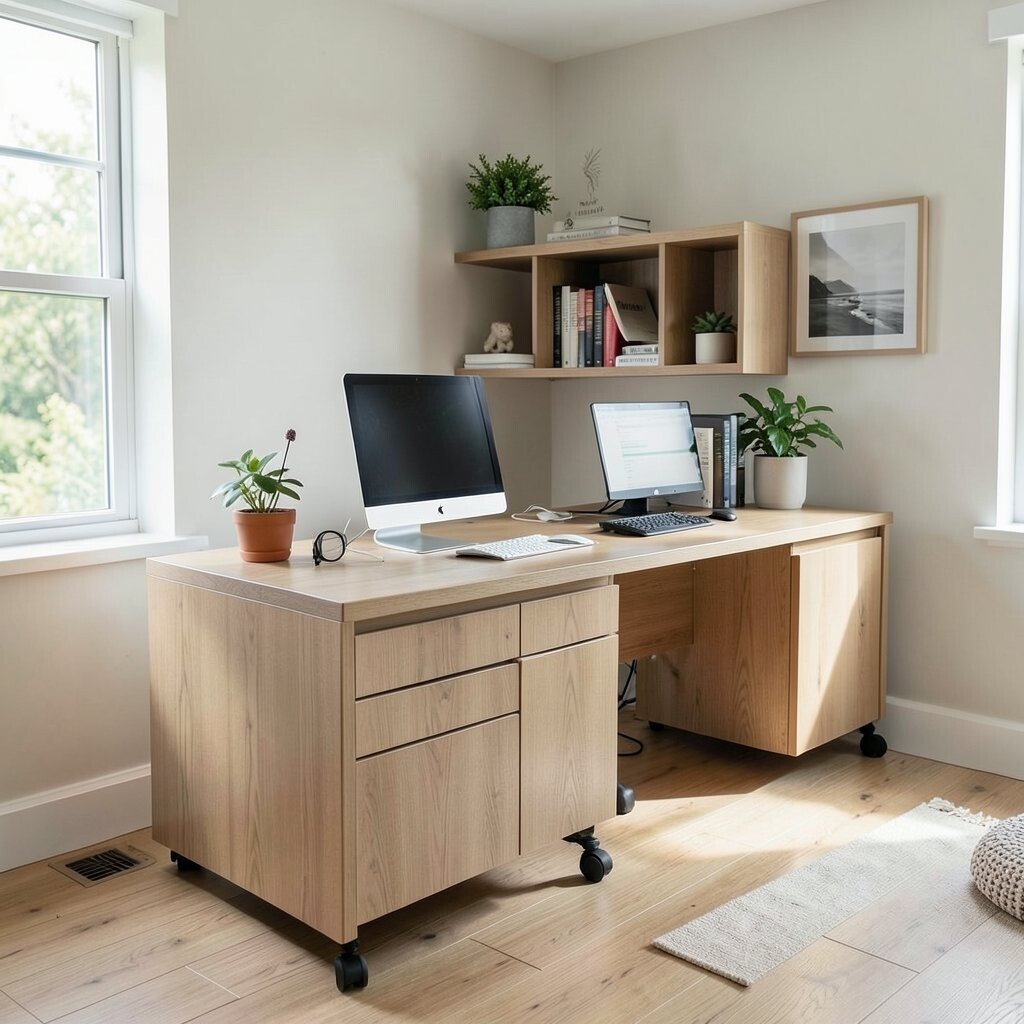
Rolling Cabinet That Moves Between Work and Life Imagine a tidy cabinet on wheels tucked near your desk, then pushed aside when you switch off. The room stays open, but your supplies hide when guests walk in.
It feels freeing because you do not need a permanent “office corner.”This helps with clutter, which is one of the biggest stress triggers for remote work. You can lock away chargers, extra cables, and printer paper in seconds.
Choose one cabinet with drawers for small items and a cabinet space for backups. -
5. Rug-Based Boundary for a “Quiet Zone”
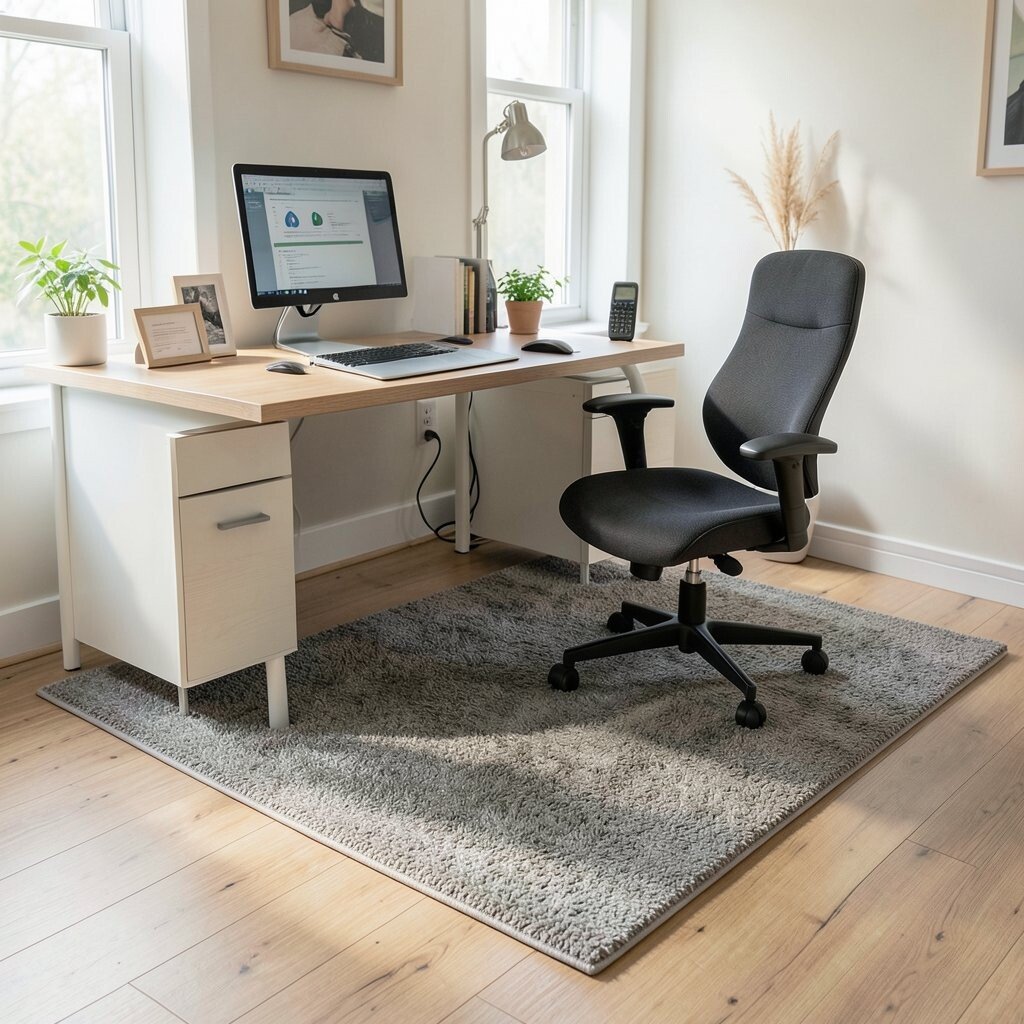
Rug-Based Boundary for a “Quiet Zone” A rug can act like a floor frame for your workstation. Picture a soft patterned rug under your chair, while the rest of the living area keeps a different texture.
This visual boundary helps you mentally treat work as its own area. It can also make the room feel warmer and quieter by reducing echo.
Keep the rug big enough so your chair wheels stay on it, which prevents random scuffs. For a simple personalization touch, pick a pattern that matches the room’s existing tones.
Rugs vary widely in cost, but you can get a strong impact even with a mid-size option. Right now, layered textures and earth-tone colors are trending for open concept spaces.
-
6. Window-Adjacent Desk with Light-First Layout
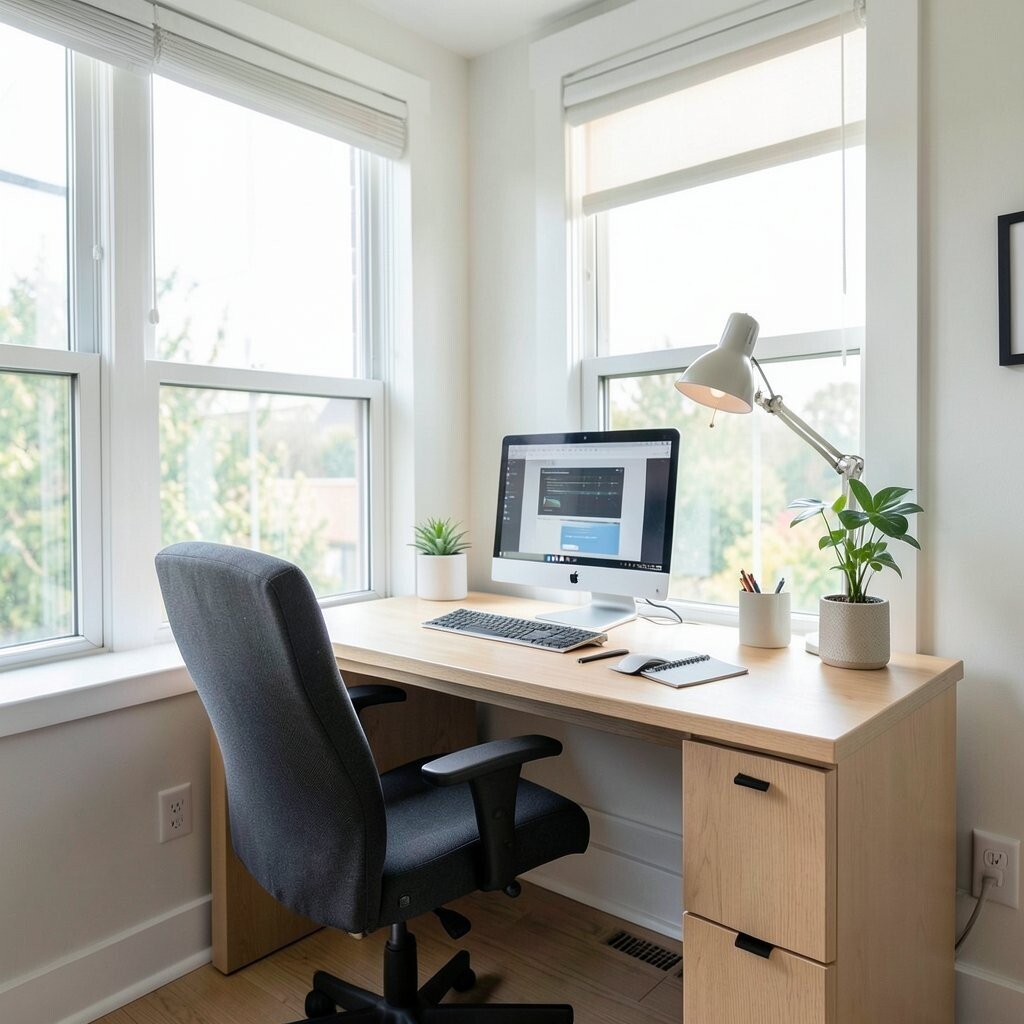
Window-Adjacent Desk with Light-First Layout Place your desk near a window so your workspace feels naturally bright. Think of the gentle glow behind your monitor rather than harsh light blasting from the side.
Natural light can improve mood and make the day feel less heavy. It also helps you stay focused because you can take quick breaks without staring at a blank wall.
Try positioning your screen so you avoid direct glare, then adjust your chair by inches.Personalize with a small tray holding your daily essentials so you do not hunt for them. Add sheer curtains for soft look and better light control during calls.
-
7. Thoughtful Cable Management Behind the Desk Line
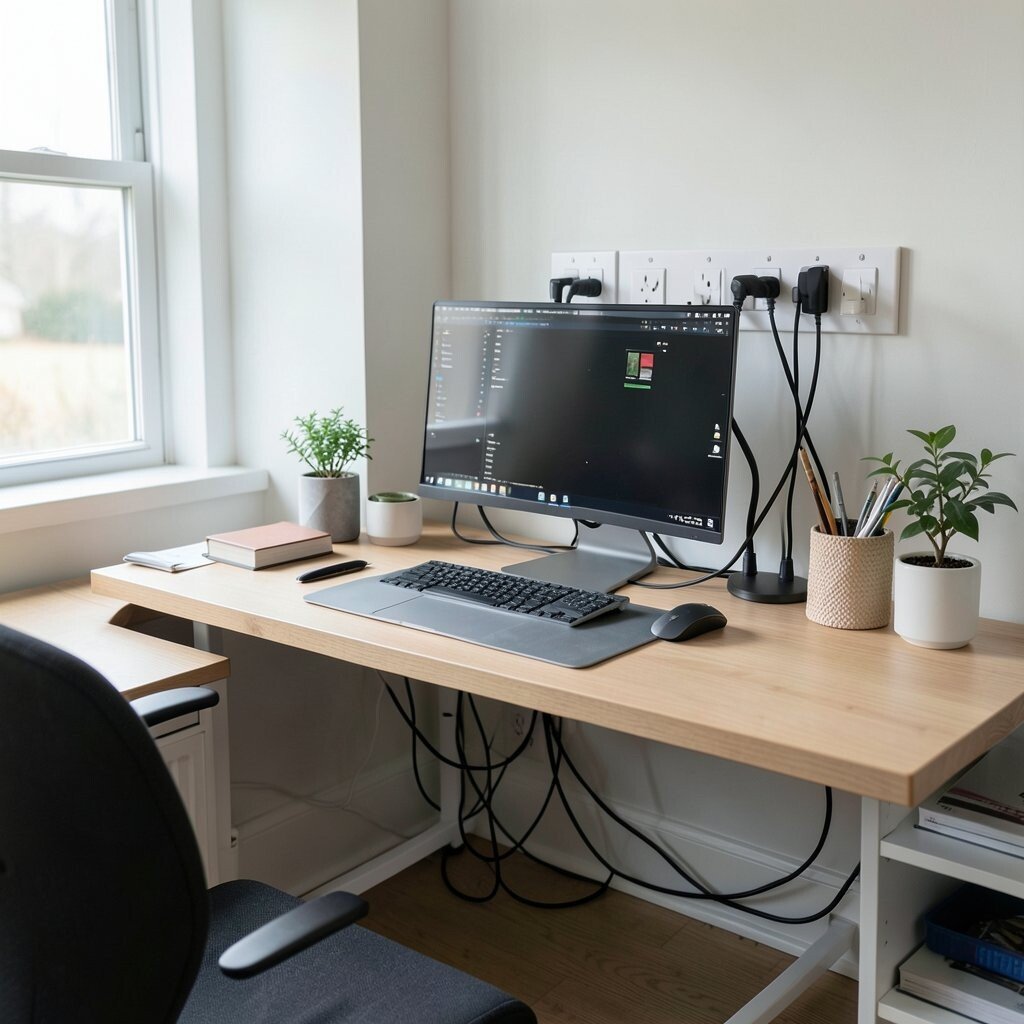
Thoughtful Cable Management Behind the Desk Line Open concept spaces often show everything, including messy cords. Picture a clean desk edge with cords tucked away, leaving only a tidy power strip out of sight.
Good cable habits make your workspace look calm and professional. It also makes it easier to swap devices for different tasks, like switching from laptop to tablet.
Use adhesive clips along the back edge, plus a simple cable sleeve for thicker bundles. Label chargers with small tags so you grab the right one faster.
For cost, you can start with basic clips and a velcro tie kit. This is a low-cost upgrade that fits current “hidden tech” trends in modern homes.
-
8. Acoustic Panels Disguised as Wall Art
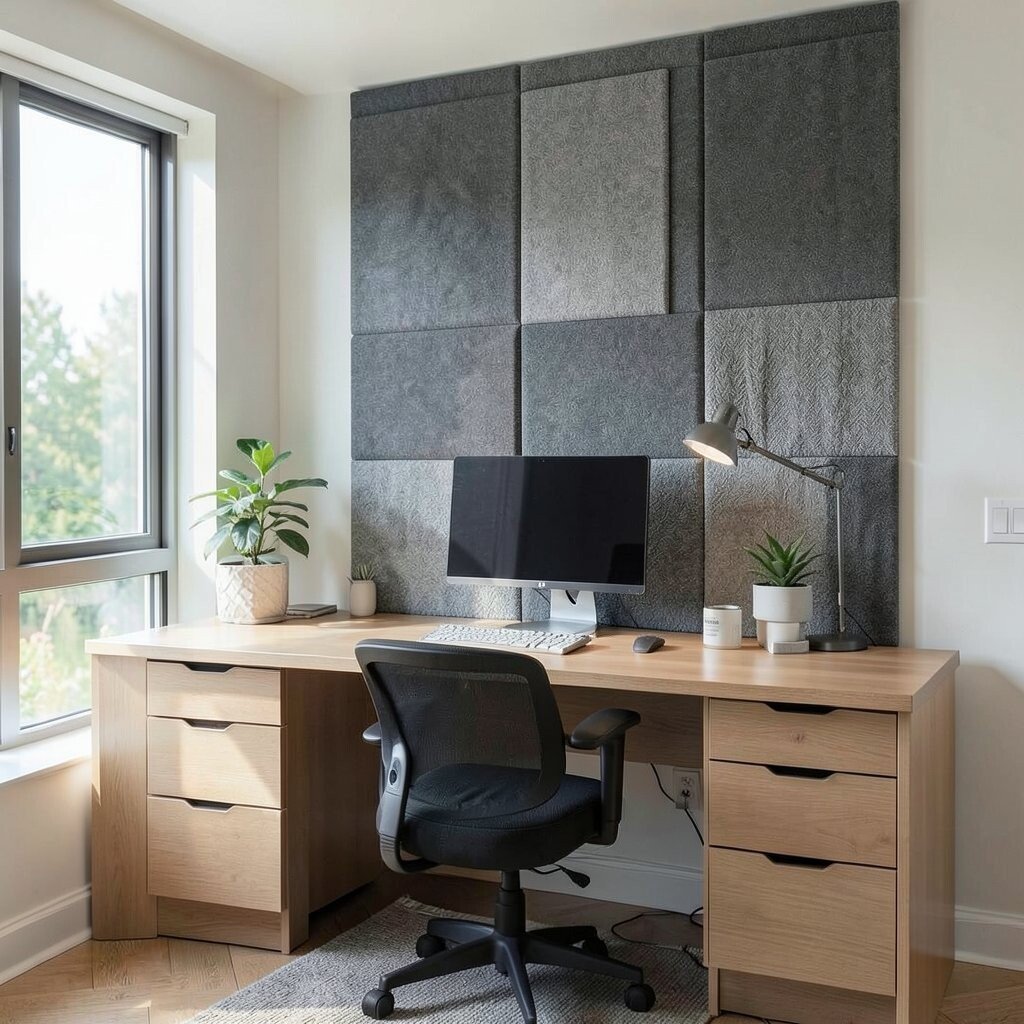
Acoustic Panels Disguised as Wall Art Sound matters when your home is also your office. Imagine wall art frames that look stylish but soften echoes in the background.
You can still keep an open feel while making the room quieter.Less echo helps your voice sound clear during calls. It also makes focus easier because distractions get quieter.
Choose colors that match your room, and place panels where sound bounces most. -
9. Books, Not Paper: Build Vertical Storage for Papers
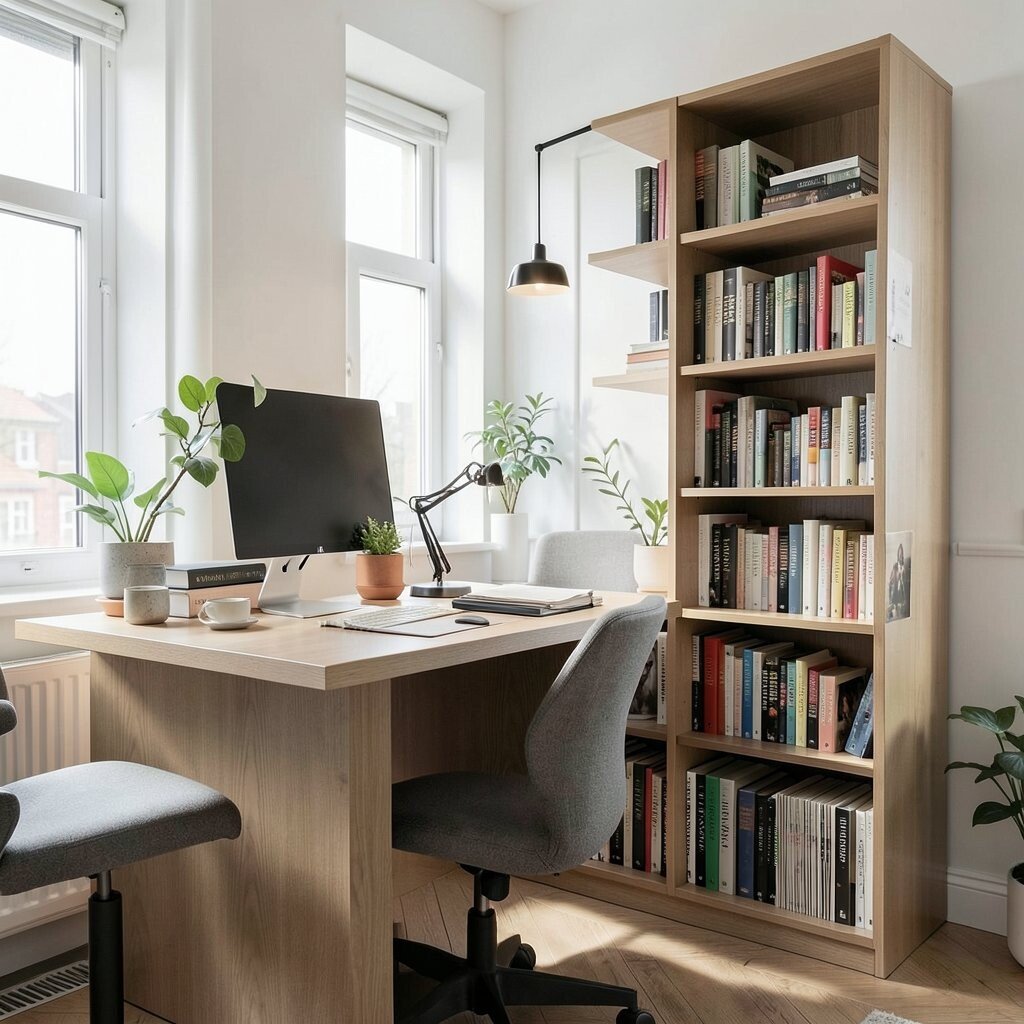
Books, Not Paper: Build Vertical Storage for Papers Keep documents upright with a slim file system instead of piles on the desk. Picture neatly arranged folders in a tall organizer beside your keyboard.
Vertical storage frees desk space, which makes you feel more in control. It also helps you find what you need without stopping work to search.
Personalize it with color-coded labels for projects, invoices, and reference materials. Add a small “to do” card holder so your daily plan stays visible.
Cost is usually budget-friendly because you can start with one organizer and expand later. Right now, minimal desk styles with smart labels are a big trend for remote work setups.
-
10. Dining Table Turned Office with a Real Work Surface
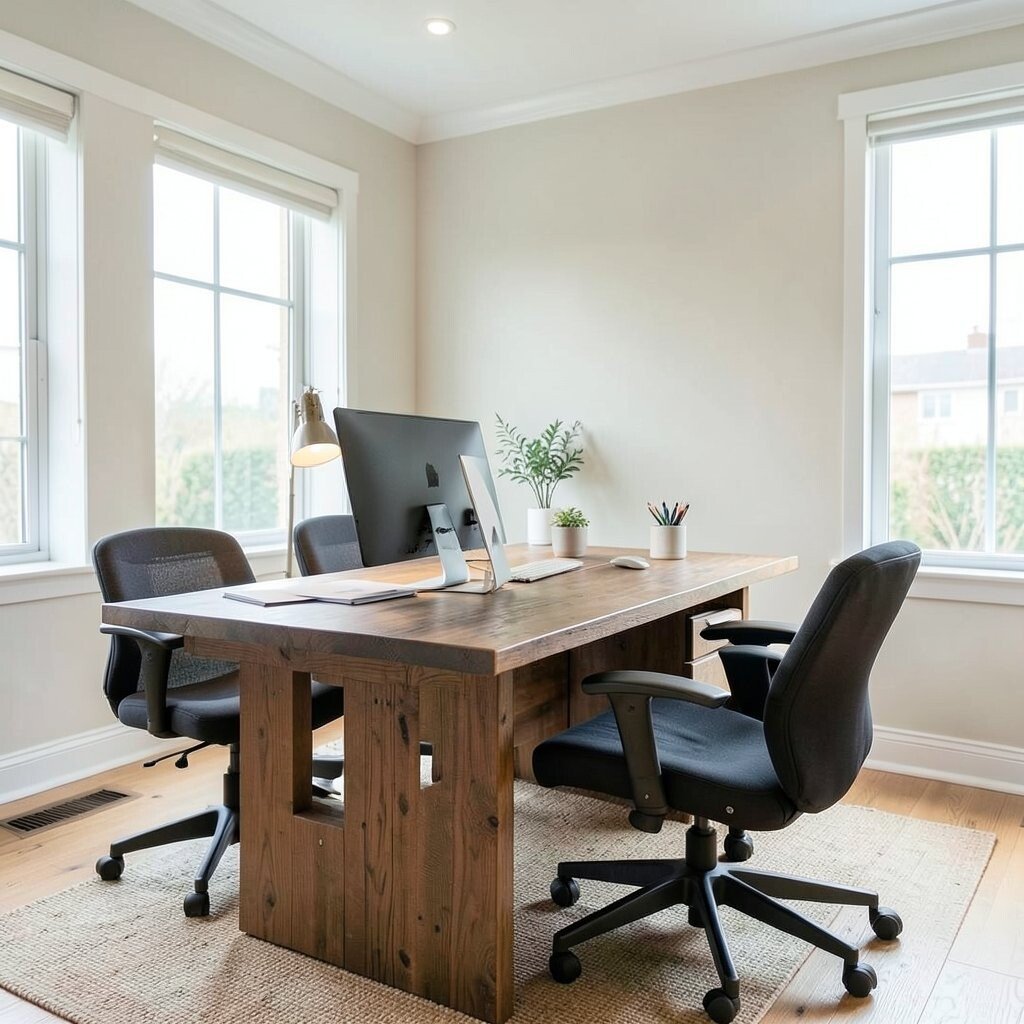
Dining Table Turned Office with a Real Work Surface If you work from home often, you can use a dining table as a flexible desk. Picture a clean top with a mat under your laptop so it feels like a true work station.
This idea is unique because it keeps your work connected to family life. You can still stand up, stretch, and feel part of the home rhythm.
Set a clear “work-only” zone by using a tray or mat for devices.Personalize with a small lamp and a pen cup that matches your style. For comfort, add a laptop stand so your screen stays at eye level.
Cost considerations are simple: if you already have the table, you only need accessories. Trends lean toward multipurpose spaces, so this fits perfectly with modern open layouts.
-
11. Display Lighting for a Gallery-Style Background
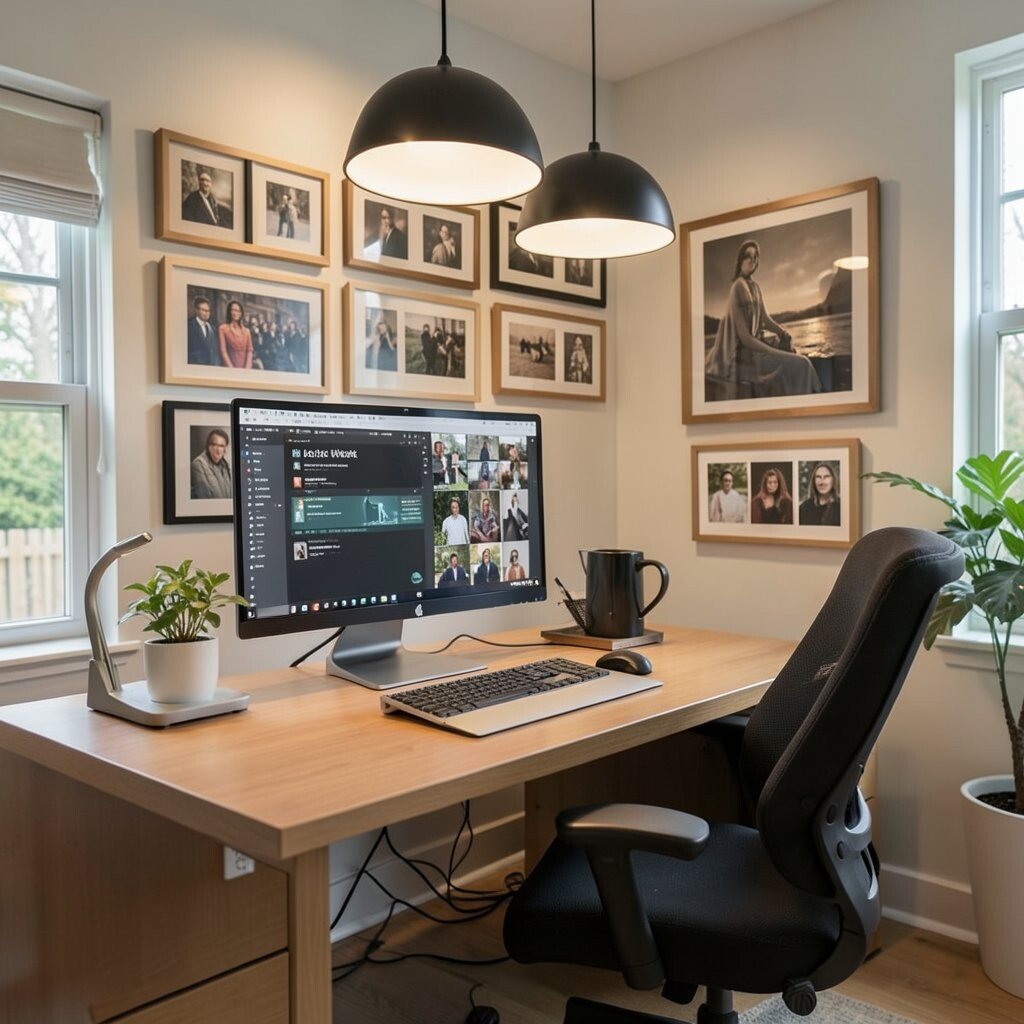
Display Lighting for a Gallery-Style Background Your background can work for you, not against you. Picture a warm light shining on a small shelf of art, books, and a few meaningful objects.
This helps during video calls because your setup looks intentional. It also makes work feel pleasant when you glance up from the screen.
Choose display lights with soft warmth and avoid harsh, overhead glare. Place items at eye level so the background looks balanced, not cluttered.
Personalize by picking a small theme, like travel souvenirs or calming neutral tones. Cost can be low if you use plug-in picture lights or a compact LED bar.
Current trends favor “cozy professional” styling, mixing personal touches with clean lines. Keep it simple with a few pieces so your room stays open and calm.
-
12. Curtain Track Divider for Instant Office Mode
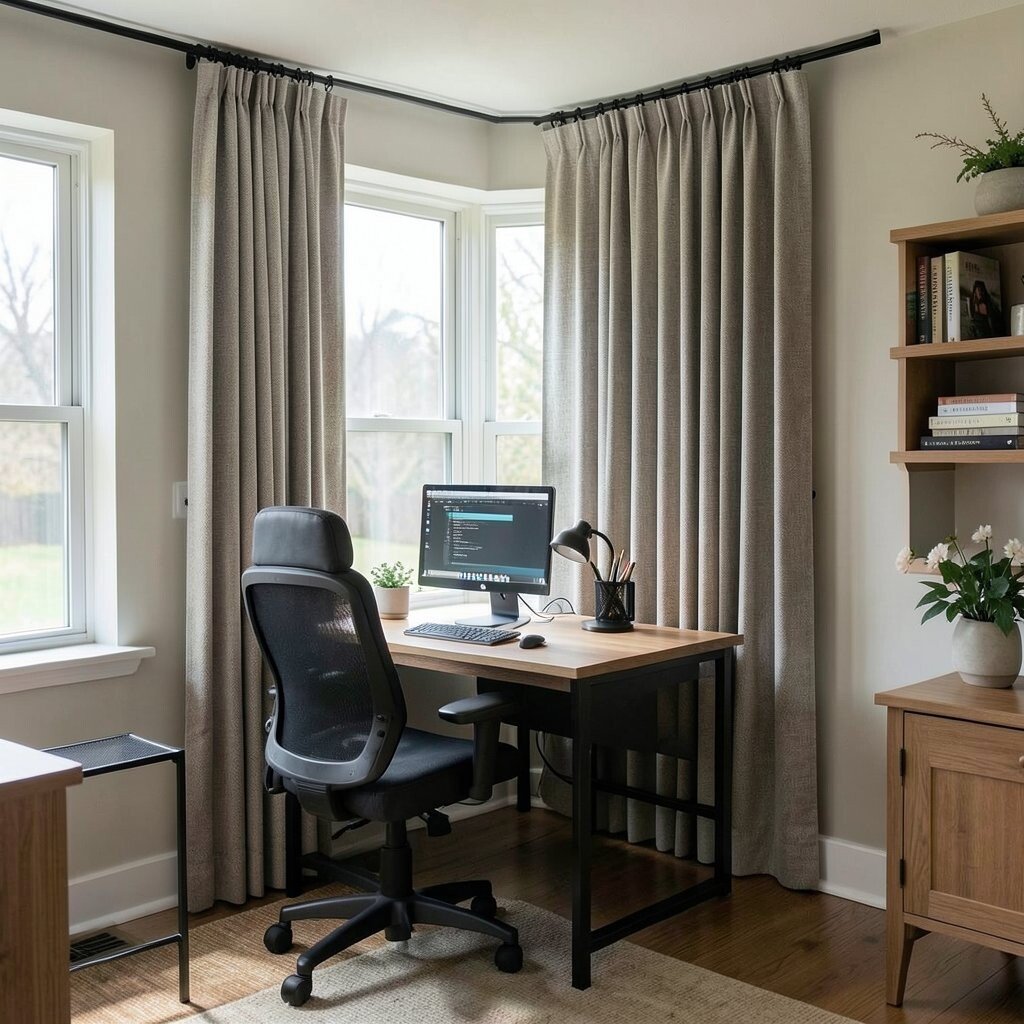
Curtain Track Divider for Instant Office Mode Curtains can create a flexible office without making the room feel closed in. Imagine soft fabric drawn across the space when you have calls, then opened again for normal life.
This gives you control over focus and privacy in an open plan. It also helps reduce background noise when conversations start in other rooms.
Use a track system for smooth movement, and choose a fabric that blocks some sound. For personalization, match the curtain color to your living space so it looks like part of the design.
Cost is usually mid-range depending on track type and fabric, but you can start with one panel. This matches today’s trend toward flexible partitions instead of permanent walls.
-
13. Floating Desk Shelf with Under-Seat Clutter Escape
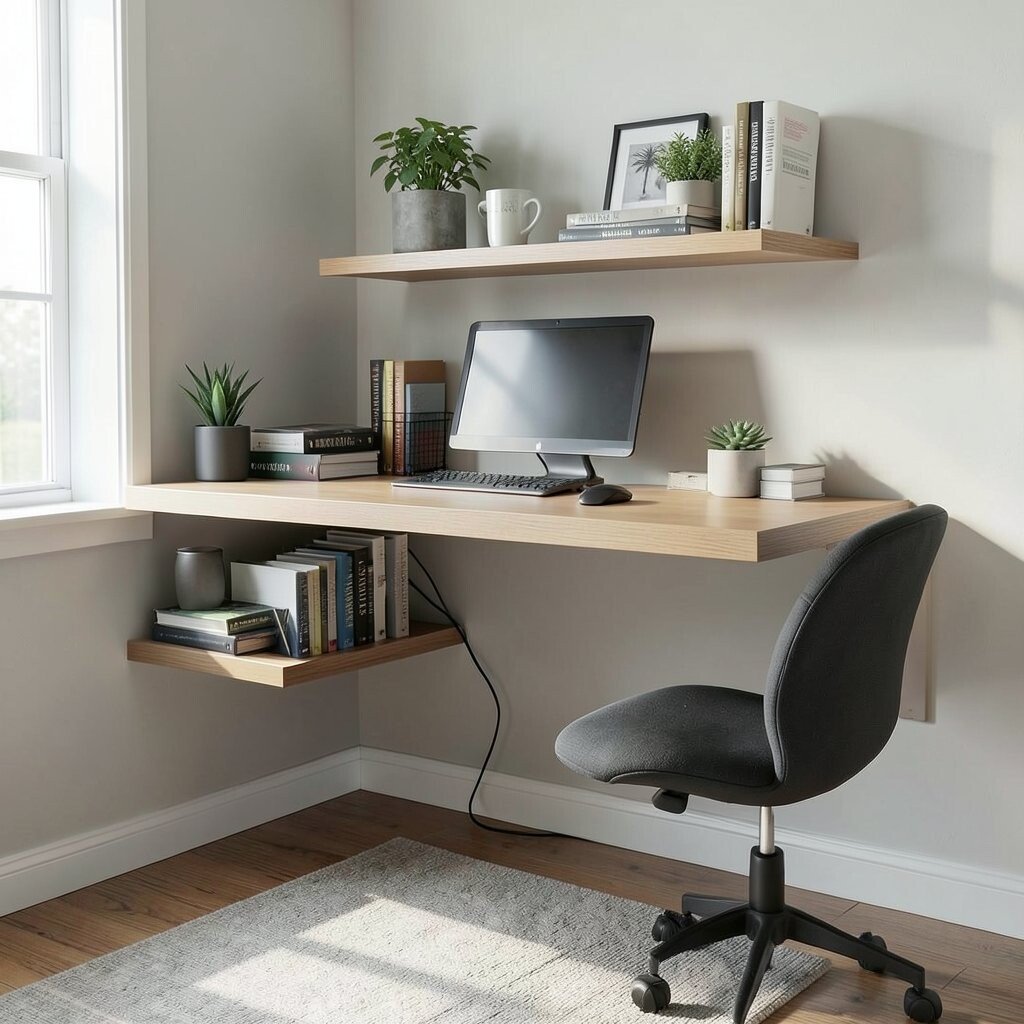
Floating Desk Shelf with Under-Seat Clutter Escape A floating desk shelf can keep your workspace visually light. Picture the desktop anchored to the wall, with storage hiding beneath and around your chair.
This design helps the room feel open because less furniture sits on the floor. It can also make cleaning easier since you can sweep or vacuum under the chair area.
Pair it with a rolling cart or closed bins below to keep supplies out of sight.Personalize by adding a slim light strip under the shelf so your documents look bright. Choose a finish that fits your home style, like warm wood or matte white.
Cost depends on mounting and materials, but it can be cost-effective if you use a ready-made shelf. Floating surfaces are trending for small spaces and for modern open-plan looks.
-
14. Standing Desk Moment with a Simple Folding Mat
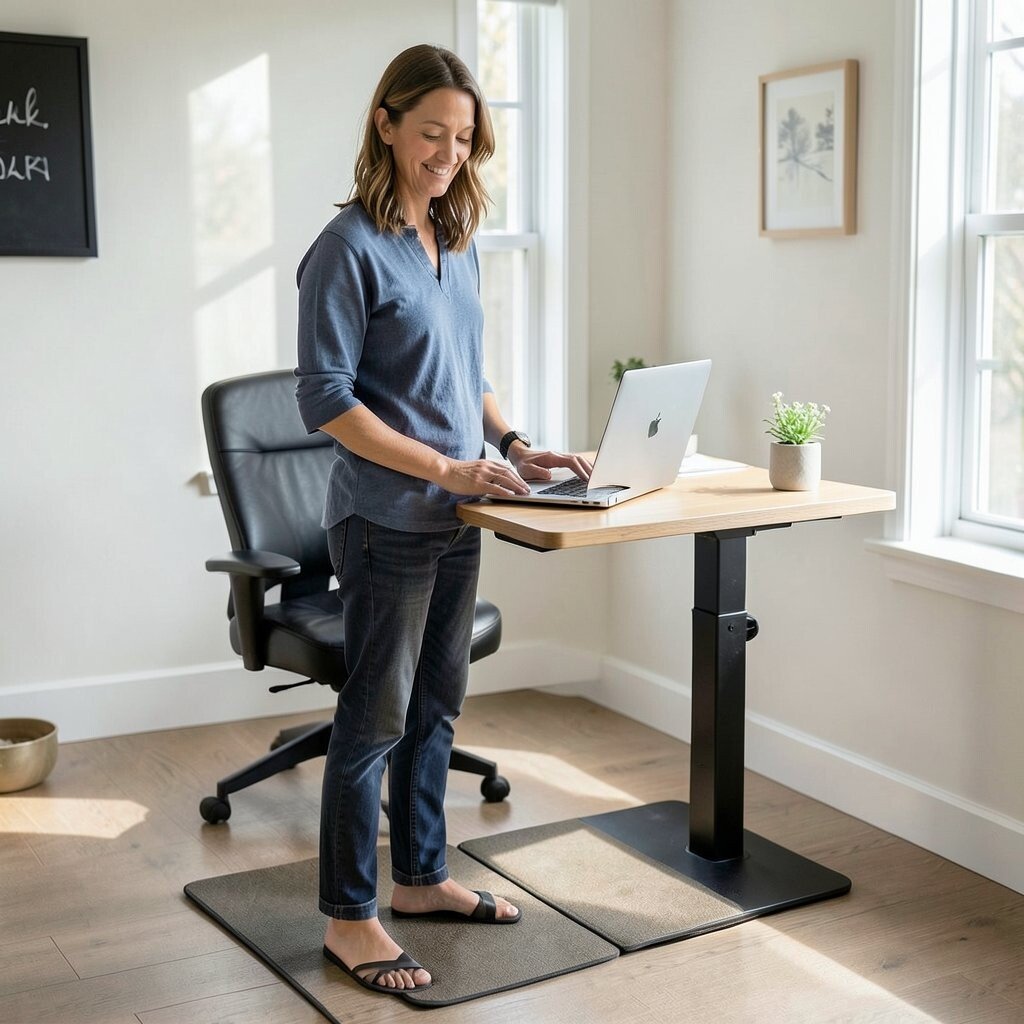
Standing Desk Moment with a Simple Folding Mat Alternating between sitting and standing can make your day feel better. Picture a standing-friendly setup with a sturdy desk and a comfortable mat that goes down in seconds.
Standing can reduce the “stuck” feeling and keep your energy moving. It also helps you fight stiffness when work stretches into the evening.
For personalization, mark your most-used height and keep it consistent. Use a small organizer for keyboard, mouse, and sticky notes so your setup stays quick.
If cost is a concern, start with a mat and a laptop stand, then upgrade the desk later. The trend toward ergonomic micro-breaks is growing, and this fits that mindset.
-
15. Plant-Forward Desk Styling for Calm Focus
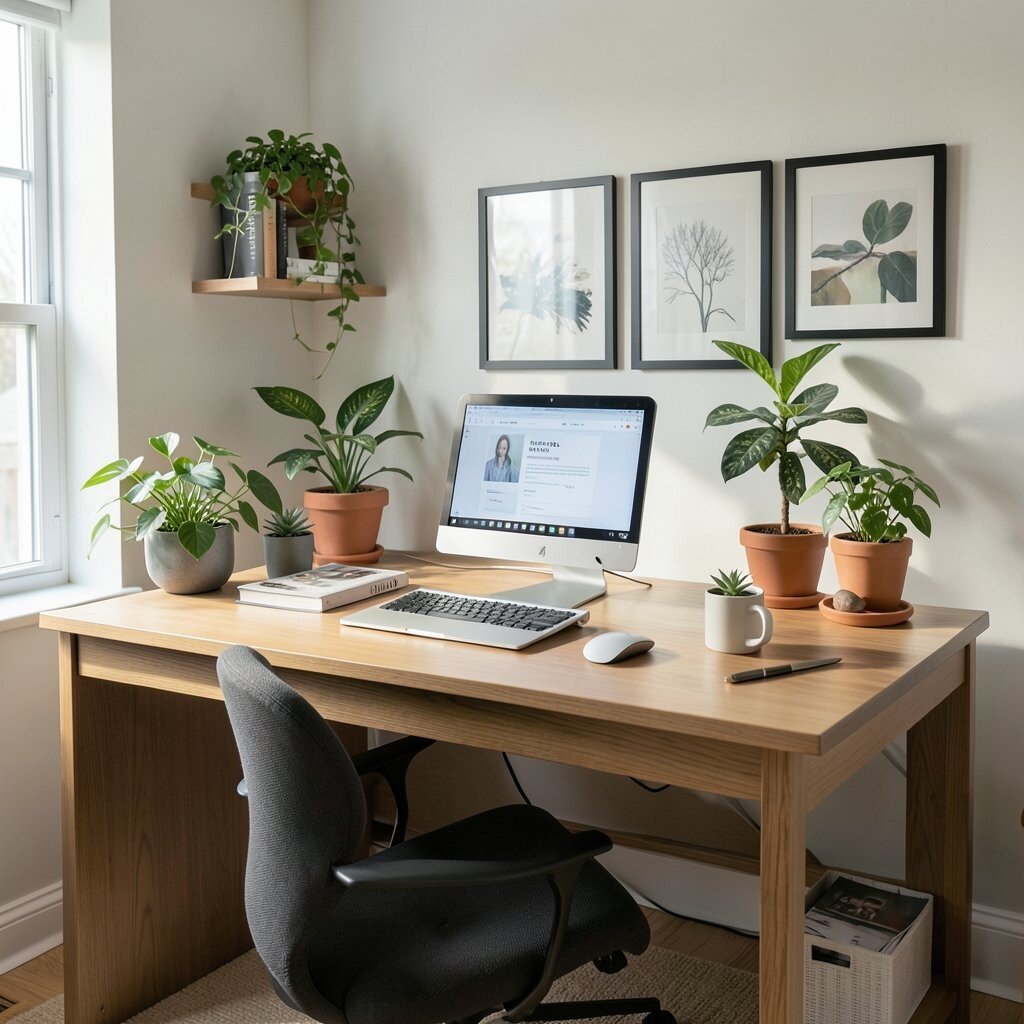
Plant-Forward Desk Styling for Calm Focus A desk with plants feels alive, not sterile. Imagine greenery near the monitor, plus one trailing plant near the edge of your workspace.
Plants can soften the look of an open room and make it feel more welcoming. Many people also feel calmer when they can glance at something natural.
Choose easy plants if you want less stress, like pothos or snake plant.Personalize with a planter style that matches your home, such as woven baskets or ceramic in muted tones. Add a watering schedule note on your phone so your routine stays simple.
-
16. Smart Storage Wall with Pull-Out Bins
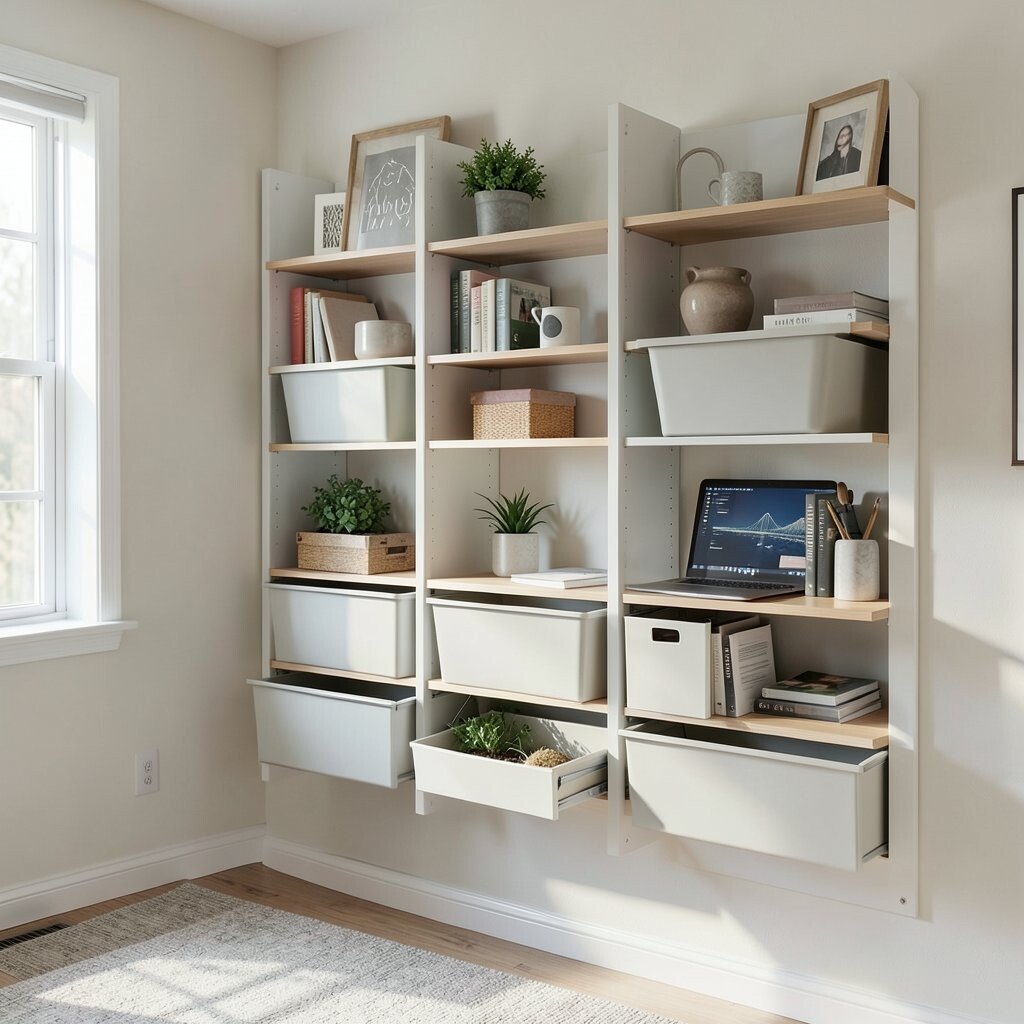
Smart Storage Wall with Pull-Out Bins A storage wall can hold office needs without crowding the living space. Picture open shelves for books and a few decorative items, with pull-out bins for tech and supplies.
This keeps the desk clear and makes your work area feel ready at any moment. It also helps you keep cords, paperwork, and backup items in one place.
Use bins that slide smoothly so you can store things fast during busy weeks.Personalize by mixing one decorative display shelf with functional storage, so the wall looks intentional. Add a small sign or label system to guide your daily routine.
Cost considerations vary, but you can build the idea gradually using modular shelves. Current trends include “show-and-hide” storage, which keeps open plans beautiful while staying practical.
If you want a softer look, pick warm wood tones and matte hardware. The end result should feel like a stylish backdrop, not a storage closet.
-
17. Personal Scheduling Board in Plain Sight
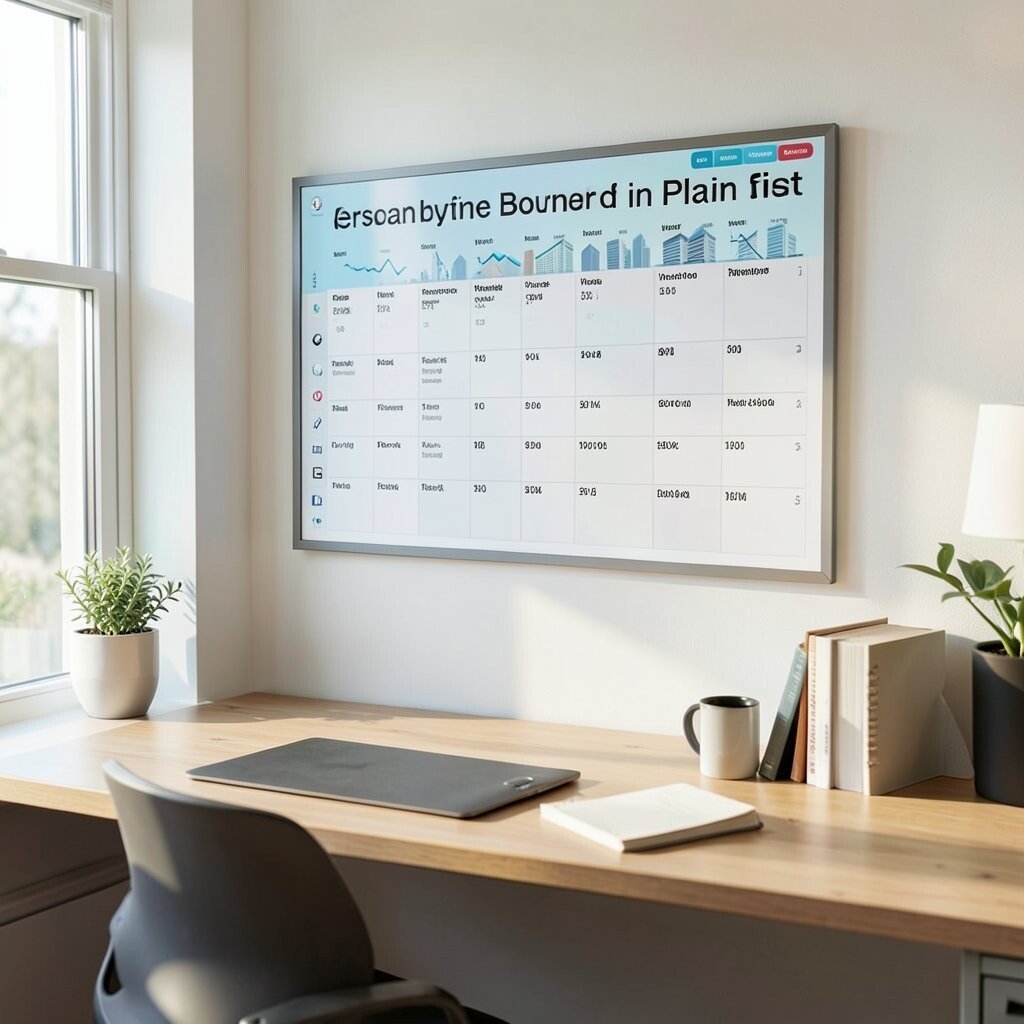
Personal Scheduling Board in Plain Sight A scheduling board turns open space into a clear plan. Picture a cork or magnetic board beside your desk, with a few weekly goals and a simple daily checklist.
When your plan is visible, you waste less time deciding what comes next. It also reduces mental clutter, because tasks live on the board instead of in your head.
Personalize it with colors that match your projects, like blue for writing and green for admin work. Add small magnets for deadlines so you can move them quickly.