Pantry clutter doesn’t have to be permanent. A few smart bins can make your shelves look calm and work better every day.
1. Clear Stackable Bins With Labels
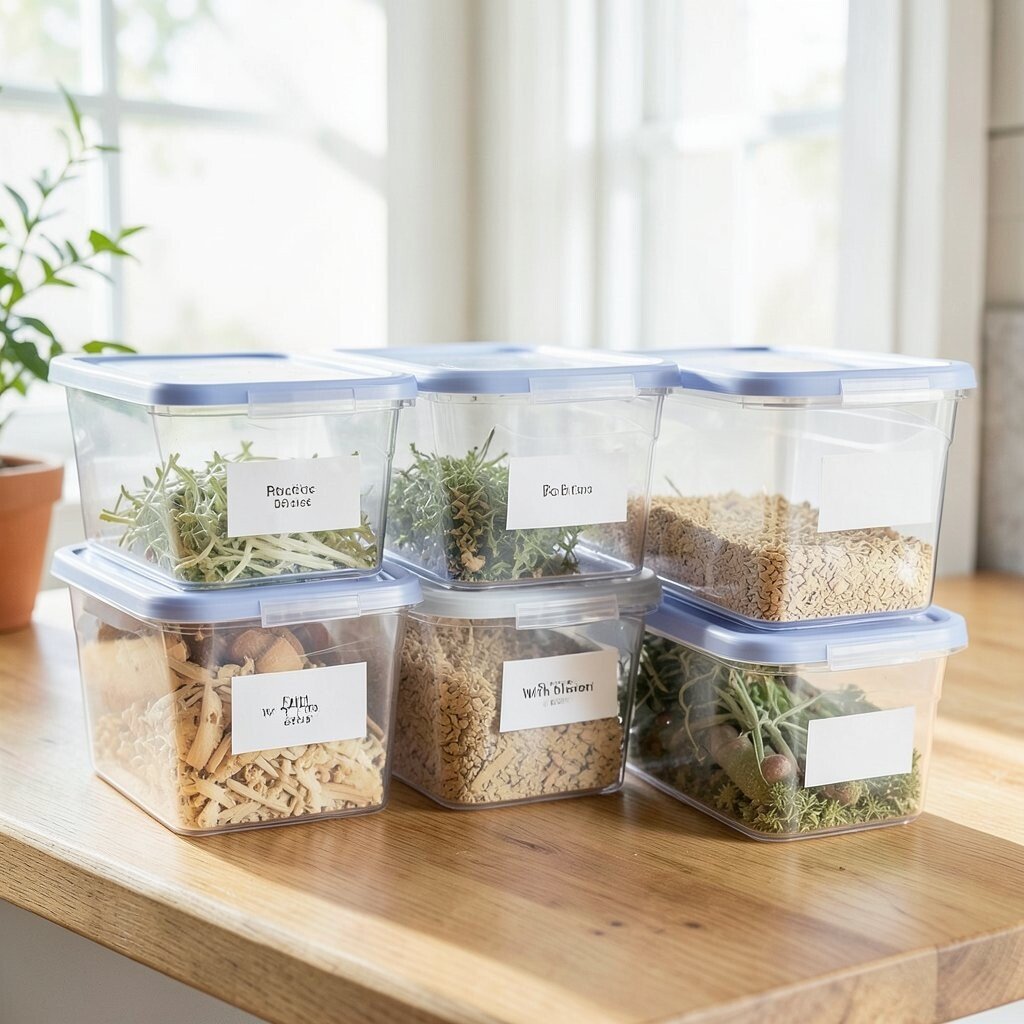
Clear bins make it easy to see what you have at a glance. You won’t keep buying duplicates because the flour, pasta, or snacks are instantly visible.
Stacking saves floor space and keeps items lined up neatly instead of piled. Add simple labels so each bin has a job, like “Breakfast” or “Baking Supplies.” For best results, place similar items together and keep older items toward the front.
2. Modular Sliding Pantry Drawers
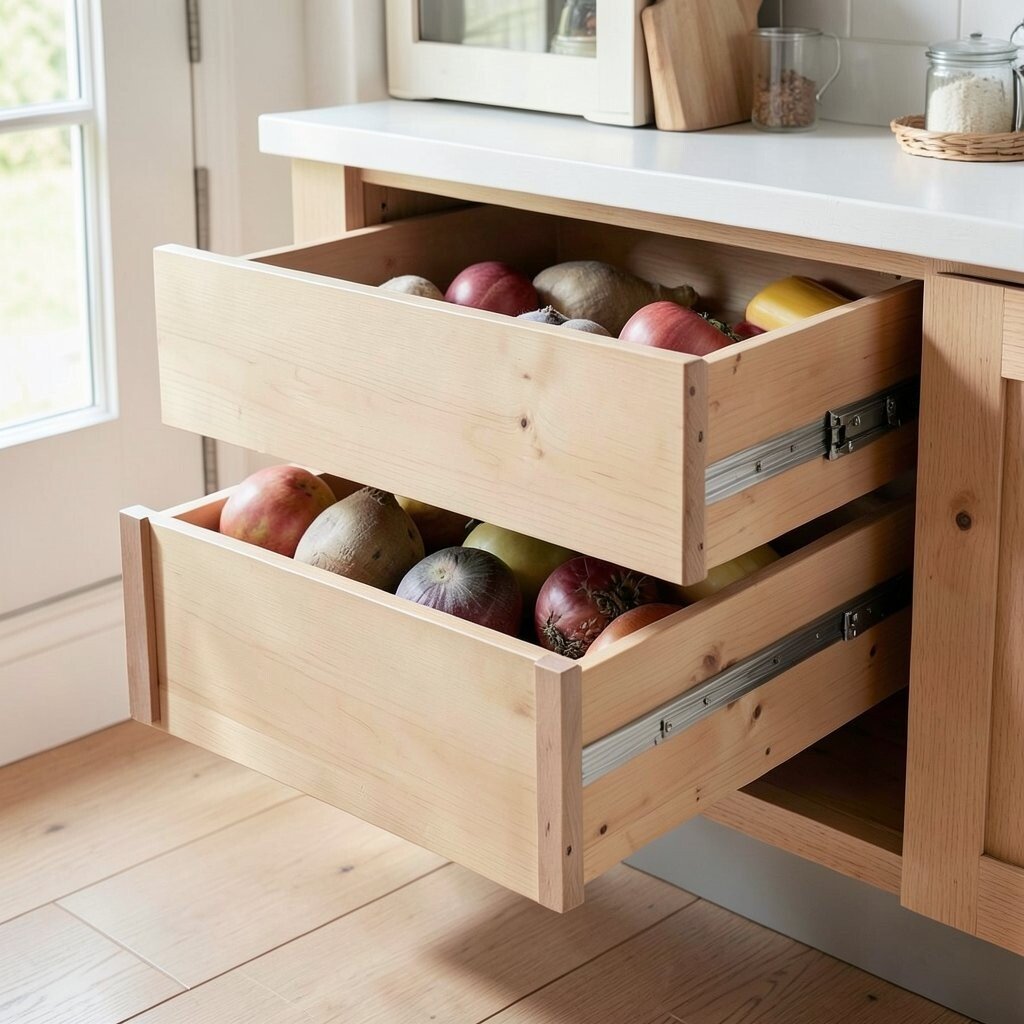
Sliding drawer bins turn a deep pantry into a tidy workstation. They help you reach items without digging through everything.
What makes them special is the smooth pull-out design that reduces mess when you’re cooking. Assign drawers to categories such as baking, canned goods, and meal kits for faster prep. Consider using height-friendly sizes so you can fit everything from spice bottles to rice bags.
Start with the width of your shelf and measure before you buy. Look for models with easy-grip handles and quiet tracks to reduce wobbling. Costs vary based on size and material, but even one drawer system can upgrade the whole pantry feel.
3. Wire Baskets for Airflow and Crunchy Foods
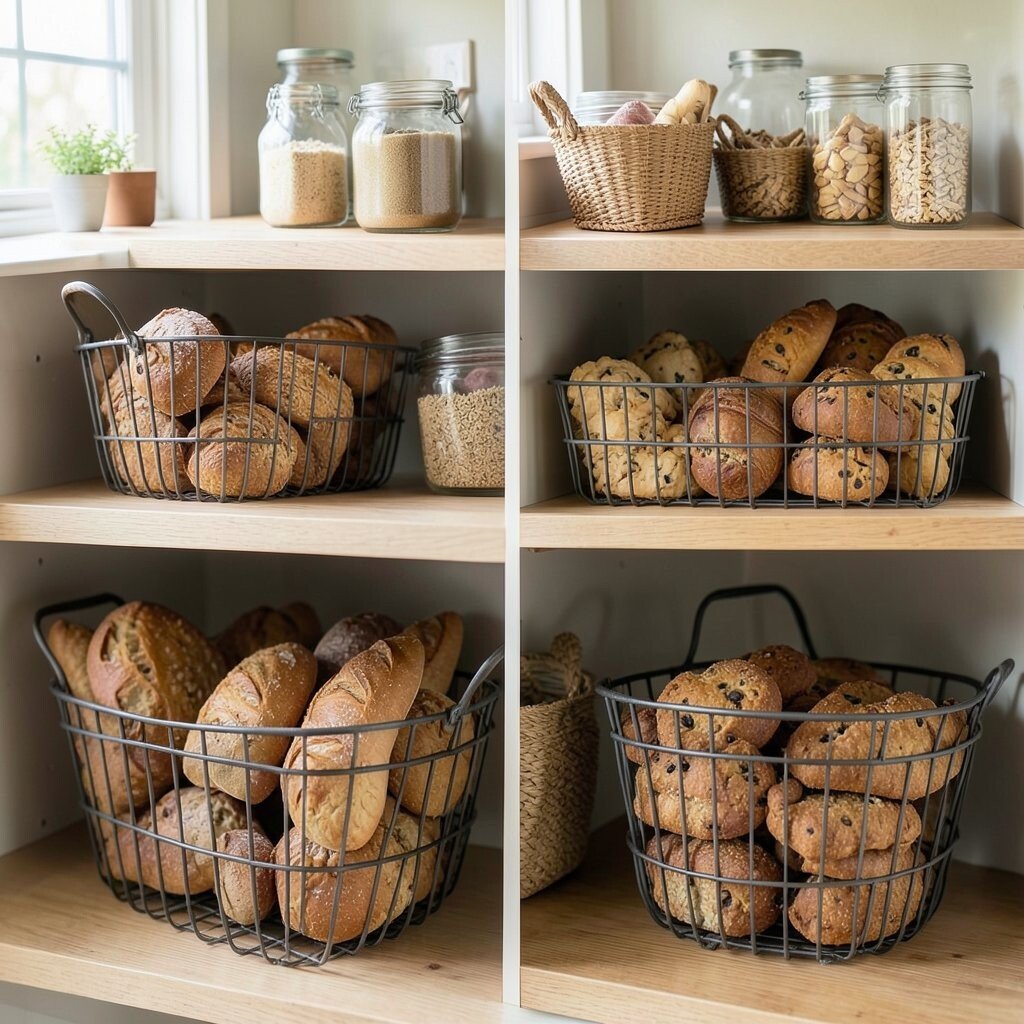
Wire baskets are great for keeping items from feeling damp. They allow airflow around onions, garlic, and potatoes for better storage.
The unique benefit is how they “breathe” compared to solid bins. Because the sides are open, you can spot sprouting or spoilage quickly. Use them for produce that needs ventilation rather than things that go stale in open air.
To make wire baskets look intentional, pair them with matching liners. Choose baskets that fit your shelf depth so they don’t slide around. A small cost-saving tip is to pick one or two baskets first, then expand when you see how well they work.
This idea is also trending with farmhouse and minimalist pantries that value natural textures. It feels lighter than plastic tubs and creates a visually organized rhythm on the shelf.
4. Small Bin Set for Spices and Baking Mix-Ins
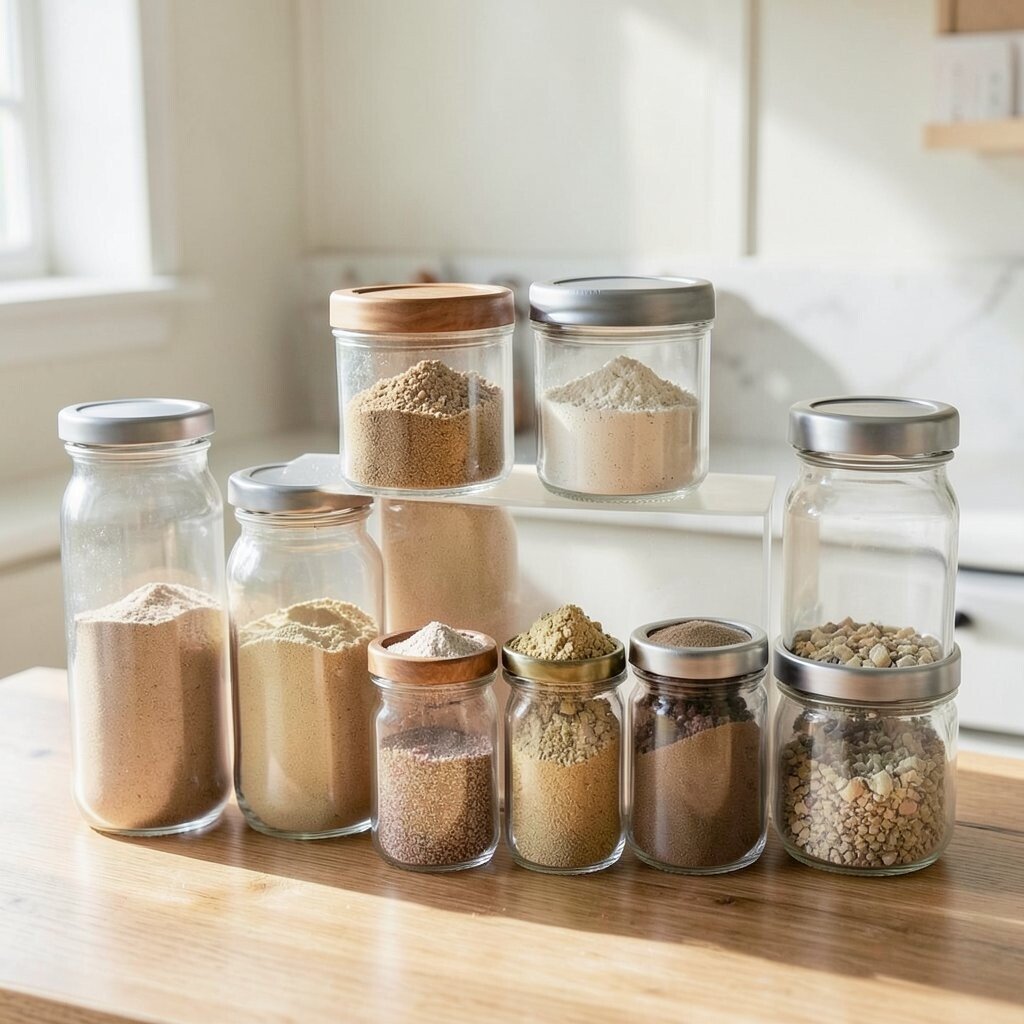
Small bins keep spice packets, cinnamon, and baking mix-ins from turning into a chaotic pile. When spices are grouped, you can cook without searching.
Use clear or translucent containers so you can read labels fast. A practical tip is to store “like with like,” such as baking spices together and savory seasonings together. If you want it to feel extra neat, add a simple label strip to each bin and keep the same style across the pantry.
5. Fabric-Front Bins for a Soft, Hidden Look
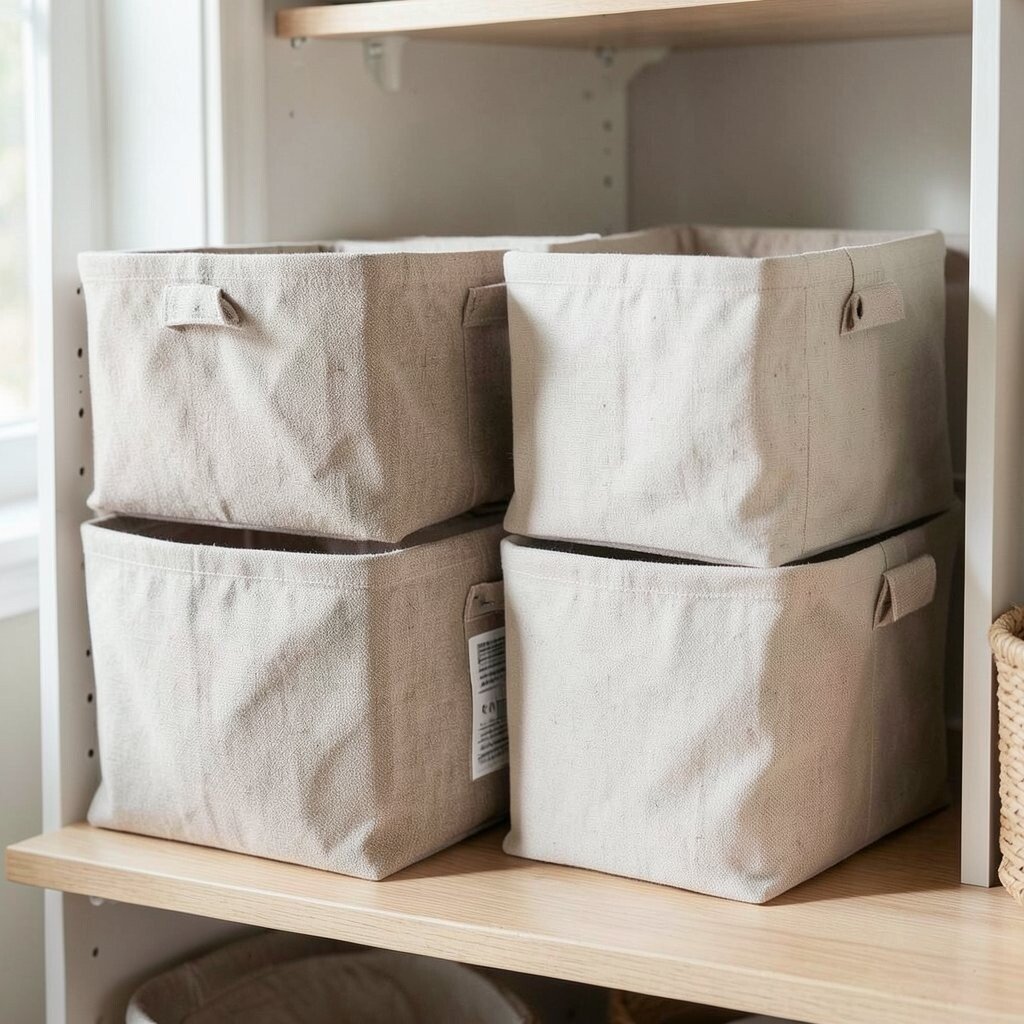
Fabric-front bins give your pantry a cozy, organized vibe. Instead of seeing everything at once, you get a clean look with gentle texture.
They’re unique because they can hide odds and ends while still being easy to pull forward. Use them for snack bars, tea packets, or reusable bags where you don’t need to view every item instantly. For practical organization, consider placing one fabric bin per shelf zone and keeping each bin’s contents narrow.
Cost can be moderate, especially if you choose removable washable covers. A good personalization idea is to match the color to your kitchen theme, like warm beige, sage, or navy. This style also fits current trends in “soft storage,” where functional bins double as decor.
6. Turntable Bins for Oils, Vinegars, and Condiments
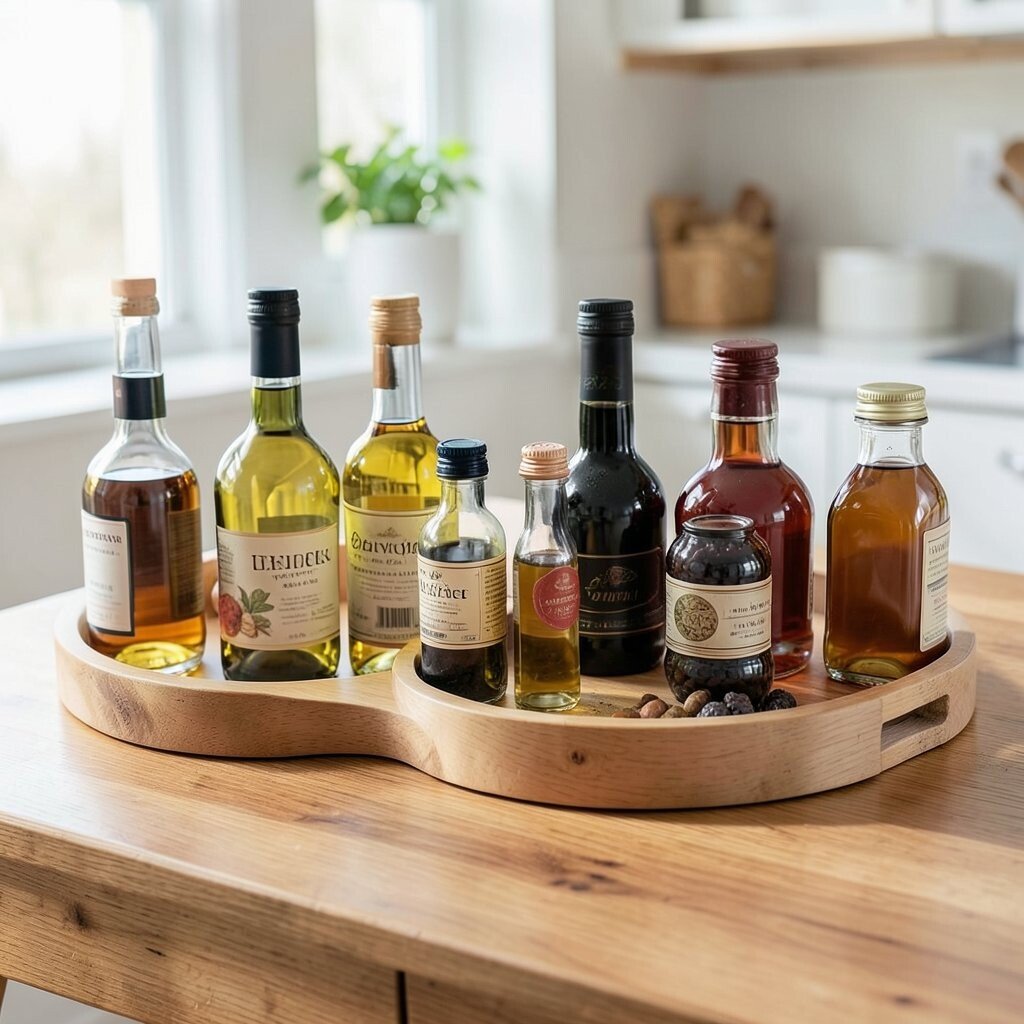
A turntable makes small items easy to grab without moving everything. Oils and vinegars are suddenly within reach, even if they’re stored in a corner spot.
What makes this idea stand out is the 360-degree access that reduces shelf clutter. Keep the newest bottle at the back and rotate older ones forward. Add a quick label on the rim or base so you know which spot each type of condiment belongs to.
For cost considerations, a basic turntable can be cheaper than building new storage. Choose one with a stable base so bottles don’t tip when you reach for them. Personalize by grouping items by cooking type, like “Salad” on one side and “Cooking” on the other.
7. Bamboo or Wood-Look Bins for Warm Aesthetic
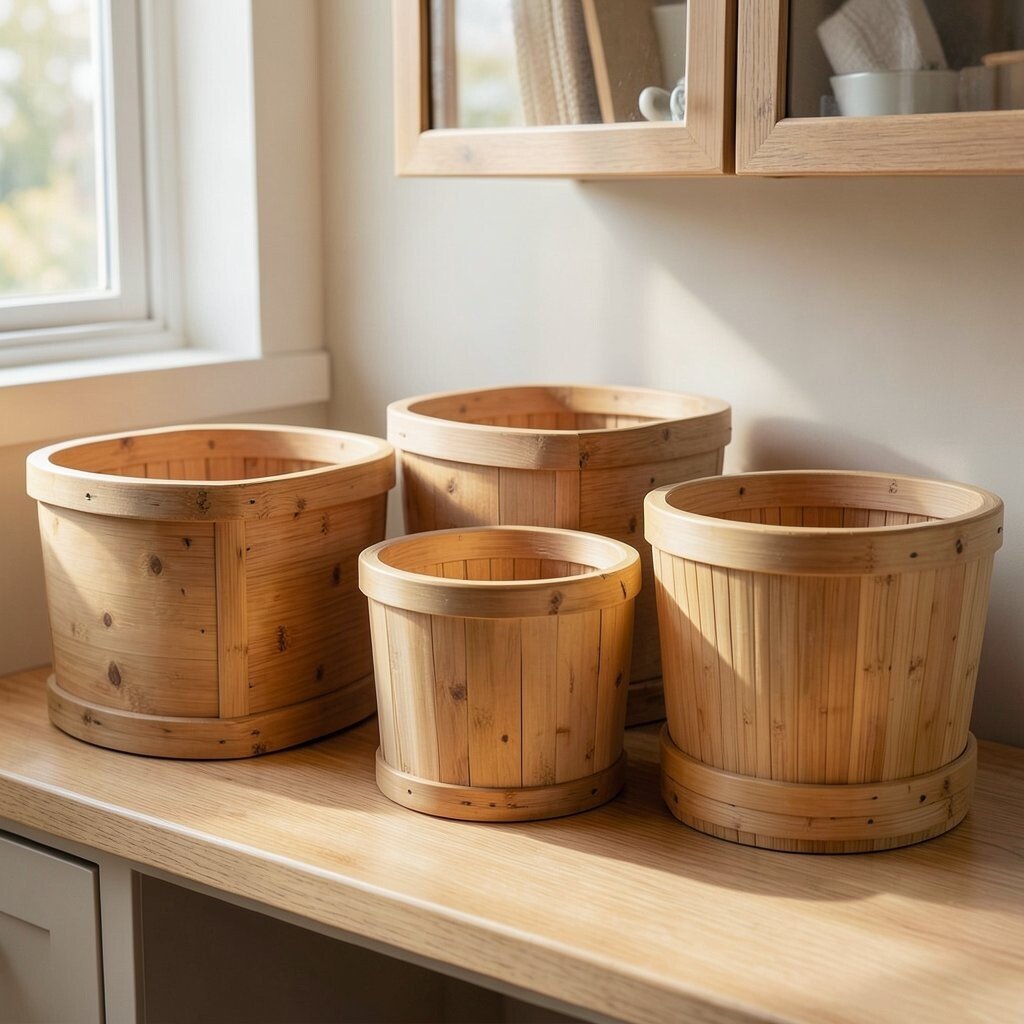
Wood-look bins make pantry shelves feel warmer and more styled. They blend nicely with most kitchen colors and add a calm, natural feel.
The unique benefit is how they look like intentional furniture rather than storage containers. Use them for flour, sugar, cereal, or dry goods you want on display. Pair them with matching scoops and simple labels for a coordinated look.
To make them practical, choose bins with lids or tight-fit covers if your pantry has humidity or pests. Budget-wise, bamboo-inspired materials often cost more than basic plastic, but they can last longer. This is a great choice when you care about both function and design.
For trends, natural textures have been popular in kitchens lately, especially in “coastal,” “Japandi,” and Scandinavian-style spaces. Small upgrades like these bins can shift your pantry from plain to polished.
8. Donation-Style “Use First” Bins
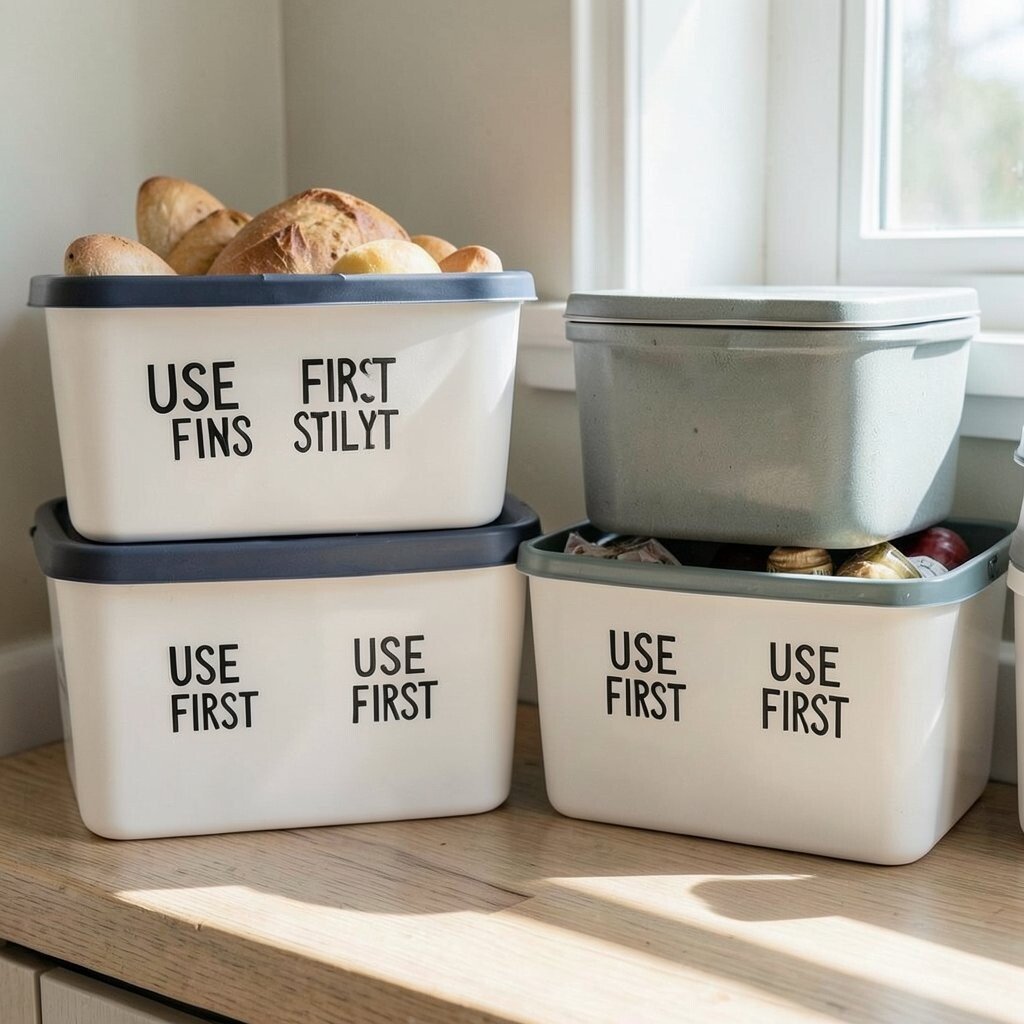
A “use first” bin is a smart way to prevent food waste. It keeps items with closer dates front and center.
The uniqueness lies in the system, not just the container. When you buy new groceries, move older items into this bin and keep fresh items behind. Add a simple rule: if it goes in the bin, it gets used next.
To make it easy, use a medium-size bin that fits within your normal browsing distance. Label it clearly and keep it where you’ll notice it while cooking. The cost is usually low because you can use any sturdy bin, even something you already own.
9. Bin-Within-a-Bin for Snacks and Variety
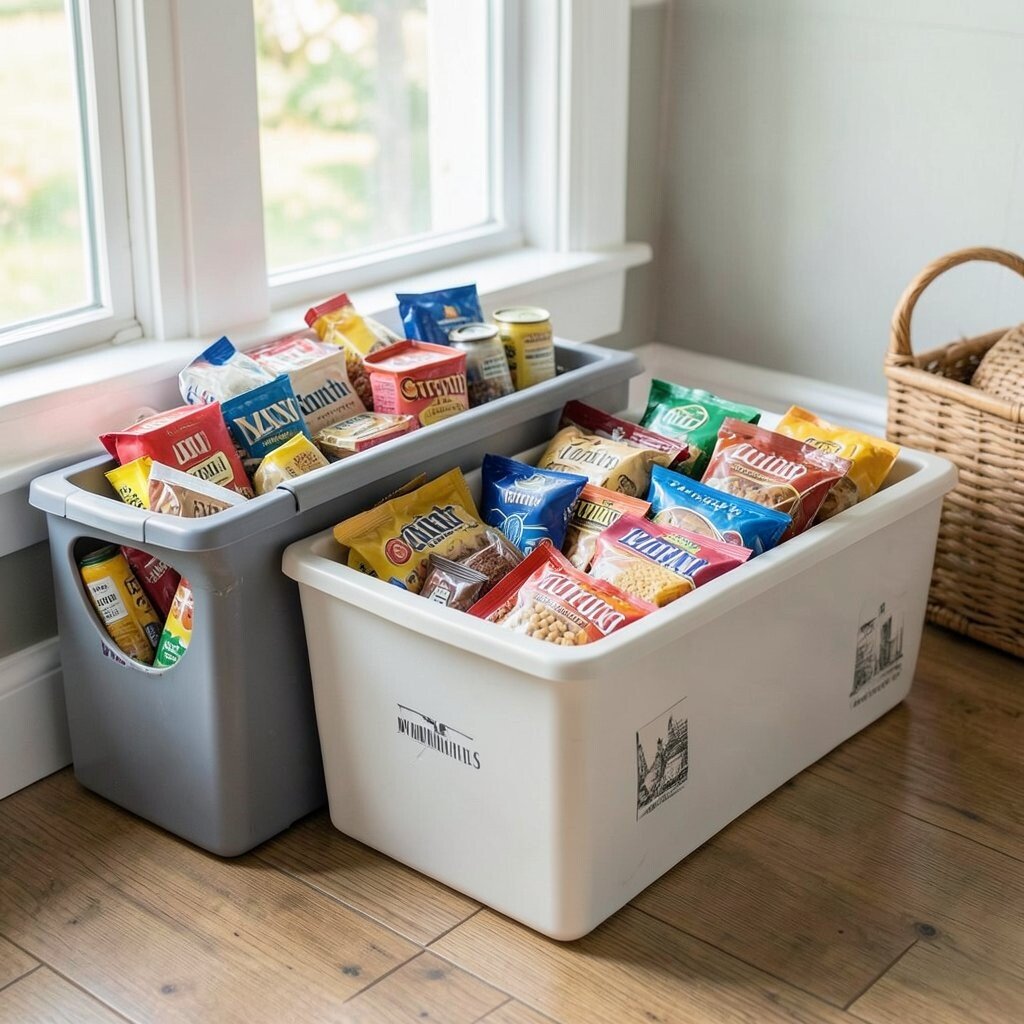
This is the trick where one larger bin holds smaller sections. It’s perfect for snack mixes, cereal toppings, and assorted pantry bites.
What makes it unique is the layered organization that helps you see parts at a glance. For example, keep nuts in one compartment and chocolate chips in another. You can also keep kid snacks separated from healthier options to reduce mix-ups.
Choose a larger bin with a lid for cleanliness, then use dividers or smaller containers inside. A practical tip is to avoid overfilling, since cramped compartments make it harder to keep things neat. Cost depends on how fancy the dividers are, but starter sets are often affordable.
In terms of trends, this “small parts organization” approach matches the current love for compartmentalized storage across kitchens. It feels neat, and it makes reaching for the right snack much faster.
10. Pantry Can Organizer Bins With Front Facing
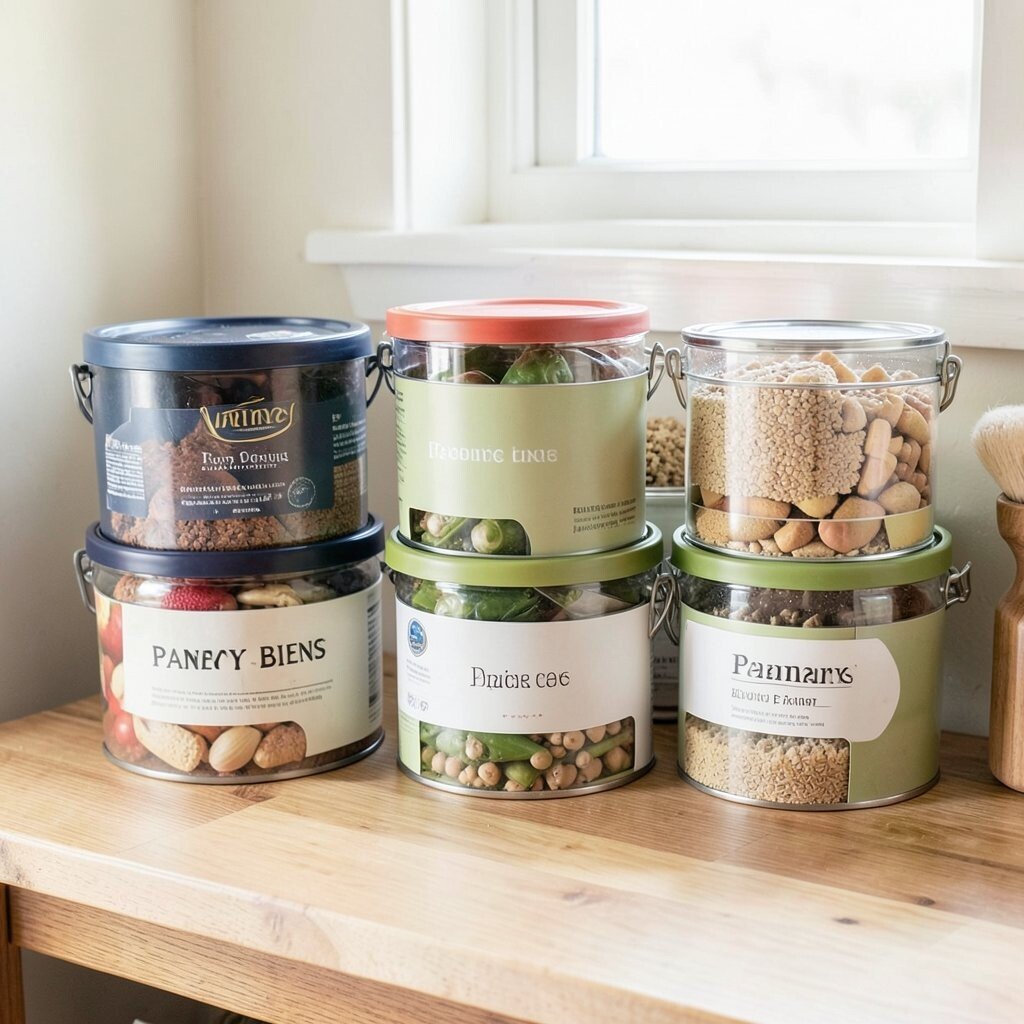
Front-facing can bins make your pantry look like a mini store shelf. When everything faces outward, you can scan labels in seconds.
The benefit is smoother meal planning because you can see what ingredients you already have. Use a bin system that holds cans upright and stable, then rotate items regularly. A practical suggestion is to group by meal type like “Soups,” “Tomato Base,” and “Beans.”
11. Clear-Lid Bins for Bulk Dry Goods
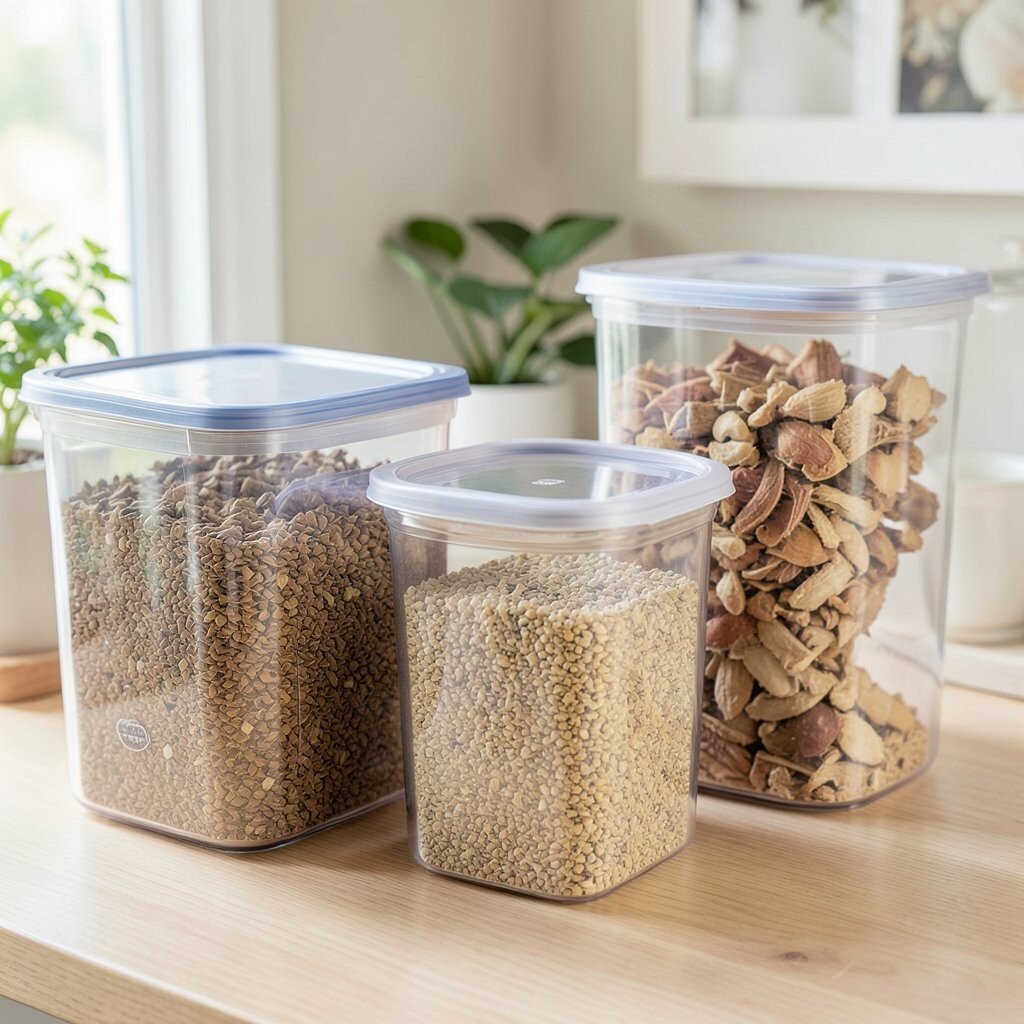
Bulk items can be messy unless they’re sealed and easy to scoop. Clear-lid bins keep rice, pasta, and oats tidy while still showing levels.
These bins stand out because the lid helps protect against spills and pantry bugs. Label by size and content so you don’t guess later. For practical tips, consider portioning large bags into bins to reduce clutter and improve the “grab and go” routine.
If you’re cost-conscious, buy a few larger bins first for your most-used items. Use a marker to write the date you added the contents so you can track freshness. This style is popular right now because it supports meal prep and streamlined cooking habits.
12. Tiered Bins for Measuring Cups and Tools
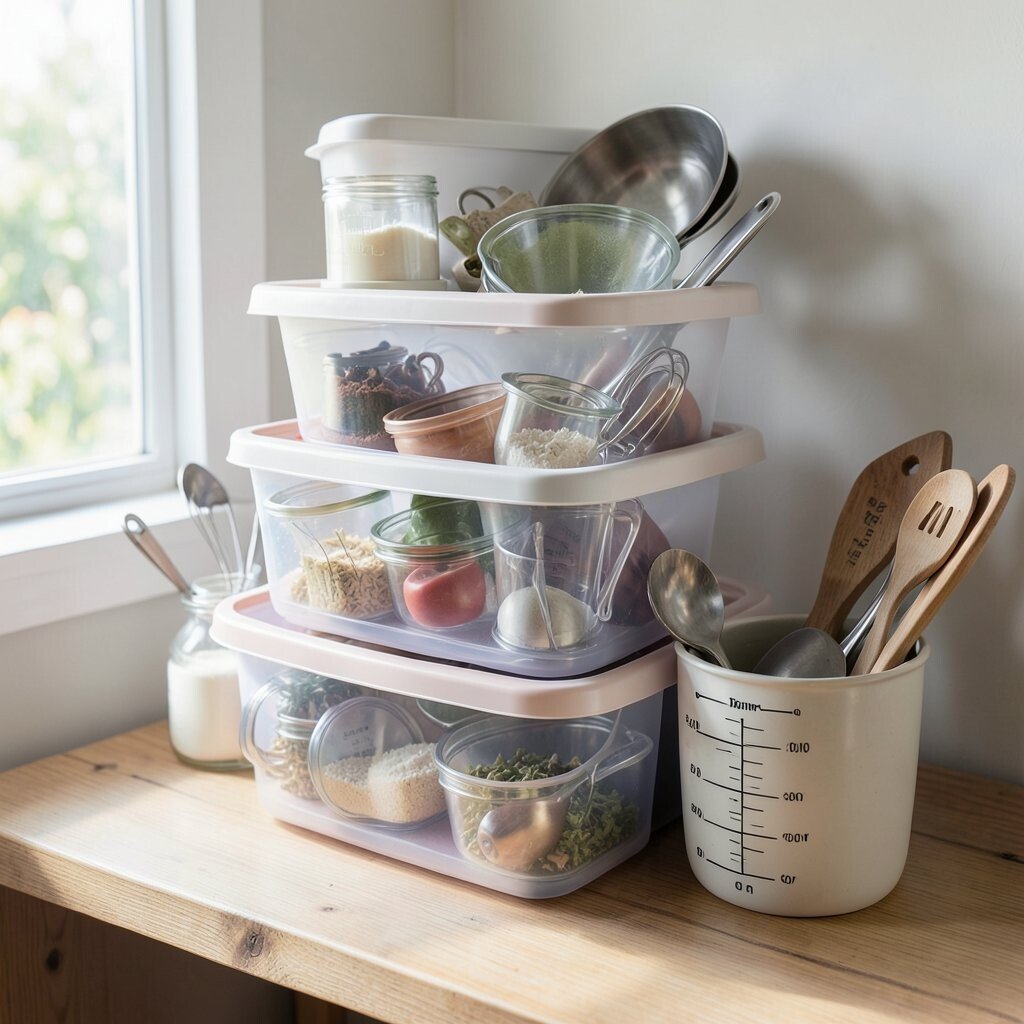
Pantry bins don’t have to be only for food. Tiered bins can store measuring cups, squeeze oils, and small kitchen tools you grab mid-recipe.
The unique angle is that you reduce trips across the kitchen when you’re cooking. Keep baking tools together, like cookie cutters, sprinkles, and measuring cups, in a dedicated area. Add a small bin for paper towels or recipe cards if that fits your workflow.
For practical personalization, customize labels to match how you actually cook. For example, “Baking Day” might include extracts and sprinkles, while “Sauce Station” could hold vinegars and syrups. Tiered systems cost more than single bins, but they save time and keep counters clearer.
Current trends lean toward functional storage near where you work, and this supports that idea. It’s a small shift that makes everyday cooking feel calmer.
13. Corner-Savvy Bins for Small Pantries
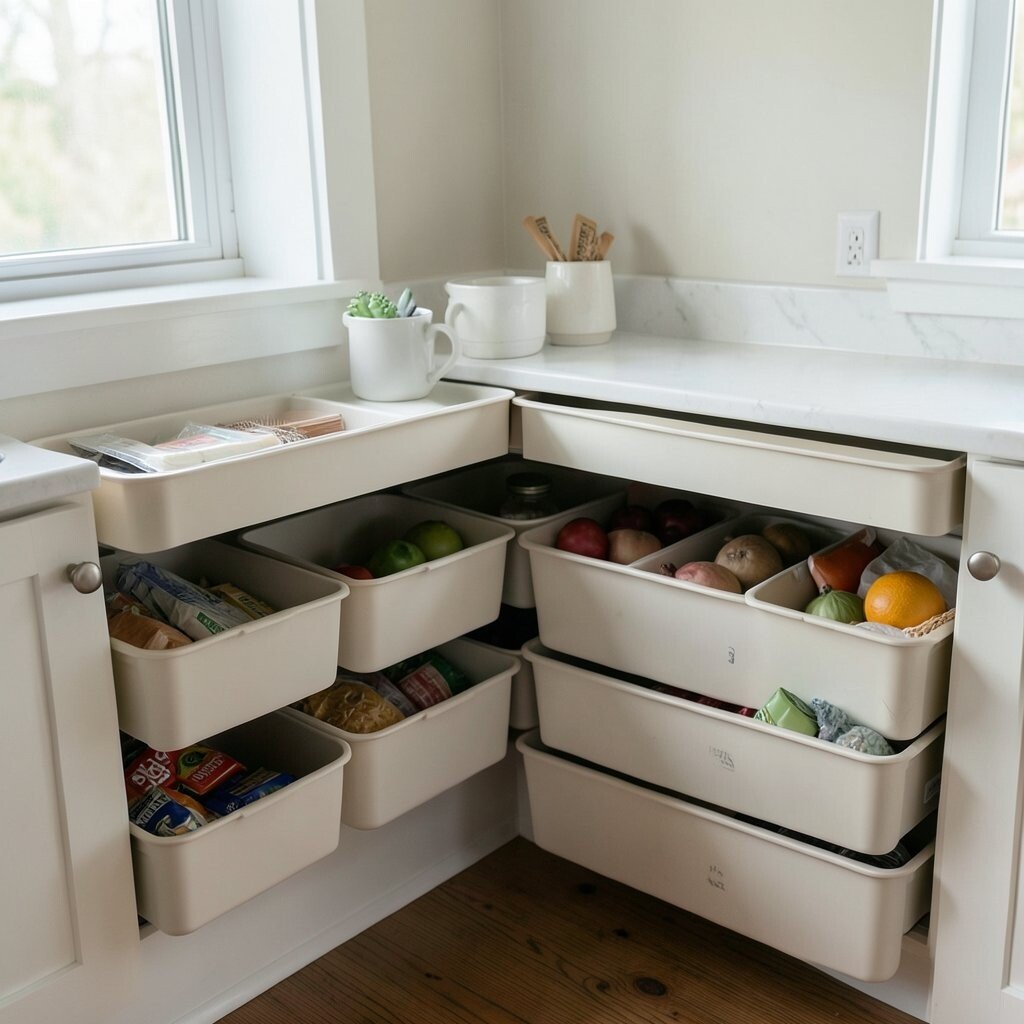
Corners are often wasted space, but bins can fix that fast. Use corner-fit bins to make awkward shelf areas actually useful.
The uniqueness here is the shape that matches the space. Corner shelves can feel cramped, so the right bin prevents items from slipping out or becoming unreachable. Choose bins that fit snugly so you don’t waste time rearranging them.
To make this practical, start by measuring the exact corner width and depth. Then pick bins that match that dimension instead of trying to “make it work.” Cost is usually reasonable because many corner organizers are simple and efficient.
Personalize with color-coded labels so even small storage areas feel organized. This also aligns with a growing trend toward maximizing small kitchens with smart, space-efficient products.
14. Basket-and-Lid Combo for Family-Friendly Storage
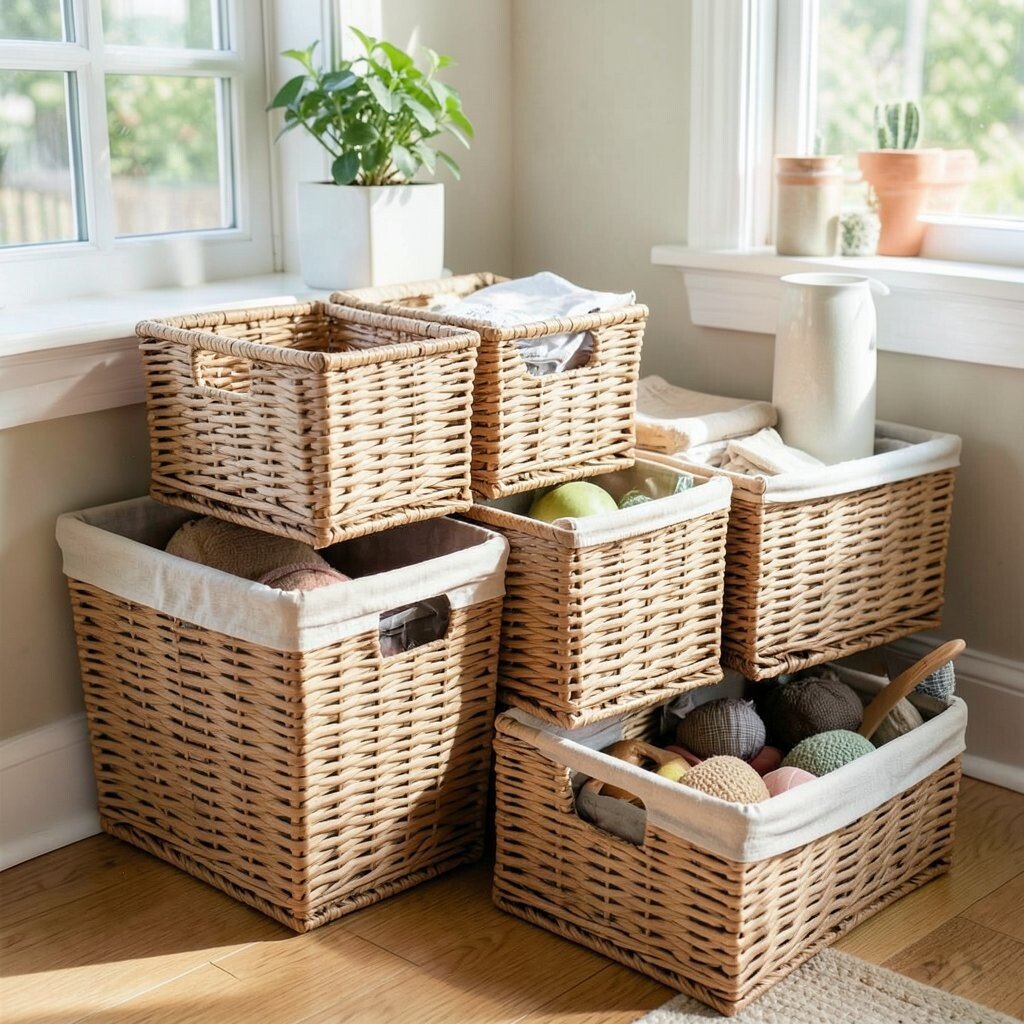
When multiple people share a pantry, storage needs to be sturdy and forgiving. A basket-and-lid combo helps keep items contained without looking overly formal.
It’s unique because you get quick access from the basket while still having protection from dust with a lid. Use these for snacks, cereal bags, or reusable straws and liners. A practical tip is to keep lids on items that spill easily, like granola or cereal.
15. Stackable Drawer Bins for Meal Kit Ingredients
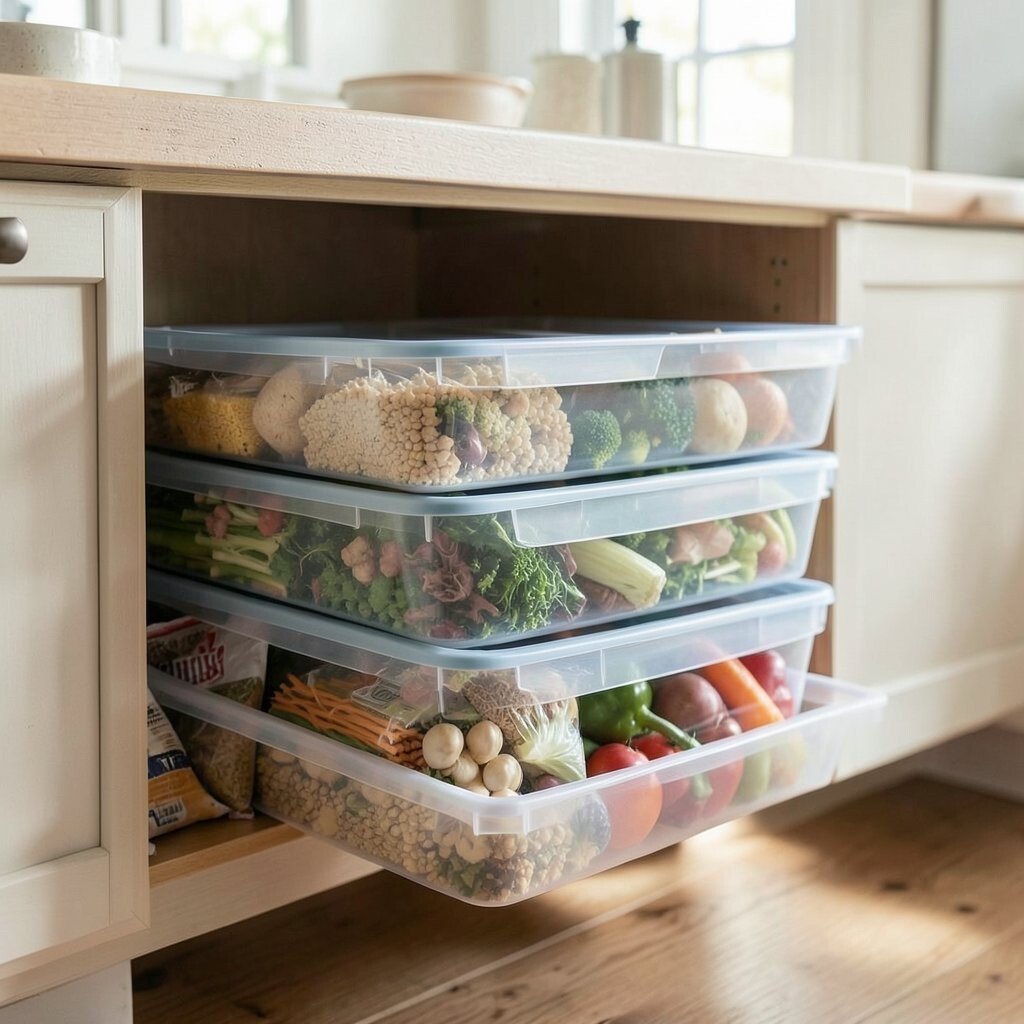
Meal kits and recipe batches need a reliable storage plan. Stackable drawer bins let you sort ingredients by recipe so cooking feels organized.
The unique benefit is that you can pre-stage a meal setup and keep it together. Think: one drawer for pasta night sauce items, another for taco ingredients, and another for stir-fry basics. Add labels to each drawer so you can find everything quickly during a busy weekday.
For practical tips, don’t overpack the drawers, and keep similar sizes together for smoother stacking. Cost varies depending on the number of drawers and overall height, but it can be worth it if you meal prep often. This approach also matches current trends in planning and prepping, where pantry storage supports faster weeknight meals.
16. DIY Upcycled Jar and Bin Labels
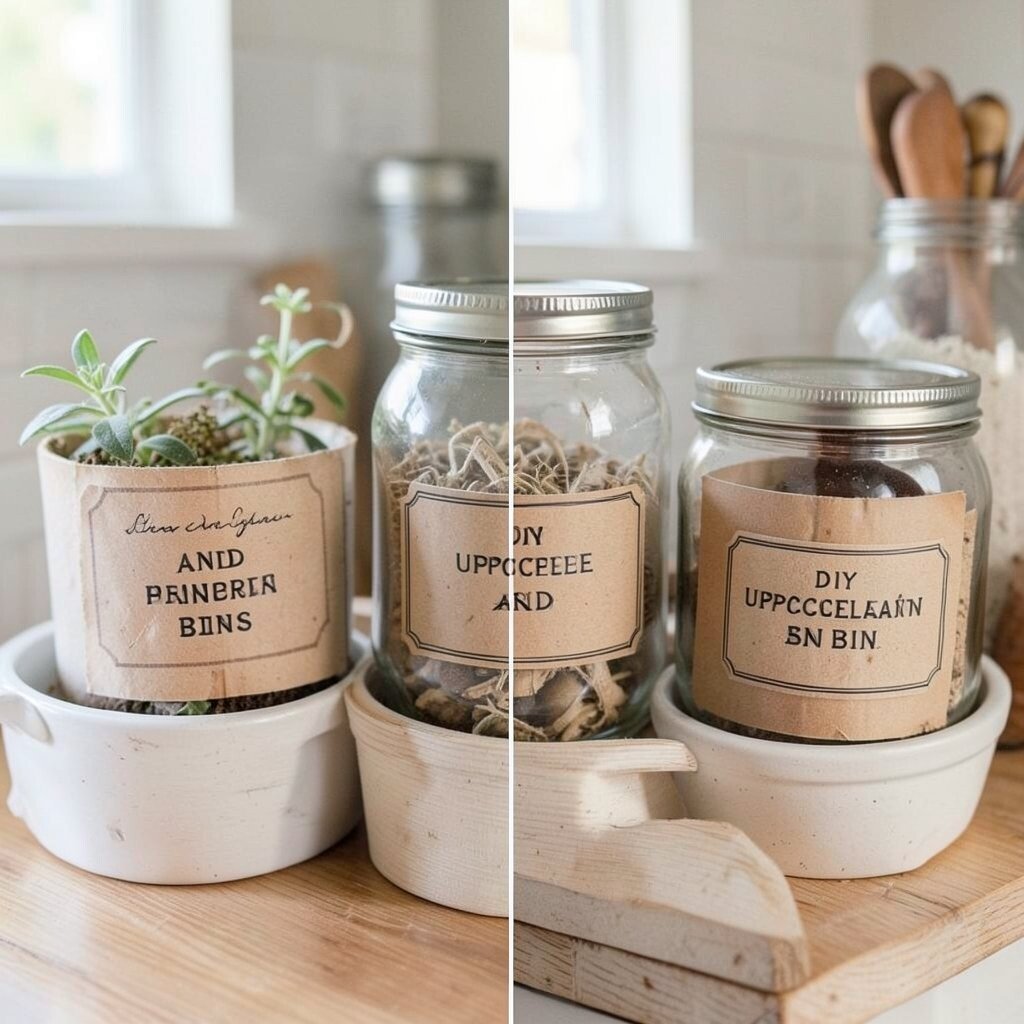
Upcycled storage can look stylish and cut costs at the same time. Turn clean jars, tins, and old containers into matching bins with consistent labels.
This idea is unique because it combines sustainability with personalization. Use a label style you love, like neat typed tags or simple chalkboard labels, so your pantry feels cohesive. A practical tip is to standardize label content, such as “Oats,” “Baking Soda,” or “Cocoa,” and include the date if needed.
Cost considerations are often lower because you’re reusing items you already have. Personalize further by using color-coded labels for different food groups. Upcycling is still trending, and it’s a great fit for anyone who wants a pantry that feels both curated and practical.