Rustic kitchens feel warm even before you cook a single meal. The right color can make your everyday routines feel a little more cozy and special.
When walls, cabinets, and accents work together, the whole space starts to glow with character. Use these ideas like a friendly map, so you can pick shades that match your life and your taste.
-
1. Weathered White with Linen Warmth
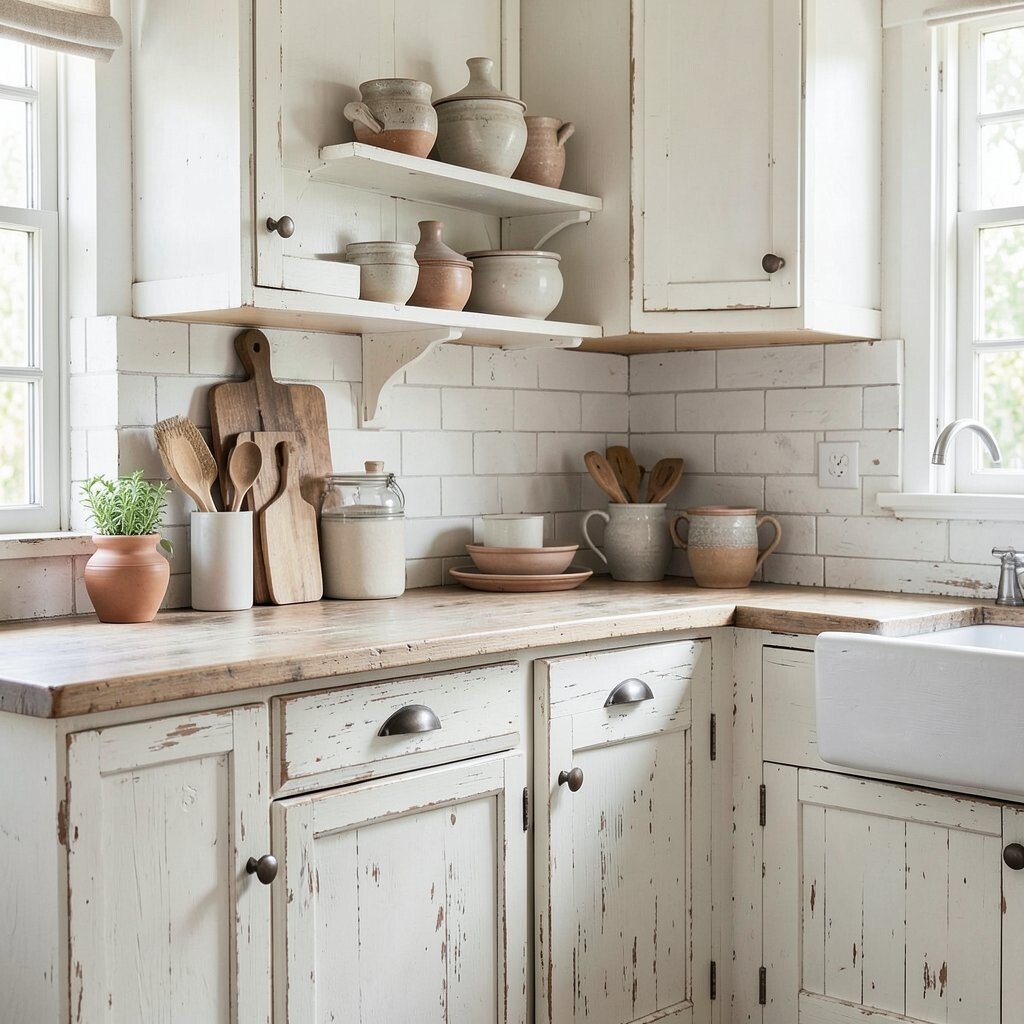
Weathered White with Linen Warmth Try a weathered white paint that looks soft, not icy. It can make your kitchen feel airy while still holding onto that lived-in charm.
This color is great for small spaces because it reflects light. It also pairs easily with wood tones, black hardware, and old-style lighting.
For a personal touch, choose a satin finish on cabinets and a matte finish on walls. Add woven baskets on open shelves to make the texture stand out.
If you want it to feel extra rustic, use glaze or mild distressing on cabinet doors. It hides tiny scuffs and gives you that “always belonged here” vibe.
Cost-wise, paint is often the most budget-friendly option, especially if you refresh only walls or just the cabinet fronts. A small tester pot can save money by proving the undertone in your exact lighting.
-
2. Sage Green That Feels Like an Herb Garden
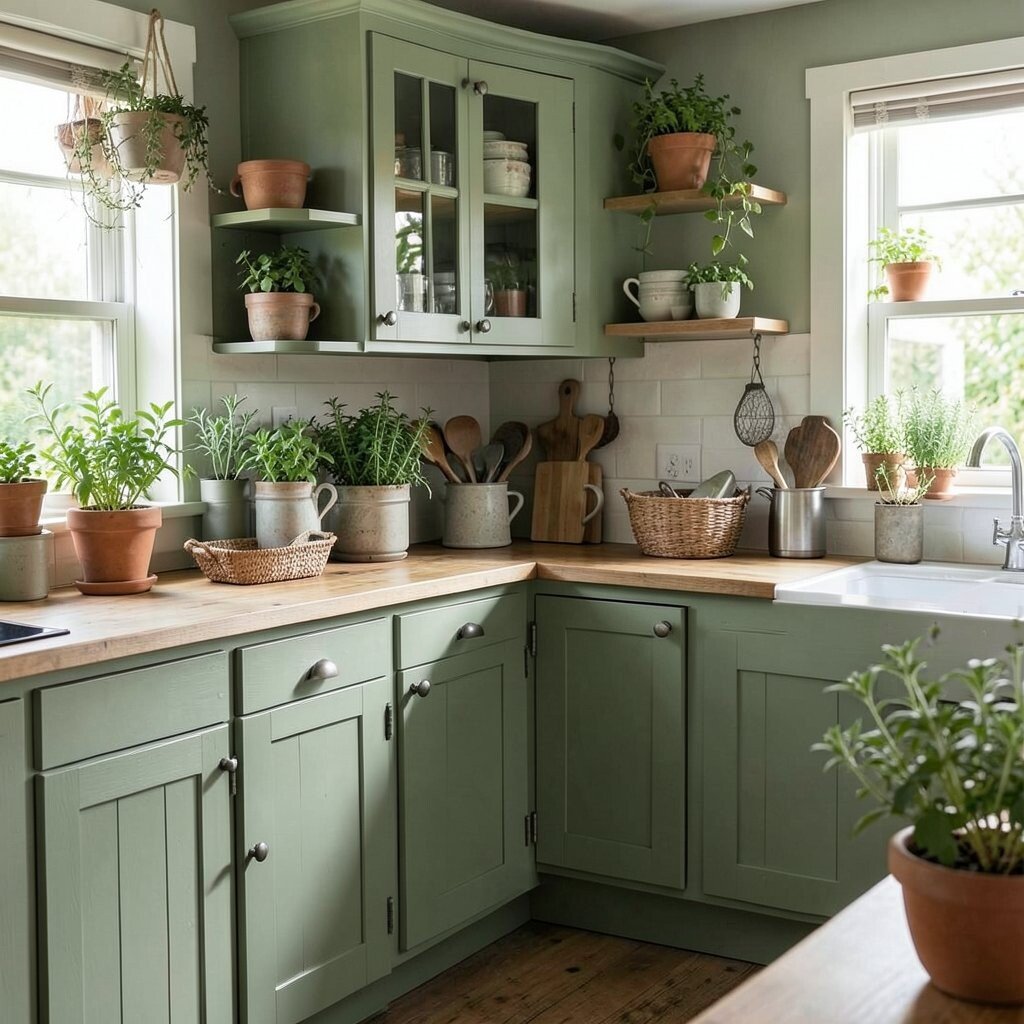
Sage Green That Feels Like an Herb Garden Sage green makes many kitchens feel calm and fresh. It looks lovely next to natural wood and stone-like countertops.
Because it is muted, it won’t feel too loud when you add mugs, baskets, and colorful produce. It is also a smart choice for open layouts since it keeps the space feeling balanced.
Use sage on lower cabinets and keep the uppers neutral for a classic, grounded look. You can also paint an accent wall behind a shelf or a breakfast nook.
For personalization, match sage with brass, rubbed bronze, or aged iron hardware. Add a runner with botanical patterns or small leaf motifs.
To keep it budget-friendly, consider painting just one set of cabinets first, then build from there. Current trends favor earthy greens and soft “farmhouse calm,” so this shade fits right in without looking trendy for only one season.
-
3. Clay Rose and Dusty Terracotta Hues
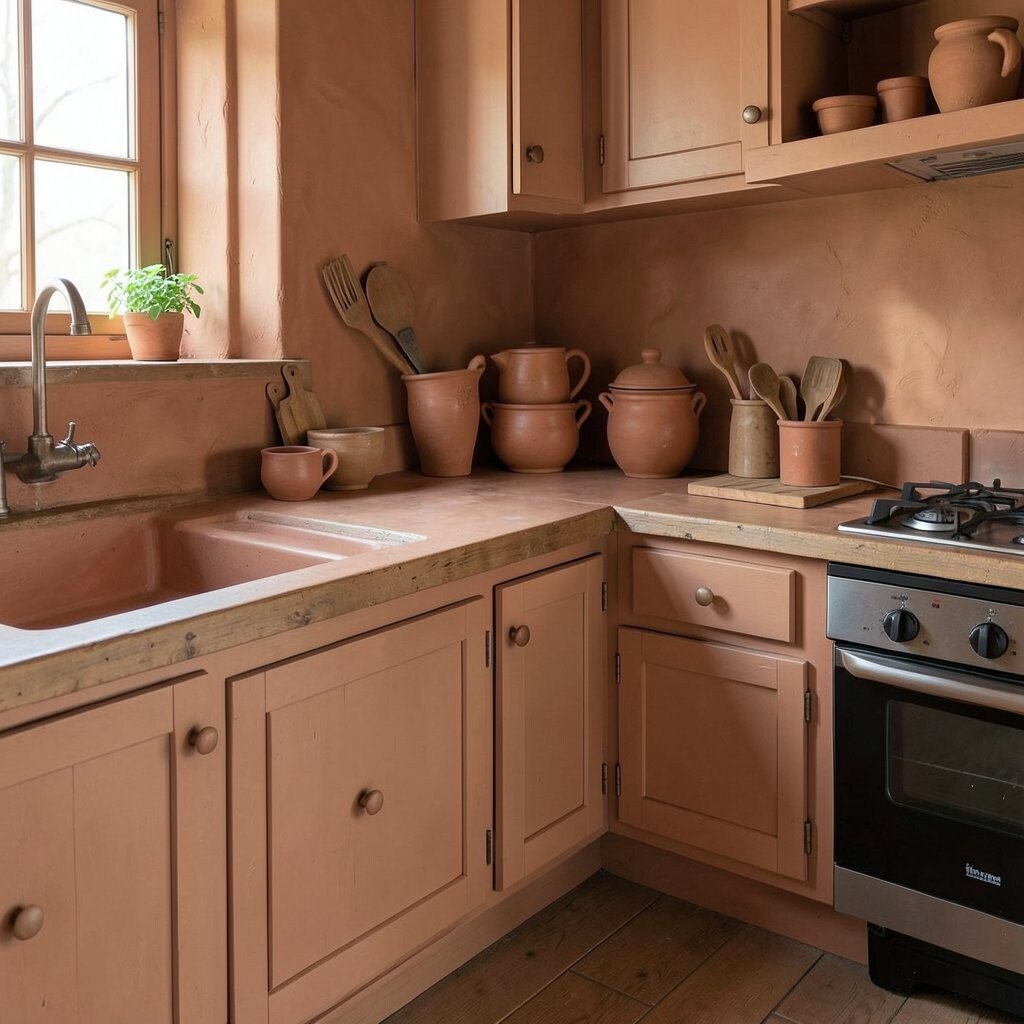
Clay Rose and Dusty Terracotta Hues Clay rose and dusty terracotta bring warm energy to a rustic kitchen. They make the room feel inviting, like baked bread cooling on a counter.
This palette is unique because it sits between pink warmth and earthy orange. It pairs especially well with dark wood, matte black fixtures, and creamy whites.
If you want a gentle look, paint cabinets in clay rose and keep walls in a soft cream. For a bolder look, try terracotta on the island and use light neutral walls around it.
One smart tip is to balance the color with natural textures, like linen curtains and wood cutting boards. Add ceramic canisters that show off handmade shapes.
Cost can stay reasonable by using color on a smaller area, like the island or a wall. You can also use peel-and-stick tile for a backsplash accent to keep project costs controlled. This shade is popular right now because people want warmth without going fully red or fully orange.
-
4. Barn Red with Soft, Peeling-Style Depth
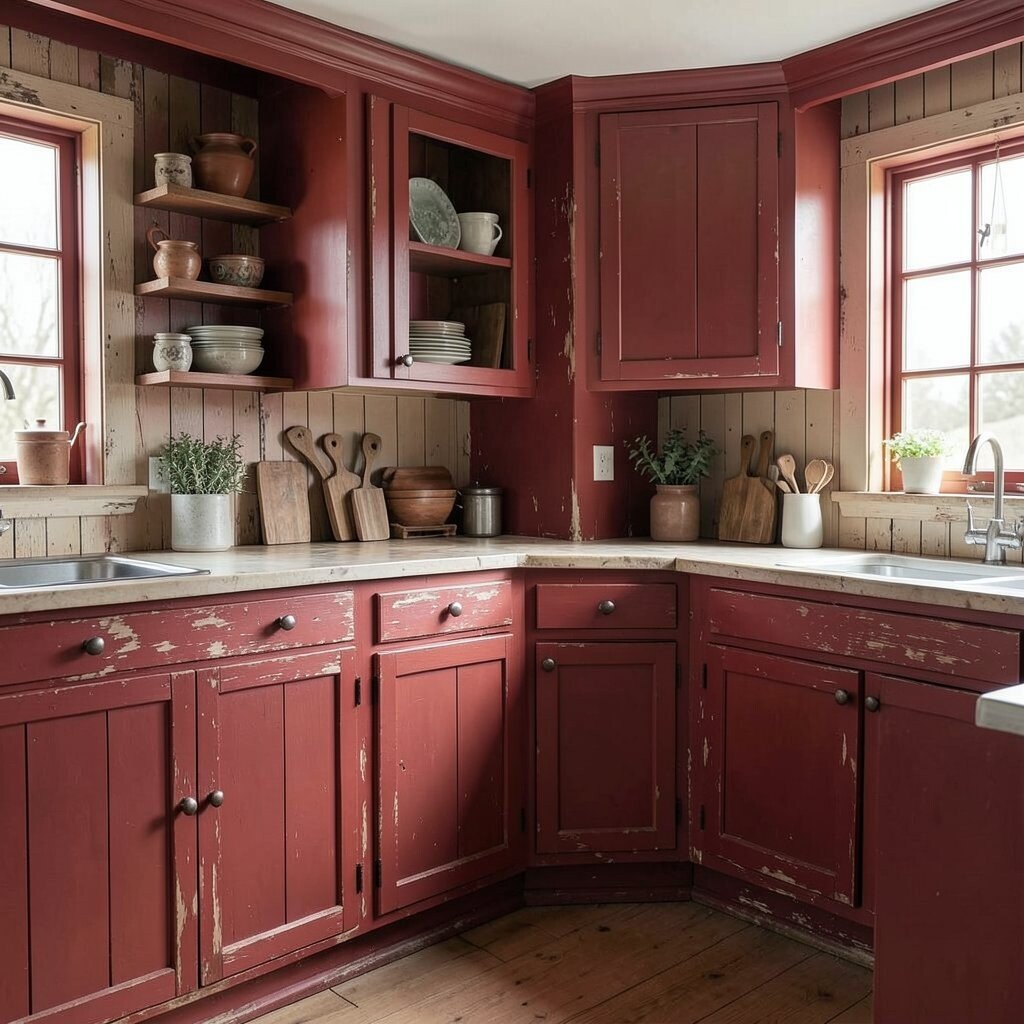
Barn Red with Soft, Peeling-Style Depth Barn red feels bold, but the right tone can still feel cozy. Look for a version that looks slightly muted, like old paint on a wooden door.
This color helps rustic kitchens feel full of personality. It also makes simple decor items, like white dishes and copper pans, look extra crisp.
Try barn red as a cabinet color and keep the wall color lighter to avoid heaviness. Another great idea is to paint the lower cabinets and use a warm off-white above.
For personalization, add a small gallery of vintage-style frames or a menu board in matching tones. Hardware in antique brass or oil-rubbed bronze makes the red look even richer.
-
5. Deep Charcoal with Warm Wood Counterparts
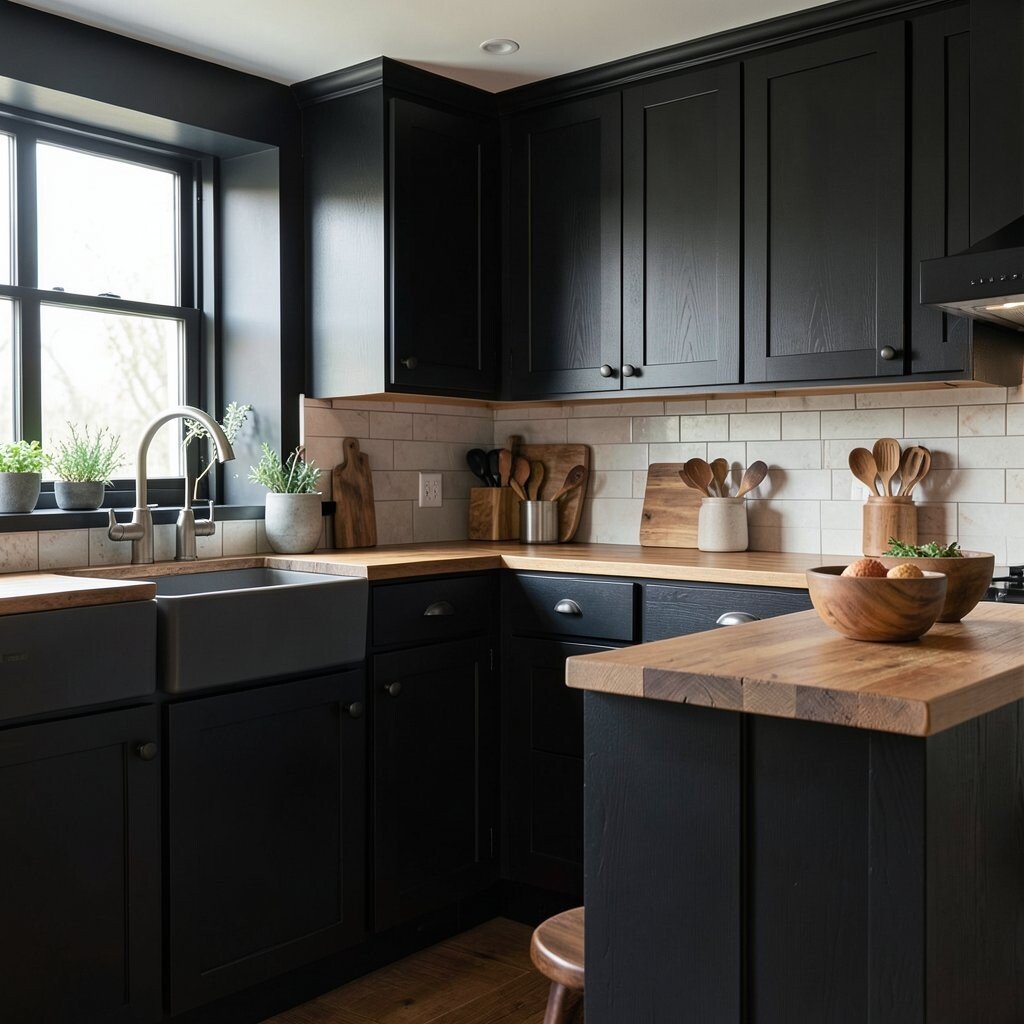
Deep Charcoal with Warm Wood Counterparts Charcoal brings drama and strong grounding. It works wonderfully when you mix it with warm wood and creamy light.
In a rustic kitchen, charcoal can feel modern, but still cozy. It helps hide wear and fingerprints, which is a real day-to-day benefit.
Use charcoal for cabinets, or try it on the island and leave the rest neutral. Pair it with a bright backsplash so the space still feels open.
For tips, choose matte hardware and textured finishes, like wood grain or soapstone-like looks. Add a pendant light with warm bulbs to soften the contrast.
Cost-wise, if you love the look but worry about a big refresh, start with charcoal on a single cabinet set or a statement wall. This dark trend is sticking around because it makes natural materials look even better.
-
6. Honeyed Oak Stain as a Color Strategy
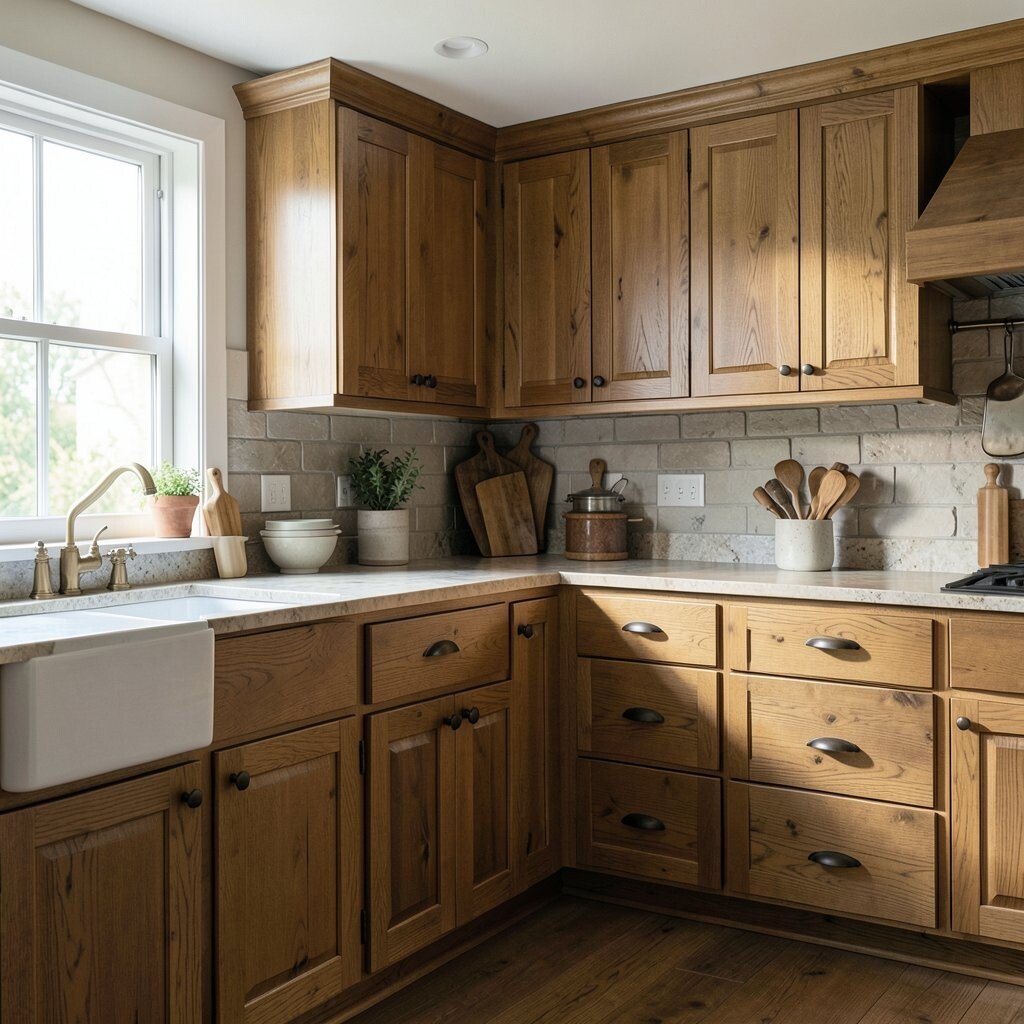
Honeyed Oak Stain as a Color Strategy Instead of starting with paint, start with stain tone. Honeyed oak stain brings a golden glow that feels naturally rustic.
It is unique because the “color” comes from wood itself. You get depth and movement that flat paint can’t fully match.
Consider staining cabinet doors, open shelves, or even a hutch panel. If you already have wood, you might be able to refresh it with sanding and a new stain.
This color strategy pairs well with warm whites and soft creams, so your kitchen stays bright. Add textured textiles like burlap-look napkins or a knitted throw for cozy layers.
For personalization, try two-tone styling: lighter stained shelves and darker stained base cabinets. Cost can be a little higher than paint if you are doing full cabinetry, but refinishing can be cheaper than replacing. A lot of people are loving wood-forward looks right now, and honeyed tones keep that trend warm and approachable.
-
7. Soft Mushroom Brown for Old-World Calm
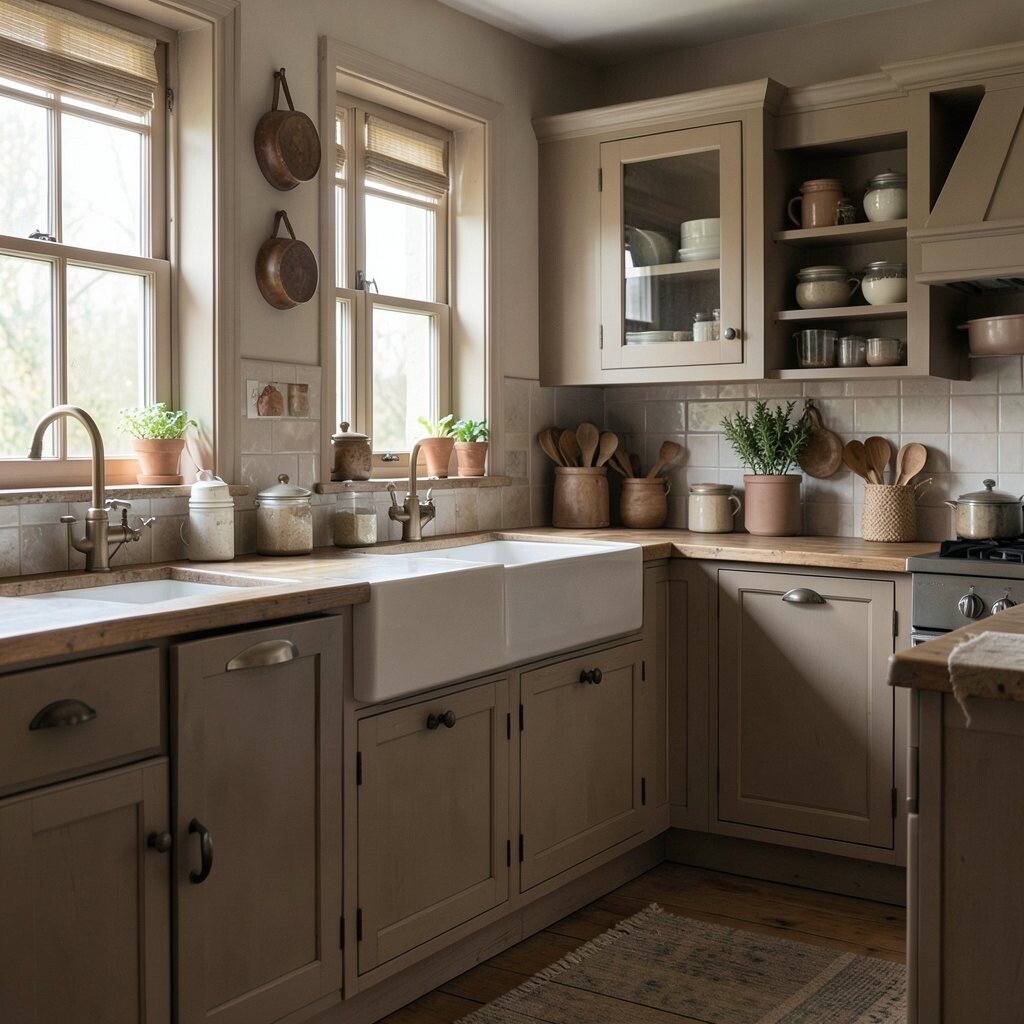
Soft Mushroom Brown for Old-World Calm Mushroom brown looks like smooth earth under a gentle sun. It gives rustic kitchens a calm, old-world feeling.
Because it is neutral, it lets your favorite pieces shine, like copper pots or a handmade salt cellar. It also works well with nearly any metal finish.
Try mushroom brown on walls, or use it as a cabinet color if you want a cozy backdrop. Keep the trim in a creamy white so the edges feel crisp and clean.
If you want a stronger rustic vibe, add a backsplash with warm stone patterns or subtle brick-like texture. Add open shelving so you can style jars and plates with intention.
Cost considerations are friendly here, because brown walls can usually be refreshed without changing countertops. This shade feels current since earthy neutrals are popular, especially for homes that want warmth without loud color.
-
8. Weathered Blue That Looks Like Coastal Farm Life
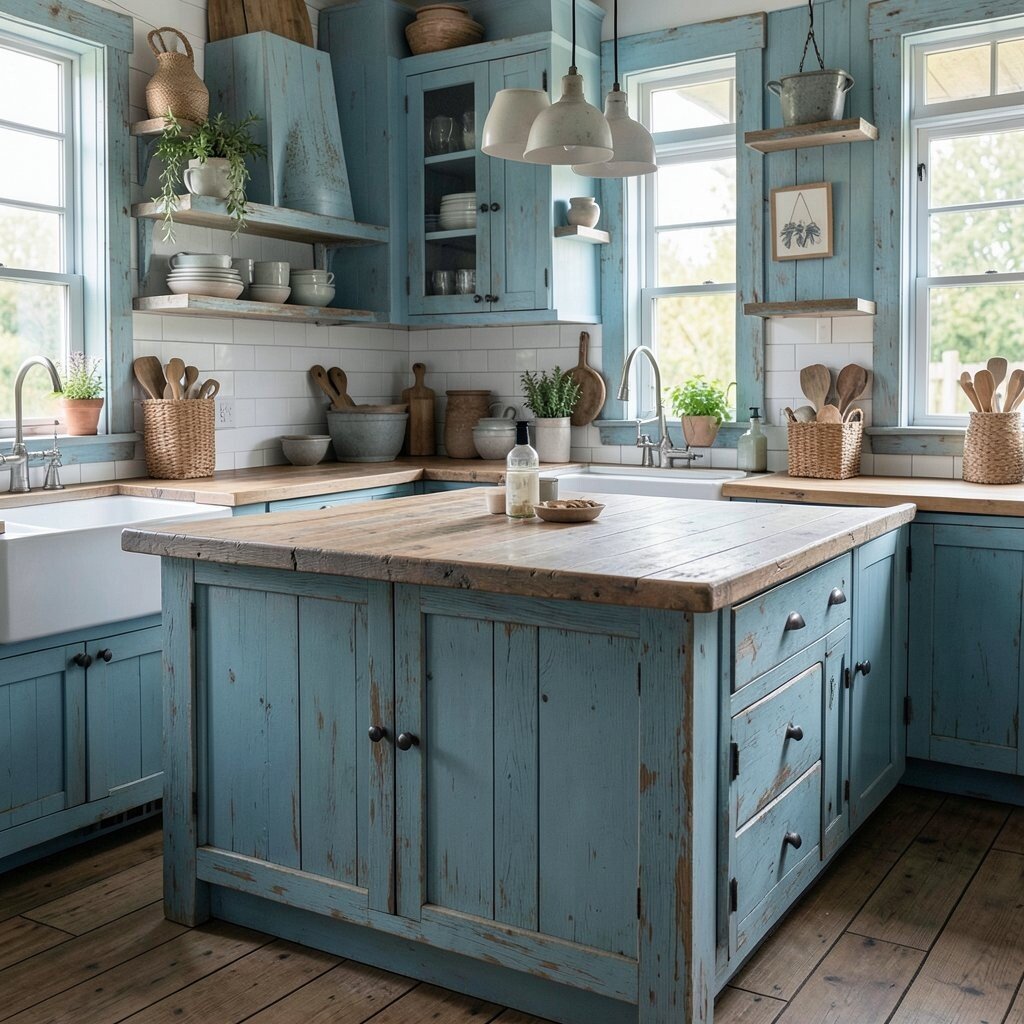
Weathered Blue That Looks Like Coastal Farm Life Weathered blue can feel rustic and coastal at the same time. It looks like a farmhouse shed painted long ago and slightly faded by sun and wind.
This color is unique because it adds color while still staying soft. It pairs beautifully with whitewashed wood and light tan accents.
Use weathered blue as an accent on the island, drawers, or a built-in shelf niche. Keep the rest of the kitchen in warm neutral shades so the blue stays the star.
For personalization, add a light striped runner or a few ceramics in sea-glass tones. Choose hardware in brushed nickel or antique brass for a balanced look.
-
9. Warm Cream with a Handcrafted, Plaster Look
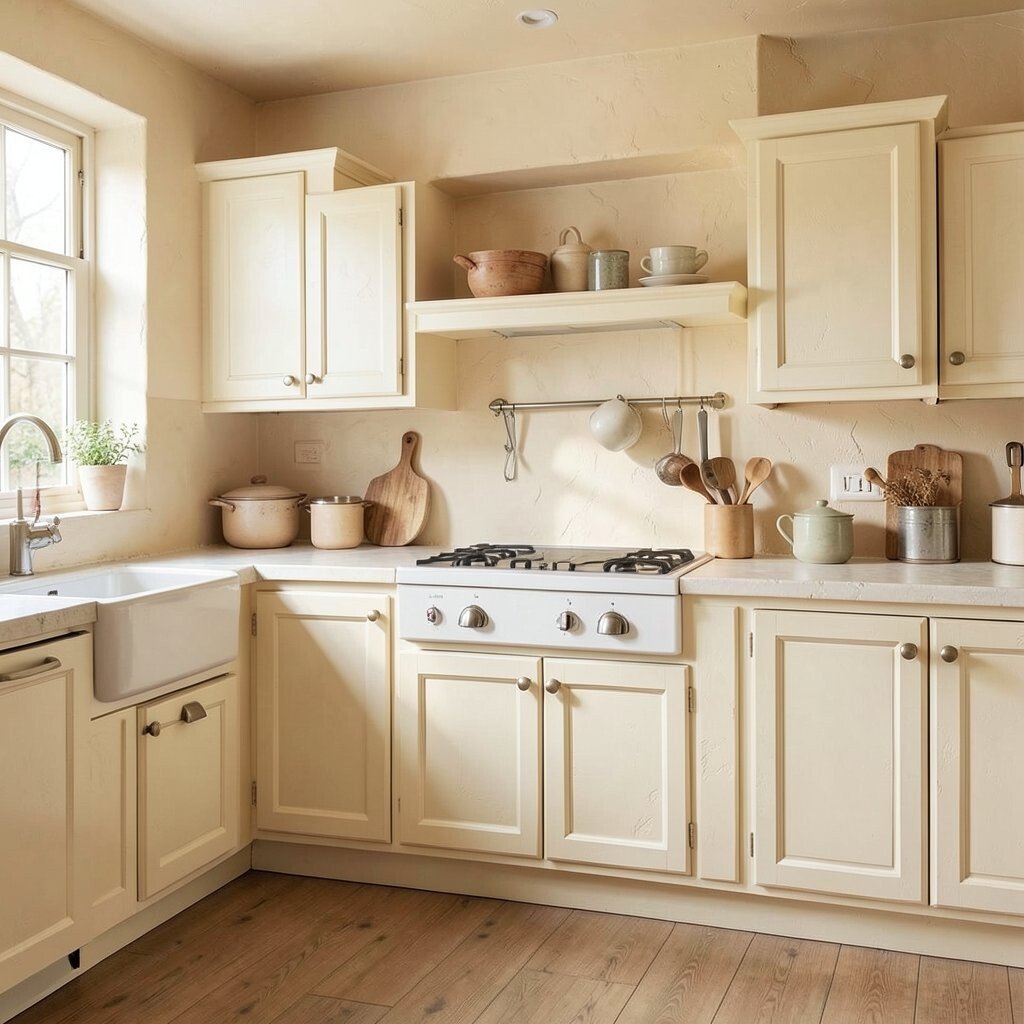
Warm Cream with a Handcrafted, Plaster Look Warm cream makes a kitchen feel like a gentle hug. It is the kind of tone that makes everything else look more inviting.
If you love rustic texture, choose a paint finish that mimics plaster. It can hide tiny imperfections and give walls that handcrafted feel.
Try cream for both walls and ceiling if your kitchen gets decent natural light. If you want more structure, use a deeper cream or light greige on cabinetry.
Add rustic lighting, like a cage pendant, to make the texture and color feel intentional. Style shelves with ceramic, linen, and natural wood trays.
Budget-wise, cream is easy because it matches many existing items. It also stays trendy because people keep leaning toward “soft neutral warmth” for kitchens that feel timeless. If you want to upgrade without big costs, replace just the faucet and drawer pulls to complete the look.
-
10. Olive Green with Black and White Contrast
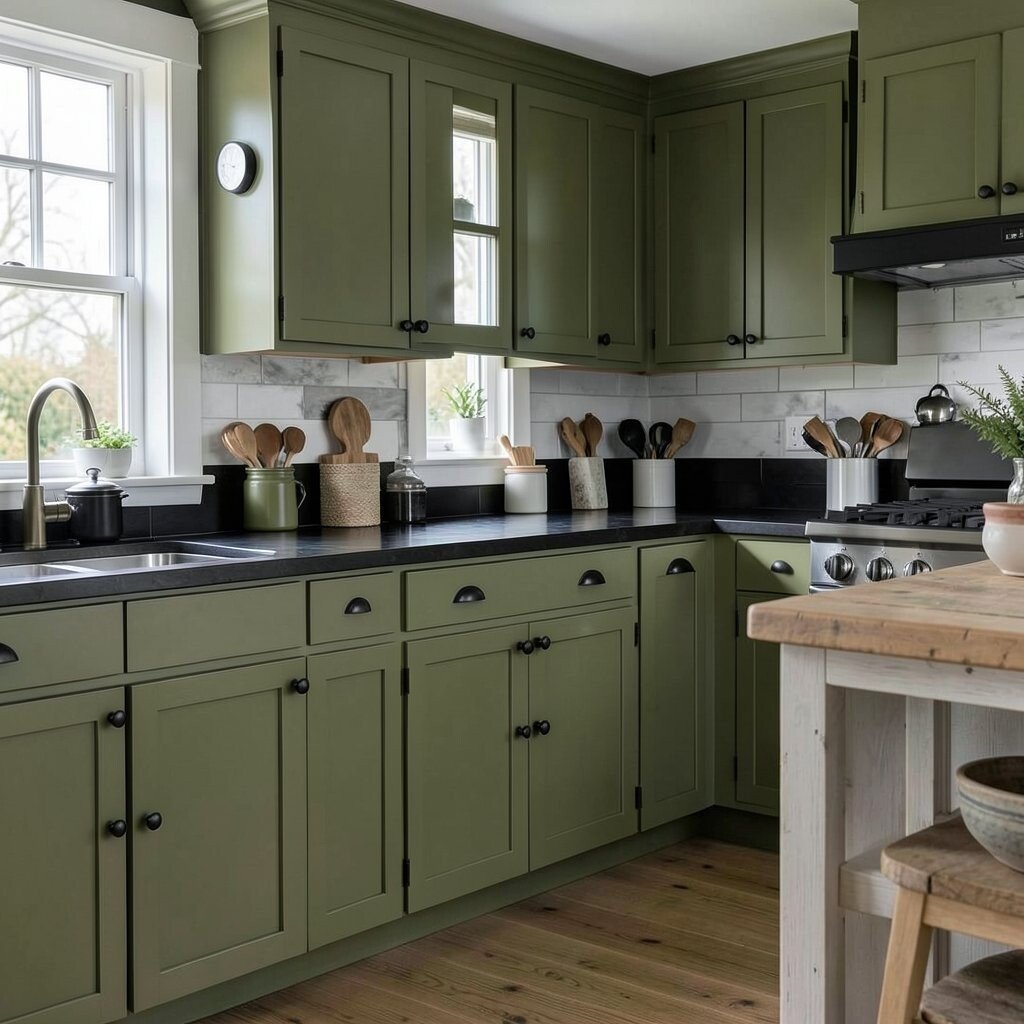
Olive Green with Black and White Contrast Olive green adds a grounded, earthy vibe that feels perfect for rustic cooking. It looks especially nice when you pair it with black hardware and warm light.
This color is unique because it can feel both traditional and a little bold. It also makes natural materials like wood, rattan, and clay pottery look richer.
For a smart setup, paint cabinets olive and keep walls in a creamy white. Another option is olive on a pantry door or a single wall, with the rest neutral.
If you want personalization, add a backsplash with subtle green flecks or earthy marbled patterns. Use black framed mirrors or a black towel bar to sharpen the look.
Cost considerations: olive can be saved by painting only the most visible surfaces first, like the cabinet fronts. Right now, olive tones are popular because they feel grounded and calm, especially in rustic and modern-rustic hybrids.
-
11. Mustard Yellow for a Sunny, Vintage Kitchen Mood
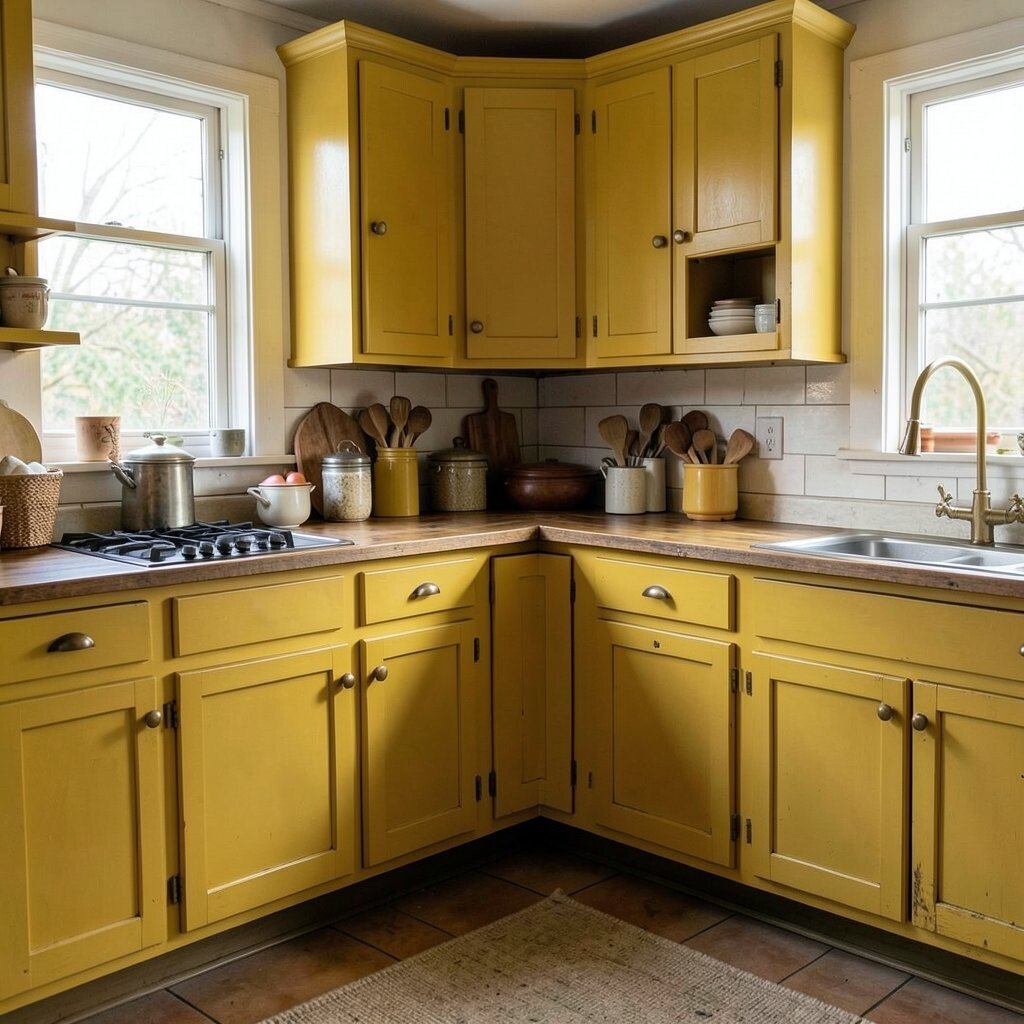
Mustard Yellow for a Sunny, Vintage Kitchen Mood Mustard yellow is like sunlight in paint form. It makes rustic kitchens feel cheerful, especially in the morning.
Because mustard is earthy, it still fits rustic design instead of feeling too playful. It also pairs well with dark wood and warm metals like brass.
Try mustard on a small area, like the backsplash wall, a set of lower cabinets, or a few upper-door panels. If you love it, you can expand later as you see how the color behaves in your lighting.
To keep it balanced, surround mustard with warm neutrals and natural textures. Add vintage-style canisters, a patterned curtain, and a wood spice rack to make it feel curated.
Cost-wise, mustard can be a smart budget move when used as an accent. This shade fits current trends because people are craving warm vintage tones that feel cozy rather than neon.
-
12. Smoky Green-Gray for a Moody Rustic Look
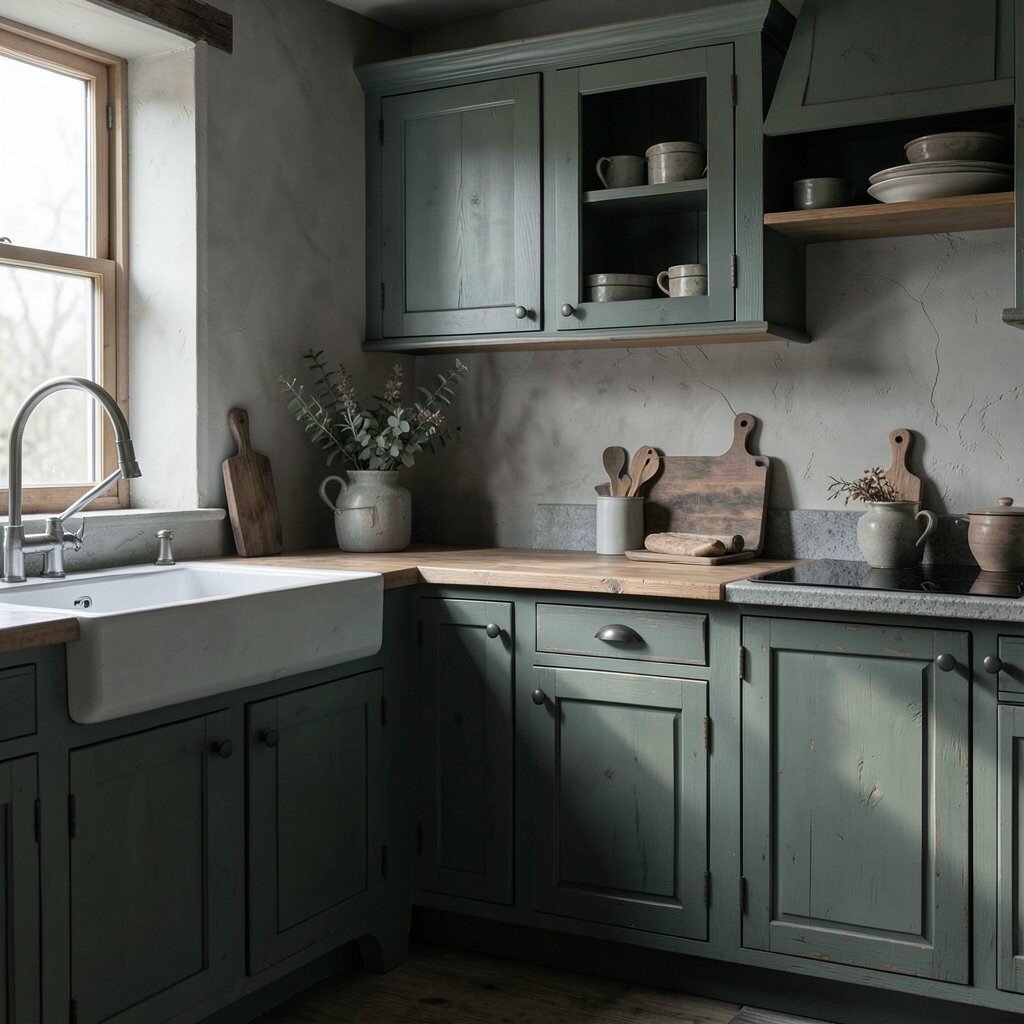
Smoky Green-Gray for a Moody Rustic Look Smoky green-gray is a moody color with a soft edge. It adds depth without feeling harsh, and it blends beautifully with gray stone textures.
This color is unique because it can shift slightly depending on time of day. In bright light it looks softer, and in evening light it turns cozy and rich.
Use it on walls for a “quiet cabin” feel, or paint the island to create a focal point. Pair smoky tones with warm wood and light cream trim so the room stays welcoming.
For tips, choose lighting with a warm color temperature to keep the green-gray from looking cold. Add natural baskets and a few ceramic pieces in muted white and tan.
Cost considerations are helpful here because paint can refresh the space without changing fixtures. This trend of moody earth colors is still growing since many homeowners want kitchens that feel calm after a busy day.
-
13. Golden Sand and Burnished Beige
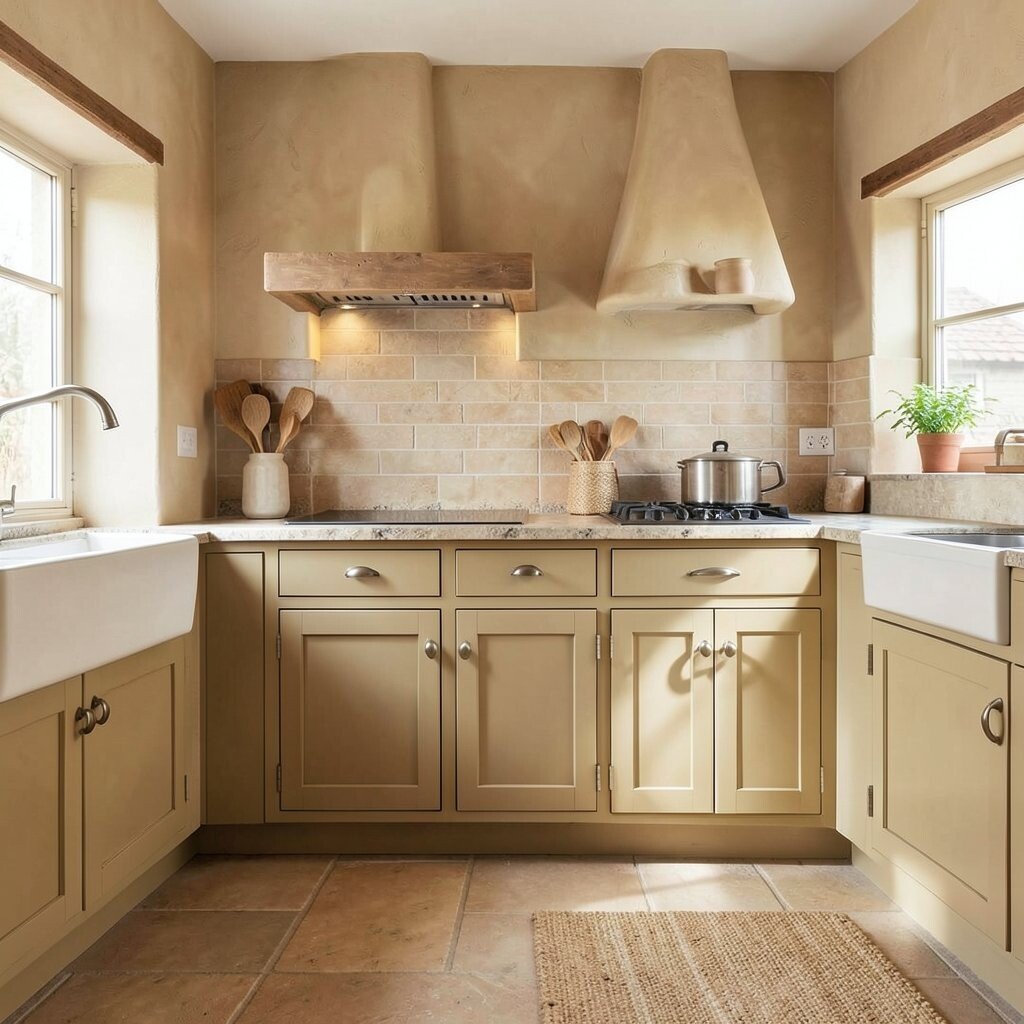
Golden Sand and Burnished Beige Golden sand and burnished beige feel like sun on a countertop. They make rustic kitchens look warm, welcoming, and gently polished.
This color is unique because it feels neutral, yet still has a sunny undertone. It brings out the beauty of wood grain and makes metal finishes look more flattering.
Try golden sand for walls and use deeper brown or black on hardware. You can also choose burnished beige for cabinets if you want a softer alternative to cream.
Personalization ideas include layering with warm patterns, like small checks or woven stripes, on seat cushions and dish towels. Add a wood butcher block or open shelving to highlight texture.