
Your kitchen can look like a scrapbook, but still work like a dream. The secret is knowing how to make busy beauty feel calm.
When you mix styles the right way, every corner starts telling you a story.
-
1. Eclectic doesn’t mean messy
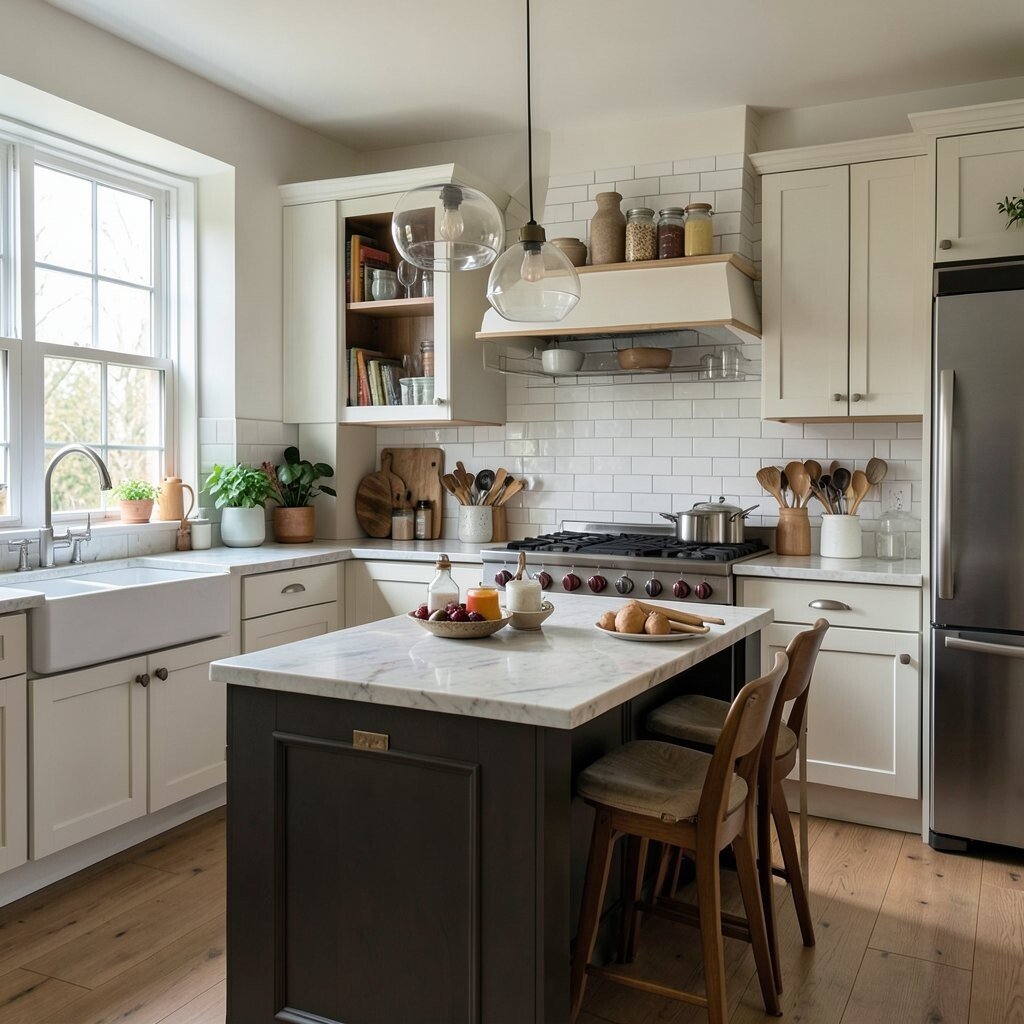
Eclectic doesn’t mean messy Many people think eclectic kitchens are random, but they can be highly planned. You can spot the calm even in bold patterns and mismatched finishes.
Try picking one “anchor” color, like warm white, soft gray, or deep olive, and let other items play around it. Then aim for visual balance by repeating shapes, such as rounded cabinet pulls and curved light shades. A simple rule helps: mix only within a shared mood, like cozy farmhouse plus vintage touches, or modern clean lines plus old-world tiles.
When the kitchen feels organized at a glance, you get the best benefits: easier cleaning, smoother cooking, and less stress when guests come over. If you love variety, start with small swaps, like a runner rug or a set of dish towels, before changing bigger things. Plan a “style anchor” first, and the rest will fall into place more easily.
-
2. Your backsplash is the referee
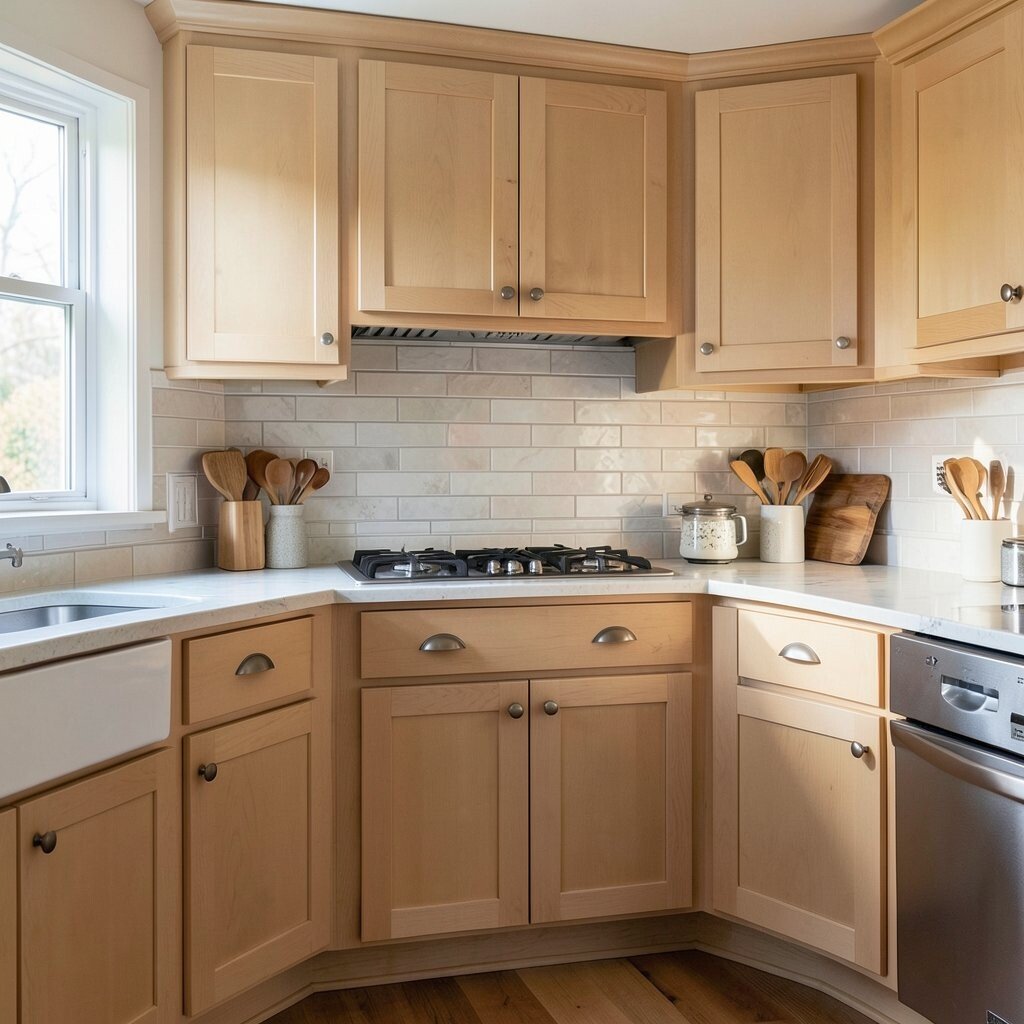
Your backsplash is the referee The backsplash often acts like a referee between different styles. It can visually connect metal, wood, stone, and color so the room stops feeling like a patchwork.
In a truly eclectic kitchen, you might see patterned tile beside sleek cabinets, and the backsplash is what ties those worlds together. Consider repeating the backsplash pattern in a small way elsewhere, like on a framed print, a ceramic canister, or a drawer organizer.
If you want a budget-friendly move, pick a peel-and-stick tile sample first to test the look. This helps you avoid wasting money on a huge change that doesn’t feel right. Trends right now include handmade-looking tiles, earthy mosaics, and glossy “still-life” colors that catch light at different times of day.
-
3. Lighting can make mismatches look intentional
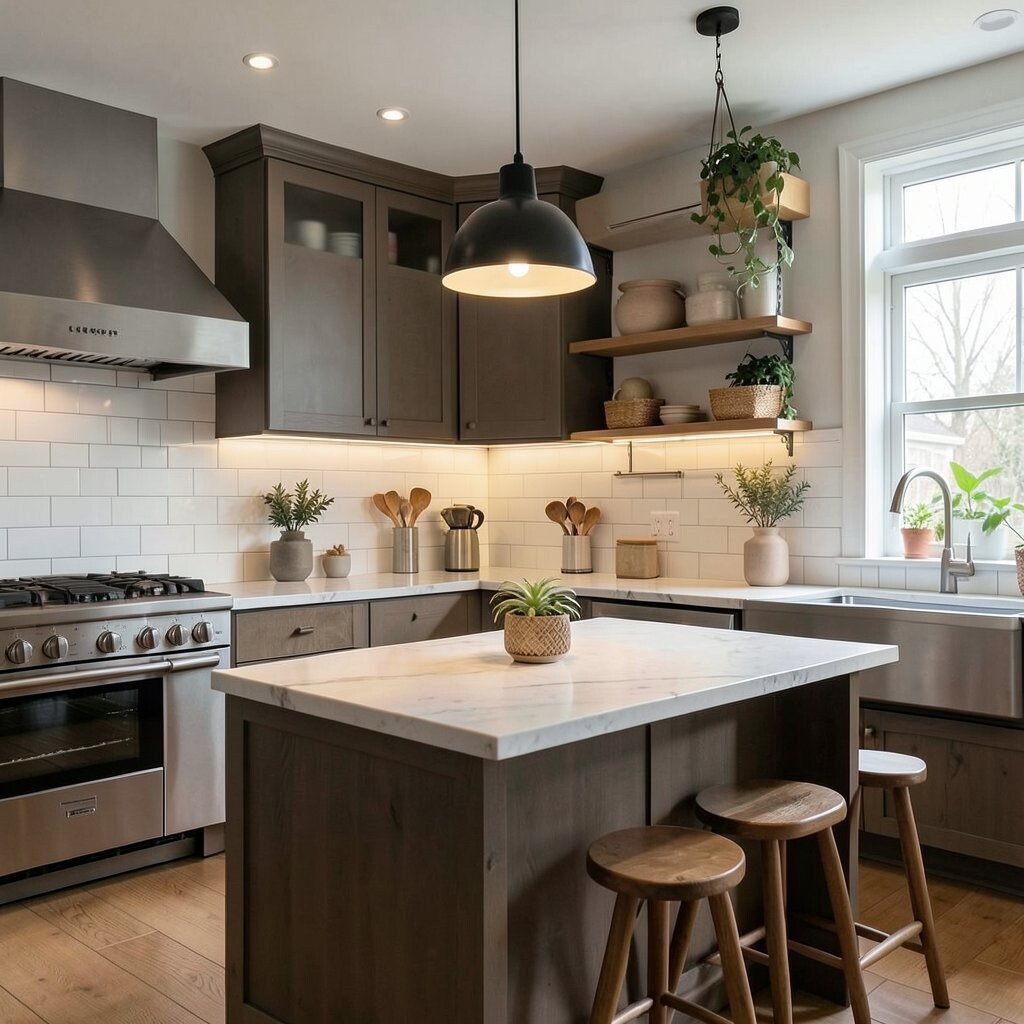
Lighting can make mismatches look intentional Nothing hides kitchen awkwardness like good lighting. A warm lamp glow can make two different metals look like they belong together.
Try layering light: overhead lighting for tasks, under-cabinet lighting for cooking, and a decorative fixture for mood. When the light is flattering, you stop noticing tiny differences and start noticing the overall vibe.
If you have mixed hardware, use one finish on the light fixture to “collect” the room. You could choose a brushed brass pendant, a black lantern style, or a glass shade that softens busy surfaces. This gives you a benefit you can feel every day: easier meal prep and a kitchen that feels friendly in the evening.
To personalize, look for shades with subtle textures, like ribbed glass or linen-like fabric. Even small changes can cost less than replacing cabinets, and you still get big visual payoff. Many people are choosing warmer bulbs and dimmer switches now, because it helps the whole kitchen feel more welcoming.
-
4. Cabinets don’t have to match to feel finished
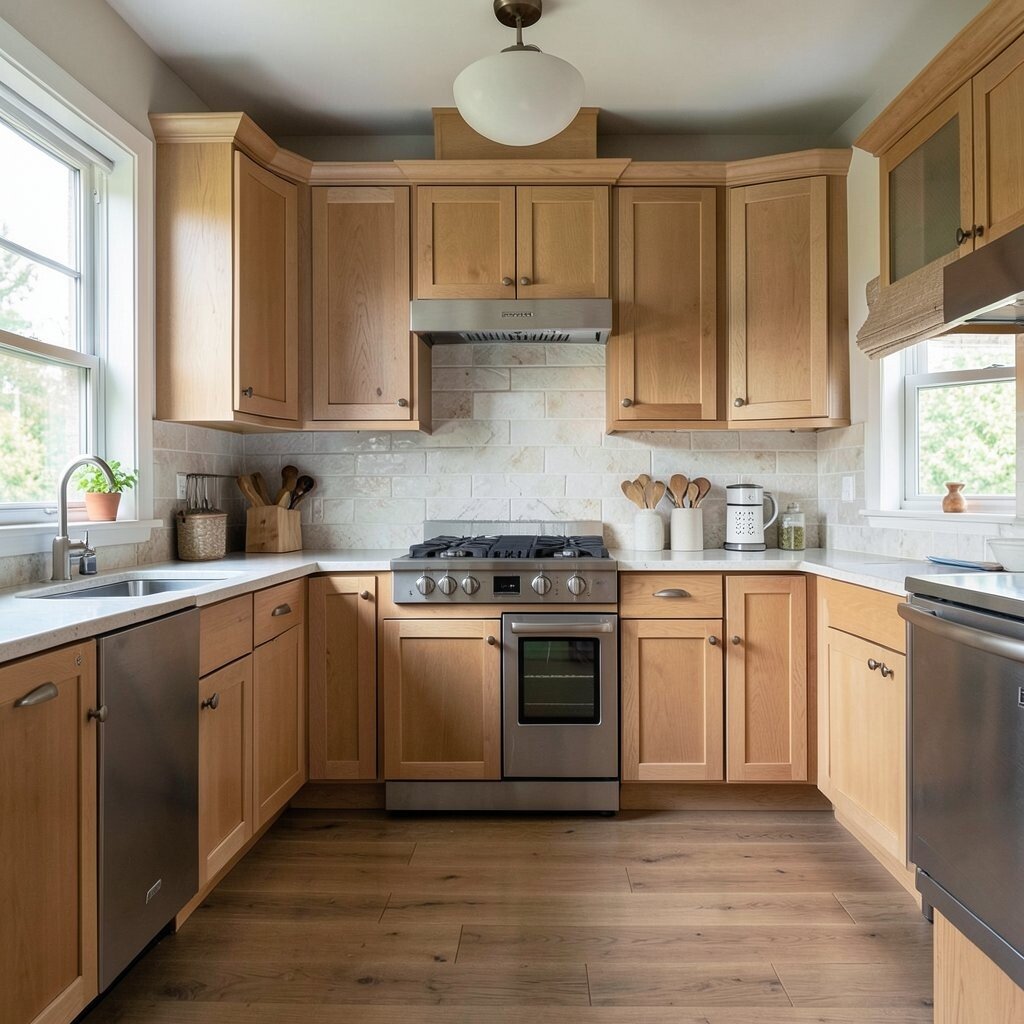
Cabinets don’t have to match to feel finished You can mix cabinet colors, but your kitchen needs a finished “through-line.” A common trick is to keep cabinet styles consistent while changing color or hardware accents.
For example, you could use one set of cabinets in a soft cream and another in a muted sage. Then bring them together with matching crown molding or the same shelf brackets. This helps the room look designed, not accidental, while still showing your personality.
-
5. Countertops can carry the whole theme
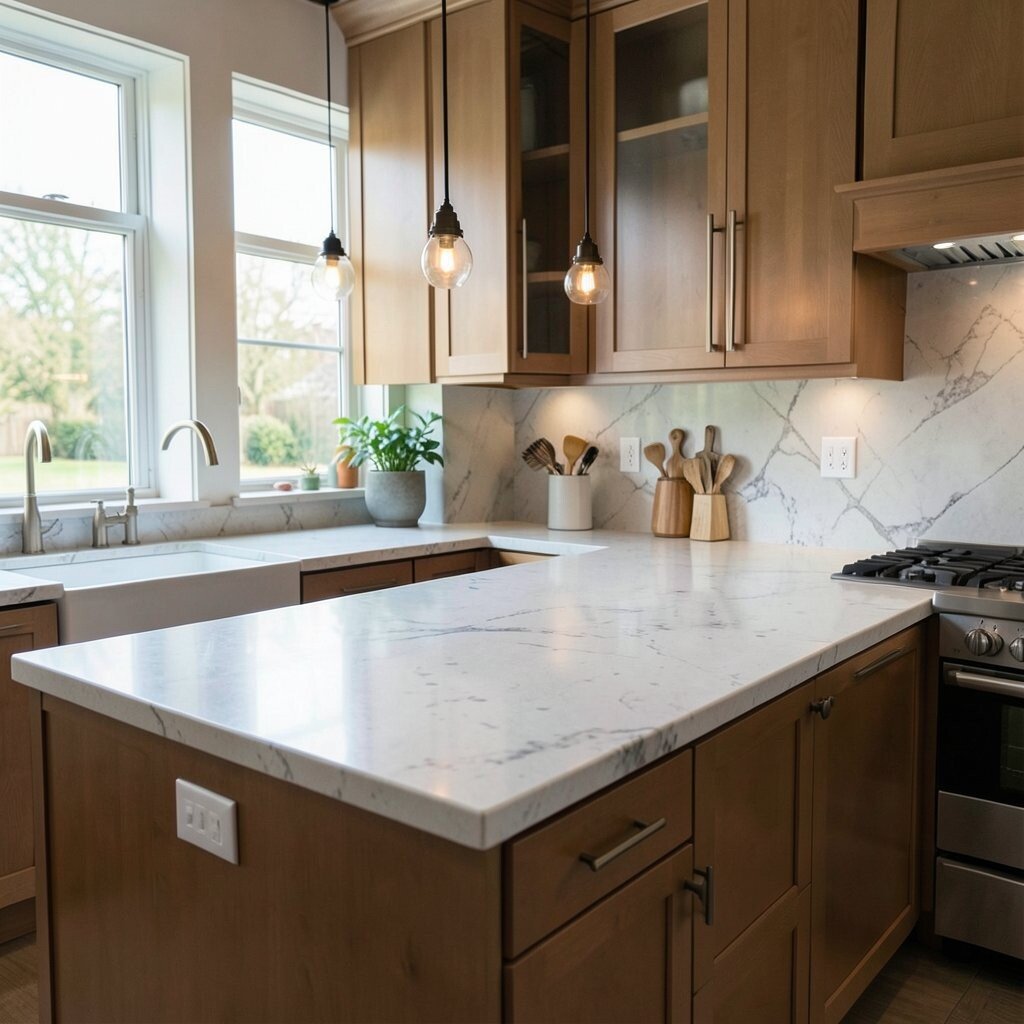
Countertops can carry the whole theme Countertops are the biggest surface your eyes land on, so they quietly set the tone. A natural slab look, like butcher block or stone-look laminate, can blend many styles at once.
Choose countertops that match the “story” you want. If you like a vintage feel, wood and warm tones feel comforting. If you want a modern edge, go for clean lines and lighter surfaces that reflect light well.
For personalization, add a cutting board wall moment or hang a few utensils in a matching theme. Just keep it neat, so the kitchen stays easy to use. Cost matters too: if stone is too pricey, consider durable laminate with a realistic pattern, or upgrade the high-visibility sections first.
-
6. Your floor sets the pace
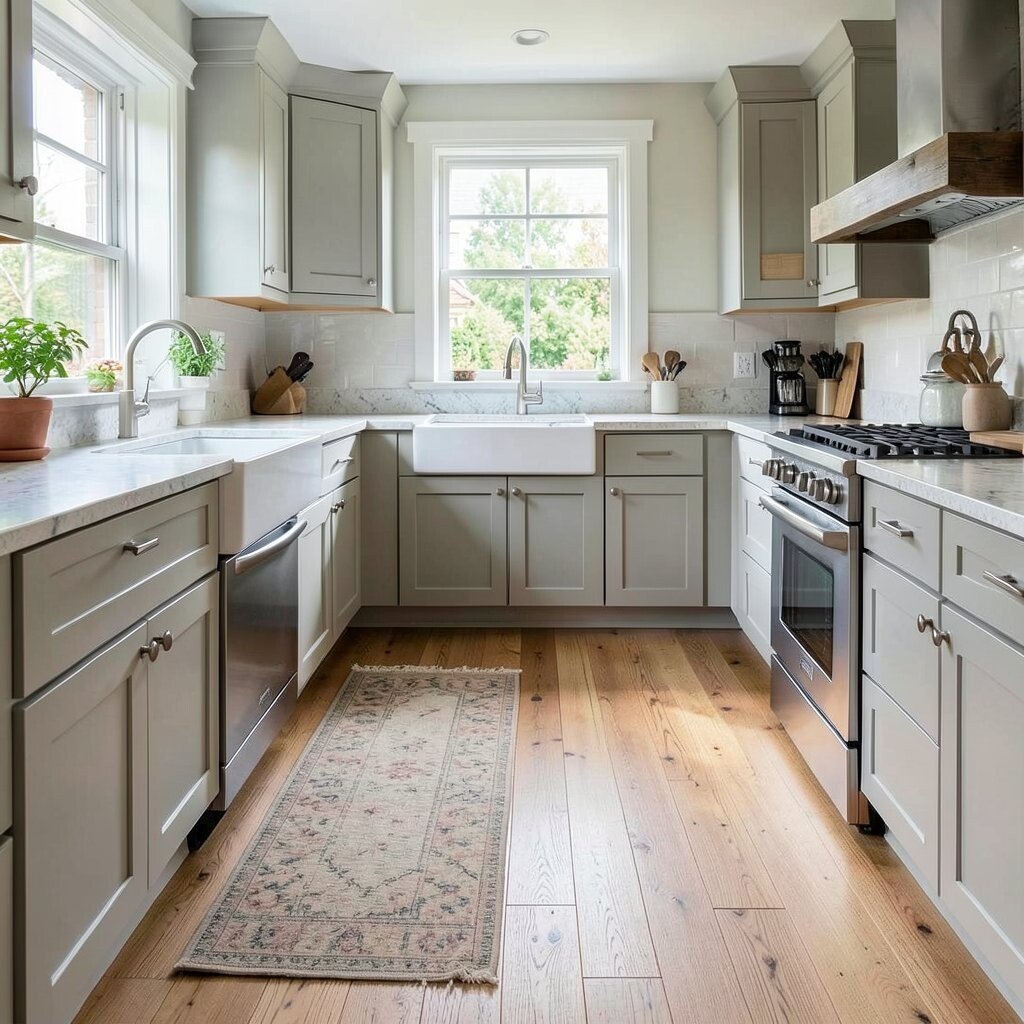
Your floor sets the pace Flooring can either calm an eclectic kitchen or make it feel chaotic. A simple, steady floor makes patterns on walls and furniture feel fun instead of loud.
If you already have mixed decor, stick to one floor direction and one finish level. Wood floors, matte tile, or wide-plank look vinyl can all work, especially when your grout lines are consistent and not too busy.
Want a practical upgrade? Add a washable rug runner near the sink and cooking zone. It gives you comfort underfoot and helps protect the floor, and it’s also an easy place to bring in your favorite colors. Right now, durable textured floors and vintage-style pattern tiles are showing up a lot, because they look cozy and hide everyday wear.
When you pick flooring, think about benefits first: easy sweeping, stain resistance, and how the space feels while you cook. Then think about your budget: sometimes a rug upgrade is the smartest cost move that still changes the look.
-
7. Open shelves need rules, not clutter
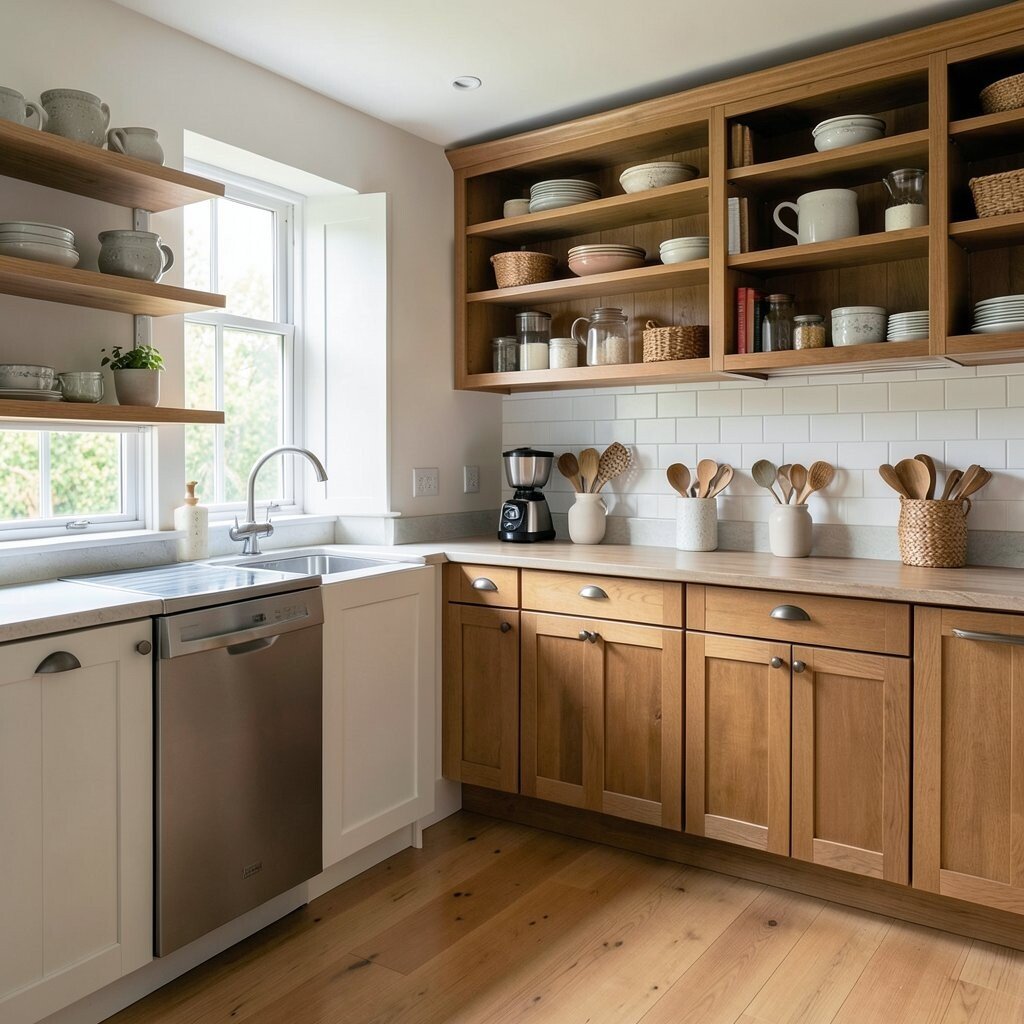
Open shelves need rules, not clutter Open shelves are a hallmark of eclectic kitchens, and they can look amazing. But they only stay gorgeous when you treat them like a gallery.
Arrange items in groups of similar height, like tall vases with short bowls, so shelves look intentional. Mix materials too, such as ceramics, woven baskets, and glass jars, so your shelves show texture and personality.
Try using labels or matching lids to keep jars neat and practical. This gives you the benefit of faster cooking, because ingredients are easy to grab. If you’re on a budget, start with one open shelf section and fill it gradually with thrifted finds and new essentials.
-
8. Thrifted pieces should be “ready” for the kitchen
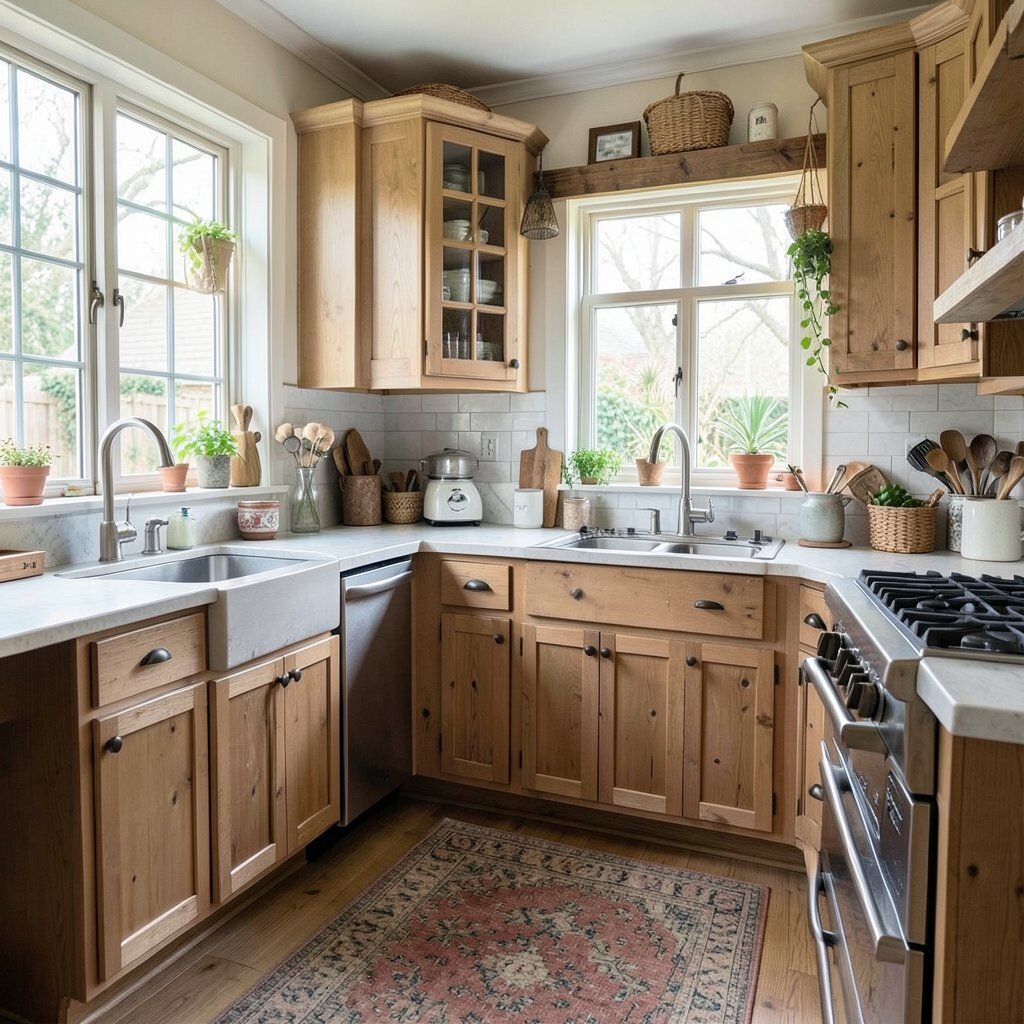
Thrifted pieces should be “ready” for the kitchen That cute vintage pitcher might look perfect, but kitchen use is different from living-room décor. Before you add anything, check it for food-safe materials and make sure it’s not cracked or stained.
Look for solid glass, glazed ceramic, and sturdy metal that can handle heat and moisture. If you want to display something that isn’t kitchen-safe, use it as décor, like a handle-up utensil pot or a wall hanging tray.
-
9. Your spice station can be a style moment
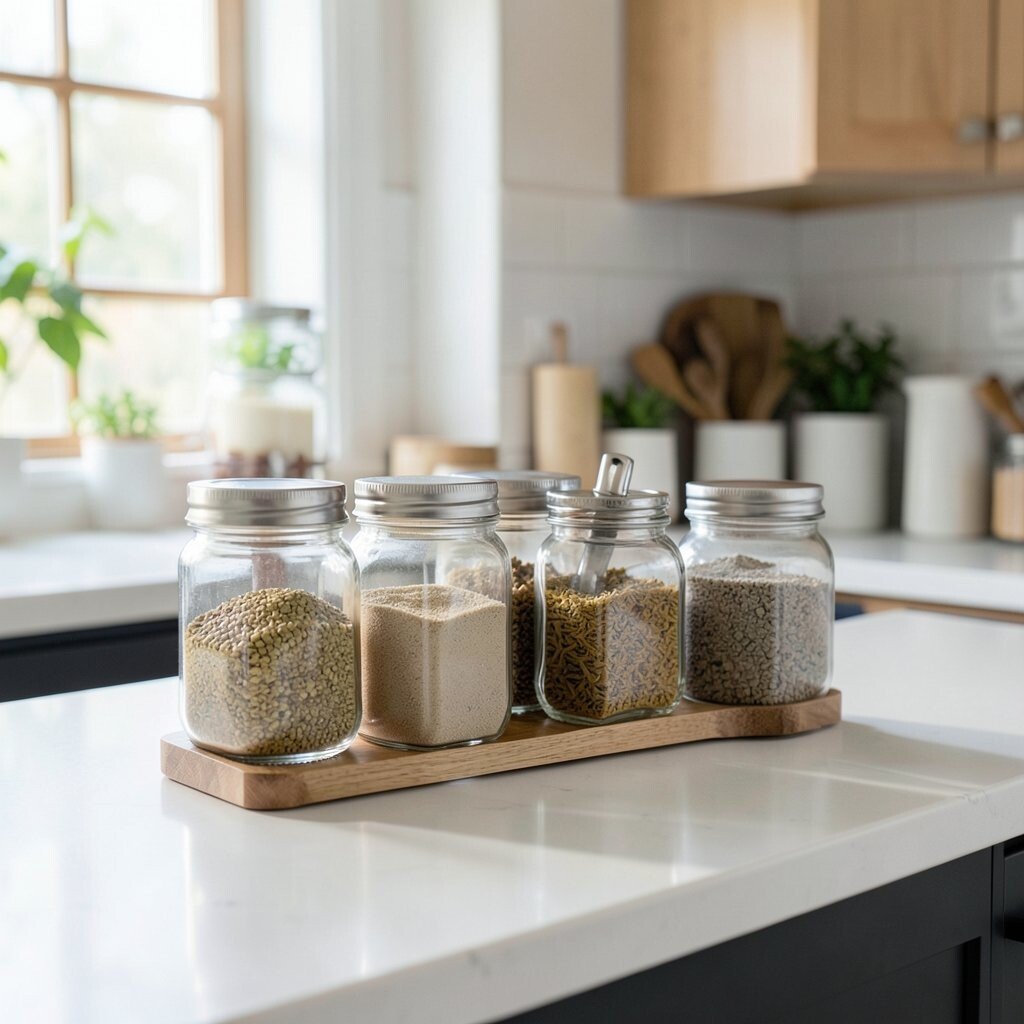
Your spice station can be a style moment Spices often get shoved into cabinets, but you can turn them into a visual treat. A tidy spice rack can look like art when labels and jars match the vibe.
Try glass jars with matching lids for a clean, modern look, or choose vintage-style tins for a playful, old-world feel. Add a small tray or a wooden board underneath to catch spills and keep everything easy to wipe.
This is a huge benefit for busy cooks: you can find what you need fast, and you waste less food. For personalization, create a color pattern with your jar lids, or print custom labels in your favorite font style. Cost-wise, you can start with only the jars you use most, then grow your collection over time.
Right now, many kitchens are leaning into “organized beauty,” where the functionality is part of the style. Your spice station can be that moment, especially if you keep it clean and updated.
-
10. Mixing metals is normal—if you repeat them
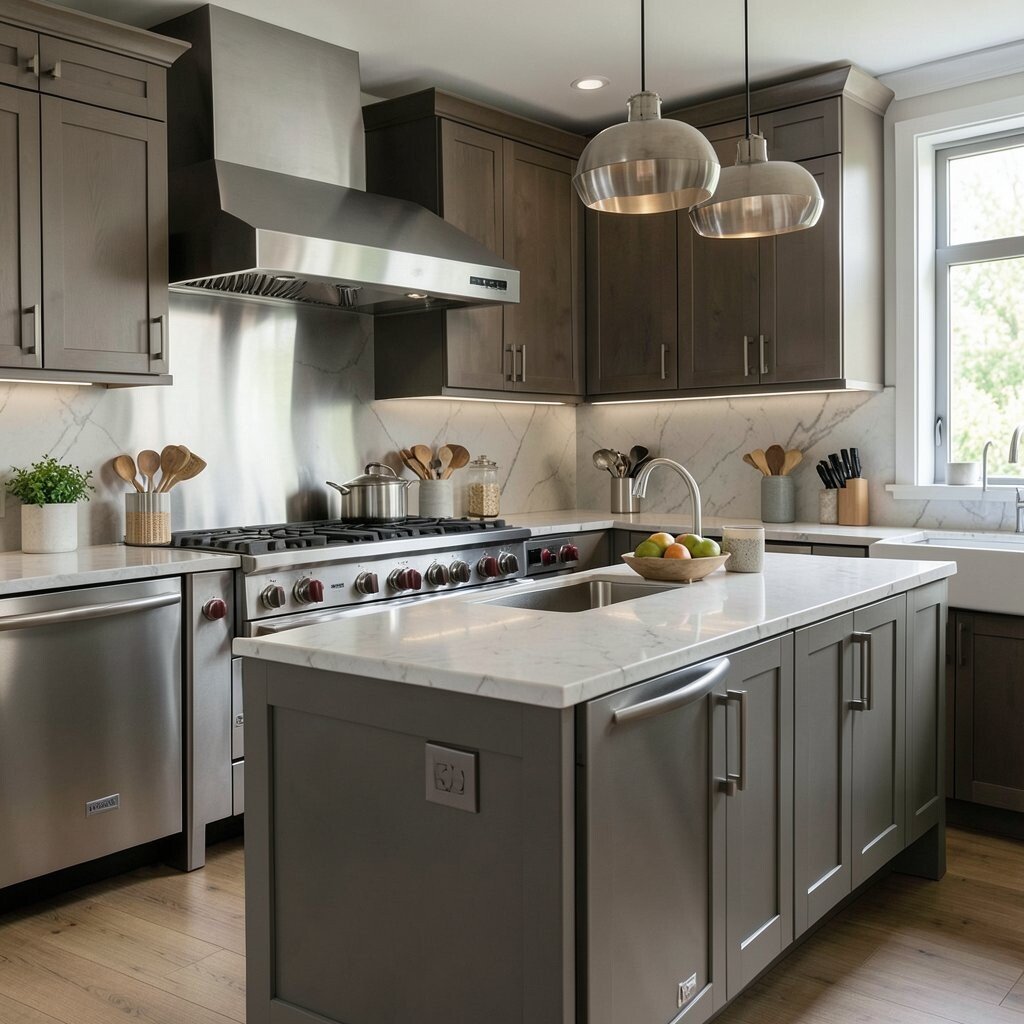
Mixing metals is normal—if you repeat them People worry about mixing brass with chrome or black with nickel, but you can absolutely do it. The trick is repetition, not perfection.
Pick two or three metal tones and repeat them in small places. For instance, if you have brass cabinet pulls, add brass in a faucet accessory, a utensil holder, or the chain of a pendant light. Repetition makes the mix feel like a choice, not a mistake.
Another benefit is flexibility: you can swap one fixture later without needing to replace everything else. If cost is a concern, focus on high-impact metal items first, like the faucet and cabinet hardware, then add smaller accents gradually. This trend is popular now because it feels warm, lived-in, and less “all one set” than older matching styles.
To personalize, bring in a metal that matches your favorite color, like copper with rust tones, or black with charcoal accents. Your kitchen will feel more like you the longer you live with it.
-
11. Textiles are your easiest style switch
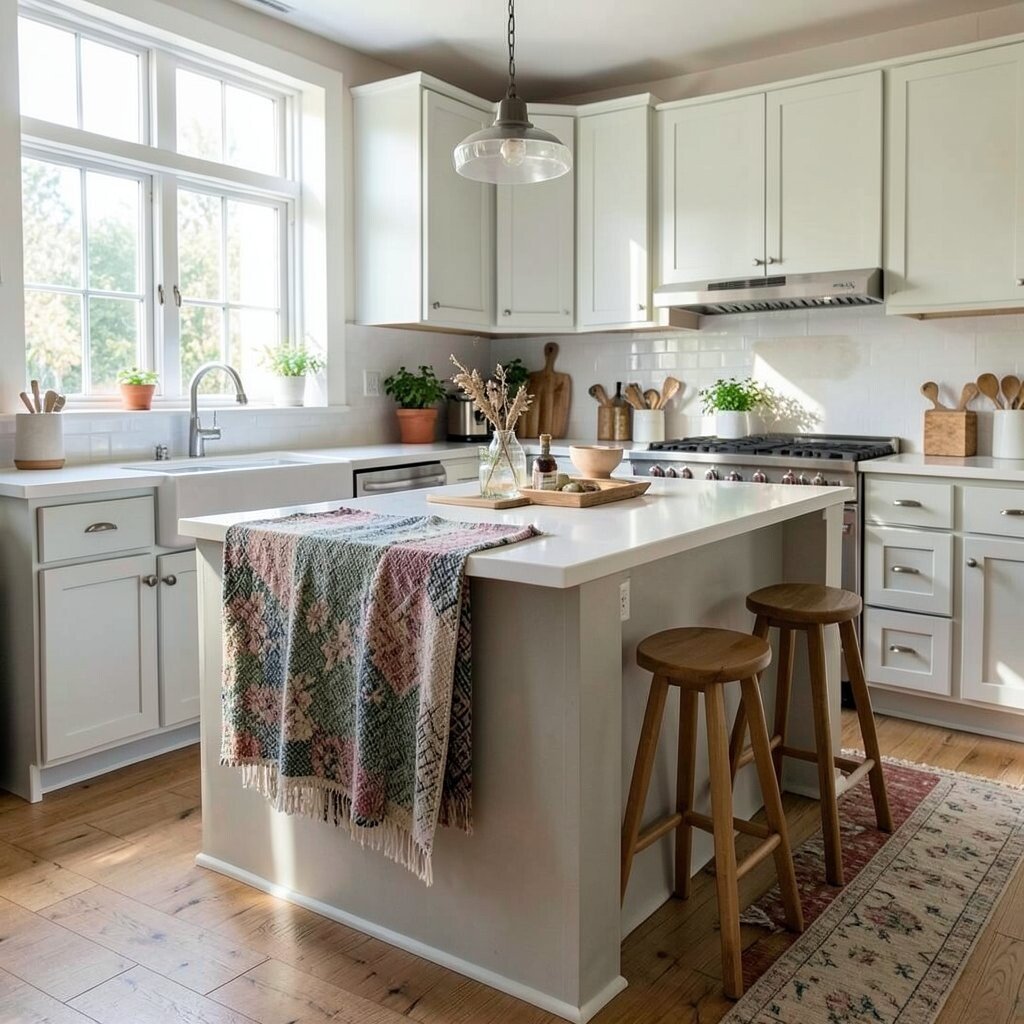
Textiles are your easiest style switch Textiles are like color paint, but they change fast and cost less. A patterned towel, a rug, or a seat cushion can set the mood without major work.
When you have eclectic dishes and a busy wall, use textiles to soften the space. Choose one strong pattern and balance it with plain textures, like linen or cotton.
If you love seasonal style, this is your best friend. Switch cabinet linens and rug colors for spring, fall, or winter, and your kitchen feels new without replacing anything permanent. Keep in mind benefits too: durable kitchen fabrics save you from constant washing and stubborn stains.
-
12. Wall art should match your cooking habits
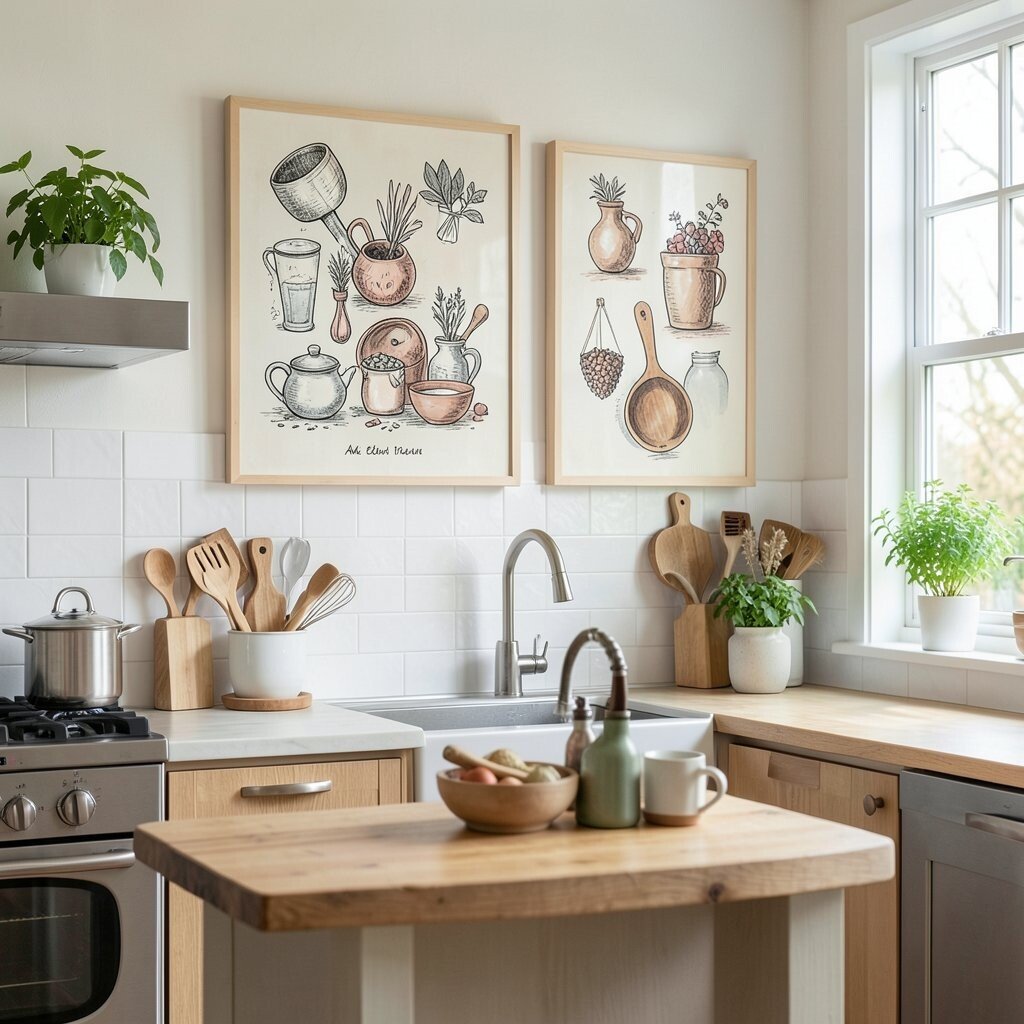
Wall art should match your cooking habits Eclectic kitchens often include framed prints, hanging plates, or a gallery wall near the dining nook. But your wall choices should also fit real life, like splashes, steam, and hand traffic.
Pick art that is easy to wipe or place it where it won’t get hit by cooking splatter. Vinyl or laminated art can be a smart choice in busy homes. If you use ceramic plates, secure them well and keep them away from heavy heat sources.
To personalize, choose prints that connect to food memories, like markets you visited or herbs you grow. Cost can stay low by printing your own photos and using simple frames from a bargain store. Trends show people leaning into bold frames, vintage maps, and botanical themes because they feel playful and still calm.
-
13. A small “misfit” moment makes the whole kitchen feel alive
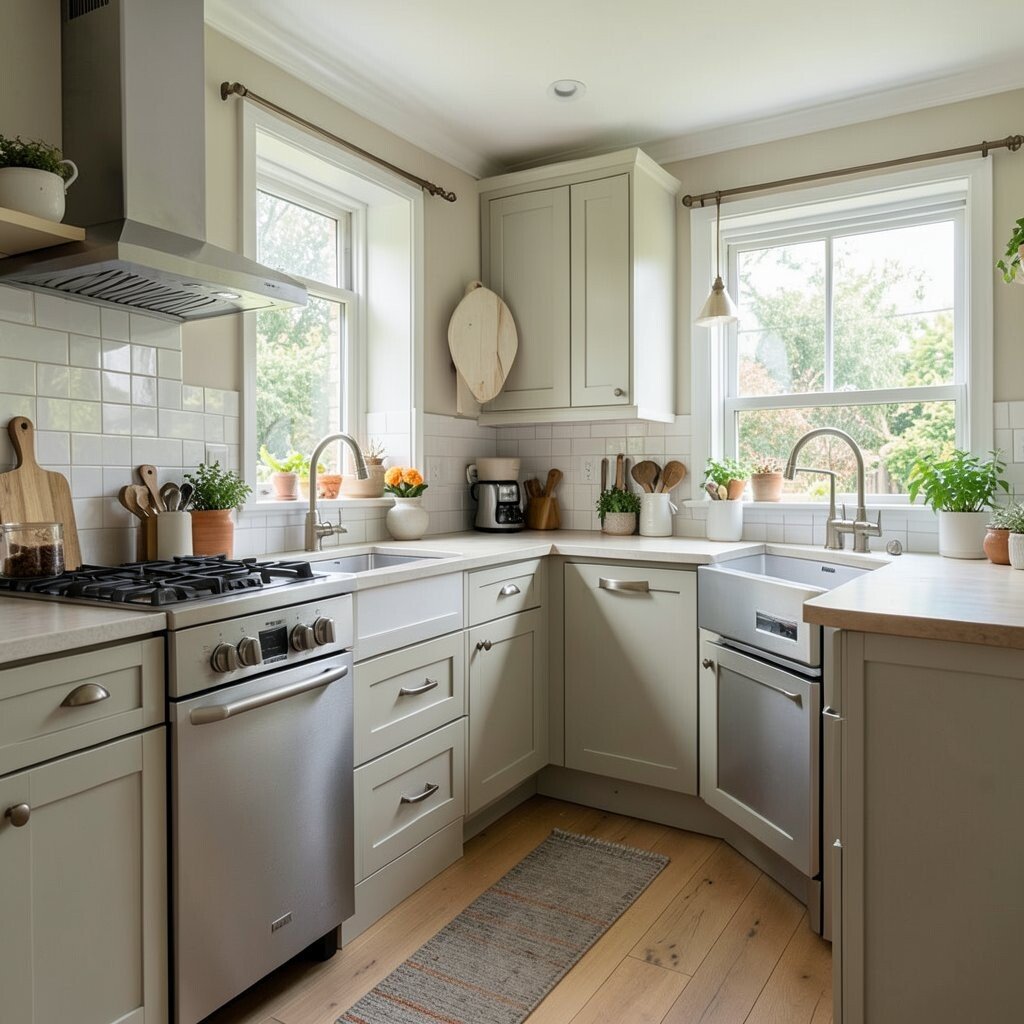
A small “misfit” moment makes the whole kitchen feel alive One surprising piece can make an eclectic kitchen feel intentional. Think of a mismatched chair at the table, a quirky light switch plate, or a single wall niche with a different style than the rest.
The key is that the misfit should connect through color or material. If everything is warm wood and cream, your “wild card” can be black iron, rust ceramic, or blue glass, as long as it links back to your anchor color.
This gives you a benefit beyond looks: your kitchen feels personal, and you’ll feel more proud of it every day. For cost, it’s also great because you can search for one special item at thrift stores, flea markets, or online marketplaces. And if you find something you love but it’s too expensive, wait for a sale or look for a similar shape in a different finish.
Right now, people love “character corners,” where one nook holds a thrifted item plus a few related accessories. Your misfit can be the star of that corner.
-
14. Storage is where eclectic kitchens really win
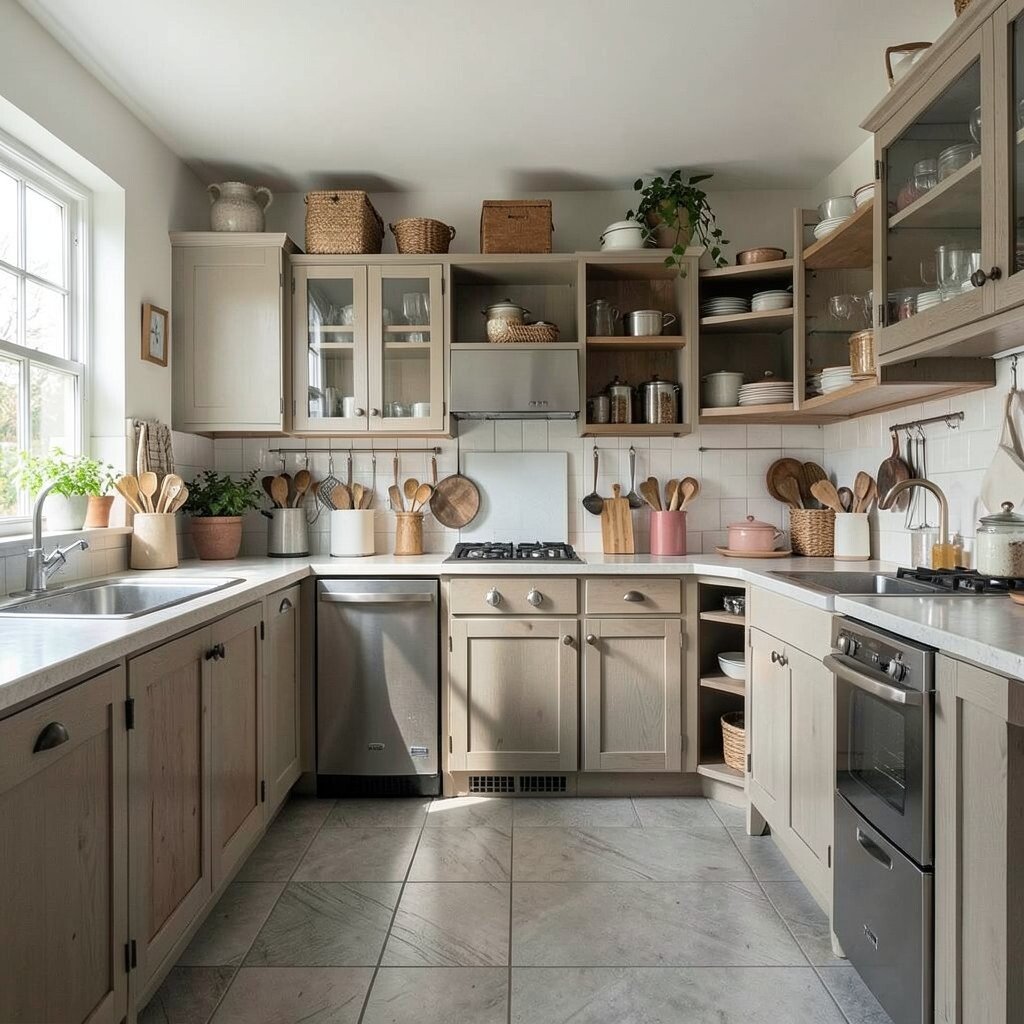
Storage is where eclectic kitchens really win When everything has a home, your kitchen stays beautiful longer. Eclectic kitchens can look “busy,” so smart storage keeps the busy parts contained.
Use baskets for odds and ends, drawer organizers for gadgets, and clear containers for staples. Even if your containers don’t match, keep them in one “family,” like all glass, all matte plastic, or all wood tones.
Try a hidden pantry approach: keep everyday items tucked away, and only show the items you want to use often. This is a great benefit for daily cooking because you spend less time searching. For personalization, add a chalkboard label area or a small rotating display on the counter, so you can change what people see.
-
15. Your eclectic kitchen will evolve—plan for that
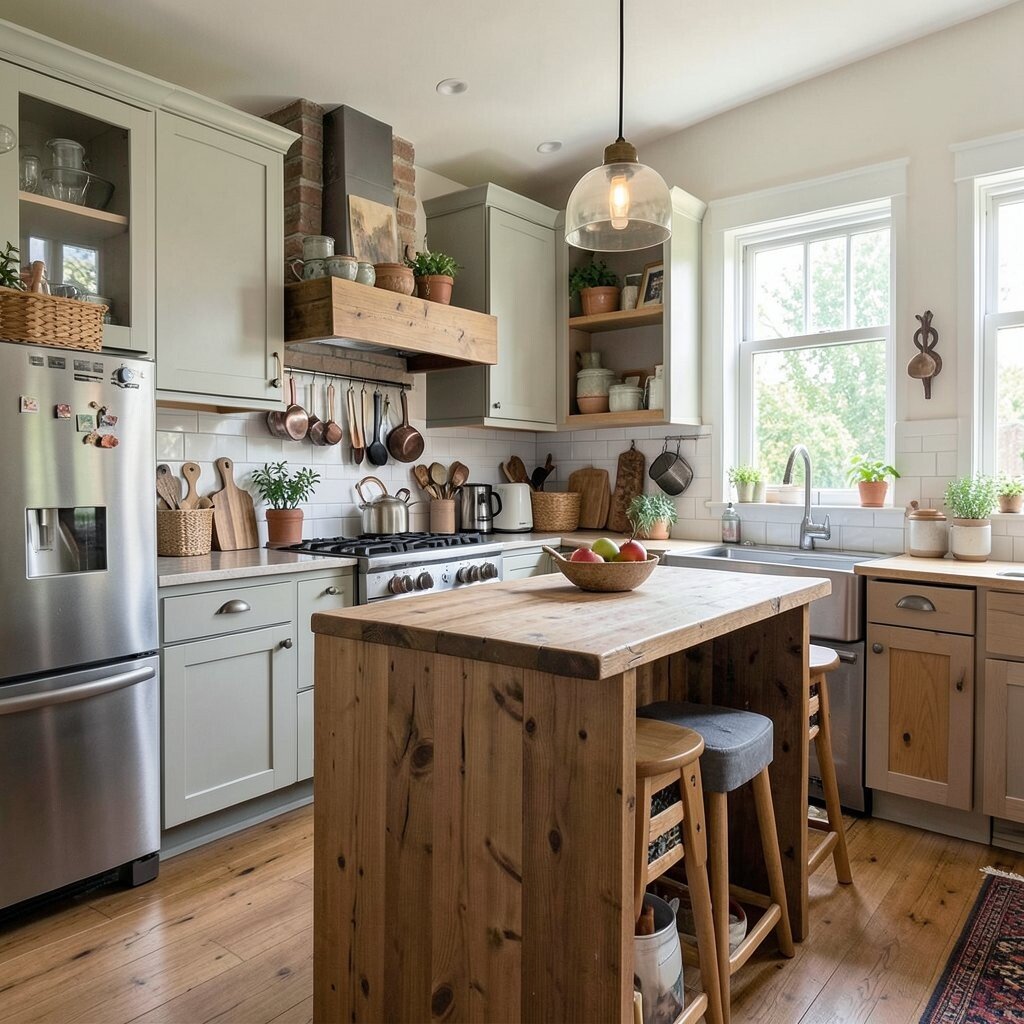
Your eclectic kitchen will evolve—plan for that The biggest secret is that eclectic kitchens are not finished on day one. They grow as your tastes grow, and you’ll keep finding pieces that fit better each time.
Make choices that are easy to update, like paint colors, cabinet hardware, removable wallpaper, and switch plates. When you can swap details without tearing everything apart, you stay flexible and excited.
To keep momentum, set a small “upgrade rhythm,” like one new jar set or one new light bulb color each month. That way you build a collection without feeling overwhelmed. Cost considerations matter here too, so choose upgrades that fix both function and style, like better drawer organizers or sturdier hooks for hanging utensils.
Also pay attention to current trends like warm minimalism, textured surfaces, and mixed materials, because they help your kitchen look fresh. But always trust what you enjoy looking at, not what the room is supposed to be.
Your eclectic kitchen should feel like a lived-in favorite place, not a showroom. When you plan for change, it stays lovable for years.