
Open concept spaces can feel warm and welcoming when the details line up just right. Small changes can make the kitchen and dining area feel like one cozy home base.
You can keep the open layout but still create pockets of comfort, texture, and friendly light.
-
1. Warm wood accents with matching dining chairs
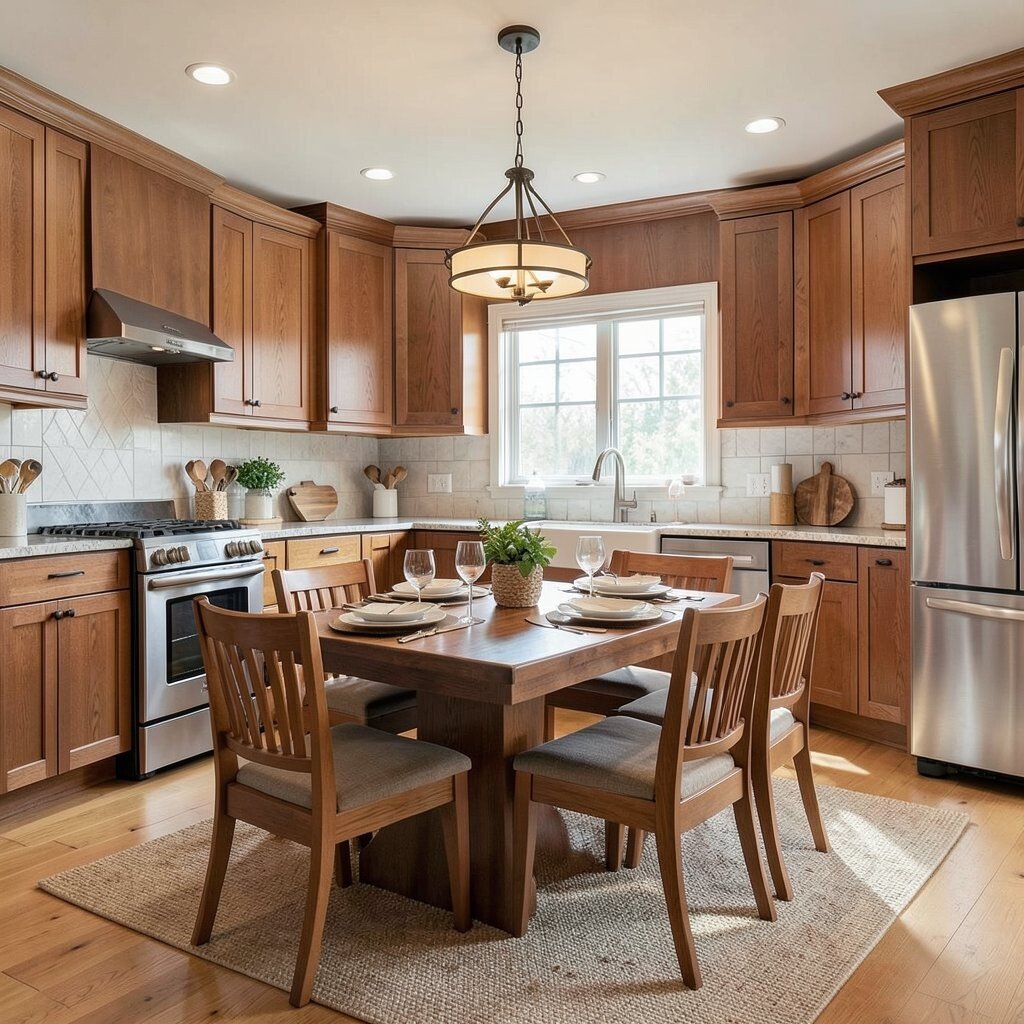
Warm wood accents with matching dining chairs Choose dining chairs with the same wood tone as your kitchen cabinets or open shelves. When the colors “talk” to each other, the whole room feels calm and put together.
For a cozy look, go for medium or honey wood, and consider a soft fabric seat cover in a neutral shade. You’ll enjoy an easier visual flow, and guests will feel instantly comfortable. If budget is tight, swap chair seats with slipcovers instead of buying new chairs, and add matching wood serving trays for a coordinated touch.
-
2. Layered lighting: pendant over dining plus under-cabinet glow
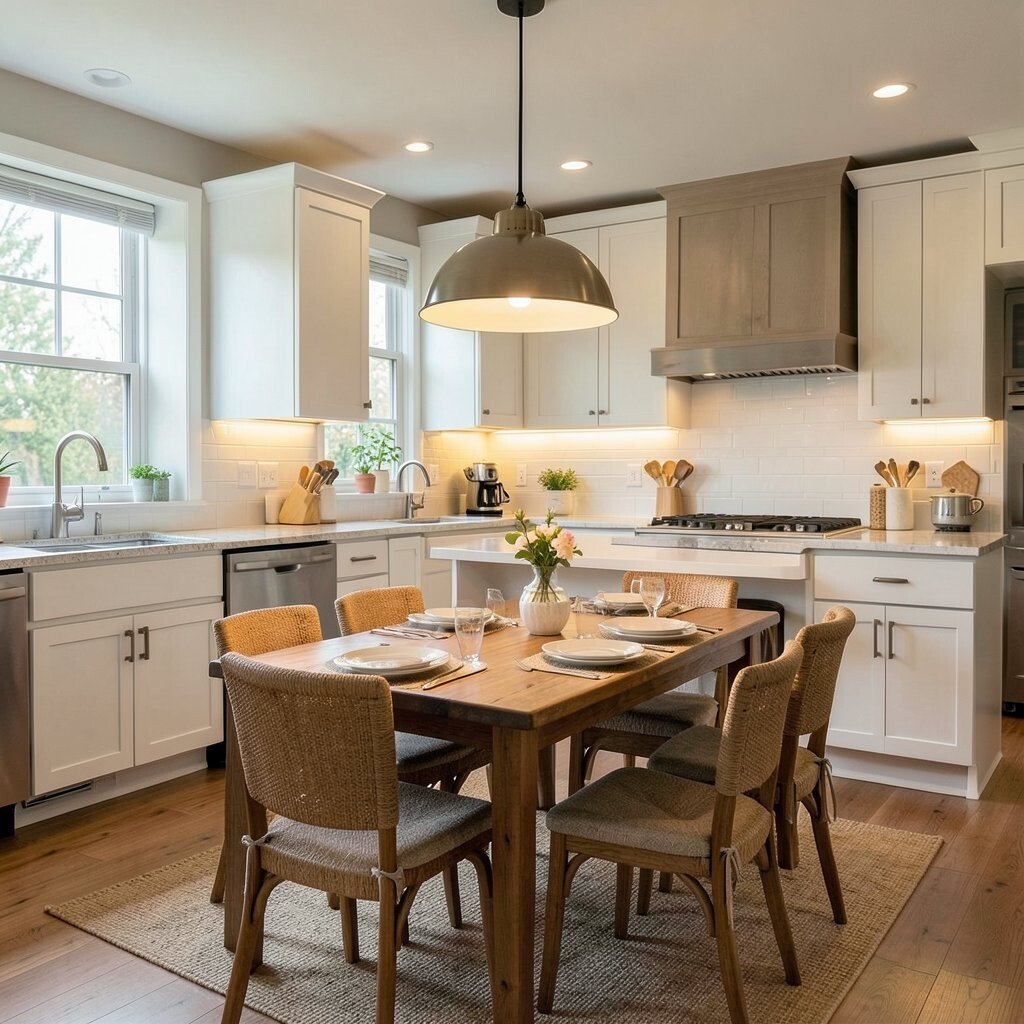
Layered lighting: pendant over dining plus under-cabinet glow Hang a pendant light above the dining table, then add under-cabinet lights under the kitchen counter. This creates a “day to night” feel without changing your layout.
Use warm bulbs, like 2700K, to make everything look inviting and gentle on the eyes. You’ll notice benefits right away: fewer harsh shadows and more cozy evenings at home. For cost, start with affordable LED strip kits for under-cabinets and choose a simple pendant that you can upgrade later.
To personalize, pick a pendant shade shape that fits your style—rattan for beachy warmth, glass for clean shine, or fabric for a soft glow.
-
3. Create a soft “threshold” with a low console or open shelving
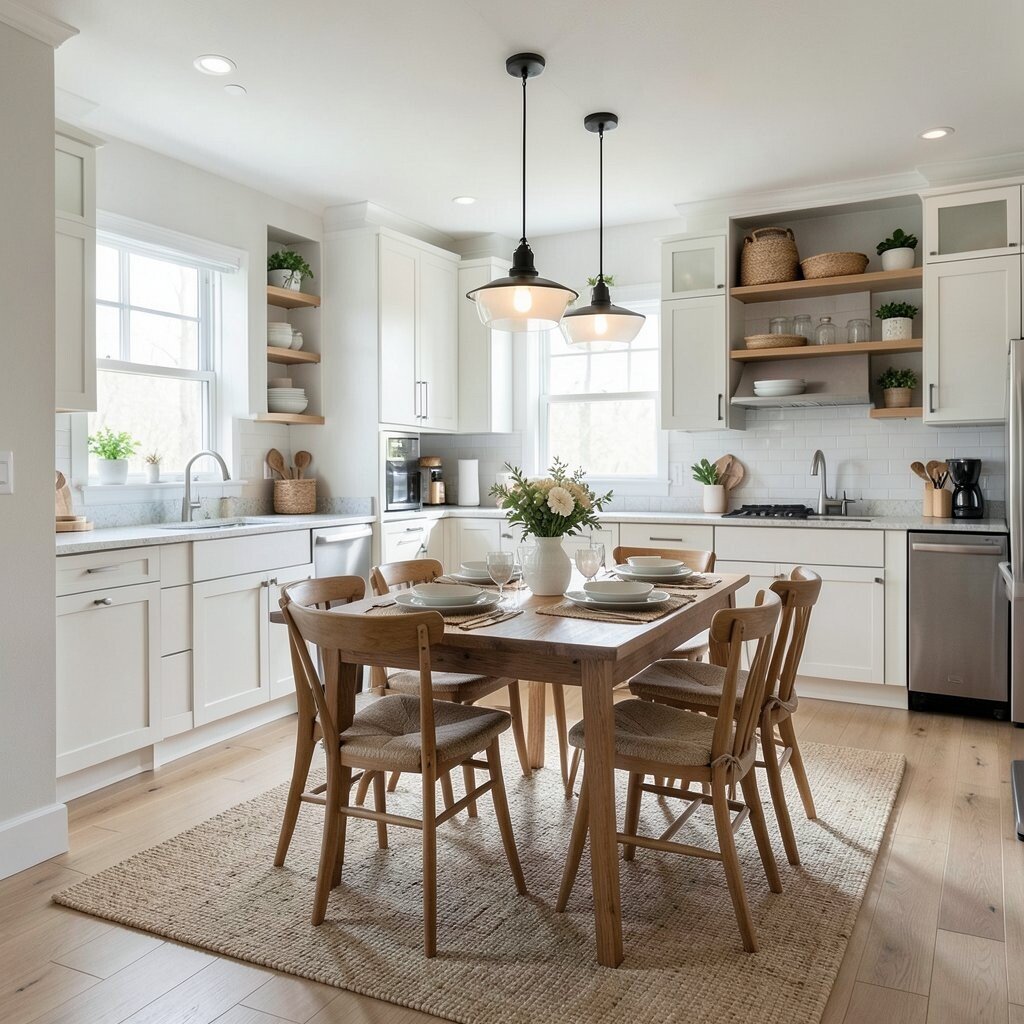
Create a soft “threshold” with a low console or open shelving If your kitchen and dining space blend into one big view, add a low console table or open shelving where the rooms meet. It helps define the dining area while still keeping everything open.
Fill shelves with cozy items like woven baskets, simple ceramics, and a few cookbooks with colorful spines. This gives you a unique look and practical storage for everyday things. Consider weather-friendly materials for open shelving, and use baskets for items you don’t want on display.
You’ll benefit from better organization and a calmer visual scene. For budget, paint the console a warm off-white or sage tone, then add affordable decor like framed prints or a small plant.
Want a personal touch? Add a rotating gallery wall on the console wall side or a chalk tray for weekend meal planning.
-
4. Use a large area rug to anchor the dining zone
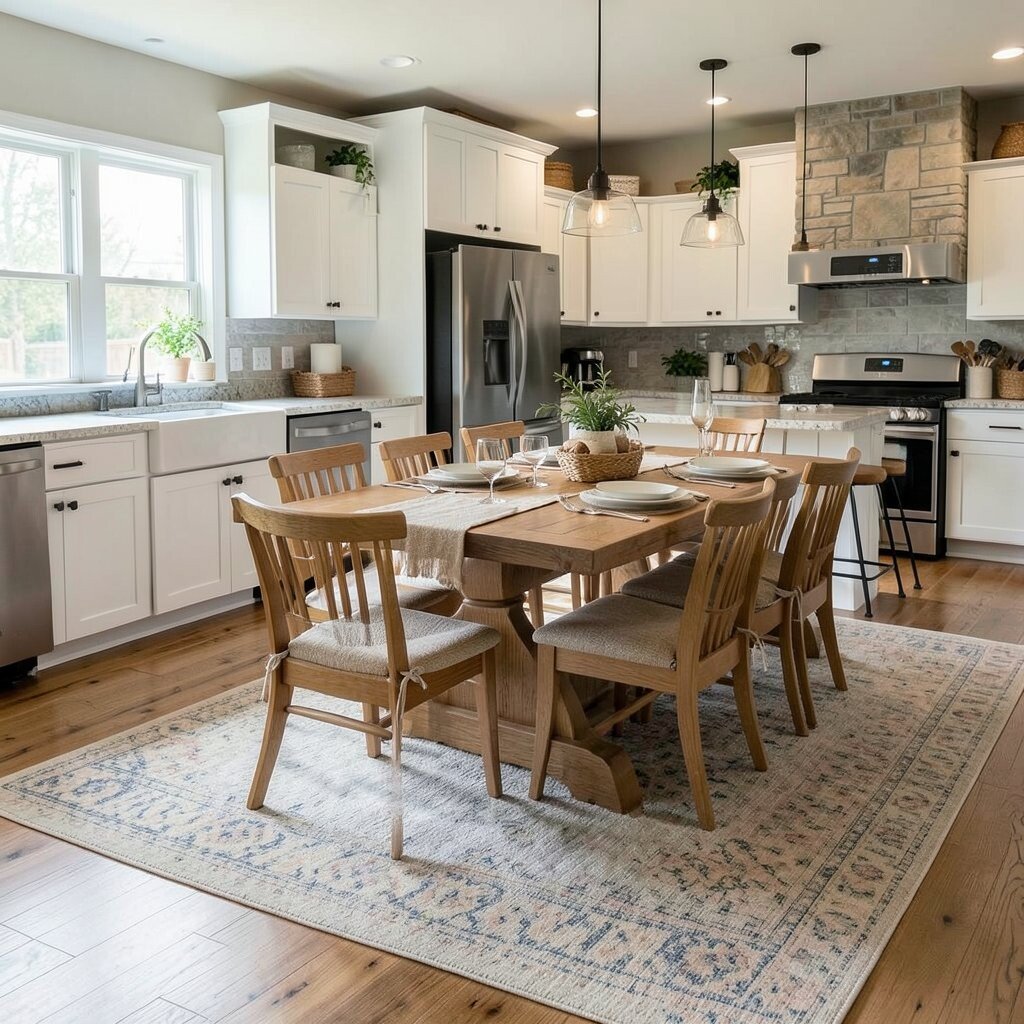
Use a large area rug to anchor the dining zone Place a roomy rug under the dining table so the space feels grounded. Even in open layouts, a rug helps “hold” the dining area in place visually.
For cozy vibes, choose a rug with texture—like woven patterns, flat loops, or subtle shag. It adds comfort underfoot when you’re making dinner, and it also reduces echo, which is a big benefit. If you have pets or kids, look for a low-pile rug and a machine-washable option.
-
5. Add a curtain or half-privacy element at the cooking side
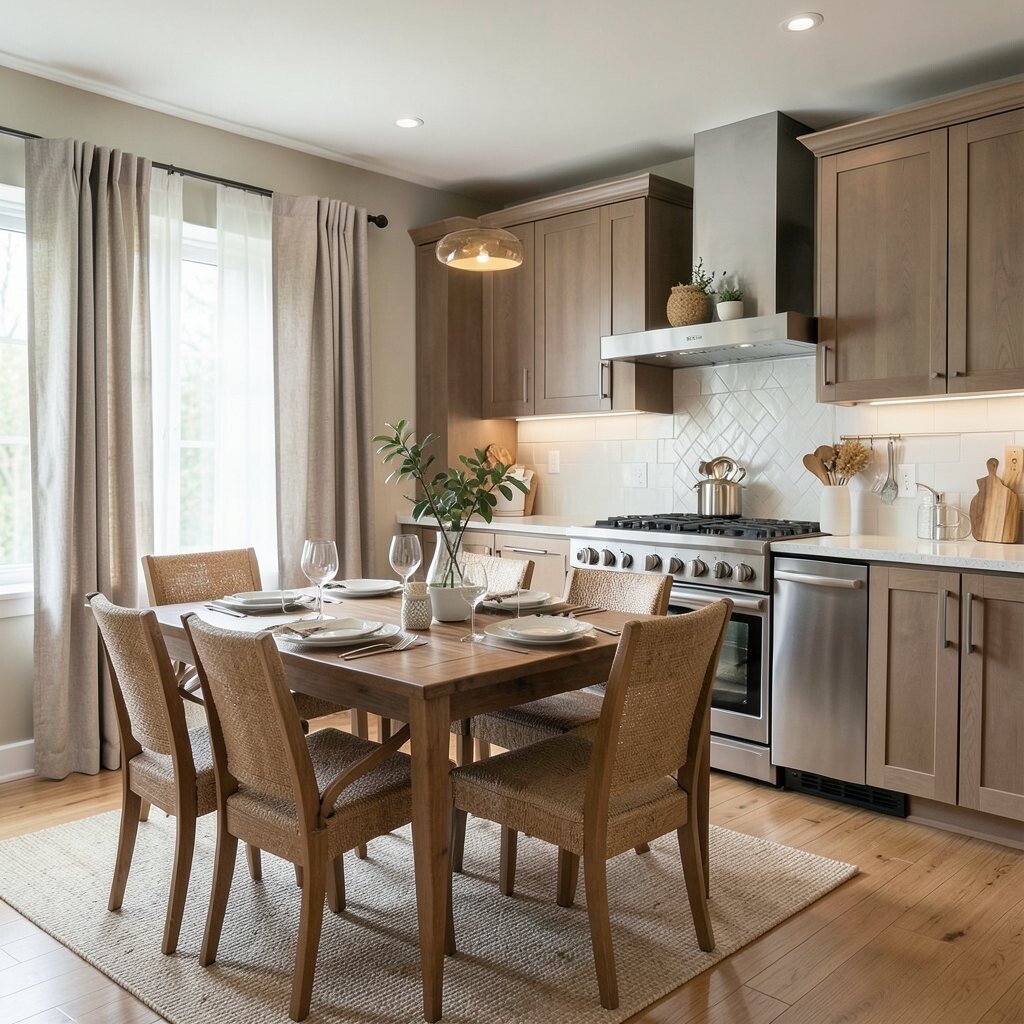
Add a curtain or half-privacy element at the cooking side In an open concept home, privacy can matter, and curtains offer an easy solution. Use a curtain panel to soften the kitchen side when you want the room to feel more cozy.
Choose linen or a light cotton blend in a warm neutral for a gentle, airy look. This gives you a unique “soft boundary” without closing the space completely. It’s also great for hiding clutter like countertops, which is a real-life win.
For cost, start with tension rods or a simple track system, then pick one fabric you love. Personalize by matching the curtain color to chair fabric or matching it to your rug pattern.
-
6. Design a coffee-and-snack station with a tray system
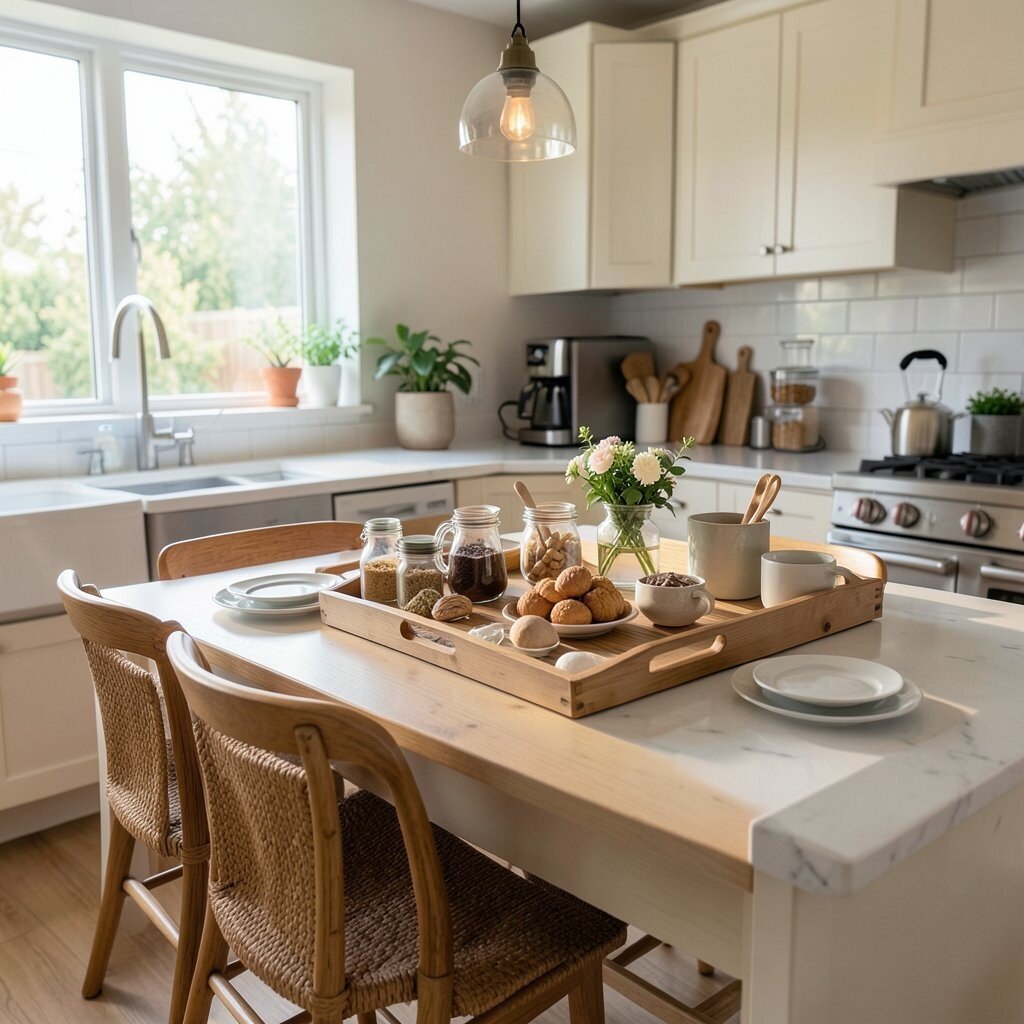
Design a coffee-and-snack station with a tray system Set up a dedicated coffee and snack corner using a cart, shelf, or open cabinet section. Keep everything on matching trays so it looks tidy even when it’s used daily.
Include a small bowl for treats, a jar for coffee pods, and a warming mug stack. This creates a cozy ritual and helps you stay organized during busy mornings. It’s unique because it turns “small habits” into a design feature.
For tips, keep one tray for weekdays and swap in a seasonal tray for holidays. Cost considerations are easy here: use existing shelves first, then upgrade trays and jars rather than buying bigger furniture.
-
7. Choose a statement backsplash that ties into dining decor
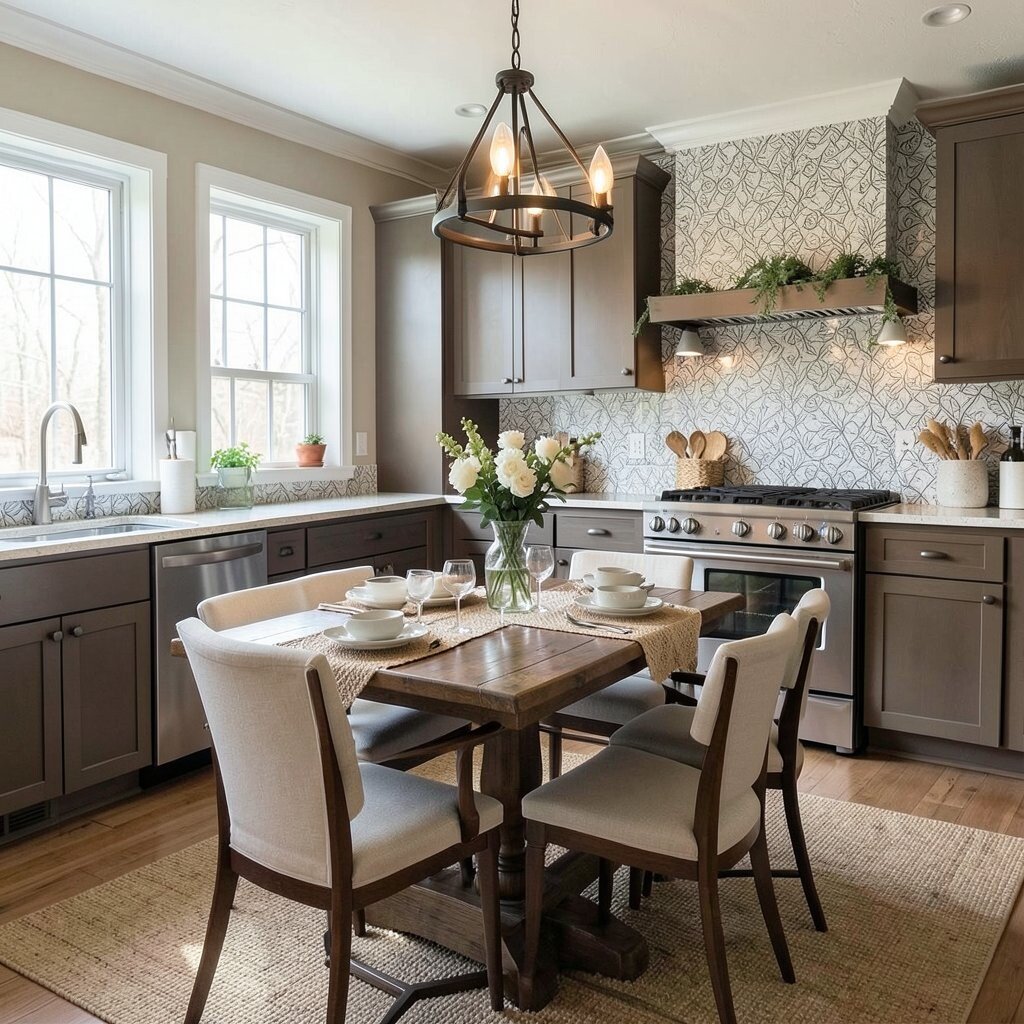
Choose a statement backsplash that ties into dining decor Your kitchen backsplash is a perfect place to add character that still feels cohesive with the dining area. Pick a tile style that matches the mood of your dining space.
For example, if your dining has warm wood and creamy textiles, choose a backsplash with soft texture or subtle pattern. This benefit gives your open layout a “focus point” and reduces the sense of blank walls. For uniqueness, use a mix of matte and glossy tile so the light looks cozy, not cold.
Budget tip: if full tile work is too much, consider peel-and-stick backsplash panels that look like real tile. Personalize with a nearby art piece or framed print that echoes a color from the backsplash.
-
8. Style the counter like a display with one functional centerpiece
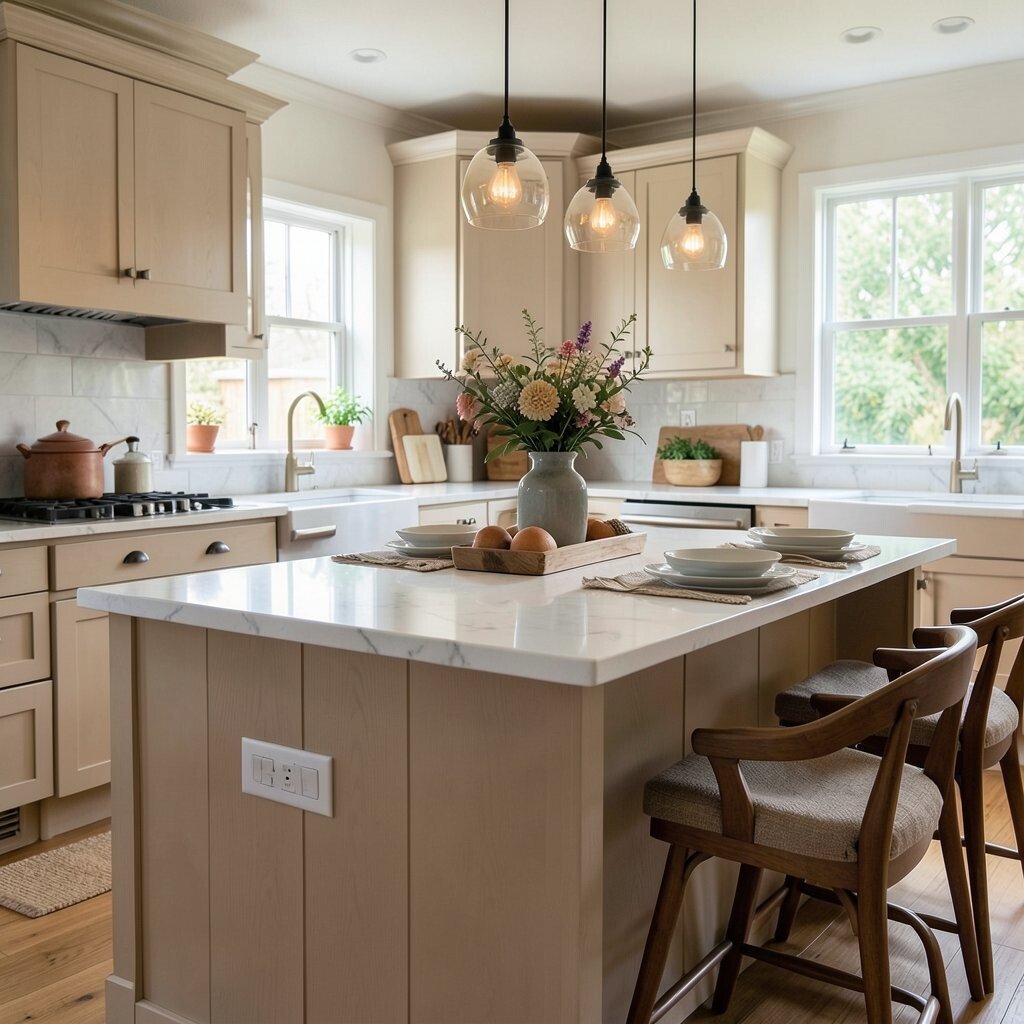
Style the counter like a display with one functional centerpiece Instead of filling every inch with decor, pick one centerpiece on your kitchen counter and build around it. A big cutting board, a ceramic bowl, or a stand with fruit can be both useful and beautiful.
Make it cozier by adding one season-friendly layer, like a small fall wreath, a vase of fresh herbs, or a set of matching canisters. This helps your open concept look intentional while still inviting. The benefit is that your space stays easier to clean, because you’re not juggling too many items.
For cost, focus on one “hero” item, then add inexpensive accents like twine labels and thrifted jars. Personalize by using colors you already love in your dining pillows or table linens.
-
9. Match table linens to your kitchen color story
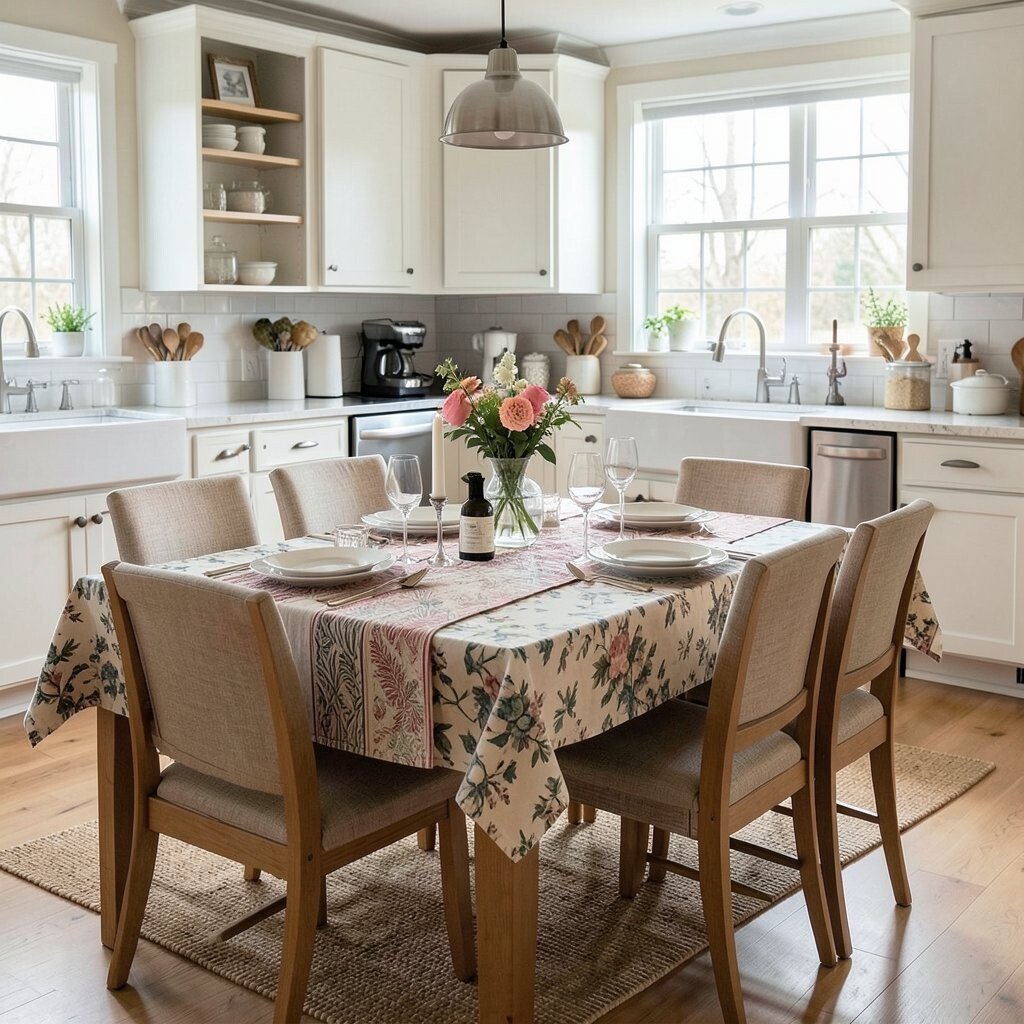
Match table linens to your kitchen color story Table linens can pull the entire space together fast. Choose placemats, a runner, or napkins that echo colors you already have in the kitchen.
Warm whites, soft greens, clay tones, and muted stripes feel cozy and current. This benefits your open layout by giving your eyes a “thread” to follow from cooking to eating. It’s unique because even simple fabrics can look custom when they match your home palette.
To personalize, keep a set of basic neutrals and rotate one accent color seasonally. Cost considerations are easy too—swapping linens is usually cheaper than replacing furniture.
-
10. Add a statement dining chair back or bench for comfort
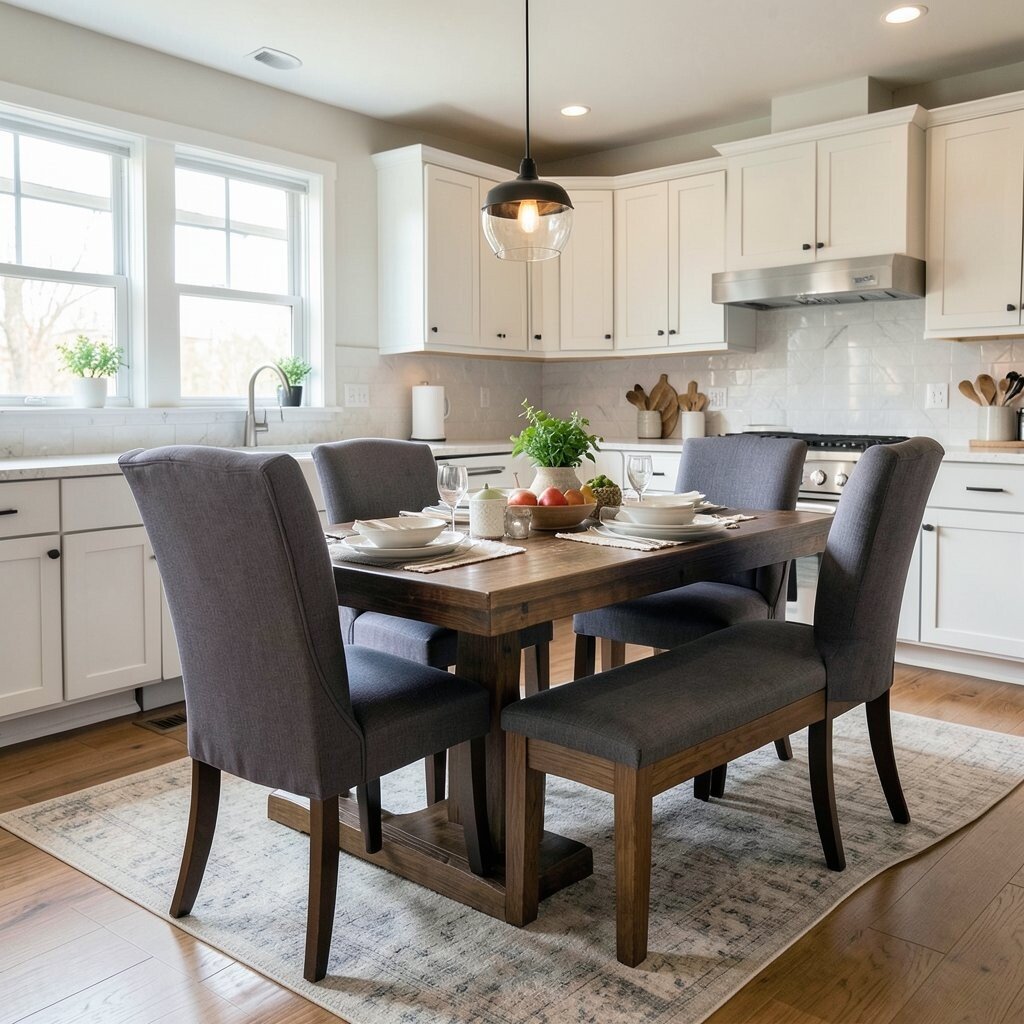
Add a statement dining chair back or bench for comfort Comfort matters, especially when you hang out at the table for long meals. A dining bench or chairs with rounded backs can make the dining area feel extra cozy.
Choose upholstery in a durable fabric like linen blend or performance weave so it holds up to daily life. This benefit means fewer worries about spills and more chances to enjoy company. For uniqueness, mix one accent chair with a different texture while keeping the same color family.
-
11. Open shelves with closed-front storage below
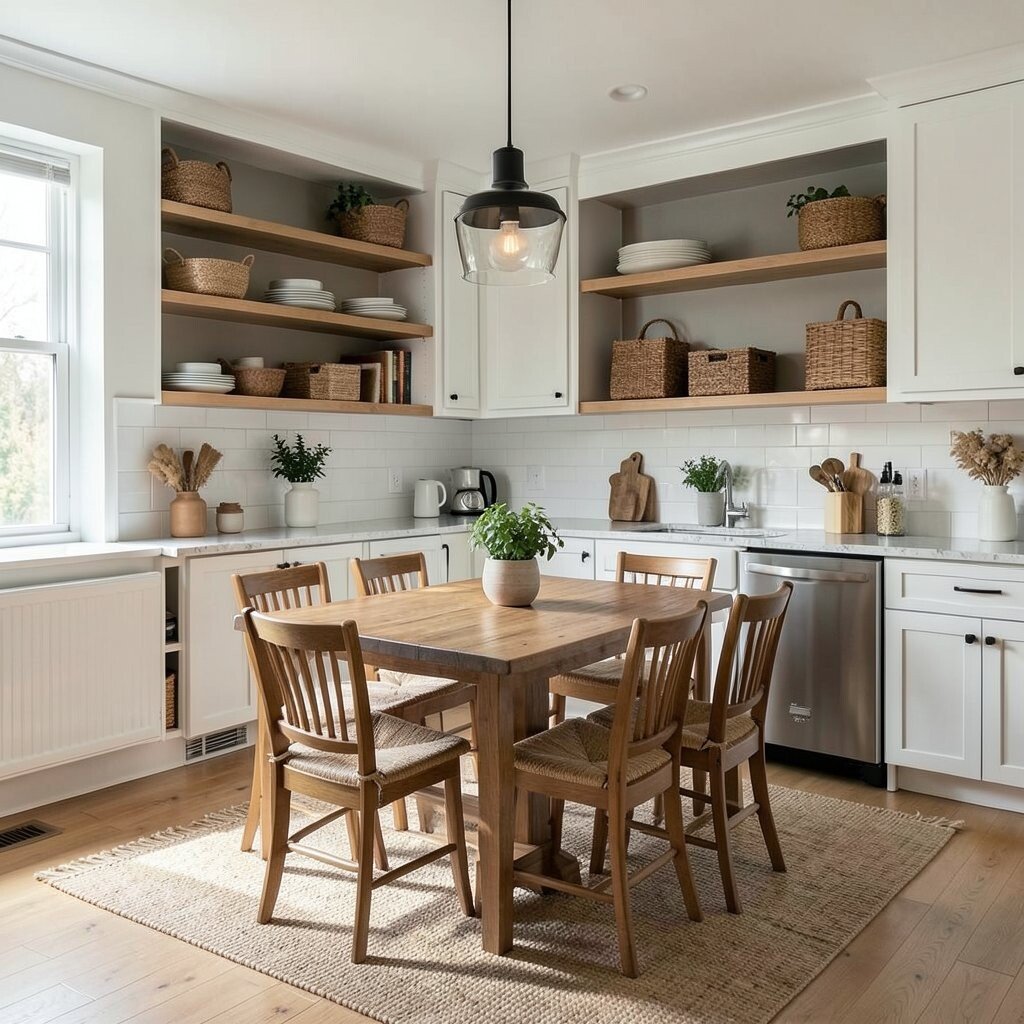
Open shelves with closed-front storage below Try open shelves for the pretty stuff and closed storage below for the practical stuff. This creates a cozy look without letting the whole kitchen feel cluttered.
On shelves, display warm items like ceramic canisters, vintage mugs, or small plants. Keep the clutter behind cabinet doors so the room stays calm and inviting. The benefit is a tidy vibe even on the days you cook a lot.
For cost, you can build a simple shelf styling routine using baskets, labeled bins, and a few matching containers. Personalize by keeping one shelf theme, like a “morning shelf” with coffee goods and a “serving shelf” with bowls and trays.
-
12. Build a wall of warmth with framed art at eye level
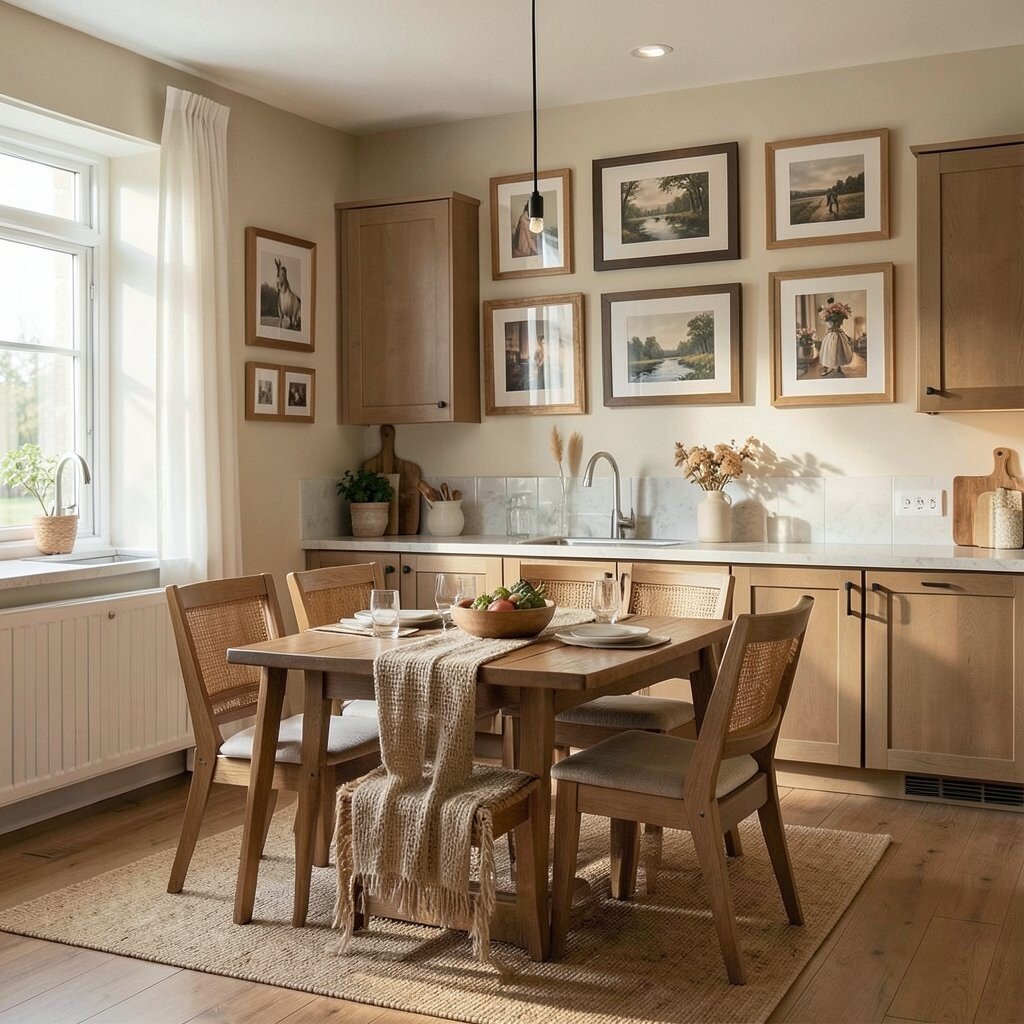
Build a wall of warmth with framed art at eye level Add framed art between the kitchen and dining area, keeping it at eye level. This makes the space feel cared for and breaks up the open sight lines.
Pick art that matches the cozy mood—warm landscapes, simple line drawings, or soft-toned prints. This benefits the room by adding personality without crowding the floor. It’s unique because you can build a mix of frames that feels like your own gallery.
For tips, use a consistent frame color and vary the mat sizes for a curated look. If you want to keep costs low, choose prints you like and swap frames from thrift stores, then spray-paint them for a consistent finish.
-
13. Choose a rounded table shape for a softer vibe
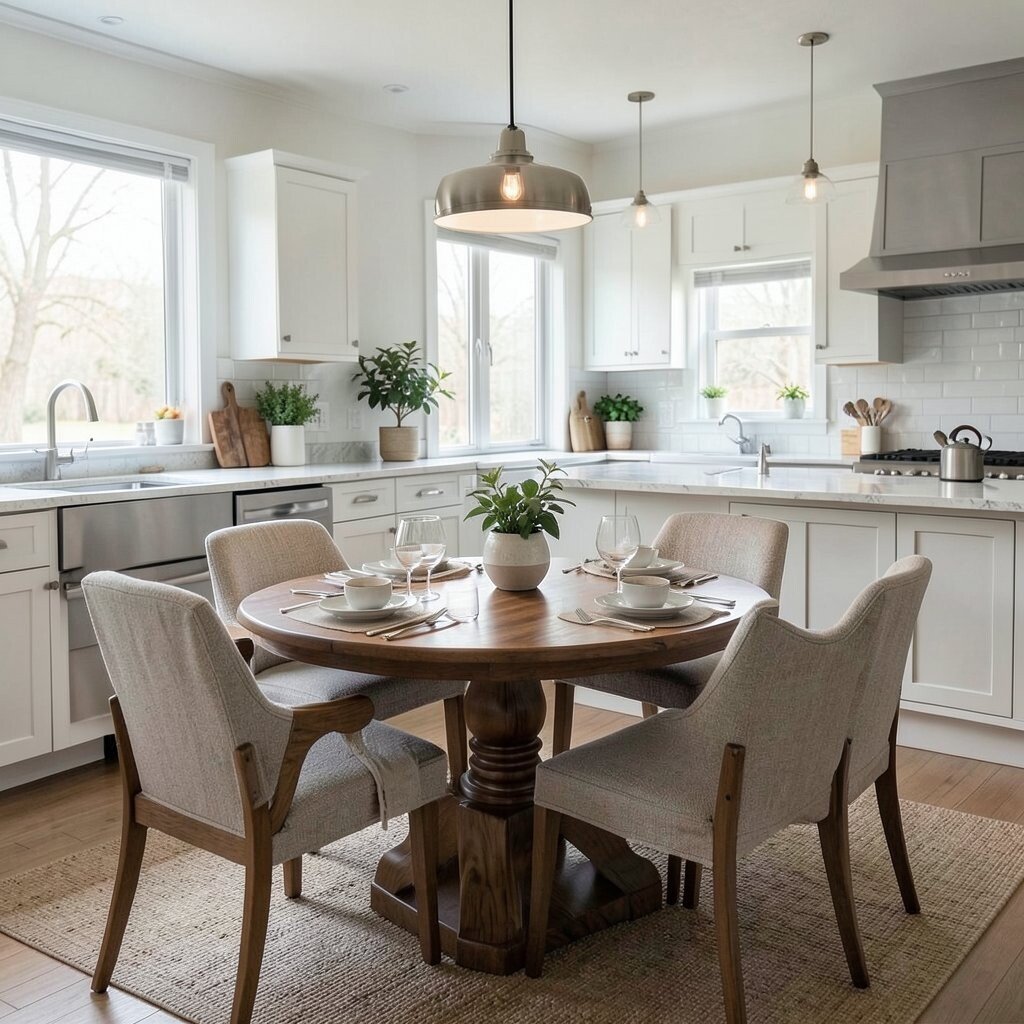
Choose a rounded table shape for a softer vibe A round or oval dining table can make an open concept feel more welcoming. Sharp corners can make big spaces feel a bit harsh, but curves feel friendly.
Round tables encourage conversation because everyone faces inward. The benefit is that the room feels cozier even before you add any decor. For uniqueness, pair a round table with a light rug pattern so the floor area looks lively.
Budget tip: if you can’t replace the table, use a tablecloth with a rounded runner or add a centerpiece that creates a curve shape. Personalize by choosing warm-toned chair cushions that match your kitchen finishes.
This trend stays popular because it supports better flow for gatherings.
-
14. Use a banquette or dining nook with built-in texture
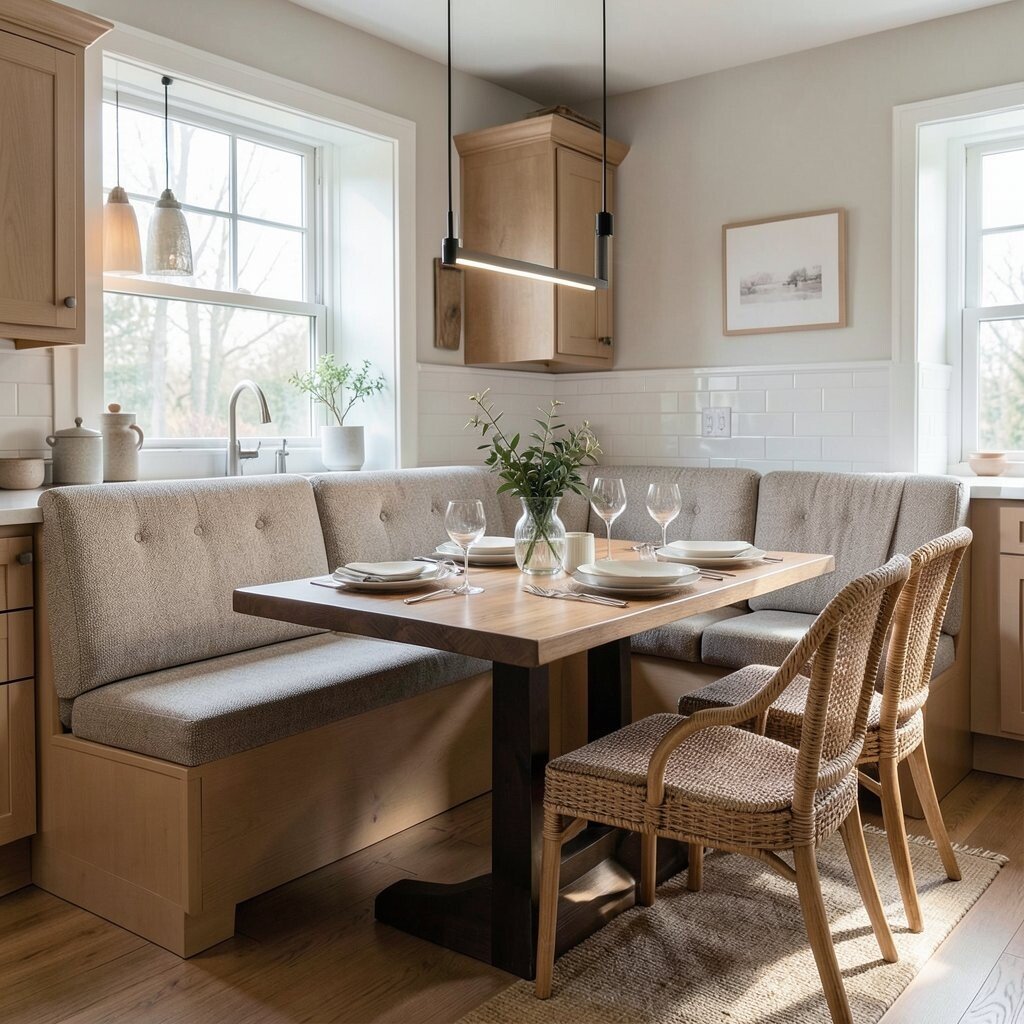
Use a banquette or dining nook with built-in texture If you have a wall edge, consider a banquette for the dining area. It instantly adds comfort and makes the open space feel more intimate.
Pick a fabric that feels cozy, like performance velvet or a textured weave. This benefits you by creating a comfy seat during long dinners and also helps the room feel less echo-y. It’s unique because banquettes often look custom, even when they’re simple.
-
15. Install a pot rack or utensil display with style
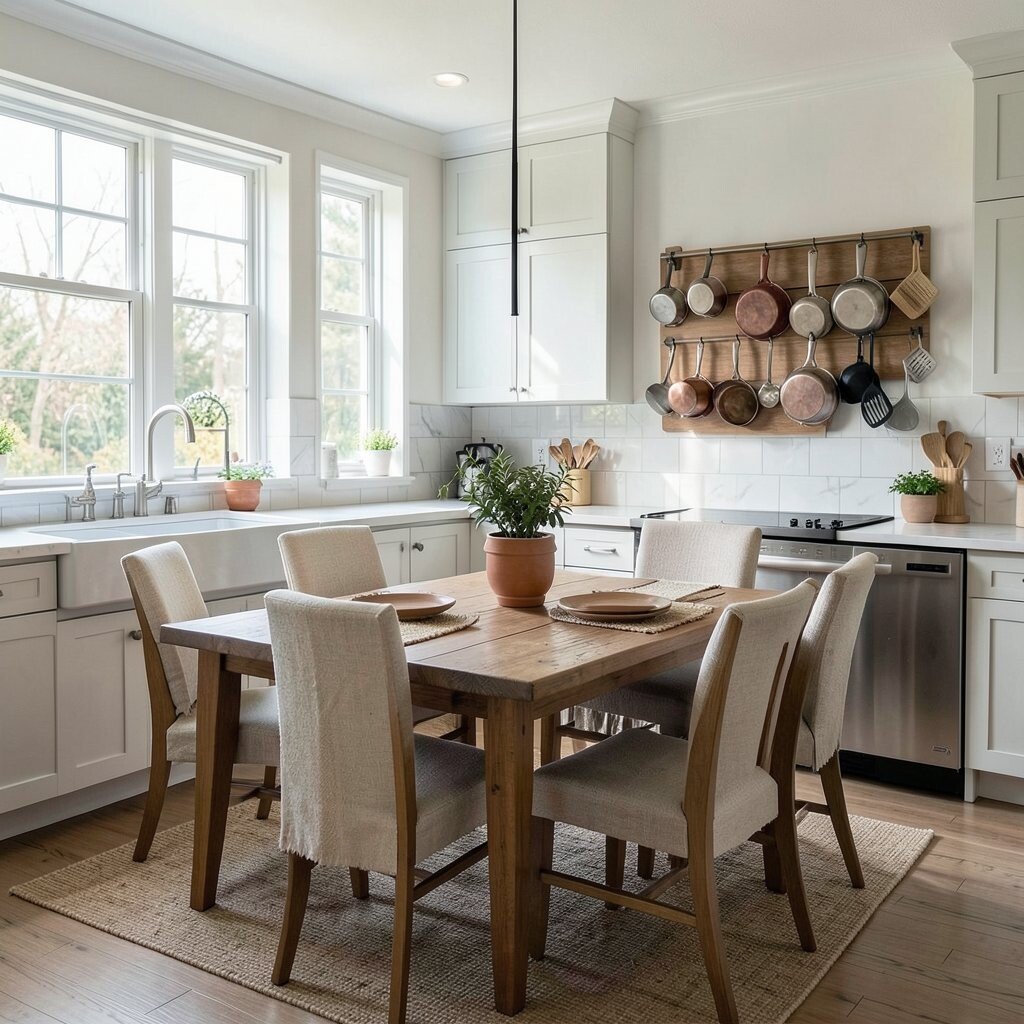
Install a pot rack or utensil display with style A pot rack can be both practical and decorative. When it’s styled well, it becomes a focal point that adds warmth to your open concept kitchen.
Choose a finish that matches your hardware—black metal, brass, or matte steel. This benefits your space by keeping cooking tools within reach and reducing clutter on counters. It’s unique because your cookware becomes part of the decor story.
For tips, keep it neat: hang matching lids, group utensils by type, and add a small sign or hook for a favorite spatula. Cost considerations are simple too—if hanging racks are too much, use a decorative wall peg rail instead.
-
16. Add a cozy color palette: warm neutrals with one bold accent
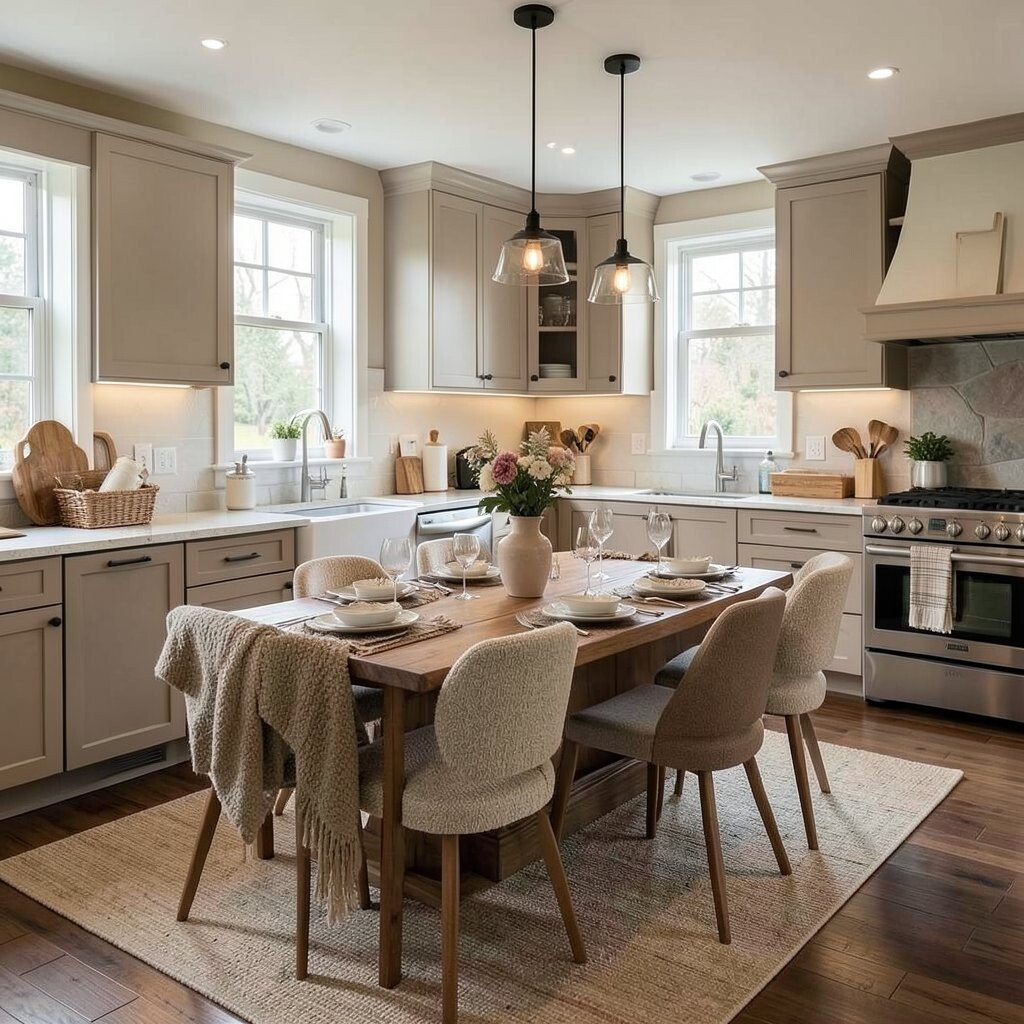
Add a cozy color palette: warm neutrals with one bold accent Cozy rooms usually have a warm neutral base plus one accent color. Think creamy whites, tan wood, soft greys, then add a pop like terracotta, deep green, or muted blue.
This gives your open layout unity without being boring. The benefit is that your kitchen and dining feel connected even when they have different materials. It’s unique because your accent can show up in small places like dish towels, placemats, and wall art.
For personalization, pick an accent color you love to use for seasonal swaps, like a rust shade for autumn and a fresh green for spring. Budget tip: paint is helpful, but it’s not the only move—mix and match affordable textiles first.
-
17. Create a “dinner prep” zone with a sideboard or cart
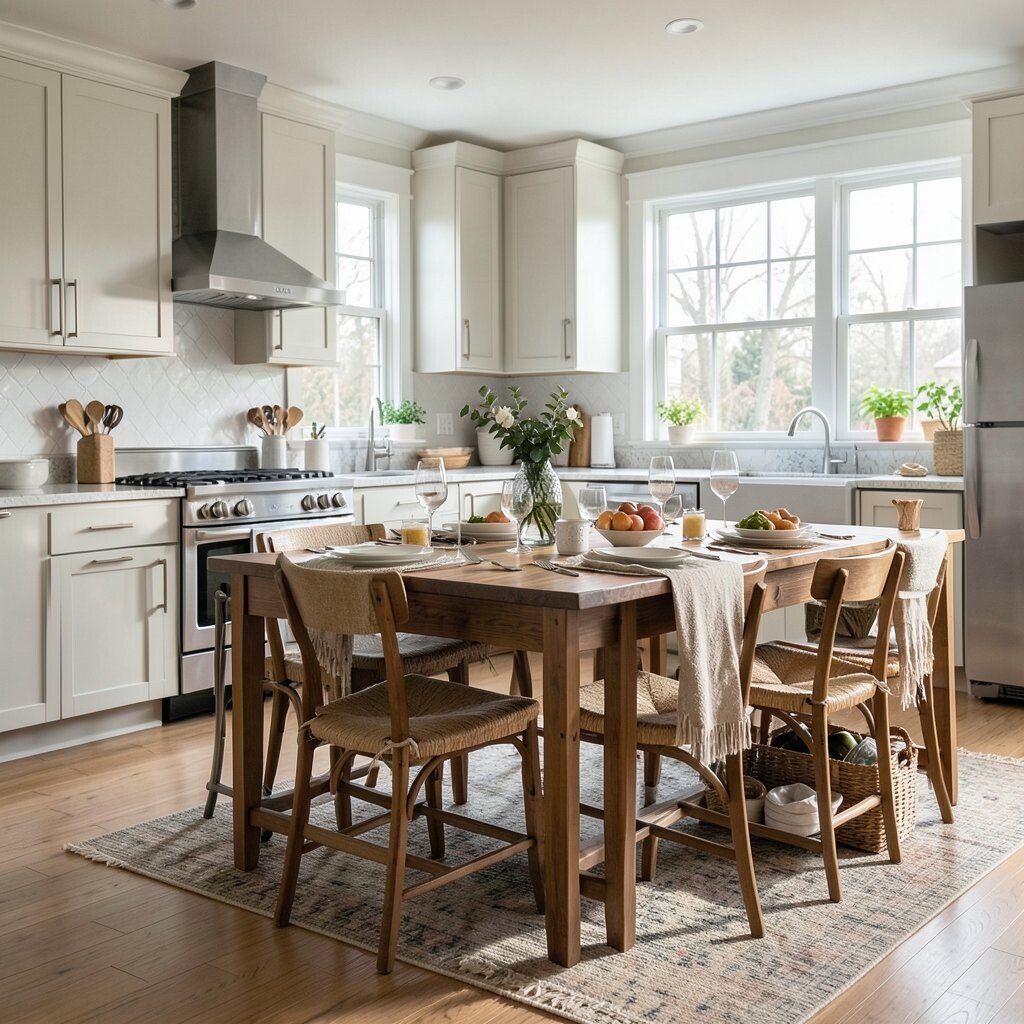
Create a “dinner prep” zone with a sideboard or cart Set a sideboard or serving cart close to the dining table so dinner feels smooth and easy. This is especially helpful when you need to move food quickly from cooking to serving.
Use the top surface for a cutting board, a bowl for fresh fruit, and a stack of plates. Then use shelves or drawers for extra napkins and serving utensils. The benefit is fewer trips and a calmer feel during hosting.
For uniqueness, choose a cart with wheels in a warm finish, or go for a wood-and-metal style for a modern cozy look. Cost considerations: look for a used cart and refinish it, or start with a simple wooden board system on a shelf you already have.
Personalize by placing a small lantern or scented candle on the cart for a “ready for guests” moment.
-
18. Use matching canisters and open jar labels
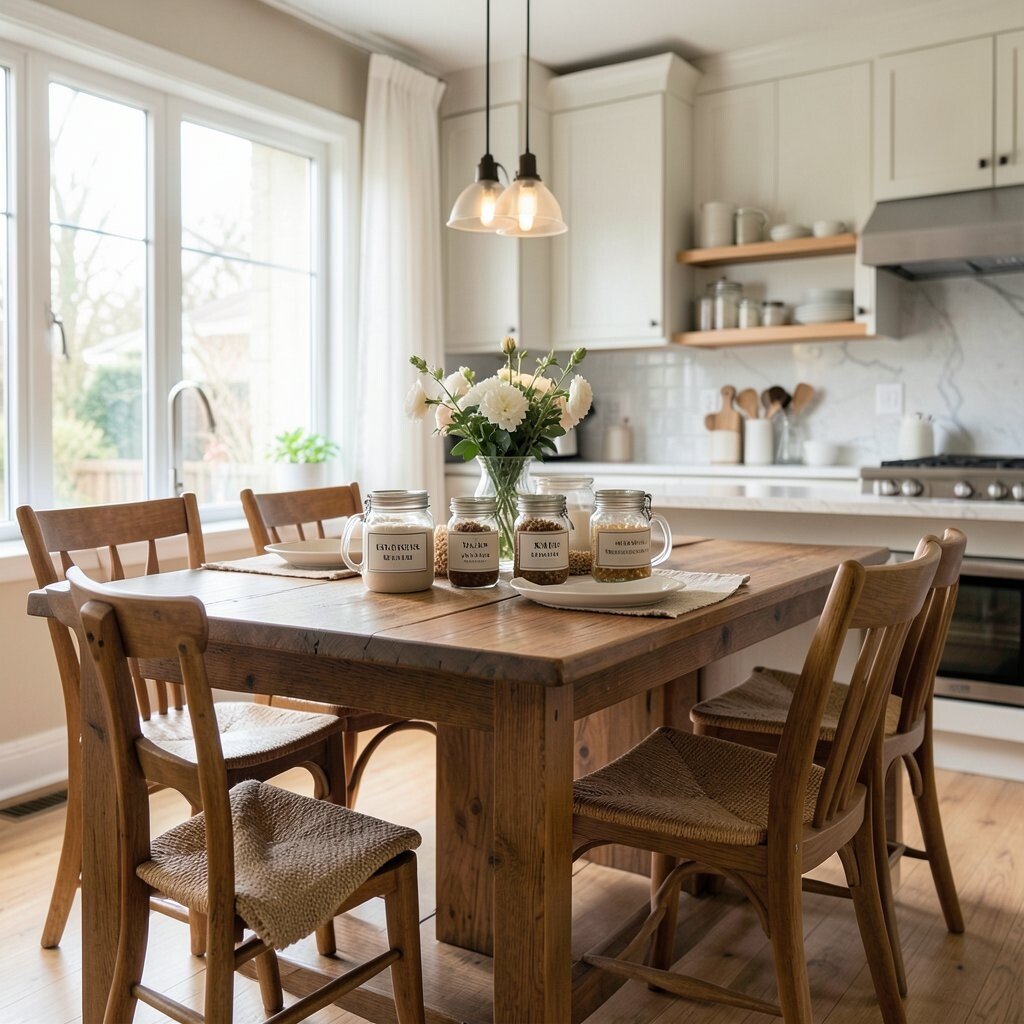
Use matching canisters and open jar labels Matching canisters and clear labels make a kitchen feel instantly more organized. They also look lovely in an open concept because you see them from the dining area.
Go for glass jars with wood lids, or matching ceramic canisters in warm tones. This benefit is huge: you’ll find ingredients faster and keep your pantry tidy. It’s unique because the label style can match your dining vibe—simple serif fonts for classic looks, or handwritten tags for a cozy cottage feel.
For tips, limit yourself to a small color set so it doesn’t get busy. Budget tip: you don’t have to buy everything at once—start with one or two favorites, like flour and coffee, then grow over time.
-
19. Add a window-friendly styling plan with blinds, valances, or sheer layers
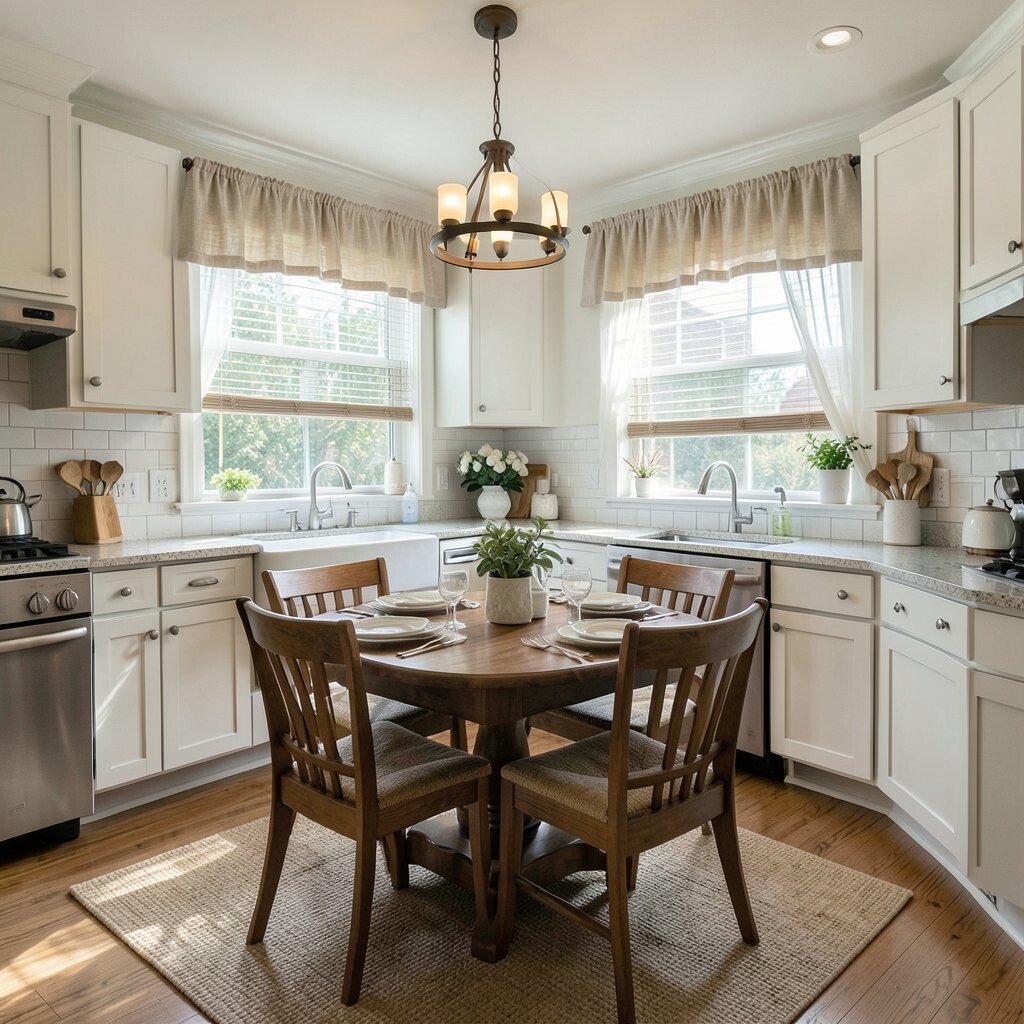
Add a window-friendly styling plan with blinds, valances, or sheer layers Windows can make open concept spaces feel warm when you dress them thoughtfully. Use sheers for soft daylight or layered curtains for evening coziness.
Pick fabrics that match your dining textiles so the whole room feels like one story. This benefits you by controlling glare while still letting light brighten the kitchen. It’s unique because window styling instantly changes the mood, even with no furniture changes.
For cost, consider updating hardware first, like switching to a warmer curtain rod finish. Then add affordable curtain panels and keep the rest simple. Personalize by choosing a pattern that echoes your rug or placemats.
-
20. Style the dining table with a warm centerpiece and a “serve-ready” setup
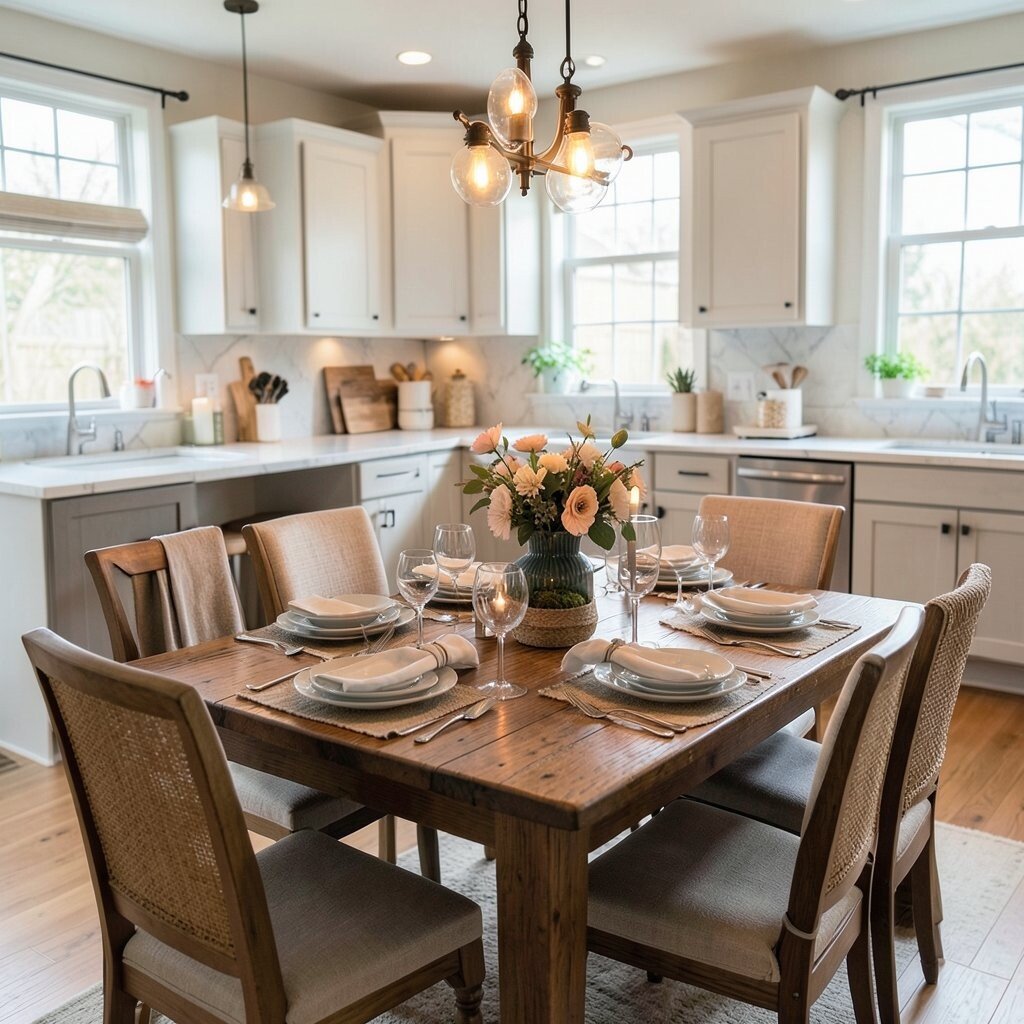
Style the dining table with a warm centerpiece and a “serve-ready” setup Create a cozy dining moment with a centerpiece that’s both pretty and useful. A ceramic bowl with seasonal fruit, a small herb pot, or a low candle arrangement can set the tone.
For the serve-ready setup, add a tray with salt, pepper, and napkins so hosting feels easy. The benefit is you spend less time searching and more time enjoying your meal. It’s unique because the centerpiece can change with holidays while the setup stays the same.
To keep costs in check, use items you already own and style them differently—try height variation with a small stack of books under a tray. Personalize by matching candle colors to your kitchen accent or by using a runner that matches your table linens.
Current trend energy favors natural textures like linen, wood, and greenery, so try simple accents that look “lived in” and inviting.